this week in lectures, signings, panel discussions, workshops, and Q&As

THE SHAPE OF THINGS: LAND OF BROKEN DREAMS CONVENING & CONCERT SERIES

LAND OF BROKEN DREAMS
Park Ave. Armory
643 Park Ave. at Sixty-Seventh St.
Concerts and convenings: December 9-11, $25
Installation: Tuesday – Sunday through December 31, $18
www.armoryonpark.org

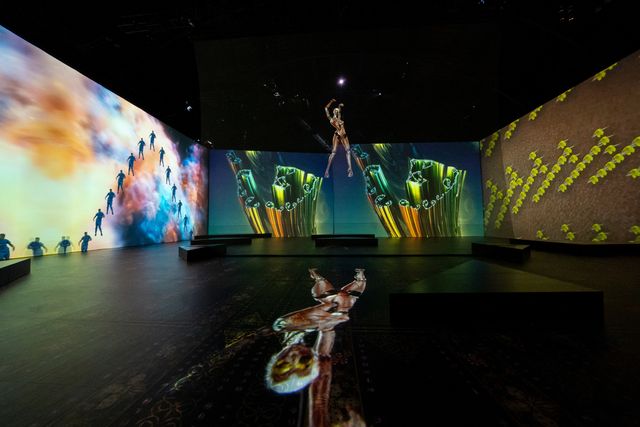
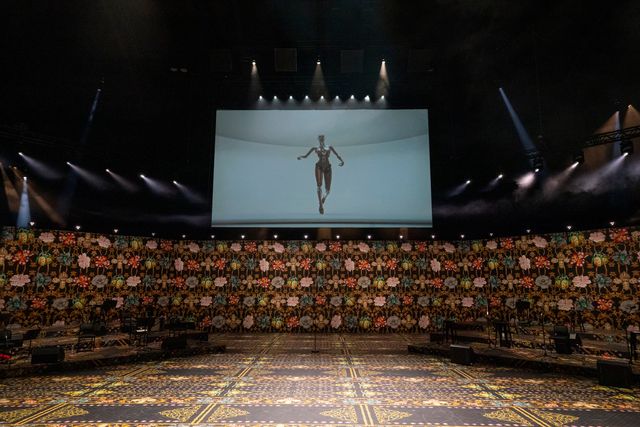
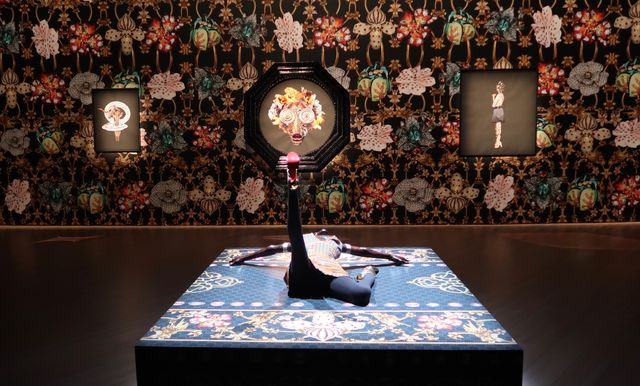
As part of Carrie Mae Weems’s “The Shape of Things” monumental multimedia installation at Park Ave. Armory, there will be three days of live music, conversations, and performances that activate the space. Tickets are going fast for the “Land of Broken Dreams” series, which features nighttime concerts by singer-songwriter Somi on December 9, the jazz trio of Vijay Iyer, Arooj Aftab, and Linda May Han Oh on December 10, and Terri Lyne Carrington and Lisa Fischer, whose latest project is “Music for Abolition,” on December 11. Tickets also include admission to a “Daytime Convening” from 1:00 to 7:00, with pop-up performances by more than 150 artists in the Wade Thompson Drill Hall, the Board of Officers Room, the Veterans Room, and the Colonels Room.

Among those participating are photographer Dawoud Bey, tap dancer Maurice Chestnut, painter Torkwase Dyson, theater director Scott Elliott, Reggie “Regg Roc” Gray and the D.R.E.A.M. Ring, philanthropist Agnes Gund, poet, playwright, and novelist Carl Hancock Rux, dancer and choreographer Francesca Harper, musician and author Nona Hendryx, civil rights leader Ben Jealous, interdisciplinary artist Rashid Johnson, visual artist Joan Jonas, set designer Christine Jones, artist Deborah Kass, painter Julie Mehretu, cultural theorist, poet, and scholar Fred Moten, visual artist Shirin Neshat, curator, critic, and art historian Hans Ulrich Obrist, multimedia installation artist Tony Oursler, poet, essayist, playwright, and editor Claudia Rankine, sculptor Alyson Shotz, conceptual artist Hank Willis Thomas, performance artist Carmelita Tropicana, rapper, actor, and Roots MC Tariq Trotter, author Quincy Troupe, director Whitney White, and the Peace Poets. You might just have to move in to the armory for seventy-two hours so you don’t miss a minute of what promises to be a memorable event.

FLASH FORWARD: DEBUT WORKS AND RECENT FILMS BY NOTABLE JAPANESE DIRECTORS

Masayuki Suo takes the audience on a wild ride in Talking the Pictures

FLASH FORWARD
Japan Society online and in-person
333 East 47th St. at First Ave.
December 3-23, free – $10 online for three-day rental, $15 in person December 11 & 17, 7:00
212-715-1258
www.japansociety.org

Japan Society and the ACA Cinema Project (Agency for Cultural Affairs, Government of Japan) follow up their inaugural festival, “21st Century Japan: Films from 2001-2020,” with “Flash Forward: Debut Works and Recent Films by Notable Japanese Directors,” running December 3-23 online and in person.

The three-week series highlights the work of six established Japanese directors, pairing their debut with a more recent film. Available on demand as a three-day rental for ten dollars or fifteen dollars per bundle are Naomi Kawase’s 1997 Cannes Camera d’Or-winning Suzaku and 2018 Vision, Miwa Nishikawa’s 2003 Wild Berries and 2016 The Long Excuse, Shuichi Okita’s 2009 The Chef of South Polar and 2020 Ora, Ora Be Goin’ Alone, Junji Sakamoto’s 1989 Knockout and 2016 The Projects (see review below), and Masayuki Suo’s 1989 Fancy Dance and 2019 Talking the Pictures. Akihiko Shiota’s 1999 Moonlight Whispers was supposed to be teamed up with his 2019 Farewell Song but will not be shown because of music rights issues; it has been replaced by his fourth film, the 2002 drama Harmful Insect.

The “Filmmakers on the Rise” section comprises recent works by six directors who might be part of “Flash Forward” if it were held again in 2040: Masakazu Kaneko 2016 The Albino’s Trees, Yuko Hakota’s 2019 Blue Hour, Omoi Sasaki’s 2017 A Boy Sato, Eisuke Naito’s Forgiven Children, Kyoko Miyake’s 2013 My Atomic Aunt, and Hiroshi Okuyama’s 2019 Jesus. These films are available for free on demand. Also free are two online talks, “Conversations with the Filmmakers,” with Kawase, Nishikawa, Okita, Sakamoto, Shiota, and Suo, and the panel discussion “Debut Works and Beyond,” with Columbia assistant professor Takuya Tsunoda, UCLA assistant professor Junko Yamazaki, and writer, curator, and filmmaker Jasper Sharp, moderated by Yale professor Aaron Gerow.

Two in-person screenings at Japan Society celebrate the late master Sadao Yamanaka, who made more than two dozen films in the 1930s, few of which survive, before dying in Manchuria in 1938 at the age of twenty-eight. On December 11 at 7:00, a new 4K restoration of Yamanaka’s 1935 Tange Sazen and the Pot Worth a Million Ryo will have its North American premiere, followed December 17 at 7:00 by the international premiere of the 4K restoration of Yamanaka’s 1936 Priest of Darkness.

THE PROJECTS

Hinako (Naomi Fujiyama) and Seiji Yamashita’s (Ittoku Kishibe) lives change once again with the return of Shinjo (Takumi Saitoh) in The Projects

THE PROJECTS (DANCHI) (団地) (Junji Sakamoto, 2016)
film.japansociety.org

“Nothing is impossible in a housing project,” several people say in Junji Sakamoto’s delightfully absurdist and downright weird black comedy The Projects, which made its North American debut at Japan Society’s tenth annual Japan Cuts Festival in 2016. Elderly couple Hinako (Naomi Fujiyama) and Seiji Yamashita (Ittoku Kishibe) have moved to an inexpensive suburban Osaka housing project, known as a danchi, after closing their popular herbal remedies shop following the tragic death of their son, Naoya. The couple lives quietly, unable to process their grief or move forward, but they’re back in business when one of their strangest customers, the well-dressed, oddly speaking Shinjo (Takumi Saitoh), tracks them down and essentially demands, in his calm, direct manner, that they begin making his special remedy again. Meanwhile, Seiji, who would rather be left alone, is dragged into the race for head of the tenant association, running against Gyotoku (Renji Ishibashi), who is having an affair with a younger resident and is married to Kimiko (Michiyo Okusu), who is obsessed with properly separating the danchi’s garbage, and young upstart Yoshizumi (Takayuki Takuma), who is not afraid to discipline his son, Kitaro (Hiroaki Ogasawara), in full view of his neighbors. After Seiji loses, he decides to hide from everyone, retreating under the floorboards whenever someone stops by, which leads a gossiping group of ladies (Hikaru Horiguchi, Yukari Taki, Mayu Harada, Mari Hamada, and Miyako Takeuchi) to believe that Hinako has actually killed her husband and chopped up the body. As the media and police get involved, things get crazier and crazier as the totally bizarre conclusion approaches.

Fujiyama and Kishibe are absolutely charming as the Yamashitas, moving and talking with a sweetly warm, slow demeanor, asking little from a life that has let them down. Sakamoto wrote The Projects specifically for comedian and stage actress Fujiyama; the two last worked together on the award-winning 2000 film Face, Fujiyama’s first film, and the pairing is another marvel. Fujiyama is wonderful in the role, imbuing Hinako with a wry, very funny sense of humor that is splendidly complemented by Kishibe’s more serious Seiji. Lovingly shot by Ryo Ohtsuka and featuring a playful score by Gorô Yasukawa, The Projects is pure fun all the way through, with many laugh-out-loud moments even as it deals with some heavy subjects, right up to its out-of-this-world finale. Don’t let the title fool you; “projects” in Japan were much-desired apartment complexes originally built in the 1950s to supply suburban public housing for the growing post-WWII Japanese population. Although they are not as popular today, they are not the kind of projects associated with drugs and crime in America. The Projects is paired with Sakamoto’s 1989 debut, Knockout (Dotsuitarunen), in “Flash Forward: Debut Works and Recent Films by Notable Japanese Directors.”

EGON SCHIELE SYMPOSIUM

Who: Hans-Peter Wipplinger, Verena Gamper, Franz Smola, Sandra Tretter, Elisabeth Leopold, Elisabeth Dutz, Christian Bauer, Jane Kallir, Gemma Blackshaw, Stefan Kutzenberger, Karin Maierhofer, Sandra Maria Dzialek
What: Fourth Egon Schiele Symposium
Where: Leopold Museum online
When: Friday, December 3, free with advance RSVP, 3:45 – 11:30 am
Why: The Leopold Museum, whose Egon Schiele collection comprises 42 paintings, 184 watercolors, drawings, and prints, and numerous writings and miscellaneous texts, will be hosting its fourth Egon Schiele Symposium on December 3, streaming live from Vienna beginning at 3:45 am EST. Interest in Schiele, who died in 1918 at the age of twenty-eight of the Spanish flu, has continued to grow over the last decade, from a centennial exhibition at St. Galerie Etienne to the documentary Portrait of Wally to John Kelly’s remounting of his one-man show Pass the Blutwurst, Bitte.

The symposium, the first of which was held in 2016, features twelve presentations, including one in English by Galerie St. Etienne head and Kallir Research Institute director Jane Kallir, “Reconfiguring Gender: Egon Schiele and the Gay Subculture.” If, like me, you miss Kallir’s extraordinary essays about the gallery’s exhibits, her talk should be a special treat. Below is the full schedule; the symposium will be available for on-demand viewing following the livestream, which will have an interactive Zoom chat.

9:45 am: Welcoming Remarks, with Leopold Museum director Hans-Peter Wipplinger and Leopold Museum Research Center head Verena Gamper

10:00 am: Egon Schiele’s Painting Jugendströmung [Current of Youth] – New Findings About Schiele’s Contribution at the International Art Show Vienna 1909, with Österreichische Galerie Belvedere curator Franz Smola

10:30 am: Gustav Klimt and Egon Schiele at the Vienna Art Show in Berlin 1916, with Klimt Foundation deputy director Sandra Tretter

11:00 am: “I Went Through Klimt”: On Egon Schiele’s Painting Hermits and the Faculty Paintings of Gustav Klimt, with Elisabeth Leopold of the Leopold Museum Private Foundation

11:30 am: Schiele’s Death Masks – New Findings of the Ongoing Research at the Albertina’s Egon Schiele Archive, with Albertina curator Elisabeth Dutz

1:30 pm: The Body Electric: Erwin Osen – Egon Schiele, with Leopold Museum Research Center head Verena Gamper

2:00 pm: Erwin Dominik Osen: An Approach, with Egon Schiele Museum curator Christian Bauer

2:30 pm: Reconfiguring Gender: Egon Schiele and the Gay Subculture (English), with Kallir Research Institute director Jane Kallir

3:00 pm: “Dear Curator …”: Correspondence as Care for Erwin Osen’s Lustknabe [Catamite] (English), with art historian and curator Gemma Blackshaw and architectural historian and artist Adam Kaasa

4:00 pm: Blue Lady in Green Nature: A Workshop Report from Silicon Valley – Egon Schiele and Artificial Intelligence, with writer, curator, and literary scholar Stefan Kutzenberger

4:30 pm: Egon Schiele’s Painting Young Mother – Insights into the Research and Restoration Project, with Wien Museum restorer Karin Maierhofer

5:00 pm: Egon Schiele’s Towns – the Leopold Museum Holdings from a Material-Technology Perspective, with Leopold Museum restorer Sandra Maria Dzialek

NETFLIX’S PASSING: SCREENING AND CONVERSATION

Who: Rebecca Hall, Ruth Negga, André Holland, David Nugent
What: Screening and conversation
Where: 92nd St. Y, 1395 Lexington Ave. at 92nd St., Buttenwieser Hall and 92Y online
When: Friday, December 3, $25 in person, 6:30; $20 online, 8:20
Why: In her directorial debut, Passing, award-winning actress Rebecca Hall (Vicky Cristina Barcelona, Machinal) makes her father, the late Sir Peter Hall of the RSC and the National Theatre, proud. The black-and-white Netflix drama stars Tessa Thompson as Irene “Reenie” Redfield, a Black woman living in Harlem who meets up with an old friend, Clare Kendry (Ruth Negga), who is living her life passing as a white woman. Although Reenie is uncomfortable with Clare’s decision, she takes advantage of certain situations where she can pass as well. As Clare starts spending more time with Reenie, her secret threatens to be exposed. Set during the Harlem Renaissance, the tense, beautifully photographed Passing, based on Nella Larsen’s 1929 novel, also features André Holland as Reenie’s husband, Brian Redfield, Alexander Skarsgård as Clare’s bigoted spouse, John Bellew, and Bill Camp as Hugh Wentworth, a friend and mentor to Reenie. On December 3, the 92nd St. Y is hosting a rescheduled hybrid event in which the Ethiopian-Irish Negga (Loving, Shirley), Alabama-born Holland (Selma, Moonlight), and London native Hall will screen and discuss the film with Hamptons International Film Festival artistic director David Nugent at Buttenwieser Hall; the conversation can be livestreamed beginning at 8:20.

APPROVAL JUNKIE

Faith Salie shares her quest for approval in one-woman show (photo by Daniel Rader)

APPROVAL JUNKIE
Audible Theatre’s Minetta Lane Theatre
18 Minetta Lane between Sixth Ave. and MacDougal St.
Tuesday – Sunday through December 12, $46-$56
www.audible.com

In her one-woman show, Approval Junkie, actress, author, and television and radio correspondent Faith Salie explains that when she would share a personal or professional success with her father, he would say, “I’m impressed, but not surprised.” I was impressed and surprised by how much I enjoyed the monologue, in which Salie details her lifelong quest for approval, from being an anorexic Georgia high school beauty and talent show contestant to auditioning for acting parts to getting married and wanting to have children. She also admits to being an applause junkie. “I’m half a century old, and I give a ton of fucks that you’re sitting at my feet,” she tells the audience. “Y’all came to the theater. And I’m pretty sure you’re wearing pants. And I hope you’re smiling behind those masks.”

Salie, an Emmy winner who appears regularly on NPR’s Wait Wait . . . Don’t Tell Me! and CBS Sunday Morning, is charming and likable — and brutally honest. She talks about some intensely private moments, but as much as she’s after our approval, she takes a humble, self-deprecating approach, telling a story that, in many ways, could be about any woman, although she acknowledges her significant privilege. She doesn’t brag about her accomplishments or look for sympathy for her failures; she just wants us to enjoy ourselves and, hopefully, learn about how we don’t need to search for approval ourselves around every corner.

Faith Salie accepts approval on opening night of Approval Junkie (photo by Daniel Rader)

The show is adapted from her book of the same name, which has two different subtitles: Adventures in Caring Too Much for the hardcover, My Heartfelt (and Occasionally Inappropriate) Quest to Please Just About Everyone, and Ultimately Myself for the paperback and ebook. For ninety minutes, Salie, in a lovely dark blue jumpsuit and beige heels (the costume is by Ivan Ingermann), walks across Jack Magaw’s spare set, which features a central platform, two small speakers where she sometimes sits, and a stained-glass-like backdrop of abstract geometric shapes on which video and animation are occasionally projected. Salie shares funny and moving stories about going to an Ayurvedic Healing Center in a Sarasota, Florida, strip mall to exorcise the darkness out of her in order to please her wasband (what she calls her ex-husband); being retweeted by Hillary Clinton and Mandy Patinkin; her desperation to look good at her divorce hearing; and attempting to be a hit on Bill O’Reilly’s Fox program. She remembers that early in her career, she took vocal lessons from acting coach Lesly Kahn, who asked her, “Why aren’t you as pretty as I want you to be?” She answers now, “I don’t know — I’m not as pretty as I want me to be.”

Directed by actor and producer Amanda Watkins, the play — which continues at Audible’s Minetta Lane Theatre through December 12, after which an Audible audio recording will be available — has a warm, welcoming atmosphere. Even when lines fall flat, and a bunch do, Salie proceeds, okay with that momentary lack of approval. Except for the animation at the beginning and end, the projections are random and inconsistent; you’ll find yourself time and again thinking something will be shown when nothing is. And that’s okay too.

It’s all bookended by tales about Shel Silverstein’s classic children’s book The Giving Tree (Salie calls the titular tree “the ultimate woodland approval junkie”) and Salie’s friendship with 104-year-old Ruth Rosner, a journey from childhood to old age. Describing Rosner’s sudden fame from Salie’s television profile of her, Salie says, “We all want to sit at the feet of someone with a century of wisdom and hear that once you get old enough, you stop striving, you figure it all out. You have, as the kids say, ‘zero fucks to give.’ But it doesn’t work that way. It feels too good to take a bow.” In this case, Salie has our approval, and she can take a well-deserved bow. (Salie will be taking part in an Audible Theater online 92Y conversation about Approval Junkie with writer and comic Josh Gondelman on November 30 at 7:00.)

JOHN SIMS RESIDENCY — 2020: (DI)VISIONS OF AMERICA

John Sims speaks out in multimedia presentations at La MaMa

Who: John Sims
What: Five-day multidisciplinary residency
Where: The Ellen Stewart Theatre, La MaMa Experimental Theatre Club
When: December 1-5, pay what you can $10-$60
Why: Conceptual artist and activist John Sims has been working on the multimedia project Recoloration Proclamation for two decades; it is now ready to be unveiled at La Mama, where the Detroit native is the 2021 artist-in-residence. From December 1 to 5, Sims will present six programs hitting on topical issues involving race, slavery, the Confederacy, police brutality, and inequalities that came to light during the Covid-19 pandemic.

The residency kicks off December 1 at 7:00 with an installation viewing and artist talk featuring the AfroDixieRemixes Listening Session — fourteen different Black versions of “Dixie” — and the world’s largest AfroConfederate flag, followed December 2 at 7:00 (and December 5 at 2:00) with a film screening of Recoloration Proclamation. On December 3, 4, and 5 at 7:00, Sims will take part in live performances of 2020: (Di)Visions of America. It all forms a unique self-portrait of the artist as well as a multidisciplinary look at the mind-set of contemporary America as Sims seeks redemption and rebirth through peace, liberty, and justice.

ALVIN AILEY AMERICAN DANCE THEATER WINTER SEASON 2021

Robert Battle’s new For Four is part of his tenth anniversary celebration at Ailey (photo by Christopher Duggan)

ALVIN AILEY AMERICAN DANCE THEATER
New York City Center
130 West 56th St. between Sixth & Seventh Aves.
December 1-19, $29-$159
212-581-1212
www.alvinailey.org
www.nycitycenter.org

If you weren’t following Alvin Ailey American Dance Theater during the pandemic lockdown, you missed out on some of the best virtual presentations of the last twenty months, from online conversations, “Dancer Diaries,” and “Ailey Up Close” talks to archival performances available on Ailey All Access and brand-new works created over Zoom and outdoors. Among the highlights were a celebration of the fiftieth anniversary of Alvin Ailey’s Cry, members of the Ailey company, Ailey II, and the Ailey School taking on artistic director Robert Battle’s The Hunt, a special filmed edition of Revelations Reimagined, and excerpts from Camille A. Brown’s City of Rain, Rennie Harris’s Lazarus, Judith Jamison’s Divining, and Jamar Roberts’s Ode in addition to Roberts’s exhilarating outdoor work A Jam Session for Troubling Times.

The Manhattan-based troupe, with new members Lloyd A. Boyd III, Caroline T. Dartey, Ashley Kaylynn Green, and Ashley Mayeux, is now back in person for its annual season at City Center, running December 1 to 19. In past years, AAADT has bid farewell to retiring dancers Linda Celeste Sims (now assistant to the rehearsal director) and Matthew Rushing (now associate artistic director) and longtime associate artistic director Masazumi Chaya; the winter run is centered around Bessie winner Roberts’s final performance, as he turns his attention to serving as AAADT’s resident choreographer. On December 9, Roberts will dance his last solo, You Are the Golden Hour That Would Soon Evanesce, with pianist Jason Moran playing his song “Only the Shadow Knows (Honey)” live; the evening also includes the world premiere of Roberts’s Holding Space, which was first seen virtually during the pandemic. Set to an electronic score by Canadian musician Tim Hecker, the piece features an onstage open cube that Roberts calls “a metaphor for many things: quarantine, being confined in a small space — if you were to, let’s say, look at an apartment building and you see the window and you see different people living in the apartment building, but the cube was sort of like taking a magnifying glass and going deeper into just one apartment unit and seeing what that experience is like, experiencing one person out of the whole.”

At City Center, AAADT will also present the in-person world premiere of Battle’s For Four, previously seen only online, with music by Wynton Marsalis. There will be new productions of Ailey’s 1976 Pas de Duke, restaged by Rushing and rehearsal director Ronni Favors, comprising five solos and duets set to songs by Duke Ellington; Reflections in D, Ailey’s 1963 solo restaged by Jamison; The River, Ailey’s thirty-four-minute 1970 opus with an original score by Ellington, restaged by Rushing, Favors, and Clifton Brown; and Battle’s Unfold, a 2007 duet set to Leontyne Price’s rendition of Gustave Charpentier’s “Depuis Le Jour,” restaged by Ailey dancer Kanji Segawa.

AAADT celebrates Battle’s tenth anniversary as artistic director with an evening consisting of Mass, Ella, In/Side, For Four, Unfold, Takademe, and the finale from Love Stories. Also on the schedule are Lazarus, Cry, Jawole Willa Jo Zollar’s Shelter, Aszure Barton’s BUSK, and Ailey’s Blues Suite and Memoria, divided into such programs as “New Works,” “All Ailey,” “50 Years of Cry,” and “Ailey & Ellington.” As always, the Saturday matinees will be followed by a Q&A with members of the company.

Seeing Ailey on its home stage at City Center is a rite of passage, something all New Yorkers must experience; just don’t be surprised when it becomes an annual December sojourn.