this week in lectures, signings, panel discussions, workshops, and Q&As

DanceAfrica 2022: HOMEGROWN

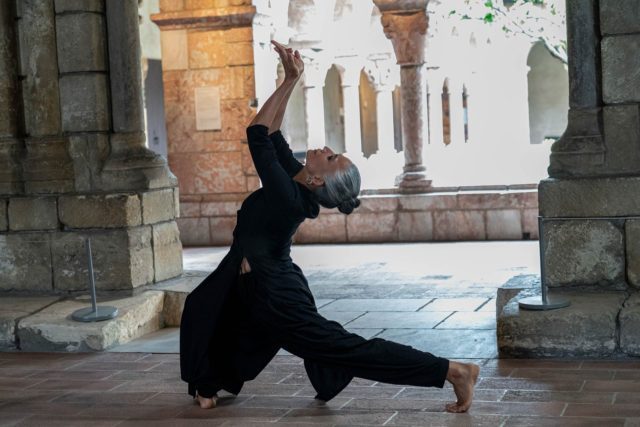
Asase Yaa African American Dance Theater will perform at BAM’s annual DanceAfrica festival

Who: Asase Yaa African American Dance Theater, Bambara Drum and Dance Ensemble, Farafina Kan, Harambe Dance Company, LaRocque Bey School of Dance, BAM/Restoration Dance Youth Ensemble, DanceAfrica Spirit Walkers, more
What: DanceAfrica Festival 2022
Where: BAM Howard Gilman Opera House, 30 Lafayette Ave.
When: May 21 – June 2, many events free, Gilman dances $12.50 – $85, film screenings $16
Why: The coming of summer means the arrival of one of the best festivals of every year, BAM’s DanceAfrica. The forty-fifth annual event features the theme “Homegrown,” with five companies making return visits to BAM’s Howard Gilman Opera House: Asase Yaa African American Dance Theater, Bambara Drum and Dance Ensemble, Farafina Kan, Harambe Dance Company, and LaRocque Bey School of Dance, along with the BAM/Restoration Dance Youth Ensemble and DanceAfrica Spirit Walkers, highlighting movement and music from Nigeria, Ghana, Guinea, Mali, and the Caribbean, accompanied by Arkestra Africa. Curated by artistic director Abdel R. Salaam, the festival also includes the Tribute to the Ancestors, Community Day, a Memorial Room, the DanceAfrica Bazaar with more than 150 vendors, dance workshops and master classes in Brooklyn Bridge Park and the Mark Morris Dance Center, the Water Your Roots Youth Dance Expo & Talent Show, the Council of Elders Roundtable “Legacy & Preservation,” Christopher Myers’s stained-glass work Be Lost Well (Stay in the House All Day), and a late night dance party with DJ YB.

FilmAfrica runs May 27 to June 2, consisting of more than two dozen films, from Moussa Touré’s 1997 TGV (followed by a Q&A with Touré and Amy Andrieux), Raymond Rajaonarivelo’s 1996 When the Stars Meet the Sea, and Amleset Muchie’s 2019 Min Alesh! to Mahamat-Saleh Haroun’s 2008 Sex, Okra, and Salted Butter, Balufu Bakupa-Kanyinda’s 2006 Juju Factory, and Dumisani Phakathi’s Don’t F*** with Me, I Have 51 Brothers and Sisters.

THE GREAT DUMBO DROP

THE GREAT DUMBO DROP
DUMBO, Brooklyn
Saturday, May 21, free, 3:00 – 8:00
dumbo.is

DUMBO Drop 2022 is set for May 21, a block party with live music, food and drink, art, prizes, the testing of the wind, and elephants falling from the sky. Among this year’s performers and activities are a sing-along with the New York City Kids Club, tap-dancing by Camila Aldet, Glam Expressway, cheerleading, a fashion show, dancing to a brass band, DJ Kyndal Marie, jugglers, an FDNY photo zone, Melissa Joy Manning, Fogo Azul NYC, wine tastings, boxing demonstrations, face painting, archery, biking, and more. Such galleries as A.I.R. Gallery and Undercurrent Gallery will be hosting exhibitions and walkthroughs, along with an art wall curated by CAM and Jaimie Walker (who designed the 2022 souvenir elephant parachute), Talking Portraits with Doménica García, and raffles benefiting DUMBO’s Title I public schools, the Dock Street Middle School and PS307 Elementary School.

Among the participating eateries are Seamore’s, Superfine, Westville, Butler, Randolph Bar, Bread and Spread, Em Vietnamese Bistro, and Time Out Market. Be sure to get there by 5:00 when the elephants float through the air around Washington St., followed at 7:45 by the Disco Drop. You can get raffle tickets from $20 to $3,000 here, making you eligible for such prizes as a shopping spree, an ice-cream party, jewelry, a hotel staycation, and a rooftop party.

“BACK TO THE STREETS” DANCE PARADE

Who: Eduardo Vilaro, Heidi Latsky, Rich Medina, more
What: Sixteenth annual Dance Parade and DanceFest
Where: Parade starts at Twentieth St. & Broadway, DanceFest in Tompkins Square Park
When: Saturday, May 21, free, noon – 7:00
Why: After two years off because of Covid, Dance Parade has returned. On May 21 from noon to seven, more than ten thousand dancers and musicians will participate in the sixteenth event, aptly dubbed “Back to the Streets.” The 2022 grand marshals are Eduardo Vilaro of Ballet Hispánico, Heidi Latsky of Heidi Latsky Dance, and DJ Rich Medina. “I’m proud to headline New York City’s largest dance event focused on cultural representation and diversity,” Vilaro said in a statement. “Movement and community is so vital to our well being which the pandemic stole from us. We look forward to being a part of Dance Parade’s citywide celebration.”

The parade kicks off at Twentieth St. & Broadway, with the viewing stand located at Fourth Ave. & Eighth St. DanceFest takes place from three to seven in Tompkins Square Park, with dozens of performers on three stages from across the dance spectrum and the globe (Ukranian folk dance, Afro-Brazilian percussion, Argentine tango, Chinese classical, hip-hop, street jazz, breakdancing, flamenco, belly dance, Afro-Caribbean, majorette, Indonesian, Bolivian, Mexican, ballet, Bollywood, more) along with dance demonstrations, education outreach, dance battles, a Soul Train line, and other activities, all free and open to everyone.

CANE FIRE

Activists fight for ancestral land in Kauaʻi in Anthony Banua-Simon’s Cane Fire

CANE FIRE (Anthony Banua-Simon, 2020)
BAM Rose Cinemas
30 Lafayette Ave. between Ashland Pl. & St. Felix St.
May 20-26
www.bam.org

Not that it’s surprising, but colonialism is alive and well in the United States, as revealed in Anthony Banua-Simon’s poignant documentary Cane Fire, screening May 20-26 at BAM.

While doing research for his 2013 short, Third Shift, about the demise of the Domino Sugar Factory in South Williamsburg and its replacement with luxury condos and commercial properties, Banua-Simon became immersed in his family’s Hawaiian history; in the 1920s, his great-grandfather immigrated to Kauaʻi from the Philippines to work in the sugar and pineapple plantations. His great-grandfather eventually left, leaving family behind, but not before serving as an extra in Lois Weber’s long-lost 1934 melodrama, Cane Fire (aka White Heat), which was filmed on Kauaʻi and deals with sugar plantations, imperialism, and mixed marriages.

While searching for more information about the film, Banua-Simon became immersed in the history of Kauaʻi, from its use as a favorite Hollywood shooting location to labor strife, cultural appropriation, and the building of massive “plantation-style” resorts on land taken from the native population, particularly following its gaining statehood in 1959, primarily for military purposes.

Banua-Simon depicts how Kauaʻi has changed through the eyes of his elderly great-uncle Henry Bermoy, a former union leader who does not like what he sees happening to the land and the culture. Banua-Simon also speaks with his younger cousins River Bermoy, Micah Bermoy, and Dylan Silva, who are trying to make lives for themselves on the island; Henry’s longtime friend and colleague, Alfredo Castillo, who bemoans the end of unions; popular singer Larry Rivera, who will take whatever gig he’s offered; second generation sugar company manager Mike Faye, who believes that industrial growth benefits everyone and always has; union rep Pamela Green; Mike Wong, who works such long hours (for low pay) at Smith’s Tropical Paradise that he has no time for his family; activists Keʻala Lopez and Kamu “Charles” Hepa, who risk their freedom to protect ancestral land; and real estate broker Chad Deal, who promotes luxury living on the island with no sense of how that negatively impacts the families who have lived there for generations.

“For those who can afford it, the island continues to fulfill the escapist fantasy,” Banua-Simon explains about more than a hundred years of exploitation. “But for the working class and native resident, Kauaʻi is at a breaking point.”

Banua-Simon keeps close track of developer Tyler Greene, who is planning on restoring the old Coco Palms resort to its former glory, when Hollywood greats partied there, owner Grace Guslander appropriated Hawaiian culture to please white tourists, and locals were taken advantage of as part of the cost of doing business. Banua-Simon incorporates new interviews with archival photographs and video; clips of Charlton Heston, John Wayne, Kevin Costner, Yvette Mimieux, Frank Sinatra, Nicolas Cage, Jennifer Aniston, Adam Sandler, and others in such movies and TV shows shot on Kauaʻi as Blue Hawaii, Jungle Heat, Diamond Head, South Pacific, Fantasy Island, Big Jim McLain, Dinocroc vs. Supergator, Dragonfly, and Pagan Love Song; old commercials for luxury travel promising the heights of extravagance; and more that reveal the disconnect between the native Hawaiians and the white interlopers.

And it’s still happening today.

“There are forces out there that don’t want us to survive because our existence threatens directly their existence,” Keʻala says as a group of locals occupy a historic, important site that is going to be redeveloped. “The fact that the kingdom exists takes away from the legitimacy of the corporations that stole these lands.”

Banua-Simon directed, edited, and photographed Cane Fire and cowrote and produced it with Michael Vass. A member of the volunteer-run Spectacle Theater in Brooklyn, Banua-Simon and Vass will be at BAM on May 20 and 21 for Q&As moderated by Alex Press and Steve Macfarlane, respectively, following the 7:00 screenings each night. In addition, documentarian Joan Lander is presenting “Eyes of the Land: Hawai‘i Shorts by Nā Maka o ka ‘Āina,” a special program at Spectacle on May 18 at 7:30 consisting of All Hawaiʻi Stand Together, No Tell Me Go, Waimanalo Eviction, and Na Wai E Ho’ōla I Nā Iwi — Who Will Save the Bones?

OUR LAUNDRY, OUR TOWN: MY CHINESE AMERICAN LIFE FROM FLUSHING TO THE DOWNTOWN STAGE AND BEYOND

Who: Alvin Eng
What: Book launch of Our Laundry, Our Town: My Chinese American Life from Flushing to the Downtown Stage and Beyond
Where: City Lore, 56 East First St., Yu & Me Books, 44 Mulberry St., Hudson Park Library, 66 Leroy St.
When: Friday, May 20, free, 5:30 webinar, 7:00 in person; Wednesday, June 8, 5:00; Saturday, June 25, 2:00
Why: “While I have been blessed to have always had a roof over my head and the honor of living with loved ones, when I was growing up, homelessness was a constant spiritual state. A child’s longing to belong is one of the most powerful forces and relentless muses on Earth. In every culture, belonging has many different nuances of meaning and resonance. What and who exactly constitutes that destination of longing changes with every age and, in childhood, with every grade. What never seems to change is the feeling that we never quite arrive, and when or if we do, it only lasts for a fleeting time and was never quite what we expected. These memoir portraits are an attempt to decode and process the urban oracle bones from growing up as the youngest of five children in an immigrant Chinese family that ran a hand laundry. Our family was born of an arranged marriage, and our laundry was in the Flushing, Queens, neighborhood of that singular universe that was New York City in the 1970s. Like many children of immigrant or ‘other’ family origins in late-twentieth-century America, I was constantly seeking American frames of reference with which to contextualize my own ‘outsider’ experiences and sensibilities.”

So begins Alvin Eng’s Our Laundry, Our Town: My Chinese American Life from Flushing to the Downtown Stage and Beyond (Fordham University Press | Empire State Editions, May 17, $27.95), in which the New York City–based playwright, performer, acoustic punk rock raconteur, and educator explores the history of his family, immigration and assimilation, and the Chinese American experience and makes pilgrimages to his ancestral homeland. The book features such chapters as “The Urban Oracle Bones of Our Laundry: Channeling China’s Last Emperor and Rock ’n’ Roll’s First Opera,” “Everybody Was Kung Fu Fighting . . . or Faking It,” “A Sort of Homecoming: But Where Are You Really From,” and “Life Dances On: Our Town in China.” Eng, whose previous work includes such solo shows as Here Comes Johnny Yen Again (or How I Kicked Punk) and The Last Emperor of Flushing and such plays and musicals as Portrait Plays and The Goong Hay Kid, will be launching Our Laundry, Our Town with a series of free events around the city.

On May 20 at 5:30, Eng will lead a webinar hosted by CUNY’s Asian American / Asian Research Institute, followed at 7:00 by an in-person appearance at City Lore on First St., where he will read from the new book and speak with City Lore codirectors Molly Garfinkel and Steve Zeitlin, then sign copies. On June 8 at 5:00, Eng will give a talk and sign books at Yu & Me on Mulberry St., and on June 25 at 2:00 he will at the Hudson Park Library on Leroy St. for an author talk.

HBO’s SCENES FROM A MARRIAGE: SPECIAL SCREENING AND CONVERSATION

Jessica Chastain and Oscar Isaac will talk about their HBO series at the 92nd St. Y

Who: Jessica Chastain, Oscar Isaac, Hagai Levi, Amy Herzog, Michael Ellenberg
What: Screening and discussion
Where: 92nd St. Y, Kaufmann Concert Hall, 1395 Lexington Ave. at Ninety-Second St.
When: Thursday, May 19, $27-$45, 7:00
Why: If you missed HBO’s English-language adaptation of Ingmar Bergman’s six-part Scenes from a Marriage, you can get a special chance to watch one of the 2021 episodes on the big screen, followed by a conversation with members of the creative team, at the 92nd St. Y on May 19. Bergman’s 1973 miniseries detailed the slow, heart-wrenching fracture of the relationship between Marianne (Liv Ullmann) and Johan (Erland Josephson). Directed and executive produced by Hagai Levi (The Affair, In Treatment) and written by Levi and playwright Amy Herzog (4000 Miles, Mary Jane), the remake turns the tables on such issues as infidelity, truth, gender, responsibility, and identity, with Oscar Isaac as Jonathan and Jessica Chastain as Mira. The 92Y screening will be followed by a discussion with Isaac, Chastain, Levi, Herzog, and producer Michael Ellenberg that goes behind the scenes of the making of the almost painfully intimate show.

STEPHEN PETRONIO COMPANY AT THE JOYCE

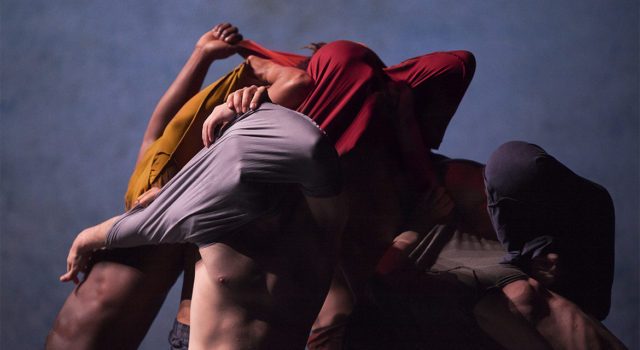
Stephen Petronio Company rehearses at Snug Harbor for Joyce season (photo by Lance Reha)

STEPHEN PETRONIO COMPANY
Joyce Theater
175 Eighth Ave. at 19th St.
May 17-22, $10-$71
212-645-2904
www.joyce.org
petron.io

“What does it mean to be out in front of you tonight, to show up for you after so long?” Stephen Petronio asks in a program note for his company’s upcoming season at the Joyce, running May 17-22. “SPC has been coming to the Joyce each spring for almost forty years — a rite, a contract as celebration. To have that interrupted by Covid is like having our oxygen taken away. We are back and breathing now! We come before you tonight to show you that we have survived, that we are still here, in some ways stronger than ever, and that dance is a kind of social glue that keeps us all connected.”

SPC’s Joyce program begins with the world premiere of New New Prayer for Now, created as a virtual piece for the company during the lockdown to celebrate online collaboration, set to original music by Monstah Black and renditions of “Balm in Gilead” and “Bridge Over Troubled Water” recorded with the Young People’s Chorus of New York City (YPC), directed by Francisco J. Nuñez; the costumes are by Marine Penvern, with lighting by Ken Tabachnick. Following a pause, SPC continues its “Bloodlines” series honoring important choreographers who influenced Petronio with his mentor Trisha Brown’s 1973 Group Primary Accumulation, restaged by Shelley Senter. The online version with four dancers in white on a wooden bridge was breathtaking, so it will be fascinating to see it now live indoors.

After an intermission, the company presents a restaging of Petronio’s Bloom, which premiered at the Joyce in 2006 and features music by Rufus Wainwright based on the poetry of Walt Whitman (“Unseen Buds,” “One’s-Self I Sing”) and Emily Dickinson (“‘Hope’ is the thing with feathers”) and the Latin Mass, sung live by YPC, with choral arrangements by Nuñez; the costumes are by Rachel Roy, with lighting by Tabachnick. The May 19 performance will be followed by a Curtain Chat with members of the company, which consists of Jaqlin Medlock, Kris Lee, Larissa Asebedo, Liviya England, Mac Twining, Nicholas Sciscione, Ryan Pliss, Tess Montoya, and Tiffany Ogburn. “It’s an emotional time,” Petronio says in the above preview of the Joyce season. If you haven’t yet seen this extraordinary company, you have only yourself to blame.