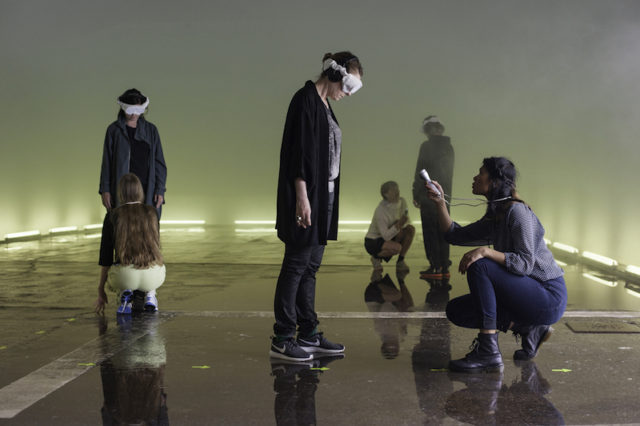
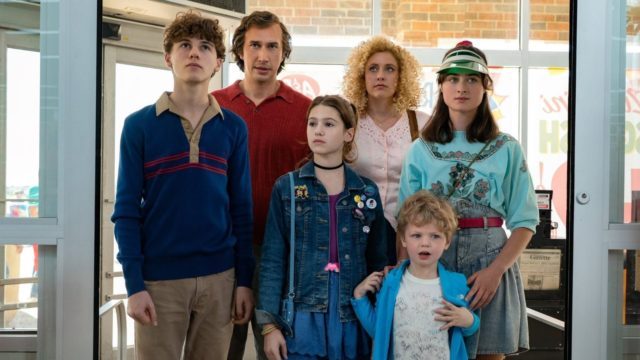
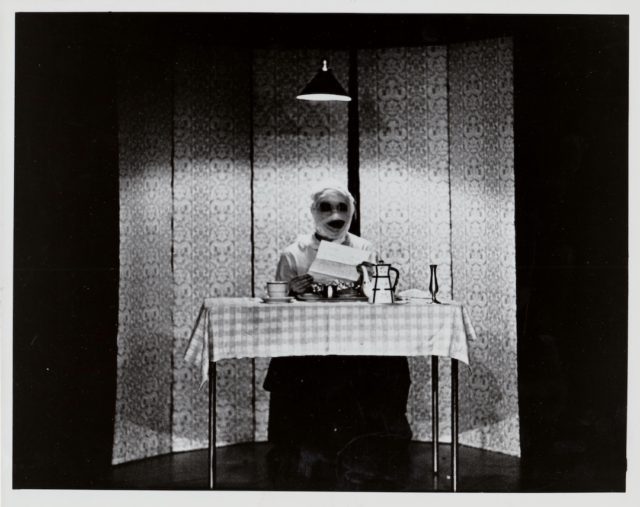
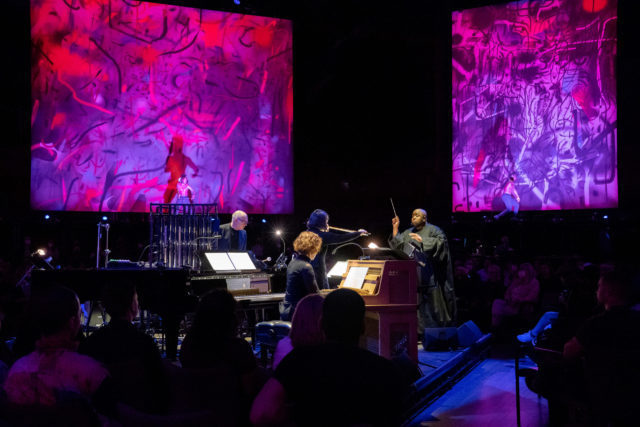
Lundahl & Seitl, Symphony — Tunnel Vision, performed in 2015 at Momentum 8 (photo courtesy of the artists)
Who:Lundahl & Seitl,Barbara London What:Performance and discussion Where:Scandinavia House, 58 Park Ave. at 38th St. When: Sunday, October 2, free with advance RSVP, performances 11:30 am – 1:30 pm and 4:00 – 5:30, discussion at 1:30 Why: “In times of challenge, how to find a good balance between resilience and resistance when adapting to a changing environment? How can we stay sensible for subtle yet powerful shifts in our being together? What is an acceptable level of reality, and for who/what do we make the sacrifice?” So ask immersive art duo Lundahl & Seitl in regard to their 2009 piece, Symphony of a Missing Room, which they reimagined as an app during the pandemic. On Sunday, October 2, Christer Lundahl and Martina Seitl will be at Scandinavia House to perform the work, in half-hour increments between 11:30 and 1:30 and 4:00 to 5:30; in addition, there will be a discussion at 1:30 moderated by curator and writer Barbara London, host of the Barbara London Calling podcast.
The free event is being held in partnership with the Consulate General of Sweden in New York; Lundahl & Seitl have previously performed Symphony of a Missing Room at the Swedish National Museum in Stockholm, the Akropolis Museum in Greece, the Kochi-Muziris Biennale in India, and the Temple of Alternative Histories at Staatstheater Kassel in Germany, among other venues. The ever-evolving work involves white goggles as participants must reconsider their inner and outer relationships with the environment and the space they are in. Admission is free with advance RSVP.
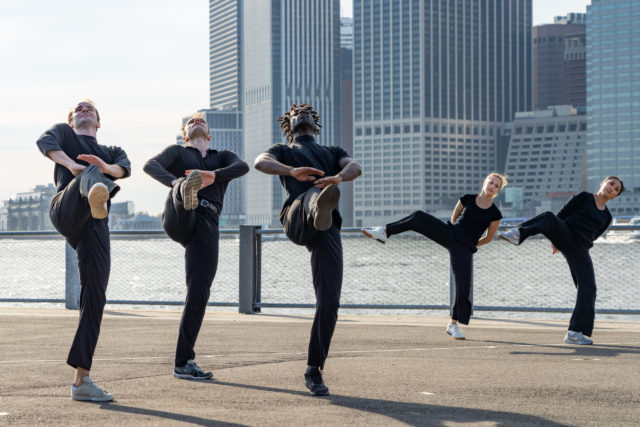
Mark Morris Dance Group will perform Water and more at Brooklyn Bridge Park on October 1 (photo by John Eng)
Who:Mark Morris Dance Group What:Free outdoor performances Where:Brooklyn Bridge Park, Pier 1, Harbor View Lawn When: Saturday, October 1, free, 2:00 & 4:00, workshop at 3:00 {ed. note: This event is now canceled because of the weather] Why: Brooklyn-based favorites Mark Morris Dance Group will be in Brooklyn Bridge Park on Saturday, October 1, to present a pair of free programs on the Harbor View Lawn at Pier 1, at 2:00 and 4:00, with an all-ages workshop at 3:00. The troupe, founded in 1980 by Morris, will perform Water, a nine-minute 2021 piece for fourteen dancers set to music by George Frideric Handel; Greek to Me, a five-minute solo from 1998 set to Harry Partch’s “Two Studies on Ancient Greek Scales” from “Eleven Intrusions”; the twenty-two-minute 2007 Suite from Orfeo ed Euridice set to the score by Christoph Willibald Gluck; and the eighteen-minute 1998 work Dancing Honeymoon, featuring seven dancers in yellow and music by Ethan Iverson.
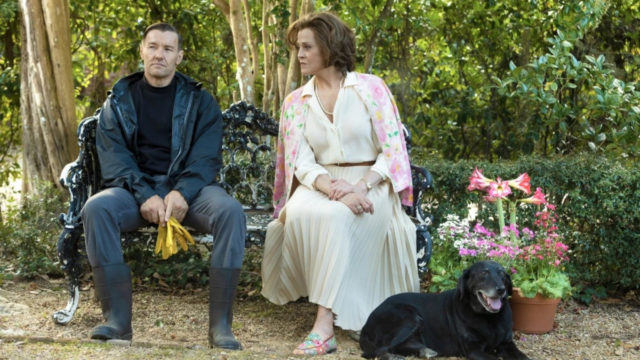
Paul Schrader will discuss his latest film, Master Gardener, in free talk at NYFF60
NYFF60: FREE TALKS
New York Film Festival 60
Elinor Bunin Munroe Amphitheater, 144 West 65th St. between Broadway & Amsterdam Ave.
October 1-15, free tickets available one hour before showtime
212-875-5601 www.filmlinc.org/nyff2022
If you don’t act immediately, it is often difficult to get tickets to the New York Film Festival’s most hotly anticipated events, appearances by superstars and internationally renowned directors at New York, US, North American, and world premieres. But there are more than a dozen free talks, lectures, panel discussions, and game-playing events that are first-come, first-served, at the Elinor Bunin Munroe Amphitheater at Lincoln Center; free tickets are distributed an hour prior to the talk, one per person. This year’s lineup includes Noah Baumbach, Nan Goldin, Paul Schrader, Cauleen Smith, Alice Diop, Frederick Wiseman, Nancy Savoca, Laura Poitras, Elvis Mitchell, Mia Hansen-Løve, Kelly Reichardt, and Molly Haskell, which is not too shabby. Below is the full schedule; you can also catch these events on YouTube later.
Saturday, October 1
Deep Focus: Noah Baumbach, White Noise, 6:00
Special Events — Cinephile Game Night: NYFF60 Edition, 8:00
Sunday, October 2
Deep Focus: Paul Schrader, Master Gardener, 2:00
The 2022 Amos Vogel Lecture, with Cauleen Smith, followed by a Q&A with Jacqueline Stewart, 6:00
Monday, October 3
Roundtables: “Politics of Desire,” with Joao Pedro Rodrigues (Will-o’-the-Wisp), Ruth Beckermann (Mutzenbacher), Elisabeth Subrin, and Isabel Sandoval (Maria Schneider, 1983), 4:00
Crosscuts: Alice Diop & Frederick Wiseman, 6:00
Special Events — IndieWire Presents: Screen Talk Live, with Eric Kohn and special guests, 6:30
Special Events — Cinephile Game Night: NYFF60 Edition, 8:00
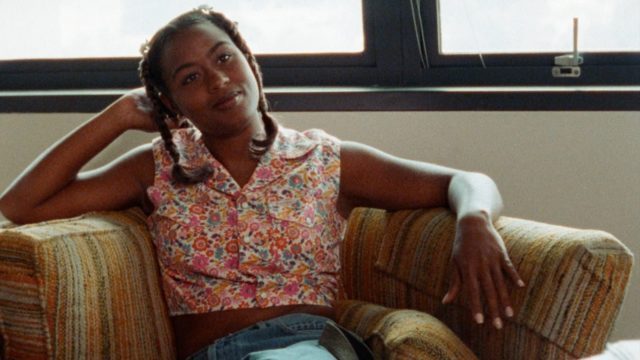
Cauleen Smith, whose Drylongso (above) screened an the 1998 New York Film Festival, will deliver the 2022 Amos Vogel Lecture
Thursday, October 6
Roundtables: “Missing Movies,” presentation and workshop with Amy Heller, Dennis Doros, Nancy Savoca, Rich Guay, Ira Deutchman, and Maya Cade, 6:00
Saturday, October 8
Roundtables — “Film Comment Live: On the Critical Attitude,” with hosts Devika Girish and Clinton Krute and guest Laura Poitras (All the Beauty and the Bloodshed), Elvis Mitchell (Is That Black Enough for You?!?), Tiffany Sia (What Rules the Invisible), and Alain Gomis (Rewind & Play), 1:00
Crosscuts: Mia Hansen-Løve (One Fine Morning) & Charlotte Wells (Aftersun), 4:00
Deep Focus: Nan Goldin, 7:00
Sunday, October 9
Crosscuts: Joanna Hogg (The Eternal Daughter) & Kelly Reichardt (Showing Up), 6:00
Special Events — Cinephile Game Night: NYFF60 Edition, 8:00
Tuesday, October 11
Deep Focus: Annie Ernaux, 6:00
Thursday, October 13
Special Events: “Inclusive Visions,” with a wine-tasting presentation by Dr. Hoby Wedler, hosted by Michele Spitz, 6:00
Saturday, October 15
Roundtables — “Film Comment Live“: Festival Report, with Devika Girish, Clinton Krute, Kelli Weston, Phoebe Chen, Molly Haskell, and others, 6:00
Noah Baumbach’s White Noise opens NYFF60 on September 30
NYFF60
Alice Tully Hall, 1941 Broadway at 65th St.
Walter Reade Theater, 165 West 65th St. at Amsterdam Ave.
Elinor Bunin Munroe Film Center: Francesca Beale Theater, Howard Gilman Theater, Amphitheater, 144 West 65th St. between Broadway & Amsterdam Ave.
September 30 – October 16
212-875-5601 www.filmlinc.org/nyff2022
Martin Scorsese, Tilda Swinton, Noah Baumbach, Carey Mulligan, Zoe Kazan, Paul Schrader, Sigourney Weaver, Joel Edgerton, Frederick Wiseman, Whoopi Goldberg, John Douglas Thompson, Claire Denis, Cate Blanchett, Nina Hoss, Kelly Reichardt, Luca Guadagnino, Chloë Sevigny, Mia Hansen-Løve, Léa Seydoux, Laura Poitras, James Ivory, Park Chan-wook, Jerzy Skolimowski, Elvis Mitchell, Gabrielle Union, Robert Downey Jr., Sarah Polley, Jeremy Pope, Claire Foy, Rooney Mara, Judith Ivey, Jeremy Strong, Anne Hathaway — those are only some of the directors and actors who will be participating in Q&As and introductions at the sixtieth New York Film Festival, taking place at Lincoln Center from September 30 through October 16. Below is the full list of special guests, which feature award winners from around the world as well as up-and-coming filmmakers.
Friday, September 30
Main Slate Opening Night North American Premiere: White Noise (Noah Baumbach, 2022), Q&A with Noah Baumbach & cast, Alice Tully Hall, 6:00
Main Slate Opening Night North American Premiere: White Noise (Noah Baumbach, 2022), introduced by Noah Baumbach, Walter Reade Theater, 6:15
Main Slate Opening Night North American Premiere: White Noise (Noah Baumbach, 2022), introduced by Noah Baumbach, Alice Tully Hall, 9:30
Main Slate Opening Night North American Premiere: White Noise (Noah Baumbach, 2022), introduced by Noah Baumbach, Walter Reade Theater, 9:45
Saturday, October 1
Main Slate U.S. Premiere: Corsage (Marie Kreutzer, 2022), Q&A with Marie Kreutzer and Vicky Krieps, 12:00
Currents U.S. Premiere: The Unstable Object II (Daniel Eisenberg, 2022), Q&A with Daniel Eisenberg, 12:15
Currents U.S. Premiere: Queens of the Qing Dynasty (Ashley McKenzie, 2022), Q&A with Ashley McKenzie, 12:30
Main Slate: Descendant (Margaret Brown, 2022), Q&A with Margaret Brown, 1:30
Main Slate North American Premiere: Master Gardener (Paul Schrader, 2022), Q&A with Paul Schrader, Sigourney Weaver, and Joel Edgerton, 3:00
Currents North American Premiere: The Dam (Ali Cherri, 2022), Q&A with Ali Cherri, 3:30
Main Slate North American Premiere: A Couple (Frederick Wiseman, 2022), Q&A with Frederick Wiseman, 4:30
Spotlight World Premiere: Till (Chinonye Chukwu, 2022), Q&A with Chinonye Chukwu, Danielle Deadwyler, and Whoopi Goldberg, 5:45
Revivals: Le Damier (Balufu Bakupa-Kanyinda, 1996), new restoration, Q&A with Balufu Bakupa-Kanyinda, 6:00
Revivals: Black God, White Devil (Glauber Rocha, 1964), new 4K restoration, introduced by Luiz Oliveira, 7:30
Main Slate: Triangle of Sadness (Ruben Östlund, 2022), Q&A with Ruben Östlund and Dolly de Leon, 9:00
Currents Opening Night U.S. Premiere: Will-o’-the-Wisp (João Pedro Rodrigues, 2022), Q&A with João Pedro Rodrigues, 9:15
Sunday, October 2
Spotlight World Premiere: Till (Chinonye Chukwu, 2022), Q&A with Chinonye Chukwu, Danielle Deadwyler, Jalyn Hall, John Douglas Thompson, Jayme Lawson, Tosin Cole, Keith Beauchamp, and Deborah Watts, 11:00 am
Revivals World Premiere: Drylongso (Cauleen Smith, 1998), 4K restoration, Q&A with Cauleen Smith, 12:45
Main Slate North American Premiere: A Couple (Frederick Wiseman, 2022), Q&A with Frederick Wiseman, 1:00
Main Slate: Triangle of Sadness (Ruben Östlund, 2022), Q&A with Ruben Östlund and Dolly de Leon, 2:15
Currents North American Premiere: Mutzenbacher (Ruth Beckermann, 2022), Q&A with Ruth Beckermann, 3:00
Main Slate North American Premiere: Stars at Noon (Claire Denis, 2022), Q&A with Claire Denis and Joe Alwyn, 5:45
Currents Opening Night U.S. Premiere: Will-o’-the-Wisp (João Pedro Rodrigues, 2022), Q&A with João Pedro Rodrigues, 5:45
Main Slate U.S. Premiere: Corsage (Marie Kreutzer, 2022), Q&A with Marie Kreutzer and Vicky Krieps, 6:00
Currents U.S. Premiere: Queens of the Qing Dynasty (Ashley McKenzie, 2022), Q&A with Ashley McKenzie, 6:15
Main Slate: Descendant (Margaret Brown, 2022), Q&A with Margaret Brown, 8:30
Main Slate U.S. Premiere: De Humani Corporis Fabrica (Véréna Paravel and Lucien Castaing-Taylor, 2022), Q&A with Véréna Paravel and Lucien Castaing-Taylor, 9:00
Currents North American Premiere: The Dam (Ali Cherri, 2022), Q&A with Ali Cherri, 9:15
Monday, October 3
Main Slate: TÁR (Todd Field, 2022), Q&A with Todd Field, Cate Blanchett, Nina Hoss, Mark Strong, Sophie Kauer, and Hildur Guonadóttir, 5:30
Main Slate U.S. Premiere: De Humani Corporis Fabrica (Véréna Paravel and Lucien Castaing-Taylor, 2022), Q&A with Véréna Paravel and Lucien Castaing-Taylor, 6:15
Main Slate U.S. Premiere: Saint Omer (Alice Diop, 2022), Q&A with Alice Diop, 8:30
Main Slate North American Premiere: Stars at Noon (Claire Denis, 2022), Q&A with Claire Denis and Joe Alwyn, 9:00
Tuesday, October 4
Main Slate North American Premiere: Scarlet (Pietro Marcello, 2022), Q&A with Pietro Marcello, 5:45
Main Slate North American Premiere: Stars at Noon (Claire Denis, 2022), introduced by Claire Denis, 6:00
Main Slate U.S. Premiere: Saint Omer (Alice Diop, 2022), Q&A with Alice Diop, 6:15
Main Slate: TÁR (Todd Field, 2022), introduced by Todd Field, 8:30
Currents North American Premiere: Mutzenbacher (Ruth Beckermann, 2022), Q&A with Ruth Beckermann, 9:00
Revivals: No Fear No Die (Claire Denis, 1990), world premiere of 4K restoration, introduced by Claire Denis and Isaach De Bankole, 9:15
Wednesday, October 5
Main Slate U.S. Premiere: Pacifiction (Albert Serra, 2022), Q&A with Albert Serra, 5:30
Spotlight U.S. Premiere: Exterior Night (Marco Bellocchio, 2022), introduced by Fabrizio Gifuni and Fausto Russo Alesi, 5:45
Revivals North American Premiere: The Mother and the Whore (Jean Eustache, 1973), new 4K restoration, Q&A with Françoise Lebrun and Charles Gillibert, 6:15
Main Slate North American Premiere: Showing Up (Kelly Reichardt, 2022), Q&A with Kelly Reichardt and Hong Chau, 9:15
Thursday, October 6
Main Slate North American Premiere: Alcarràs (Carla Simón, 2022), Q&A with Carla Simón, 6:00
Main Slate North American Premiere: Scarlet (Pietro Marcello, 2022), Q&A with Pietro Marcello, 6:15
Main Slate North American Premiere: Showing Up (Kelly Reichardt, 2022), Q&A with Kelly Reichardt and Hong Chau, 6:15
Revivals North American Premiere: The Mother and the Whore (Jean Eustache, 1973), new 4K restoration, introduced by Françoise Lebrun and Charles Gillibert, 6:30
Spotlight: Bones and All (Luca Guadagnino, 2022), Q&A with Luca Guadagnino, Taylor Russell, and Chloë Sevigny, 9:00
Main Slate U.S. Premiere: Pacifiction (Albert Serra, 2022), Q&A with Albert Serra, 9:00
Friday, October 7
Currents Program 1: Field Trips, Q&As with Nicolás Pereda, Natalia Escobar, Simon(e) Jaikiriuma Paetau, and Simon Velez, 1:15
Currents Program 2: Fault Lines, Q&As with Ellie Ga, 1:30
Currents Program 3: Action Figures, Q&As with Sara Cwynar, Diane Severin Nguyen, Fox Maxy, and Riccardo Giacconi, 3:45
Currents Program 4: Vital Signs, Q&As with Mary Helena Clark, Joshua Solondz, and Jordan Strafer, 4:00
Main Slate Centerpiece Selection: All the Beauty and the Bloodshed (Laura Poitras, 2022), Q&A with Laura Poitras, 6:00 & 9:15
Currents Program 5: After Utopia, Q&As with Meriem Bennani and Josh Kline, 6:15
Spotlight World Premiere: A Cooler Climate (James Ivory & Giles Gardner, 2022), Q&A with James Ivory and Giles Gardner, 6:30
Main Slate North American Premiere: Alcarràs (Carla Simón, 2022), Q&A with Carla Simón, 8:45
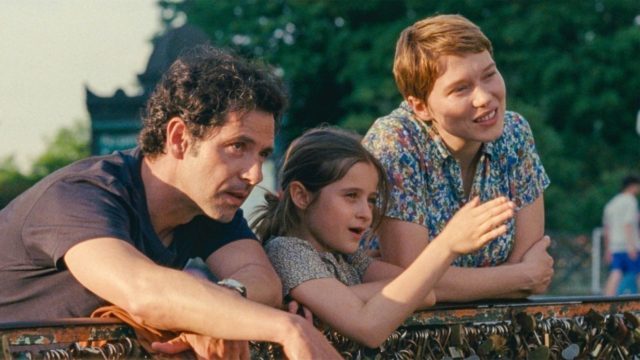
Léa Seydoux stars in Mia Hansen-Løve’s One Fine Morning
Saturday, October 8
Main Slate: Aftersun (Charlotte Wells, 2022), Q&A with Charlotte Wells, Paul Mescal, and Frankio Corio, 12:00
Currents Program 6: Inside Voices, Q&As with Kim Salac, Mackie Mallison, Thuy-Han Nguyen-Chi, Courtney Stephens, Sheilah ReStack, and Angelo Madsen Minax, 12:00
Currents Program 1: Field Trips, Q&As with Nicolás Pereda, Natalia Escobar, Simon(e) Jaikiriuma Paetau, and Simon Velez, 2:15
Currents Program 7: Ordinary Devotion, Q&As with Simon Liu, Alexandra Cuesta, and Pablo Mazzolo, 2:45
Currents Program 2: Fault Lines, Q&As with Ellie Ga, 4:30
Main Slate: One Fine Morning (Mia Hansen-Løve, 2022), Q&A with Mia Hansen-Løve and Léa Seydoux, 6:15
Main Slate U.S. Premiere: Enys Men (Mark Jenkin, 2022), Q&A with Mark Jenkin and Mary Woodvine, 6:30
Currents Program 8: Time Out of Mind, Q&A with Tiffany Sia, 7:00
Currents World Premiere: Slaughterhouses of Modernity (Heinz Emigholz, 2022), Q&A with Heinz Emigholz, 8:15
Currents: Rewind & Play (Alain Gomis, 2022), Q&A with Elisabeth Subrin and Alain Gomis, 9:00
Main Slate: Decision to Leave (Park Chan-wook, 2022), Q&A with Park Chan-wook and Park Hae-il, 9:00
Sunday, October 9
Main Slate U.S. Premiere: No Bears (Jafar Panahi, 2022), introduced by by Mina Kavani, 12:00
Main Slate: One Fine Morning (Mia Hansen-Løve, 2022), Q&A with Mia Hansen-Løve and Léa Seydoux, 12:00
Currents Program 7: Ordinary Devotion, Q&As with Simon Liu, Alexandra Cuesta, and Pablo Mazzolo, 1:00
Currents Program 5: After Utopia, Q&A with Josh Kline, 1:30
Main Slate: Decision to Leave (Park Chan-wook, 2022), Q&A with Park Chan-wook and Park Hae-il, 2:45
Main Slate U.S. Premiere: Unrest (Cyril Schäublin, 2022), Q&A with Cyril Schäublin, 3:00
Currents World Premiere: Slaughterhouses of Modernity (Heinz Emigholz, 2022), Q&A with Heinz Emigholz, 3:15
Currents Program 4: Vital Signs, Q&As with Mary Helena Clark, Joshua Solondz, and Jordan Strafer, 3:45
Spotlight World Premiere: Is That Black Enough for You?!? (Elvis Mitchell, 2022), Q&A with Elvis Mitchell, 5:30
Main Slate U.S. Premiere: R.M.N. (Cristian Mungiu, 2022), Q&A with Cristian Mungiu, 6:00
Currents Program 6: Inside Voices, Q&As with Kim Salac, Mackie Mallison, Thuy-Han Nguyen-Chi, Courtney Stephens, Sheilah ReStack, and Angelo Madsen Minax, 6:00
Main Slate U.S. Premiere: Enys Men (Mark Jenkin, 2022), Q&A with Mark Jenkin and Mary Woodvine, 8:30
Currents U.S. Premiere: Dry Ground Burning (Joana Pimenta & Adirley Queirós, 2022), Q&A with Joana Pimenta and Adirley Queirós, 8:45
Main Slate: Aftersun (Charlotte Wells, 2022), Q&A with Charlotte Wells and Paul Mescal, 9:00
Monday, October 10
Main Slate U.S. Premiere: R.M.N. (Cristian Mungiu, 2022), Q&A with Cristian Mungiu, 12:00
Spotlight North American Premiere: The Super 8 Years (Annie Ernaux and David Ernaux-Briot, 2022), Q&A with Annie Ernaux and David Ernaux-Briot, 12:30
Main Slate U.S. Premiere: Unrest (Cyril Schäublin, 2022), Q&A with Cyril Schäublin, 1:00
Currents North American Premiere: Human Flowers of Flesh (Helena Wittmann, 2022), Q&A with Helena Wittmann, 2:45
Spotlight: “Sr.” (Chris Smith, 2022), Q&A with Chris Smith, Robert Downey Jr., Susan Downey, and Kevin Ford, 3:00
Currents Program 9: New York Shorts, Q&As with Jamil McGinnis, Sarah Friedland, Charlotte Ercoli, Alex Ashe, and Lloyd Lee Choi, 3:15
Spotlight: Women Talking (Sarah Polley, 2022), Q&A with Sarah Polley, Claire Foy, Rooney Mara, Judith Ivey, and Sheila McCarthy, 6:15
Currents Program 3: Action Figures, Q&As with Sara Cwynar, Diane Severin Nguyen, Fox Maxy, and Riccardo Giacconi, 6:30
Main Slate U.S. Premiere: Stonewalling (Huang Ji, Ryuji Otsuka, 2022), Q&A with Huang Ji and Ryuji Otsuka, 8:15
Currents U.S. Premiere: Dry Ground Burning (Joana Pimenta & Adirley Queirós, 2022), Q&A with Joana Pimenta and Adirley Queirós, 8:30
Currents: Rewind & Play (Alain Gomis, 2022), Q&A with Elisabeth Subrin and Alain Gomis, 8:45
Main Slate: The Eternal Daughter (Joanna Hogg, 2022), Q&A with Joanna Hogg and Tilda Swinton, 9:00
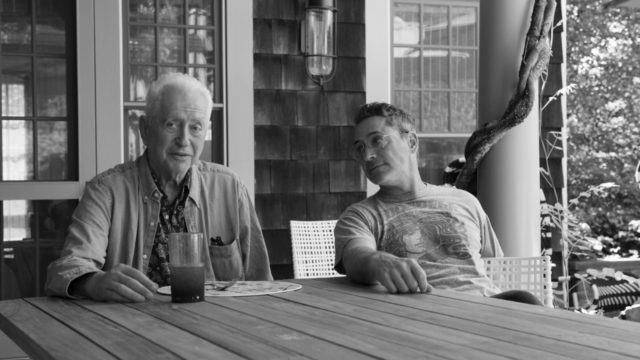
Chris Smith’s “Sr.” explores the life and times of Robert Downey Sr.
Tuesday, October 11
Spotlight: “Sr.” (Chris Smith, 2022), Q&A with Chris Smith, Robert Downey Jr., Susan Downey, and Kevin Ford, 3:00
Currents North American Premiere: Tales of the Purple House (Abbas Fahdel, 2022), Q&A with Abbas Fahdel, 5:15
Main Slate U.S. Premiere: Stonewalling (Huang Ji, Ryuji Otsuka, 2022), Q&A with Huang Ji and Ryuji Otsuka, 5:30
Main Slate: The Eternal Daughter (Joanna Hogg, 2022), Q&A with Joanna Hogg and Tilda Swinton, 6:15
Main Slate: All That Breathes (Shaunak Sen, 2022), Q&A with Shaunak Sen, 6:30
Main Slate U.S. Premiere: EO (Jerzy Skolimowski, 2022), Q&A with Jerzy Skolimowski, 9:00
Spotlight North American Premiere: The Super 8 Years (Annie Ernaux and David Ernaux-Briot, 2022), Q&A with Annie Ernaux and David Ernaux-Briot, 9:00
Main Slate North American Premiere: Trenque Lauquen (Laura Citarella, 2022), Q&A with Laura Citarella, 9:00
Currents North American Premiere: Human Flowers of Flesh (Helena Wittmann, 2022), Q&A with Helena Wittmann, 9:15
Wednesday, October 12
Main Slate NYFF 60th Anniversary Celebration: Armageddon Time (James Gray, 2022), Q&A with James Gray, Jeremy Strong, Anne Hathaway, Banks Repeta, and Jaylin Webb, 6:00
Currents: Remote (Mika Rottenberg & Mahyad Tousi, 2022), Q&A with Mika Rottenberg and Mahyad Tousi, 6:15
Currents Program 9: New York Shorts, Q&As with Jamil McGinnis, Sarah Friedland, Charlotte Ercoli, Alex Ashe, and Lloyd Lee Choi, 6:30
Spotlight World Premiere: Personality Crisis: One Night Only (Martin Scorsese and David Tedeschi, 2022), Q&A with David Tedeschi and Martin Scorsese, 9:00
Main Slate: All That Breathes (Shaunak Sen, 2022), Q&A with Shaunak Sen, 9:00
Currents North American Premiere: The Adventures of Gigi the Law (Alessandro Comodin, 2022), Q&A with Alessandro Comodin, 9:15
Thursday, October 13
Main Slate U.S. Premiere: No Bears (Jafar Panahi, 2022), introduced by by Mina Kavani, 3:15
Spotlight World Premiere: She Said (Maria Schrader, 2022), Q&A with Maria Schrader, Carey Mulligan, Zoe Kazan, Jodi Kantor, and Megan Twohey, 6:00
Main Slate U.S. Premiere: Return to Seoul (Davy Chou, 2022), Q&A with Davy Chou and Park Ji-Min, 6:15
Currents North American Premiere: The Adventures of Gigi the Law (Alessandro Comodin, 2022), Q&A with Alessandro Comodin, 6:15
Main Slate U.S. Premiere: EO (Jerzy Skolimowski, 2022), Q&A with Jerzy Skolimowski, 6:45
Currents: Remote (Mika Rottenberg & Mahyad Tousi, 2022), Q&A with Mika Rottenberg and Mahyad Tousi, 9:00
Main Slate NYFF 60th Anniversary Celebration: Armageddon Time (James Gray, 2022), Q&A with James Gray and Jeremy Strong, 9:00
Currents: Three Tidy Tigers Tied a Tie Tighter (Gustavo Vinagre, 2022), Q&A with Gustavo Vinagre, 9:15
Friday, October 14
Currents: Three Tidy Tigers Tied a Tie Tighter (Gustavo Vinagre, 2022), Q&A with Gustavo Vinagre, 3:45
Main Slate NYFF 60th Anniversary Celebration: Armageddon Time (James Gray, 2022), introduced by James Gray, 6:00
Spotlight World Premiere: Personality Crisis: One Night Only (Martin Scorsese and David Tedeschi, 2022), Q&A with David Tedeschi, 9:00
Main Slate Closing Night Selection U.S. Premiere: The Inspection (Elegance Bratton, 2022), Q&A with Elegance Bratton, Jeremy Pope, Gabrielle Union, and Raúl Castillo, 6:00 & 9:00
Main Slate U.S. Premiere: No Bears (Jafar Panahi, 2022), introduced by Mina Kavani, 8:45
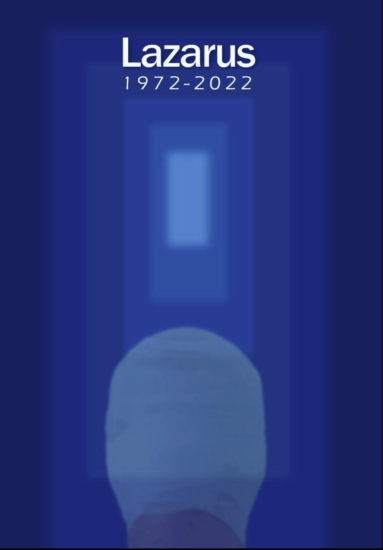
Ping Chong will revisit his 1972 work, Lazarus, at La MaMa (photo by Cathy Zimmerman)
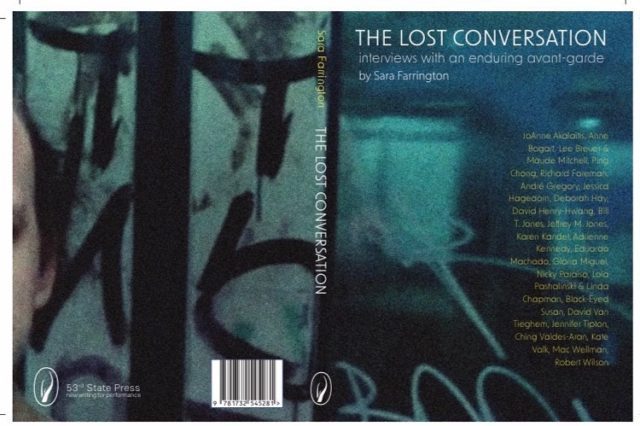
Who:Ping Chong and Company What: Reimagining of Ping Chong’s 1972 Lazarus Where:La MaMa Downstairs Theater, 66 East Fourth St. between Second & Third Aves. When: September 30 – October 16, $30 (panel discussion moderated by Sara Farrington on October 9 after 4:00 show) Why: “I’ve never thought of myself as a theater artist, I’ve thought of myself as an artist in the theater,” Ping Chong tells Sara Farrington in her new book, The Lost Conversation: Interviews with an Enduring Avant-Garde (53rd State Press, April 2022, $16). Asked how he first became involved in avant-garde theater around 1971, the Toronto-born Ping explains, “I graduated from the School of Visual Arts in film and I didn’t know what I was going to do. I mean, there were no filmmakers of color around. There was no role model and I wasn’t one of these go-getter aggressive kids. So I was just killing time, trying to figure out what to do next. And then a friend of a friend, an associate of mine from school, said, I’m taking some dance classes with Meredith Monk, do you want to go? So I took her classes — she was doing continuing education classes at NYU. And Meredith said to me, You’re talented, come to my workshop. But I didn’t.” He eventually did attend a workshop — Monk’s studio was only three blocks from his apartment — and even joined Monk’s company. His apartment was also only two blocks from La MaMa; he put on his first show there in 1979.
Ping is now back at La MaMa with what will be his final production as artistic director, Lazarus 1972–2022, a reimagining of his first independent work, which was staged at Meredith Monk’s loft studio half a century ago. It’s a nonlinear piece about cultural alienation in which the title biblical character is resurrected in 1972 New York City; it featured projections, puppets, voice-overs (by Ping and Andrea Goodman), sound effects, music, but no dialogue spoken by the two main characters, portrayed by Tony Jannetti and Catherine Zimmerman. The sixty-minute Lazarus 1972–2022 runs Thursdays through Sundays from September 30 to October 16 at La MaMa Downstairs Theater; Christopher Caines will be Lazarus and Jeannie Hutchins portrays Woman, with sets by Watoko Ueno, lighting by Hao Bai, costumes by Stefani Mar, sound by Ernesto Valenzuela, and projections by Kate Freer.
“Lazarus was a metaphor for my own experience, because I had just left my insular world of Chinatown, moving out of that limbo into figuring out how to exist in larger society,” Ping said in a statement. “The original show was 1972; New York City was nearly bankrupt at that time and the urban purgatory aspect of it was very surreal and real. Originally the work reflected that — but the work has changed: I’m a lifetime New Yorker, and Lazarus is now different than the show was at the time in the sense that New York is also different, and centrally, part of the character of the show. Lazarus 1972–2022 is my love for New York but it’s also my sadness for what it’s become. Lazarus may have left purgatory and come back into the world — but what kind of a world did he come back into in 2022?”
On October 9 following the 4:00 performance, playwright, theater artist, screenwriter, director, and Foxy Films cofounder Farrington will join Ping at La MaMa for the panel discussion “Time Passes: Ping Chong and Fiji Theater Company Then and Now,” accompanied by members of his company from the late-1970s and 1980s, including John Fleming, Brian Hallas, Louise Smith, and Jeannie Hutchins. In her book, Farrington, who has collaborated with her husband, Reid, on such experimental multimedia shows as The Passion Project,CasablancaBox,Tyson vs. Ali, and BrandoCapote in addition to writing and/or directing other works, also speaks with such legendary figures as JoAnne Akalaitis, Anne Bogart, Richard Foreman, André Gregory David Henry Hwang, Bill T. Jones, Adrienne Kennedy, David Van Tieghem, Kate Valk, Mac Wellman, and Robert Wilson, creating a fascinating oral history of avant-garde theater.
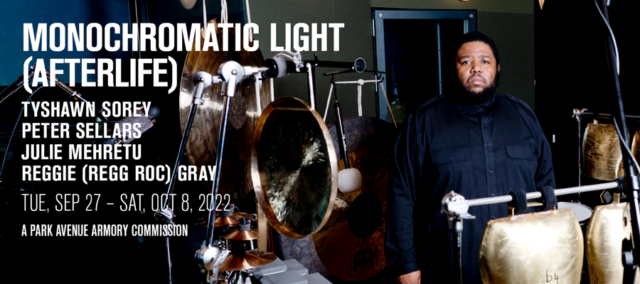
Who: Tyshawn Sorey, Peter Sellars, Reggie (Regg Roc) Gray, Julie Mehretu, Kim Kashkashian, Sarah Rothenberg, Steven Schick, Davóne Tines, the Choir of Trinity Wall Street What:Monochromatic Light (Afterlife) Where:Park Ave. Armory, Wade Thompson Drill Hall, 643 Park Ave. at Sixty-Seventh St. When: September 27 – October 8, $40-$95 Why: During the pandemic lockdown, the Rothko Chapel in Houston celebrated its fiftieth anniversary with a livestreamed meditation and discussion from the ecumenical space in May 2021. “The Rothko Chapel is oriented towards the sacred, and yet it imposes no traditional environment. It offers a place where a common orientation could be found – an orientation towards God, named or unnamed, an orientation towards the highest aspirations of Man and the most intimate calls of the conscience,” said Dominique de Menil, who commissioned the chapel with her husband, John, in 1964. Rothko had previously written to his benefactors, “The magnitude, on every level of experience and meaning, of the task in which you have involved me, exceeds all of my preconceptions. And it is teaching me to extend myself beyond what I thought was possible for me.”
Continuing the golden celebration, Newark-born American composer Tyshawn Sorey will be presenting a new multidisciplinary piece, Monochromatic Light (Afterlife), at the Park Avenue Armory September 27 through October 8. The work is inspired by the Rothko Chapel and Morton Feldman’s 1971 masterpiece, “Rothko Chapel,” created for the opening dedication. Sorey’s score for percussion, viola, celesta, piano, bass-baritone, and choir premiered at the chapel in February and has now been reimagined for the armory’s Wade Thompson Drill Hall, featuring new and existing immersive art by Ethiopian-born painter Julie Mehretu, choreography by Brooklyn-born Flex dance pioneer Reggie (Regg Roc) Gray, and direction by Pittsburgh-born theater legend Peter Sellars. Mehretu and Gray were both involved in Carrie Mae Weems’s “The Shape of Things: Land of Broken Dreams” at the armory last December, multi-instrumentalist Sorey performed with pianist and composer Conrad Tao in the armory’s Veterans Room in May 2016, and Sellars staged St. Matthew Passion in the Drill Hall in October 2014 and collaborated with Gray on FLEXN and FLEXN Evolution at the armory in 2015 and 2017, respectively. The music will be performed by Kim Kashkashian on viola, Sarah Rothenberg on piano and celesta, and Steven Schick on percussion, with vocalist Davóne Tines and the Choir of Trinity Wall Street.
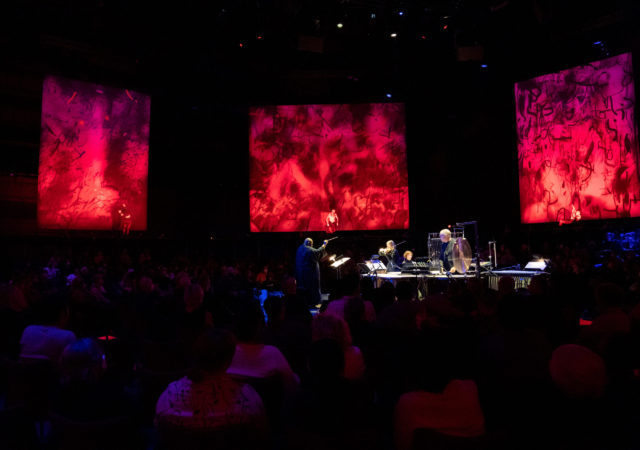
Art, music, and dance come together in Monochromatic Light (Afterlife) (photo by Stephanie Berger Photography / Park Avenue Armory)
“When asked to write this piece, I made the conscious decision to not compose a single note of music until I experienced the visual and spiritual transformation of [Rothko’s fourteen] paintings for myself inside the Chapel, where I’ve spent several hours during different times of each day I went,” Sorey said in a statement. “This piece reflects these experiences as well as the influence of both Rothko’s artistic output and that of Morton Feldman, one of my biggest musical inspirations. As with all my works, my hope for this composition is for audiences to have an active, dynamic experience with it, not simply just to listen, which the nontraditional space of the armory’s Drill Hall helps to realize.”
Sellars added, “Tyshawn Sorey has created a spare, intimate, enveloping world of sound calling forth the piercing memories, unfinished and unburied histories, yearning, and resolve that live inside every step forward and each moment of stillness; Julie Mehretu’s paintings frame, focus, color, and intensify a thirst for justice and spiritual renewal that moves across layers of generations and geographies; Regg Roc Gray and the courageous movers of FLEXN wear the grief, the loss, the endurance, the grace, and the unbroken life-force itself in every bone and sinew as they break, glide, pause, and get low. It is a privilege for me to enter and share the charged, contemplative, cleansing space opened, activated, and sustained by these artists. For these evenings, the Park Avenue Armory will become a communal site of remembrance and deep introspection.”
On September 29 at 6:00 ($15), Sorey, Mehretu, Gray, Tines, and Sellars will come together for a preshow panel discussion about Monochromatic Light (Afterlife), which was originally co-commissioned by Park Avenue Armory, DaCamera, and Rothko Chapel. In the above promotional video of the four creators at the armory, Sellars, explaining how the work is really a ceremony, a way for people to gather peacefully, says, “For me, one of the deepest things about this not being a show is I also think that we’re at a period in history where we don’t need more shows.” Sorey adds, “Yeah, there’s not a show at all.”
Monochromatic Light (Afterlife) offers a multimedia meditation at armory (photo by Stephanie Berger Photography / Park Avenue Armory)
Update: At the end of the performance, I approached Sellars to tell him how moved I was by the stunning show. His eyes tearing up, he gave me a warm embrace and said, “We’re all so moved. It really was beautiful, wasn’t it?”
I had never met Sellars before and he didn’t know who I was, but Monochromatic Light (Afterlife) provides that kind of atmosphere, bringing everyone together across ninety minutes of art, music, and dance.
The piece is presented in the round, with violist Kim Kashkashian, pianist Sarah Rothenberg, percussionist Steven Schick, and composer-conductor Sorey in the center, surrounded on all sides by the audience. Eight abstract works by Mehretu circle the space, hanging above a platform on which eight dancers are positioned, each in front of one painting. The Choir of Trinity Wall Street is seated in a back row; vocalist Tines walks throughout the space, entering through the audience and later slowly moving across the platform.
Banks Artiste, Deidra “Dayntee” Braz, Rafael “Droid” Burgos, Quamaine “Virtuoso” Daniels, Calvin “Cal” Hunt, Infinite “Ivvy” Johnson, Derick “Spectacular Slicc” Murreld, and Jeremy “Opt” Perez, most of whom are veterans of FLEXN and/or the D.R.E.A.M. Ring, perform unique dances in front of their assigned painting, their Black and brown bodies, particularly their arms and legs, interacting with the swirls and shapes of Mehretu’s canvases, which have such titles as torch, sphinx, about the space of half an hour, and A Mercy (four of which were created for this collaboration). James F. Ingalls’s superb lighting creates shadows of all sizes as well as haunting silhouettes when the dancers roll under the paintings and dance on the other side; shifts in the color of the lights, from blue, red, and pink to green, yellow, and white, breathe life into the paintings as their palettes change.
The music is slow and deliberate, at times almost too much so, but it is also meditative and, perhaps surprisingly, comforting, as it harkens to memory and grieving in addition to healing and rebirth . Tines mostly sings guttural sounds, but he repeats occasional words, such as “Sometime I feel” and “Child,” evoking the Negro spiritual “Sometimes I Feel Like a Motherless Child.” The dramatic sound design is by Marc Urselli.
For ninety minutes, there is always something going on, something to be seen or heard, wrapping the audience, including the creators, in a warm and loving embrace.
Sinéad O’Connor explores her past and her legacy in Nothing Compares documentary
NOTHING COMPARES (Kathryn Ferguson, 2022)
Cinema Village
22 East 12th St. between University Pl. & Fifth Ave.
Opens Friday, September 23
212-529-6799 www.cinemavillage.com www.sho.com/nothing-compares
On October 16, 1992, I was at Madison Square Garden for the Bobfest, an all-star concert celebrating the thirtieth anniversary of Bob Dylan’s first album for Columbia Records. The lineup included Johnny and June Carter Cash, Lou Reed, Willie Nelson, Tracy Chapman, Kris Kristofferson, Tom Petty and the Heartbreakers, Chrissie Hynde, Neil Young, George Harrison, and many others. But the thing that most people remember about the one-of-a-kind concert — especially those of us who were there — was the reaction when the one-of-a-kind Sinéad O’Connor took the stage.
Two weeks earlier, the twenty-five-year-old Irish activist singer-songwriter had torn up a photograph of Pope John Paul II on Saturday Night Live after performing a haunting solo version of Bob Marley’s “War,” a political song whose lyrics come from a 1963 speech by Ethiopian emperor Haile Selassie. At MSG, O’Connor was met with an eerie mix of joyous applause and a building, ominous booing. She stood frozen for a moment, then Kristofferson came out and famously told her, “Don’t let the bastards get you down.” Instead of playing Dylan’s “I Believe in You,” O’Connor reprised “War,” then exited.
I remember being so upset at how she was treated that I wrote my first and only letter to the editor, which was printed in the Daily News, defending her actions. I quickly received several anti-Semitic phone calls from anonymous “bastards.”
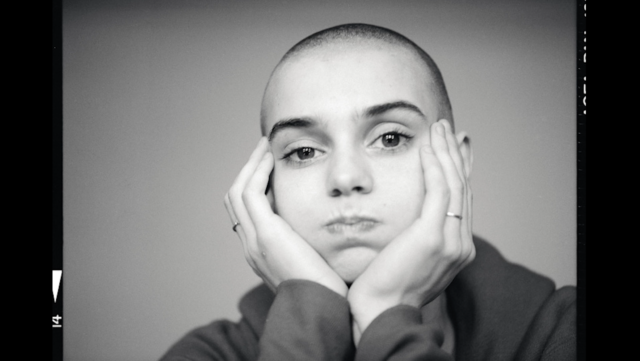
O’Connor’s appearance at the Bobfest serves as the frame for the new Showtime documentary Nothing Compares, opening September 23 at Cinema Village before streaming on the cable channel beginning September 30. The film is appropriately unusual and bends genre traditions, in homage to its iconoclastic subject. Director Kathryn Ferguson focuses on O’Connor’s life and career up to 1993, eschewing all that came after, from more albums and tours to an autobiography and her conversion to Islam. We hear a lot from her first husband, record producer John Reynolds, and about their son, Jake, but no mention is made of her subsequent three marriages and three more children.
O’Connor honestly and unabashedly shares critical insight on pivotal events that influenced who she was and what she became, but her contemporary self is mostly not seen, only heard. It’s not until the very end that we get to see her in the present day, with her band, perform an old song specially chosen for the film. In addition, all the other interviewees, from her music teacher and longtime friend to directors, journalists, and fellow musicians, are also heard but not seen on camera. This is a film about Sinead 1.0.
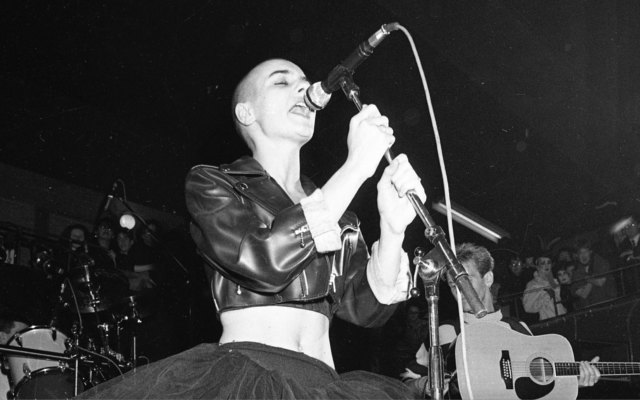
Sinéad O’Connor belts out an early song in the archival-heavy Nothing Compares
Ferguson (Taking the Waters,Space to Be), who will be at Cinema Village for a Q&A following the 5:00 screening on September 23, keeps the Dublin born and raised O’Connor front and center, in a barrage of archival news clips, family photographs, behind-the-scenes recording footage, staged re-creations, and more (courtesy editor Mick Mahon), as O’Connor delves into the horrible abuse she experienced at the hands of her mother (which was ignored by her father), the poor education she received from nuns, her refusal to get an abortion despite demands from her record company, her condemnation of the church because it was turning its back on pedophilia, her support for mental health programs, her insistence the national anthem not be played before a New Jersey gig, and her boycotting of awards shows because of misogyny and racism in the music industry and society at large.
“There was no therapy when I was growing up. So the reason I got into music was therapy,” she tells Ferguson, who previously directed music videos for O’Connor. “Which is why it was such a shock to become a pop star; it’s not what I wanted. I just wanted to scream.”
The film explores her swift rise from her debut album, 1987’s The Lion and the Cobra, to 1990’s I Do Not Want What I Haven’t Got and 1992’s Am I Not Your Girl?, with detailed looks at such songs as “Troy” (a testament that was her first song truly about herself), “Mandinka,” and “Black Boys on Mopeds.” (The Prince estate did not give Ferguson permission to use “Nothing Compares 2 U” in the film, so we only see the video without hearing the music.) Stardom was not easy for her, but she became an international icon fighting the power, particularly for young girls and women, well ahead of her time. “The powers that be weren’t ready for her,” Chuck D says. Kathleen Hanna was influenced by watching O’Connor’s “feminist performance art” on television — the controversial SNL appearance.
O’Connor resisted being stereotyped or talked down to because she was an attractive woman with a shaved head who liked to dress provocatively, and both her attitude and her looks rattled well-known talk-show hosts thirty years ago.
“I just knew that I didn’t want any man telling me who I could be or what I could be or what to sound like,” she declares. “I came from a patriarchal country where I’m being told everything I can and can’t do because I’m a girl. I figured, well, if I didn’t take it from the system, and I didn’t take it from my daddy, I ain’t taking it from anybody else.”
O’Connor’s voice today is deep and mature, not immediately recognizable. She makes no apologies for the choices she made, and she remains firm in her beliefs in fighting social injustice. Her legacy shines through, even given the difficult times, which continue. She offers a compelling, profoundly personal explanation about why she ripped up the photograph of the pope and shares her thoughts on how she came to be regarded as a powerful, influential public figure.
“I didn’t mean to be strong. I wasn’t thinking to myself, I must be strong. I didn’t know I was strong,” she says. “I did suffer through a lot because everybody felt it was okay to kick the shit out of me. I regret that I was so sad because of it. I regret that, that I spent so many years very isolated and lonely, really.”
The song she was scheduled to sing at the Bobfest, “I Believe in You” from 1978’s Slow Train Coming, contains the following stanza: “They show me to the door / They say don’t come back no more / ’Cause I don’t be like they’d like me to / And I walk out on my own / A thousand miles from home / But I don’t feel alone / ’Cause I believe in you.” After all these years, O’Connor is still doing things her own way, not about to be shown to the door by anyone.