this week in lectures, signings, panel discussions, workshops, and Q&As

MY OLD SCHOOL

Alan Cumming stars as Scottish hoaxer Brandon Lee in My Old School

MY OLD SCHOOL (Jono McLeod, 2022)
Film Forum
209 West Houston St.
Opens Friday, July 22
212-727-8110
filmforum.org

“To rewind your life and be someone different — what would possess someone to do that?” Nicola asks at the beginning of Jono McLeod’s brilliantly eccentric hybrid documentary, My Old School.

Sam adds, “Anything’s possible here. I’m telling you, this guy is a charmer. He’s not what you think he is; he never was.”

In 1993, a new student named Brandon Lee entered prestigious Bearsden Academy in Scotland. Although he appeared to be significantly older than the rest of his classmates, some of whom initially assumed he was a teacher, he continued going to school and even starred as marine lieutenant Joseph Cable in Bearsden’s production of South Pacific. But it turned out that Brandon was not who he said he was, leading to a major scandal.

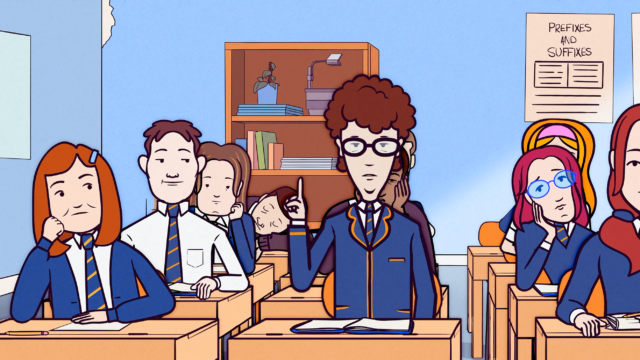
Jono McLeod uses animation flashbacks to tell strange tale in hybrid documentary

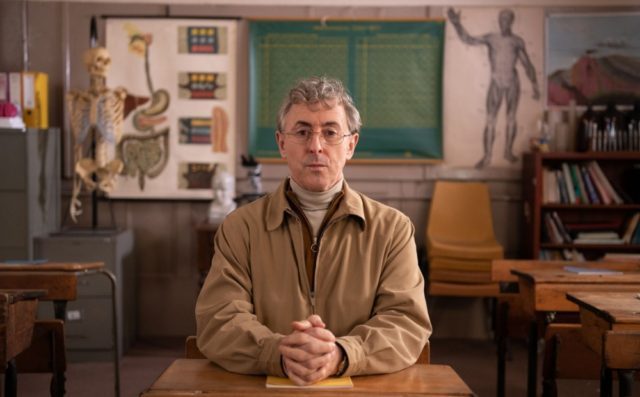
In 1995, it was announced that Scots actor Alan Cumming would portray Brandon in a movie, but it never got made. Instead, nearly thirty years later, Cumming is finally playing the man who eventually got caught pulling off a hoax of epic proportions. But Cumming doesn’t speak a word in the film; Brandon agreed to tell his story to McLeod, who was one of his Bearsden classmates, but he refused to appear on camera. So, sitting in a school desk, Cumming expertly lip syncs Brandon’s extremely strange tale of ambition, deception, and just plain weirdness.

It’s a bravura performance, reminiscent of Deirdre O’Connell’s Tony-winning role in Dana H., in which she portrayed playwright Lucas Hnath’s mother, sitting in a chair as she lip synced the story of an abduction from an interview Hnath conducted with the real Dana. Cumming, a Tony-winning stage actor himself (Cabaret, Macbeth), uses small gestures and movements and his alluring eyes to convey Brandon’s state of mind without ever getting out of his seat; George Geddes’s camera is as curious as we are, exploring his face and body in extreme close-ups as if looking for cracks in his armor.

In his debut feature film, McLeod, a former reporter and current television documentarian, uses multiple ways to share the bizarre chronicle: In addition to interviewing the main subject, McLeod speaks with more than a dozen of Brandon’s classmates, who also sit at school desks as they relate what happened from beginning to end. They do so with both humor and wonder, laughing and smiling as they describe the details of Brandon’s subterfuge; McLeod gets several teachers to go on the record as well.

McLeod presents their testimonials in playful animation (courtesy Rory Lowe), inspired by MTV’s Daria, interspersing real news reports and other archival footage, all seamlessly edited with quirky delight by Berny McGurk. Some of the cartoon characters are voiced by actors, including Clare Grogan as Mrs. Ogg, Joe McFadden as Mr. MacLeod, Juliet Cadzow as Brandon’s grandmother, Michele Gallagher as Mrs. Thomson, Camilla Kerslake as Brandon’s opera-diva mother, Gary Lamont as Mr. MacKinnon, Carly McKinnon as science teacher Miss MacKichan, Brian O’Sullivan as Mr. Gunn, Dawn Steele as Mrs. Nolan, Wam Siluka Jr. as Stefen (who lovingly admits how Brandon changed his life), and, most notably, the one and only Lulu (To Sir, with Love) as mean Mrs. Holmes. Lulu also sings the cover version of Steely Dan’s “My Old School” over the closing credits, during which McLeod pairs childhood photos of the students and teachers with their animated versions.

It’s a tour de force of storytelling, and what a story it tells. The less you know going in, the better, but regardless, it’s one hundred minutes of utter fun and amazement, particularly potent in 2022, when personal identity is at the forefront of so much discussion. My Old School opens July 22 at Film Forum; there will be Q&As with McLeod after the 7:50 screenings on Friday and Saturday night.

THE METHOD ON FILM: WANDA / FIVE EASY PIECES

BAM series kicks off with a double feature with Method man Marlon Brando

THE METHOD ON FILM
BAM Rose Cinemas
30 Lafayette Ave. between Ashland Pl. & St. Felix St.
Series runs July 22-28
www.bam.org

“Acting is a curious thing,” Isaac Butler writes in The Method: How the Twentieth Century Learned to Act. “Practically anyone who watches Hollywood movies — which is to say pretty much everyone — spends a staggering amount of talking and thinking about actors. We know intimate details of their private lives. We look to them to speak out about the issues of the day. We evaluate them constantly and festoon the better ones with a trunkload of different prizes. Yet when pressed to explain what good acting actually is, we usually struggle.”

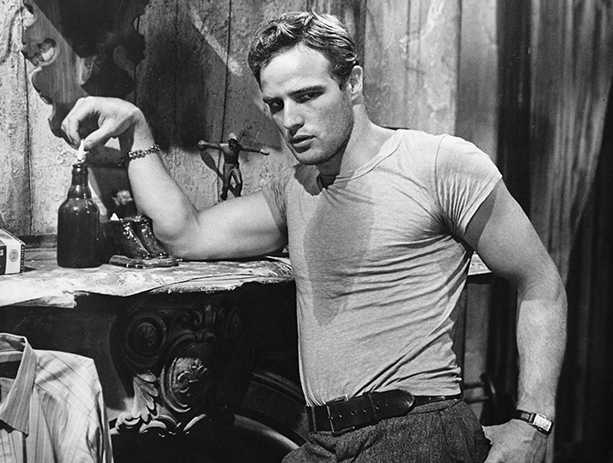
BAM provides plenty for cineastes to struggle over with the one-week series “The Method on Film,” featuring works starring some of the greatest movie actors ever, famous for their discipline and dedication to their craft. It all begins with a double feature with Method man Marlon Brando, playing Stanley Kowalski in Elia Kazan’s A Streetcar Named Desire, then being profiled in the 1966 documentary Meet Marlon Brando. Butler will be at BAM for a prescreening reading and postscreening book signing.

The series continues with Montgomery Clift, Sidney Poitier, Eartha Kitt, Warren Beatty, John Garfield, Kim Stanley, Jack Nicholson, Joanne Woodward, Dustin Hoffman, Anne Bancroft, and Rod Steiger in such classics as The Pawnbroker, The Graduate, A Raisin in the Sun, and Humoresque in addition to a handful of lesser-known works, including two early, influential Russian silent versions of The Queen of Spades. There will also be discussions before the screenings of Arnold Laven’s Anna Lucasta (with dramaturg, director, and archivist Arminda Thomas on July 23) and Edgar G. Ulmer’s American Matchmaker (with Columbia Yiddish professor Jeremy Dauber on July 24). Below is a deeper look at two of the highlights, a pair of unique road movies.

Barbara Loden wrote, directed, produced, and stars in WANDA

Barbara Loden wrote, directed, produced, and stars in Wanda

WANDA (Barbara Loden, 1970)
Tuesday, July 26, 9:30
www.bam.org

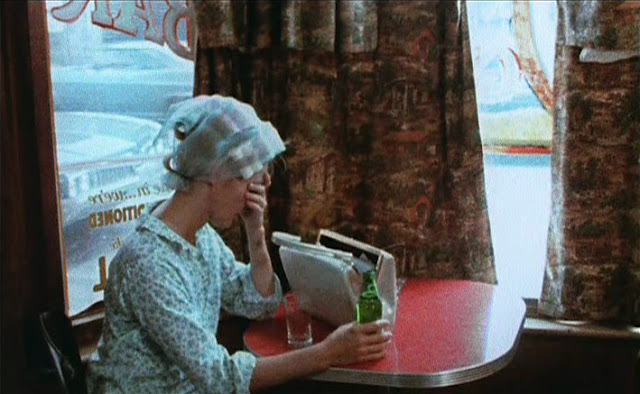
“If you don’t want anything, you won’t have anything, and if you don’t have anything, then you’re as good as dead,” Mr. Dennis (Michael Higgins) tells Wanda Goronski (Barbara Loden) in Wanda. The first theatrical feature written, directed, produced by, and starring an American woman, Wanda, named Best Foreign Film at the Venice International Film Festival, is a raw, naturalistic road-trip movie about an emotionally vacant woman who walks through life in a kind of stupor, wandering into situations to avoid being alone yet still trapped in an unrelenting alienation. Loden, who won a 1964 Tony for her portrayal of Maggie in Arthur Miller’s After the Fall — the play was directed on Broadway by Elia Kazan, whom she would marry four years later and remain with through her tragic death in 1980 — doesn’t try to turn Wanda into a feminist antihero, but she does take all the power away from her, making her completely dependent on other people, primarily men, an excellent counterpoint to Loden herself, who has all the power. Staying on her sister’s (Dorothy Shupenes) couch in the middle of Pennsylvania coal country, Wanda is almost zombielike as she slowly heads to court in curlers and a housecoat and lets the judge award custody of her two children to her soon-to-be-ex-husband (Jerome Thier). “I’m just no good,” she mumbles. Broke and apparently with no faith or hope in her future, she proceeds to get involved with some sketchy losers, including Mr. Dennis, who takes her on a minor crime spree that is a far cry from Bonnie and Clyde. All along the way, she rarely has anything of any interest to say to anyone; the only time she speaks clearly and definitively is when she explains that she likes onions on her hamburgers.

Shot in a cinéma vérité style by documentary cinematographer Nicholas T. Proferes, Wanda is a riveting and infuriating exploration of the death of the American dream as the 1960s come to an end and the country reexamines itself, not necessarily liking what it sees. Apathy competes with melancholy as Wanda is unable and unwilling to take control of her life, dressed in the same white outfit and carrying the same white pocketbook throughout nearly the entire film, but she is more disconsolate than angelic. Much of the film is improvised and most of the characters are portrayed by nonprofessional actors or people who just happened to be in the area, like the scene in which Mr. Dennis and Wanda encounter a family flying a remote-control model airplane. (Higgins would go on to make more than fifty films, including The Conversation, The Stepford Wives, and The Seduction of Joe Tynan.) Coming on the cusp of the women’s liberation movement, Wanda is about a pouty sad-sack who barely ever changes emotion, always wearing the same blank stare. It’s not that she’s promiscuous, adventurous, or even unpredictable; she just is. You desperately want her to take action, to care about something or someone, but it’s just not going to happen. It’s almost as if Loden is setting the groundwork for such future films as Martin Scorsese’s Alice Doesn’t Live Here Anymore and Taxi Driver, which feature such strong, decisive female characters as Alice (Ellen Burstyn) in the former and Iris (Jodie Foster) in the latter, who at least attempt to take matters into their own hands; elements of Wanda can also be found in Aki Kaurismäki’s Match Factory Girl and Chantal Akerman’s Jeanne Dielman, 23, Quai du Commerce, 1080 Bruxelles. Wanda would end up being Loden’s only film as writer and director; she died in 1980 of cancer at the age of forty-eight.

Jack Nicholson places the most famous sandwich order in film history (Sony Pictures Repertory)

Jack Nicholson places the most famous sandwich order in film history (Sony Pictures Repertory)

FIVE EASY PIECES (Bob Rafelson, 1970)
Tuesday, July 26, 7:00
www.bam.org

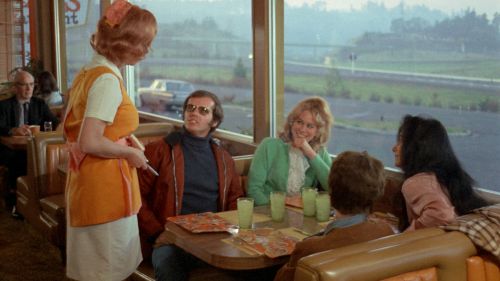
A key film that helped lead 1960s cinema into the grittier 1970s, Bob Rafelson’s Five Easy Pieces is one of the most American of dramas, a tale of ennui and unrest among the rich and the poor, a road movie that travels from trailer parks to fashionable country estates. Caught in between is Bobby Dupea (Jack Nicholson), a former piano prodigy now working on an oil rig and living with a well-meaning but not very bright waitress, Rayette (Karen Black). When Bobby finds out that his father is ill, he reluctantly returns to the family home, the prodigal son who had left all that behind, escaping to a less-complicated though unsatisfying life putting his fingers in a bowling ball rather than tickling the keys of a grand piano. Back in his old house, he has to deal with his brother, Carl (Ralph Waite), a onetime violinist who can no longer play because of an injured neck and who serves as the film’s comic relief; Carl’s wife, Catherine (Susan Anspach), a snooty woman Bobby has always been attracted to; and Bobby’s sister, Partita (Lois Smith), a lonely, troubled soul who has the hots for Spicer (John Ryan), the live-in nurse who takes care of their wheelchair-bound father (William Challee).

Rafelson had previously directed the psychedelic movie Head (he cocreated the Monkees band and TV show) and would go on to make such films as The King of Marvin Gardens, Stay Hungry, and Black Widow; written by Carole Eastman, Five Easy Pieces fits flawlessly in between them, a deeply philosophical work that captures the myriad changes the country was experiencing as the Woodstock Generation was forced to start growing up. The film suffers from some unsteady editing primarily in the earlier scenes, but it is still a gem, featuring at least two unforgettable scenes, one that takes place in a California highway traffic jam and the other in a diner, where Bobby places an order for the ages. And as good as both Nicholson, who earned the first of seven Best Actor Oscar nominations, and Black, who was nominated for Best Supporting Actress, are, Helena Kallianiotes nearly steals the picture as a crazy woman railing against the ills of the world from the backseat of Bobby’s car.

“1962 . . . 1963 . . . 1964”

“1962 . . . 1963 . . . 1964”
Film Forum
209 West Houston St.
July 22 – August 11
212-727-8110
filmforum.org

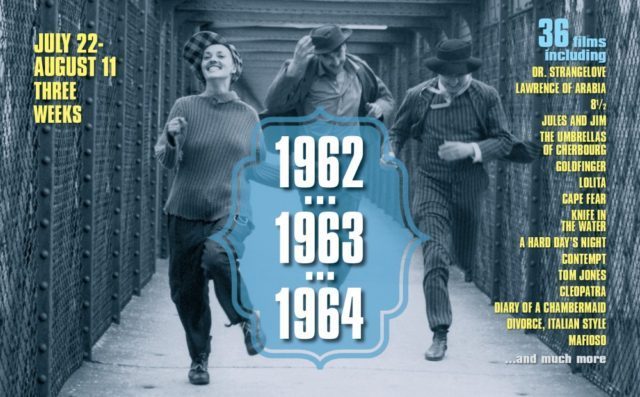
The years 1962, 1963, and 1964 were like no others in the history of America, and that evolving zeitgeist was captured on celluloid as the Hollywood studio system faded away. Film Forum is celebrating those three years with “1962 . . . 1963 . . . 1964,” a three-week series consisting of thirty-five cinematic works that, together, form a fascinating time capsule of the era. There are films by François Truffaut, David Lean, Stanley Kubrick, John Ford, Agnès Varda, Vittorio De Sica, Federico Fellini, Francis Ford Coppola, Alfred Hitchcock, Luis Buñuel, Sergio Leone, and many others, in multiple genres, with superstars ranging from Clint Eastwood, Marcello Mastroianni, and Sean Connery to Peter Sellers, Paul Newman, and the Fab Four.

The July 22 screening of Lolita will have a special prerecorded introduction from film critic and historian Stephen Farber. Below are select reviews from the festival, which is being held in conjunction with the Jewish Museum exhibition “New York: 1962-1964” and Film at Lincoln Center’s “New York, 1962-1964: Underground and Experimental Cinema.”
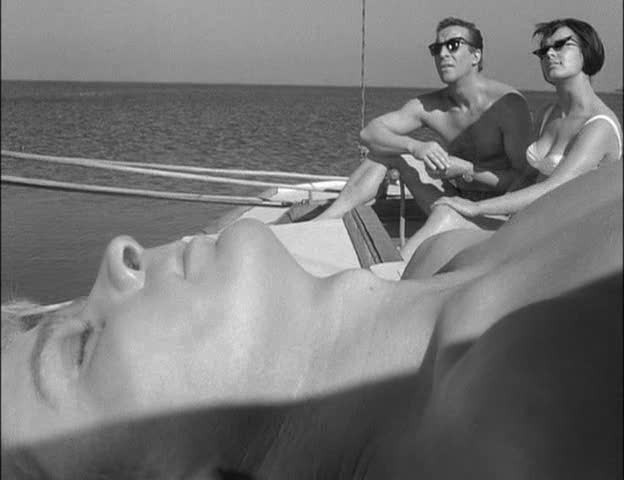
KNIFE IN THE WATER

A young hitchhiker (Zygmunt Malanowicz) throws a kink in a couple’s sailing plans in Roman Polanski’s Knife in the Water

KNIFE IN THE WATER (NÓŻ W WODZIE) (Roman Polanski, 1962)
Saturday, July 23, 5:10, and Monday, July 25, 6:20
filmforum.org

“Even discounting wind, weather, and the natural hazards of filming afloat, Knife in the Water was a devilishly difficult picture to make,” immensely talented and even more controversial Roman Polanski wrote in his 1984 autobiography, Roman by Polanski. That is likely to have been a blessing in disguise, upping the ante in the Polish filmmaker’s debut feature film, a tense three-character thriller set primarily on a sailboat, filmed on location. Upper-middle-class couple Andrzej (theater veteran Leon Niemczyk) and Krystyna (nonprofessional actor Jolanta Umecka) are on their way to their sailboat at the marina when a young hitchhiker (drama school grad Zygmunt Malanowicz) forces them to pull over on an otherwise empty road. Andrzej and the unnamed man almost immediately get involved in a physical and psychological pissing contest, with Andrzej soon inviting him to join them on their sojourn, practically daring the hitchhiker to make a move on his wife.

Once on the boat, the two men continue their battle of wills, which becomes more dangerous once the young man reveals his rather threatening knife, which he handles like a pro. Lodz Film School graduate Polanski, who collaborated on the final screenplay with Jerzy Skolimowski (The Shout, Moonlighting) after initially working with Jakub Goldberg, envelops the black-and-white Knife in the Water — the first Polish film to be nominated for a Best Foreign Language Film Oscar and winner of the Critics’ FIPRESCI Prize at the 1962 Venice Film Festival — in a highly volatile, claustrophobic energy, creating gorgeous scenes intimately photographed by cinematographer Jerzy Lipman, from Andrzej and Krystyna in their small car to all three trying to find space on the boat amid the vast sea and a changing wind. Many of the shots are highlighted by deep focus in which one character is shown in close-up in the foreground with the others in the background, alerting the viewer to various potential conflicts — sexual, economic, class- and gender-based — all underscored by Krzysztof T. Komeda’s intoxicating jazz score featuring saxophonist Bernt Rosengren.
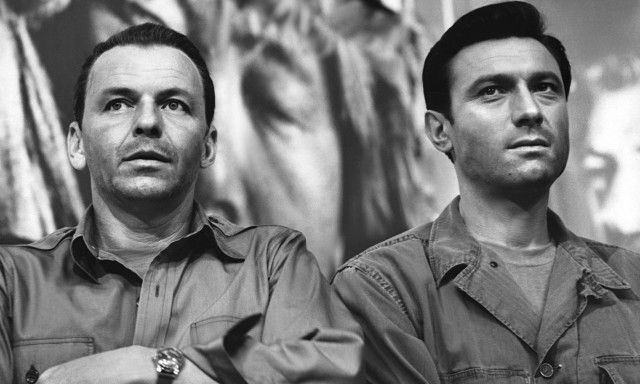
THE MANCHURIAN CANDIDATE

Bennett Marco (Frank Sinatra) and Raymond Shaw (Laurence Harvey) need to clear their heads in The Manchurian Candidate

THE MANCHURIAN CANDIDATE (John Frankenheimer, 1962)
Tuesday, July 26, 5:30, and Wednesday, August 10, 2:35
filmforum.org

John Frankenheimer’s unconventional Cold War conspiracy noir, The Manchurian Candidate, is, quite simply, one of the greatest political thrillers ever made. Ten years after fighting in Korea, Maj. Bennett Marco (Frank Sinatra) remains in the military, working in intelligence. He is haunted by terrifying nightmares in which his unit, led by Sgt. Raymond Shaw (Laurence Harvey), is at a woman’s gardening club lecture that turns into a Communist brainwashing session orchestrated by the menacing Dr. Yen Lo (Khigh Dheigh) of the Pavlov Institute. Meanwhile, the decorated but clearly tortured Shaw has to deal with his power-hungry mother, Mrs. Iselin (Angela Lansbury), who is manipulating everyone she can to ensure that her second husband, the McCarthy-like Sen. John Yerkes Iselin (James Gregory), becomes the Republican vice presidential nominee. As Marco gets to the bottom of the mystery, the clock keeps ticking toward an inevitable crisis with lives on the line and the very future of democracy at stake.

Written by George Axelrod based on the book by Richard Condon (Winter Kills, Prizzi’s Honor), The Manchurian Candidate is a tense, gripping work that feels oddly prescient when seen today. Frankenheimer (Birdman of Alcatraz, Seven Days in May, Seconds) keeps the suspense at Hitchockian levels, particularly as the finale nears, while throwing in doses of dark satire and complex romance. Shaw tries to reconnect with his lost love, Jocelyn Jordan (Leslie Parrish), daughter of erudite Democratic Sen. Thomas Jordan (John McGiver), while Marco is intrigued by Eugenie Rose Cheyney (Janet Leigh); their meeting scene in between cars on a train is an offbeat joy, thought to be impacted by Leigh’s real-life breakup with Tony Curtis that very day. Sinatra, whose previous films included From Here to Eternity and Suddenly — he played a presidential assassin in the latter — once again gets to show off his strong acting chops, especially in a long, uncut scene with Harvey (Room at the Top, Darling) and a fierce fight with Harvey’s servant, Chunjin (Ocean Eleven’s Henry Silva).

Oscar nominee Lansbury relishes her role as Shaw’s villainous mother (in reality, she was only three years older than he was), manipulating her blowhard husband like a puppet. The dramatic music is by composer David Amram (Pull My Daisy), the moody cinematography by Lionel Lindon (All Fall Down, I Want to Live!), with narration by Paul Frees, who went on to voice such cartoon characters as Burgermeister Meisterburger in Santa Claus Is Comin’ to Town and Santa Claus in Frosty the Snowman, in addition to many others. Among the New York City landmarks featured in the film are Central Park and the old Madison Square Garden. And you’ll never look at the Queen of Diamonds or play solitaire quite the same way again. The film’s cultlike status was enhanced because it was out of circulation for a quarter of a century until Sinatra, claiming he hadn’t known that he had owned the the rights since 1972, rereleased it in 1988.
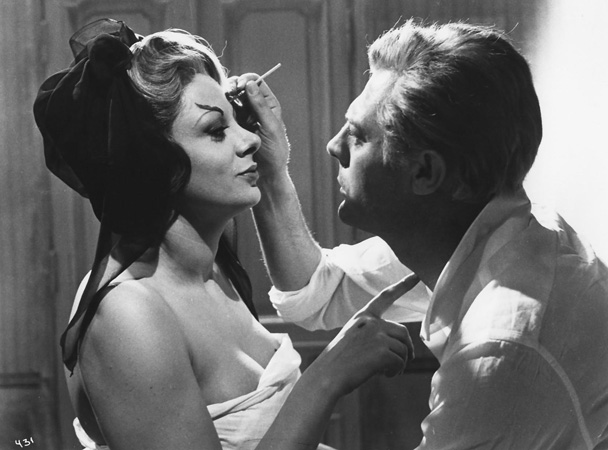
Guido Anselmi (Marcello Mastroianni) is in a bit of a personal and professional crisis in Fellini masterpiece

8½ (Federico Fellini, 1963)
Friday, July 29, 6:00, and Monday, August 1, 8:00
filmforum.org

“Your eminence, I am not happy,” Guido (Marcello Mastroianni) tells the cardinal (Tito Masini) halfway through Federico Fellini’s self-reflexive masterpiece 8½. “Why should you be happy?” the cardinal responds. “That is not your task in life. Who said we were put on this earth to be happy?” Well, film makes people happy, and it’s because of works such as 8½. Fellini’s Oscar-winning eighth-and-a-half movie is a sensational self-examination of film and fame, a hysterically funny, surreal story of a famous Italian auteur who finds his life and career in need of a major overhaul. Mastroianni is magnificent as Guido Anselmi, a man in a personal and professional crisis who has gone to a healing spa for some much-needed relaxation, but he doesn’t get any as he is continually harassed by producers, screenwriters, would-be actresses, and various other oddball hangers-on.

He also has to deal both with his mistress, Carla (Sandra Milo), who is quite a handful, as well as his wife, Luisa (Anouk Aimée), who is losing patience with his lies. Trapped in a strange world of his own creation, Guido has dreams where he flies over claustrophobic traffic and makes out with his dead mother, and his next film involves a spaceship; it doesn’t take a psychiatrist to figure out the many inner demons that are haunting him. Marvelously shot by Gianni Di Venanzo in black-and-white, scored with a vast sense of humor by Nino Rota, and featuring some of the most amazing hats ever seen on film — costume designer Piero Gherardi won an Oscar for all the great dresses and chapeaux — is an endlessly fascinating and wildly entertaining exploration of the creative process and the bizarre world of filmmaking itself.
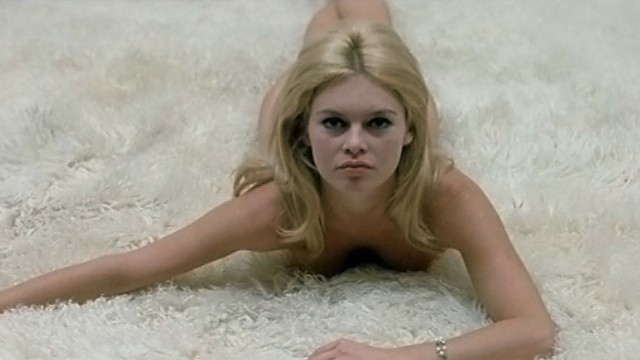
Brigitte Bardot shows off both her acting talent and beautiful body in Jean-Luc Godard’s Contempt

CONTEMPT (LE MEPRIS) (Jean-Luc Godard, 1963)
Saturday, July 30, 8:00, and Tuesday, August 9, 8:15
filmforum.org

French auteur Jean-Luc Godard doesn’t hold back any of his contempt for Hollywood cinema in his multilayered masterpiece Contempt. Loosely based on Alberto Moravia’s Il Disprezzo, Contempt stars Michel Piccoli as Paul Javal, a French screenwriter called to Rome’s famed Cinecittà studios by American producer Jeremy Prokosch (Jack Palance ) to perform rewrites on Austrian director Fritz Lang’s (played by Lang himself) adaptation of The Odyssey by ancient Greek writer Homer. Paul brings along his young wife, the beautiful Camille (Brigitte Bardot), whom Prokosch takes an immediate liking to. With so many languages being spoken, Prokosch’s assistant, Francesca Vanini (Giorgia Moll), serves as translator, but getting the various characters to communicate with one another and say precisely what is on their mind grows more and more difficult as the story continues and Camille and Paul’s love starts to crumble. Contempt is a spectacularly made film, bathed in deep red, white, and blue, as Godard and cinematographer Raoul Coutard poke fun at the American way of life. (Both Godard and Coutard appear in the film, the former as Lang’s assistant director, the latter as Lang’s cameraman — as well as the cameraman who aims the lens right at the viewer at the start of the film.)

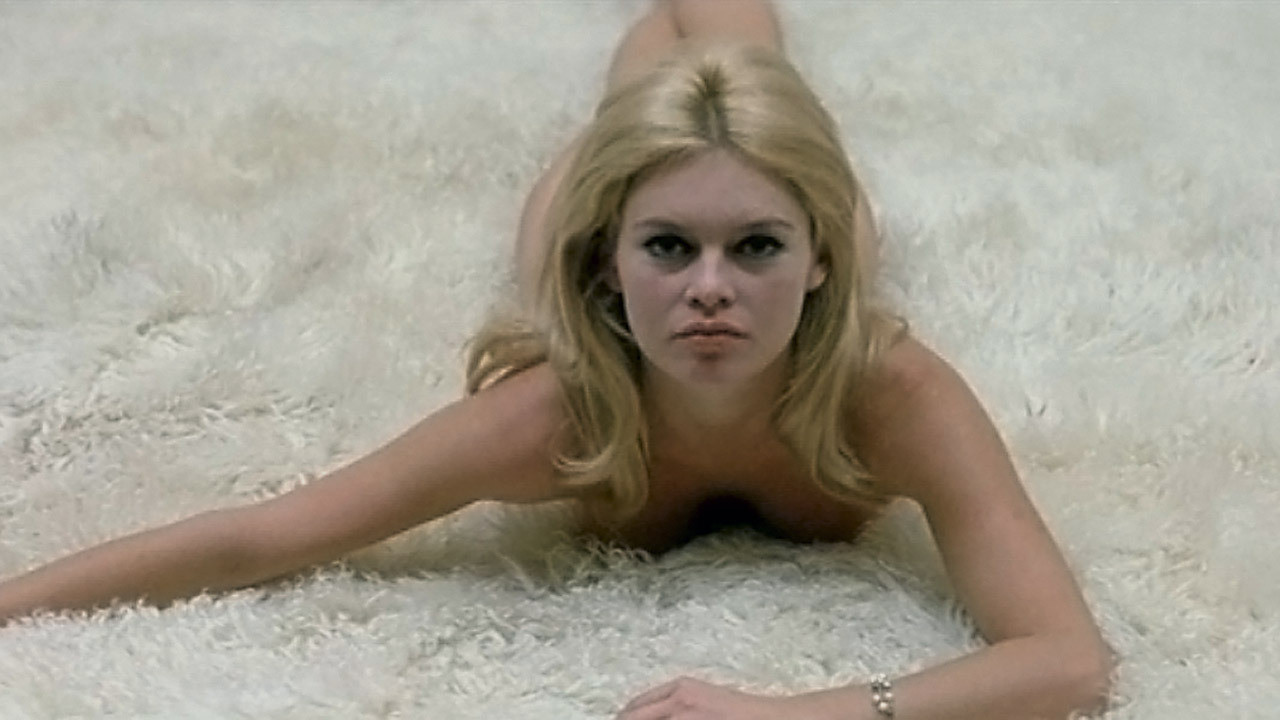
Bardot is sensational in one of her best roles, whether teasing Paul at a marvelously filmed sequence in their Rome apartment (watch for him opening and stepping through a door without any glass), lying naked on the bed, asking Paul what he thinks of various parts of her body (while Coutard changes the filter from a lurid red to a lush blue), or pouting when it appears that Paul is willing to pimp her out in order to get the writing job. Palance is a hoot as the big-time producer, regularly reading fortune-cookie-like quotes from an extremely little red book he carries around that couldn’t possibly hold so many words. And Lang, who left Germany in the mid-1930s for a career in Hollywood, has a ball playing a version of himself, an experienced veteran willing to put up with Prokosch’s crazy demands. Vastly entertaining from start to finish, Contempt is filled with a slew of inside jokes about the filmmaking industry and even Godard’s personal and professional life, along with some of the French director’s expected assortment of political statements and a string of small flourishes that are easy to miss but add to the immense fun, all set to a gorgeous romantic score by Georges Delerue.
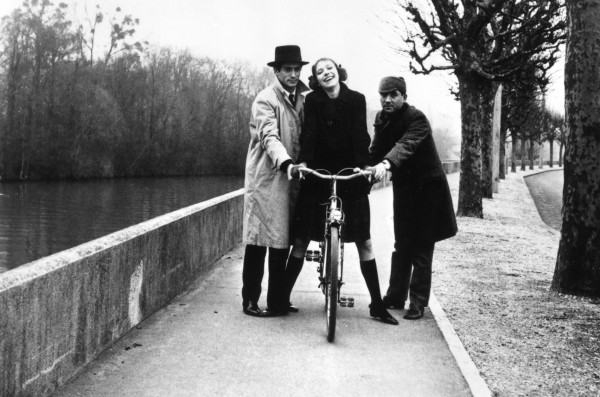
Jean-Luc Godard’s Band of Outsiders is a different kind of heist movie

BANDE À PART (BAND OF OUTSIDERS) (Jean-Luc Godard, 1964)
Tuesday, August 2, 8:10, Wednesday, August 3, 12:30, and Tuesday, August 9, 6:10
filmforum.org

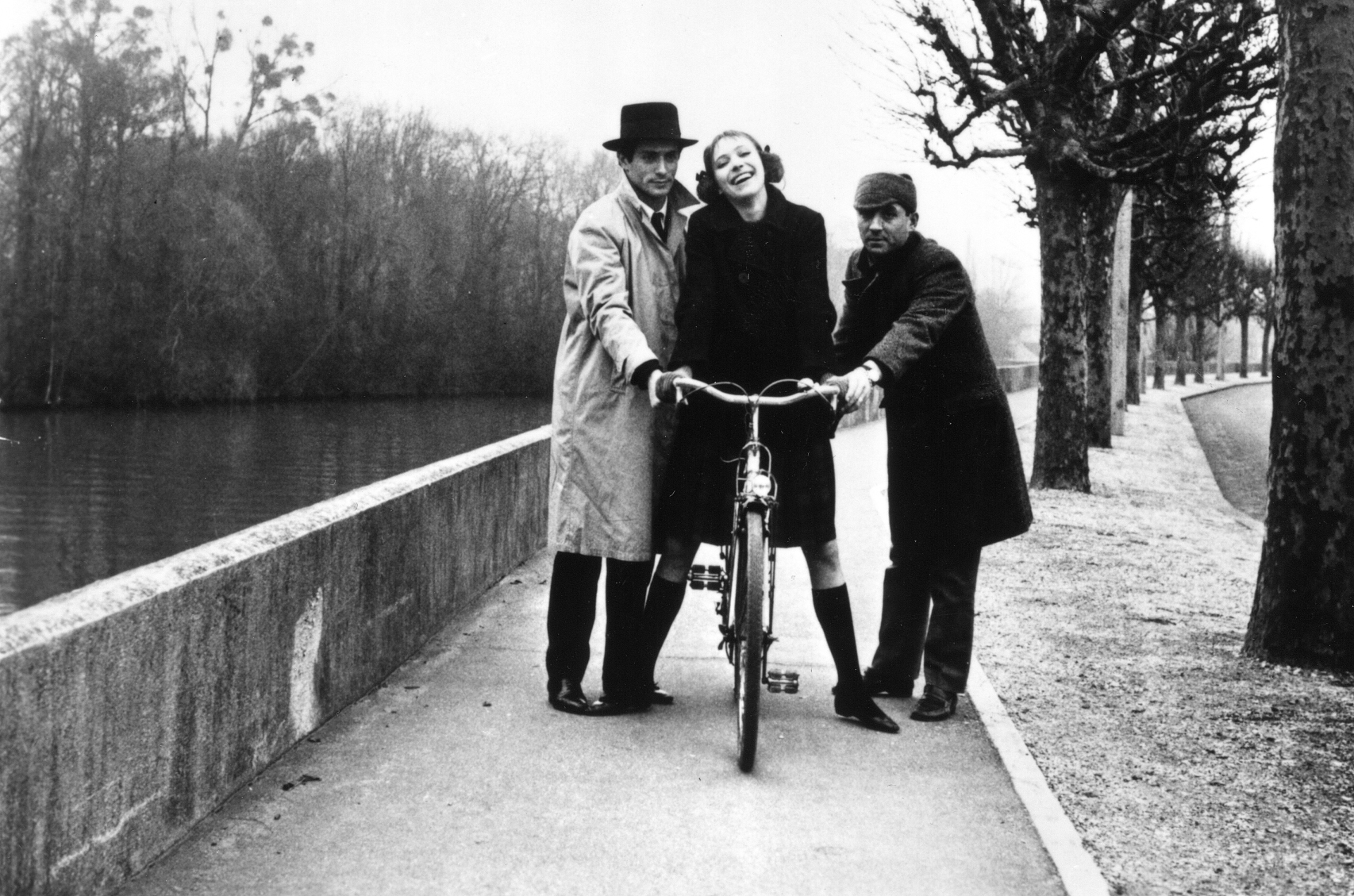
When a pair of disaffected Parisians, Arthur (Claude Brasseur) and Franz (Sami Frey), meet an adorable young woman, Odile (Anna Karina), in English class, they decide to team up and steal a ton of money from a man living in Odile’s aunt’s house. As they meander through the streets of cinematographer Raoul Coutard’s black-and-white Paris, they talk about English and wealth, dance in a cafe while director Jean-Luc Godard breaks in with voice-over narration about their character, run through the Louvre in record time, and pause for a near-moment of pure silence. Godard throws in plenty of commentary on politics, the cinema, and the bourgeoisie in the midst of some genuinely funny scenes. One of Godard’s most accessible films, Band of Outsiders is no ordinary heist movie; based on Dolores Hitchens’s novel Fool’s Gold, it is the story of three offbeat individuals who just happen to decide to attempt a robbery while living their strange existence, as if they were outside from the rest of the world. The trio of ne’er-do-wells might remind Jim Jarmusch fans of the main threesome from Stranger Than Paradise (1984), except Godard’s characters are more aggressively persistent.
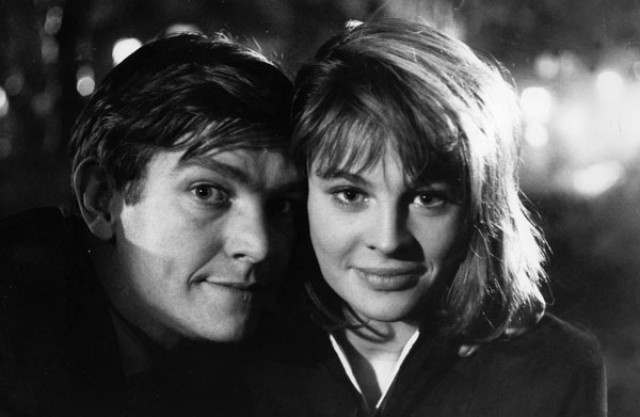
Tom Courtenay and Julie Christie get close in John Schlesinger’s Billy Liar

BILLY LIAR (John Schlesinger, 1963)
Wednesday, August 3, 2:40 & 6:00
filmforum.org

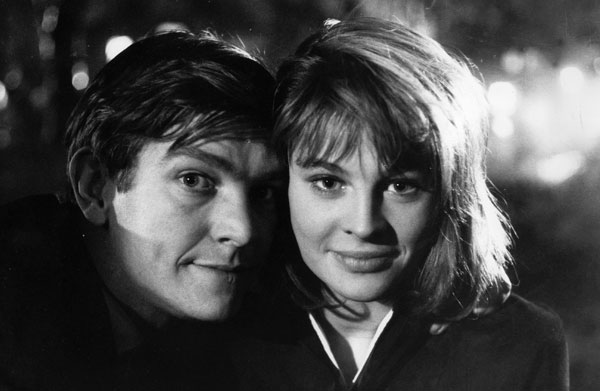
Based on the novel by Keith Waterhouse (which he also adapted into a play with Willis Hall and which later became a musical), John Schlesinger’s Billy Liar is a prime example of the British New Wave of the 1950s and 1960s, which features work by such directors as Lindsay Anderson, Joseph Losey, Ken Russell, Nicolas Roeg, and Karel Reisz. Tom Courtenay stars as William Fisher, a ne’er-do-well ladies’ man who drudges away in a funeral home and dates (and lies to) multiple women, all the while daydreaming of being the president of the fictional country of Ambrosia. Billy lives in his own fantasy world where he can suddenly fire machine guns at people who bother him and be cheered by adoring crowds as he leads a marching band. Reminiscent of the 1947 American comedy The Secret Life of Walter Mitty, in which Danny Kaye dreams of other lives to lift him out of the doldrums, Billy Liar is also rooted in the reality of post-WWII England, represented by Billy’s father (Wilfred Pickles), who thinks his son is a no-good lazy bum. Shot in black-and-white by Denys Coop (This Sporting Life, Bunny Lake Is Missing), the film glows every time Julie Christie appears playing Liz, a modern woman who takes a rather fond liking to Billy. The film made Christie a star; Schlesinger next cast her in Darling, for which she won the Oscar for Best Actress.
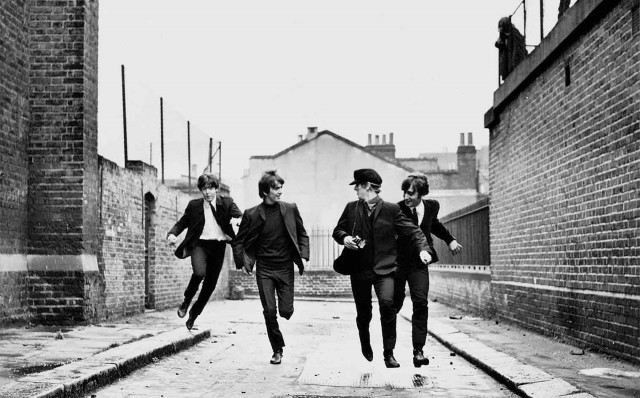
A HARD DAY’S NIGHT

The Beatles’ A Hard Day’s Night gets back to Film Forum for 1962-63-64 series

A HARD DAY’S NIGHT (Richard Lester, 1964)
Friday, August 5, 2:35 & 9:25, Saturday, August 6, 12:30 & 4:35
filmforum.org

The Beatles recently invaded America again with Peter Jackson’s three-part documentary Get Back, about the making of Let It Be. The Film Forum series takes us back to their debut movie, the deliriously funny anarchic comedy A Hard Day’s Night. Initially released on July 6, 1964, in the UK, AHDN turned out to be much more than just a promotional piece advertising the Fab Four and their music. Instead, it quickly became a huge critical and popular success, a highly influential work that presaged Monty Python and MTV while also honoring the Marx Brothers, Buster Keaton, Jacques Tati, and the French New Wave. Directed by Richard Lester, who had previously made the eleven-minute The Running Jumping & Standing Still Film with Peter Sellers and would go on to make A Funny Thing Happened on the Way to the Forum, Petulia, and The Three Musketeers, the madcap romp opens with the first chord of the title track as John Lennon, Paul McCartney, George Harrison, and Ringo Starr are running down a narrow street, being chased by rabid fans, but they’re coming toward the camera, welcoming viewers into their crazy world. (George’s fall was unscripted but left in the scene.) As the song blasts over the soundtrack, Lester introduces the major characters: the four moptops, who are clearly having a ball, led by John’s infectious smile, in addition to Paul’s “very clean” grandfather (Wilfrid Brambell, who played a dirty old man in the British series Steptoe and Son, the inspiration for Sanford and Son) and the band’s much-put-upon manager, Norm (Norman Rossington). Lester and cinematographer Gilbert Taylor (Dr. Strangelove or: How I Learned to Stop Worrying and Love the Bomb, Repulsion, Star Wars) also establish the pace and look of the film, a frantic black-and-white frolic shot in a cinema-vérité style that is like a mockumentary taking off from where François Truffaut’s 400 Blows ends.

The boys eventually make it onto a train, which is taking them back to their hometown of Liverpool, where they are scheduled to appear on a television show helmed by a hapless director (Victor Spinetti, who would star in Help as well) who essentially represents all those people who are dubious about the Beatles and the sea change going on in the music industry. Norm and road manager Shake (John Junkin) have the virtually impossible task of ensuring that John, Paul, George, and Ringo make it to the show on time, but there is no containing the energetic enthusiasm and contagious curiosity the quartet has for experiencing everything their success has to offer — while also sticking their tongues out at class structure, societal trends, and the culture of celebrity itself. Lester and Oscar-nominated screenwriter Alun Owen develop each individual Beatle’s unique character through press interviews, solo sojourns (the underappreciated Ringo goes off on a kind of vision quest; George is mistaken by a fashion fop for a model), and an endless stream of spoken and visual one-liners. (John sniffs a Coke bottle; a reporter asks George, “What do you call your hairstyle?” to which the Quiet One replies, “Arthur.”) Oh, the music is rather good too, featuring such songs as “I Should Have Known Better,” “All My Loving,” “If I Fell,” “Can’t Buy Me Love,” “I’m Happy Just to Dance with You,” “This Boy,” and “She Loves You.” The working name for the film was Beatlemania, but it was eventually changed to A Hard Day’s Night, based on a Ringo malapropism, forcing John and Paul to quickly write the title track. No mere exploitation flick, A Hard Day’s Night is one of the funniest, most influential films ever made, capturing a critical moment in pop-culture history and unleashing four extraordinary gentlemen on an unsuspecting world. Don’t you dare miss this glorious eighty-five-minute explosion of sheer, unadulterated joy.
twi-ny talk: BARBARA POLLACK / MIRROR IMAGE

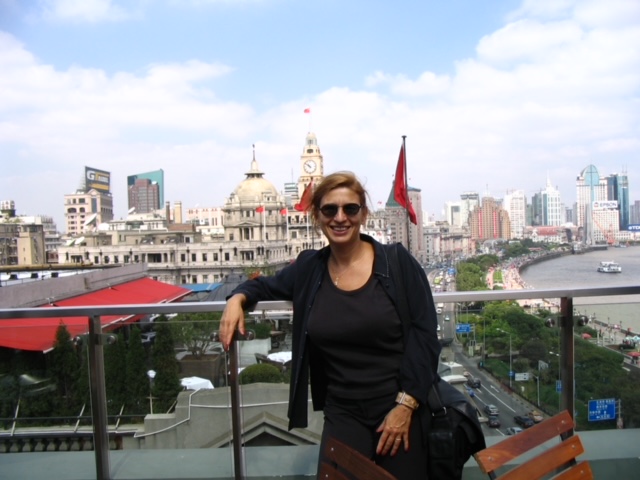
Barbara Pollack first visited China in 2004 (photo courtesy Barbara Pollack)

MIRROR IMAGE: A TRANSFORMATION OF CHINESE IDENTITY
Asia Society Museum
725 Park Ave. at 70th St.
Wednesday – Sunday through December 31, $7-$12
Artist Talk July 21, free, 7:00
Brooklyn Rail talk Tuesday, August 9, free, 1:00
asiasociety.org

In a 2010 twi-ny talk, Barbara Pollack noted, discussing her book The Wild, Wild East: An American Art Critic’s Adventures in China, “Until the late 1990s, the art world was extremely narrow-minded and unwilling to think that a major talent could come from somewhere other than Europe or North America. That has changed forever, good riddance.”

Pollack spent the following decade meeting with, writing about, and researching these major talents, in China and other countries, leading to her next book, 2018’s Brand New Art from China: A Generation on the Rise.

Right before Covid-19 forced the lockdown of restaurants, theaters, museums, and other businesses in March 2020, Pollack’s “Mirror Image: A Transformation of Chinese Identity” had been scheduled to open at Asia Society but had to be put on hold. Pollack, a writer, teacher, curator, and visual artist with a law degree, pivoted immediately and formed, with Anne Verhallen, Art at a Time Like This, a nonprofit that presents sociopolitical art, both on- and offline. Finally, after a more than two-year delay, “Mirror Image,” curated by Pollack with guest curatorial assistant Hongzheng Han, opened at the Park Ave. institution in June and has just been extended through the end of the year.

The exhibition, which Pollack sees as a kind of follow-up to Asia Society’s seminal 1998 show “Inside Out: New Chinese Art,” features multimedia works that explore the idea of “Chinese-ness” by seven artists who were born on mainland China in the 1980s, six of whom are still primarily based there. In her curatorial statement, Pollack explains, “These artists continue to push forward. We no longer view them as ambassadors from an exotic land but as representatives of a world we share.”

Pixy Liao, who lives and works in Brooklyn and was born in Shanghai in 1979, contributes intimate digital chromogenic still-lifes of parts of her and her partner’s bodies. Cui Jie creates futuristic cityscapes with hints of the past in large acrylic paintings. Tianzhuo Chen invites viewers into one of his ecstatic theatrical performances in the five-minute two-channel video Trance. Liu Shiyuan, who divides her time between Beijing and Copenhagen, combines found images with original footage in dizzying prints. Miao Ying, who lives and works in Shanghai and New York City, incorporates online gaming into her computer-animated film Surplus Intelligence, while Pilgrimage into Walden XII is a live simulation that learns over time. Tao Hui’s Similar Disguise Stills is accompanied by QR codes that take visitors into digital TikTok soap operas with nonbinary characters. And Nabuqi’s How to Be “Good Life” is a living room installation, influenced by Martin Heidegger and Richard Hamilton, that questions how popular culture invades personal spaces.

Tao Hui, Similar Disguise Stills, archival pigment prints mounted on aluminum panels, 2021 (photo courtesy of the artist, Kiang Malingue, Esther Schipper, and Macalline Art Center, Beijing)

On July 21, Pollack will moderate a conversation with Pixy and Miao at Asia Society and Nabuqi and Tao participating remotely; the talk can be viewed in person as well as online here.

Pollack is an old friend; her second book was represented by Stonesong, my wife’s literary agency. Pollack recently discussed the impact of the internet on Chinese art, putting together an exhibition during a pandemic, the Chinese art market, Chinese identity, and more in her latest twi-ny talk.

twi-ny: The exhibition includes a timeline that goes back to President Nixon’s visit to China in 1972 and Mao’s death in 1976. I know this could take a book – and you’ve written several on the subject – but, in a nutshell if possible, what have been some of the biggest changes in Chinese art and the perception of Chinese artists since then?

barbara pollack: I begin the timeline with Nixon’s visit and Mao’s death, basically the end of the Cultural Revolution, the most repressive period in modern Chinese history. The artists in this show were mostly born five to ten years later and had no experience with that kind of scary attitude toward intellectuals and creatives. In fact, they grew up in a world where there was an art infrastructure including auction houses, galleries, and, finally, new contemporary art museums. This all happened really quickly.

In the 1990s, art was still kind of underground, but by 2000, China hosted a major biennial, several official auction houses, and a few galleries. By the time these artists were exhibiting, China had an art market that rivaled that in the U.S. Most people here don’t realize that Shanghai now has a dozen contemporary art museums and there are several hundred galleries between Shanghai and Beijing and other cities. That creates an incredibly rich environment for artists to exhibit their works, despite censorship and other drawbacks.

twi-ny: The internet came to China in 1994, and much of the art in the show incorporates elements of AI, high-tech social media, and online gaming. How did the internet impact the work Chinese artists were creating?

bp: In 1994, China was still a pretty isolated, agrarian society. The internet changed everything for everyone, but mostly the generation born in the 1980s, as are the artists in this show. Suddenly you no longer had to smuggle in catalogues or merely read about shows of contemporary art elsewhere in the world. It took a while for the internet to improve, but soon you could get information directly. Artists in China learned rapidly how to have their own websites and how to email international curators. I know this firsthand by those who contacted me early on. But more importantly, before the establishment of the Great Firewall — China’s surveillance of all internet activity — people in China could learn about Chinese history not included in domestic textbooks. It was an eye-opening period and one of the reasons that this younger generation is so enthralled with the liberation that came from this technology.

twi-ny: In our 2010 twi-ny talk, you pointed out that Chinese artists were able to produce without the interference of the Ministry of Culture and that restrictions rarely impeded their output. Is that still true? That was two years before Xi Jinping took over as general secretary.

bp: I have no idea what has happened in the last two years, but it should be noted that in 2014, Xi Jinping gave a speech exhorting media, television, films, and art producers to “serve the people” and uphold Chinese culture. That’s a return to Mao’s rhetoric during the Cultural Revolution. As a result, there has been a rise in self-censorship for sure. I need to return to China to see how this has had an impact on cultural institutions and art making.

Miao Ying, Surplus Intelligence, single-channel film with sound, 2021-22 (courtesy of the artist)

twi-ny: Speaking of going to China, what was it like putting “Mirror Image” together during the pandemic? You’re used to traveling there often, but I imagine that because of Covid, the Russian invasion of Ukraine, and other political situations, that is not possible.

bp: “Mirror Image” was supposed to open in the spring of 2020, just as Covid took over New York City and museums and galleries were closed. I was devastated that the show was canceled at that point. In fall 2021, Asia Society came to me and revived the show. By then, I knew we could not ship works from China — not because of Covid but because of shipping tariffs imposed by Donald Trump. So we used “virtual shipping,” with artists sending photo works and videos digitally.

Even Nabuqi’s great installation — originally created in Beijing with elements bought at the local IKEA — was completely assembled in NYC. The artist sent us a “shopping list.” We ordered from IKEA here and then she directed the installation via Zoom with a translator in the museum. I think that’s a perfect example of how globalization can impact — even facilitate — art making in the twenty-first century. Also, several galleries — Kiang Malingue in Hong Kong, Tanya Bonakdar in Chelsea, Pilar Corrias in London, and Chambers Fine Art downtown — were incredibly helpful in sourcing works in the U.S. I really have to thank the team at Asia Society for an extraordinary effort to pull this together.

twi-ny: The exhibition includes a wild video installation by Tianzhuo Chen; a few years back, you attended one of his performances here in the city. What was it like to experience it in person?

bp: Tianzhuo’s work is the most visceral experience I have ever had in an art institution. It’s like watching wild animals refusing to get back in their cages. The tension between the space and the performers is absolutely riveting.

Pixy Liao, Play Station, digital chromogenic print, 2013 (courtesy of the artist and Chambers Fine Art)

twi-ny: Another highlight of the show are ten digital chromogenic prints by Pixy Liao. How did you get introduced to her work?

bp: I met Pixy early in her career, around 2010, when she came to New York. She and her partner, Moro, have their own quirky band and I saw them perform at Printed Matter. I may have known her even before that. I love working with Pixy because she has no ego and comes off like a cutie pie but is actually quite brilliant and powerful. That’s the tension that comes through in the photographs. Her images really speak to people about the state of relationships in today’s gender-fluid world, not just in China or Chinese communities.

twi-ny: For people who might not know that much about contemporary Chinese art, what do you think will most surprise them about this show?

bp: Everything! Many Americans have such a limited view of China that they don’t even believe that creativity is possible in such a repressive society. It is repressive, but that is the framework that Chinese artists push against and test the limits of. Almost all of the work in the show has been shown in China without problems. Many of these artists have major markets with a new generation of young Chinese collectors, and internationally. But this may change. I’m worried about the future. Very worried.

twi-ny: On July 21, you will be moderating a conversation with four of the artists. What are some of the main topics you will be discussing?

bp: We will start with a discussion of how being born in China has influenced their choices as artists and whether that still guides their work. Then I will allow the artists to guide the discussion more or less. But this issue of identity will obviously recur throughout the evening. Most of the artists have told me they are citizens of the internet, not China. We’ll see where that leads us.

[You can watch a recording of the panel discussion here. Pollack will also be participating in a free Brooklyn Rail New Social Environment discussion on Zoom on August 9 at 1:00 with artists Liu Shiyuan and Miao Ying, moderated by Lilly Wei and featuring a poetry reading by Abby Romine.]

QUEENS ON SCREEN: SWERVE / ENTRE NOS

Lynne Sachs’s poetic short Swerve moves to the rhythm of Queens

ENTRE NOS (Paola Mendoza & Gloria La Morte, 2009) / SWERVE (Lynne Sachs, 2022)
Museum of the Moving Image
35th Ave. at 36th St., Astoria
Friday, July 15, 7:15, and Sunday, July 17, 1:30, $15
718-777-6800
movingimage.us

The Astoria-based Museum of the Moving Image’s monthly “Queens on Screen” series — which is not about royalty or LGBTQIA+ issues but comprises films set in one of the most diverse areas on the planet — continues July 15 and 17 with two works set in the borough. Up first is Lynne Sachs’s seven-minute Swerve, in which artist and curator Emmy Catedral, blaqlatinx multidisciplinary artist ray ferreira, director and cinematographer Jeff Preiss, film curator and programmer Inney Prakash, and actor Juliana Sass recite excerpts from Pilipinx poet Paolo Javier’s O.B.B. (Nightboat, November 2021, $19.95).

Illustrated by Alex Tarampi and Ernest Concepcion, the book, which stands for Original Brown Boy, consists of such sections as “Aren’t You a Mess,” “Goldfish Kisses,” “Restrained by Time,” and “Last Gasp.” New Yorkers Catedral, ferreira, Preiss, Prakash, and Sass share Javier’s words as they wander around Moore Homestead Playground and Elmhurst’s HK Food Court. “The words each operate on their own swerve, from music that would play in the background and from overheard conversation outside my window, on the subway, at the local Korean deli,” Javier says at the beginning, writing in a notebook.

The film was shot in one day in August 2021, during the Delta wave of Covid-19, so many people are wearing masks, and the food court is nearly empty; when Prakash orders, a plastic sheet separates him from the employee. The performers recite the poems as if engaging in free-flowing speech; words occasionally appear on the screen, including “free emptiness,” “unknown thoroughfare,” and “hum your savage cabbage leaf.”

Experimental documentarian Sachs (Film About a Father Who, Investigation of a Flame), who was the subject of a career retrospective at MoMI last year, captures the unique rhythm of both Javier’s language and the language of Queens; Javier and Sachs will be at the museum to discuss the film after the July 15 screening.

Swerve will be followed by Paola Mendoza and Gloria La Morte’s Entre Nos, a deeply personal semiautobiographical story in which Mendoza stars as a Colombian immigrant whose husband deserts her, leaving her to raise two children in Queens. The film is shot by Oscar-nominated cinematographer Bradford Young (Arrival, Selma), who makes the borough its own character.

In a director’s note, Mendoza explains, “Throughout my childhood my mother worked countless double-shifts at the toilet bowl cleaners business and flipping burgers at local fast food restaurants near me. We never talked about the roaches in the house or the yearning to see our family back in the country and culture of Colombia. Instead we had to learn to smile through the grit, the trial of tears, and dealing with heartache. As the years passed, I came to a sublime new realization that our story was not unique. Thousands of immigrant mothers, for hundreds of years, have endured problems when trying to adapt to their new immigration in the USA. My mother, like those before her, have overcome all that remains for exactly the same reason, to build the foundation for a better life for their children.”

THE SUPPLIANTS PROJECT: UKRAINE

Who: Oscar Isaac, Willem Dafoe, David Strathairn, Kira Meshcherska, Dmytro Zaleskyi, Lyudmila Yankina, Olena Martynenko, Tatiana Tolpezhnikov, Roman Tolpezhnikov, Bryan Doerries, Oksana Yakushko
What: Live, dramatic reading followed by community discussion
Where: Theater of War Zoom
When: Saturday, July 16, free with RSVP, 1:00
Why: “Zeus! Lord and guard of suppliant hands / Look down benign on us who crave / Thine aid — whom winds and waters drave / From where, through drifting shifting sands, / Pours Nilus to the wave. / From where the green land, god-possest, / Closes and fronts the Syrian waste, / We flee as exiles, yet unbanned / By murder’s sentence from our land; / But — since Aegyptus had decreed / His sons should wed his brother’s seed, — / Ourselves we tore from bonds abhorred, / From wedlock not of heart but hand, / Nor brooked to call a kinsman lord!” So the chorus chimes at the beginning of Aeschylus’s The Suppliants, the 460s BCE play involving immigration, the military, borders, and political activism.

Theater of War Productions, which performs Greek tragedies and contemporary texts with all-star casts, followed by community discussions on topics related to the works, including climate change, the pandemic, racialized police violence, caregiving, mental health, incarceration, substance abuse, and homelessness, now turns its attention to the emergency situation in Ukraine. On July 16 at 1:00, Oscar Isaac, Willem Dafoe, Kira Meshcherska, and David Strathairn will headline a staged reading on Zoom of The Suppliants, part of Aeschylus’s Danaid Tetralogy, after which Theater of War artistic director Bryan Doerries will facilitate an interactive discussion with Dr. Dmytro Zaleskyi of the Mobile Medical Center of Ukrainian Territorial Defense, Lyudmila Yankina of the ZMINA Human Rights Center in Ukraine, Kyiv-based communication manager Olena Martynenko, and Mariupol refugees Tatiana Tolpezhnikov and Roman Tolpezhnikov. Admission is free with advance RSVP.

MONTHLY CLASSICS: MOTHRA

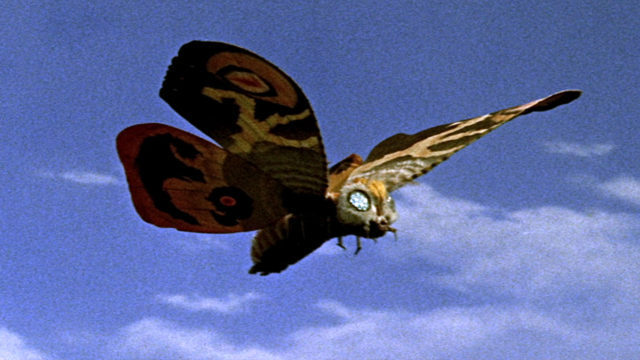
Mothra flies into Japan Society for special screening on July 8

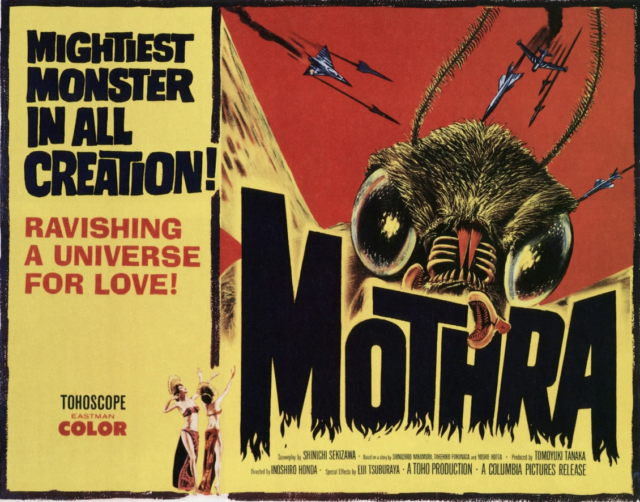
MOTHRA (KAIJU) (Ishirō Honda, 1961)
Japan Society
333 East 47th St. at First Ave.
Friday, July 8, $15, 7:00
www.japansociety.org

Look, up in the sky! It’s a bird! It’s a plane! It’s — well, eventually, it’s a gigantic gynnidomorpha alisman, commonly known as a moth. But first, it’s an enormous caterpillar that moves across Japan slower than the giant breast in Woody Allen’s 1972 Everything You Always Wanted to Know About Sex* But Were Afraid to Ask. And while the mammoth mammary Victor Shakapopulis is hunting down in Allen’s comedy shoots out mother’s milk, the giant lepidoptera, labeled Mothra, dispenses powerful silk.

In the 1950s and ’60s, a series of Japanese films featured monsters born of the aftereffects of the atomic bombs that were dropped on Hiroshima and Nagasaki and the fear of alien invasion. It all started with Ishirō Honda’s Godzilla in 1954 and also included Honda’s Rodan and King Ghidorah and Noriaki Uasa’s Gamera as well as endless sequels.

In 1961, Honda gave us Mothra, a melding of GodzillaGojira in Japanese, the last two letters of which were added to the otherwise harmless word “moth” to make it appear much more dangerous — and the basic plot of King Kong. In fact, the next year Honda made King Kong vs. Godzilla.

The tale begins as human life is discovered on Infant Island, where the government of Rolisica (a combination of Russia and America) conducted hydrogen bomb tests thinking the land mass was uninhabitable. A group of explorers is assembled to investigate, led by the evil Rolisican Clark Nelson (Jerry Ito), who has ulterior motives. Among the others on the expedition are Dr. Shin’ichi Chûjô (Hiroshi Koizumi), an anthropologist and linguist who is excited by what might be discovered, and Zen’ichirō Fukuda (Frankie Sakai), a stowaway reporter (and comic relief) who is trying to get the big story for his demanding editor, Sadakatsu Amano (the great Takashi Shimura of Akira Kurosawa fame).

On the island, they discover a pair of “tiny beauties” (identical twins Yumi Ito and Emi Ito of the pop duo the Peanuts) called the Shobijin, singing sisters who are a mere one foot tall. Using weapons against the peaceful indigenous population, Nelson captures the fairies and brings them to Japan to exploit them. The islanders then perform a ritual ceremony to summon a great monster from its shell to bring the women back. “Whatever some giant monster does is completely unrelated with our work,” Nelson’s cohort declares, setting the stage for a final showdown in New Kirk City, a version of New York, Los Angeles, and San Francisco.

Mothra is a bizarrely masterful movie, a warning about the dangers of atomic warfare, government greed, rampant capitalism, and disregard for indigenous societies. Written by Shinichi Sekizawa, who penned dozens of monster flicks, the film is a kind of parable of the human life cycle from birth to death. The Shobijin, two miniature women, are found on the deftly titled Infant Island, and they are almost like children, growing up in front of us as they learn to speak. Mothra evolves from egg to caterpillar to moth. It’s as if the whole world has been reborn in the aftermath of WWII, with Russia and America merging together to try to become the parents of the planet.

The special effects, courtesy of Eiji Tsuburaya, are often hilarious. When Nelson picks up the tiny beauties, it is obvious he is holding two small dolls. It is clear that many of the cars are toys, and the breaking of a dam looks like a kid’s unwieldy science experiment. Pre-CGI superimposition of characters over various locations is shaky. For some reason, the military pauses for what seems like hours while Mothra spins its cocoon. The skin of the actors portraying the indigenous denizens of Infant Island was (poorly) darkened in a way that would be totally unacceptable today (and should have been in 1961).

But then, amid an attack by Japanese planes on Mothra doing the breaststroke across the ocean, an unintended rainbow flashes for just a second, as if the heavens are declaring him our hero and promising that things will turn out okay, a feeling that is echoed in the Peanuts’ haunting, memorable song.

Mothra is screening in 35mm at Japan Society on July 8 at 7:00 and will be introduced by Kevin Derendorf, author of SF: The Japanese Science Fiction Film Encyclopedia and Kaiju for Hipsters: 101 Alternative Giant Monster Movies. In addition, there will be a Kaiju-themed pop-up sponsored by Seismic Toys, with an exclusive limited-edition Mothra Mini-Print by Robo7 on sale in the lobby.