this week in lectures, signings, panel discussions, workshops, and Q&As

HISPANIC GOLDEN AGE CLASSICS | LOPE DE VEGA: THE CAPULETS AND THE MONTAGUES

Who: Red Bull Theater
What: Online benefit reading and free discussions
Where: Red Bull Theater online
When: Monday, September 12, $25, 7:30
Why: Red Bull Theater kicked off its “Hispanic Golden Age Classics — Lope de Vega” initiative on September 8 with the panel discussion “Lope de Vega & Shakespeare,” exploring how the Bard and Spanish playwright and novelist Félix Lope de Vega y Carpio both wrote works about the Capulets and the Montagues; UCLA professor Barbara Fuchs and UCLA PhD candidate Rhonda Sharrah were joined by actor Dakin Matthews, who wrote the new rhyming translation that is being used. The “Diversifying the Classics” programming is centered by a live, online reading of Lope de Vega’s The Capulets and the Montagues (Castelvines y Monteses) on September 12 at 7:30 (available through September 18 at 11:59 pm), performed by Junior Nyong’o as Romeo and Cara Ricketts as Juliet, along with Anita Castillo-Halvorssen, Christian DeMarais, Carson Elrod, Topher Embrey, Alejandra Escalante, Jake Hart, Paco Lozano, Maria-Christina Oliveras, Timothy D. Stickney, and Matthews, directed by Melia Bensussen. On September 15 at 7:30, members of the creative team will participate in the interactive online Bull Session “The Capulets and the Montagues.”

Castelvines y Monteses is the sixth comedia I have translated, and my first Lopean adventure — after three Alarcóns, one Tirso, and one Moreto. It was a bracing experience to dip for the first time into the font from which sprang all later comedias,” Matthews explains in an introductory essay. “And it was just as bracing to work with material that so closely accorded with that of Shakespeare, who has been the subject of my lifelong fascination and study. And there, of course, lies the first trap that I — and any translator who comes to Lope’s version of the Romeo and Juliet story — must try to avoid. (Which I did not make any easier on myself, I confess, by my determination to use the equivalent Shakespearean proper names in an effort to make the play more appealing to English-speaking producers and audiences.)” Meanwhile, Sharrah notes, “Miguel de Cervantes, [Lope’s] contemporary and rival, may not have meant it entirely as a compliment when he called Lope a ‘monster of nature’ (monstruo de la naturaleza). Yet Lope’s prodigious output was fundamental to developing the theater of his age, and to our understanding of it today. The monster of nature left us many gifts.”
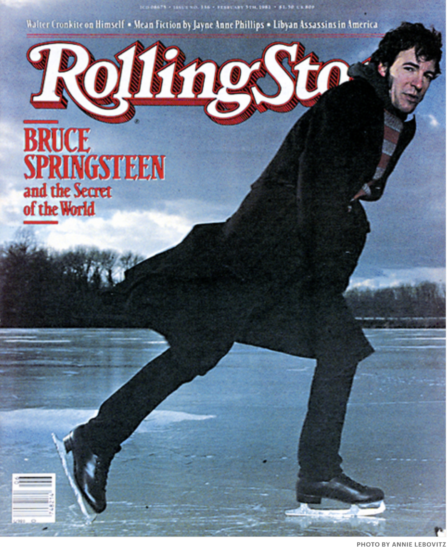
LIKE A ROLLING STONE: JANN WENNER IN CONVERSATION WITH BRUCE SPRINGSTEEN

Who: Bruce Springsteen, Jann S. Wenner
What: Virtual and in-person discussion
Where: 92nd St. Y, Kaufmann Concert Hall, 1395 Lexington Ave., and online
When: Tuesday, September 13, $60 (includes book), 7:00
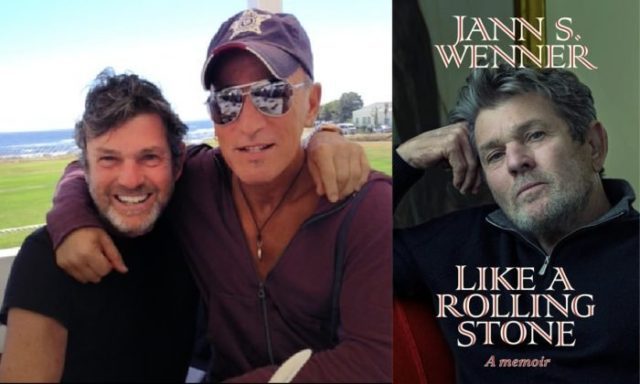
Why: “I went to the Rolling Stone offices on a Monday morning in mid-May 2019. My assistant met me downstairs to take my attaché case, as I was still walking with two canes. It was a gray day in New York, one of rain, with a forecast for more all week. When I got to our second-floor lobby, workmen were putting up plywood to protect the walls from the movers,” Jann S. Wenner writes in “The Last Days,” the prologue to his new memoir, Like a Rolling Stone (Little, Brown, $35). Cleaning out his office, he writes, “I took down Annie Leibovitz’s portrait of a young Pete Townshend, his hands bloody from playing his guitar. . . . I packed up the small wood and metal sculpture of a skier that Patti Scialfa sent for my birthday.” Describing the memoir itself, he posits, “Our readers often referred to Rolling Stone as a letter from home. This is my last letter to you.”

On September 13, Wenner will be at the 92nd St. Y to discuss his memoir with his longtime friend Bruce Springsteen, who has appeared on the cover of Rolling Stone by himself fourteen times and another eight with others; the conclusion to Wenner’s prologue is a reference to Springsteen’s most recent album, Letter to You. Bruce, whose wife is Patti Scialfa, has been the subject of numerous RS interviews, but this time he turns the tables, interviewing Wenner about the new book, delving into the New York City native’s often controversial life and career. Springsteen says of the memoir, “If you were young, alone, and in the far lands of New Jersey, Rolling Stone was a dispatch from the front, carrying news of a bigger world and another life awaiting. Like a Rolling Stone is a touchingly honest memoir from a man who recorded and shaped our times and of a grand life well lived. It is a wonderfully deep and rewarding reading. I loved it.”

The book features seventy-seven chapters that explore the counterculture, politics, family, and such journalists, musicians, and pop-culture icons as Hunter S. Thompson, Ralph J. Gleason, the Beatles, the Rolling Stones, John Belushi, Jackie Onassis, Tom Wolfe, the Dalai Lama, and the Grateful Dead. In addition to being the founder and publisher of Rolling Stone, Wenner, a cofounder of the Rock and Roll Hall of Fame, has interviewed such figures as Bono, Bob Dylan, Mick Jagger, Bill Clinton, John Kerry, Jerry Garcia, John Lennon, and Townshend for the magazine; Jagger and music executive Ahmet Ertegun inducted Wenner into the hall in 2004. Tickets are $60 and come with a copy of the book, which will be signed for those attending the event in person.

CROSSING THE LINE FESTIVAL 2022

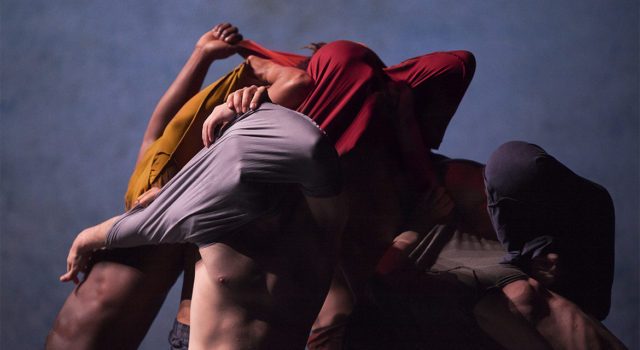
Fouad Boussouf’s Näss will be performed at the Joyce as part of FIAF fest (photo © Charlotte Audureau)

CROSSING THE LINE FESTIVAL
FIAF and other locations
55 East 59th St. between Madison & Park Aves.
September 9–October 28, free – $75
212-355-6100
fiaf.org

FIAF’s fifteenth annual Crossing the Line Festival is another journey into exciting, challenging, and experimental music, dance, and theater from the French-speaking world. Running September 9 through October 28, the programs take place at such venues as Abrons Arts Center, New York Live Arts, the Chinese Consolidated Benevolent Association, the Joyce, and BAM in addition to FIAF’s Gallery, Florence Gould Hall, and Skyroom.

“For our first year curating this festival, we wanted to honor its founding principles: presenting compelling multidisciplinary art forms throughout the city, bringing acclaimed cutting-edge French and Francophone productions to our shores, and nurturing dialogue between international and New York-based artists,” curators Mathilde Augé and Florent Masse write in a program note. “The fifteenth edition of the festival features a diverse group of audacious artists engaging with the most pressing issues of our time — including gender, sexuality, human connection, race, and climate change — and exploring new territories in performing arts.”

None of the nine live performances — there were supposed to be ten but Caroline Guiela Nguyen’s FRATERNITY, A Fantastic Tale had to be canceled because of visa problems — has ever been seen before in New York, including several North American, US, and world premieres. The mix of dance, theater, art, music, and literature hails from Senegal, France, South Africa, Rwanda, the United States, and Morocco, examining societal change, Vaslav Nijinsky, science, Cheikh Anta Diop, intergenerational culture, the political views of René Char and Frantz Fanon, and a Detroit rave.

In addition, FIAF is hosting the fall open house celebration Fête de la Rentrée, highlighted by an opening reception for Omar Ba’s “Clin d’oeil” art exhibition on September 9 at 6:00 (free with RSVP) and a Sunset Soirée at Le Bain on October 12 at the Standard Hotel (free with RSVP). Below is the full Crossing the Line schedule.

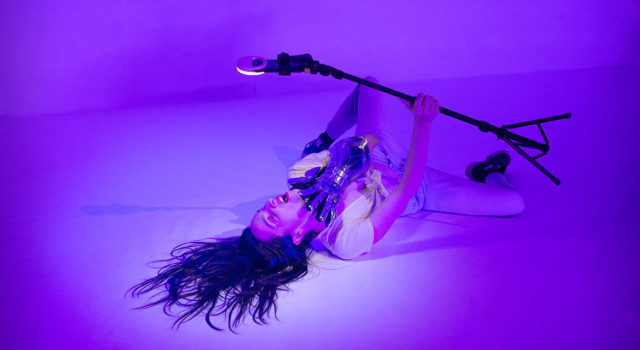
Helena de Laurens stars in Marion Siéfert’s _ jeanne_dark _ at FIAF’s Crossing the Line Festival (photo © Matthieu Bareyre)

September 9 – October 28
Exhibition: “Clin d’oeil,” by Omar Ba, FIAF Gallery, free

Wednesday, September 14, and Thursday, September 15
Theater: _ jeanne_dark _, by Marion Siéfert, starring Helena de Laurens, North American premiere, FIAF Florence Gould Hall, $40, 7:30

Wednesday, September 21
Theater: Traces – Speech to African Nations, by Felwine Sarr and Étienne Minoungou, with Étienne Minoungou and Simon Winsé, New York premiere, Abrons Arts Center, $25, 8:30

Thursday, September 22, through Saturday, September 24
Dance: And so you see… our honourable blue sky and ever enduring sun… can only be consumed slice by slice…, by Robyn Orlin, performed by Albert Ibokwe Khoza, US premiere, New York Live Arts, $15-$35, 7:30

Saturday, September 24
Theater: Freedom, I’ll have lived your dream until the very last day, by Felwine Sarr and Dorcy Rugamba, featuring Marie-Laure Crochant, Majnun, Felwine Sarr, and T.I.E., North American premiere, Florence Gould Hall, $40, 7:30

Bruno Latour and Frédérique Aït-Touati’s Terrestrial Trilogy closes out FIAF fest (photo © zonecritiquecie)

Thursday, September 29, and Friday, September 30
Performance: Fire in the Head, by Christopher Myers, world premiere, Chinese Consolidated Benevolent Association, $20, 7:30

Thursday, October 6, through Saturday, October 8
Dance: The Encounter, by Kimberly Bartosik, performed by Kimberly Bartosik, Claude “CJ” Johnson, Burr Johnson, Joanna Kotze, Ryan Pliss, Kalub Thompson, Mac Twining, River Bartosik-Murray, Logan Farmer, and Ellington Hurd, world premiere, FIAF Skyroom, $30, 7:30

Thursday, October 13, through Saturday, October 15
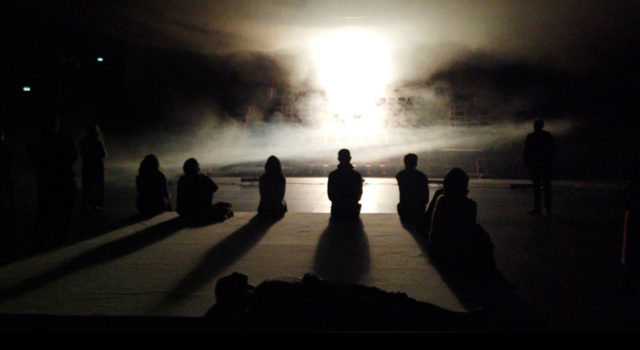
Dance: CROWD, by Gisèle Vienne, US premiere, BAM Howard Gilman Opera House, $35-$75, 7:30

Tuesday, October 18, through Sunday, October 23
Dance: Näss, by Fouad Boussouf, New York premiere, the Joyce Theater, $20-$55

Thursday, October 27, and Friday, October 28
Theater: The Terrestrial Trilogy, a Performance in Three Parts: Inside, Moving Earths, and Viral, by Bruno Latour and Frédérique Aït-Touati, with special guest Bruno Latour, North American premiere, FIAF Florence Gould Hall, $40

MILOŠ FORMAN 90

MILOŠ FORMAN 90
Film Forum
209 West Houston St.
September 9-22
212-727-8110
filmforum.org

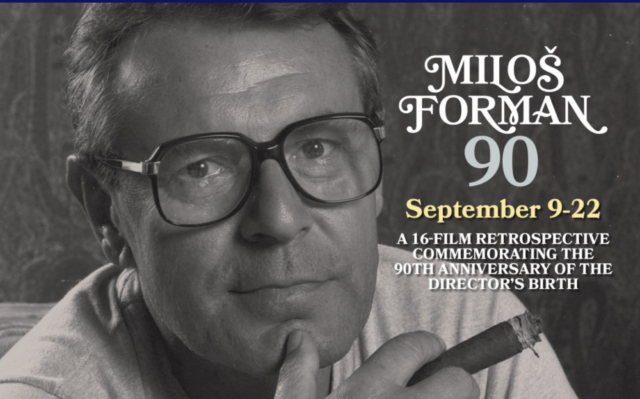
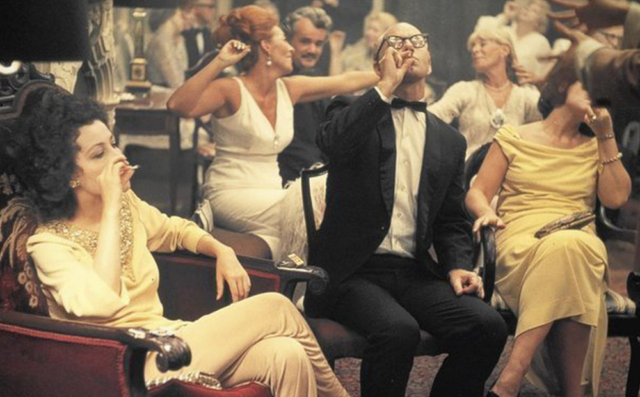
Upon the death of master Czech filmmaker Miloš Forman in 2018 at the age of eighty-six, film curator and producer Irena Kovarova wrote in Czech Film magazine, “When Miloš Forman was a young boy, he and his parents dressed up in their Sunday best and headed over to the cinema in Čáslav for the future filmmaker’s first moviegoing experience. They took their seats and the opera Bartered Bride began on screen — as a silent film. In Forman’s telling of this story, he would always pause when delivering the paradox of this moment. Then he would continue, revealing that to his great delight, the audience, knowing the opera by heart, began to sing along. From that moment on, cinema was forever fixed in his mind as a communal experience. Miloš Forman was a remarkable storyteller. For the screen and in person. You’d hear him tell the same stories from his career on many occasions, but you’d never see him bored with his own words. They were perfectly crafted and he was incredibly generous with his audience. He knew the story worked and he was there to bring his listeners joy with his delivery, which in turn warmed his heart. He was a man larger than life: his baritone voice strong, and his r’s rolled and resounding. One believed when in his presence that his first love was for people, and he made sure that everyone around him could feel it.”

Miloš Forman celebration at Film Forum takes off with Taking Off

Kovarova is serving as the consultant on the Film Forum series “Miloš Forman 90,” celebrating the ninetieth anniversary of the director’s birth in Caslav. The two-week festival consists of all twelve of his feature films, from 1964’s Black Peter to 2006’s Goya’s Ghosts, in addition to several documentaries (Czechoslovakia, 1967) and Alfréd Radok’s 1956 Old Man Motor Car, in which Forman makes a brief appearance. Radok was a major influence on Forman; the two went on to work together at the multimedia theater company Laterna Magika.

The series boasts such beloved classics as One Flew Over the Cuckoo’s Nest, Ragtime, and Amadeus in addition to Man on the Moon, Hair, and Valmont. Kovarova will introduce the September 15 showing of Audition, the September 17 screenings of Old Man Motor Car The Firemen’s Ball, and the September 20 screening of Věra Chytilová’s 1982 documentary, Chytilová versus Forman. Producer Michael Hausman will introduce the 1968 counterculture favorite Taking Off (starring Buck Henry!) on September 9 at 8:30; screenwriter Michael Weller will introduce Ragtime on September 11 at 3:40; screenwriters Scott Alexander and Larry Karaszewski will introduce the 6:00 screening of Man on the Moon on September 12 and, on the same day, participate in a Q&A following the 8:30 screening of The People vs. Larry Flynt; producer Paul Zaentz will introduce the September 16 screening of Amadeus and the September 19 screening of Goya’s Ghosts.

THE BENGALI

Fatima Shaik searches for a critical piece of family history in The Bengali

THE BENGALI (Kavery Kaul, 2021)
Quad Cinema
34 West 13th St. between Fifth & Sixth Aves.
Opens Friday, September 9
212-255-2243
quadcinema.com
www.thebengalifilm.com

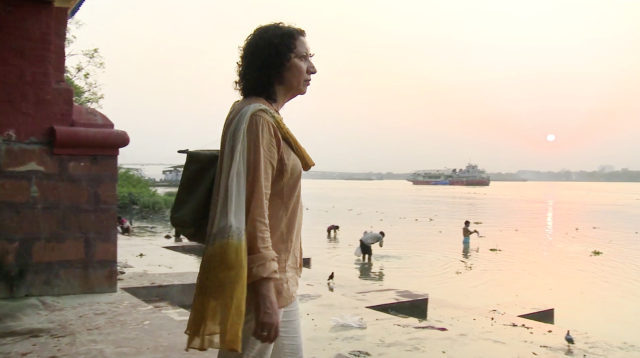
“Why would anybody come from the other side of the world to find somebody who doesn’t even exist anymore?” author Fatima Shaik says at the beginning of The Bengali. “Why not?” asks Kolkata-born American director Kavery Kaul. Armed with a partial ship’s registry and a photograph of her grandfather, Shaik Mohamed Musa, who left his small village in India in 1893 to make a new life in the United States, in New Orleans, where he married a Black woman, Fatima travels to her ancestral country, wanting to know more about where she came from and to see a patch of land that he owned. Joined by Kaul, who is Bengali, and cinematographer John Russell Foster, who is white, they have very little information and face roadblock after roadblock until success is in reach, but everywhere she goes, Fatima is met with resistance, as Indians view her with suspicion, thinking that she, a Christian in a Muslim community, might be there to reclaim her grandfather’s land.

The Bengali is an emotional, deeply personal search for identity, almost to the point of obsession, of seeking out one’s family history in a land where you don’t speak the language and are not immediately welcome. The film opens at the Quad on September 9, with Kaul (Cuban Canvas, Long Way from Home) participating in Q&As following the 7:00 screenings on September 9 and 10 and after the 5:10 show on September 11.

THREE MINUTES — A LENGTHENING

Three minutes of footage tell a remarkable story in documentary

THREE MINUTES: A LENGTHENING (Bianca Stigter, 2021)
Quad Cinema
34 West 13th St. between Fifth & Sixth Aves.
August 18-25
212-255-2243
quadcinema.com
www.threeminutesfilm.com

“For the Jewish inhabitants of Nasielsk in Poland, nothing remains,” narrator Helena Bonham Carter says in Bianca Stigter’s astounding documentary, Three Minutes — A Lengthening. “The only thing left is an absence.”

In 1938, David and Liza Kurtz, Polish immigrants who had come to New York in the 1890s and found success, took a trip to Europe, where they visited Holland, Belgium, Switzerland, France, and England, on the cusp of the Holocaust. In an unusual move for Americans making a Grand Tour, they visited David’s hometown of Nasielsk in Eastern Europe that August. There, David used his brand-new movie camera to shoot footage in 16mm Kodachrome and black-and-white of the men, women, and children of the village, smiling, goofing around, and preening, of course unaware of what was to come in a very short time.

In 2009, David and Liza’s grandson Glenn Kurtz donated the three minutes of footage to the United States Holocaust Memorial Museum in Washington, DC, for preservation and research. The museum posted it online, hoping that perhaps some of the people in the film could be identified. Glenn further researched the excerpt for four years, detailing his journey in the 2014 book Three Minutes in Poland: Discovering a Lost World in a 1938 Family Film.

“Nasielsk was not an important town, unless you lived there. It was just a town,” Kurtz explains in the documentary. “But of all the Polish towns destroyed in the Holocaust, Nasielsk is among the very few that exists in moving pictures, among just a handful preserved in color.”

In 2015, Dutch historian and cultural critic Stigter made a short work-in-progress film based on the footage (Three Minutes Thirteen Minutes Thirty Minutes), and now she has expanded it into her feature-length debut, Three Minutes — A Lengthening, opening August 18 at the Quad. It’s a haunting investigation of time and memory that focuses exclusively on the 180+ seconds of David Kurtz’s Nasielsk footage; there are no other images in the seventy-minute film. Stigter and editor Katharina Wartena perform a kind of forensic analysis of each moment, zooming in on specific individuals or locations, trying to figure out the name of a grocery store, even determining what kind of trees lined the cobblestone square, understanding that anything could provide critical information.

The style of the film is reminiscent of what filmmaker Peter Greenaway did with Leonardo da Vinci’s The Last Supper, Rembrandt’s The Night Watch, and Veronese’s Wedding at Cana, fantastically close examinations of every face and detail on the canvases, but the subjects of Three Minutes are all too real.

“These three minutes of life were taken out of the flow of time,” Bonham Carter says. That becomes particularly apparent when thirteen-year-old Maurice Chandler, born Mozek Tuchendler, is recognized by a family member, and Stigter visits him in Detroit; we hear him as he watches the footage, remembering some of the other residents and telling a charming story of some trouble he and a friend got into one day.

The only misstep, and a minor one at that, is a section in which Stigter slowly fills the screen with thumbnails of every face in the footage; while the point is to give each individual their own moment of identity, proof of their existence, it takes away from the overall flow of the film and its compelling detective-procedural-style pacing. However, stick around to the end of the credits for a little bonus.

Although Stigter, who previously served as an associate producer on Widows and Twelve Years a Slave, both directed by her husband, Steve McQueen, who is a co-producer on Three Minutes, speaks with Kurtz, Chandler, survivor Andrzej Lubieniecki, historian Zdzisław Suwiński, translator Katarzyna Kacprzak, and two of Chandler’s relatives, they are never shown; this film is about the three thousand people who lived in Nasielsk in 1938, fewer than a hundred of whom survived the Nazi invasion. It’s also about all such Eastern European Jewish towns that were decimated in the Holocaust.

“By defining the loss of that world, we might succeed in keeping the memory alive,” Kurtz says. In addition, it’s about the power of the medium of film, how it can capture the past and preserve culture and history that might have otherwise disappeared forever. Stigter has noted that there were other surprising elements that she could have pursued, some of which are included in Kurtz’s book, but she wanted to concentrate solely on what could be discovered and interpreted from the celluloid itself.

Last year, Ruth Katcher, a colleague of mine, found 8mm footage of her family holding a Passover seder in Philadelphia in April 1932, led by her great-grandfather, who, with his wife and children in 1906, had fled Donetsk in what is now Eastern Ukraine. It is a remarkable three-and-a-half-minute scene, which she discusses in an article in the Forward. “The film has special resonance, showing nearly the last seder with the family intact,” Katcher writes.

After experiencing Three Minutes, don’t be surprised if you find yourself going through closets and basements, looking for recorded remnants of your family’s past.

Stigter and Kurtz will participate in a series of Q&As following screenings on August 18, 19, 20 (all at 7:00) and 21 (2:00), moderated by Dr. Ori Z. Soltes, Aviva Slesin, or Annette Insdorf. The film will also be presented September 8 and 12 at the Marlene Meyerson JCC Manhattan.

STAND WITH SALMAN: DEFEND THE FREEDOM TO WRITE

Who: Paul Auster, Reginald Dwayne Betts, Tina Brown, Kiran Desai, Andrea Elliott, Amanda Foreman, A. M. Homes, Siri Hustvedt, Hari Kunzru, Colum McCann, Douglas Murray, Andrew Solomon, Gay Talese, more
What: Public reading of Salman Rushdie’s The Satanic Verses
Where: The New York Public Library, Fifth Ave. and Forty-Second St., and online
When: Friday, August 19, free, 11:00 am
Why: “‘To be born again,’ sang Gibreel Farishta tumbling from the heavens, ‘first you have to die. Ho ji! Ho ji! To land upon the bosomy earth, first one needs to fly. Ta-taa! Taka-thun! How to ever smile again, if first you won’t cry? How to win the darling’s love, mister, without a sigh? Baba, if you want to get born again . . .’”

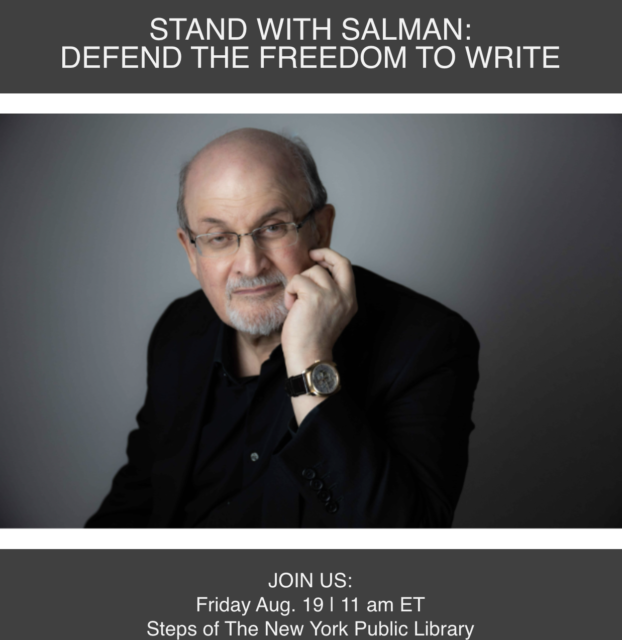
So begins Salman Rushdie’s 1988 Booker Prize finalist and Whitbread winner, The Satanic Verses, which famously led the Ayatollah Khomeini to issue a fatwa on the Indian-born British-American novelist, calling for his death, complete with a multimillion-dollar bounty. While others associated with the publication of the book have indeed been murdered (Italian translator Ettore Capriolo, Japanese translator Hitoshi Igarashi; Norwegian publisher William Nygaard and Turkish translator Aziz Nesin survived attacks), Rushdie spent years in hiding but ultimately emerged to become a leading international literary figure. But on August 12, Rushdie was stabbed ten times as he prepared to give a talk and lecture at the Chautauqua Institution; the alleged assailant, twenty-four-year-old Hadi Matar, claims to have read only two pages of The Satanic Verses but decided to try to kill Rushdie after watching numerous speeches of his on YouTube.

Rushdie, who has been writing and speaking about human rights and free speech around the world for decades, will be celebrated on August 19 at 11:00 am when a group of his friends and colleagues gather on the steps of the New York Public Library in Midtown for a public reading of his most famous book; there was also a public reading of the work a few days after the fatwa was declared, some thirty-three years ago. Organized by PEN, the NYPL, PenguinRandom House, and House of SpeakEasy, “Stand with Salman: Defend the Freedom to Write” will include such authorial stalwarts as Paul Auster, Reginald Dwayne Betts, Tina Brown, Kiran Desai, Andrea Elliott, Amanda Foreman, A. M. Homes, Siri Hustvedt, Hari Kunzru, Colum McCann, Douglas Murray, Andrew Solomon, and Gay Talese. The grassroots event is open to all and will be livestreamed as well; in addition, you can post your own reading of a short passage on social media using #StandWithSalman and tagging @penamerica.

“We are again facing a watershed moment,” Foreman wrote in a statement. “The war against freedom of expression is gaining strength. Globally, over two thousand writers and journalists have been murdered since Rushdie was sentence to death by Iran. On August 19 we have an opportunity to make a stand: courage breeds courage.”