Walking tour of Harlem is part of special exhibition programming at Poster House
POSTER HOUSE WALKING TOUR WITH HISTORIAN JOHN T. REDDICK
Poster House
119 West Twenty-Third St. (tour starting point given upon ticket purchase)
Saturday, July 18, $25, 11:00 am to 1:00 pm
Exhibition runs through September 6 posterhouse.org
In September 2024, longtime Harlem resident, preservationist, and Yale University School of Architecture graduate John T. Reddick gave me a tour of the exhibit “Illustrating Tin Pan Alley: From Ragtime to Jazz” at the Society of Illustrators, consisting of his remarkable collection of sheet music art from the Tin Pan Alley era, focusing on Black composers, musicians, and performers. He told me that while doing his research, “It was just shocking; as I bought sheet music or got to see the names, I realized they all lived in Harlem during the same time period.”
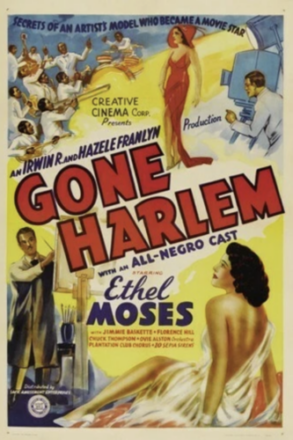
Reddick is now collaborating with Poster House on a walking tour of Harlem in conjunction with the institution’s “Act Black: Posters from Black American Stage & Screen,” comprising promotional posters for musical revues, theatrical presentations, and movies featuring Black performers from the 1870s to the 1940s (including from Cabin in the Sky,Zouzou, and Imitation of Life). The one-hour tour will visit Strivers’ Row, the Schomburg Center, and Harlem Hospital’s WPA murals, among other locations that played a role in the Harlem Renaissance.
Reddick, who is a member of the Board of Directors of the Tin Pan Alley American Popular Music Project, is an engaging storyteller and a font of knowledge, so this should be a special adventure; tickets are $25, and the starting point will be given upon purchase.
[Mark Rifkin is a Brooklyn-born, Manhattan-based writer; you can follow him on Substack here.]
Hirokazu Koreeda’s Sheep in the Box closes the 2026 Japan Cuts festival
JAPAN CUTS: FESTIVAL OF NEW JAPANESE FILM
Japan Society
333 East 47th St. at First Ave.
July 8–19, $16-$20 www.japansociety.org
“The world is full of strange things,” a narrator says in one of the films that make up this year’s “Japan Cuts: Festival of New Japanese Film,” running July 8–19 at Japan Society. As always, the nineteenth edition of the hotly anticipated series is chock full of strange things, as well as things of beauty — and often both at the same time.
Japanese films may come in all genres, but the best of the best tend to veer off track into their own indefinable categories, and the 2026 iteration is no different, with more than its share of exciting, unusual, frightening, romantic, bloodthirsty, chilling, touching, and gorgeous works. There are twenty-seven programs divided into five sections: “Feature Slate,” “Next Generation,” “Classics,” “Documentaries,” and “New Directions in Japanese Cinema.”
The festival opens July 8 with Yoji Yamada’s ninety-first full-length film, Tokyo Taxi, followed by a reception with Twisty BonBon. The centerpiece selection is Kei Ishikawa’s A Pale View of Hills, followed by a Q&A and reception with star Suzu Hirose, winner of the Cut Above award. The closing-night film is Hirokazu Koreeda’s Sheep in the Box, followed by a Q&A and reception with the director.
Below is a look at some of the other highlights, with more strangeness to come.
SHUFFLE (『シャッフル』) (Gakuryu Ishii, 1981) THE MASTER OF SHIATSU (『指圧王者』; SHIATSU OJA) (Gakuryu Ishii as Sogo Ishii, 1989)
Saturday, July 11, 5:30 japansociety.org
One of the myriad reasons to check out Japan Cuts is for double features such as this wild one, the world premieres of 4K restorations of Gakuryu Ishii’s 1981 thirty-seven-minute Shuffle and 1989 thirteen-minute The Master of Shiatsu.
The Master of Shiatsu begins with a close-up of a woman’s left hand stroking a man’s right hand in what appears to be an elegant bar. Bright lights glow from the contact, a crazy laugh is heard, and the opening credits roll, the title in a wacky design reminiscent of 1970s wuxia films. Ishii then cuts to a feather floating into a candle and a woman (Anna Hole) getting a deep, erotic massage from an older man (Tokujiro Namikoshi, the real-life Father of Shiatsu). Wonderfully cheesy special effects take them both to another dimension, leading to a very strange but optimistic finale.
Inspired by Katsuhiro Otomo’s manga Run, the mostly black-and-white Shuffle begins with a close-up of a young punk, Hiroshi Kobayashi (Yosuke Nakajima), cutting off his hair when a small earthquake hits, knocking down some of the bullets next to a handgun. He peers out his window at two men in suits surveilling the area, then heads outside, where he is spotted by one of the detectives (Tatsuya Mori). What ensues is one of the wildest foot chases you’ve ever seen, a brilliantly filmed frenetic pursuit, set to Hikashu’s propulsive score, in which neither man is willing to give up. The action cuts away a few times to reveal a back story involving a femme fatale, Naomi (Shigeru Muroi), and a gangster, Kimura (Genjirō Arato), but keeps returning to the seemingly endless hunt, with Kobayashi hallucinating, in color, moments from his past.
Both films create fantastical realities with characters immersed in activities that release endorphins and dopamine that the audience tunes in to, The Master of Shiatsu slowly paced and intimate, Shuffle a marathon sprint Ishii called “a portrait of my generation.” I dare you to not think about these films the next time you get a massage or go running, for whatever reason.
Four sisters come together after their father’s death in another masterpiece from Hirokazu Koreeda
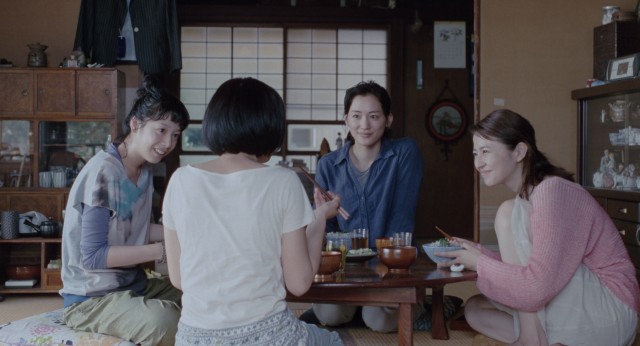
In such films as Still Walking,Nobody Knows, and Like Father, Like Son, Japanese writer-director-editor Hirokazu Koreeda has crafted beautifully told tales of parents and children, of estrangement and divorce, of death and ritual and the unbreakable bonds between siblings. In yet another minimalist masterpiece, Our Little Sister, he focuses on the women of the happily dysfunctional Kōda family in the scenic city of Kamakura. Sachi (Haruka Ayase), Yoshino (Masami Nagasawa), and Chika (Kaho) live together in a large house, where they go about their days with the normal trials and tribulations of twentysomething women. Sachi, the oldest, is a nurse who acts as a surrogate mother to her younger sisters, since their real mother plays almost no role in their lives. Yoshino, the middle sister, works in a bank and likes to stay out late drinking and partying. And Chika, the baby of the trio, is sweet and goofy, but not as goofy as her mountain-climbing boyfriend. When their long-estranged father dies, they decide to attend the funeral, where they meet their dad’s thirteen-year-old daughter from his second of three marriages, Suzu Asano (Suzu Hirose), a solid, smart girl who seems a bit lost now that both of her parents are dead. So the three older sisters invite her to move in with them in Kamakura and extend their family. The four immediately grow close as they live their daily lives, going to work or school, eating together, interacting with the opposite sex, and honoring their deceased ancestors. Suzu also regales them with tales of their father, some of which surprise them. Not a whole lot happens except a series of heartfelt, realistic scenes that audiences of all kinds can relate to.
Freely adapted from Akimi Yoshida’s josei manga Umimachi Diary,Our Little Sister simmers with the beauty and energy of real life, as Koreeda offers viewers a fly-on-the-wall look at four exquisite women living day by day. Koreeda once again blends documentary techniques with the intimate style of Yasujirō Ozu to fully develop his delightful characters, from the four sisters to their great-aunt to a student smitten with Suzu to local diner owner Sachiko Ninomiya (Jun Fubuki), who serves as a kind of tenderhearted matriarchal figure to the community. Yoko Kanno’s sweet music and Mikiya Takimoto’s lovely cinematography make it all a visual and aural pleasure, along with a fabulous cast that acts with an infectious naturalism. No one makes family dramas like Koreeda, who skillfully avoids treacly plot twists in favor of simplicity, making it all seem easy. If you’ve never seen a Koreeda film, Our Little Sister is a great place to start, and if you have experienced any of his previous work, this one is another gentle, graceful, and immensely engaging tour de force from one of the world’s most talented and original filmmakers. His latest, Sheep in the Box, closes “Japan Cuts” on July 19.
Kura (Kei Nakafuji) and Kishida (Kai Fujita) are reunited high school friends in Gingerboy
GINGERBOY (『ジンジャーボーイ』; JINJABOI; SEPARATED) (Miki Tanaka, 2024) NAOMI OUT OF SYNC (『空回りする直美』; KARAMAWARI SURU NAOMI) (Fuku Nakazato, 2025)
Tuesday, July 14, 9:00 japansociety.org
The North American premiere of Miki Tanaka’s forty-eight-minute Gingerboy and the international premiere of Fuku Nakazato’s forty-four-minute Naomi Out of Sync make for a strangely compelling double feature. Part of “Next Generation,” in which one filmmaker will take home a three-thousand-dollar stipend, the movies both explore offbeat relationships, obsession, and physiological and neurodevelopmental conditions.
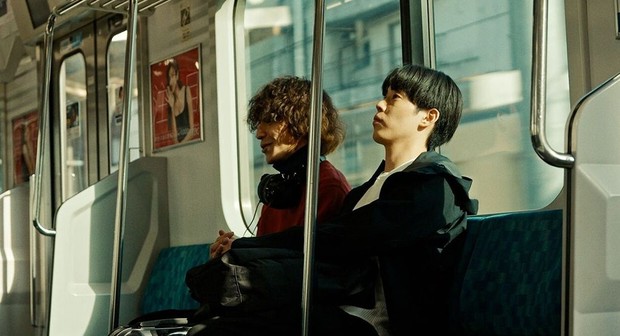
Winner of a joint third prize La Cinéf Selection award at Cannes, Gingerboy reunites high school friends Kishida (Kai Fujita) and Kura (Kei Nakafuji), whose lives have gone in opposite directions. The former is a regional banker who has been transferred to Tokyo, while the latter is an aspiring ne’er-do-well filmmaker. Kishida puts on a suit for work and has a girlfriend back home; he is quiet and unassuming, serious about his career. “I’m not nice,” he admits to a coworker. “It’s just a hassle to say no.” Kura is unpredictable and unkempt, wasting away the days and partying at night with booze and women. At first Kishida goes out with Kura, but he soon makes some discoveries about his roommate that complicate their friendship, even as Kura grows more dependent on him. Nakazato creates unique characters in knotty situations in a tense narrative that builds to a moving conclusion that provides no easy answers.
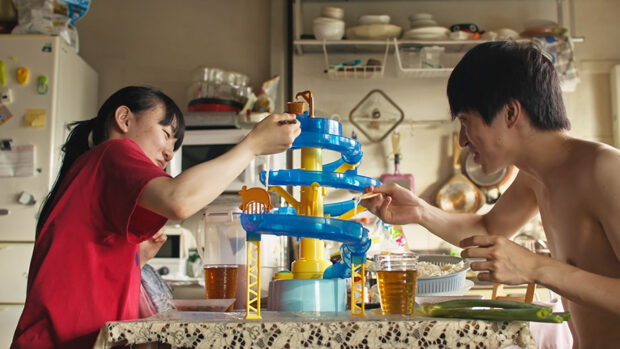
Naomi (Kono Adachi) and Shingo (Masafumi Shinohara) try the best they can in Naomi Out of Sync
In Naomi Out of Sync, Kono Adachi is delightful in the title role, an eighteen-year-old part-time employee caring for her her older brother, Shingo (Masafumi Shinohara), who has debilitating Tourette’s, while her father (Wataru Ohshige) is away. Naomi works at a supermarket but has trouble focusing on her job; when she gets disciplined, it looks like she’s not taking it seriously, but that’s just the way she approaches life. “What goes on in her head? And she always smiles when I scold her. What is she grinning about?” her boss asks another manager. When Shingo sells her clothes so he can buy a plastic toy, instead of getting mad, Naomi slurps down noodles she and Shingo slide through the toy. Naomi’s main responsibility is to make sure Shingo takes his medication, but when that goes awry, serious problems arise. But as her T-shirt says: “Fully honest: Believe in yourself.”
Winner of the Grand Prize at the PIA Film Festival, Naomi Out of Sync is an affecting drama about a dysfunctional family in which the two kids are trying to do the best they can, not unlike Kishida and Kura in Gingerboy. Kono is mesmerizing as Naomi; even when Naomi makes questionable decisions, you can’t help but be charmed by her, rooting her on as she stands by her choices. And oh, that surprise ending, one that is deeper than you might first imagine.
[Mark Rifkin is a Brooklyn-born, Manhattan-based writer; you can follow him on Substack here.]
Pianist Min Kwon reimagines “America the Beautiful” at Chelsea Music Festival
CHELSEA MUSIC FESTIVAL: EVERY STORY COUNTS
St. Paul’s German Church and other venues
June 20-27, $65-$150, season pass $500 chelseamusicfestival.org
“This season, our theme, ‘Every Story Counts,’ draws inspiration from the phrase ‘Every Vote Counts,’ where each person’s vote is dignified and counted in a democracy,” 2026 Chelsea Music Festival artistic directors Melinda Lee Masur and Ken-David Masur said in a statement. “This summer, we celebrate the power of music and storytelling to preserve and elevate the voices of people from all walks of life in America. As we contemplate America’s 250th anniversary, we welcome the voices of composers, musicians, artists, chefs, and creators who contribute to the cultural fabric of this country and strive to elevate our shared humanity. Our hope is to continue providing a stage and safe haven for the exchange of ideas and differences, and a fertile ground for artistic collaborations between the performing, visual, and culinary arts.”
The seventeenth annual event, running June 20–27, consists of nine special presentations, with seventeen New York premieres and two world premieres; tickets for some are near capacity or already sold out, so you better hurry if you want to be part of this year’s fest.
Invitation to Love — Opening Night with Clara Osowski
St. Paul’s German Church
315 West Twenty-Second St.
Saturday, June 20, $85, 7:00 chelseamusicfestival.org
Mezzo-soprano Clara Osowski and pianists Dimitri Dover and Melinda Lee Masur lead a six-piece ensemble in an evening of works that explore the American immigrant experience and the poetry of Langston Hughes and Paul Laurence Dunbar, comprising Mark Carlson’s Stars — The Dream Keeper, Aaron Copland’s Three Old American Songs, Erich Wolfgang Korngold’s Three Songs, Libby Larsen’s This Unbearable Stillness: Songs from the Balcony, Reinaldo Moya’s DREAM Songs, Frederick Piket’s The Dream Keeper, Damien Sneed’s All Night, All Day and I Dream A World, and Steven Ward’s Invitation to Love.
Mark Twain–inspired Southern Sunday Brunch
City Winery Bistro
25 Eleventh Ave.
Sunday, June 21, $100, 12:30 chelseamusicfestival.org
Food and drink aren’t the only things on the menu at this City Winery brunch with Melinda Lee Masur and Ken-David Masur, joined by director, writer, and producer Bill Barclay for a talk about the making of Copland & Twain (see below), along with music by violinists Yuyu Ikeda and Carlos Rafael Martinez Arroyo. Oh, yes, there is food and drink as well; the menu features buttermilk biscuits, buttermilk fried chicken and waffle, farm egg scramble, Saratoga potatoes, heirloom tomato, and warm apple pie.
America/Beautiful
St. Paul’s German Church
315 West Twenty-Second St.
Monday, June 22, $65, 7:00 chelseamusicfestival.org
During the pandemic, pianist Min Kwon initiated her America/Beautiful project, in which she asked more than seventy composers around the country, “What is America — is it beautiful, was it ever, or will it ever be?” Some of the results will be heard when she teams up with pianists Timo Andres, Chaihun Kim, and Jorges Tabarés and violinist Claire Bourg to perform America-themed works by Stewart Copeland, Vijay Iyer, Nico Muhly, and others, accompanied by landscape photography by Park Joon.
Verona Quartet at Poets House
Poets House
10 River Terr.
Tuesday, June 23, pay-what-you-wish, 7:00 chelseamusicfestival.org
The Verona Quartet — Jonathan Ong and Dorothy Ro on violin, Abigail Rojansky on viola, and Jonathan Dormand on cello — perform Philip Glass’s String Quartet No. 2 “Company,” George Walker’s Lyric for String Quartet, Jerod Impichchaachaaha’ Tate’s MoonStrike, and arranger Peter Myers’s Twenties Tunes Jazz Suite, with narration by Byron Singleton and poetry from Wayne Koestenbaum, followed by a wine reception.
American Street Food Stories with Chef Hinnerk von Bargen
St. Paul’s German Church
315 West Twenty-Second St.
Wednesday, June 24, $75, 7:00 chelseamusicfestival.org
CIA professor and Street Foods author Hinnerk von Bargen hosts an evening of culinary delights from street food stalls, including sloopy bun, curry wurst, cold Sichuan-style sesame noodles, and fruit sandos.
Aaron Copland and Mark Twain join forces in unique theatrical concert
Copland & Twain — A Theatrical Concert
Open Jar Studios
1601 Broadway, floor 11
Thursday, June 25, $150, 7:00 chelseamusicfestival.org
One of the highlights of the festival is Bill Barclay’s Copland & Twain — A Theatrical Concert, a genius pairing of Brooklyn-born composer Aaron Copland and Missouri-born humorist Samuel Langhorne Clemens, better known as Mark Twain. Their lives barely overlapped — Copland was nine when Twain died in 1910 at the age of seventy-four — but writer-director Barclay and Concert Theatre Works have produced an evening that brings together Copland’s Music for the Movies and Music for the Theater and Twain’s Diaries of Adam and Eve, performed by the Festival Chamber Orchestra, conducted by Ken-David Masur, and actors Caleb Mayo, Chloe McFarlane, Maurice Emanuel Parent, Robert Walsh, and Carson Elrod, in costumes by Arthur Oliver.
“This program began by imagining how to publicly go about celebrating America’s 250th anniversary. How could this event serve such a polarized time in our history? I have always been moved by some of the traditional American tunes and hymns, but the state of our country called for something else, something I couldn’t quite identify at first,” Barclay explains. “I now realize that for some reason or other, I wanted to laugh. I wanted to release energy, not summon it. I wanted the community of joy, not the burden of politics. And it seemed that avoiding politics entirely was ignoring the elephant in the room. A symphony audience today may be one of the last public spaces of American life that is truly politically heterogeneous. Classical music plays to Republicans, Democrats, and Independents alike. This prompts a follow-up question: Is there a way we can laugh about ourselves without excluding people?”
Shelters in the Desert — An Evening with Vu, León, Susman, Smirnóv, Hernández
St. Paul’s German Church
315 West Twenty-Second St.
Friday, June 26, $85, 7:00 chelseamusicfestival.org
Water, memory, and transformation are the underlying themes of Shelters in the Desert, in which the Festival Chamber Orchestra, conducted by Ken-David Masur, plays Ania Vu’s Water Realms, Tania León’s Esencia — I. Agua de Florida for strings, Grigóry Smirnóv’s Impromptu, J. E. Hernández’s Desert Shelter, and William Susman’s Clouds and Flames, the last piece inspired by Philippe Petit’s 1974 tightrope walk between the Twin Towers; a reception follows.
Family Event: Every Storybook Counts
St. Paul’s German Church
315 West Twenty-Second St.
Saturday, June 27, free with RSVP, 10:30 am chelseamusicfestival.org
American composers are celebrated in this interactive family-friendly morning with Paul Collins, the creator of the Unbannable Library.
Jazz Finale: Warren Wolf plays Chick Corea
St. Paul’s German Church
315 West Twenty-Second St.
Saturday, June 27, $85, 7:00 chelseamusicfestival.org
The 2026 Chelsea Music Festival concludes with a jazz finale celebrating the life and career of multi-instrumentalist legend Chick Corea, who died in 2021 at the age of seventy-nine. Vibraphonist Warren Wolf and pianist Alex Brown, joined by the Ivalas Quartet (violinists Tiani Butts and Reuben Kebede, violist Marcus Stevenson, cellist Pedro Sanchez), will perform Brown’s The Old Line and the New York premiere of Corea’s Lyric Suite for Sextet, with a reception to follow.
[Mark Rifkin is a Brooklyn-born, Manhattan-based writer and editor; you can follow him on Substack here.]
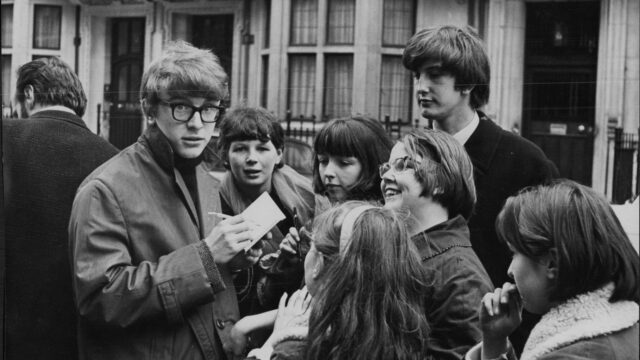
Peter Asher signs autographs with Gordon Waller, as seen in Peter Asher: Everywhere Man
PETER ASHER: EVERYWHERE MAN (Dayna Goldfine & Dan Geller, 2025)
Quad Cinema
34 West 13th St. between Fifth & Sixth Aves.
Opens Thursday, June 18 quadcinema.com thefilmcollaborative.org
Peter Asher: Everywhere Man is so utterly engaging and delightful, so happy-making and surprising, that I actually wanted to crawl inside the screen and enter Peter Asher’s extraordinary life.
In Terry Gilliam’s 1988 film The Adventures of Baron Munchausen, John Neville stars as the title character, who tells a fanciful, impossible-to-believe story based on Rudolf Erich Raspe’s 1785 collection The Surprising Adventures of Baron Munchausen, consisting of heavily embellished tall tales loosely inspired by the real-life eighteenth-century German nobleman Hieronymus Karl Friedrich Freiherr von Münchhausen, whose name was given to the mental disorder Munchausen syndrome, a subtype of factitious illness in part characterized by, according to the National Library of Medicine, “pseudologia fantastica, a pattern of fabricating detailed falsehoods regarding personal history, education, and achievements.”
In the extraordinary documentary Peter Asher: Everywhere Man, the title figure tells his fanciful, impossible-to-believe story — but in this case, it’s all remarkably true, including that his father, endocrinologist Dr. Richard Asher, is credited with introducing the term “Munchausen syndrome.”
Born in England in 1944, Asher has lived a charmed, and charming, life. He and his sisters, Jane and Clare, three redheads, were child actors affectionately known as the Carrots of Wimpole Street. At Westminster School, he met Gordon Waller, a fellow guitarist, and they formed a duo, Peter and Gordon, who joined the British Invasion and scored a series of huge hits, anchored by “A World without Love,” written for them in 1964 by Jane’s boyfriend, Paul McCartney, who was living in the Asher home at the time. Other songs followed: “I Don’t Want to See You Again,” “Woman,” “I Go to Pieces,” and “Nobody I Know,” and they appeared on The Ed Sullivan Show. Asher’s mother, Margaret, was an oboist and professor who taught music to George Martin, the Beatles’ innovative producer.
Asher opened the highly influential Indica bookstore and gallery, where John Lennon met Yoko Ono. After serving as head of A&R for Apple Records, he became producer and then manager of a rising young folk singer named James Taylor, which led to him working with Linda Ronstadt, Carole King, and so many others (Diana Ross, Cher, Neil Diamond, Morrissey, Elton John, Rodrigo y Gabriela, 10,000 Maniacs, Robin Williams). He threw the party at which Mick Jagger and Marianne Faithfull fell in love, even though she was married to one of Asher’s Indica partners, John Dunbar. He put together backing bands with such musicians as King, bassist Leland Sklar, guitarists Danny “Kootch” Kortchmar and Waddy Wachtel, multi-instrumentalist Andrew Gold, and drummer Russ Kunkel, and he listed them on albums, something that previously was not done on pop records. And he did all of it with little or no training, just thriving on improvisation and experience.
“I think that Peter just got better and better at what he did,” Kortchmar says in the film. “Producing is a very broad term. Sometimes it means he’s a musical prodigy, and sometimes it means he’s a social worker or a therapist. And sometimes it means he or she just enables somebody who’s musically gifted to do their thing and get out of the way. And I think he probably can wear any of those hats.”
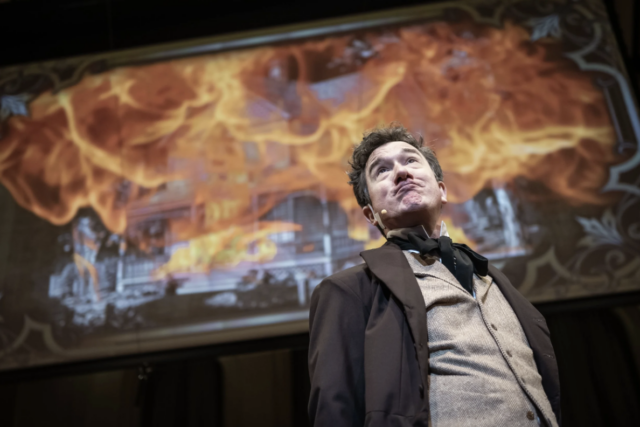
Directors and producers Dayna Goldfine and Dan Geller structure the documentary around Asher’s cabaret show, A Musical Memoir of the ’60s and Beyond, which they saw in December 2019 with Ronstadt. In the multimedia performance, Asher narrates his story and sings various songs with a band, along with projections of archival photos and videos. Editor Darren Lund intercuts new interviews with Monty Python veteran and The Adventures of Baron Munchausen costar Eric Idle, Steve Martin, Lyle Lovett, McCartney (voice), Twiggy, Kortchmar, Pattie Boyd, Paul Jones (Manfred Mann), Taylor and his sister Kate, Rolling Stone journalist Ben Fong-Torres, Indica cofounders Dunbar and Barry Miles, Natalie Merchant, and Asher’s longtime personal assistant, Chris O’Dell, among others, in addition to clips from a 2006 interview of Waller. They also follow Asher around London as he gives a tour to his daughter, Victoria.
Asher is generous with his time, although every now and then he prefers not to go into deep detail. When he is asked about drugs back in the 1960s and ’70s, he admits that he partook, although Ronstadt points out, “Cocaine was a lot of fun but it ruined everything.” Meanwhile, he had the unique ability to go where the action was, or create it himself.
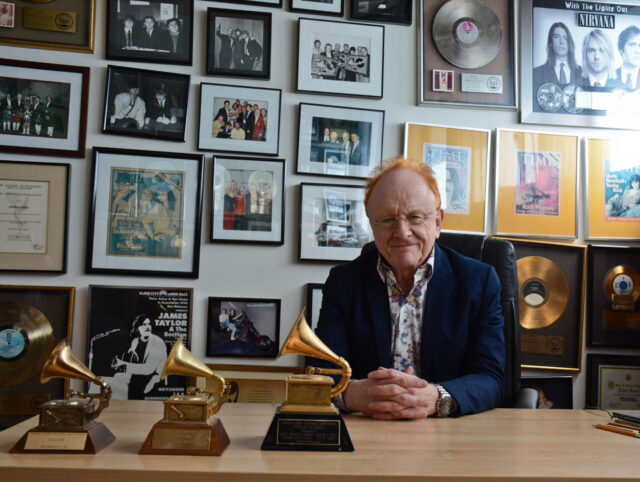
Peter Asher relaxes in his office surrounded by many of his successes in an extraordinary career
Throughout it all, Asher, with his shock of bright red hair and dapper style, seems to have remained a warm, gentle, and caring individual who would do whatever it takes for his clients and friends, without seeking stardom for himself, at least since Peter & Gordon broke up in 1968. However, Wachtel states, “He’s a ham like the rest of us.”
“I suppose I do have this sort of generally optimistic view of what I set my hand to seems to work out okay, and I don’t think it’s necessarily to my credit at all,” he says humbly. “I think it could all just be a series of fortunate circumstances. But I’ve never really known what I was going to be doing next.”
Asher, a three-time Grammy winner and CBE (Commander of the British Empire), has touched so many people around the world over the last seven decades, whether they realize it or not, and it’s to his credit that he doesn’t get caught up in that, although he is clearly proud of his nearly endless accomplishments, as he should be. The film, to its credit, captures that beautifully. Asher was so often in the room where it happened, and is still happening, and Goldfine and Geller bring audiences into those very rooms.
Peter Asher: Everywhere Man opens June 18 at the Quad, with Goldfine and Geller (The Galapagos Affair: Satan Came to Eden,Hallelujah: Leonard Cohen, a Journey, a Song) participating in Q&As following the screenings on June 18 at 7:15 (moderated by Alan Light), June 19 at 7:00 (Dennis Elsas), June 20 at 7:00 (Joe Neumaier), and June 21 at 2:30 (Neumaier). You can find a Spotify playlist for the film here.
[Mark Rifkin is a Brooklyn-born, Manhattan-based writer; you can follow him on Substack here.]
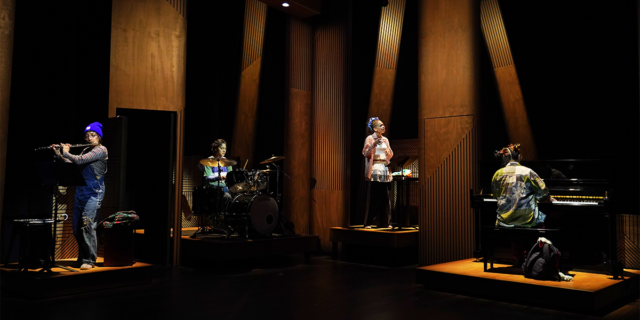
Four teen girls explore their lives through music in world premiere play by Eisa Davis (photo by Carol Rosegg)
||: GIRLS :||: CHANCE :||: MUSIC :||
Vineyard Theatre
Gertrude and Irving Dimson Theatre
108 East 15th St. between Union Square East & Irving Pl.
Tuesday – Sunday through June 21, $37.80-$106.92 www.vineyardtheatre.org
Eisa Davis’s ||: Girls :||: Chance :||: Music :|| unfolds like an improvisatory jazz theatrical piece, transforming the concept of the creation and playing of music into subtle and not-so-subtle metaphors about growing up and making choices. It explores chaos and empathy, education and impermanence, and building — or not building — family and community, with time jumps and forays into alternate realities.
If you’re one of the first twelve people entering the Vineyard Theatre, you’ll be offered the opportunity of selecting a note on a keyboard chart that will, when done, form a unique tone row for that night’s performance, serving as the underlying musical theme. The cast will develop it at the start of the play, asking the audience to participate, and the tune will make appearances later on as well.
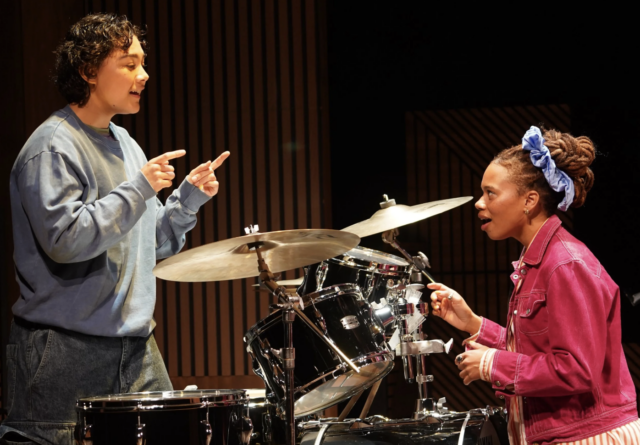
The show follows four teenagers of color as they prepare for their final project at a girls summer music program in Berkeley. Clementine (Gianna DiGregorio Rivera) is a straightforward flutist who mostly stays in the background; Fax (Hillary Fisher) is a vocalist who always prefers to have a plan; Margot (Naomi Latta) is a wildly unpredictable drummer; and Rile (Yeena Sung) is a pianist who enjoys experimenting.
Early on, Rile is playing the end of “Una Voce Poco Fa” from Rossini’s The Barber of Seville when she makes a mistake and improvises around it, completely throwing Fax off. “I mean it’s about being intentional with your juxtaposition,” Fax says, clearly unhappy. Rile responds, “Putting things together that don’t seem like they’ll fit.” Soon after, Fax declares, “Don’t do random shit onstage that’s different from what we practiced.”
Over the course of 105 minutes, the four characters face such issues as race, class, gender, and sexuality as they try to find their place not only in music but in the world itself, one filled with trouble and danger. “I love getting up in the morning to come here — when the world feels like one disaster after another,” Fax says.
Margot later explains, “Quake wasn’t random and it wasn’t planned / just cause and effect from billions of years ago to now / we’re given an effect and we get to make a new cause with it / which makes a new effect and / it’s a chain / a network of exchange.”
Margot (Naomi Latta) and Fax (Hillary Fisher) form a unique bond in ||: Girls :||: Chance :||: Music :|| (photo by Carol Rosegg)
Nina Ball’s set consists of four small platformed music sections, one for each character, surrounded by angled columns that harken back to Greek tragedy; it evokes how the girls are four distinct individuals who can benefit from working together as a kind of band instead of on their own, like in life. Loneliness is a leitmotif. When Margot and Fax art talking about being artists — and human beings — Margot advises, “We’re supposed to do things we’re not supposed to do . . . you have to go out on a limb to do anything crucial,” but Fax replies, “But then you’re like lonely.” Fax has a home to go back to, one that seems to be growing by the day, while Margot is much more on her own.
Mel Ng’s costumes change often, with cool little touches that at first define the characters by specific color schemes. Russell H. Champa’s lighting gives each of the girls their personal moment to take center stage. It’s a strong, talented ensemble, like a tight-knit jazz quartet, although the narrative does occasionally meander off track, becoming too abstract, but it always finds its way back to the melody. Fisher (The Notebook,Between the Lines) and Latta, in her impressive off-Broadway debut, play off each other with a gorgeous rhythm, with Sung (Mary V,Comfort Women: A New Musical) riling things up just enough as Rile, and Rivera, in her off-Broadway debut, providing the right elements as the ending approaches.
Produced by the Vineyard in conjunction with American Conservatory Theater, ||: Girls :||: Chance :||: Music :|| is conducted — er, directed — with an understanding, guiding hand by Tony winner Pam MacKinnon (Clybourne Park,Who’s Afraid of Virginia Woolf?), who turns Davis’s (Bulrusher,The Essentialist) complex script into a mini-symphony.
It is both a perplexing and rewarding play, weaving in and out of time and reality, expectations and desires, as four teenagers contemplate — or don’t — what’s waiting for them around the corner, and what their role in taking those next steps might be.
[Mark Rifkin is a Brooklyn-born, Manhattan-based writer and editor; you can follow him on Substack here.]
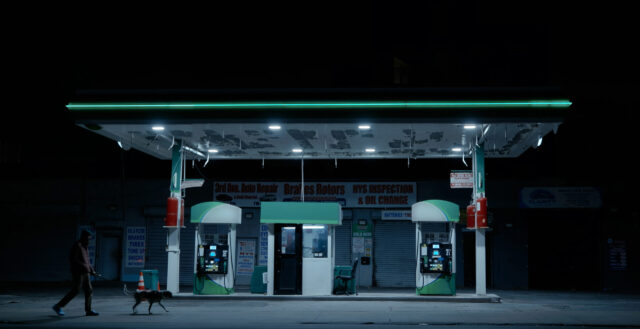
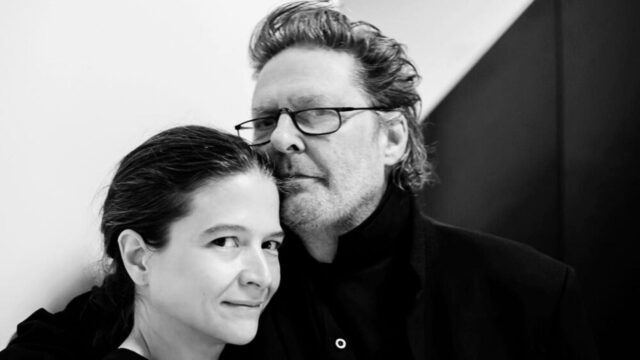
“The stories behind our smiling family are complicated and sometimes painful to tell,” Karla Murthy says in her new documentary, The Gas Station Attendant. “But isn’t everyone’s? It reminds me of the saying my cousin recently told me, while we were cooking, about all families having problems: ‘Everybody’s dosas have holes in them.’”
The Gas Station Attendant is a poignant, intimate tale of a family whose dosas have more than their share of holes. It’s about the immigrant experience and the search for the American dream, told by the daughter of a gentle man, H. N. Shantha Murthy, who spends his entire life trying to make things better for everyone around him despite meeting obstacles nearly every step of the way.
Murthy started recording her family on video when she was a little girl; later, as an adult, she began taping phone conversations with her father when he was forced to take a late-night job as a gas station attendant to pay the bills. During those talks, he shares details of the complicated, painful life he led, anchored by his deep love for his family.
He ran away from his home in India when he was ten, escaping horrific poverty, only to soon consider suicide. “I can still see myself as a boy,” he tells Karla. “I’m hiding here and there, not having food to eat for weeks. I used to sleep on the street, looking at the stars and moon, and always prayed: Someday, somehow, my life will change.” His life did change when, as a teen working at a hotel, he served a white couple from Texas who decided to sponsor him in America, paying for his education, and he became an engineer.
Following a mass layoff at Boeing, he struggled to earn a living, taking on a series of odd jobs, not wanting his family to experience any hardship. His first wife died too young, and he got remarried to a caring woman; both were Filipino, and he had two kids with each. Through it all, he grits his teeth and smiles, making friends wherever he goes — he and his second wife sold small gift items at trade shows around the country, something Karla sees for herself when she accompanies her father on one of those trips and he falls ill.
“Dad, how did you get up and keep going?” she thinks to herself.
The Emmy-nominated Murthy (The Place That Makes Us,Love, Jamie) wrote, directed, edited, and produced the eighty-three-minute film, incorporating archival footage, family photos and home movies, and numerous shots of empty gas stations, concerned for her father’s safety in what is a very dangerous job.
“And so here I am, reliving the past while trying to live in the present, wondering what it means to be a good father, a good daughter, a good mother,” Karla says.
Named Best Documentary Feature at the Nashville and San Diego Asian Film Festivals, The Gas Station Attendant will run June 12–18 at DCTV Firehouse Cinema, with Murthy participating in four postscreening Q&As: June 12 at 7:00 with writer Mira Jacob, June 13 at 6:00 with composer and podcaster Jad Abumrad, June 14 at 5:00 with New York Taxi Workers Alliance founder Bhairavi Desai, moderated by executive producer and Basement Bhangra founder DJ Rekha (who makes a cameo in the film), and June 18 at 6:30 with Economic Hardship Reporting Project executive director Alissa Quart.
[Mark Rifkin is a Brooklyn-born, Manhattan-based writer; you can follow him on Substack here.]
Lincoln Center’s Summer for the City features numerous events tied to the World Cup
SUMMER FOR THE CITY: TOGETHER, WE MOVE
Lincoln Center
June 10 – August 8, free or choose-what-you-pay www.lincolncenter.org
The fifth iteration of Lincoln Center’s Summer for the City features art, film, music, comedy, workshops, discussions, meditation, silent discos, and more, but its focus is on dance — along with World Cup–related soccer programs.
Describing the series, which features an outdoor installation by Clint Ramos, Chief Artistic Director Shanta Thake explains, “Lincoln Center becomes a celebration of bodies in motion — dancing, gathering, and connecting people from all walks of life.” There are hundreds of events, with performers from around the globe.
All presentations are free or choose-what-you-pay, and some require advance RSVP; below are twi-ny’s don’t-miss highlights.
Reg Bloor will conduct her late husband Glenn Branca’s symphony for one hundred guitars at Lincoln Center on June 12 (photo by Maria Jose Govia)
Glenn Branca’s Symphony No. 13 (Hallucination City) for 100 Guitars
Wu Tsai Theater, David Geffen Hall
Friday, June 12, choose-what-you-pay, 7:30 www.lincolncenter.org
On June 13, 2001, avant-garde composer Glenn Branca premiered Symphony No. 13 (Hallucination City) for 100 Guitars on the plaza at the World Trade Center. Writing about the piece for Sound American, Reg Bloor, guitarist Reg Bloor, Branca’s wife, explained, “This is the first time Glenn had done anything like this with volunteers, so we had no idea if anyone was going to show up. I’ll never forget walking around the corner of the North Tower onto the World Trade Center Plaza for the first rehearsal and seeing people sitting there on their amps waiting for us. This was really going to work. . . . The piece was a swirling cauldron of consonance and dissonance, like a giant swarm of bees trapped in a cyclone, the single movement a long, gradual build of dynamics, pitch, and tempo to a crescendo bouncing off the towers and ringing through the plaza, spilling out onto the streets of Lower Manhattan. It’s a sound that stays with you for the rest of the day after the piece is over. You hear it coming out of the subway tunnel or in the air conditioning. You can’t get it out of your ear until whole world starts to sound like Glenn.” Bloor will conduct the symphony at David Geffen Hall on June 12 at 7:30, with one hundred guitarists along with drummer Greg Fox.
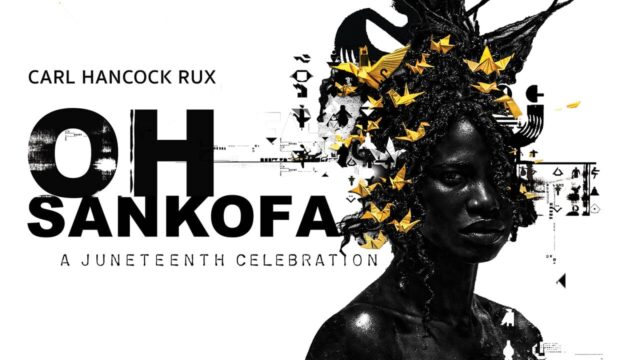
Lincoln Center honors Juneteenth with three special performances that, unfortunately, overlap one another: Carl Hancock Rux’s Oh Sankofa at Hearst Plaza at 7:00, boasting a talented cast exploring the importance of folklore during the Transatlantic Slave Trade; Jeremy Nedd’s from rock to rock . . . aka how magnolia was taken for granite at Alice Tully Hall at 7:30, which looks at the Milly Rock; and Pulitzer Prize winner Suzan-Lori Parks’s The Tune Up at the David Rubenstein Atrium at 7:30, directed by the Flea’s Niegel Smith.
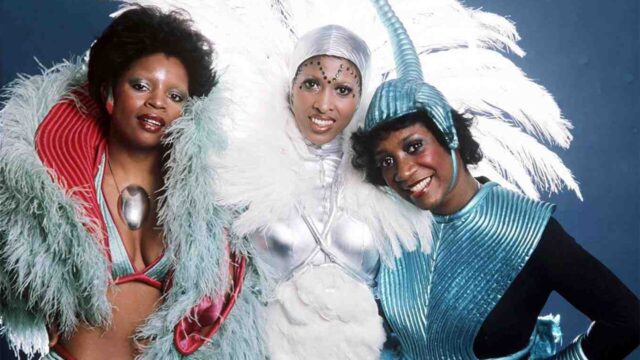
The music of Labelle is celebrated by original member Nona Hendryx at David Geffen Hall
Nightbirds, the Music of Labelle
Wu Tsai Theater, David Geffen Hall
Sunday, June 28, choose-what-you-pay, 7:30 www.lincolncenter.org
In 1974, Patti LaBelle, Nona Hendryx, and Sarah Dash, known as LaBelle, took the country by storm with the monster hit “Lady Marmalade.” The trio had been together in other forms since 1961, broke up in lurid circumstances in 1976, the re-formed from 2005 to 2009. On June 28, Dream Machine Studio is presenting “Nightbirds, the Music of Labelle” at David Geffen Hall, led by Hendryx, joined by the original Labelle backing trio of guitarist Eddie Martinez, bassist Carmine Rojas, and percussionist Jose Rossy, along with Tony winner Adrienne Warren, Kimberly Nichole, Ledisi, and Sandra St. Victor.
Shen Wei Dance Arts and Guangdong Modern Dance Company team up for site-specific MindScape on Hearst Plaza (photo by Gabe Palacio)
Shen Wei Dance Arts | Guangdong Modern Dance Company: MindScape
Hearst Plaza
July 1-3, free, 5:00 www.lincolncenter.org
Chinese-born, NYC-based choreographer, director, and painter Shen Wei brings together Shen Wei Dance Arts (SWDA) and Guangdong Modern Dance Company for MindScape, a forty-five-minute piece that incorporates poetry, calligraphy, painting, and movement on Hearst Plaza. SWDA has presented dazzling dances in the Park Ave. Armory Drill Hall, at the Prospect Park Bandshell, in the Met’s Charles Engelhard Court, and other unique locations, so it should be fascinating to see what they’ll be doing outdoors at Lincoln Center. MindScape is part of Lincoln Center’s Dance Encounters series, which also has performances by Omari Wiles / Les Ballet Afrik (New York Is Burning), Ogemdi Ude (Major), Anna Sperber (Bow Echo), Benjamin Akio Kimitch (Tiger Hands), and Vangeline (Naiad Metal), which takes place in and around the Milstein Reflecting Pool, as well as Chinese Arts Week, which also includes Chinese-born, NYC-based Pulitzer Prize winner Du Yun’s family-friendly The Ocean Etched in the Forest.
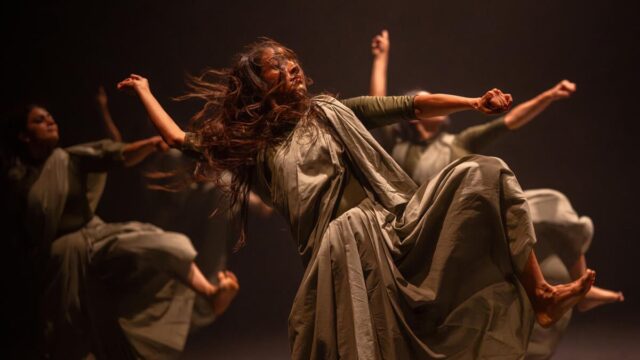
Akram Khan’s Thikra is part of Summer for the City at Lincoln Center
Akram Khan Company: Thikra: Night of Remembering
Alice Tully Hall, 1941 Broadway
Thursday, July 2, 7:30; Friday, July 3, 7:30; Sunday, July 5, 2:00, choose-what-you-pay www.lincolncenter.org
English choreographer Akram Khan, who melds the Indian kathak form with contemporary dance, collaborates with visual director Manal AlDowayan on Thikra: Night of Remembering, a piece for between nine and eleven women set to “Gyura Beli Belo Platno” by the London Bulgarian Choir and “The Elephant’s Funeral” by Sushma Soma with Aditya Prakash. “As I stand humbled within the vastness of this epic desert known as AlUla, I feel the urge to unearth the many cultures that have passed through here,” Khan says about the work, which explores the ancient Saudi Arabia desert civilization. Thikra: Night of Remembering is part of the Lincoln Center Contemporary Dance Festival, which also features Jeremy Nedd, Yinka Esi Graves, Sung Im Her / Her Project, Rachid Ouramdane / Compagnie de Chaillot, and others.
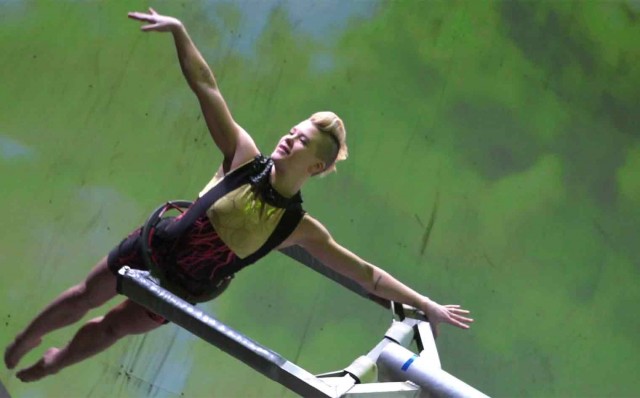
Documentary reveals how Elizabeth Streb and her Extreme Action Company (including Jackie Carlson, seen here) take dance to a whole new level
For more than fifteen years, New Yorkers have gotten the chance to see Elizabeth Streb’s Extreme Action Company perform such dazzling works as Ascension at Gansevoort Plaza, Kiss the Air! at the Park Avenue Armory, and Human Fountain at World Financial Center Plaza as her team of gymnast-dancer-acrobats risk their physical well-being in daring feats of strength, stamina, durability, and grace. In addition, Streb herself walked down the outside wall of the Whitney as part of a tribute to one of her mentors, Trisha Brown. Catherine Gund takes viewers behind the scenes in the exhilarating documentary Born to Fly: Elizabeth Streb vs. Gravity, going deep into the mind of the endlessly inventive and adventurous extreme action architect and the courage and fearlessness of her company. Gund follows Streb as she discusses her childhood, her dance studies, the formation of STREB in 1985, and her carefully thought out views on space, line, and movement as her work stretches the limits of what the human body can do. “I think my original belief and desire is to see a human being fly,” Streb says near the beginning of the film, which includes archival footage of early performances, family photos, and a warm scene in which the Rochester-born Streb and her partner, Laura Flanders, host a dinner party in their apartment, cooking for Bill T. Jones, Bjorn Amelan, Anne Bogart, Catharine Stimpson, and A. M. Homes. Gund also speaks with current and past members of the talented, ever-enthusiastic company — associate artistic director Fabio Tavares, Sarah Callan, Jackie Carlson, Leonardo Giron, Felix Hess, Samantha Jakus, Cassandre Joseph, John Kasten, and Daniel Rysak — who talk about their dedication to Streb’s vision while using such words as “challenge,” “velocity,” “endurance,” “magic,” “invincibility,” and “risk” to describe what they do and how they feel about it. The film is screening on Hearst Plaza on July 10 at 6:00 as part of Lincoln Center’s Dance Encounters series, which also includes “Movement on Film: Athletic Shorts” July 15–17.
Double Dutch Fusion Freestyle & Open Jump
The Dance Floor, Josie Robertson Plaza
Thursday, July 16, free, 5:00 www.lincolncenter.org
One of the most exciting events of every summer at Lincoln Center is the National Double Dutch League strutting its stuff with breathtaking displays of athleticism. It’s three hours of exhilarating movement, including an open jump where visitors are encouraged to participate.
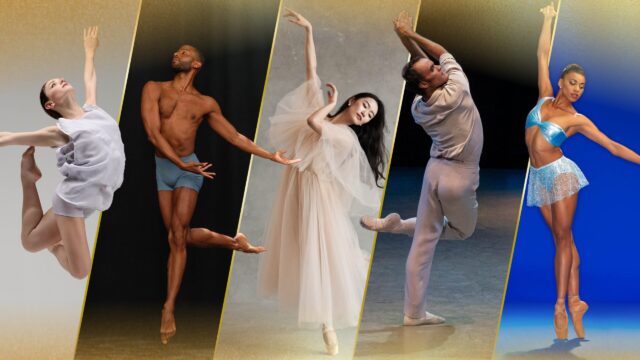
Five troupes come together for annual BAAND Festival (Francesca Levita by Rachel Neville, Christopher R. Wilson by Andrew Eccles, Fangqi Li by Karolina Kuras, Taylor Stanley by Paul Kolnik, DTH Company Artist Kamala Saara by Nir Arieli)
BAAND Together Dance Festival
David H. Koch Theater
Tuesday, July 28, through Sunday, August 1, choose-what-you-pay www.lincolncenter.org
The sixth BAAND Together Dance Festival takes place July 28 thorugh August 1, with five exciting troupes performing in the David H. Koch Theater: Ballet Hispánico New York, Alvin Ailey American Dance Theater, American Ballet Theatre, New York City Ballet, and Dance Theatre of Harlem. It doesn’t get much better than that. Each company will also host a family-friendly dance workshop every day.
[Mark Rifkin is a Brooklyn-born, Manhattan-based writer; you can follow him on Substack here.]