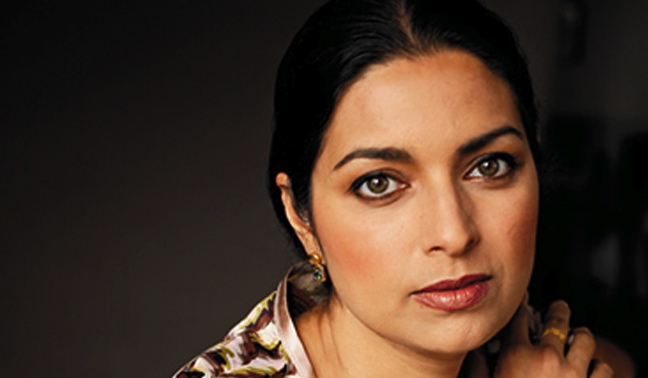
Jhumpa Lahiri will receive the BoBi (Best of Brooklyn) Award at this year’s Brooklyn Book Festival
Multiple venues in Brooklyn
Sunday, September 18, free, 10:00 am – 6:00 pm
www.brooklynbookfestival.org
Three’s just something about Brooklyn that both raises many of the world’s best writers and lures them to the Borough of Kings to do their most insightful writing. On Sunday, more than 250 writers will come together for the sixth annual Brooklyn Book Festival, with panel discussions, signings, lectures, workshops, live performances, and other events taking place at Borough Hall, Columbus Park, St. Francis College, St. Ann’s Church, and the Brooklyn Historical Society. This year’s BoBi (Best of Brooklyn) Award goes to Jhumpa Lahiri, who will be at St. Ann’s at 2:00 to speak with Liesl Schillinger. Everything is free, although some of the events require advance ticketing available one hour before program time. Below are our top ten recommendations; other participants include Colson Whitehead, John Sayles, Lawrence Block, Susan Isaacs, Madison Smartt Bell, Edmund White, Alina Simone, DJ Spooky, Pete Hamill, Russell Banks, Nicole Krauss, Larry McMurtry, Jennifer Egan, Tom Perrotta, Cory Doctorow, Dean Haspiel, J Hoberman, Phillip Lopate, Nick Bertozzi, Rita Williams-Garcia, and many more.
Laugh Your Head Off: Teen beauty pageant contestant Mad Libs! with Jon Scieszka, Libba Bray, Paul Acampora, and Tommy Greenwald, moderated by Olugbemisola Rhuday-Perkovich, Youth Stoop, Borough Hall Plaza / Columbus Park, 10:00 am
The Phantom Tollbooth at 50: Norton Juster and Jules Feiffer in conversation with Leonard Marcus, St. Francis Auditorium, 180 Remsen St., tickets required, 12 noon
Epic Confusion: Readings and discussion with Nadia Kalman, Chuck Klosterman, and Sam Lipsyte, moderated by Tiphanie Yanique, St. Francis McArdle Hall, 180 Remsen St., 12 noon
Words of Personal: Readings by Jonathan Safran Foer, Joyce Carol Oates, and Nina Revoyr, followed by a Q&A moderated by Brigid Hughes, St. Francis Auditorium, 180 Remsen St., tickets required, 2:00
Gumshoes: Eoin Colfer and Walter Mosley, moderated by David L, Ulin, St. Ann and the Holy Trinity Church, 157 Montague St., 3:00
Making Difficult Choices: Panel discussion with Cory Doctorow, Jacqueline Woodson, and Gayle Forman, moderated by Caragh O’Brien, Youth Stoop, Borough Hall Plaza / Columbus Park, 3:00
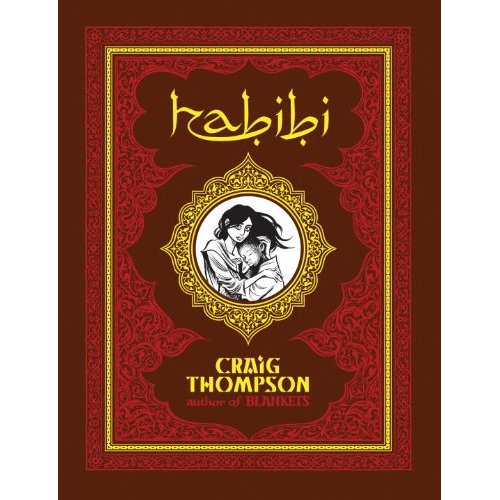
Comics Writ Large and Small: Panel discussion with Craig Thompson, Anders Nilsen, and Adrian Tomine, moderated by Meg Lemke, St. Francis Auditorium, 180 Remsen St., tickets required, 3:00
CATCH-22 at 50: Examining the classic novel with Tracy Daugherty, Bruce Jay Friedman, and Troupe, North Stage, Borough Hall Plaza / Columbus Park, 3:00
Where Are We? Panel discussion with Deborah Eisenberg, Fran Lebowitz, and Wallace Shawn, moderated by Harold Augenbraum, St. Ann and the Holy Trinity Church, 157 Montague St., 4:00
Kickstarter Conversations: A Symposium on Creative Ideas with Ted Rall, Nelson George, and Meaghan O’Connell, moderated by Yancey Strickler, North Stage, Borough Hall Plaza / Columbus Park, 4:00

 The first half of Lorenz Knauer’s documentary about Jane Goodall, Jane’s Journey, offers fascinating insight into the life and career of the famed primatologist. Making sure she’s not mistaken for the late Dian Fossey, Goodall shares intimate details about her personal and professional lives, discussing her two marriages and her conflict with her son while also delving into her early days working with chimpanzees and archaeologist Louis Leakey in Gombe National Park in Tanzania. Wanting to study animals in Africa since she was a little girl, Goodall achieved her dreams in her early twenties, as she came upon major discoveries that changed the way the scientific world looked at both chimpanzees and humans. Goodall, now in her seventies, returns to Tanzania, sitting with the chimpanzees, showing how they welcomed her those many years ago and still do today. In 1986, Goodall made an abrupt shift in her career, giving up primatology in favor of traveling around the world in a desperate effort to save the planet; the documentary makes an abrupt shift as well, going from a charming study of this highly influential woman to a worshipful fundraising campaign for her many charitable efforts, which include Roots & Shoots and the Jane Goodall Institute. It is here that the film loses its edge; whereas before Knauer spoke with people who knew Goodall well, including her son, her sister, her biographer, and a longtime coworker, now he adds interviews with superstar celebrities (Pierce Brosnan and Angelina Jolie) and random fans lining up for autographs. It’s not that what Goodall has been doing for the last quarter-century isn’t as important as what she did previously; it’s just that it’s not very interesting as presented, playing more like an infomercial than a documentary. Goodall will be at the IFC Center for the 7:20 and 9:50 screenings on opening night, September 16; on September 27 at 8:00 ($18), the one-night-only event
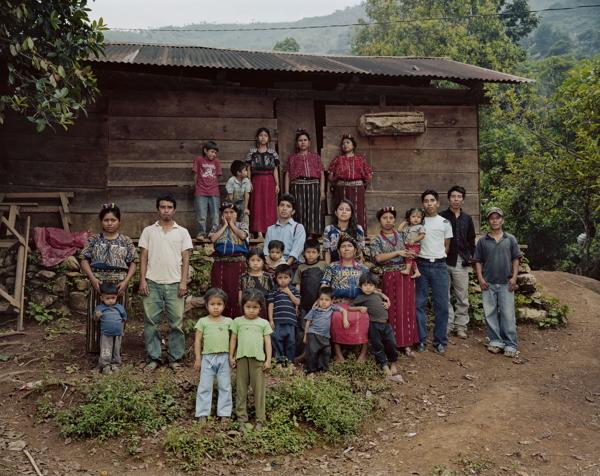
 The opening-night selection of the 2011 Human Rights Watch Film Festival, Granito: How to Nail a Dictator is an illuminating, if at times overly self-referential, examination of the power of documentary filmmaking. In 1982, Pamela Yates and Newton Thomas Sigel made When the Mountains Tremble, which told the inside story of civilian massacres of the indigenous Maya people as government forces and guerrilla revolutionaries fought in the jungles of Guatemala; one of the film’s subjects, Rigoberta Menchú, became an international figure and went on to win the Nobel Peace Prize. “When I made that film, I had no idea I was filming in the middle of a genocide,” Yates says at the beginning of Granito. A quarter-century after When the Mountains Tremble, Yates was contacted by lawyer Almudena Bernabeu, who asked Yates to comb through her reels and reels of footage to find evidence of the Guatemalan genocide and help bring charges again dictator Ríos Montt, whom Yates had met with back in 1982. In researching the case, Yates speaks with Menchú, forensic archivist Kate Doyle, journalist liaison Naomi Roht-Arriaza, forensic anthropologist Fredy Peccerelli, Spanish national court judge Santiago Pedraz, victims’ rights leader and genocide survivor Antonio Caba Caba, and Gustavo Meoño, a founding member of the Guerrilla Army of the Poor, each of whom sheds light on the proceedings from various different angles, from digging up bones in mass graves to discussing redacted documents that reveal U.S. involvement in Guatemala. Several of them are risking their lives by both continuing to fight the government and appearing on camera. Granito, which Yates directed with Peter Kinoy and Paco de Onís and was her sixth film to be shown at the Human Rights Watch festival, is a compelling look at how individuals can make a difference. The music is often overly melodramatic, and Yates does seem to like to show herself both in outtakes from her first film and in serious poses in the new film, but its ultimate point overrides those tendencies. Granito opens September 14 at the IFC Center, with the filmmakers present to talk about their work at the 7:40 showings Wednesday through Sunday as well as the 10:00 show Friday and Saturday night.