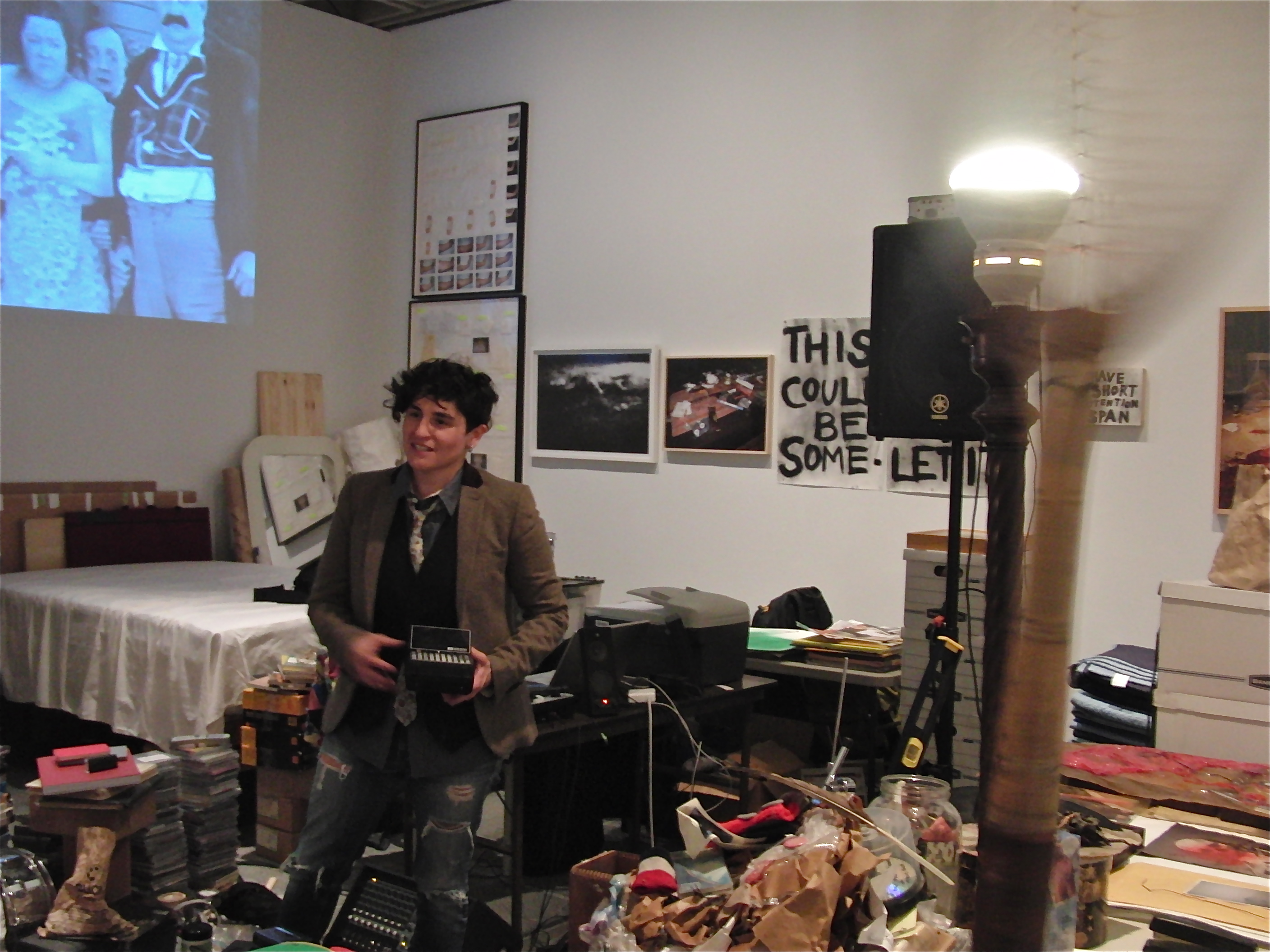
Dawn Kasper has moved into the Whitney and will present live performances May 23-25 (photo by twi-ny/mdr)
Whitney Museum of American Art
945 Madison Ave. at 75th St.
March 1 – May 27, $18 (pay-what-you-wish Fridays 6:00 – 9:00)
212-570-3600
www.whitney.org
The seventy-sixth Whitney Biennial opens today with an entire floor dedicated to live performance and performance-based installation. The premier events include a series of residencies beginning March 1-11 with Sarah Michelson’s “Devotion Study #1 — The American Dancer” and continuing March 14 – April 8 with a new multimedia piece by Michael Clark in collaboration with Charles Atlas. The specially commissioned works, which take place on the fourth floor in a white space with rows of folding chairs, require advance tickets for some performances while at other times are first come, first served with regular museum admission. Atlas will also screen several of his films April 11-15, participate in a conversation with biennial curators and Robert Swinston on April 12, and present the live audio-visual show “Atlas/Basinski” on April 20-21. The rock band the Red Krayola will perform ensemble music and a free-form freakout on April 13 and opera on April 14, while Richard Maxwell will hold open rehearsals for a new play April 25-29. Alicia Hall Moran and Jason Moran’s “BLEED” involves five days of live music May 9-13, while K8 Hardy will examine the state of fashion with a unique runway show on May 20. Buster Keaton fan Dawn Kasper has taken all of her possessions from her L.A. studio apartment and moved into the Whitney’s third floor, where she will be rearranging her cluttered space and hosting performances with friends May 23-25. From May 23 through June 3, Lutz Bacher, whose “Celestial Handbook” framed pages hang on walls throughout the museum, will be scattering hundreds of baseballs to redefine her space. Arika’s philosophical foray “A survey is a process of listening” invites audiences to share their thoughts May 2-6, while Yair Oelbaum and Kai Althoff will perform the play There we will be buried May 16-19. On Sundays and other select days, Georgia Sagri will create a book with the concept “Working the No Work.” And Tom Thayer’s third-floor installation will come to life May 20 and 27.
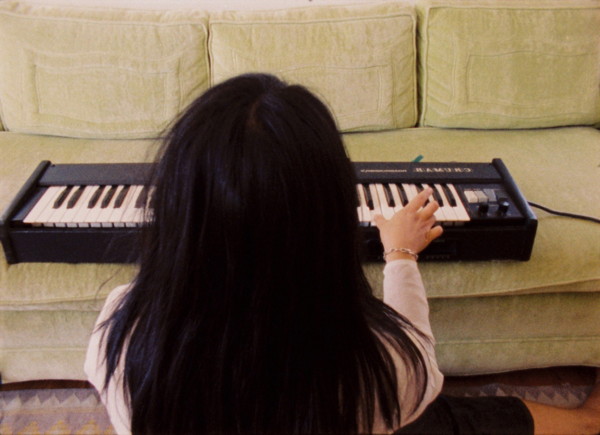
Laida Lertxunde will be at the Whitney April 1 to screen and discuss such works as A LAX RIDDLE UNIT
Curators Elisabeth Sussman, Jay Sanders, Thomas Beard, and Ed Halter have put together a wide-ranging film series that runs throughout the biennial, with programs dedicated to shorts and feature-length works by Luther Price, Michael Robinson, Jerome Hiler, Nathaniel Dorsky, Laida Lertxunde, Thom Andersen, Moyra Davey, Kelly Reichardt, Matt Porterfield, Wu Tsang, Kevin Jerome Everson, and Laura Poitras, all of whom will participate in individual conversations; films by the recently deceased George Kuchar and Mike Kelly will also be screened, as well as the very much alive Frederick Wiseman’s 2010 Boxing Gym. With all of these special programs, you should allow yourself plenty of time to experience this year’s biennial — or even set aside a few days, because there’s a whole lot to see and experience.
 After the breakout success of Born to Run in 1975, Bruce Springsteen became embroiled in a lawsuit over control of his music that prevented him from going into the studio to make the highly anticipated follow-up. Springsteen found himself at a crossroads; “You didn’t know if this would be the last record you’d ever make,” he says in the revealing behind-the-scenes documentary The Promise: The Making of Darkness on the Edge of Town. Combining archival footage of the Darkness sessions shot by Barry Rebo with new interviews with all the members of the E Street Band in addition to producers Jimmy Iovine, Jon Landau, and others, editor and director Thom Zimny melds Bruce’s past with the present, delving deep into Springsteen’s complex, infuriating, and fiercely dedicated creative process. “I had to disregard my own mutation,” Springsteen says at one point, regarding his battle to avoid getting caught up in the hype that came with Born to Run, so he decided that his next album would be “a meditation on where are you going to stand.” Rebo captures Springsteen and the E Street Band — from a bare-chested Bruce to a bandanna-less Steve Van Zandt — rehearsing and recording alternate takes of familiar songs as well as tunes that would later wind up on such albums as The River and Tracks, opening up Bruce’s famous notebooks and examining his intense creative process, which included throwing away dozens and dozens of songs that he believed just didn’t fit within his vision of what Darkness should be. Two of the most fascinating parts of the The Promise involve Patti Smith discussing “Because the Night,” explaining that the lyrics she added are about her waiting for her boyfriend at the time (and later husband), Fred “Sonic” Smith, to call her, and Toby Scott talking about mixing the Darkness record to get the sound pictures in Bruce’s head onto vinyl. The Promise: The Making of Darkness on the Edge of Town is screening as part of the IFC Center’s Stranger Than Fiction series and will be followed by a Q&A with Zimny, Springsteen’s longtime director who just made the music video for Bruce’s latest single, “We Take Care of Our Own.”
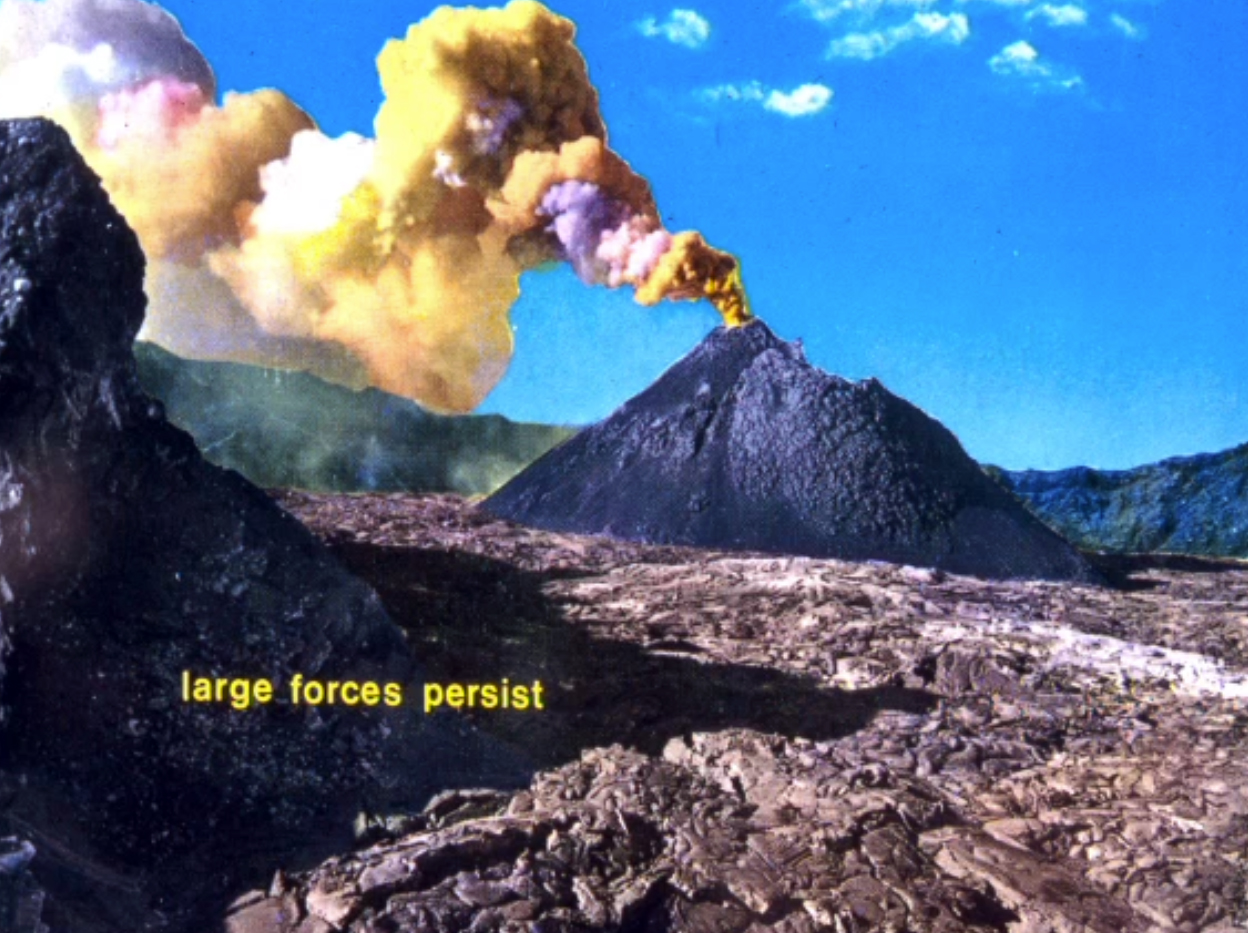
 In the late 1970s, Andrea Callard helped found a collective of artists that would come to be known as Colab, or Collaborative Projects, Inc. Among her fellow officers in the group were Coleen Fitzgibbons, Tom Otterness, and Ulli Rimkus. “Through a juicy and conflicted multi-year period of identity and structural definition,” she explains on her website, “there was experimentation in and rich discussion of accessible content, political forces, technology, equity, corporate versus union models, and material resources.” From February 13 to 19, the Maysles Institute will look back at Callard’s career by presenting the world premiere of her first feature-length film, Talking Landscape: Early Media Work, 1974-1984, which examines all those things and more in its eighty minutes. More a greatest-hits package than a narrative nonfiction film, Talking Landscape consists of several of Callard’s low-budget, low-tech Super 8 shorts, narrated in her steady deadpan, beginning with 11 thru 12, in which Callard humorously discusses “inspiration, information, transportation, the National Geographic, the Yellow Pages, and taxi cabs” while standing at an ironing board, trying to hail a cab out on the street, and walking on her hands in the ocean. In Notes on Ailanthus, she details the history of the tree that “grows abundantly in all the empty spaces around New York.” In Sound Windows, she has fun with her apartment windows. In Walking Outside, she sings a blues song while walking through green fields. Talking Landscape also includes a trio of slide shows of site-specific installations Callard was involved in. Commuting from Point to Point combines images shot in Paris, Italy, and New York with phrases lifted from books; for example a shot of cigarettes put out in a bowl of dirt on a newspaper is accompanied by the words “only time gets lost,” while a photo of the Spanish Steps features the phrase “worn by millions of feet.” The Customs House is a document of the 1979 Creative Time group show “Custom and Culture 2,” held inside the dilapidated Customs House by Bowling Green, now home to the National Museum of the American Indian. And finally, The Times Square Show takes viewers on a tour of the seminal art show held in June 1980, which sought to investigate “the need to communicate in a larger world”; the Colab exhibition comprised works by Keith Haring, Lee Quinones, Jean-Michel Basquiat, Jenny Holzer, Kenny Scharf, John Ahearn, Kiki Smith, Otterness, Callard, and others held in the then-still-seedy neighborhood. Throughout the film, Callard displays a wry sense of humor in these brief experimental works that were part of a major shift in the New York City art scene. Talking Landscape is being screened as part of the Maysles Institute’s continuing “Documentary in Bloom” series, curated by Livia Bloom, who will moderate Q&As with Callard following the February 16 and 19 showings.