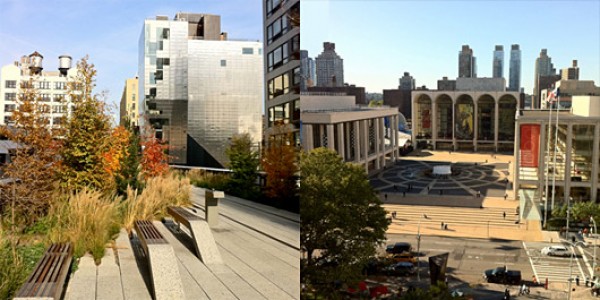
DILLER SCOFIDIO + RENFRO: REIMAGINING LINCOLN CENTER AND THE HIGH LINE looks at the transformation of a pair of New York City landmarks
ADFF NY 2012
Tribeca Cinemas
54 Varick St. at Laight St.
October 18-21, $14
212-759-9550
www.adfilmfest.com
www.tribecacinemas.com
Founded by architect Kyle Bergman in 2009, the Architecture & Design Film Festival includes screenings of works about architecture and design and panel discussions examining contemporary issues with an international collection of industry leaders. Taking place October 18-21 at Tribeca Cinemas, the 2012 edition consists of a dozen programs, beginning with opening night’s “The Vignellis,” featuring Kathy Brew and Roberto Guerra’s Design Is One: Lella and Massimo Vignelli, a documentary about the Italian designers, followed by a Q&A with the directors. Among the other highlights are “Opera,” a screening of Architect: A Chamber Opera in Six Scenes, Jenny Kallick’s film inspired by the work of Louis I. Kahn; “The Public Realm,” anchored by Muffie Dunn and Tom Piper’s Diller Scofidio + Renfro: Reimagining Lincoln Center and the High Line; and “The Creative Process,” which pairs Tim Cawley’s From Nothing, Something with Martin Glegg’s The Lighthouse. In addition to the Q&A sessions that follow most screenings, there will be four panels: “Conversation with Massimo Vignelli,” with Vignelli, Martin Pederson, and Michael Donovan; “In the Public Realm,” with Charles Renfro, Claire Weisz, Michael Parley, and Susan Stephens; “Architecture as Diplomat: Embassies and What They Communicate,” with Eric Kenue, Frances Halsband, Jane Loeffler, and Jord den Hollander; and “16 Acres +,” with Holly Leicht, Mark Ginsberg, Petra Todorovich, and Rick Bell.
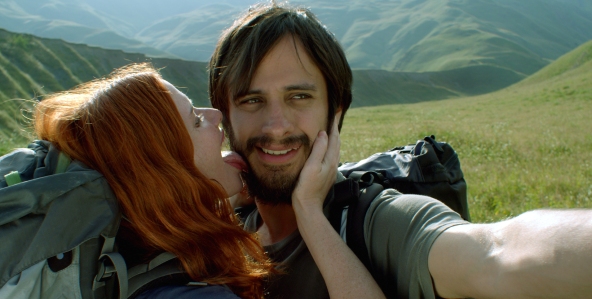
 The first half of Julia Loktev’s second feature film, The Loneliest Planet, is a dazzling tour de force, as young lovers Alex (Gael García Bernal) and Nica (Hani Furstenberg) revel in all that life has to offer. Shortly before getting married, they have decided to go on a hiking trip through the Caucasus Mountains in Georgia, led by a guide named Dato (real-life mountaineer Bidzina Gudjabidze, in his first acting role). Alex and Nica are fresh and alive, their eyes filled with wonder, their faces in perpetual, infectious smiles as they make their way through spectacular landscapes gorgeously photographed by cinematographer Inti Briones. In several shots, the three hikers are barely visible walking in the distance as Briones focuses on breathtaking views of the lush green mountainside and vast Central Asian landscape (as well as, in close-up, Furstenburg’s dazzling red hair). What little dialogue there is doesn’t really matter; in fact, much of it is hard to hear, more like background noise, and what is spoken in foreign languages isn’t even translated. But when the travelers run into three locals, something happens that upends the dynamic and severely changes the relationship among Alex, Nica, and Dato, something that requires the kind of split-second decision that one can never take back, resulting in a return journey that is much darker, the smiles, laughter, and romance disappearing in a stark moment. Based on Tom Bissell’s short story “Expensive Trips Nowhere,” The Loneliest Planet recalls such seminal works as Mikhail Kalatozov’s The Letter Never Sent, Andrei Tarkovsky’s Stalker, John Boorman’s Deliverance, Akira Kurosawa’s Dersu Uzala, and Roberto Rosselini’s Voyage in Italy, in which location serves as a character of mystery and potential danger. Loktev, a visual artist who previously made the 1998 documentary Moment of Impact, which details her family’s very personal experiences after her father was hit by a car, and her 2006 narrative debut, Day Night Day Night, about a female Palestinian suicide bomber, has crafted a mesmerizing tale built around small subtleties and the tender, fragile nature of human relationships, in which one misstep can have shattering consequences. Mexican actor García Bernal and New York-born Israeli star Furstenberg make a terrifically believable couple, so vibrant in the first half, so tentative and subdued in the latter sections. The Loneliest Planet is having a special preview screening on October 17 as part of the Museum of the Moving Image’s “See It Big!” series, with Loktev and Furstenberg on hand to talk about the film, which opens October 26 at the IFC Center.
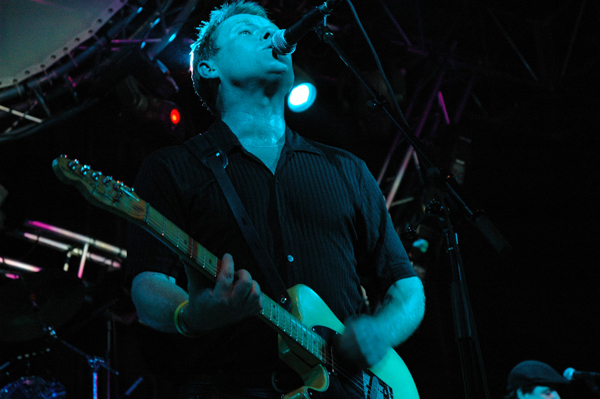
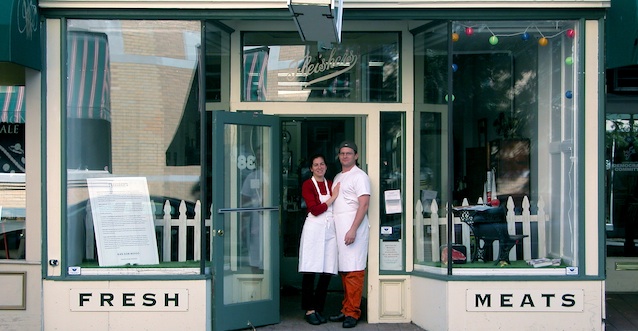
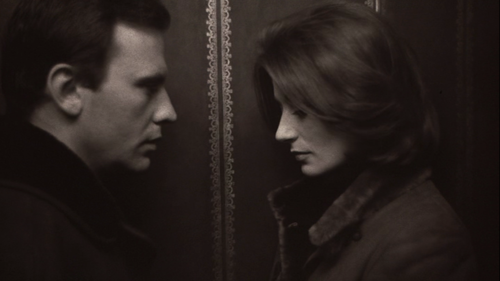
 Winner of both the Oscar for Best Foreign Language Film and the Palme d’Or at Cannes, Claude Lelouch’s A Man and a Woman is one of the most popular, and most unusual, romantic love stories ever put on film. Oscar-nominated Anouk Aimée stars as Anne Gauthier and Jean-Louis Trintignant as Jean-Louis Duroc, two people who each has a child in a boarding school in Deauville. Anne, a former actress, and Jean-Louis, a successful racecar driver, seem to hit it off immediately, but they both have pasts that haunt them and threaten any kind of relationship. Shot in three weeks with a handheld camera by Lelouch, who earned nods for Best Director and Best Screenplay (with Pierre Uytterhoeven), A Man and a Woman is a tour-de-force of filmmaking, going from the modern day to the past via a series of flashbacks that at first alternate between color and black-and-white, then shift hues in curious, indeterminate ways. Much of the film takes place in cars, either as Jean-Louis races around a track or the protagonists sit in his red Mustang convertible and talk about their lives, their hopes, their fears. The heat they generate is palpable, making their reluctance to just fall madly, deeply in love that much more heart-wrenching, all set to a memorable soundtrack by Francis Lai. Lelouch, Trintignant, and Aimée revisited the story in 1986 with A Man and a Woman: 20 Years Later, without the same impact and success. A new print of the original will be shown on October 15 at the Academy Theater as part of MoMA’s annual “To Serve and Project” film preservation festival, in conjunction with the Motion Picture Academy of Arts and Sciences’ monthly “Monday Nights with Oscar” programming and will be introduced by Aimée, who has appeared in several recent films following a seven-year hiatus. The MoMA series, cocurated by J. Hoberman, continues through November 12 with such films as Jacques Demy’s Lola, Andy Warhol’s San Diego Surf, Raoul Walsh’s Wild Girl, and the director’s cut of Roberto Rossellini’s General della Rovere.