this week in lectures, signings, panel discussions, workshops, and Q&As

MOVIE NIGHT WITH MICHEL GONDRY: BILLY LIAR

Tom Courtenay and Julie Christie get close in BILLY LIAR

BILLY LIAR (John Schlesinger, 1963)
IFC Center
323 Sixth Ave. at West Third St.
Thursday, March 7, $17, 7:30
212-924-7771
www.ifccenter.com
www.michelgondry.com

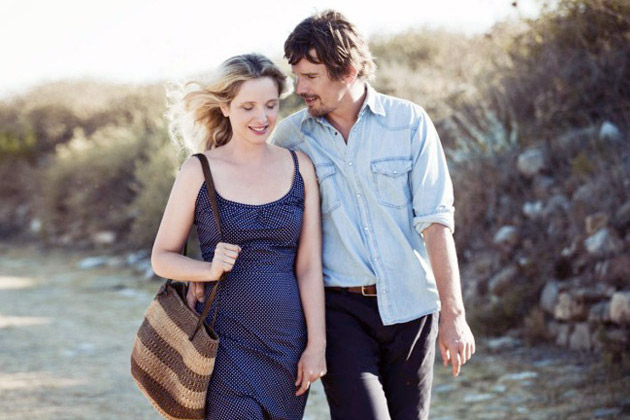
Based on the novel by Keith Waterhouse (which he also adapted into a play with Willis Hall and which later became a musical), John Schlesinger’s Billy Liar is a prime example of the British New Wave of the 1950s and 1960s, which features work by such directors as Lindsay Anderson, Joseph Losey, Ken Russell, Nicolas Roeg, and Karel Reisz. Tom Courtenay stars as William Fisher, a ne’er-do-well ladies’ man who drudges away in a funeral home and dates (and lies to) multiple women, all the while daydreaming of being the president of the fictional country of Ambrosia. Billy lives in his own fantasy world where he can suddenly fire machine guns at people who bother him and be cheered by adoring crowds as he leads a marching band. Reminiscent of the 1947 American comedy The Secret Life of Walter Mitty, in which Danny Kaye dreams of other lives to lift him out of the doldrums, Billy Liar is also rooted in the reality of post-WWII England, represented by Billy’s father (Wilfred Pickles), who thinks his son is a no-good lazy bum. Shot in black-and-white, the film glows every time Julie Christie appears playing Liz, a modern woman who takes a rather fond liking to Billy. The film made Christie a star; Schlesinger next cast her in Darling, for which she won the Oscar for Best Actress. A 35mm print of Billy Liar is being shown March 7 at the IFC Center in the special program “Movie Night with Michel Gondry”; the director of Eternal Sunshine of the Spotless Mind, Be Kind Rewind, and The We and the I, which opens at IFC on March 8, will participate in a discussion following the screening. “John Schlesinger’s film certainly had an influence on my films, especially The Science of Sleep, just like Walter Mitty or other films intercutting layers of consciousness,” Gondry explains on the IFC website. “Only Billy Liar is one of the few to achieve that in the context of a social satire. All Billy’s visions are like explosions coming out of this very crude and bleak reality. And his personality is very unique, nailed in his lack of ambition. This is one of the films that taught me how magic can come just from editing.”

ARMORY ARTS WEEK 2013

Brooklyn artist Janet Biggs will screen her latest work, A STEP ON THE SUN, at the closing night of the Armory Show, followed by a panel discussion (photo © Janet Biggs)

Brooklyn artist Janet Biggs will screen her latest work, A STEP ON THE SUN, at the closing night of the Armory Show, followed by a panel discussion (photo © Janet Biggs)

Armory Arts Week had been getting out of control, with upwards of a dozen different fairs taking place around the city during one crazy weekend. But now the fairs are essentially cut in half, with some scheduled for this week and the rest in May. The centerpiece is the Armory Show at Piers 92 & 94 (March 7-10, $30, run of show $60, dual Volta NY pass $40), which this year will celebrate the centennial of its namesake, the game-changing 1913 Armory Show that introduced modern art to New York. The 2013 edition is broken into two parts, with modern art at Pier 92 and contemporary art at Pier 94, along with a preview party March 6 at MoMA featuring a live performance by Solange Knowles. The Armory Show is once again partnering with Volta NY (March 7-10, $15, dual Armory Show pass $40), which moves to 82Mercer, where it will present more than one hundred solo projects from around the world, including Amy Bennett, Mark Jenkins, Chiho Akama, Patick Lo Guidice, and Regina Scully. The Fountain Art Fair (March 8-10, $10/day, $15 weekend pass) is back at the 69th Regiment Armory at Lexington and 25th St., with more than seventy-five exhibitors, including such standard-bearers as the Mighty Tanaka, McCaig + Welles, and the ever-popular Murder Lounge. There will also be a site-specific street art installation curated by Alex Emmart and Robots Will Kill and live performances by Lucas Walters, Musa and Spank Rock, Kamp!, and NSR, and DJ sets by Chances with Wolves and Nina Sky. Meanwhile, Moving Image New York (March 7-10, free) remains in its home in the Waterfront Tunnel at Eleventh Ave. and Twenty-Seventh St., where it will have monitors hanging from the ceiling and other cinematic installations showing videos by Janet Biggs, Cheryl Pope, Tommy Turner, Zhao Zhao, Kota Ezawa, Eva and Franco Mattes, and others.

The special events planned for Armory Arts Week begin on March 5 with Uptown & Museum Mile Day, featuring Harlem Armory Day at the Cathedral Church of Saint John the Divine and a Harlem Biennale “Music in the Air” walking tour led by John T. Reddick. On March 7, Bronx Day & SoHo Night is highlighted by a live spoken-word performance at the Nuyorican Poets Café, an after-hours viewing of Walter De Maria’s “The New York Earth Room” and “The Broken Kilometer,” a presentation of Saya Woolfalk’s “Chimera” at Third Streaming, and Tsipi Ben-Haim and Jessica Diamond’s “Tributes to ‘Kusama: Art Infinity-Net’” at CITYarts, with many SoHo galleries open late. Attention moves to Long Island City on March 8 with performances, workshops, and tours at No Longer Empty’s “How Much Do I Owe You?” in the Clock Tower Building and Andras Borocz live at the “So Real” group show at Radiator Gallery. Chelsea Day and Brooklyn Night on March 9 includes brunch with Tamara K.E. at Johannes Vogt Gallery, a Cut Paste and Sew dialogue with Mia Brownell, Camomile Hixon, Duron Jackson, Jingjing Linn, and Woolfak, ICP curator Christopher Phillips in conversation with Israeli artist Ilit Azoulay at Andrea Meislin, “The World’s First Tumblr Art Symposium” at 319 Scholes Gallery, a silent auction at the Rabbithole, and an installation and performance by Jonathan Schipper at the Boiler. Events conclude Sunday night in the Lower East Side / Downtown with “The Dealer’s Perspective” beginning at Allegra LaViola Gallery, the LES Gallery Stroll, and several art brunches. There will also be special films presented each night at the Armory Show, with some followed by a panel discussion, beginning March 6 at 5:00 with Matthew Day Jackson’s In Search of . . . Zombies, March 7 at 5:00 with Pavel Büchler’s High Noon compilation, March 8 at 3:00 with The Show That Shook the World: Marcel Duchamp and the 1913 Armory Show, March 9 at 5:00 with Liz Magic Laser’s The Armory Show Focus Group, and March 10 at 5:00 with Janet Biggs’s Fade to White and A Step on the Sun.

Al Hamm’s “Untitled . . . Crates” fill the entryway to Scope

Al Hamm’s “Untitled . . . Crates” will fill the entryway to Scope

Over at the Park Avenue Armory, ADAA The Art Show (March 6-10, $25) is celebrating its twenty-fifth anniversary with more than seventy galleries participating, with such solo exhibitions as Wim Delvoye at Sperone Westwater, Mona Hatoum at Alexander and Bonin, Fred Tomaselli at James Cohan, Thomas Schütte at Peter Freeman, Robert Motherwell at Lillian Heidenberg, Robert Mapplethorpe at Sean Kelly, Sean Scully at Galerie Lelong, Louise Lawler at Metro Pictures, Eadweard Muybridge at Laurence Miller, Jean Arp at Mitchell-Innes & Nash, Kiki Smith at Pace, Damien Hirst at Van de Weghe, and Milton Avery at David Zwirner. The Collectors’ Forum consists of a pair of panel discussions entitled “Picturing the Frame: The Art World in the Next Decade,” with Jock Reynolds on Friday at 6:00 and Michael Findlay on Saturday morning at 11:00. The second annual Spring/Break Art Show (March 6-10, $5 suggested donation) will take place in classrooms at the Old School at 233 Mott St., with presentations from such artists and collectives as Jeremy Blake, Jennifer Chan, Grayson Cox, Fall on Your Sword, Ted Gahl, Beka Goedde, Matthew Hassell, Bel Linquist, Rachel Ostrow, and Printed Matter, curated by Marco Antonini, Ted Barrow, Elizabeth Clark, Simon Lee, Patrick Meagher, Aurora Pellizzi, Cecelia Stucker, Maureen Sullivan, Eve Sussman, and others, highlighted by Sussman and Lee’s curation of Car Wash Incident. The New City Art Fair (March 7-10, free) will set up in hpgrp Gallery at 529 West Twentieth St., consisting of works from eleven galleries from Japan in addition to an artists’ studio visit, the opening of a sake barrel, Japanese art food, and more. Also in Chelsea, more than fifty galleries will take part in the Independent (March 7-10, free) at 548 West Twenty-Second St., where the stairway gets crowded as art lovers make their up several floors of creatively and chaotically arranged installations that are generally more cutting edge than what can be found at the other shows. Be sure to get up to the roof, which has been specially designed by Christian Wassmann. But the fair with the best space might just be Scope (March 7-10, $15), which moves into Skylight at Moynihan Station in the 33rd St. post office, where connoisseurs will find shows by more than one hundred international galleries, along with such projects as Ron English’s “Culture Jam Supermarket,” Al Hamm’s “Untitled . . . Crates” entrance, Andrea Stanislav’s “The Vanishing Points,” David Rohn’s performance piece “Contact Walt Whitman,” and Sophie Hirsch’s recycled “Leave the Gun. Take the Cannoli.”

THOMAS SCHÜTTE: UNITED ENEMIES

Thomas Schütte carefully watches installation of “United Enemies” at Central Park entrance on March 2 (photo by twi-ny/mdr)

Thomas Schütte carefully watches installation of “United Enemies” at Central Park entrance on March 2 (photo by twi-ny/mdr)

Scholars’ Gate, Doris C. Freedman Plaza
Central Park entrance, 60th St. & Fifth Ave.
March 5 – August 25
Public Art Fund Talk: Monday, March 4, the New School, 55 West 13th St., $10, 6:30
www.publicartfund.org
united enemies installation slideshow

This weekend, Thomas Schütte’s “United Enemies” was installed on Doris C. Freedman Plaza in front of the Scholars’ Gate entrance to Central Park on Sixtieth St., and the installation itself lent a whole new dynamic to the monumental bronze sculptures. Influenced by political corruption scandals in the Italian government, Schütte has created two pairs of mythical figures bound together forever by tightly knotted rope. These bizarre-looking figures, their faces contorted into impossible forms, resemble twisted versions of Auguste Rodin’s “Monument to Balzac,” their honor long gone. The “United Enemies” series began in the early 1990s when Schütte, who studied with Gerhard Richter at the Düsseldorf Art Academy, started using clay, wood, and wire to compose miniature figures tied together and captured in bell jars. The large-scale statues, which are making their U.S. debut in this presentation of the Public Art Fund, are bold and provocative in their bigger version, calling into question the very nature of celebratory statues and public art. The subjects here don’t seem to enjoy being on display, physically joined to an enemy; imagine a disgraced Republican congressman tied to a dirty Democratic adversary in perpetuity and these are most likely the kinds of faces they’d be making. And they’re not standing on platforms the way most public sculptures are but instead are balancing precipitously on wooden beams that recall the cross. But when the two works were being installed on March 2, with Schütte carefully watching, they took on another dimension. As the works were being lowered into position, the thick cord was wrapped around the necks of three of the men, as if they were being hanged for their crimes; the cord on the fourth man was wound over his mouth, as if he were being censured or had been kidnapped. Schütte will be at the New School on March 4 at 6:30, giving a rare talk that will focus on scale and public sculpture.

STRIPPED/DRESSED: FAYE DRISCOLL

Faye Driscoll’s work-in-progress brings dancers — and audience — together in unique ways (photo by Julie Lemberger)

Faye Driscoll’s work-in-progress brings dancers — and audience — together in unique ways (photo by Julie Lemberger)

92nd St. Y, Buttenwieser Hall
395 Lexington Ave. at 92nd St.
Sunday, March 3, $24, 3:00
212-415-5500
www.92y.org
www.fayedriscoll.com

For her “Stripped/Dressed” presentation at the 92nd St. Y, New York-based choreographer Faye Driscoll changed the general format, with spectacular results. Part of the Harkness Dance Festival, “Stripped/Dressed” invites choreographers to first stage a piece without adornment — no costumes, props, etc. — then discuss the work and show it again, the second time with theatrical accoutrements. Driscoll, whose previous work includes You’re Me, There is so much mad in me, and 837 Venice Blvd, transformed the already intimate Buttenwieser Hall into a warm, friendly gathering, with two rows of seats surrounding all four sides of the center Marley floor. Driscoll first discussed the genesis of her untitled work-in-progress, which examines such themes as mirroring, group ritual, and the interdependence of audience and performer, being sure to walk around the space so she could get close to everyone. Then the five dancers (Giulia Carotenuto, Jeremy Pheiffer, Anna Marie Shogren, Brandon Washington, and Nikki Zialcita) — who had never before performed in public for Driscoll or with one another; they had been hired through auditions in December — began a thirty-five-minute excerpt, wearing regular clothes, with no music and the house lights on throughout, in which they virtually were always in contact with one another as foot touched foot, fingers stroked hair, hands brushed chest, lips kissed neck, elbow banged shoulder, and head popped through legs in a dazzling display of emotion and physicality. The dancers also interacted with the audience via direct eye contact, the exchange of random objects, and touch as well. It’s like the craziest game of Twister you’ve ever seen, except taken to much deeper, provocative, metaphysical levels while, as is Driscoll’s wont, changing many of the rules. The choreographer pointed out that since the work is still in its early phases, some movements are likely to be expanded for the final piece, while others will probably disappear, but audience members after the show could be heard saying that they hope she doesn’t change a thing. The third and final presentation of Driscoll’s unique “Stripped/Dressed” presentation takes place Sunday afternoon at 3:00; curated by Doug Varone, for whom Driscoll previously danced, the series continues March 8-10 with the Liz Gerring Dance Company’s she dreams in code, March 15-17 with Ronald K. Brown/Evidence, a Dance Company’s Gatekeepers, and March 22-24 with the Kate Weare Company’s Garden.

MoMA SELECTS: POV — GRANITO: HOW TO NAIL A DICTATOR

GRANITO shows the power and importance of independent documentary filmmaking

DOCUMENTARY FORTNIGHT 2013: MOMA’S INTERNATIONAL FESTIVAL OF NONFICTION FILM AND MEDIA — GRANITO: HOW TO NAIL A DICTATOR (Pamela Yates, Peter Kinoy & Paco de Onís, 2011)
MoMA Film, Museum of Modern Art
11 West 53rd St. between Fifth & Sixth Aves.
Sunday, March 3, 5:30
Festival runs February 27 – March 4
Tickets: $12, in person only, may be applied to museum admission within thirty days, same-day screenings free with museum admission, available at Film and Media Desk beginning at 9:30 am
212-708-9400
www.moma.org
www.skylightpictures.com

The opening-night selection of the 2011 Human Rights Watch Film Festival, Granito: How to Nail a Dictator is an illuminating, if at times overly self-referential, examination of the power of documentary filmmaking. In 1982, Pamela Yates and Newton Thomas Sigel made When the Mountains Tremble, which told the inside story of civilian massacres of the indigenous Maya people as government forces and guerrilla revolutionaries fought in the jungles of Guatemala; one of the film’s subjects, Rigoberta Menchú, became an international figure and went on to win the Nobel Peace Prize. “When I made that film, I had no idea I was filming in the middle of a genocide,” Yates says at the beginning of Granito. A quarter-century after When the Mountains Tremble, Yates was contacted by lawyer Almudena Bernabeu, who asked Yates to comb through her reels and reels of footage to find evidence of the Guatemalan genocide and help bring charges again dictator Ríos Montt, whom Yates had met with back in 1982. In researching the case, Yates speaks with Menchú, forensic archivist Kate Doyle, journalist liaison Naomi Roht-Arriaza, forensic anthropologist Fredy Peccerelli, Spanish national court judge Santiago Pedraz, victims’ rights leader and genocide survivor Antonio Caba Caba, and Gustavo Meoño, a founding member of the Guerrilla Army of the Poor, each of whom sheds light on the proceedings from various different angles, from digging up bones in mass graves to discussing redacted documents that reveal U.S. involvement in Guatemala. Several of them are risking their lives by both continuing to fight the government and appearing on camera. Granito, which Yates directed with Peter Kinoy and Paco de Onís and was her sixth film to be shown at the Human Rights Watch festival, is a compelling look at how individuals can make a difference. The music is often overly melodramatic, and Yates does seem to like to show herself both in outtakes from her first film and in serious poses in the new film, but its ultimate point overrides those tendencies. Granito is screening at MoMA on March 3 at 5:30 as part of the “MoMA Selects: POV” section of “Documentary Fortnight 2013: MoMA’s International Festival of Nonfiction Film and Media” and will be followed by a Q&A with Yates, de Onís, and Kinoy; the POV portion, which runs February 27 to March 4, celebrates a quarter-century of the award-winning PBS program POV and also includes such films as Marion Lipschutz and Rose Rosenblatt’s The Education of Shelby Knox, Jane Wagner and Tina Di Feliciantonio’s Girls Like Us, Laura Poitras’s The Oath, David Redmon and A. Sabin’s Girl Model.POV films and filmmakers have been at the center of a golden age of documentary filmmaking,” POV executive producer Simon Kilmurry explained in a statement. “The films in MoMA’s special program not only look back at the first twenty-five years of POV but also look forward. Collectively, they illustrate how vibrant and essential documentaries have become in exploring the human experience.”

WELCOME TO PINE HILL

WELCOME TO PINE HILL

Shannon Harper plays a gentle giant in the existential gem WELCOME TO PINE HILL

WELCOME TO PINE HILL (Keith Miller, 2012)
IFC Center
323 Sixth Ave. at West Third St.
Opens Friday March 1
212-924-7771
www.ifccenter.com
www.welcometopinehill.com

In 2010, filmmaker and Gallatin School professor Keith Miller made a short film, Prince/William, based on a real-life situation involving himself, Shannon Harper, and a dog each man claimed to own. Using most of that eight-minute short as a starting point, Miller has expanded Prince/William into a feature film, the poignant Welcome to Pine Hill, a low-budget, existential examination of Abu (Harper, at times channeling Forest Whitaker in Ghost Dog), a gentle giant who lets life happen to him instead of taking action. Abu lives in his own private bubble, his eyes peering in other directions and out windows, wondering what else is out there as he listens to drivers’ endless explanations of car accidents at his insurance job, sits down to eat dinner by himself, agrees to hold on to a package for a friend, gets a terrible diagnosis from a doctor, and visits his estranged mother. While it is apparent that Abu was once a dangerous thug, he has now settled into a far more humdrum, honest existence, but it is still difficult for him to shed his reputation. Even after finding out he has a terminal disease, he doesn’t share this information with anyone but just silently goes about getting some of his affairs in order. When Harper takes his huge hand and strokes it over his face, as he often does, it’s like he’s hoping things will change when he’s done, but nothing ever does. Miller keeps Welcome to Pine Hill at a slow and steady pace throughout, evoking Abu’s now-boring life. Filmed in a cinéma vérité style by Lily Henderson and Begonia Colomar (Eric Phillips-Horst shot the opening sequence), it also features many of the secondary characters playing versions of themselves, adding to the realistic feel. Harper is magnetic in his film debut, making audiences want to reach into the screen and shake Abu, but even that probably wouldn’t faze him as he head toward the elegant, poetic finale. Winner of awards at the Slamdance Film Festival as well as at indie fests in Seattle, Nashville, Atlanta, and Sarasota, Welcome to Pine Hill opens this weekend at the IFC Center, with Miller on hand to talk about this small gem at the 7:45 screenings on March 1-2 and the 4:05 show on March 3.

FUTURE WEATHER

FUTURE WEATHER

Lauderee (Perla Haney-Jardine) and her grandmother (Amy Madigan) look to save their family and the planet in FUTURE WEATHER

FUTURE WEATHER (Jenny Deller, 2012)
reRun Gastropub Theater
147 Front St. between Jay & Pearl Sts., Brooklyn
March 1 – 7
718-766-9110
www.futureweathermovie.com
www.reruntheater.com

Jenny Deller’s first feature, Future Weather, is an involving, if overly zealous, coming-of-age drama about a thirteen-year-old loner obsessed with saving the environment. Perla Haney-Jardine (Kill Bill Vol. 2, Dark Water) stars as Lauduree, a smart, independent girl whose flighty single mother, Tanya (Marin Ireland), suddenly bolts from their trailer on the outskirts of Philadelphia and takes off for the West Coast in hopes of becoming a Hollywood makeup artist. At first Lauderee tries to go it alone but eventually starts living with her grandmother, Greta (Amy Madigan), a tough woman who is considering moving to Florida with her longtime boyfriend, the well-meaning Ed (William Sadler). Jenny’s only solace comes in science club, where she and new kid Neel (Anubhav Jain) work on special nature projects with their understanding teacher, Mrs. Markovi (Lili Taylor). While Jenny grows more and more concerned with the disastrous changes that are threatening the planet, she has difficulty dealing with the many changes that are going on in her own ever-more-complicated life. Deller makes an impressive debut with Future Weather, serving as writer, director, and editor, and she produced the film with another first-timer, Kristin Fairweather. The narrative works best when it focuses on Lauderee’s relationship with her mother and grandmother and the teen’s unique individuality, but it tends to get overbearing when making its very serious points about the Earth’s impending man-made doom. However, Deller practiced what she preached, using special environmentally friendly cameras, props, and sets, natural light, and green offices and shot at such locations as the Schuykill Center for Environmental Education and the Pennypack Ecological Restoration Trust. The film will be playing the reRun Gastropub Theater from March 1 to 7, with several special events scheduled. On March 2 at 2:00, Deller, production designer Gino Fortebuono, and cinematographer Zac Mulligan will participate in the panel discussion “Collaborating on the Vision for Future Weather,” and on March 3 at 2:00, Deller, composer Erik Friedlander, and music supervisor Jackie Mulhearn will be on hand for the panel “Creating a Soundtrack.”