2013: A YEAR WITH PROUST
Multiple locations
November 8-14, free (some events require advance RSVP)
www.frenchculture.org
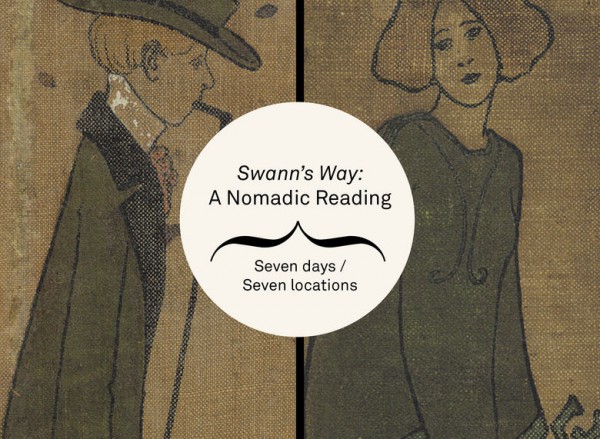
Earlier this week, Flavorwire posted “50 Incredibly Tough Books for Extreme Readers,” which included such classic difficult favorites as Herman Melville’s Moby-Dick, James Joyce’s Finnegans Wake, William Faulkner’s The Sound and the Fury, and Marcel Proust’s In Search of Lost Time. If you’ve never made it through even the beginning of Proust’s challenging epic, you can now have others do it for you, as the Cultural Services of the French Embassy presents a one hundredth anniversary public reading of Swann’s Way as part of its major celebration 2013: A Year with Proust. “A Nomadic Reading” kicks off November 8 at the Wythe Hotel and continues November 9 at Soho Rep., November 10 at the New York Botanical Garden, November 11 at the Oracle Club, November 12 at Simone Subal Gallery, and November 13 at Le Baron Chinatown before concluding November 14, the actual centennial of the publication of Swann’s Way, at the French Embassy. All programs are free, with some requiring advance RSVP; among the scheduled readers are Ira Glass, Deborah Treisman, Jonathan Galassi, Paul Holdengraber, Judith Thurman, and Mike Birbiglia. Here’s a little amuse-bouche to get you started, from Lydia Davis’s 2003 translation for Viking:
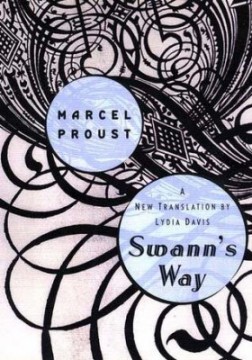
For a long time I used to go to bed early. Sometimes, when I had put out my candle, my eyes would close so quickly that I had not even time to say “I’m going to sleep.” And half an hour later the thought that it was time to go to sleep would awaken me; I would try to put away the book which, I imagined, was still in my hands, and to blow out the light; I had been thinking all the time, while I was asleep, of what I had just been reading, but my thoughts had run into a channel of their own, until I myself seemed actually to have become the subject of my book: a church, a quartet, the rivalry between François I and Charles V. This impression would persist for some moments after I was awake; it did not disturb my mind, but it lay like scales upon my eyes and prevented them from registering the fact that the candle was no longer burning. Then it would begin to seem unintelligible, as the thoughts of a former existence must be to a reincarnate spirit; the subject of my book would separate itself from me, leaving me free to choose whether I would form part of it or no; and at the same time my sight would return and I would be astonished to find myself in a state of darkness, pleasant and restful enough for the eyes, and even more, perhaps, for my mind, to which it appeared incomprehensible, without a cause, a matter dark indeed.
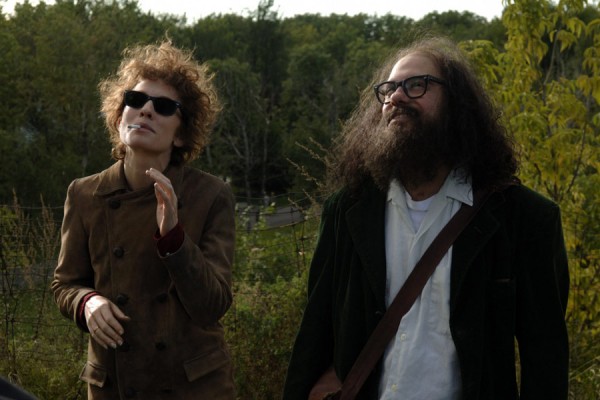
 Todd Haynes’s dramatization of the musical life of Bob Dylan is ambitious, innovative, and, ultimately, overblown and disappointing. Working with Dylan’s permission (though not artistic input), Haynes crafts a nonlinear tale in which six actors play different parts of Dylan’s psyche as the Great White Wonder develops from a humble folksinger to an internationally renowned and revered figure. Dylan is seen as an eleven-year-old black traveling hobo who goes by the name Woody Guthrie (Marcus Carl Franklin); Jack (Christian Bale), a Greenwich Village protest singer who later becomes a pastor; Robbie (Heath Ledger), an actor who has portrayed a Dylan entity and is having marital problems with his wife, Claire (Charlotte Gainsbourg); Arthur Rimbaud (Ben Whishaw), a staunch defender of poetry and revolution; an old Billy the Kid (Richard Gere), who has settled down peacefully in the small town of Riddle; and Jude Quinn (Cate Blanchett), who is attacked by her audience when she goes electric. Each story line is shot in a different style; for example, Jude’s is influenced by Fellini and the Dylan documentary Eat This Document!, Robbie’s by Godard, and Billy’s by Peckinpah. Excerpts from Dylan’s own version of his songs are interwoven with interpretations by Tom Verlaine, Yo La Tengo, Ramblin’ Jack Elliott, Stephen Malkmus, the Hold Steady, Sonic Youth (who do a killer version of the unreleased Basement Tapes–era title track over the closing credits), and many more, with cameos by Kris Kristofferson (as the opening narrator), Richie Havens, Julianne Moore, Kim Gordon, Paul Van Dyck, Michelle Williams, and David Cross (looking ridiculous as Allen Ginsberg). The most successful section by far is Blanchett’s; she takes over the role with relish, and cinematographer Edward Lachman and production designer Judy Becker nail the feel of the mid-’60s energy surrounding Dylan. But the rest of the film is all over the place, a great concept that bit off more than it could chew. I’m Not There is screening November 8 at 7:00 as part of the Museum of the Moving Image’s “See It Big!” series, with Lachman present to talk about the making of the film.
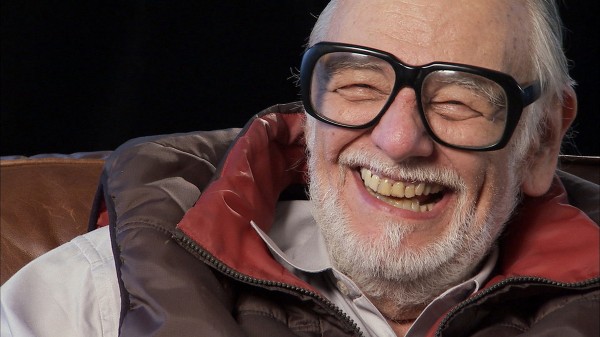
 “It was this tiny little movie in Pittsburgh that seemed to have no chance and it changed the world,” says Jason Zinoman at the beginning of Rob Kuhns’s extremely entertaining new documentary, Birth of the Living Dead. Zinoman, author of Shock Value: How a Few Eccentric Outsiders Gave Us Nightmares, Conquered Hollywood, and Invented Modern Horror, is one of several experts discussing the making, influence, and legacy of college dropout George A. Romero’s 1968 classic frightfest, Night of the Living Dead, which essentially invented the flesh-eating zombie. Throughout the documentary, the Bronx-born Romero, looking somewhat like a wide-eyed, white-haired Martin Scorsese, shares fascinating behind-the-scenes details about the creation of his masterpiece, describing how he raised what little funds he could, how most of the nonprofessional actors were members of the local community (steel workers, cops, meatpackers, ad executives, television hosts, etc.) who not only played ad-libbing humans or zombies but also supplied props, did the makeup, and donated equipment, and how no one really thought they’d ever actually finish and distribute the film, having previously specialized primarily in beer commercials and such authorized shorts as Mister Rogers Gets a Tonsillectomy — which Romero still considers his scariest work to date. Fans of Night of the Living Dead will glory in learning more about Harry and Helen Cooper (business partners Karl Hindman and Marilyn Eastman), newscaster Charles Craig, cemetery zombie Bill Hinzman, Sheriff McClelland (George Kosana), and others. While Romero says that the casting of Duane Jones as Ben was not based on race — and that not a word of the script was changed because Jones was black — a group of talking heads relates how it was a genius move not to make specific mention of race in the film, which was completed just before the assassination of Dr. Martin Luther King, Jr.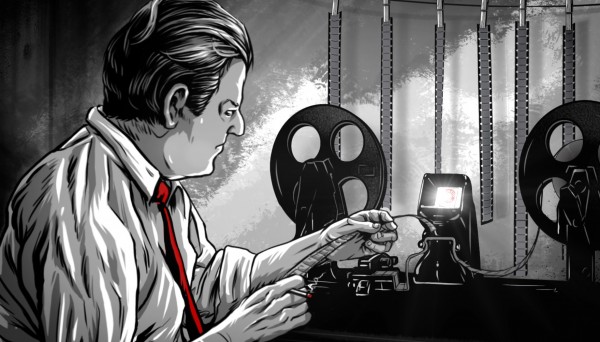
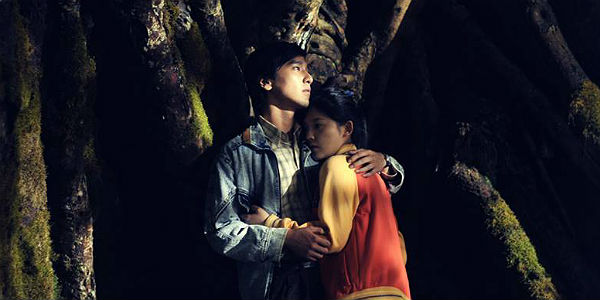
 A huge critical and financial success in its native China, Zhao Wei’s romantic epic, So Young, will open the fourth annual New York Chinese Film Festival on November 5 at Alice Tully Hall. Adapted by screenwriter Li Qiang (Peacock) from Xin Yiwuit’s novel To Our Youth That Is Fading Away, the film follows a group of young women who meet at college, fall in and out of love with various young men, then look back at what could have been ten years later. The central focus is on Zheng Wei (Yang Zishan), an impulsive civil engineering freshman who is incensed by how she is treated by fellow architecture student and loner Chen Xiaozheng (Mark Chao). But soon her very public hatred simmers down as she tries to convince the very private Chen to be her boyfriend. Meanwhile, her roommates, campus beauty Ruan Guan (Jiang Shuying), clean freak Li Weijuan (Zhang Yao), and the butch Zhu Xiaobei (Liu Yase), go through their own problems as they all grow close. Award-winning actress and singer Zhao (So Close, Shaolin Soccer) makes a solid directorial debut with So Young, which takes its name from the song by Suede, although the film is overly long at more than two hours and gets confusing as it jumps around in time. But as the girls mature, so does the film itself, exploring social class, education, love, loyalty, ambition, and the many trials and tribulations that accompany the journey from childhood to adulthood. Zhao will attend the red carpet opening and participate in a postscreening Q&A. The festival continues November 6-7 at the AMC Empire 25 on Forty-Second St. with Larry Yang’s Sorry, I Love You, Xue Xiaolu’s Finding Mr. Right, Joe Ma’s Love Undercover, Pang Ho-Cheung’s Love in the Buff, Wilson Yip’s IP Man, and Clarence Fok Yiu-leung’s Special ID; among those taking part in Q&As after the screenings are Yang, Wesley Wong, Miriam Yeung, and Donnie Yen.