A ONE-NIGHT-ONLY READING TO BENEFIT THE NEW GROUP: BETH HENLEY’S CRIMES OF THE HEART
The New Group @ Theatre Row
The Acorn Theatre
410 West 42nd St. between Eighth & Ninth Sts.
Monday, October 28, $100, 7:00
212-244-3380 ext308 / jamie@thenewgroup.org
www.thenewgroup.org
Since 1995, the New Group has been staging contemporary, adventurous shows, including productions of Kenneth Lonergan’s This Is Our Youth with Josh Hamilton and Mark Ruffalo; the Tony-winning Avenue Q; Joe Orton’s What the Butler Saw with Dylan Baker and Chloë Sevigny; David Rabe’s Hurlyburly with New Group mainstay Ethan Hawke, Bobby Cannavale, Parker Posey, Wallace Shawn, Catherine Kellner, and Hamilton; Jonathan Marc Sherman’s Things We Want with Peter Dinklage, Paul Dano, Hamilton, and Zoe Kazan; and Sam Shepard’s A Lie of the Mind with Keith Carradine, Marin Ireland, Laurie Metcalf, Frank Whaley, and Hamilton, directed by Hawke. The company, founded by artistic director Scott Elliott, who helms many of its productions, has won or been nominated for multiple Obie, Lucille Lortel, Drama Desk, and other awards during its eighteen seasons. On October 28, in conjunction with its brand-new production, Beth Henley’s eagerly awaited The Jacksonian, starring Ed Harris, Glenne Headly, Amy Madigan, Bill Pullman, and Juliet Brett, the nonprofit New Group is holding a benefit reading of Henley’s Tony and Pulitzer Prize-winning Crimes of the Heart, the southern tragicomedy that was also turned into a film directed by Bruce Beresford. The reading, directed by Elliott, will feature Ireland (Homeland, Marie Antoinette) as Lenny, Natasha Lyonne (Orange Is the New Black, Slums of Beverly Hills) as Chick, Zosia Mamet (Girls, Really Really) as Babe, Sebastian Stan (Gossip Girl, Picnic) as Doc, Raviv Ullman (Phil of the Future, Russian Transport) as Barnette, and Allison Williams (Girls, The Mindy Project) as Meg. Tickets are $100 and are fully tax deductible.
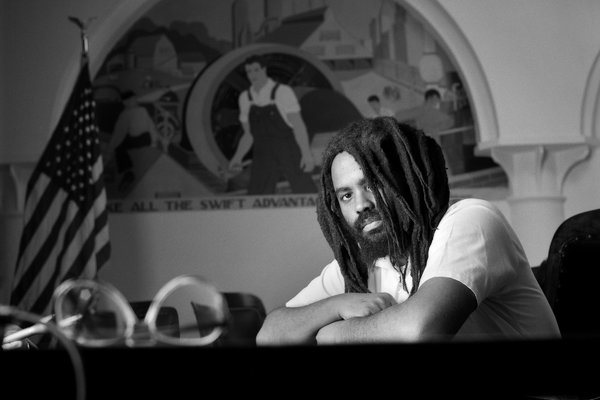
 In Stephen Vittoria’s overly reverential documentary Mumia: Long Distance Revolutionary, actors, activists, journalists, writers, and others celebrate the life and career of the former Wesley Cook, who changed his name to Mumia Abu-Jamal and helped found the Philadelphia wing of the Black Panther Party. The two-hour film begins with right-wing media mouths and the owner of Geno’s Steaks decrying the left’s embracing of Abu-Jamal, who was convicted in 1982 of killing Philadelphia police officer Daniel Faulkner. Denied access to Abu-Jamal in prison, Vittoria uses staged re-creations, archival footage, radio interviews, and such actors as Giancarlo Esposito, Ruby Dee, and Peter Coyote reading from his many books in order to portray him as a dedicated and talented journalist who became a feared target of FBI head J. Edgar Hoover and controversial Philly mayor Frank Rizzo, ultimately being set up for a murder he did not commit. Vittoria does not delve into the details of the case, instead exploring the man himself, with stories from Abu-Jamal’s sister Lydia Barashango, comedian and activist Dick Gregory, wrongly incarcerated boxer Rubin “Hurricane” Carter, philosopher Cornel West, Pulitzer Prize-winning writer Alice Walker, fellow investigative journalist Juan Gonzalez, radical activist Angela Davis, and radio host Amy Goodman, who has broadcast numerous phone interviews with Abu-Jamal, whose 1982 death sentence was commuted to life in prison last year. Mumia: Long Distance Revolutionary is completely one-sided, showing anyone against the golden-throated Abu-Jamal to be crazy as the filmmakers glorify its subject. However, it does reveal the City of Brotherly Love to be a frightening hotbed of violence and racism, even if that is not necessarily news. “Philadelphia has a veneer of liberalism and this whole Quaker mystique,” explains Temple associate professor and journalist Linn Washington. “The reality is it has been this ruthlessly racist city — really from its inception.” Mumia: Long Distance Revolutionary works better when it examines the social history of the civil rights movement and the Black Panthers as covered by Abu-Jamal but falters when it treats his writings as if they were Shakespearean soliloquies. Vittoria, producer Noelle Hanrahan, and attorney Rachel Wolkenstein will be at the Quad to participate in Q&As following the 8:15 screenings on October 25 and 26, and King Downing and other former Black Panthers will take part in a Q&A following the 1:10 show on October 27.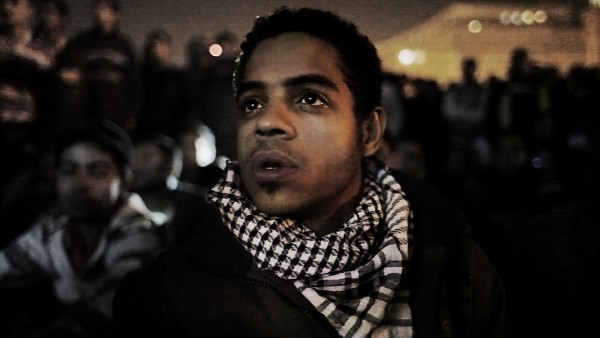
 “During the early days, we agreed to stay united no matter what,” Ahmed Hassan tells those around him in Jehane Noujaim’s powerful and important documentary The Square. “When we were united, we brought down the dictator. How do we succeed now? We succeed by uniting once again.” But Ahmed, one of several Egyptian revolutionaries who Noujaim follows for two years in the film, finds that it is not that easy to bring everyone together, as the government leaders continue to change and factions develop that favor the military and the Muslim Brotherhood. Putting her own life in danger, Noujaim (The Control Room, Startup.com) is right in the middle of it all as she shares the stories of Ahmed, a young man who is determined to see the revolution through until peace and justice prevail; Magdy Ashour, a member of the Muslim Brotherhood who must choose between his own personal beliefs and that of his power-hungry organization; and Khalid Abdalla, the British-Egyptian star of The Kite Runner and United 93 who becomes an activist like his father, serving as the revolution’s main link to the international community through the media and by posting videos. In The Square, a 2013 New York Film Festival selection, Noujaim also introduces viewers to human rights lawyer Ragia Omran, protest singer Ramy Essam, and filmmaker Aida El Kashef, none of whom are willing to give in even as the violence increases.
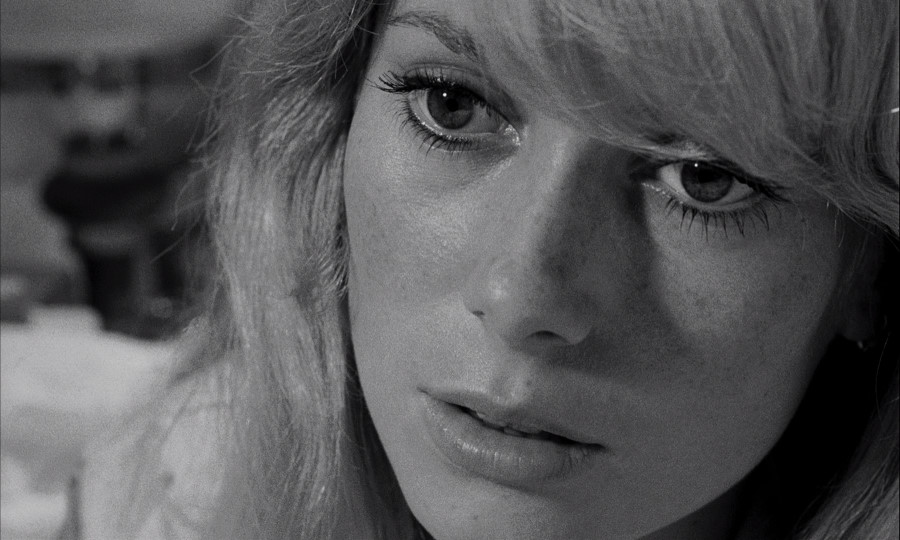
 In 1965, Polish-French auteur Roman Polanski followed his Oscar-nominated debut feature, Knife in the Water, with his first English-language film, the psychological masterpiece Repulsion. Catherine Deneuve gives a mesmerizing performance as Carol Ledoux, a deeply troubled, beautiful young woman who shies away from the world, hiding something that has turned her into a frightened childlike creature who barely speaks. A manicurist who lives in London with her sister, Hélène (Yvonne Furneaux), Carol becomes entranced by cracks in the sidewalk, suddenly going nearly catatonic at their sight; in bed at night, she is terrified of the walls, which seem to break apart as she grips tight to the covers. A proper gentleman (John Fraser) is trying to start a relationship with her, but she ignores him or forgets about their meetings, unable to make any genuine connections. Deneuve’s every movement, from the blink of an eye to a wave of her hand, reveals Carol’s submerged inner turmoil and desperation, leading to an ending that is both shocking and not surprising. Shot in a creepy black-and-white by Gilbert Taylor (A Hard Day’s Night, Dr. Strangelove or: How I Learned to Stop Worrying and Love the Bomb) and featuring a pulsating score by jazz legend Chico Hamilton, Repulsion is a brilliant journey into the limitations and possibilities of the human mind, with Polanski expertly navigating through a complex terrain. Winner of a pair of awards at the fifteenth Berlin International Film Festival, Repulsion, the first of Polanski’s Apartment Trilogy (followed by 1968’s Rosemary’s Baby and 1976’s The Tenant), will be having a special screening October 26 at 2:00 at the Museum of the Moving Image in honor of Polanski’s eightieth birthday and will be introduced by James Greenberg, author of the new book Roman Polanski: A Retrospective, who will be signing books after the screening.