this week in lectures, signings, panel discussions, workshops, and Q&As

THE DECENT ONE

THE DECENT ONE

THE DECENT ONE sheds new light on the architect of the Final Solution

THE DECENT ONE (DER ANSTÄNDIGE) (Vanessa Lapa, 2014)
Film Forum
209 West Houston St.
October 1-14, 12:30, 2:40, 4:50, 7:00, and 9:15
212-727-8110
www.filmforum.org

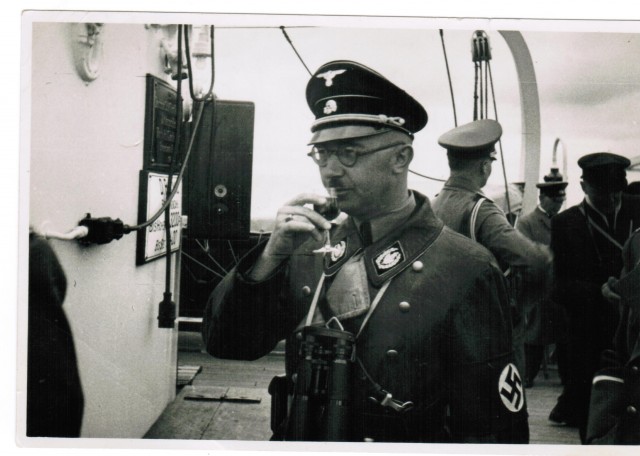
Vanessa Lapa’s chilling feature documentary debut, The Decent One, reveals that there wasn’t a whole lot that was decent about Heinrich Himmler, the SS chief who was the architect of the Final Solution. In 2006, Lapa’s father purchased a collection of Himmler’s diaries, letters, documents, and photographs that had initially been discovered in his home by U.S. soldiers in May 1945. The treasure trove forms the narration for Lapa’s film, as actors read from many of the items in chronological order while home movies, still images, and rare archival footage of Himmler and the rise of the SS are shown onscreen. The film includes letters, postcards, and diaries from Himmler; his parents; his wife, Marga; his mistress, Hedwig Potthast; his beloved daughter, “Püppi”; his foster son, Gerhard von Ahé; and others, in which the Gestapo head discusses love and romance, racial purity, motherhood, duty and honor, order and obedience, the Jewish question, homosexuality, and subhumans, troubling views he developed from a young age. “People don’t like me,” he writes after not being accepted into a fraternal group at college. Looking for purpose in his life, he explains, “You start to think, if only there was a war again. If only I could put my life on the line. Fight! It would be a pleasure.” He was also fully aware of the brutality of the Nazi regime. “I can predict the horrors of the future,” he notes in 1927.

Even his love letters evoke the terror he brought to the world. “What a naughty man you have, with such an evil, naughty movement,” he writes to his wife. Lapa and editors Sharon Brook and Noam Amit move smoothly between pictures of Himmler with his wife and children and shots of him in uniform, inspecting the troops and meeting with Adolf Hitler. It all makes for an uncomfortable intimacy, especially when the actual letters fill the screen; seeing his handwriting while listening to his words is extremely disturbing, but it’s not done in an effort to humanize him, as there is not much humanity to be found in the mass murderer responsible for so many atrocities. The Decent One is disquieting and unnerving, but it is also essential viewing. Named Best Documentary at the Jerusalem Film Festival, The Decent One begins a two-week run at Film Forum on October 1 (perhaps not coincidentally during the Days of Awe, the ten days of contemplation and repentance between Rosh Hashanah and Yom Kippur); Lapa will participate in Q&As following the 7:00 screenings October 1, 2, and 4.

NYFF52 MAIN SLATE: HEAVEN KNOWS WHAT

HEAVEN KNOWS WHAT

Arielle Holmes plays a fictionalized version of herself in the Safdie brothers’ HEAVEN KNOWS WHAT

HEAVEN KNOWS WHAT (Josh & Benny Safdie, 2014)
Film Society of Lincoln Center
Thursday, October 2, Alice Tully Hall, 9:00
Sunday, October 5, Walter Reade Theater, 8:00
Festival runs September 26 – October 12
212-875-5050
www.filmlinc.com

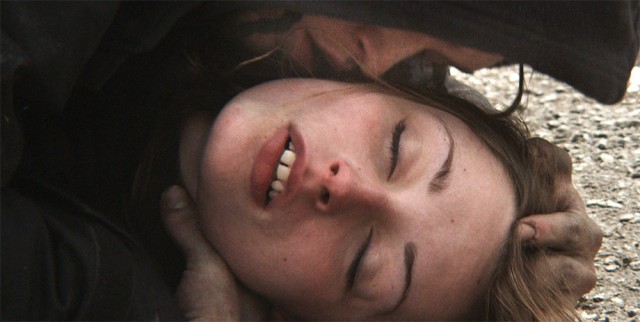
Josh and Benny Safdie’s Heaven Knows What is a harrowing tale about addiction and obsession, but it turns out that its back story is much more compelling than what shows up onscreen. Josh was researching a film about the Diamond District when he came upon Arielle Holmes, a nineteen-year-old temp assistant. He was determined to find out more about her and shortly discovered that she was a homeless junkie with a wild, unpredictable druggie boyfriend, Ilya. Josh and Benny, who had previous collaborated on such indie features as The Pleasure of Being Robbed and Daddy Longlegs and the documentary Lenny Cooke, commissioned Holmes to write her story, and she quickly delivered 150 pages that ultimately inspired the film, in which Holmes plays Harley, a young heroin addict living on the streets of New York City, spanging money (begging for spare change) for her next fix while in a combative relationship with Ilya (Caleb Landry Jones). Harley has done something to alienate Ilya, and she says she will kill herself to prove her love and devotion. He tells her to go ahead and do it, so she slits one of her wrists and is rushed to the hospital. That sets the stage for the rest of the lurid and sordid narrative, as Haley bounces between the cruel Ilya and her drug dealer, the far more easygoing and mellow Mike (real-life street legend Buddy Duress in his acting debut); she is also followed around by Skully (rapper Necro), who wants to save her from herself but is clearly in no position to do so.


Working with cowriter and coeditor Ronald Bronstein (Daddy Longlegs, Frownland) and cinematographer Sean Price Williams (Beetle Queen Conquers Tokyo, Frownland), writer-director Josh and editor-director Benny immerse the viewer in this squalid subculture, as the characters, played by a mix of professional actors and real street kids, are trapped in their dirty little world, almost like a death sentence. Williams uses a tripod and long lenses that give the feel of a handheld camera while keeping a distance, which combine with Isao Tomita’s electronic versions of Debussy to create an operatic quality, but there’s no escaping a story that has been told before, and better. The Safdies were influenced by the HBO documentary Life of Crime, Andrzej Żuławski’s 1984 Possession, and Martin Wise’s 1984 Streetwise, but Heaven Knows What most closely resembles Jerry Schatzberg’s far superior 1971 classic, The Panic in Needle Park, even taking place in some of the same locations. In fact, Josh asked Schatzberg for his blessing in making Heaven Knows What, which doesn’t really cover any new ground in the genre. Holmes does an admirable job playing a version of herself, and a virtually unrecognizable Jones (X-Men: First Class, Queen and Country) throws himself into the part of Ilya with a frightening abandon, but it all ends up more like Heaven: So What. Heaven Knows What is having its U.S. premiere October 2 & 5 at the 52nd New York Film Festival; the Safdie brothers will participate in a Q&A following both screenings, joined by stars Holmes and Jones on October 2.

NYFF52 SPOTLIGHT ON DOCUMENTARY: STRAY DOG

STRAY DOG

Ron “Stray Dog” Hall takes his wife, and viewers, on a marvelous ride into the heart of America in Debra Granik’s charming documentary

STRAY DOG (Debra Granik, 2014)
Film Society of Lincoln Center
Thursday, October 2, Francesca Beale Theater, 7:30
Friday, October 3, Howard Gilman Theater, 6:15
Encore screening: Sunday, October 12, Walter Reade Theater, 2:30
Festival runs September 26 – October 12
212-875-5050
www.filmlinc.com
www.straydogthemovie.com

Shortly after meeting Ron “Stray Dog” Hall at the Biker Church in Branson, Missouri, writer-director Debra Granik (Down to the Bone) cast the Vietnam vet as Thump Milton in her second feature, the Oscar-nominated Winter’s Bone. Upon learning more about him, she soon decided that he would be a great subject for a documentary, so she took to the road, following him across the country in the engaging and revealing Stray Dog. Nearly always dressed in black, including his treasured leather jacket covered in medals and patches — when he puts it in a suitcase for a trip, it’s a ritual like he’s folding the American flag — Hall is a wonderfully grizzled old man with a fluffy white beard. At home, he is learning Spanish online so he can communicate better with his new wife, Alicia, a Mexican immigrant, and her two sons (who still live across the border). He visits with his teenage granddaughter, who is making some questionable decisions about her future. In Missouri, he owns and operates the At Ease RV Park, where he gives breaks to fellow vets who can’t always afford to pay the rent. And when he goes on the road, participating in the Run for the Wall, joining up with thousands of other bikers heading for the annual service at the Vietnam Veterans Memorial in Washington, DC, he stops along the way at other ceremonies honoring soldiers who have gone missing, are POWs, or were killed in action in Vietnam, Iraq, Afghanistan, and other wars.

Hall is a gregarious, gentle man who people instantly flock to and gather around — a scene in which two of his cats sit on each of his knees is absolutely heartwarming — but he is also haunted by some of the things he did in Vietnam, suffering from nightmares that sometimes have him screaming out loud while sleeping in bed. And he wears one of his mottoes right on his arm: “Never Forgive Never Forget.” At one point he sits comfortably on a couch and says, “Just kind of being free, don’t hurt nobody, do what you want to do — a nice thing, ain’t it? You know, I’d rather live as a free man for a year than a slave for twenty.” Granik simply follows Hall as he experiences life with his surprisingly refreshing point of view; no one ever turns to the camera to make any confessions, and no talking heads are brought on board to evaluate what we’re seeing. Granik just lets this beautiful piece of Americana unfold at its own pace while also touching on such hot-button topics as immigration reform, gun control, the economic crisis, and PTSD, making no judgments as we follow the captivating exploits of a man who is part Buddha, part Santa, and all patriot. Stray Dog is making its New York premiere October 2-3 at the 52nd New York Film Festival, with Granik participating in Q&As following each screening. [Ed. note: An encore screening has been added for Sunday, October 12, at 2:30 at the Walter Reade Theater.]

NYFF52 MAIN SLATE: THE BLUE ROOM

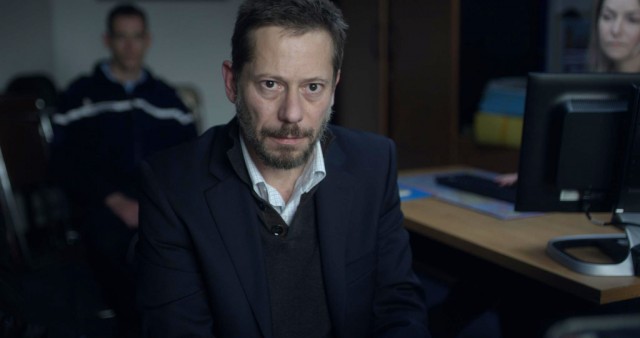
Mathieu Amalric

Mathieu Amalric stars as a husband and father in deep trouble in film he also directed and cowrote

THE BLUE ROOM (LA CHAMBRE BLEUE) (Mathieu Amalric, 2014)
Film Society of Lincoln Center
Monday, September 29, Alice Tully Hall, 9:00 pm
Tuesday, September 30, Francesca Beale Theater, 9:00 pm
Festival runs September 26 – October 12
212-875-5050
www.filmlinc.com
www.lachambrebleue-lefilm.com

Real-life partners Mathieu Amalric and Stéphanie Cléau strip Georges Simenon’s short 1955 novel The Blue Room to its bare essentials — and we do mean bare — in their intimate, claustrophobic modern noir adaptation, which makes its North American premiere at the New York Film Festival September 29 and 30. In addition to being one of the world’s most talented actors, starring in such films as Kings and Queen, The Diving Bell and the Butterfly, A Christmas Tale, and Venus in Fur, Amalric has directed several previous works, including On Tour, which earned him the Best Director prize at Cannes. In The Blue Room, Amalric plays Julien Gahyde, a successful agriculture equipment salesman whose passionate affair with a local pharmacist’s wife, Esther Despierre (Cléau, who cowrote the script with Amalric), appears to have ended in murder. The film opens with Grégoire Hetzel’s lush, sweeping music as the camera makes its way to a blue hotel room where Julien and Esther have just made love offscreen. “Did I hurt you?” she asks. “No,” he responds. “You’re angry,” she says. “No,” he repeats as she laughs and a drop of blood falls on a creamy white sheet. Only then do we see the naked, sweaty couple, whose lurid tale has been succinctly revealed by this highly stylized, beautifully orchestrated scene. Next we hear Julien being interrogated by a magistrate (Laurent Poitrenaux) about a suspicious death, and soon we see Julien in handcuffs in the police station. We don’t know exactly what crime he has been accused of, nor do we know the victim — it could be Julien’s wife, Delphine (Léa Drucker), Esther’s husband, Nicolas (Olivier Mauvezin), or maybe even Esther herself. But as director Amalric, cinematographer Christophe Beaucarne, and editor François Gedigier cut between the past and the present, the details slowly unfold — although that doesn’t mean they ever become completely clear.
Amalric fills The Blue Room with bold splashes of color amid all the darkness and muted skin tones, from the red towel that signals Julien and Esther’s illicit rendezvous to Delphine’s blue bikini to the strikingly red hair of Nicolas’s mother (Véronique Alain) and the shiny green and yellow John Deere equipment he sells. Amalric and Cléau trim so much out of the original story that it too often feels overly cold and calculating, the manipulation too clear and obvious. The nudity also lacks subtlety; Amalric and Cléau might be comfortable with each other sans clothing, but it seems to be a bit of an obsession with Amalric the director. Nonetheless, The Blue Room, shot in the old-fashioned aspect ratio of 1:33 and running a mere seventy-six minutes, is a gripping yarn, a lurid tale of sex and murder, pain and passion, and femmes fatale, told from the point of view of a relatively quiet, reserved man who never thought his world could just fall apart like it does. With such plot elements as adultery and murder and even the presence of a young daughter (Mona Jaffart), the story cannot fail to call to mind French author Gustave Flaubert’s classic novel of provincial France and misplaced passion, Madame Bovary, but the near-echoes never become too loud, merely adding a somewhat puzzling flavor to the film, like a dream half remembered. Amalric will participate in a Q&A following the September 29 screening at 9:00 at Alice Tully Hall; in addition, he will sit down for a free HBO Directors Dialogue that same day at 6:00 in the Walter Reade Theater, where he’s sure to discuss such influences as Alfred Hitchcock, François Truffaut, Claude Chabrol, Otto Preminger, and Fritz Lang.

ATLANTIC ANTIC 2014

atlantic antic

Atlantic Ave. between Hicks St. & Fourth Ave.
Sunday, September 28, free, 12 noon – 6:00 pm
www.atlanticave.org

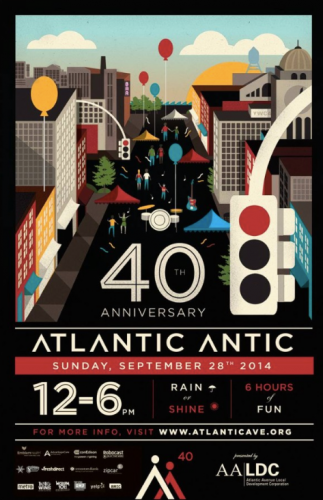
Brooklyn’s most popular street fair, Atlantic Antic, turns forty this year, and it’s doing it in style with an extensive lineup of special guests and live performances, along with games, family-friendly activities, art exhibitions, book readings, dozens of vendors, and plenty of politicos. There will be live music from the Windsor Terrors, Junior Rivera and Charanga Soleil, the Black Coffee Blues Band with Popa Chubby, the Dysfunctional Family Jazz Band, Dead Leaf Echo, Le Sans Culottes, and headliner Brown Rice Family World Roots Band, a welcome-ceremony dance by the Brooklyn Ballet, and the presentation of the Ambassador Award to Assembly Member Joan L. Millman. And for the twenty-first year, the New York Transit Museum is hosting the Bus Festival on Boerum Pl. between State St. & Atlantic Ave., featuring vintage buses (Betsy, Bus 2969, Bus 3100, Tunnel Wrecker), workshops, free tours, and other fun things, with admission to the museum only one dollar.

FRANCESCO CLEMENTE: INSPIRED BY INDIA

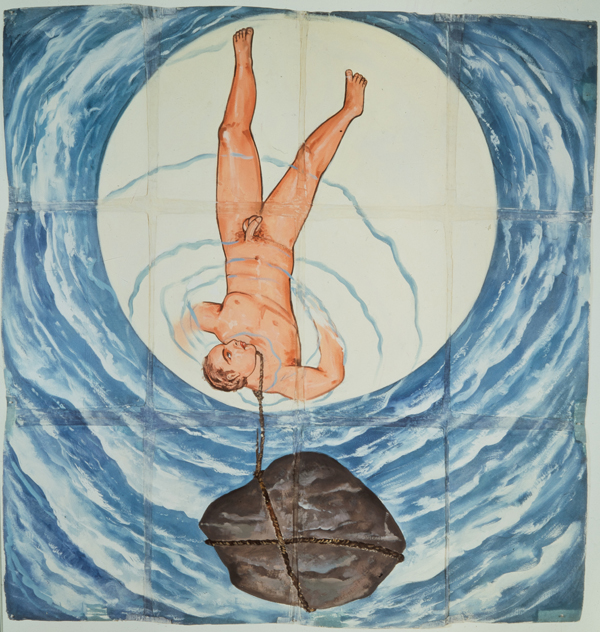
Francesco Clemente, “Moon,” gouache on twelve sheets of handmade Pondicherry paper joined with handwoven cotton strips, 1985 (courtesy the Metropolitan Museum of Art, New York)

Francesco Clemente, “Moon,” gouache on twelve sheets of handmade Pondicherry paper joined with handwoven cotton strips, 1985 (courtesy the Metropolitan Museum of Art, New York)

Rubin Museum of Art
150 West 17th St. at Seventh Ave.
Wednesday – Monday through February 2, $10-$15 (free Fridays 6:00 – 10:00)
212-620-5000
www.rubinmuseum.org

Over the last four decades, Italian artist Francesco Clemente has spent a significant amount of time living in India, collaborating with local artists and artisans to create works that explore the culture in unique ways. A small sampling of these works is now on view at the Rubin Museum in “Francesco Clemente: Inspired by India.” Consisting of four large-scale paintings from 1980 and one from 1985, two watercolor series from 1989 and 2012-13, and a quartet of corner sculptures made specifically for this show, the exhibit is set up to evoke an Indian temple. “Building on the plan, orientation, and personality of the Rubin Museum gallery — and corresponding loosely to the concept of vastu (sacred proportion) in ancient Indian texts known as shastras — the exhibition was designed to reflect metaphorically the experience of visiting an Indian temple,” curator Beth Citron writes in the catalog. “Building a dialogue between the architecture of the gallery and the art within it also speaks to Clemente’s great sensitivity to environment and his deep understanding of Indian visual, material, and spiritual cultures.” The 1980 works, composed of gouache on sheets of handmade Pondicherry paper joined with handwoven cotton strips, include the powerful “Moon,” in which a nude man is being dragged away from (or perhaps into) a swirling moon by a rock tied around his neck, and “Hunger,” in which a man is taking a bite out of an Ouroboros, a snake devouring itself in a circle. The recent series “Sixteen Amulets for the Road” features depictions of men in chains, clocks showing different times, twisted ladders reaching toward the sky, and birds surrounded by graphic arrows, with one unlucky creature pierced by one of the sharp symbols. Most impressive is “The Black Book,” sixteen intensely beautiful, small, dark watercolors of men and women in the midst of heated passion; the longer you look at them, the more you can make out what is going on in these otherwise abstract images. The sculptures have similar names as the paintings — “Moon,” “Earth,” “Sun,” “Hunger” — each one set on a makeshift bamboo pedestal, at the top such repurposed objects as a vase, a suitcase, a mystery box, and a flag with quotations from Debord’s The Society of the Spectacle on either side.

But it’s the related programming that takes this exhibition to another level. For “Clemente x 8,” the artist will engage in onstage conversations with multimedia performer Patti Smith (October 1), theater innovator Robert Lepage (October 5), hip-hop star Nas (October 7), Tibetan monk Gelek Rimpoche (October 8), chef Eric Ripert (October 22), architect Billie Tsien (October 29), Sopranos creator David Chase (November 5), and writer-director Alfonso Cuarón (November 9); all tickets are $45 and include admission to the exhibition before and after the talk. In addition, Clemente has selected the films for the museum’s Friday-night Cabaret Cinema series; “My Formative Years” consists of ten works introduced by special guests, pairing Stella Schnabel with Luis Buñuel’s Viridiana, daughter Chiara Clemente with Bernardo Bertolucci’s Before the Revolution, Philip Glass with Conrad Rooks’s Chappaqua, Neil LaBute with Peter Fonda’s The Hired Hand, and Karole Armitage with Pier Paolo Pasolini’s Salò, or the 120 Days of Sodom, among other screenings through December 5. (Admission is free with a minimum $10 purchase in the K2 Lounge.) And finally, exhibition curator Citron will speak with contemporary artists on select Friday nights at 6:15; the impressive “Artists on Art” lineup boasts Fred Tomaselli on September 26, Julian Schnabel on October 3, Philip Taaffe on October 17, Sandeep Mukherjee on October 24, David Salle on November 7, Terry Winters on November 14, and Swoon on November 21. (Free tickets are distributed beginning at 5:45.)

DUMBO ARTS FESTIVAL 2014

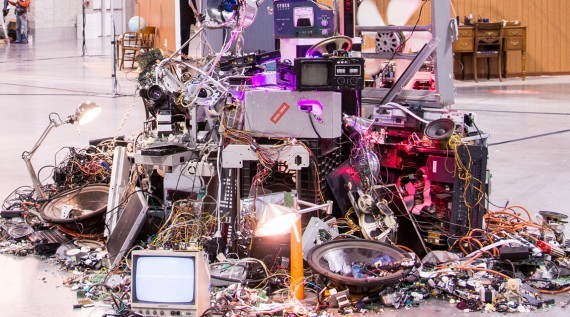
Taezoo Park’s “Digital Being” invites visitors to play with its many parts, all made out of waste

Taezoo Park’s “Digital Being” invites visitors to play with its many parts, all made out of electronic waste

Multiple venues in DUMBO
September 27-29, free
www.dumboartsfestival.com

The annual DUMBO Arts Festival is one of the most fun events of the year, as live performances, art installations, gallery shows, pop-up parties, and just about anything else can be found in nearly every nook and cranny all around the district Down under the Manhattan Bridge Overpass. The eighteenth annual event takes place September 26-28, with hundreds of artists participating in solo and group exhibitions, open studios, site-specific public art projects, interactive presentations, family-friendly activities, and much more, with a few hundred thousand people expected to attend. And yes, it’s all free. Below are only some of the highlights.

Friday, September 26
and
Saturday, September 27

DiscoTransformer, by Thomas Stevenson, mobile music and light system in street vendor cart, roaming throughout DUMBO, 7:00 – 10:00 pm

Friday, September 26
Saturday, September 27
and
Sunday, September 28

Digital Being, by Taezoo Park, evolving kinetic installation made from electronic waste, with people invited to manipulate the sculpture in various ways, St. Ann’s Warehouse, 29 Jay St., Friday 6:00 to 9:00, Saturday 12 noon – 9:00, Sunday 12 noon – 6:00

Rub Me the Wrong Way, by Traci Talasco, immersive installation in which gallery space has been covered with sandpaper to represent societal expectations of women, BAC Gallery, 111 Front St., Suite 218, Friday 6:00 to 9:00, Saturday 12 noon – 9:00, Sunday 12 noon – 6:00

Borges: The Complete Works, by Daniel Temkin & Rony Maltz, word search of every palabra ever written by Jorge Luis Borges, in Spanish and English translation (borgeslibrary.com), Manhattan Bridge, Adams Street side, 7:00 pm – 12:00 midnight

Xiu Xiu will deliver a special site-specific performance incorporating Danh Vo sculptures

Xiu Xiu will incorporate Danh Vo’s “We the People” Statue of Liberty installation into special performance on Sunday in Brooklyn Bridge Park

Saturday, September 27
Art Is Me, Art Is You: NYC Series #2, by Yikwon Kim, outdoor procession with artists marching in wearable art, including Yikwon Kim, Eleanor Bailey, Mike Brenner, Cyril Bullard, Bill Cromar, Vinson Houston, Richard Jochum, Grant Johnson, Scot Kaylor, Minny Lee, Yvonne Love, Courtney Morgan, Gabrielle Russomagno, Inyoung Seoung, Insook Soul, Graeme Sullivan, and Jay Sullivan, 12 noon – 4:00

The Imaginary Truck, by chashama, visitors invited to put on blindfold and be led through art truck, corner of Plymouth & Adams Sts., 12 noon – 6:00

I ____ a Dollar, by Jody Servon, public intervention exploring the value of a dollar, Main St. between Plymouth & Water Sts., 12 noon – 6:00

Saturday, September 27
and
Sunday, September 28

Barter Town (Trading Post XVI: Mesh & Lace), by Heather Hart Experience, interactive sharing economy in which visitors can barter for palm reading, massage therapy, costume making, face painting, and other services, no money allowed, 12 noon – 6:00

BEAUTY, interactive performance art by the South Asian Women’s Creative Collective (SAWCC), with Shahnaz Habib, Rachel Kalpana James & Svetlana Swinimer, Sunita Mukhi, Qinza Najm, Nooshin Rostami, Reya Sehgal, and Purvi Shah, Parul Shah, and Deesha Narichania, Main St. between Plymouth & Water Sts., 12 noon – 6:00

Sunday, September 28
Dreams for Free, by Jody Servon, in which visitors can share their dreams in exchange for a lottery ticket, Main St. between Plymouth & Water Sts., 12 noon – 6:00

Kling Klang, by Xiu Xiu, live music performance incorporating Danh Vo’s “We the People” installation, Pier 3 Greenway Terrace, Brooklyn Bridge Park, 1:00 – 4:00

The Imaginary App, by Paul D. Miller (aka DJ Spooky) and Svitlana Matviyenko, celebration of publication of anthology The Imaginary App, the powerHouse Arena, 37 Main St., 5:00 – 7:00