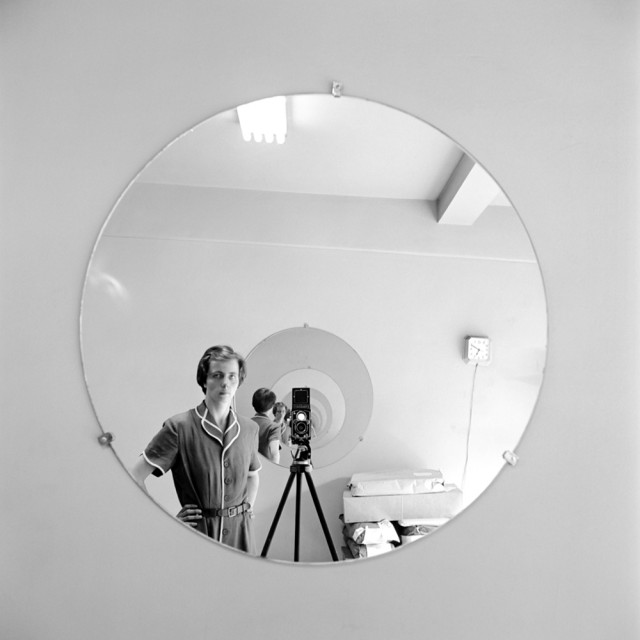
Documentary turns the camera on mysterious street photographer Vivian Maier (photo by Vivian Maier / courtesy of the Maloof Collection)
FINDING VIVIAN MAIER (John Maloof & Charlie Siskel, 2013)
Bow Tie Chelsea Cinemas
260 West 23rd St. between Seventh & Eighth Aves.
Friday, November 14, 12:30, and Saturday, November 15, 12 noon
Series runs November 13-20
www.docnyc.net
www.findingvivianmaier.com
 By their very nature, street photographers take pictures of anonymous individuals, capturing a moment in time in which viewers can fill in their own details. In the wonderful documentary Finding Vivian Maier, codirectors John Maloof and Charlie Siskel turn the lens around on a street photographer herself, attempting to fill in the details of the curious life and times of Vivian Maier, about whom very little was known. “I find the mystery of it more interesting than her work itself,” says one woman for whom Vivian Maier served as a nanny decades earlier. “I’d love to know more about this person, and I don’t think you can do that through her work.” In 2007, while looking for historical photos for a book on the Portage Park section of Chicago, Maloof purchased a box of negatives at an auction. Upon discovering that they were high-quality, museum-worthy photographs, he set off on a mission to learn more about the photographer. Playing detective — while also developing hundreds of rolls of film, with thousands more to go — Maloof meets with men and women who knew Maier as an oddball, hoarding nanny who went everywhere with her camera and shared little, if anything, about her personal life. “I’m the mystery woman,” Maier says in a color home movie. Her former employers and charges, including talk-show host Phil Donahue, debate her background, the spelling and pronunciation of her name, her accent, and how she might have felt about a documentary delving into her secretive life.
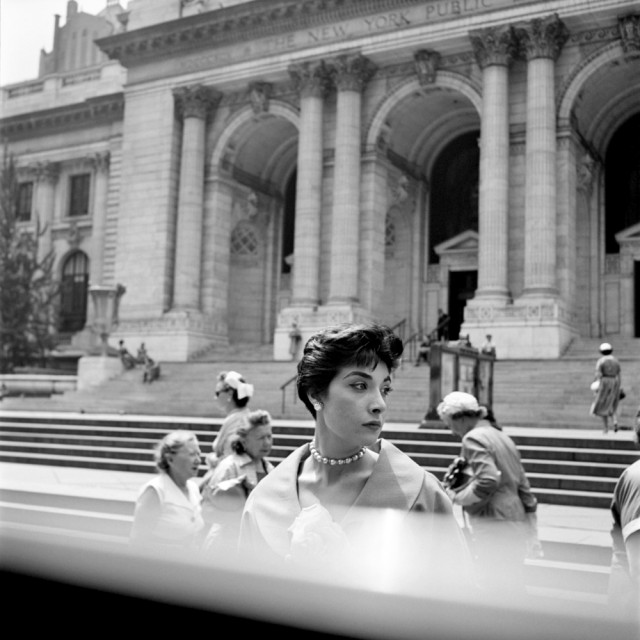
Street photographer Vivian Maier captured a unique view of the world in more than 100,000 pictures (photo by Vivian Maier / courtesy of the Maloof Collection)
Maloof also discusses Maier’s work with such major photographers as Joel Meyerowitz and Mary Ellen Mark. “Had she made herself known, she would have become a famous photographer. Something was wrong. . . . A piece of the puzzle is missing,” Mark says while comparing Maier’s work to such legends as Robert Frank, Lisette Model, Helen Levitt, and Diane Arbus. Maloof tries to complete what becomes an ever-more-fascinating puzzle in this extremely enjoyable documentary that gets very serious as he finds out more about the mystery woman who is now considered an important twentieth-century artist. Finding Vivian Maier also has an intriguing pedigree; codirector and producer Siskel (Religulous) is executive producer of Comedy Central’s Tosh.0, executive producer Jeff Garlin (I Want Someone to Eat Cheese With) is a comedian who played Larry David’s best friend and agent on Curb Your Enthusiasm, and Kickstarter contributor and interviewee Tim Roth (Reservoir Dogs, Lie to Me) is an Oscar-nominated actor who collects Maier’s work. Maloof and Siskel will be on hand when Finding Vivian Maier is presented November 14 & 15 at Bow Tie Chelsea Cinemas in the Short List section of the 2014 DOC NYC festival, which runs November 13-20 and consists of more than 150 documentaries being shown at Bow Tie, the IFC Center, and the SVA Theatre. To experience Maier’s work in person, be sure to check out the photography exhibit “Vivian Maier: In Her Own Hands,” continuing at the Howard Greenberg Gallery in Midtown through December 6.
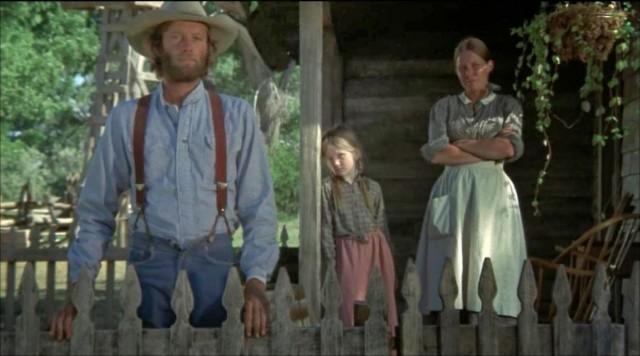
 After many years away from the homestead, Harry Collings (first-time-director Peter Fonda) returns to his farm, only to find that his wife (Verna Bloom) has kept herself rather busy once she assumed he was not coming back, in The Hired Hand, a so-called hippie Western written by Scottish novelist Alan Sharp, who also wrote Ulzana’s Raid and Night Moves. Warren Oates is his usual fine self as Harry’s dedicated sidekick, Arch Harris, as they do battle with the likes of the evil McVey (Severn Darden). The quiet, beautiful Fonda is like a Zen cowboy, trusting in karma to right the world’s wrongs, but that doesn’t always work out. Fonda considers the film, photographed by a young Vilmos Szigmond (McCabe & Mrs. Miller, The Deer Hunter), to be a Greek tragedy within a Western; indeed, it’s a little gem that that goes way beyond the trappings of the genre, laying the groundwork for such later anti-Westerns as Clint Eastwood’s Unforgiven. The film is being shown November 14 as part of the Rubin Museum Cabaret Cinema series “My Formative Years,” curated by artist Francesco Clemente in conjunction with his current solo show, “Inspired by India,” and will be introduced by playwright Neil LaBute. Clemente says about the film, “I’m in favor of psychedelia in all manifestations and to find psychedelia in a Western is always nice when it happens, but it never happens.” The film series continues with Alejandro Jodorowsky’s The Holy Mountain on November 21 and Pier Paolo Pasolini’s Salò, or the 120 Days of Sodom on November 28 (introduced by choreographer Karole Armitage), before concluding with Gianfranco Rosi’s Sacro GRA on December 5.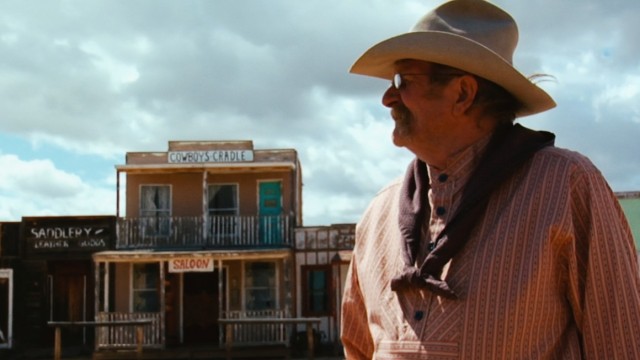
 Brooklyn-based documentarian Andrea B. Scott reveals the soft underbelly of contemporary America in Florence, Arizona, which is having its world premiere this week at the annual DOC NYC festival. Scott heads to the small desert town of Florence in the Grand Canyon State, an area that was a farm community until a nearby 1875 silver boom led to its becoming a more wild West kind of place. Today the town revolves around the prison system; there are twice as many prisoners in Florence as there are residents, and a call to privatize more of the jails is part of the battle for mayor between the New Age-y Lina Austin and former police chief Tom Rankin, both of whom speak openly and honestly with Scott. Scott, who directed, produced, coedited, and photographed the film — which includes gorgeous shots of sunrises and vast landscapes — also meets with prison barber and former inmate Andy Celaya, who remembers the respect ex-cons used to get after serving their time; another former prisoner, young Marcus Seitz, who can’t wait to turn twenty-one so he can work inside the prison, explaining, “That would be pretty cool”; and grizzled prison detention officer Gunny Jackson, who runs the Semper Fi Ranch with his wife, Lois, and considers himself a “dove” who can be “a very vicious man when I want to be; I know how to inflict pain.” Scott also visits the Pinal County Historical Society, which features a section on all of the people who have been executed in Florence’s prisons.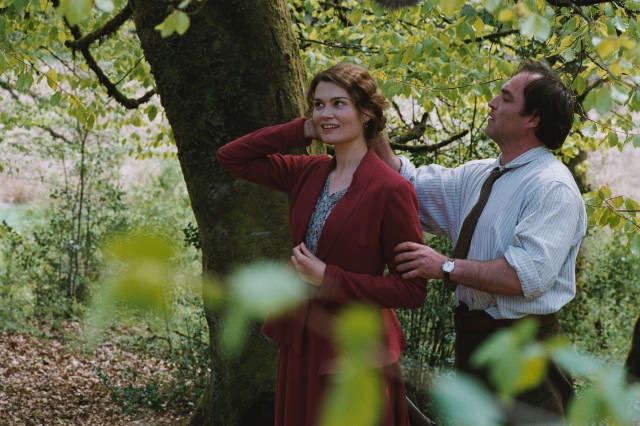


 In The Invisible Front, directors Vincas Sruoginis and Jonaš Ohman and producer Mark Johnston tell the story of the little-known Lithuanian resistance movement against the Soviets beginning in the early 1940s, as Stalin sought to spread his communist rule by invading Lithuania, Latvia, and Estonia. The central focus is on the heroic Juozas Lukša, whose memoir, Forest Brothers: The Account of an Anti-Soviet Lithuanian Freedom Fighter, 1944-1948, is quoted extensively in the film. Using news reports, archival footage, and new interviews with surviving partisans, Soviet collaborators, and former Lithuanian president Valdas Adamkus, Sruoginis and Ohman relate the devastating tale of the 1940s resistance, celebrating the enduring spirit of the Lithuanian freedom movement, including the battle for independence in 1991. Unfortunately, the tale gets drowned in sentiment and propaganda, with dry narration and melodramatic music. Of course, the story is as relevant as ever as Vladimir Putin and the Russians again threaten to wreak havoc in the region, but the film is more a call-to-arms than a historical investigation. In fact, the filmmakers are raising money for the current Ukraine resistance; it might be a noble cause, but that purpose further marks the film as having too much of an agenda. The Invisible Front opens November 7 at Cinema Village, with Sruoginis, Ohman, and Johnston participating in Q&As following the 7:00 screenings on Friday and Saturday and the 1:00 show on Sunday.