this week in lectures, signings, panel discussions, workshops, and Q&As

PASOLINI 40 YEARS LATER: WITH ALFREDO JAAR AND NORMAN MacAFEE

Alfredo Jaar. The Ashes of Pasolini, 2009. Video: 38:00. Courtesy the artist, New York.

Alfredo Jaar, THE ASHES OF PASOLINI, 2009. Video: 38:00 (Courtesy the artist, New York)

Anthology Film Archives
32 Second Ave. at Second St.
Sunday, November 1, free, 12:30 pm
646-336-5771
anthologyfilmarchives.org
www.alfredojaar.net

Chilean artist, architect, and filmmaker Alfredo Jaar honors the fortieth anniversary of the mysterious murder of Pier Paolo Pasolini with a special presentation at Anthology Film Archives on November 1. “Pasolini 40 Years Later: with Alfredo Jaar and Norman MacAfee” consists of a screening of Jaar’s 2009 documentary, The Ashes of Pasolini, the launch of a new artist book, Pier Paolo Pasolini: The Ashes of Gramsci, readings from the iconoclastic Italian writer and director’s poetry, and a discussion about Pasolini’s life and work. Jaar will be joined by writer, visual artist, literary translator, and freelance book editor Norman MacAfee for the event. Jaar has written that The Ashes of Pasolini — a eulogy for Pasolini inspired by Pasolini’s poem “The Ashes of Gramsci,” which was a eulogy for Italian theoretician Antonio Gramsci — “is a modest film about the death of an extraordinary intellectual. . . . As you know, it is still unclear who killed him. But for me, it has always been clear why: it was because of fear. Fear of his voice, fear of his life style, fear of his ideas, fear of his opinions, fear of his intellect. He was the totally complete intellectual: a filmmaker, a poet, a writer, a journalist, a critic, a polemist. He was totally involved in the cultural and political life of his time. As an artist he took risks, broke the rules, he created his own rules.” The tribute will be followed by a book signing and reception; the book will be available for purchase for $10.
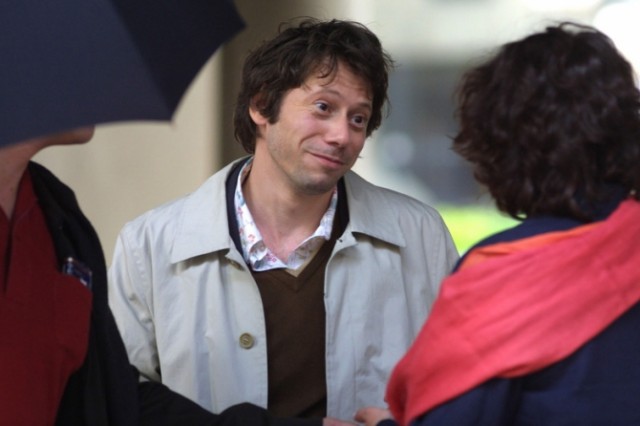

MATHIEU AMALRIC — RENAISSANCE MAN: KINGS AND QUEEN

Mathieu Amalric

The always-engaging Mathieu Amalric is being feted by Anthology Film Archives and the French Institute Alliance Française

KINGS AND QUEEN (ROIS ET REINE) (Arnaud Desplechin, 2004)
Anthology Film Archives
32 Second Ave. at Second St.
Saturday, October 31, 6:00, and Saturday, November 7, 8:30
Series runs October 29 – November 8 (companion series at FIAF runs November 3 – December 15)
212-505-5181
anthologyfilmarchives.org

Award-winning French actor-director Mathieu Amalric is celebrating his fiftieth birthday with an exciting invasion of New York City, where he is being honored in a pair of terrific companion film series and will also star in a theatrical production. FIAF’s CinéSalon tribute runs on Tuesday nights through December 15, beginning November 3 with a screening of his 2014 film The Blue Room, followed by a Q&A with Amalric and costar and cowriter Stéphanie Cléau, who is also his real-life partner; Amalric will also star in Fight or Flight (Le Moral des Ménages), Cléau’s stage adaptation of the novel by Eric Reinhardt. But the big festivities begin at Anthology Film Archives, where “Mathieu Amalric: Renaissance Man” runs October 29 through November 8, featuring ten of his films, including Otar Iosseliani’s 1984 Favorites of the Moon, in which he makes his film debut, and 2001’s Eat Your Soup, his first directorial effort.
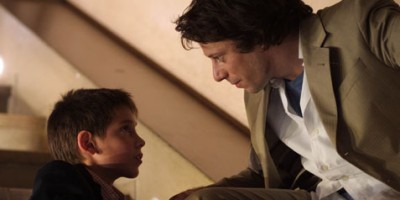
Mathieu Amalric won a César for his starring role in KINGS AND QUEEN

Mathieu Amalric won a César for his starring role in Arnaud Desplechin’s KINGS AND QUEEN

Amalric has made several films with Arnaud Desplechin (A Christmas Tale, My Sex Life . . . or How I Got into an Argument), and one of the best is being shown October 31 and November 7 at Anthology. In Kings and Queen, Emmanuelle Devos is spectacular as Nora, a divorced single mother with a ten-year-old son (Valentin Lelong), an ailing father (Maurice Garrel), a troubled sister (Nathalie Boutefeu), a straitlaced, boring fiance (Olivier Rabourdin), a dead ex-husband who appears as a ghost (Joachim Salinger), a manic, tax-evading ex-husband who is institutionalized (a fabulous Amalric), and a deep-seated survival instinct that is infectious. Throw in a suicidal woman (Magalie Woch) who can’t get enough sex, an alluring doctor (Catherine Deneuve), a drug-addicted lawyer (Hippolyte Girardot), a remarkably calm, gun-toting convenience-store owner (Jean-Paul Roussillon), and other unusual characters and plotlines and you have one highly entertaining, complex, and marvelously original French drama that will fly by much faster than its two-and-a-half-hour length would lead you to believe. Amalric won his first César for the role; he won his second three years later for The Diving Bell and the Butterfly. Amalric will be at Anthology to introduce the October 31 screening of Roman Polanski’s Venus in Fur.

ERNESTO PUJOL: 9 – 5

(photo by twi-ny/mdr)

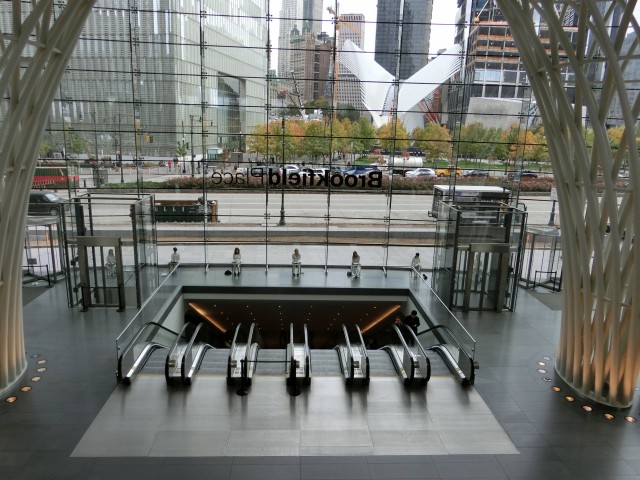
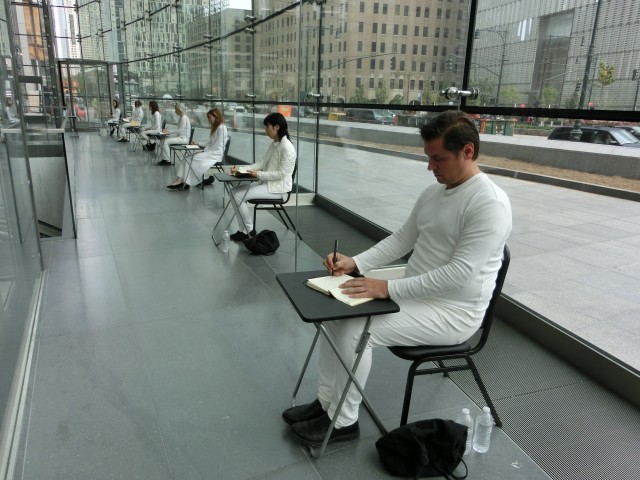
Eleven performers dressed in white take notes on passersby in Ernesto Pujol’s “9 – 5” at Brookfield Place (photo by twi-ny/mdr)

Brookfield Place
230 Vesey St.
October 26-28, free, 9:00 am – 5:00 pm
brookfieldplaceny.com
9-5 slideshow

Social choreographer Ernesto Pujol takes the concept of the open office plan to a whole new level with 9 – 5, a site-specific durational performance running October 26 to 28 just inside the fifty-five-foot-tall front windows of the Pavilion at Brookfield Place. The Havana-born, New York–based Pujol has situated eleven performers, all dressed in white, at small desks, where they take notes, silently and calmly reflecting on what they observe as some thirty-five thousand people swirl about, on their way to Le District, Hudson Eats, the Winter Garden, the subway, or back to their own desks in their own offices. Meanwhile, outside and behind the eleven people, West St. is a whirlwind of activity, with massive construction, speeding cars, and the building of the new World Trade Center train station. There is a heavenly, meditative feeling in the air around the performers (Dillon de Give, Kate Harding, Young Sun Han, Sara Jimenez, Bess Matassa, James Rich, Valarie Samulski, Catilin Turski, Michael Watson, Joy Whalen, and Jayoung Yoon), almost as if they are guardian angels watching out for us as they jot things down in their notebooks; then again, they could also be spying on us in a very public form of surveillance. But mostly, Pujol is trying to get all of us — commuters, tourists, office workers, shoppers, passersby, etc. — to just slow down: “Close your eyes / Take a deep breath / Open your eyes and look around / (Repeat this if necessary) / Take a deep breath with eyes wide open / Begin to see.”

(photo by twi-ny/mdr)

Ernesto Pujol’s “9 – 5” continues at the Brookfield Place Pavilion through October 28 (photo by twi-ny/mdr)

There’s a Zen-like philosophy to what Pujol does, particularly as he examines the monotony of the 9 – 5 world. On his website, he explains, “I perform as a form of ephemeral, collective, and psychic portraiture. My public, durational, group performances seek to reveal the unseen, the intangible, the invisible, and the lost. It is performance practice as a form of perception, reclamation, and mourning. To memorialize and to mourn may result in transformative experiences, in steps toward forgiveness, reparation, and healing.” A collaboration with Brookfield Place and More Art, 9 – 5 is that much more powerful with the Freedom Tower standing outside, reminding viewers of the invisible and the lost, of what isn’t there — and what has arisen in its place, phoenix-like. Pujol, who has previously staged such works as Speaking in Silence in Hawaii in 2011, Farmers Dream in Kansas in 2010, and Baptizing a Garden in South Carolina in 2008, will be leading a free workshop, “Embodied Meditation,” on November 2 & 4 at 12:30 with body practice teacher Samulski and will deliver a free lecture, “The Art of Mindful Presence,” on November 4 at 6:30; advance RSVPs are required.

LUNCH WITH MIMI SHERATON AND MICHAEL GROSS

Mimi Sheraton will be interviewed by Michael Gross at special lunch event at Rotisserie Georgette

Mimi Sheraton will be interviewed by Michael Gross at special lunch event at Rotisserie Georgette

Rotisserie Georgette
140 East 60th St. between Madison & Fifth Aves.
Saturday, October 31, $59 (plus tax, tip, and book purchase), 12 noon
212-390-8060
www.rotisserieg.com

Brooklyn-born restaurant critic Mimi Sheraton will be at Rotisserie Georgette on October 31 at 12 noon, interviewed by Manhattan-born author Michael Gross, focusing on Sheraton’s most recent book, 1,000 Foods to Eat Before You Die: A Food Lover’s Life List. As they discuss food and real estate — quite a healthy topic, as so many New York City eateries have closed or moved because of skyrocketing rents — guest will dine on Barigoule d’Artichauts and Brandade de Morue as an appetizer, Poulet Rôti “Farnèse” and Pomme Aligot for the main course, and Chocolate Pot de Crème for dessert, all taken from the book. Afterward, there will be a book signing with both Sheraton, who has also written such tomes as From My Mother’s Kitchen: Recipes and Reminiscences and The Bialy Eaters, and Gross, author of such nonfiction works as 740 Park and House of Outrageous Fortune.

UMUSUNA: MEMORIES BEFORE HISTORY

(photo courtesy of Sankai Juku)

Sankai Juku returns to BAM for first time in nine years with UMUSUNA (photo courtesy of Sankai Juku)

NEXT WAVE FESTIVAL
BAM Howard Gilman Opera House
30 Lafayette Ave. between Ashland Pl. & St. Felix St.
October 28-31, $25-$75, 7:30
718-636-4100
www.bam.org
www.sankaijuku.com

Feeling a bit overwhelmed these days? Can’t navigate through all the emails, crowded subway trains, streets jammed with tourists? Looking for something to calm you down, relax, give you a little time to stop and be here now? Japanese dance troupe Sankai Juku has just the right remedy. This week the Tokyo-based Butoh purveyors return to New York City for the first time in five years, since performing Tobari: As If in an Inexhaustible Flux at the Joyce in 2010. They are back at BAM for the first time in nine years, as director, choreographer, designer, and Sankai Juku founder Ushio Amagatsu brings Umusuna: Memories Before History to the Howard Gilman Opera House October 28-31, following such previous BAM performances as Hibiki (Resonance from Far Away) in 2002 and Kagemi: Beyond the Metaphors of Mirrors in 2006. The dancers, covered in white talcum powder, will move agonizingly slowly through sand as they contemplate the elements: fire, water, air, and earth. The meditative piece, part of BAM’s Next Wave Festival and the company’s fortieth anniversary, features music by Takashi Kako, Yas-Kaz, and Yoichiro Yoshikawa. Should you want to try this at home, Sankai Juku founding member and longtime dancer Semimaru will lead the Butoh class “Sankai Juku: What Makes a Body Move” on October 30 at 12 noon ($25, no experience necessary) at the Mark Morris Dance Center right across the street.

THEATER & CINEMA: THE LAST METRO

THE LAST METRO

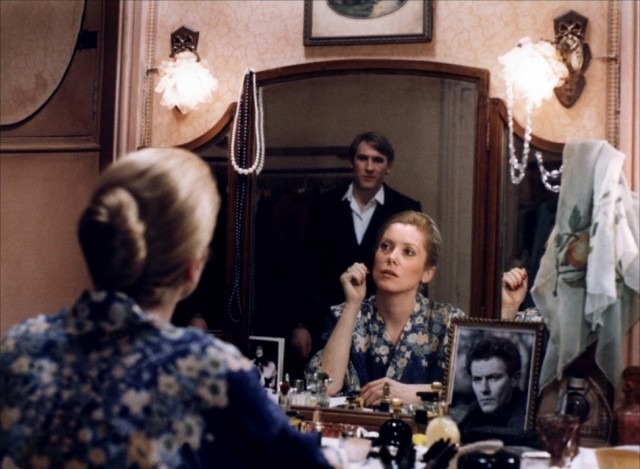
Catherine Deneuve and Gérard Depardieu star in François Truffaut’s gripping WWII melodrama THE LAST METRO

CINÉSALON: THE LAST METRO (LE DERNIER METRO) (François Truffaut, 1980)
French Institute Alliance Française, Florence Gould Hall
55 East 59th St. between Madison & Park Aves.
Tuesday, October 27, $14, 4:00 & 7:30 (later screening introduced by Olivia Bransbourg)
212-355-6100
www.fiaf.org

FIAF’s CinéSalon series “Theater & Cinema” concludes October 27 with François Truffaut’s powerful Oscar-nominated WWII melodrama, The Last Metro. Set in Vichy France during the German occupation, the film takes place in and around the Théâtre Montmartre, which has been taken over by movie-star actress (and non-Jew) Marion Steiner (Catherine Deneuve) after her husband, Jewish theater director Lucas Steiner (Heinz Bennent), has apparently escaped the Nazi regime. But in fact Lucas is hiding out in the theater’s basement, where he has translated a Norwegian play, aptly titled Disappearance, and is directing it from below. The cast and crew of Disappearance include ladies’ man Bernard Granger (Gérard Depardieu) as Marion’s love interest; costume designer Arlette Guillaume (Andréa Ferréol), who refuses Bernard’s advances because of a secret reason; young actress Nadine Marsac (Sabine Haudepin), who will do just about anything to get parts; stage manager Raymond Boursier (Maurice Risch), who is deeply dedicated to the theater; and Jean-Loup Cottins (Jean Poiret), the stand-in director for Lucas. Only Marion knows where Lucas is, but danger grows when critic, publisher, and Nazi collaborator Daxiat (Jean-Louis Richard) starts sniffing around a little too much.
THE LAST METRO

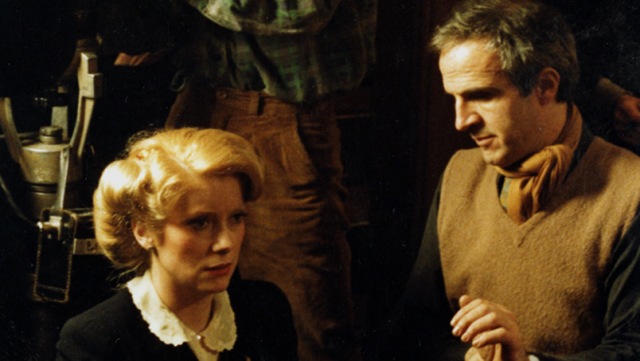
Catherine Deneuve on-set with director François Truffaut during the making of THE LAST METRO

Genre lover Truffaut reaches deep into his cinematic bag of tricks in The Last Metro, paying tribute to film noir, romantic melodrama, war movies, and even musicals as he references Casablanca, The Phantom of the Opera, The Diary of Anne Frank, Gaslight, To Be or Not to Be, The Golden Coach, Notorious, and Cabaret. He takes on anti-Semitism, anti-homosexuality, and anti-humanism in general while setting up a compelling love triangle that is echoed in the play-within-a movie, which is staged on a dramatic, surreal pink Expressionistic set. Depardieu and Deneuve, who went on to make such other films together as Claude Berri’s Fort Saganne, André Téchiné’s Changing Times, and François Ozon’s Potiche, might not be Bogart and Bergman, but they are a magnetic duo, Depardieu’s hulking, brutishly handsome presence dominating confined spaces, Deneuve’s refined, radiant beauty glowing amid a predominantly drab palette. The film uses the metaphor of theater as a way to escape reality, whether on an individual basis or during an international crisis, but of course Truffaut is also citing film as its own escape, a place where people flock to when times are both good and bad. The Last Metro — the title refers to the final train of the night, which passengers must catch in order to not break the strict curfew — is a beautifully made picture, the second in Truffaut’s planned trilogy of films about entertainment, following 1973’s Day for Night and preceding the never-finished L’Agence Magique. Winner of a 1990 César for Best Film of the 1980s in addition to ten previous Césars, including Best Film, Best Director (Truffaut), Best Actor (Depardieu), Best Actress (Deneuve), Best Cinematography (Nestor Almendros), Best Music (Georges Delerue), Best Production Design (Jean-Pierre Kohut-Svelko), and Best Writing (Truffaut and Suzanne Schiffman), The Last Metro is screening at 4:00 and 7:30 on October 27 in Florence Gould Hall; the later show will be introduced by French publisher and fragrance designer Olivia Bransbourg.

REFUSE THE HOUR

(photo by John Hodgkiss)

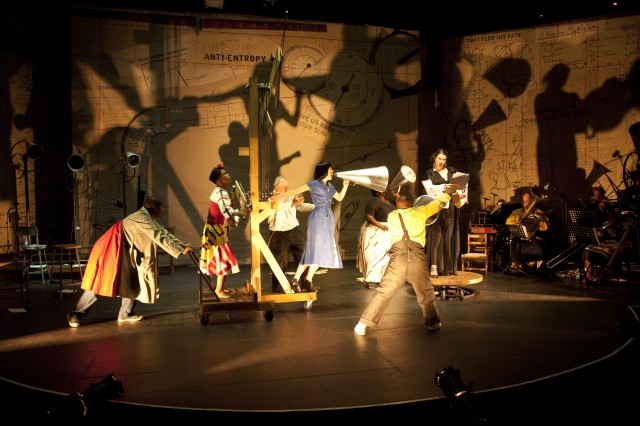
William Kentridge leads a troupe of dancers, vocalists, and musicians through a multimedia journey into the concept of time and space in REFUSE THE HOUR (photo by John Hodgkiss)

NEXT WAVE FESTIVAL
Brooklyn Academy of Music
BAM Harvey Theater
651 Fulton St.
October 22-25, $52-$110
718-636-4100
www.bam.org

At one point in William Kentridge’s multimedia, multidisciplinary chamber opera, Refiuse the Hour, projections of three large metronomes all move at different speeds, an apt metaphor for the eighty-minute piece as a whole, a wildly inventive and unpredictable presentation of sounds and images built around such concepts as time, anti-entropy, science, and art in addition to coincidence and fate. “I walk around the studio, waiting for these fragments that have come in to appear, and make sense, repeating the elements again and again,” Kentridge says, standing onstage in his trademark white button-down shirt and black pants and shoes in front of a projection of himself walking through his studio. The dialogue, with dramaturgy by Harvard history of science and physics professor Peter Galison, collides with the imagery in abstract ways, as beautiful and mesmerizing as it is confusing and chaotic. Kentridge serves as storyteller, discussing the Perseus myth and black holes, as well as a kind of conductor — the hand of the artist is often visible in his drawings and films — interacting with kinetic sculptures and the other members of the cast, which include dancer and choreographer Dada Masilo, vocalists Ann Masina and Joanna Dudley, actor Thato Motlhaolwa, and musicians Adam Howard, Tlale Makhene, Waldo Alexander, Dan Selsick, Vicenzo Pasquariello, and Thobeka Thukane, performing a score by Kentridge’s longtime collaborator, composer Philip Miller. Meanwhile, a percussion kit hangs from above, mysteriously chiming in. Sabine Theunissen’s ragtag set feels right at home at the BAM Harvey, wonderfully integrating Catherine Meyburgh’s video design, Greta Goiris’s costumes, and Luc de Wit’s choreographed movement of humans and machines. A companion piece to his immersive, deeply intellectual yet playful exhibition “The Refusal of Time,” Refuse the Hour refuses categorization, instead leading the audience down a dramatic rabbit hole where science and art intersect in a complex yet delightful symphony of words, images, movement, and music. “Can we hold our breath against time?” Kentridge asks. Refuse the Hour is nothing if not breathtaking itself, challenging the notion of performance as only Kentridge can. (For more on Kentridge’s current invasion of New York City, go here.)