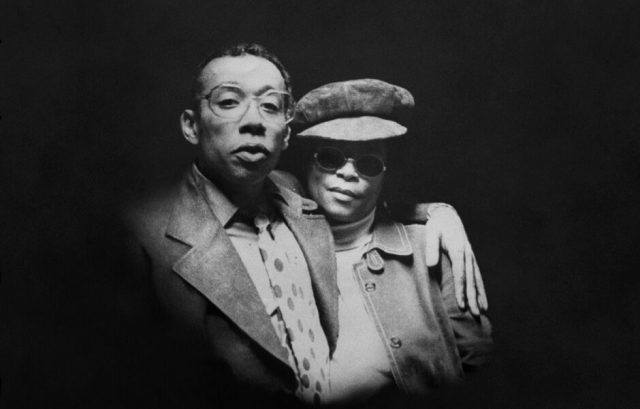
I CALLED HIM MORGAN details the complicated relationship between jazz trumpeter Lee Morgan and his common-law wife, Helen
I CALLED HIM MORGAN (Kasper Collin, 2016)
Film Society of Lincoln Center, Francesca Beale Theater
144 West 65th St. at Amsterdam Ave.
Opens Friday, March 24
212-875-5601
icalledhimmorgan.com
www.filmlinc.org
 On February 19, 1972, during a massive blizzard, thirty-three-year-old jazz trumpeter extraordinaire Lee Morgan was shot to death by his common-law wife, Helen, in Slugs’ Saloon on the Lower East Side. Swedish director, writer, and producer Kasper Collin takes viewers behind the scenes of the tragedy in the sensational documentary I Called Him Morgan. The Philadelphia-born Morgan was a young prodigy, studying with Clifford Brown, playing with Dizzy Gillespie’s orchestra when he was eighteen, and joining Art Blakey’s Jazz Messengers at twenty. Preferring the term “black classical music” to “jazz,” Morgan was caught up in a lifestyle of fast cars and drugs, ultimately hitting rock bottom until he was rescued by Helen Moore, thirteen years his elder, a farm girl from North Carolina who loved throwing parties in her adopted hometown of New York City and was a beloved fixture in the jazz community. Collin amasses an impressive roster of jazz greats who share their insights, including saxophonists Wayne Shorter, Bennie Maupin, and Billy Harper, drummers Albert “Tootie” Heath and Charli Persip, and bassists Larry Ridley, Jymie Merritt, and Paul West, along with Morgan neighbor Ron St. Clair, Helen’s son Al Harrison, and Morgan’s very close friend, Judith Johnson, many of whom are going on the record for the first time. “There was never no doubt in anybody’s mind: Lee was gonna be a star, Persip remembers. “They cared about each other. They loved each other,” Maupin says about Lee and Helen. There are also rare audio clips from an interview British writer and photographer Val Wilmer conducted with Morgan in October 1971 in Lee and Helen’s Bronx apartment. The film is anchored by a remarkable interview Helen gave writer, teacher, and jazz radio announcer Larry Reni Thomas in February 1996, a month before she died. “I will not sit here and tell you that I was so nice, because I was not,” she tells Thomas, speaking often in broken phrases. “One of the . . . will cut you. I was sharp. Yeah . . . I had to be. And I looked out for me.” It all culminates in a spellbinding, detailed account of the murder itself, told by numerous eyewitnesses with “Stagger Lee”-like swagger.
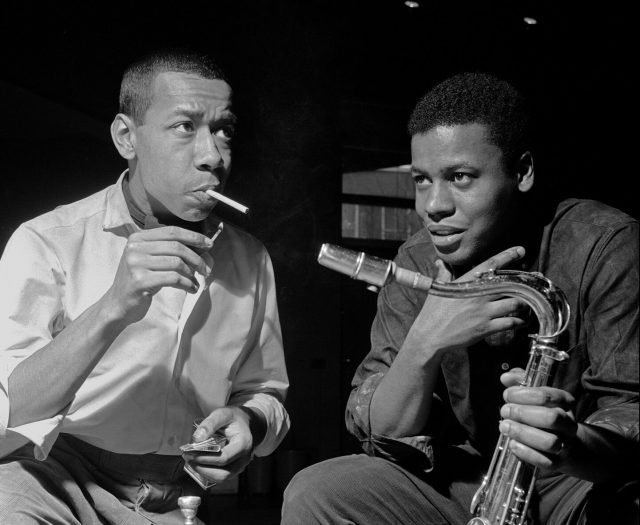
Jazz greats Lee Morgan and Wayne Shorter take a break in Kasper Collin’s I CALLED HIM MORGAN
“He knew how to tell a story,” 2016 Ertegun Jazz Hall of Fame inductee Shorter says of Morgan, who released more than two dozens albums (among them The Sidewinder, Search for the New Land, and Lee-Way) in his too-brief career, primarily for Blue Note, while also appearing on records by John Coltrane, Blakey, Gillespie, Quincy Jones, and many others. With I Called Him Morgan, Collin (My Name Is Albert Ayler) proves that he knows how to tell a story too. Initially inspired by a YouTube clip of Morgan performing, Collin spent seven years putting the documentary together, combing through archives and convincing people to participate. The film unfolds like an epic jazz composition as Collin and editors Hanna Lejonqvist, Eva Hillström, and Dino Jonsäter interweave amazing archival footage, a wide range of personal and professional photographs (mostly by Wilmer and Blue Note cofounder Francis Wolff), new interviews, and poetic, atmospheric shots of snow, sunsets, cityscapes, and other outdoor scenes by Oscar-nominated cinematographer Bradford Young (Selma, Arrival). Throughout, Morgan’s glorious music is heard, front and center or in the background, including such songs as “Gaza Strip,” “Tom Cat,” “New-Ma,” “Lament for Stacy,” “The Procrastinator,” “Absolutions,” “Angela” (for Angela Davis), and “Helen’s Ritual,” tunes that are not only revelatory but also a constant reminder of the talent the world lost in 1972. “I find that the essence of creativity is the newness of things,” Morgan told Wilmer in 1971. “And the only way to keep things new is to have constant changes in environment and surroundings and people, and all that, you know. And that’s the thing that makes it so exciting about being a jazz musician.” It’s also what makes Collin’s film so exciting. I Called Him Morgan opens March 24 at the Film Society of Lincoln Center’s Francesca Beale Theater, with Collin participating in Q&As on March 24 at 6:00 (with jazz critic Gary Giddins) and 8:15 and March 25 at 6:00 with jazz historian Ashley Kahn; it will expand to Metrograph on March 31.
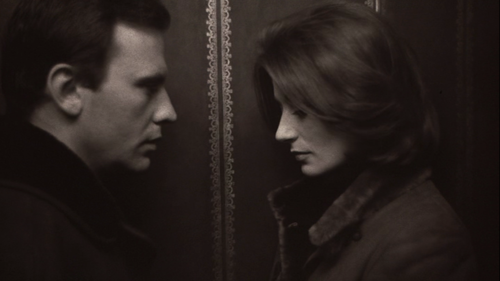
 Winner of both the Oscar for Best Foreign Language Film and the Palme d’Or at Cannes, Claude Lelouch’s A Man and a Woman is one of the most popular, and most unusual, romantic love stories ever put on film. FIAF is celebrating the work’s fiftieth anniversary by screening a newly restored version on March 28 as part of the