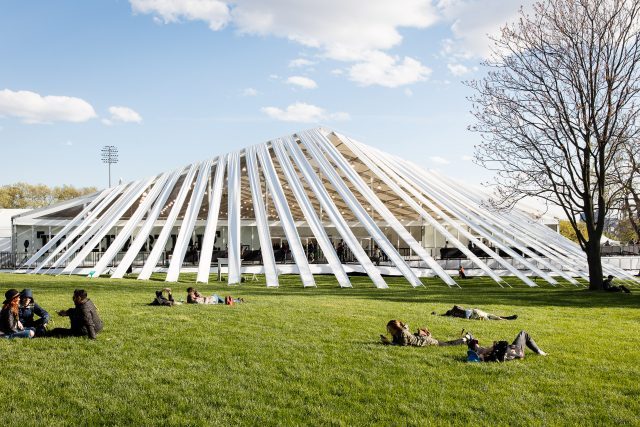
Frieze 2017 takes place May 5-7 on Randall’s Island
FRIEZE ART FAIR
Randall’s Island Park
May 5-7, $46 per day ($69 including magazine subscription and ferry)
frieze.com
While visiting many art fairs year in and year out can feel more like a chore than a privilege, Frieze continues to be one that we look forward to every May. Held on Randall’s Island, the fair features more than two hundred galleries from around the world, organized into manageable aisles that tend not to get too ridiculously crowded. Plus, you get to take a ferry. For this year’s special projects, Dora Budor will employ cinematic doubling, Jon Rafman will create a secret movie theater, and Elaine Cameron-Weir will offer a peek into an outdoor air-raid shelter. Frieze 2017 will pay tribute to Galleria La Tartaruga’s 1968 exhibition “Il Teatro delle Mostre” with a restaging of Fabio Mauri’s Luna on Sunday and new commissions by Ryan McNamara on Friday and Adam Pendleton on Saturday. This year’s Frame artists, each of whom gets a solo presentation, are Eva LeWitt, Zhou Siwei, Jan Vorisek, Jared Ginsburg, Thomson & Craighead, Milano Chow, Susan Cianciolo, Nadia Kaabi-Linke, Sven Loven, Hudinilson Jr., Daniel Boccato, Akira Ikezoe, Lea Cetera, Piotr Lakomy, Daiga Grantina, Ulises Carrión, and Li Qing, while Spotlight: 20th-Century Pioneers consists of solo installations by avant-garde artists Katalin Ladik, Francis Newton Souza, Agustin Fernandez, Judith Linhares, Waltercio Caldas, Etienne-Martin, Thomas Kovachevich, Amilcar de Castro, Jaime Davidovich, Felipe Jesus Consalvos, Kenny Scharf, Dieter Krieg, Paul Feeley, Dumile Feni, Virginia Jaramillo, Tatsuo Kawaguchi, Ursula Schulz-Dornburg, Peter Young, Irma Blank, Tony DeLap, Julio Plaza, Barbara Chase-Riboud, Dom Sylvester Houédard, Lee Mullican, Alfred Leslie, USCO and Gerd Stern, Jared Bark, Teresa Burga, Tatsuo Kawaguchi, and Kimiyo Mishima. Even the curation of the restaurants is thoughtful, with food from Café Altro Paradiso, Court Street Grocers, Frankies Spuntino, Marlo & Sons, Roberta’s, Morgenstern’s Finest Ice Cream, Russ & Daughters, Sant Ambroeus, and TYME Fast Food. Below are the special events scheduled for the weekend, including several not taking place on Randall’s Island.
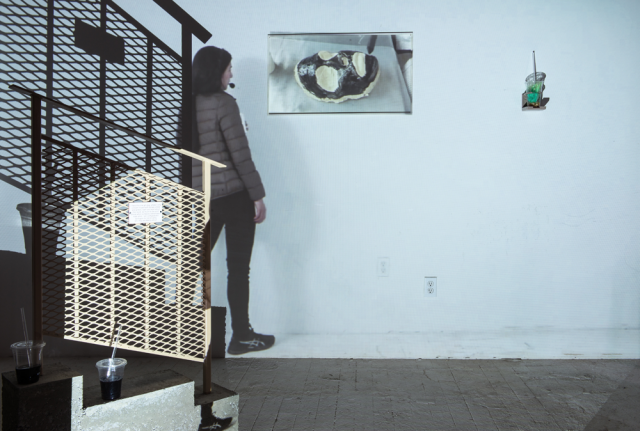
Southard Reid’s “Threshold” is part of Frieze Frame program (courtesy of the artist and Southard Reid, London; photo by Ernst Fischer)
Friday, May 5
Symposium panel: Discussing Latin American and Latino Art, with Edward Sullivan, Deborah Cullen, Guillermo Kuitca, and Chon Noriega, 9:15 am; “Radical Women: Latin American Art, 1960-1985,” with Rocío Aranda-Alvarado, Cecilia Fajardo-Hill, María Evelia Marmolejo, and Sylvia Palacios Whitman, 10:30; “Art, Architecture & Visions of Modernism,” with With Dan Fox, Jonathas de Andrade, Clara M. Kim, and Clarissa Tossin, 11:30, Institute of Fine Arts, New York University, the James B. Duke House, 1 East 78th St., $50
Lower East Side and Soho Morning: apexart, Bridget Donahue, Callicoon Fine Arts, Daata Editions x Vanity Projects, David Lewis, Derek Eller Gallery, Foxy Production, Galerie Perrotin, James Cohan, James Fuente, Lehmann Maupin, Kate Werble Gallery, Martos Gallery, Miguel Abreu Gallery, On Stellar Rays, Rachel Uffner Gallery, RxArt, Salon 94, Simon Preston Gallery, Simone Subal Gallery, the Drawing Center, WhiteBox, free, 10:00 am – 12 noon
Conversation: Complicating the Modern, with Laura Owens and Ann Temkin, free with Frieze admission, 11:30 am
ARTnews: Meet the Editors, Reading Room, 12:30
frieze: Asad Raza, author of Home Show, in conversation with Andrew Durbin, Reading Room, 2:30
Artforum: Tobi Haslett and David Velasco review the 2017 Whitney Biennial, Reading Room, 4:30
Saturday, May 6
Upper East Side and Harlem Morning: Americas Society, Acquavella Galleries, Almine Rech, Anton Kern Gallery, Blum & Poe, Castelli Gallery, Ceysson & Bénétière, Elizabeth Dee, Hauser & Wirth, Henrique Faria, Institute of Fine Art, NYU, Jason Jacques Gallery, Marian Goodman Gallery, Mendes Wood DM, Mitchell-Innes & Nash, Skarstedt, Taka Ishii Gallery, 10:00 am – 12 noon
Panel: The activity of a lifetime, with Tania Bruguera, Anri Sala, and Jeanne van Heeswijk, chaired by Shuddhabrata Sengupta, free with Frieze admission, 11:30
ArtMag by Deutsche Bank: Approaching the End, with Rebecca Rose Cuomo and Andrea Galvani, Reading Room, 12:30
W Magazine Presents Custom Portraits with Ian Sklarsky, Reading Room, 2:30
#SolarTalks: The rise of Narco culture, with Igor Ramírez García-Peralta and Beatriz López, Reading Room, 4:30
Chelsea Night: 303 Gallery, Andrew Kreps Gallery, Bruce Silverstein Gallery, David Zwirner, Dia: Chelsea, Fredericks & Freiser, Gagosian Gallery, Galerie Lelong, Garth Greenan Gallery, Hauser & Wirth, Jack Shainman Gallery, James Cohan, Lehmann Maupin, Lisson Gallery, Mitchell-Innes & Nash, Pace Gallery, Paul Kasmin Gallery, Sean Kelly, Skarstedt, Tanya Bonakdar, Tina Kim Gallery, free, 6:00 – 8:00
Sunday, May 7
Reading & discussion: Claudia Rankine, free with Frieze admission, 11:30
ARTBOOK + Koenig Books: book signing with Claudia Rankine, author of Citizen: An American Lyric, Reading Room, 12:30
Even: Jason Farago in conversation with Kanishk Tharoor, author of Swimmer Among the Stars, Reading Room, 2:30
frieze in conversation with Hands off our Revolution: conversation and workshop with Ana Marie Peña and Brooke Lynn McGowan, Reading Room, 4:30
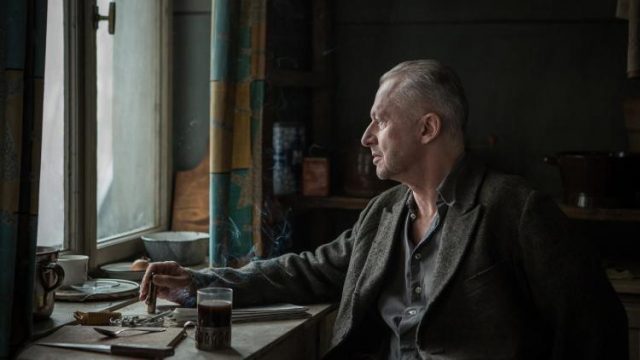
 In his final film, Polish master Andrzej Wajda makes a grand statement about the importance of art and its place in society. Afterimage, which will be introduced by Martin Scorsese at the gala opening-night celebration of the thirteenth New York Polish Film Festival on May 2 at the Directors Guild of America, is based on a true story while also serving as a stern warning. Bogusław Linda, who has previously appeared in Wajda’s Man of Iron and Danton, gives a towering performance as real-life Polish avant-garde artist Władysław Strzemiński, a one-armed, one-legged painter considered one of the greatest Polish artists and theoreticians of the twentieth century but whose legacy was destroyed during the rise of Stalinism and social realism. The film begins with a bright, gleeful scene in which Professor Strzemiński and his students roll around a lush green field, smiling and laughing and loving life. Hanna (Zofia Wichłacz) arrives, wanting to study with the professor as well. “The image has to be what you absorb from this,” he tells her, pointing at the beautiful landscape while his students listen with rapt attention. “When we gaze at an object, we get its reflection in our eye. When we stop looking at it and move our gaze elsewhere, an afterimage of the object remains in the eye — a trace of the object with the same shape but the opposite color. An afterimage. Afterimages are the colors, the inside of the eye which looks at an object. Because a person really only sees what he is aware of.” He then gazes out with a big grin and closes his eyes — and Wajda cuts to him in his apartment in 1948, with the Polish United Workers’ Party now in charge; cinematographer Paweł Edelman switches to a very different color scheme, primarily dank grays save for the pervasive red of the Communist party. Virtually day by day, Strzemiński has his ability to make art and to teach stripped away a little at a time as the party enforces a strict code of what is permitted and what is not under its regime. “The purpose of art is to improve its truth on reality,” Strzemiński explains, and he has to face a series of disturbing new truths himself, especially when his young daughter, Nika (Bronislawa Zamachowska), whose mother is famous sculptor Katarzyna Kobro (Aleksandra Justa), starts falling in line with Communist ideals.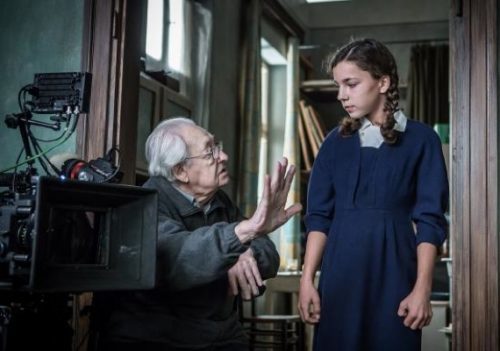

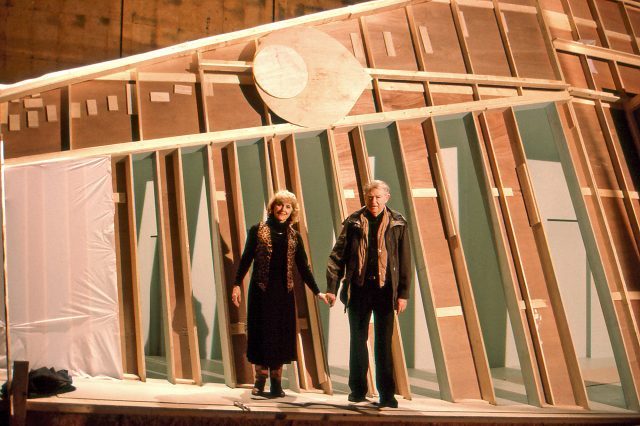
 Burton and Taylor. Bogie and Bacall. Gable and Lombard. Michelson and Michelson? In Harold and Lillian: A Hollywood Love Story, documentarian Daniel Raim traces the sixty-year relationship between storyboard artist and production designer Harold Michelson and his wife, film researcher extraordinaire Lillian, and their roles in Hollywood’s Golden Age and beyond. New York City native Harold was a bombardier navigator in WWII who developed a talent for illustration. Lillian lived in a series of orphanages, seeking to be part of a family. She accepted Harold’s offer to move to Los Angeles to be with him mainly because she had no better plan for her life — and his mother didn’t approve. But soon their love blossomed, as did their impact on the movie industry. Harold had a natural ability for creating storyboards that incorporated camera angles and other technical elements that was a boon for directors; meanwhile, Lillian did extensive research for a myriad of films, doing whatever it took in order to make sure every possible detail was correct, from major plot points to clothing and household objects in backgrounds. Among those paying tribute to the happy couple, whose work was often uncredited, are Danny DeVito, Francis Ford Coppola, Mel Brooks, and such production designers as Gene Allen, James D. Bissell, Rick Carter, Richard Sylbert, and Tom Walsh. Raim, who wrote, directed, produced (with his wife, Jennifer Raim), and shot (with Battiste Fenwick) the documentary, includes clips from many of the films Harold and/or Lillian worked on, including The Ten Commandments, Full Metal Jacket, Rosemary’s Baby, Spaceballs, The Birds, Scarface, and Winter Kills, in which Harold discusses how his storyboards were turned into a gripping scene.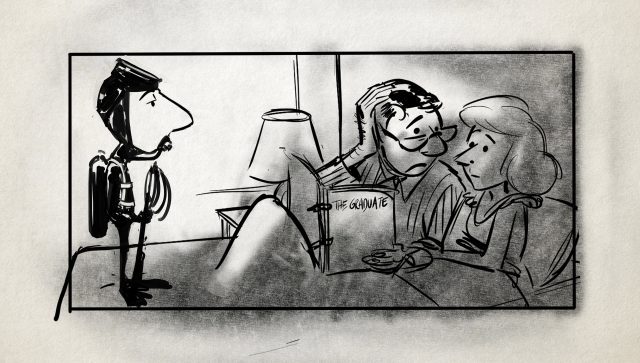
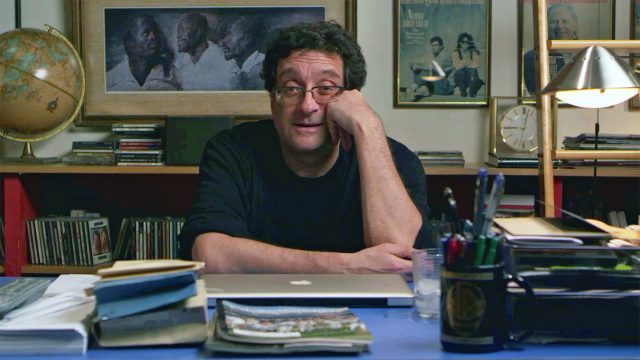
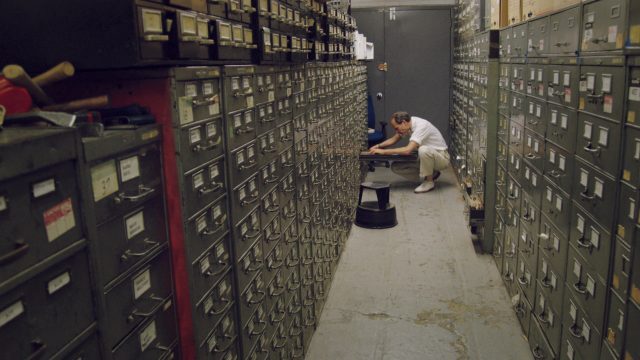
 Vanessa Gould’s surprising charmer, Obit., might primarily be about the documentation of individual death by the New York Times obituaries desk, but at its heart it’s a celebration of life. “It’s almost never depressing because we’re almost always writing about someone in his or her eighties or nineties who has died after a long, rich, creative, fulfilling life,” obituaries senior writer Margalit Fox explains. “In an obit of eight hundred words or so, maybe a sentence or two will be about the death and the other ninety percent is about the life. So it’s counterintuitive, ironic even, but obits have next to nothing to do with death and, in fact, absolutely everything to do with the life.” Inspired by an obituary the New York Times ran about a friend of hers at her urging, Gould spent about a week in the Times offices, capturing the obit writers and editors in action as they do extensive research (online and on the phone), work hard on the lede, carefully fact check, and get just the right photo for what they consider legitimate news stories, not simply memorials to the deceased. “It’s a once-only chance to make the dead live again,” obituaries writer (and former food critic) William Grimes notes. They are shown deciding whose life was newsworthy, keeping to a specific word count, and pitching for better placement of their story while attempting to capture the essence of the individual they are writing about. When researching the death of typewriter repairman Manson Whitlock, Fox hits the keys of an old Royal, attempting to incorporate the sound and feel of the instrument in her article. In addition to the obviously famous and influential, they also cover such people as Slinky creator Richard T. James, Bill Haley bass player Marshall Lytle, television remote inventor Gene Polley, Brown v. Board of Education of Topeka plaintiff Zelma Henderson, aviatrix Elinor Smith, advertising executive Richie Rich, Skylab saviour Jack A. Kinzler, and William P. Wilson, the JFK aide who helped orchestrate John F. Kennedy’s critical televised debate win over Vice President Richard M. Nixon. Gould’s film includes archival photographs and film footage of many of the obituary subjects and the times in which they lived, although some of the clips are not completely relevant. Still, they are cool to see and flesh out the documentary with visual splendor and fun details.