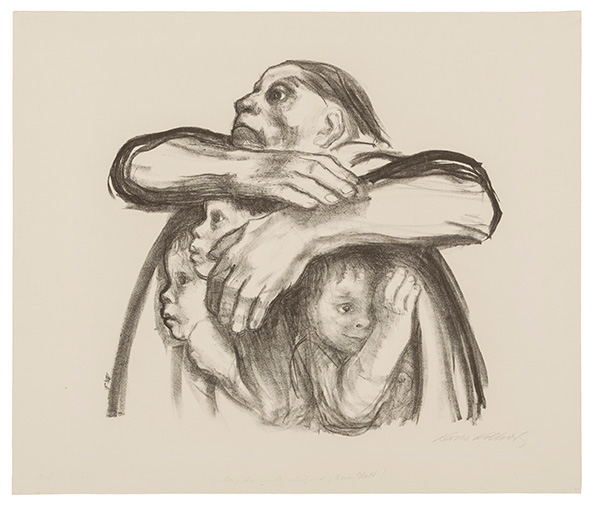
Käthe Kollwitz, “Seed-Corn Must Not Be Ground,” lithograph on smooth ivory wove paper, 1941 (Very rare proof; no edition was published. Knesebeck 274. Private collection.)
Galerie St. Etienne
24 West 57th St. between Fifth & Sixth Aves.
Thursday, February 1, free (advance RSVP recommended), 6:30
Exhibition continues Tuesday – Saturday through March 10, free
212-245-6734
www.gseart.com
Galerie St. Etienne brings together two of its most popular artists in “All Good Art Is Political: Käthe Kollwitz and Sue Coe,” revealing compelling similarities in their work, from their style and themes to their socialist, feminist, and activist beliefs. On February 1, the British-born Coe, who has claimed the Prussian-born German artist as a major influence (along with Goya, Soutine, and others), will be at the Fifty-Seventh St. gallery for a talk about her career. The exhibition, which has been extended through March 10, creates a dialogue between their works, consisting primarily of black-and-white drawings, etchings, woodcuts, linocuts, lithographs, and collages that focus on powerful scenes of prisoners, riots, torture, war, and violence along with emotional depictions of women trying to protect children from seen and unseen horrors in a brutal society. “My art serves a purpose. I want to exert an influence in my own time, in which human beings are so helpless and destitute,” Kollwitz (Revolt of the Weavers, Peasant War), who was born in 1867 and died in 1945, said. Coe (Dead Meat, Sheep of Fools), who was born in 1951, has taken up Kollwitz’s mantle, following her journalistic approach. “People think they can be indifferent, and the filter of art is a useful veil to present the reality,” Coe says. “It opens up a chance to have a useful dialogue where the viewer asks questions and is more open to the challenge of change.” Coe’s angry “How to Commit Suicide in South Africa” and “Vigilante” share much in common with Kollwitz’s “Never Again War” and “Free Our Prisoners,” bearing witness and demanding societal overhaul. Coe’s rallying cry “Stop Violence” is a kind of combination of Kollwitz’s “The Volunteers” and “Outbreak/Charge.”
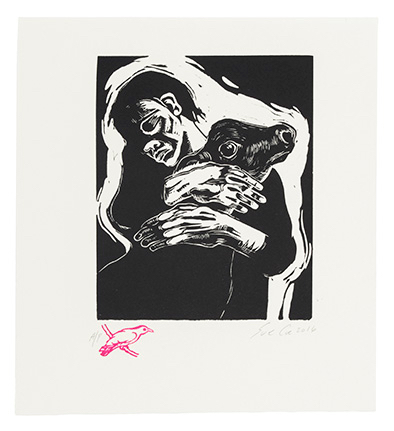
Sue Coe, “Safe at Last (Rescued),” linocut on thin white wove paper, 2016 (From an estimated edition of 100 impressions. Reproduced in The Animals’ Vegan Manifesto, p. 113.)
Coe also extends those themes from humans to animals, which also relates to Kollwitz, who compared “survivors” to “women huddled together in a black lump, protecting their children just as animals do with their own brood,” as explained in the gallery’s outstanding expansive essay about the show. In “Safe at Last (Rescued),” from Coe’s The Animals’ Vegan Manifesto, a woman holds a calf like a child, echoing Kollwitz’s “Seed-Corn Must Not Be Ground,” where a woman uses her broad arms to protect three young kids. Coe’s “Veal Skinner,” a graphite drawing of a sad man standing next to a large, skinned animal carcass hanging upside down, evokes Kollwitz’s “Hunger,” in which a skeletal woman puts her hands over her eyes so she cannot see the dead child on her lap. Hands play a major role in both artists’ oeuvre, clutching at prison bars, reaching up in defiance, holding a weapon, cradling an infant, scrubbing ham, pounding drums, emerging from a small sculpture of a group of women, held up to a face in desperation, and tied behind a black man’s back. Both artists also do not shy away from a boldness that eschews subtlety, although Coe takes it to another level with such recent work as “Unpresidented,” a linocut of Donald Trump grabbing the Statue of Liberty from behind, covering her mouth with one hand and grabbing her genitals with the other. So get ready for Coe, the natural successor to Kollwitz, to hold nothing back at her Thursday gallery talk about art’s role in a changing society.
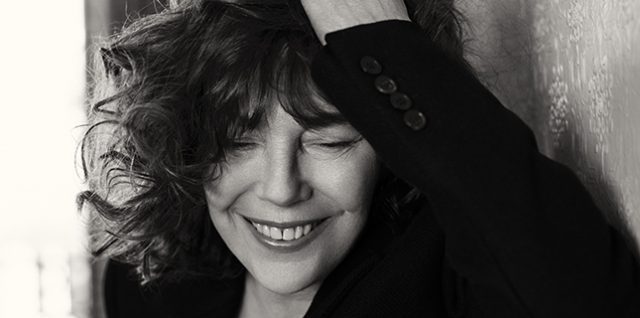
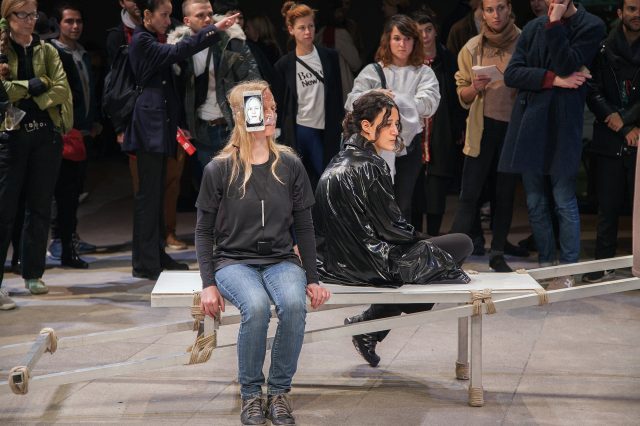
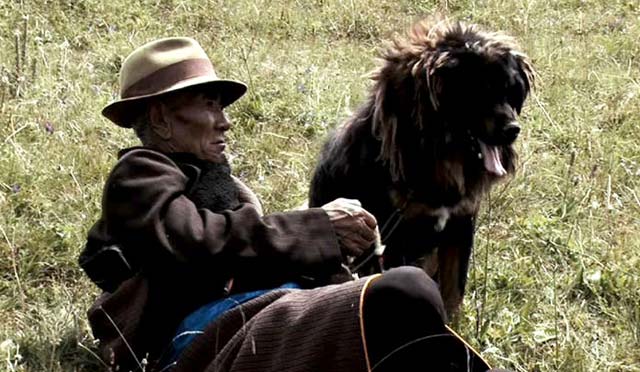
 In June 2016, Tibetan filmmaker Pema Tseden, who lives and works in Beijing, was arrested by Chinese authorities at Xining airport in western China for “disrupting social order” supposedly over a luggage dispute, then was admitted to a local hospital with various injuries and illnesses. He was shortly freed following international outcry, and he went right back to making films about Tibet. The forty-eight-year-old writer and director, who spoke at Asia Society in 2010, returns to the institution this weekend for “Pema Tseden: Celebrating a Tibetan Voice,” a two-day free retrospective of all four of his feature films, two of which will be followed by Q&As with Tseden, whose Chinese name is Wanma Caidan. One of the films Tseden will be speaking after is his 2011 drama, Old Dog, a beautifully told, slowly paced meditation on Buddhism’s four Noble Truths — “Life means suffering”; The origin of suffering is attachment”; “The cessation of suffering is attainable”; and “There is a path to the cessation of suffering” — that ends with a shocking, manipulative finale that nearly destroys everything that came before it. In order to get a little money and to save the family’s sheep-herding dog from being stolen, Gonpo (Drolma Kyab) sells their Tibetan nomad mastiff to Lao Wang (Yanbum Gyal), a dealer who resells the prized breed to stores in China, where they’re used for protection. When Gonpa’s father (Lochey) finds out what his son has done, he goes back to Lao Wang and demands the return of the dog he’s taken care of for thirteen years. “I’d sell myself before the dog,” he tells his son.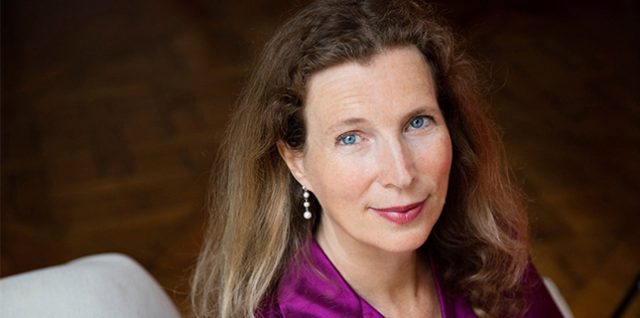
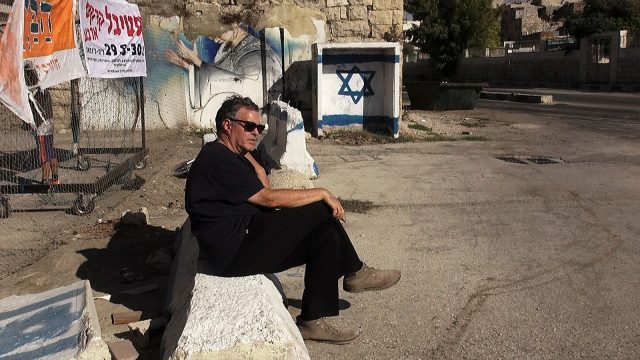
 The New York Jewish Film Festival, presented by the Film Society of Lincoln Center and the Jewish Museum, concludes January 23 with the U.S. premiere of Israeli filmmaker Amos Gitai’s West of the Jordan River, screening at 12:30 and 6:00 at the Walter Reade Theater. Both are followed by a Q&A with Gitai; the first will be moderated by New York Film Festival director emeritus Richard Peña. The eighty-seven-minute documentary revisits a familiar theme for Gitai, the continuing crisis between Jews and Palestinians, which he previously explored in such nonfiction works as 1982’s Field Diary, 2016’s