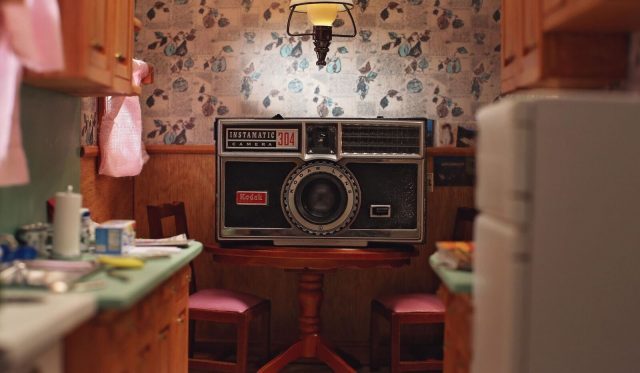
Siblings Elan and Jonathan Bogarín use a dollhouse re-creation of their beloved grandmother’s home in excavating her life in 306 Hollywood
306 HOLLYWOOD (Elan and Jonathan Bogarín, 2018)
Quad Cinema
34 West 13th St. between Fifth & Sixth Aves.
Opens Friday, September 28
212-255-2243
www.306hollywood.com
quadcinema.com
 Psychoanalysts Sigmund Freud and Carl Jung both used the metaphor of a house to represent the whole of a person and his or her psyche. Siblings Elan and Jonathan Bogarín explore that concept in 306 Hollywood, an imaginative documentary in which they seek to define who their beloved late grandmother was — and where she is after her death. In 2011, Annette Ontell passed away at the age of ninety-three. In her will, she left her home of sixty-seven years, a relatively basic suburban house at 306 Hollywood Ave. in Hillside, New Jersey, to Elan and Jonathan, who at first were encouraged by their mother, Marilyn Ontell, to sell it. But after funeral director Sherry Anthony tells the siblings that it is believed that following a death, the soul of the deceased hovers around its home for nearly a year, they changed their mind. “You have eleven months to make your grandmother tangible again,” she explains. And the Bogaríns take that time to turn the house into an archaeological dig, excavating through physical items that spur memories of the past to celebrate the life of their beloved grandmother. “As far as we knew, the house was her world,” Jonathan says. “When you lose someone you love, you start to look for new ways to understand the world,” Elan adds.
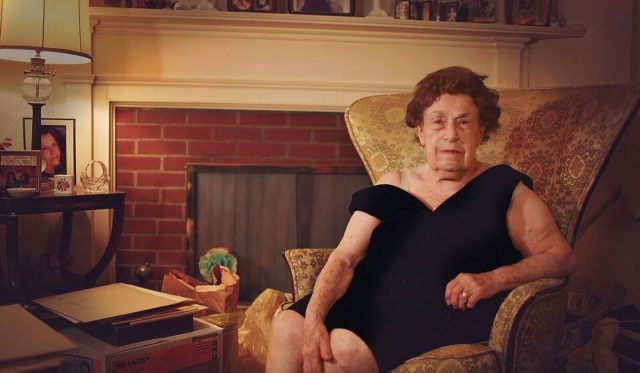
Imaginative documentary by her grandchildren explores the life and times of Annette Ontell
Elan and Jonathan use re-creations, home movies, family photographs, and filmed interviews they made with Annette, a fashion designer who was married to an accountant named Herman, every year from 2001 to 2011, in which she honestly and entertainingly shares her thoughts about her long life, including discussions of death. The siblings, who employ a visual sense of humor and magical realism akin to that of a Wes Anderson movie combined with the documentary style of Chantal Akerman and Agnès Varda, speak with their mother, Annette’s daughter, Marilyn Ontell, as well as fashion conservator Nicole Bloomfield; Rockefeller archivist Robert Clark; Biblioteca Casanatense librarian Isabella Ceccopieri and director Rita Fioravanti; archaeologist Jan Gadeyne; and MIT physicist and novelist Alan Lightman, who all offer views about interpreting physical and psychological aspects of a person’s life, from items they collected to papers they saved to the clothes they wore. Two of the most compelling scenes involve clothing; Elan and Jonathan film their grandmother trying to put on dresses, with the help of her daughter, that she made more than half a century before. Annette sits in a chair in her bra and panties, her aging body mostly exposed to the camera, as she insists she won’t fit into the chic clothes. Later, Bloomfield performs a forensics-like investigation on the dresses, offering yet more information about Annette.
Elan and Jonathan also have a precise miniature version of the house made by Rick Maccione of Dollhouse Mansions and often film inside it, playing with the scale of history, time, and memory and the role of the camera in recording the past. “It was plain to me that the house represented a kind of image of the psyche,” Jung wrote. But as Jonathan notes at one point, “Grandma’s house isn’t a home anymore. It’s a ruin.” And finally, Lightman asks, “Where is she?,” declaring that question to be the “great mystery of existence.” After watching 306 Hollywood, which the Bogaríns directed, produced with Judit Stalter, edited with Nyneve Laura Minnear and composer Troy Herion, and photographed with Alejandro Mejía, you’ll have a very clear picture of who Annette Ontell was — and you’ll wonder about who your own late relatives were, in addition to where they might be at this very moment. The Sundance hit opens September 28 at the Quad, which will host numerous postscreening Q&As with the filmmakers, Herion, Mejía, and such organizations as POV, the Wassaic Project, New York Women in Film & Television, Cinema Tropical, and WeCroak.
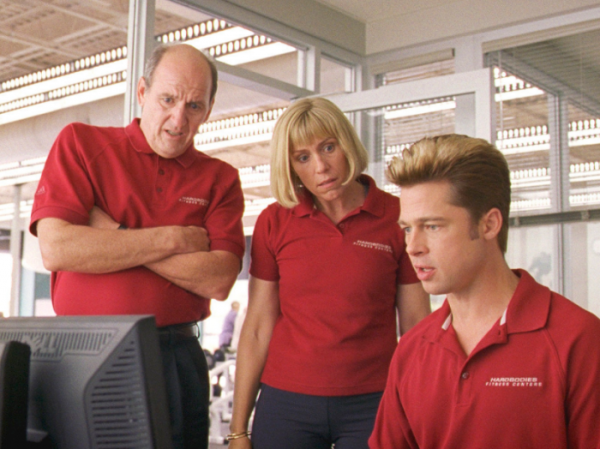
 After delighting audiences with such outstanding indie fare as Blood Simple (1984), Fargo (1996), and O Brother, Where Art Thou? (2000), brothers Joel and Ethan Coen hit a midcareer slump with the mediocre The Man Who Wasn’t There (2001), the much-maligned Intolerable Cruelty (2003), and the just plain awful remake of The Ladykillers (2004). It was three years before they released their next film, the Oscar-winning monster hit No Country for Old Men. In 2008 they toned things down again with the slight but entertaining Burn After Reading. John Malkovich is hysterical as Osborne Cox, an angry, bitter, foul-mouthed CIA agent who loses his job and decides to write a tell-all memoir, which bizarrely ends up in the hands of a pair of bumbling idiots, Chad Feldheimer (an extremely funny Brad Pitt) and Linda Litzke (Frances McDormand). Linda really wants to get a whole bunch of plastic surgery done, so she plans on squeezing a lot of money out of old Mr. Cox, who has no patience for anyone other than himself. Throw in a cold-as-ice wife (Tilda Swinton), a philandering G-man (George Clooney), a Russian ambassador named after Severn Darden’s character in The President’s Analyst, a stellar cast that also includes Richard Jenkins, J. K. Simmons, David Rasche, Elizabeth Marvel, and Dermot Mulroney, and some shocking violence and — well, we’ve told you too much already. Burn After Reading might not be grade-A Coen brothers, but it’s still a worthwhile endeavor from two of America’s most ingenious filmmakers. The movie, which asks the question “The Russians? Are you sure?,” is screening at Nitehawk on September 24 as part of the “Booze & Books” series and will be followed by a Q&A with Film Comment contributor and Harpers digital editor Violet Lucca and Adam Nayman, author of the new book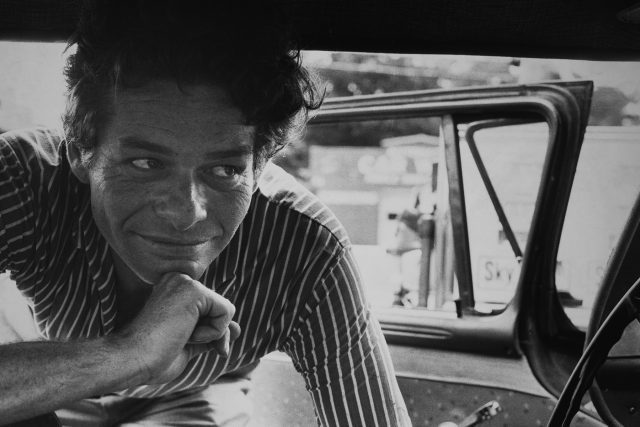
 There’s an intrinsic challenge about making a documentary about a photographer: How to portray the artist’s work, silent, still pictures of a moment in time, in a medium based on sound and movement. In Garry Winogrand: All Things Are Photographable, producer, director, and editor Sasha Waters Freyer attacks that issue by delving deep into many of Winogrand’s photographs, lingering on them as friends, relatives, and colleagues rave about his glorious images. “Well, what is a photograph? I’ll tell you what a photograph is. It’s the illusion of a literal description of how a camera saw a piece of time in space,” Winogrand said in a 1975 lecture at the University of Texas Austin, later adding, “All it is is light on surface.” Of course, in Winogrand’s case, it is much more than that; the black-and-white pictures he took with his trusted Leica M4 inhale and exhale at the exciting pace of real life. “It’s this observation of human behavior, of human activity, human gesture, the relationships between people, whether they know each other or not, how we behave in the world,” curator Susan Kismaric says. Writer Geoff Dyer calls Winogrand’s work a “psychogestural ballet,” while photographer Matt Stuart looks at photo after photo, pointing out “the dance” in each one. “When things move, I get interested. I know that much,” Winogrand, who passed away in 1984 at the age of fifty-six, says in his gruff voice. “He had no ambition for fame or celebrity. He was totally obsessed and possessed by photography,” his good friend, photographer Tod Papageorge, says. “It was work work work work work.”
![New York, 1968 [laughing woman with ice cream] Photographs by Garry Winogrand, Collection Center for Creative Photography, The University of Arizona. © The Estate of Garry Winogrand, courtesy of Fraenkel Gallery, San Francisco.](https://twi-ny.com/wp-content/uploads/2018/09/garry-winogrand-2-e1537325349352.jpg)