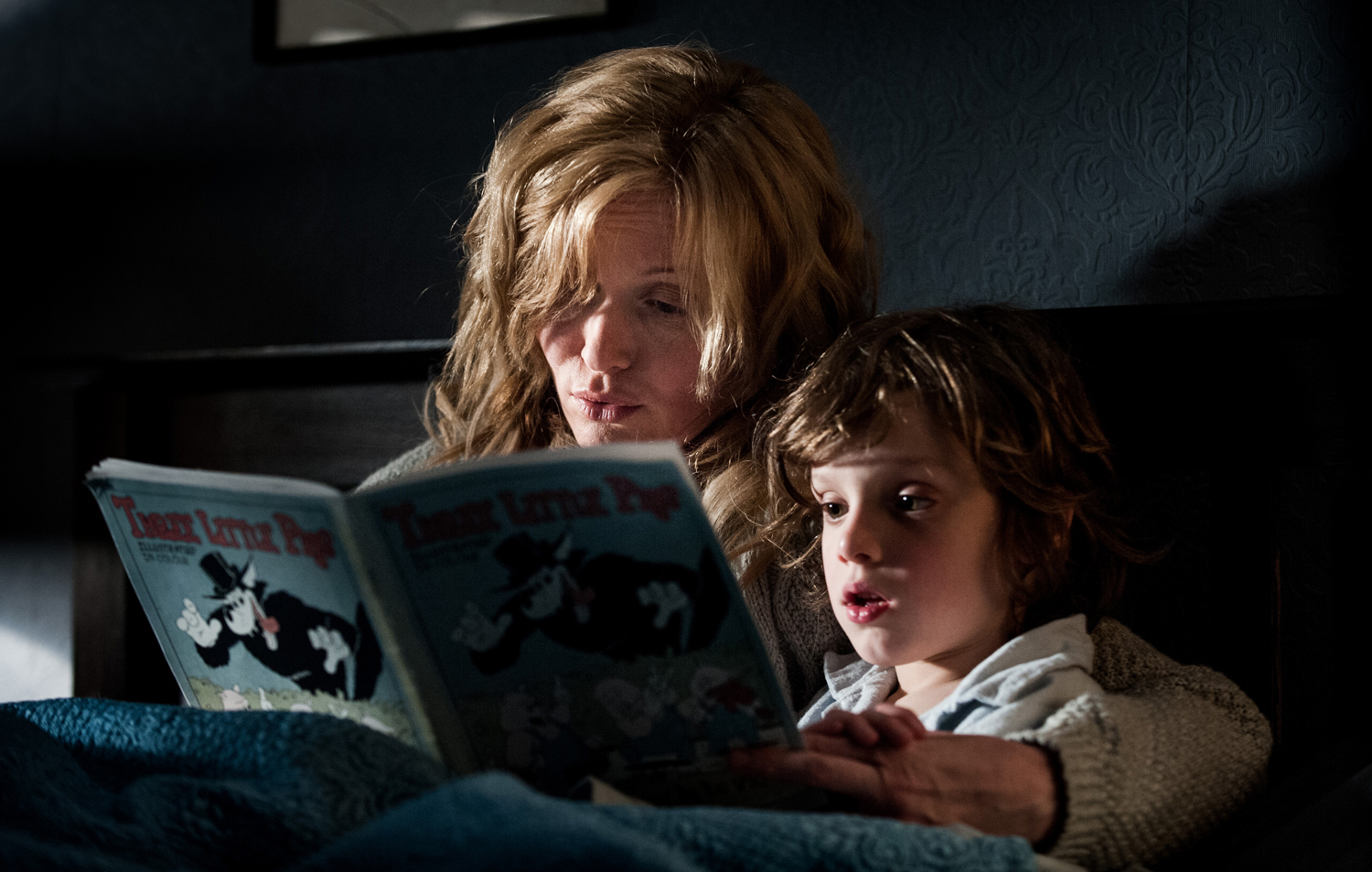
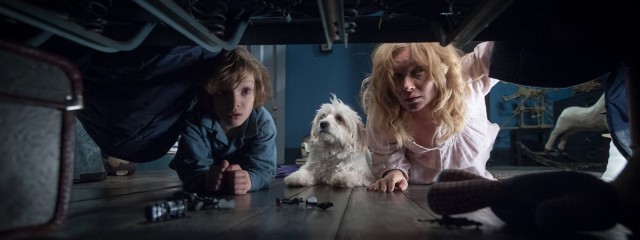
A mother (Essie Davis) and her young son (Noah Wiseman) must get past terrible tragedy in The Babadook
THE BABADOOK (Jennifer Kent, 2014)
Industry City, Courtyard 5/6, 51 Thirty-Fifth St., Brooklyn
Tuesday, September 17, $22.15, 7:45 rooftopfilms.com www.ifcfilms.com
A hair-raising sleeper hit at Sundance that was named Best First Film of 2014 by the New York Film Critics Circle, The Babadook will be celebrating its tenth anniversary with a special Rooftop Films screening in Industry City on September 17, followed by a Q&A with director Jennifer Kent and a vodka-infused afterpaty.
The Babadook is a frightening tale of a mother and her young son — and a suspicious, scary character called the Babadook — trapped in a terrifying situation. Expanded from her 2005 ten-minute short, Monster, writer-director Kent’s debut feature focuses on the relationship between single mom Amelia (Essie Davis), who works as a nursing home aide, and her seemingly uncontrollable six-year-old son, Samuel (Noah Wiseman), who is constantly getting into trouble because he’s more than just a little strange. Sam was born the same day his father, Oskar (Ben Winspear), died, killed in a car accident while rushing Amelia to the hospital to give birth, resulting in Amelia harboring a deep resentment toward the boy, one that she is afraid to acknowledge. Meanwhile, Sam walks around with home-made weapons to protect his mother from a presence he says haunts them. One night Amelia reads Sam a book that suddenly appeared on the shelf, an odd pop-up book called Mister Babadook that threatens her. She tries to throw it away, but as Sam and the book keep reminding her, “You can’t get rid of the Babadook.” Soon the Babadook appears to take physical form, and Amelia must face her deepest, darkest fears if she wants she and Sam to survive.
Writer-director Jennifer Kent explores classic horror tropes in her feature debut, the sleeper hit The Babadook
The Babadook began life as a demonic children’s book designed by illustrator Alex Juhasz specifically for the film — and one that was initially available for purchase from the movie’s official website, although anyone who bought the book hopefully thought twice before inviting the twisted tome into their house. The gripping film, shot by Polish cinematographer Radek Ladczuk in subdued German expressionist tones of black, gray, and white with bursts of other colors, evokes such classic horror fare as Stanley Kubrick’s The Shining, Roman Polanski’s Repulsion, and Edgar Allan Poe’s The Fall of the House of Usher, where place plays such a key role in the terror. The Babadook itself is a kind of warped combination of the villains from F. W. Murnau’s Nosferatu, Robert Wiene’s The Cabinet of Dr. Caligari, and Hideo Nakata’s The Ring. Kent, a former actress who studied at Australia’s National Institute of Dramatic Art with Davis and has made one other feature, 2018’s The Nightingale, lets further influences show in the late-night television Amelia is obsessed with, which includes films by early French wizard Georges Méliès. But the real fear comes from something that many parents experience but are too ashamed or embarrassed to admit: that they might not actually love their child, despite trying their best to do so. At its tender heart, The Babadook is a story of a mother and son who must go through a kind of hell if they are going to get past the awful way they were brought together.
The film career of French artist Daniel Pommereulle is being celebrated at Metrograph this month
SIX MORAL TALES: LA COLLECTIONNEUSE (Eric Rohmer, 1967)
Metrograph
7 Ludlow St. between Canal & Hester Sts.
Saturday, September 14, 2:30
Sunday, September 15, 11:00 am
Series runs September 13-29
212-660-0312 metrograph.com
On September 12, the exhibit “Daniel Pommereulle: Premonition Objects” opens at Ramiken on Grand St. On September 13, Metrograph kicks off the two-week series “One More Time: The Cinema of Daniel Pommereulle,” consisting of seven programs featuring the French painter, sculptor, filmmaker, performer, and poet who died in 2003 at the age of sixty-six. First up is “Daniel Pommereulle X3,” bringing together Pommereulle’s shorts One More Time and Vite and Anton Bialas and Ferdinand Gouzon’s 2021 Monuments aux vivants, which documents the artist’s sculptural work; curators Boris Bergmann and Armance Léger will take part in a postscreening Q&A moderated by filmmaker Kathy Brew. “Pommereulle was one of those people who could stand firm against the all-consuming metropolis: someone who never compromised, who never sold his soul — even to America. We joyously return Pommereulle to New York: a necessary encounter, a poetic reward,” Léger and Bergmann said in a statement. The festival also includes Jean-Luc Godard’s Weekend, Jean Eustache’s The Mother and the Whore, Marc’O’s Les Idoles, Jackie Raynal’s Deux Fois, serge Bard and Olivier Mosset’s Ici et maintenant and Fun and Games for Everyone, and Eric Rohmer’s La Collectionneuse.
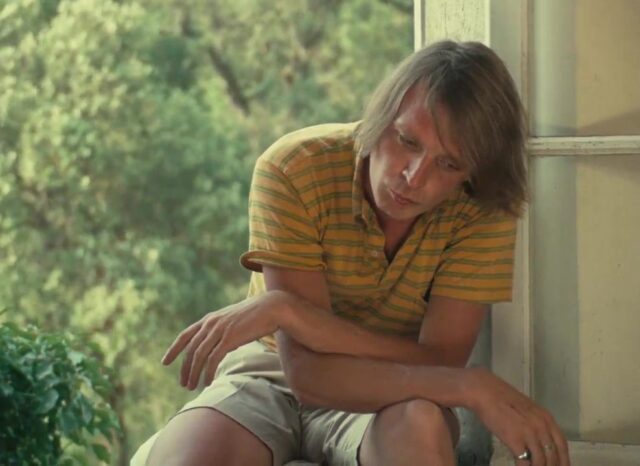
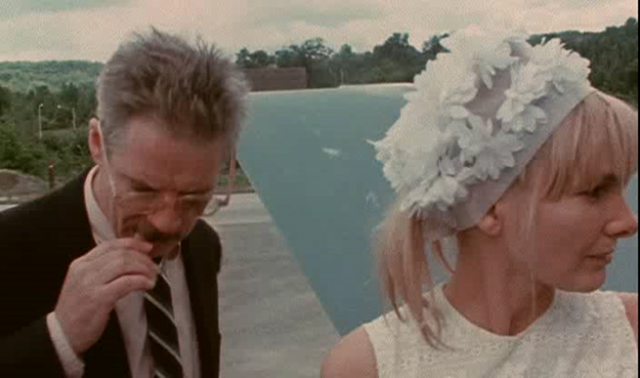
“Razor blades are words,” art critic Alain Jouffroy tells painter Daniel Pommereulle (Daniel Pommereulle) in one of the prologues at the start of La Collectionneuse, the fourth film in French master Eric Rohmer’s Six Moral Tales (falling between My Night at Maud’s and Claire’s Knee). Words might have the ability to cut, but they don’t seem to have much impact on the three people at the center of the film, which offers a sort of alternate take on François Truffaut’s Jules et Jim. Needing a break from his supposedly strenuous life, gallerist Adrien (Patrick Bauchau, who also appeared in La Carrière de Suzanne, Rohmer’s second morality tale) decides to vacation at the isolated St. Tropez summer home of the never-seen Rodolphe. Daniel is also at the house, along with Haydée (Haydée Politoff), a beautiful young woman who spends much of the film in a bikini and being taken out by a different guy nearly every night. Adrien decides that she is a “collector” of men, and the three needle one another as they discuss life and love, sex and morality, beauty and ugliness. Adrien might claim to want to have nothing to do with Haydée, but he keeps spending more and more time with her, even though he never stops criticizing her lifestyle. He even uses her as a pawn when trying to get an art collector named Sam (played by former New York Times film critic Eugene Archer under the pseudonym Seymour Hertzberg) to invest in his gallery.
While everybody else in the film pretty much knows what they want, Adrien, who purports to understand life better than all of them, is a sad, lost soul, unable to get past his high-and-mighty attitude. Rohmer crafted the roles of Daniel and Haydée specifically for Pommereulle and Politoff, who improvised much of their dialogue; Bauchau opted not to take that route, making for a fascinating relationship among the three very different people. La Collectionneuse is beautifully shot in 35mm by Néstor Almendros, the bright colors of the characters’ clothing mixing splendidly with the countryside and ocean while offering a striking visual counterpoint to the constant ennui dripping off the screen. His camera especially loves Politoff, regularly exploring her body inch by inch. The film is both Rohmer’s and Almendros’s first color feature; Almendros would go on to make more films with the director, as well as with Truffaut, even after coming to Hollywood and shooting such films as Days of Heaven, Kramer vs. Kramer, and Sophie’s Choice. Winner of a Silver Bear Extraordinary Jury Prize at the 1967 Berlinale, La Collectionneuse is screening September 14 and 15 at Metrograph.
[Mark Rifkin is a Brooklyn-born, Manhattan-based writer and editor; you can follow him on Substack here.]
Barbara Loden wrote, directed, produced, and stars in Wanda
WANDA (Barbara Loden, 1970)
Metrograph
7 Ludlow St. between Canal & Hester Sts.
Friday, September 13, 8:20 (with introduction)
Sunday, September 15, 2:50
Thursday, September 19, 3:00
212-660-0312 metrograph.com
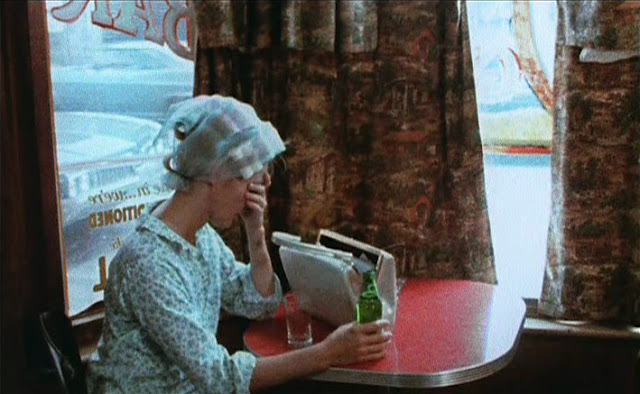
“If you don’t want anything, you won’t have anything, and if you don’t have anything, then you’re as good as dead,” Mr. Dennis (Michael Higgins) tells Wanda Goronski (Barbara Loden) in Wanda, which is screening September 13, 15, and 19 in the continuing Metrograph series “One-Timers.” The first theatrical feature written, directed, produced by, and starring an American woman, Wanda is a raw, naturalistic road-trip movie about an emotionally vacant woman who walks through life in a kind of stupor, wandering into situations to avoid being alone yet still trapped in an unrelenting alienation. Loden, who won a 1964 Tony for her portrayal of Maggie in Arthur Miller’s After the Fall — the play was directed on Broadway by Elia Kazan, whom she would marry four years later and remain with through her tragic death in 1980 — doesn’t try to turn Wanda into a feminist antihero, but she does take all the power away from her, making her completely dependent on other people, primarily men, an excellent counterpoint to Loden herself, who has all the power. Staying on her sister’s (Dorothy Shupenes) couch in the middle of Pennsylvania coal country, Wanda is almost zombielike as she slowly heads to court in curlers and a housecoat and lets the judge award custody of her two children to her soon-to-be-ex-husband (Jerome Thier). “I’m just no good,” she mumbles. Broke and apparently with no faith or hope in her future, she proceeds to get involved with some sketchy losers, including Mr. Dennis, who takes her on a minor crime spree that is a far cry from Bonnie and Clyde. All along the way, she rarely has anything of any interest to say to anyone; the only time she speaks clearly and definitively is when she explains that she likes onions on her hamburgers.
Mr. Dennis (Michael Higgins) takes Wanda Goronski (Barbara Loden) for quite a ride in Wanda
Shot in a cinéma vérité style by documentary cinematographer Nicholas T. Proferes, Wanda — named Best Foreign Film at the Venice International Film Festival — is a riveting and infuriating exploration of the death of the American dream as the 1960s come to an end and the country reexamines itself, not necessarily liking what it sees. Apathy competes with melancholy as Wanda is unable and unwilling to take control of her life, dressed in the same white outfit and carrying the same white pocketbook throughout nearly the entire film, but she is more disconsolate than angelic. Much of the film is improvised and most of the characters are portrayed by nonprofessional actors or people who just happened to be in the area, like the scene in which Mr. Dennis and Wanda encounter a family flying a remote-control model airplane. (Higgins would go on to make more than fifty films, including The Conversation, The Stepford Wives, and The Seduction of Joe Tynan.) Coming on the cusp of the women’s liberation movement, Wanda is about a pouty sad-sack who barely ever changes emotion, always wearing the same blank stare. It’s not that she’s promiscuous, adventurous, or even unpredictable; she just is. You desperately want her to take action, to care about something or someone, but it’s just not going to happen. It’s almost as if Loden is setting the groundwork for such future films as Martin Scorsese’s Alice Doesn’t Live Here Anymore and Taxi Driver, which feature such strong, decisive female characters as Alice (Ellen Burstyn) in the former and Iris (Jodie Foster) in the latter, who at least attempt to take matters into their own hands; elements of Wanda can also be found in Aki Kaurismäki’s Match Factory Girl and Chantal Akerman’s Jeanne Dielman, 23, Quai du Commerce, 1080 Bruxelles.Wanda would end up being Loden’s only film as writer and director; she died in 1980 of cancer at the age of forty-eight. The September 13 screening will be introduced by Caryn Coleman, founder of the Future of Film Is Female.
[Mark Rifkin is a Brooklyn-born, Manhattan-based writer and editor; you can follow him on Substack here.]
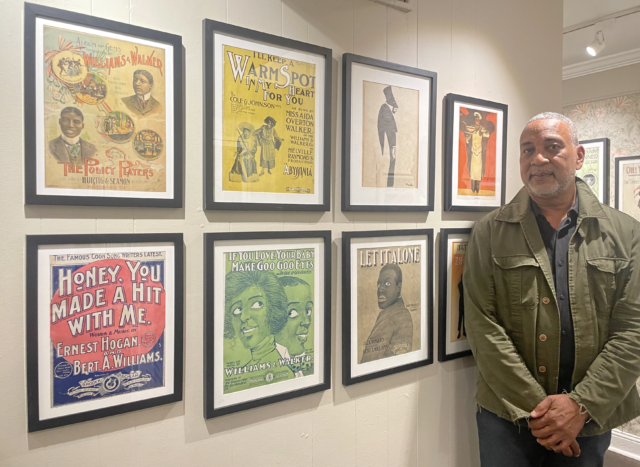
Curator and cultural historian John T. Reddick will give a talk on Tin Pan Alley on September 11 at the Society of Illustrators (photo by twi-ny/mdr)
ILLUSTRATING TIN PAN ALLEY: FROM RAGTIME TO JAZZ
Society of Illustrators
128 East Sixty-Third St. between Park & Lexington Aves.
Wednesday – Saturday through October 12, $10-$15
Tin Pan Alley Talk & Reception: Wednesday, September 11, $10-$15. 6:30
212-838-2560 societyillustrators.org
Longtime Harlem resident and Yale University School of Architecture graduate John T. Reddick is into bridge building — but in this case, the bridges aren’t physical structures but those that involve the lesser-known history of Tin Pan Alley. The birthplace of American popular music, Tin Pan Alley flourished in the late nineteenth and early twentieth centuries, when dozens of music publishers and businesses lined the streets of what is now Chelsea, in the West Twenties.
Born and raised in the integrated Philadelphia neighborhood of Mount Airy, Reddick got involved in trying to save Tin Pan Alley when five buildings on West Twenty-Eighth St. were in danger of being demolished by their owner/developer. In 2019, the Landmarks Preservation Commission designated them historic landmarks.
A founding member of Harlem Pride and the director of community engagement projects for the Central Park Conservancy, Reddick has been an avid collector of sheet music art, focusing on songs composed and/or performed by Black and Jewish entertainers. What began as a curiosity and hobby has blossomed into a dazzling exhibition at the Society of Illustrators, “Illustrating Tin Pan Alley: From Ragtime to Jazz,” on view through October 12.
“I felt like these artists were groundbreakers. I see in them many parallels to hip hop, in that ragtime’s innovation for its time was as jarring as hip hop’s,” he said of the composers and performers of the era during a tour of the show. “My journey began after I went to a talk on the Lower East Side given by Jeffery Gurock, who lectured on the period when Harlem was Jewish. That was a revelation to me, that Harlem had once been the second largest Jewish community in New York City. From that point I went to the library, did research, and started buying items on eBay. It was just shocking; as I bought sheet music or got to see the names, I realized they all lived in Harlem during the same time period.”
Arranged chronologically, the exhibit focuses on sheet music and its accompanying art, which reveals the developing connections between American Black and white music, beginning with the cakewalk, a Black dance that originated in America but became a craze when introduced in Europe, advancing its popularity as a hit in the United States. Several photographs and illustrations depict the cakewalk being performed, including two works by French artist Georges-Bertin Scott, sheet music covers for the songs “Darktown Is Out To-Night” and “Cake Walk Neath the Dixie Moon,” and a drawing in which Uncle Sam relaxes while watching dancers’ cakewalk around a tree.
On a nearby wall is the sheet music for “All Coons Look Alike to Me,” a popular 1898 song composed by Ernest Hogan that sold more than a million copies. Hogan, a prominent Black composer and performer, appeared in shows with the leading African American performers of the day. However, the song’s sheet music art, which featured unflattering caricatures of Black men and women, became such a crippling definer of Hogan as an artist that it led to his demise.
Reddick noted, “All of a sudden, this ragtime music is popular, and you want to show and sell us more. What do you use to image that music?” Reddick grouped together the sheet music covers for “Who Dat Say Chicken in Dis Crowd” by Paul Laurence Dunbar and Will Marion [Cook], “Cotton: A Southern Breakdown” by Albert Von Tilzer, and “Watermelon Am Good Enough for Mine” by G. Barker Richardson and Von Tilzer. “I have three things in there: cotton, chicken, and watermelon. They’re in the lyrics; they’re in the titles,” Reddick said. “A lot of the signifying, I feel, is coming out of music publishers just trying to meet the commercial market where its mind is at. You don’t cartoon something unless its understanding is pervasive. For me it’s the beginning of bridge building to some identity that’s beyond that becomes an American music.”
Other excellent groupings juxtapose two different sheet music covers for Lew Pollack’s “Vamping Sal the Sheba of Georgia” and three for Shelton Brooks’s “Darktown Strutters’ Ball.”
Pointing out that a lot of sheet music was dedicated to songwriter and journalist Monroe Rosenfeld because the performers knew he could talk them up in the newspaper, Reddick zeroed in on the team of Bert Williams and George Walker.
“Rosenfeld has this bridge relationship, so you see a lot of people pandering to him, even Williams and Walker, who coined themselves ‘the two real coons.’ They claimed the tag and the stage to establish their own authenticity and artistry. I realized in many ways it’s just like hip hop. You could have been the greatest hip-hop singer in the world, but if you went to amateur night at the Apollo and started singing in a tuxedo, you would be booed. You wouldn’t even get your mouth open because there’s a certain kind of drag they expect you to be in to perform. Williams and Walker knew they were good, but they realized that more whites were blacking-up and playing Blacks onstage than actual Black performers. It was so much more sophisticated. They could show that there’s parody and all this irony in lot of stuff they did.”
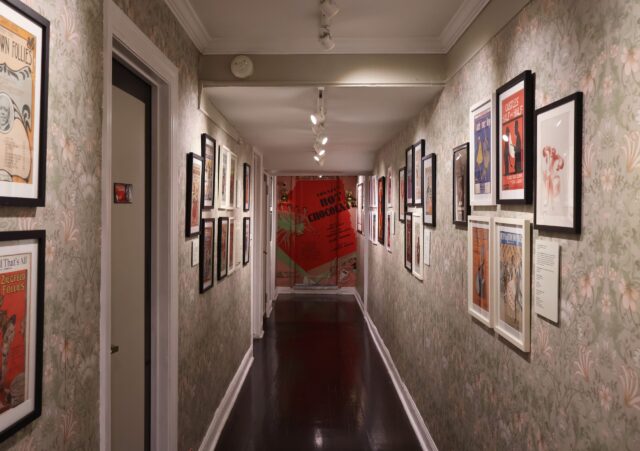
Every element, even the way the show is hung, carries some kind of weight. Reddick explained that for most of the works, a black frame indicates the song was written by a Black composer, a white frame by a white composer.
Perhaps not accidentally, the cover sheet for Jean Schwartz’s 1908 “The Whitewash Man,” depicting a smiling Black man carrying a paint bucket and a broom, is placed over a water fountain, evoking the “Whites Only” signs of the Jim Crow era.
Among the other composers and performers Reddick discussed were James Reese Europe and Ford T. Dabney, Noble Sissle and Eubie Blake, Irene and Vernon Castle, Irving Berlin, George Gershwin, Ethel Waters, Cab Calloway, Duke Ellington, Miss Aida Overton Walker, drummer Buddy Gilmore, Fats Waller, Sophie Tucker, Josephine Baker, and W. C. Handy as well as the Clef Club, the Ziegfeld Follies, the Cotton Club, Connie’s Inn, and Al Hirschfeld and Sydney Leff, two Jewish artists who attended the Vocational High School for the Arts on 138th Street in Harlem.
“Think of the names of Motown groups,” Reddick said. “The Supremes, the Marvelettes, the Temptations. Nobody’s a gangster. They’re claiming we deserve to be on the other side. Now we have a credential. . . . When the Central Park jogger case happened [in 1989], the term ‘wilding,’ it was just a term for young people being in nature and the park, not being there in the park to victimize people. But that was the first time it crossed over as a term from the Black community to the broader public. . . . So, I always think, what if bling had crossed over, associated with a jewelry store robbery as opposed to the fashions of hip-hop artists. Again, the word already had that meaning in my culture. Bling and jewelry. You got bling on, but at a certain point it crossed over, right? Maybe a hip-hop person, whatever. What was the bridge that made it happen?”
Tin Pan Alley exhibition winds down narrow hallway (photo courtesy of Society of Illustrators)
One of the most striking works is E. Simms Campbell’s gorgeously detailed 1932 “Night-Club-Map of Harlem,” which locates such hot spots as Smalls Paradise, Club Hot-Cha (“where nothing happens before 2 a.m.”), “the nice new police station,” Gladys’ Clam House, the Lafayette Theatre, the Radium Club, and the Savoy Ballroom, with cartoon vignettes of people dancing the lindy hop and the snakehips, men purchasing “marijuana cigarettes,” Bill “Bojangles” Robinson tapping away, and Tillie’s offering “specialties in fried chicken — and it’s really good.”
Reddick, who will give a lecture at the Society of Illustrators on September 11 at 6:30, followed by a reception with pianist/preservationist Adrian Untermyer, then told a story about American composer and violinist Will Marion Cook, who had studied with and influenced Antonín Dvořák’s take on America’s “Negro Music.”
“He performed and got a review that said he was one of the nation’s best colored violinists. And he took his violin to the critic and broke it and said, ‘I’m the best violinist.’ He wanted to start writing for Black shows and other Black players. He wrote with [poet and novelist] Paul Laurence Dunbar. But his family was so embarrassed for writing that ‘n—er’ music that in his first productions, he didn’t use his last name. However, Cook-associated shows such as 1898’s Clorindy and 1903’s In Dahomey served to bring a more diverse African American identity to the stage. What does that mean politically? If people are liking you, then they are seeing you in another light. What’s that going to mean on the political landscape?”
He added, “Now they could be voters. Picking cotton, you weren’t a voter. They’re playing at Madison Square Garden, so they’re at this elevated level. They’re having a life that was unimaginable for most Blacks.”
Above “All Coons Look Alike to Me” is a quote by W. E. B. Du Bois from his 1903 book The Souls of Black Folk: “It is a peculiar sensation, this double-consciousness, this sense of always looking at one’s self through the eyes of others . . . one ever feels his two-ness, an American, a Negro; two souls, two thoughts, two un-reconciled strivings.”
In “Illustrating Tin Pan Alley: From Ragtime to Jazz,” Reddick is reconciling those strivings and more, building bridges across race and class through a unique moment in New York City musical history.
[On September 19, the Society of Illustrators will host a happy hour from 5:00 to 9:00, with free admission, drink specials, and live music by Charlie Judkins, Miss Maybell, and Robert Lamont. Mark Rifkin is a Brooklyn-born, Manhattan-based writer and editor; you can follow him on Substack here.]
EXORCISM = LIBERATION
Multiple locations
September 6-28, free www.acanarytorsi.org
Yanira Castro is a fearless creator always ready to challenge herself and fully engage the audience. Born in Puerto Rico and based in Brooklyn, Castro and her company, a canary torsi (an anagram of her name), have presented such involving, complex, and entertaining multidisciplinary works as Dark Horse/Black Forest, a dance installation for public restrooms; the Jean-Luc Godard–inspired Paradis, a site-specific performance outdoors at twilight at the Brooklyn Botanic Garden; Performance | Portrait, an interactive video installation at the Invisible Dog Art Center; now.here.this, a meditative march of resistance in Prague; and Last Audience, a live communal laboratory at New York Live Arts, a performance manual, and a three-part space-opera podcast.
“Yanira Castro is a structural obsessive. She is an art scientist. She sees the rules and patterns lurking just beneath the surface of things,” Chocolate Factory Theater cofounding artistic director Brian Rogers has written. “The stuff that’s easier not to see . . . chaos staring at itself in the mirror, finding order.”
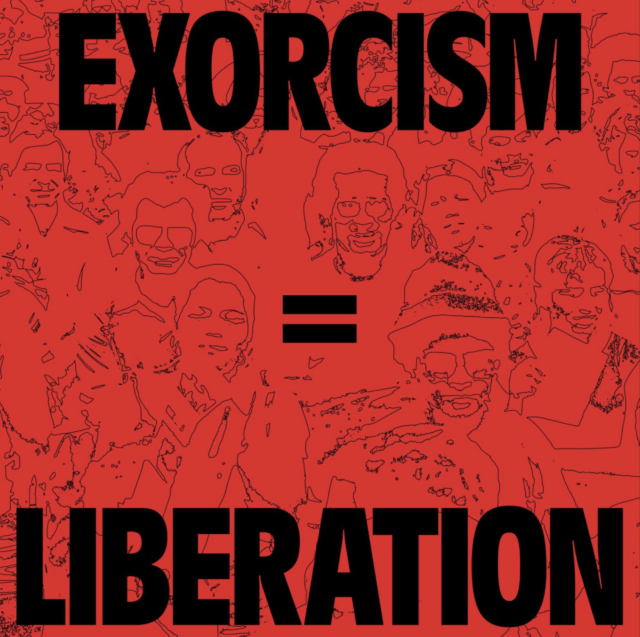
The Chocolate Factory is one of several venues hosting Castro’s latest project, Exorcism = Liberation, which explores climate change, immigration, land rights, colonialism, and self-determination in activations modeled around political campaigns. Kicking off September 6 and continuing each Saturday this month, the programs, seen through a Puerto Rican lens, include listening sessions, live music, food, and posters, stickers, banners, lawn signs, and pins. (There will also be activations in Chicago, and Western Massachusetts.)
Exorcism = Liberation asks participants to examine three slogans: “I came here to weep,” “Exorcism = Liberation,” and “What is your first memory of dirt?” Conceived, written, and directed by Castro, the project features audio design by Erica Ricketts, graphics by Alejandro Torres Viera and Luis Vázquez O’Neill, voice performances by Melissa DuPrey, josé alejandro rivera, and Steph Reyes, a bomba danced by Michael Rodríguez, and live musical performances by devynn emory and Martita Abril.
In a 2014 twi-ny talk about Court/Garden at Danspace Project, Castro explained, “It is not that I want to challenge the audience. I want to create a scenario for them and to be in conversation with them and I want them to form the picture, craft their experience. Their presence dynamically changes what is occurring. That is what ‘live’ means for me. It is dynamic because of the people in the room.”
In addition to the below events, installations at Abrons Arts Center, the Center for Performance Research (with a November activation date TBD), and the Chocolate Factory will continue into November.
Yanira Castro will present activations of Exorcism = Liberation in multiple locations this month
Friday, September 6, 6:00 I came here to weep: immersive group audio experience with movement score performed by Martita Abril, light refreshments prepared by Castro, stickers and pins available, Abrons Arts Center, 466 Grand St. at Pitt St., Manhattan
Saturday, September 7, 6:00 What is your first memory of dirt?: activation and collective listening session, followed by movement score “Clearing Practice” performed by devynn emory, light refreshments prepared by Castro, stickers and pins available, the Invisible Dog garden, 51 Bergen St., Brooklyn
Saturday, September 14, 7:00 CATCH 76: collective action, followed by a movement score performed by Martita Abril, with ice pops and limbers de coco y limon, the Chocolate Factory Theater (outside), 38-33 24th St., Long Island City
Saturday, September 21, 2:00 I came here to weep: activation and long table discussion with Jeremy Toussaint-Baptiste, Sami Hopkins, and Theodore (ted) Kerr, ISSUE Project Room, 22 Boerum Pl., Brooklyn
Saturday, September 28, 2:00-4:00 Exorcism = Liberation: activation with ice pops, limbers de coco y limon, the Clemente Soto Vélez Cultural & Educational Center, 107 Suffolk St., Manhattan
In the hybrid documentary Holding Back the Tide, director and cowriter Emily Packer delves into the long history of New York City and oysters, visiting such spots as the Gowanus Canal, Grand Central Terminal, Governors Island, the Battery Park SeaGlass Carousel, the Brooklyn Children’s Museum, the Staten Island Ferry, the Union Square Greenmarket, Jamaica Bay, and Violet Cove to trace their relation to the delicious mollusks. At each stop, Packer shares details about how oysters are raised, served, and preserved, topics that have taken on new importance during the major expansions of the waterfront that have thrived since the Bloomberg administration.
Packer also highlights oysters’ ability to switch gender — the mollusks are born male, and most become female within a year or two — to honor the LGBTQIA+ community, interspersing numerous scripted scenes into the film, which is “dedicated to the queer future.”
“All things living transform. We build, break, morph, become, and become ourselves again. The tides rise and fall, a rock turns to sand, an island is named, renamed, and made a city,” Aphrodite (Robin LaVerne Wilson aka Dragonfly) says early on, walking barefoot along the rocks. “No river is endless. All oceans meet the shore. And in the end, in the best case, we return to the beginning.”
Exploring harbor restoration, coastal protection, commercialization, and more, Packer meets with a wide-ranging group of environmentalists and entrepreneurs who are never identified, including Mothershuckers founder Ben “Moody” Harney, former WNBA star and current oyster farmer Sue Wicks, commercial fishermen Wade Karlin and Phil Karlin of PE & DD Seafood, Cornell Cooperative Extension shellfish hatchery manager Joshua Perry, CCE SPAT director Kim Tetrault, resilience planner Pippa Brashear, Gowanus Dredgers founder Owen Foote, and Tanasia Swift, Agata Poniatowski, and John Ribaudo of Billion Oyster Project. The nonfiction scenes are fun and informative, filmed on location as the people go about their daily business.
The fiction scenes, featuring actors Aasia Taylor-Patterson, TL Thompson, Hannah Rego, Thomas Annunziata, Meghan Dolbey, Katharine Antonia Nedder, Avery Nusbaum, Hilary Asare, and Marlena Ospina, have a New Age-y atmosphere, like mini-fantasies with poetry, lilting music, and underwater choreography, making it often feel like you’re watching two different films. A nonbinary couple slurp oysters at an otherwise empty Grand Central Oyster Bar, then go to the whisper gallery, hearing the sound of the ocean. A server shucks oysters in front of Delmonico’s in the Financial District. A pair of performers pose like Wisdom and Felicity, two of the figures in the Bailey Fountain at Grand Army Plaza in Brooklyn.
“Holding Back the Tide was made with intersectional queer values, queer practices, and LGBTQIA+ collaborators. As a nonbinary queer filmmaker working with a subject that regularly changes its sex as part of its reproductive process, it was important for me to create a vision of the oysters’ cultural economy that celebrated the environmental heroism of the oyster through a queer perspective,” Packer explains in their director’s statement. “Not only are most of the characters and actors queer people, but they also come to see that their gender evolution and self-actualization are reflected in nature. . . . Our creative choices are deeply rooted in our research and incorporate our subjects’ Black Indigenous immigrant and working class histories. We subvert the oyster’s ‘classic’ connotations of wealth and heterosexual aphrodisia reframing old tropes through an intersectional and anti-capitalist lens.”
Holding Back the Tide is running September 6-12 at DCTV Firehouse Cinema, with Q&As September 6 at 7:00 with Packer and Pete Malinowski of Billion Oyster Project, moderated by DCTV’s Dara Messinger; September 7 at 6:30 with comedian Esther Fallick and friends; September 8 at 5:00 with Packer and journalist Bedatri Choudhury; September 10 at 7:00 with Packer and filmmaker Lynne Sachs; and September 11 at 7:00 with Harney, aka the Real Mothershucker.
During the Olympics, I was surprised to see Puerto Rico taking on the United States in men’s basketball, since Puerto Rico is a US territory and all Puerto Ricans are American citizens. For some reason, I hadn’t realized that Puerto Rico has been competing as its own entity in the Summer Olympics since 1948 and in the Winter Olympics since 1984. Unfortunately, when I think of Puerto Rico, one of the things that first comes to mind is Donald Trump throwing rolls of paper towels at Puerto Ricans in the aftermath of the destruction wrought by Hurricane Maria in 2017.
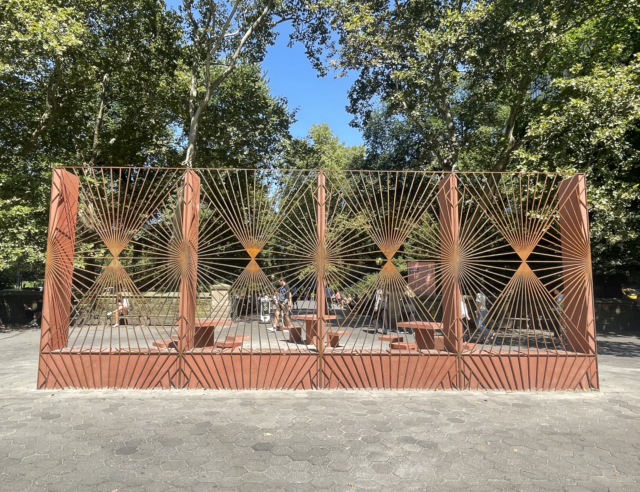
That separation between Puerto Rico and the United States is forefront in Edra Soto’s new Public Art Fund commission, Graft, a red terrazzo concrete and corten steel barrier at the Scholars Gate entrance to Central Park. Soto, who was born and raised in Puerto Rico and has lived and worked in Chicago since 1998, has placed architectural interventions at several previous indoor and outdoor locations. This latest iteration, situated on Doris C. Freedman Plaza, looks like a wrought-iron fence that can let people in — and keep them out, referencing immigration, fear of crime, and the prison system.
On the park side of the physical boundary, there are three sets of tables and chairs where people can grab a seat but have no privacy, as they can be seen through the grating, which features an intricate design inspired by rejas, fences that are incorporated into middle-class Puerto Rican houses, based on Caribbean palm leaves and Yoruba symbols from West Africa.
“The rejas make perfect sense to me, as an expression of self. They exist and are understood as a formality in art, but they can live in invisibility because they are not meant to be contemplative,” Soto said in a statement. “As decorative patterns from a common house, they are meant simply to be pleasant enough to be a part of living spaces.”
Graft feels right at home in New York City, with its proud past of rampant corruption and large Puerto Rican communities; the sculpture resides among tall buildings and large, lovely trees, where people from all around the world will pass by, while nearby is Augustus Saint-Gaudens’s golden statue of Civil War general William Tecumseh Sherman astride his horse, Ontario, led by Victory. “Fear is the beginning of wisdom,” Sherman, who was born in Ohio and died in New York City, once said.
Fear is often the reason why walls are built. The inclusion of floral motifs also may be referencing botanical grafts, the process of cutting a branch of one plant and joining it to the stem of another so that they grow together, generating a more robust and beautiful tree or shrub.
“Graft at Central Park invites viewers to contemplate the resilience of cultural identity and the diasporic experiences which have infused New York City’s history and present day,” Public Art Fund senior curator Melanie Kress explained in a statement. “Soto’s installation will encourage connection in a communal space where people can reflect on their shared histories and celebrate their diverse cultural heritage.”
The opening celebration takes place September 4 at 6:00 and is open to everyone; future programs will include dominoes tournaments held in conjunction with the Clemente Soto Velez Cultural and Educational Center, and the Public Art Fund usually hosts an artist talk about its commissions. No paper towels necessary.
[Mark Rifkin is a Brooklyn-born, Manhattan-based writer and editor; you can follow him on Substack here.]