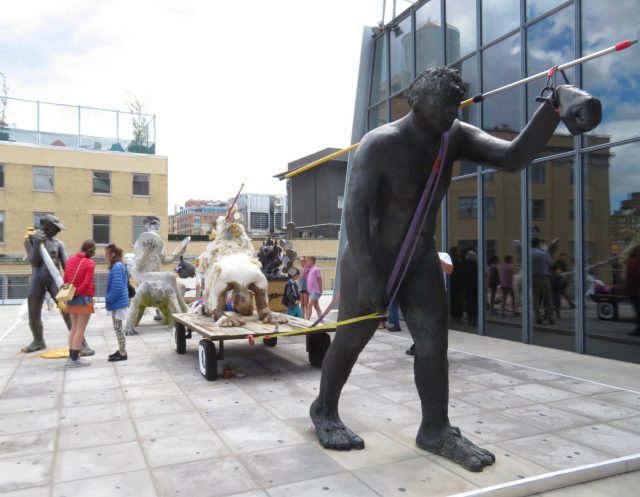
Nicole Eisenman’s aptly named Procession nearly proceeded out of the Whitney Biennial (photo by twi-ny/mdr)
Whitney Museum of American Art
99 Gansevoort St.
Wednesday – Monday through September 22, $18-$25 (eighteen and under free; pay-what-you-wish Fridays 7:00 – 9:30)
Some programs require advance registration and/or tickets
212-570-3600
whitney.org
The most viscerally entertaining work at the 2019 Whitney Biennial is Nicole Eisenman’s aptly named Procession, which first proceeded onto the sixth floor terrace, then nearly proceeded out of the building. The France-born, Brooklyn-based artist was part of a protest against the Whitney’s vice chairman, Warren Kanders, whose Safariland company makes tear-gas canisters, among other items used by security forces on civilians around the world. Eight artists — Eisenman, Michael Rakowitz, Korakrit Arunanondchai, Meriem Bennani, Nicholas Galanin, Eddie Arroyo, Agustina Woodgate, and Christine Sun Kim — demanded their work be removed from the biennial as long as Kanders remained on the board; they were responding to an original call for a boycott made by Hannah Black, Ciarán Finlayson, and Tobi Haslett. Two years ago, artist and writer Black argued that Dana Schutz’s painting Open Casket, depicting Emmett Till in his coffin, “must go,” claiming it was cultural appropriation. The Whitney decided to add signage to Schutz’s canvas, explaining the controversy and letting viewers decide for themselves. But this time around, the Whitney agreed to pull the contributions from the eight artists — only to stop when Kanders resigned from the board, not admitting any guilt but not wanting the story to “undermine the important work of the Whitney.”
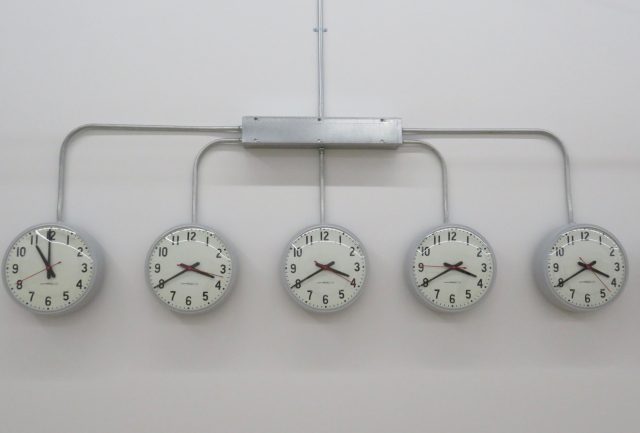
Agustina Woodgate’s National Times erases “master/slave” time (photo by twi-ny/mdr)
The site-specific Procession is an oddball collection of near-mythical bronze and plaster figures trudging along, a mix of classical and contemporary styles. Visitors are allowed to walk on the platform and get up close to the individual elements, which contain plenty of humor; watch out for the gaseous release. If you’d like to comment on the piece, Eisenman has a message for you: “How’s my sculpting? Call 1-800-EAT-SHIT.” Meanwhile, after much consternation, Marcus Fischer opted to keep his audio installation, Ascent/Dissent, in the Allison and Warren Kanders Stairway as a tribute to Felix Gonzalez Torres’s Untitled (America) string of lightbulbs that hang down the center of the stairwell. For more on the Kanders situation, Forensic Architecture’s eye-opening Triple-Chaser digs deep into the making and distribution of tear-gas canisters using an AI algorithm.
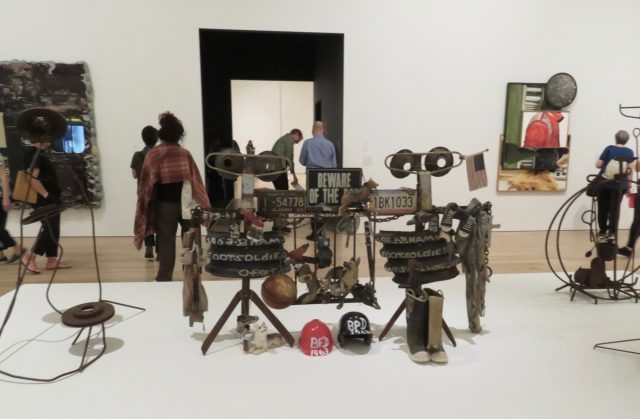
Joe Minter’s ’63 Foot Soldiers is composed of found objects (photo by twi-ny/mdr)
The rest of the survey of twenty-first-century American art is, as always, a hit-or-miss affair, with many works dealing with international sociopolitical issues. Alexandra Bell’s Friday, April 21, 1989 — Front Page looks at how the New York Daily News reported the Central Park Five case. Bennani’s Mission Teens invites viewers to sit in a tropical “video viewing garden” to experience her films on colonialism. Robert Bittenbender uses garbage he collected in Long Island City to create wall sculptures that comment on gentrification. Kota Ezawa’s large-scale animation National Anthem was made from smaller watercolors of football players taking a knee during “The Star-Spangled Banner.” Sofía Gallisá Muriente explores the fraught relationship between mainland America and Puerto Rico in Lluvia con Nieve (Rain with Snow), as does Daniel Lind-Ramos in his found-object sculptures Sentinels and Maria-Maria; the latter reimagines the Virgin Mary through Hurricane Maria, which devastated his homeland.
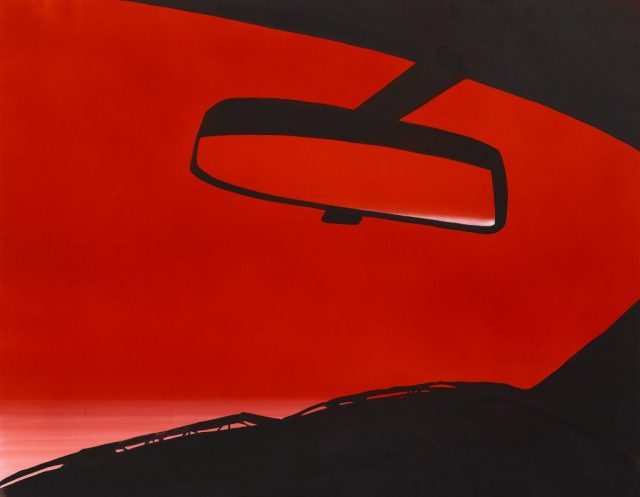
Calvin Marcus, Los Angeles Painting, watercolor and vinyl paint on linen, 2018 (image courtesy the artist; Clearing, New York and Brussels; and David Kordansky Gallery, Los Angeles)
Three videos by Ilana Harris-Babou take on such issues as reparations and redlining. Joe Minter’s ’63 Foot Soldiers uses found materials, including license plates, signs, helmets, sneakers, and a small flag, to reference the civil rights movement and the current state of wealth and class inequality. Woodgate’s National Times consists of clocks keeping “master/slave” time, the minute hand equipped with sandpaper that slowly erases the numbers. In My Soul Remainer, ballet star Jock Soto dances to Laura Ortman’s violin, playing a combination of musical notes and environmental sounds amid a mountain landscape. On select Fridays, Saturdays, and Sundays, five dancers (Hector Cerna, Tiffany Mangulabnan, Charles Gowin, Violetta Komyshan, Josep Maria Monreal Vidal, Amy Saunder, Mauricio Vera, Allison Walsh, Jennifer Whalen, Tyler Zydel) move within Brendan Fernandes’s The Master and Form scaffold-like installation, in which the performers get ready at individual spots where they interact with ash wood and leather works on black carpets, their bodies mimicking the shape of the sculpture, then inhabit a central scaffold-like installation that looks like it belongs in a children’s playground before grabbing on to floor-to-ceiling ropes lined up in front of full-length windows.
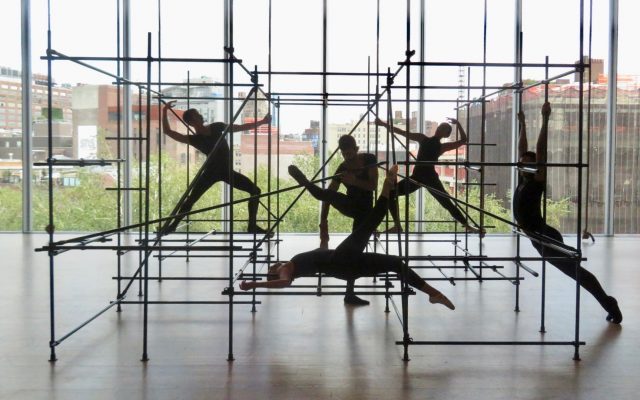
Brendan Fernandes’s The Master and Form is performed Fridays, Saturdays, and Sundays (photo by twi-ny/mdr)
Two of the most striking images in the show are Curran Hatleberg’s Untitled (Camaro), a photograph of a red Camaro stuck on top of two dumpsters in a junkyard, and Calvin Marcus’s gorgeous Los Angeles Painting, a fiery red future visible through a car windshield; both can be seen as harbingers of doom, a theme that hovers over this biennial, though the exhibit, curated by Jane Panetta and Rujeko Hockley, is not without hope. Also keep an eye out for impressive works by Simone Leigh, Brian Belott, Todd Gray, Maia Ruth Lee, and the late Barbara Hammer. Below are the remaining special screenings and live performances; some require advance tickets or RSVP.
Thursday, September 5
and
Saturday, September 7
Autumn Knight: Sanity TV, third floor, Susan and John Hess Family Theater, $10, 7:30
Saturday, September 7
Whitney Block Walk, free with advance RSVP, 4:30, 5:00, 5:30, 6:00
Friday, September 13
Steffani Jemison with Garrett Gray: On Similitude, third floor, Susan and John Hess Family Theater, $10, 7:30
Saturday, September 14
Whitney Block Walk, free with advance RSVP, 4:30, 5:30
Sunday, September 15
From Seneca Village to Brooklyn: A Conversation with Tomashi Jackson, with Tourmaline, Tsubasa Berg, Diana diZerega, Jonathan Kuhn, Meredith B. Linn, Kelly Mena, K-Sue Park, Nan Rothschild, Marie Warsh, and Stephen Witt, third floor, Susan and John Hess Family Theater, free with advance RSVP, 7:30
Thursday, September 19
Madeline Hollander — Ouroboros: Gs, Pamella and Daniel DeVos Family Outdoor Largo, free with museum admission, 5:00 – 9:00
Friday, September 20, 7:00
and
Saturday, September 21, 4:00
What Was Always Yours and Never Lost, short films followed by a Q&A with curator Sky Hopinka and some of the filmmakers, Susan and John Hess Family Theater, $10

 Eight years in the making, Ognjen Glavonić’s narrative feature debut, The Load, is a tense, gripping drama set amid the NATO bombings during the Kosovo war in Yugoslavia in 1999. After the factory where he worked closes down, Vlada Stefanovic (Leon Lučev) takes a job driving a truck from the countryside to Belgrade. The mission is reminiscent of the ones in Henri-Georges Clouzot’s The Wages of Fear and William Friedkin’s underrated remake,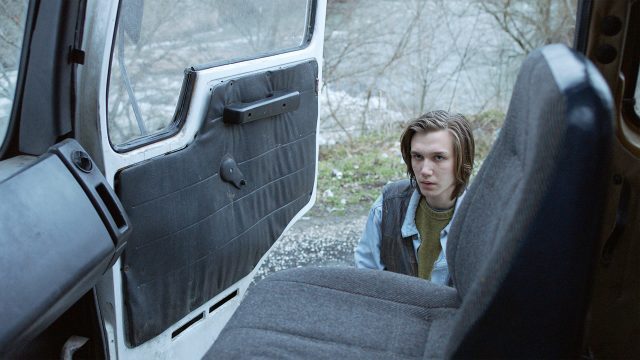

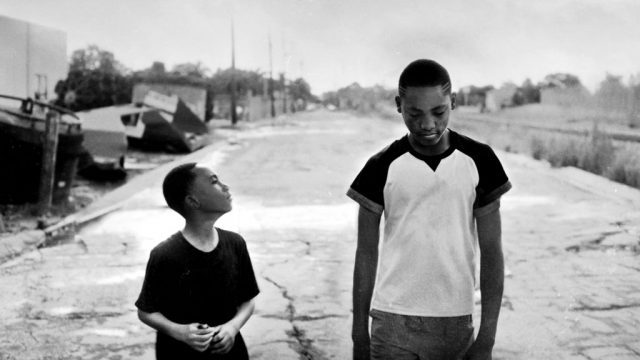
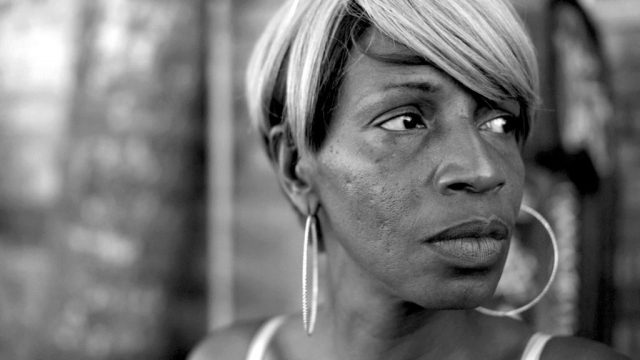
 Roberto Minervini follows up his Texas Trilogy – The Passage, Low Tide, and Stop the Pounding Heart – with the powerful sociopolitical call to action, What You Gonna Do When the World’s on Fire? The film is shot in sharp, distinctive black-and-white by cinematographer Diego Romero Suarez-Llanos so that it looks like a fictional work from the civil rights era, but it is an all-too-real documentary that shows what’s happening in the US today, even though far too many Americans would deny the inherent realities the movie depicts. Italian-born director Minervini, who is based in the American south, tells four poignant stories steeped in oppression: Judy Hill is struggling to get by, running a bar that has become an important meeting place for the Tremé community while also caring for her elderly mother, Dorothy; Ashlei King hopes that her young sons, fourteen-year-old Ronaldo King and nine-year-old Titus Turner, come back safe after going out to play in a junkyard; Mardi Gras Indian Chief Kevin Goodman melds black and Native American traditions in changing times; and Krystal Muhammad and the New Black Panther Party for Self Defense protest the killings of two African American men at the hands of police.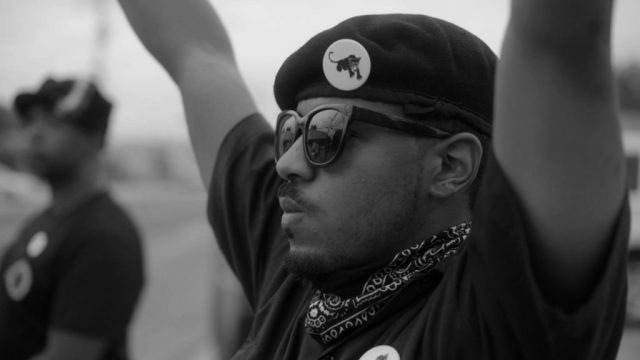
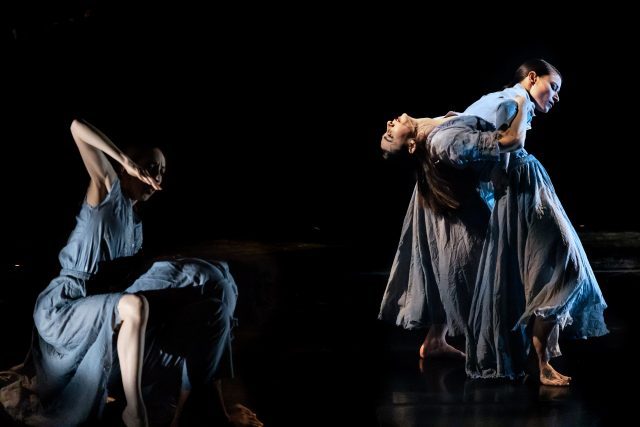
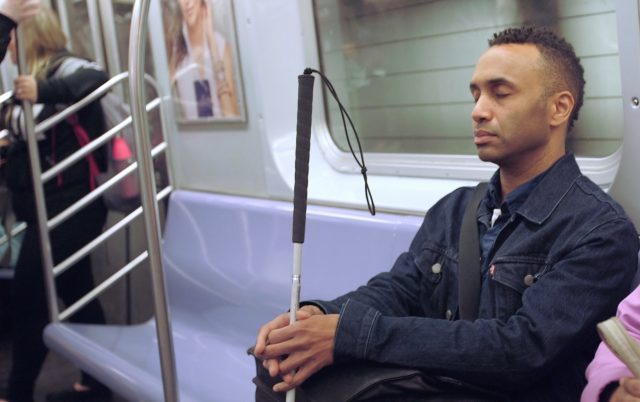
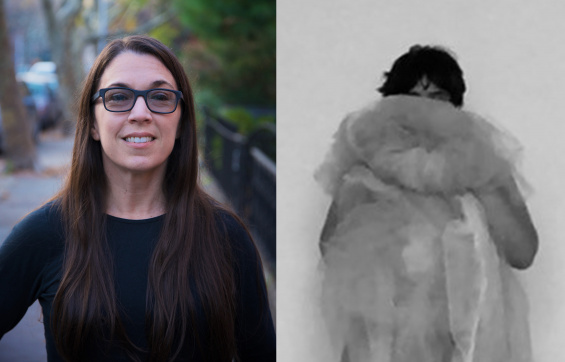
 “In a lot of ways, I feel like I’m just looking for guidance in how to be a blind artist,” filmmaker Rodney Evans says in Vision Portraits, his remarkable new documentary opening August 9 at Metrograph. Evans follows three artists as they deal with severe visual impairment but refuse to give up on their dreams as he seeks experimental treatment for his retinitis pigmentosa. Manhattan photographer John Dugdale lost most of his eyesight from CMV retinitis when he was thirty-two but is using his supposed disability to his advantage, taking stunning photos bathed in blue, inspired by the aurora borealis he sees when he closes his eyes. “Proving to myself that I could still function in a way that was not expected of a blind person was really gonna be the thing,” he says. “It’s fun to live in this bliss.” Bronx dancer Kayla Hamilton was born with no vision in one eye and developed iritis and glaucoma in the other, but she is shown working on a new piece called Nearly Sighted that incorporates the audience into her story. “How can I use my art form as a way of sharing what it is that I’m experiencing?” she asks.