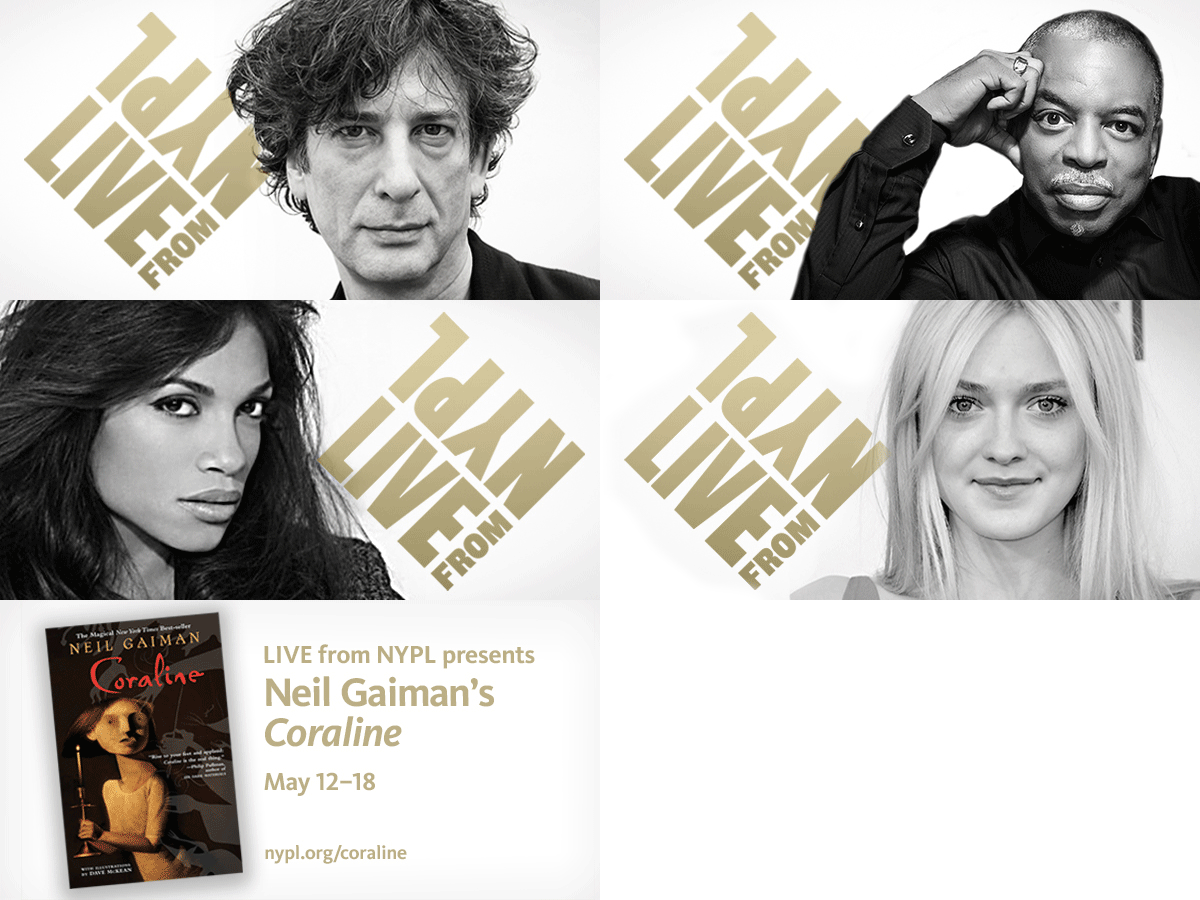
Who: Neil Gaiman, LeVar Burton, Rosario Dawson, Dakota Fanning What: Livestreamed reading from the New York Public Library Where:NYPL Facebook page When: May 12-18, free with advance registration, 6:00 Why: Prior to the pandemic, award-winning writer Neil Gaiman was scheduled to present “Mind of a Storyteller” as part of the New York Public Library’s LIVE from NYPL series at the main branch on Fifth Ave. at Forty-First St. But with the Covid-19 shutdown, Gaiman and the NYPL have come up with a live, online alternative. From May 12 to 18 at 6:00, Gaiman and special guests will read the full text of his 2002 Hugo- and Nebula-winning novella Coraline — which was also turned into an Oscar-nominated 2009 animated film and a graphic novel — about a girl who finds a different kind of escape from her house, which is particularly relevant as we are all sheltering in place at home. [Ed. note: In another part of my life, I work for HarperCollins, which publishes Gaiman’s adult and children’ books.] Gaiman will read chapters one and two on May 12 and three and four on May 13, LeVar Burton will read chapter five on May 14 and chapters six and seven on May 15, Rosario Dawson will read chapters eight and nine on May 16 and ten and eleven on May 17, and Dakota Fanning will finish the creepy tale with chapters twelve and thirteen on May 18. You can register for the free event here, where you can also find out how to access the ebook to follow along gratis as well.
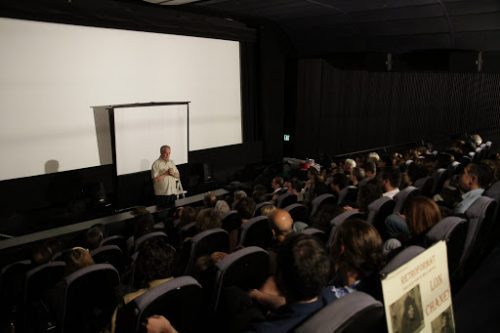
Paul Dooley gives a talk about Buter Keaton at Retroformat Los Angeles (photo courtesy Retroformat)
Who: Paul Dooley, Cliff Retallic What: Livestreamed classic silent movies with special guests Where:Retroformat Facebook page When: Monday nights at 10:30, free with RSVP Why:Retroformat in Los Angeles has teamed with Flicker Alley LLC, Lobster Films, and Blackhawk Films to present #SilentMovieMondays, livestreamed screenings of silent classics on Facebook, with live musical accompaniment by Retroformat musical director Cliff Retallick, special guest lecturers, and Q&As. On May 4, they showed Max Linder’s 1921 Seven Years Bad Luck and had a talk with self-described “cinevore” Serge Bromberg. On May 11, the great Paul Dooley, the ninety-two-year-old star of stage and screen, including such films as A Wedding, Breaking Away, Popeye, Cars, and Sixteen Candles, will be on hand to talk about Buster Keaton, who will be featured in one of his all-time best, One Week, about a pair of newlyweds and their new home, as well as Cops, in which he gets in trouble with the LAPD. Dooley, who refers to himself as “a household face” and was the cocreator of the long-running children’s show The Electric Company, considers Keaton his hero; he played a Keystone cop in one of Keaton’s 1964-65 Ford Econoline commercials. Retroformat, whose “sole mission is to educate and inspire enthusiasm for the art and history of silent film,” will continue the series during the pandemic shutdown with future titles and guests to be announced.
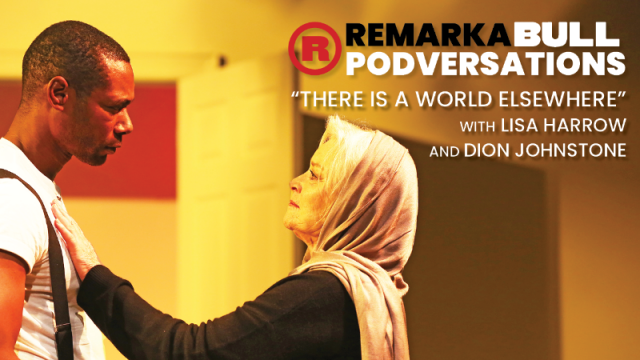
Who:Red Bull Theater company What:Conversation about William Shakespeare’s Coriolanus, live online unrehearsed reading of play Where:Red Bull Theater website and Facebook Live When: Monday, May 11 and 18, free (donations accepted), 7:30 Why: No other New York City theater company has taken advantage of livestreaming during the pandemic shutdown like Red Bull has. The troupe, which specializes in Elizabethan and Jacobean comedy and tragedy, has been hosting events on its online sites every Monday night at 7:30, alternating between RemarkaBULL Podversations, in which actors discuss famous speeches, and live, unrehearsed Zoom readings with the original casts of previous Red Bull productions. On April 13, Michael Urie took on the “Queen Mab” speech from Romeo & Juliet, followed April 27 by Elizabeth Marvel tackling Mark Antony’s “Cry Havoc” monologue from Julius Caesar. Meanwhile, the company held live reunion readings of John Ford’s ‘Tis Pity She’s a Whore on April 20 and Ford, Thomas Dekker, and William Rowley’s The Witch of Edmonton on May 4. (While the podversations can still be viewed on the website, the readings are available only through the Friday of that week.)
Red Bull now turns its attention to the Bard’s Coriolanus, which it staged in the fall of 2016 at the Barrow Street Theatre in a dynamic production set during the Occupy movement that I wrote was transported to “up-to-the-minute contemporary times in a fast and furious immersive adaptation bursting with passion and energy.” On May 11 at 7:30, the podversation “There Is a World Elsewhere” delves into two speeches from the play, with Dion Johnstone, who starred as Cauis Martius, and Lisa Harrow, who played Volumnia, in conversation with Red Bull associate producer Nathan Winkelstein. And nearly the entire original cast will be back on May 18 for a live, unrehearsed reading, with Matthew Amendt as Tullus Aufidius, Zachary Fine as Titus Lartius, Rebecca S’Manga Frank as Virgilia, Harrow as Volumnia, Merritt Janson as Brutus, Johnstone as Cauis Martius, Aaron Krohn as General Cominius, Patrick Page as Menenius Agrippa, Olivia Reis as Young Martius, Lily Santiago as Valeria, Stephen Spinella as Sicinius, and Edward O’Blenis in multiple small roles, along with composer Brandon Wolcott, all performing from wherever they are sheltering in place. Both events are free, but donations are accepted. Up next will be Zoom reunion readings of Red Bull’s 2005-6 version of Thomas Middleton’s The Revenger’s Tragedy on June 1 and Jeffrey Hatcher’s fab 2017 adaptation of Gogol’s The Government Inspector on June 15.
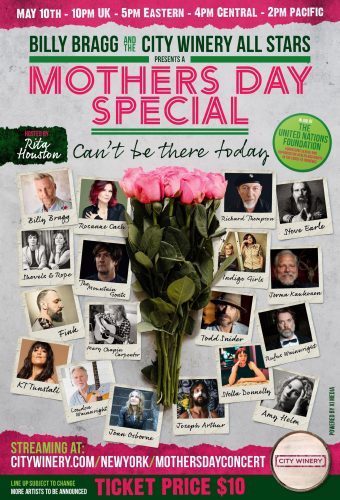
Who:Billy Bragg, Rosanne Cash, Mary Chapin Carpenter, Steve Earle, Shovels & Rope, Rufus Wainwright, Richard Thompson, the Indigo Girls, Jorma Kaukonen, Todd Snider, KT Tunstall, Loudon Wainwright, Amy Helm, Joseph Arthur, Stella Donnelly, Andrew Bird, Fink, Joan Osborne, the Mountain Goats, Valerie June, Stephin Merritt, Rita Houston What: Special livestreamed Mother’s Day benefit concert from City Winery Where: Private YouTube link sent two hours before showtime When: Sunday, May 10, $10, 5:00 Why: “I love you and that’s why I’m going to stay away,” Billy Bragg sings to his mother in his March 21 video, “Can’t Be There Today.” The English singer-songwriter and activist was quick to follow social distancing guidelines, even if it meant not seeing loved ones. He has now teamed up with City Winery, where he is a regular performer, for a livestreamed Mother’s Day concert on Sunday, May 10, at 5:00, and there is an all-star lineup joining him from wherever they are sheltering in place. The roster so far features Rosanne Cash, Mary Chapin Carpenter, Steve Earle, Shovels & Rope, Rufus Wainwright, Richard Thompson, the Indigo Girls, Jorma Kaukonen, Todd Snider, KT Tunstall, Loudon Wainwright, Amy Helm, Joseph Arthur, Stella Donnelly, Andrew Bird, Fink, Joan Osborne, the Mountain Goats, Valerie June, and Stephin Merritt, hosted by Rita Houston.
Tickets to the YouTube show are $10, with all proceeds benefiting the United Nations Foundation, which “addresses sexual and reproductive health and rights in the COVID-19 pandemic.” Showing as always that he is ahead of the curve, Bragg explained in a statement about the song, “The coronavirus pandemic is going to affect our lives in ways we’ve yet to grasp. In the coming months, most of us will be forced to miss family gatherings, including Mother’s Day, which in the UK fell on the first weekend of isolation [March 22]. My new song touches on the emotional cost of this crisis.” Watch the concert with your mother, or in your mother’s memory. And stay safe and healthy out there; it’s not worth risking your life — or your mother’s — just to tell her you love her in person on Sunday.
Who: Frances McDormand, John Turturro, Oscar Isaac, Jeffrey Wright, Frankie Faison, David Strathairn, Glenn Davis, Marjolaine Goldsmith, Jumaane Williams What: Live Zoom theatrical production by Theater of War Where: Eventbrite link sent with RSVP When: Thursday, May 7, free with RSVP, 7:00 Why: Theater of War Productions (TOWP) presents dramatic readings of plays and speeches by Sophocles, Tennessee Williams, Euripides, Conor McPherson, Aeschylus, Dr. Martin Luther King Jr., Eugene O’Neill, Frederick Douglass, and others, examining them through a contemporary sociocultural lens, focusing on such themes as addiction and substance abuse, gun violence, the prison system, natural disasters, consent, genocide, and caregiving. On May 7 at 7:00, the company, which was cofounded in 2009 by Bryan Doerries and Phyllis Kaufman, will turn its attention to the current pandemic with the Oedipus Project, a free online initiative that will feature an all-star roster of actors giving a live, dramatic reading of scenes from Sophocles’s fifth-century BCE classic, Oedipus the King. The play deals with such elements as arrogance, pride, power, guilt, and truth and was first performed during the Plague of Athens, an epidemic that killed about a third of the population. The impressive cast, who will be performing from wherever they are sheltering in place, consists of Frances McDormand, John Turturro, Oscar Isaac, Jeffrey Wright, Frankie Faison, David Strathairn, Glenn Davis, and Marjolaine Goldsmith. “There are people suffering out there, dying from the hateful plague, and this is what you choose to do with your time?” Jocasta asks in Doerries’s translation; Doerries also directs the show and will facilitate a live, interactive discussion about the impact of Covid-19 on families and communities, joined by New York City public advocate Jumaane Williams. TOWP is planning other productions to help those facing loneliness, trauma, loss, and mental and physical illness during this time of isolation.
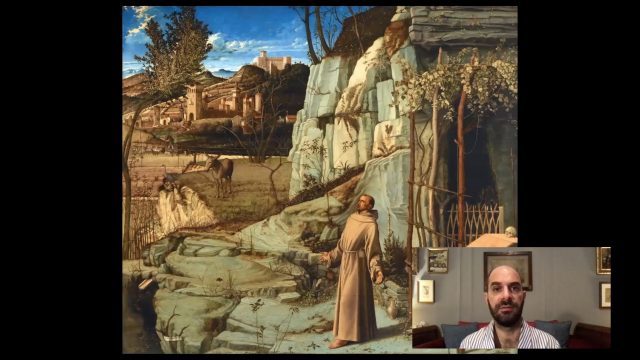
Frick Chief Curator Xavier F. Salomon chose a Manhattan to drink while exploring Bellini’s St. Francis in the Desert from home (courtesy the Frick Collection)
Among the things that many of us are missing the most during the Covid-19 crisis are art and travel. They might not be essential businesses, but they’re key parts of a full and rewarding life. Both serve as respites from the everyday; they entertain and educate us, offering escape from our daily toil. “How Can We Think of Art at a Time Like This?” is the titular question of Barbara Pollack and Anne Verhallen’s ongoing online exhibition, which features new and recent work from major living artists addressing the pandemic and politics. The answer, of course, is how can we not?
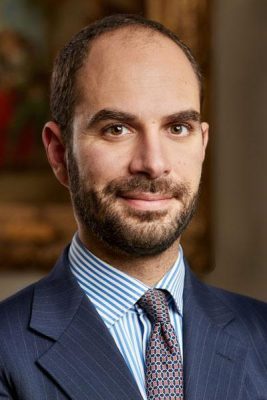
Xavier F. Salomon has found his own unique method of thinking about art in the time of coronavirus, adding related travel as well. Salomon, who was born in Rome to an English mother and a Danish father, was raised in Italy and England, and received his BA, MA, and PhD from the Courtauld Institute of Art in London, is the Peter Jay Sharp Chief Curator at the Frick Collection. Every Wednesday and Friday, he takes over the Frick’s YouTube channel with deep dives into art history. On Wednesday’s “Travels with a Curator,” Salomon, who previously worked at the British Museum, the National Gallery and the Dulwich Picture Gallery in London, and the Met here in New York — quite a resume for a man only just in his forties — gives an illustrated lecture about art and architecture in specific cities; so far he has guided us through Castel Sant’Angelo, Rome, and Ca’ d’Oro, Venice.
Frick Chief Curator Xavier F. Salomon is becoming an internet star during pandemic (photo by Michael Bodycomb)
He is fast becoming an internet superstar for his Friday talks, “Cocktails with a Curator,” my preferred manner of ending the workweek. At 5:00, Salomon pairs a masterpiece from the Frick with a cocktail and spends between fifteen and twenty minutes discussing the Frick gem and the drink, placing them in context of the current pandemic. Seen in the lower-right-hand corner of the screen, the bald, bearded, handsome, and ever-charming Salomon has helped us look deeply into Rembrandt’s Polish Rider with a Szarlotka, Bellini’s St. Francis in the Desert with a Manhattan, and Van Dyck’s Sir John Suckling with a Pink Gin. (On May 1, curator Aimee Ng explored Constable’s White Horse with a gin and Dubonnet.)
On May 8, Salomon will visit with Joseph Mallord William Turner’s Harbor of Dieppe: Changement de Domicile while enjoying a Widow’s Kiss. (The recipes, which include alcohol-free versions, are posted on the YouTube page in advance.) The Frick is my personal favorite museum, a place I go to often to see familiar works that both relax and energize me — including Harbor of Dieppe, which I’ve marveled at on many occasions — so I’m finding these talks, which are prerecorded but stream live (and can be also watched later), absolutely essential in every way. Salomon recently took a break from his art history forays to discuss art and travel in the age of coronavirus.
twi-ny: Last year, before the pandemic, you started examining specific works from current Frick special exhibitions in a Facebook series called “Live from the Frick!” How did that evolve into “Cocktails with a Curator”?
xavier f. salomon: The Frick Collection has had a long tradition of online offerings (exhibition virtual tours, online live streaming of scholarly lectures, and Facebook “Lives,” among many examples). As soon as the lockdown began, we started to think, as a team, as to what we could offer to as varied an audience as possible. The idea of weekly appointments – with “Cocktails” on Fridays and “Travels” on Wednesdays – is designed to take our minds away from our current problems and to “meet” virtually. The idea was to match art with something we may miss from our previous life: things such as going out with friends for a drink, or traveling.
twi-ny: Do you consider yourself a cocktail aficionado? Are you trying new drinks, or are you choosing some of your favorites?
xaf: I do like cocktails very much. I am starting with a number of favorites, but as the series will continue, I am definitely planning to explore new options.
twi-ny: As a Frick regular, I feel that many of the paintings and sculptures in the museum are like old friends and members of the family that I thought I knew so well. I’ve stared at “St. Francis in the Desert” dozens of times, but as I watched your description on “Cocktails,” I felt as if I’d never really seen it. Because you are presenting this with a slightly adjusted context, referencing the pandemic, do you find yourself learning surprising things about works that you thought you knew so well?
xaf: The Frick is a museum of masterpieces. And I always believed that great works of art, first of all, can improve our lives but can also mean a number of different things at different times. One of the most common questions I have been asked in the last few years is: “Are works of art by Old Masters relevant?” The answer is: “YES!!!” And I hope to demonstrate this with this series. One thing that this virus is making apparent to everyone is how fragile human beings are. Artworks are the best that human beings have produced in the last few thousand years, and they can help us understand why and how we live. People a thousand years ago, five hundred years ago, a hundred years ago, were dealing with life as we do, with love, with friendship, with knowledge, with financial issues . . . and with epidemics and death. So I have been working on matching works at the Frick with broad issues we are thinking about today. And – not surprisingly – it is actually quite easy. And I am enjoying thinking about our works in this way.
twi-ny: I’m also appreciative of how fresh your analysis is. In the most recent Frick Collection magazine, you wrote about van Dyck’s “Sir John Suckling,” but your “Cocktails” talk about it explored the painting differently. I gather you would agree that “perspective is everything”?
xaf: Yes, I fully agree. And that is the importance of great works of art. They can be understood in a number of ways and can touch different chords in us. The same work of art meant different things to me when I was a teenager, or ten years ago. . . . We change as we go through life, and a truly great masterpiece can be for us a travel companion or a great friend. We change and they alongside us.
twi-ny: The camerawork is extraordinary, taking us deep inside the paintings. Is that footage already available, or might someone be taking new shots inside the museum?
xaf: The Frick has always had an in-house photographer, and our works have been very well photographed over the years by very talented people. All of the photographs of our works are from our archives. No new photography has been commissioned for these online programs. And many of the photos of locations I have taken myself over the years on my travels.
twi-ny: For the third “Cocktails” presentation, you cleverly changed where you were sitting when giving the talks. What part of the city are you sequestered in, and are you sheltering in place with any humans or animals?
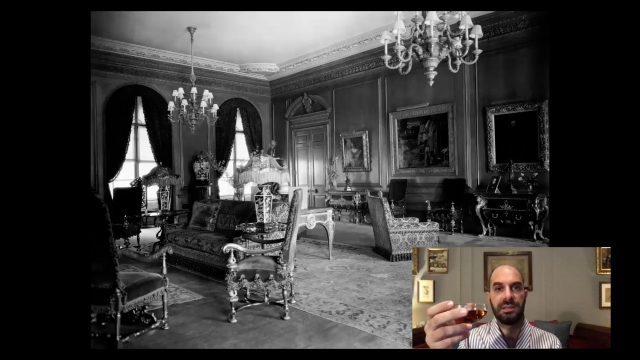
xaf: I have been playing with different corners of my apartment to find an ideal location for the filming. It is a first for me, to film myself in my own apartment. I live in Washington Heights, in Manhattan, an area I like very much. I am, unfortunately, sheltering in place alone, as my partner (in the same situation) is across the Atlantic, in Europe. I would love to have a pet, especially during these times. But I cannot complain, because in my “hermitage” at least I have books.
Xavier F. Salomon brings the Frick into his home and ours in weekly online series (courtesy the Frick Collection)
twi-ny: Most curators exist in the background; the public might read essays by them in catalogs and wall text, or maybe see them if they go to an illustrated lecture at a museum. But you’re becoming a virtual sensation, with fans tuning in not just to hear about a masterpiece but to specifically see you and have a drink together. How does that feel?
xaf: I am not sure I would describe myself as a “virtual sensation.” But I also don’t believe that curators or art historians should live in the “background.” Art is for everyone, and if people want to know more about museums or works of art, curators need to be accessible. It is not about spending our lives in ivory towers and being buried in our libraries or our museums. As much as many of us (myself included) don’t necessarily dislike that idea, there is the fundamental fact that we need to put our knowledge and studies somewhere out there and have it available for the general public. I am not looking for fans, but I have to confess that it feels very rewarding to know that, with a very small contribution, I have somewhat enhanced people’s lives at a particularly difficult time.
twi-ny: You appear to love what you do, and you can be very funny, but on camera you never break character as a serious art historian. What does it take to make you burst out laughing?
xaf: I love, adore, what I do. I live for it. I could not imagine doing anything else with my life. I don’t know why, but I always feel awkward when laughing in public. But many things make me laugh out loud, and, it is usually female comedians. Women have such a wonderful sense of humor! But, maybe, you are right, I should be less serious on my online programs. . . .
twi-ny: What artworks might be coming up, or would you prefer to keep them a secret until closer to showtime? If you take requests, I have a few.
xaf: The answer is that I know a few works (Turner, Velázquez, Holbein, Bronzino) and places (the Monastery of the Temptation in Jericho, Santa Maria delle Carceri in Prato, the towns of Osuna in Spain and Valenciennes in France) that will come up, but I am still not sure about the exact timing and I do not have a full list. I keep thinking and choosing as I go along. And, yes, suggestions are well received!!! I was surprised to see that people have written to me with suggestions for specific cocktails (and I apologize for all those people who really expected me to offer a Bellini with a Bellini painting — come on, guys!!! — I need to be a bit more original than that . . .), but no one so far has suggested a work of art or a place. Please send me your ideas! [ed. note: How about Goya’s The Forge, Vermeer’s Officer and Laughing Girl, El Greco’s Purification of the Temple, or Constable’s Salisbury Cathedral from the Bishop’s Grounds?]
Who: Marlo Thomas, Phil Donahue, Rob Reiner What: Live online book launch and conversation celebrating fortieth wedding anniversary Where:92nd St. Y online When: Thursday, May 7, $20, 7:30 Why: To celebrate their fortieth anniversary, actress and social activist Marlo Thomas and longtime talk show host Phil Donahue wrote What Makes a Marriage Last: 40 Celebrated Couples Share with Us the Secret to a Happy Life (HarperCollins, May 2020, $29.99), in which they interview dozens of other happily married celebrity couples, including Kevin Bacon and Kyra Sedgwick, James Carville and Mary Matalin, Jamie Lee Curtis and Christopher Guest, Ted Danson and Mary Steenburgen, Michael J. Fox and Tracy Pollan, Melissa McCarthy and Ben Falcone, John McEnroe and Patty Smyth, Tony Shalhoub and Brooke Adams, Sting and Trudie Styler, Lily Tomlin and Jane Wagner, and Rob and Michele Reiner. On May 7 at 7:30, Rob Reiner will interview Thomas and Donahue, who got married on May 21, 1980, via the 92nd St. Y’s online portal. Virtual tickets are $20 and go to help the losses suffered by the 92nd St. Y because of the pandemic.