this week in lectures, signings, panel discussions, workshops, and Q&As

HENRY CHALFANT: ART vs. TRANSIT, 1977-1987

(photo by twi-ny/mdr)

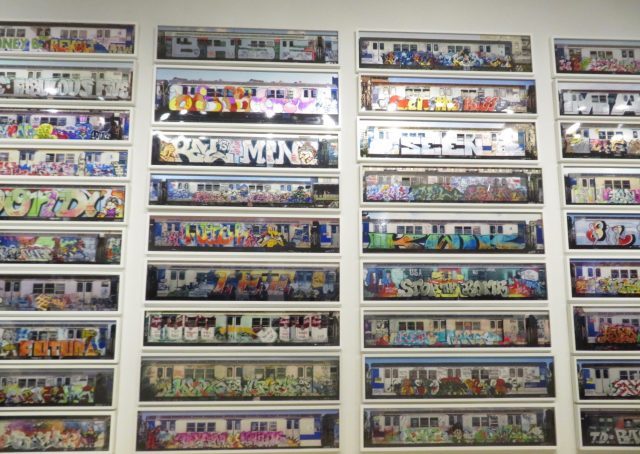
Henry Chalfant’s train photos fill up a wall and more at Bronx Museum exhibit (photo by twi-ny/mdr)

Bronx Museum of the Arts
1040 Grand Concourse at 165th St.
Through March 8, free
718-681-6000
www.bronxmuseum.org

In 1985, the MTA began its Arts for Transit and Urban Design program (now known as MTA Arts & Design), connecting art with public transportation. But before that, art and transit went together like oil and water; hence the name of a fab exhibit that continues at the Bronx Museum through March 8, “Henry Chalfant: Art vs. Transit, 1977–1987,” the title of which was also inspired by the late graffiti artist SHY147. After arriving in New York City from Pittsburgh in 1973 and beginning as a sculptor, Chalfant was quickly enamored with street art, train graffiti, and hip-hop culture and started documenting it. Since train graffiti was impermanent — in addition to the MTA relentlessly trying to clean trains, other taggers and writers would spray paint right over existing tags — his photographs often became the only evidence of the work, so much so that soon graffiti artists would call him up to ask him to take pictures of trains and buildings they’d tagged. Chalfant would go to aboveground stations such as Intervale Avenue and East Tremont on the 2 and 5 lines and take multiple photos with his 35mm camera as trains whizzed by; he would then develop the photos and splice them together to create panoramic shots of full trains.
(photo by twi-ny/mdr)

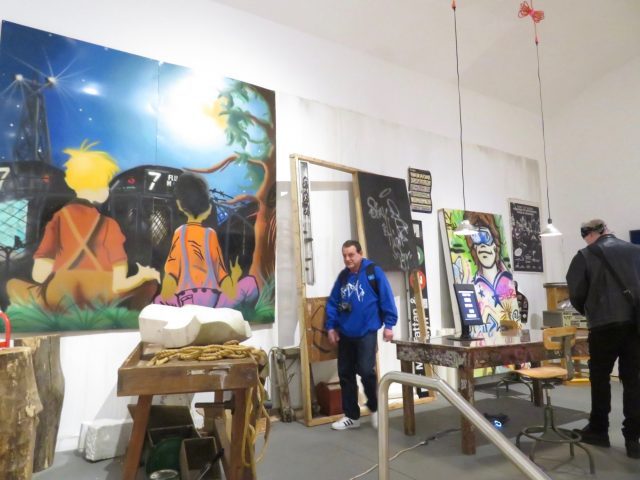
Duster UA visits re-creation of Henry Chalfant’s SoHo studio (photo by twi-ny/mdr)

This first US museum retrospective, which was curated by Spanish graffiti artist SUSO33 for the Centro de Arte Tomás y Valiente in Madrid, includes dozens of Chalfant’s long, rectangular photographs, hung on the walls one above another, from floor to ceiling, exploding in a glorious blaze of colors and shapes, with wild lettering and cartoonish characters. Among the artists whose work he preserved on film are Dondi, Futura, Lady Pink, Lee Quiñones, Zephyr, Blade, Crash, DAZE, Dez, Kel, Mare, SEEN, Skeme, and T-Kid, some of whom are interviewed for a short film made by multimedia, multidisciplinary artist, producer, and chronicler Sacha Jenkins. I was fortunate enough to watch the film, which is screened continuously within a re-creation of Chalfant’s SoHo studio, alongside a graffiti artist who added biting commentary about some of the figures in the film and pointed out one of his pieces as it passed by.
(photo by twi-ny/mdr)

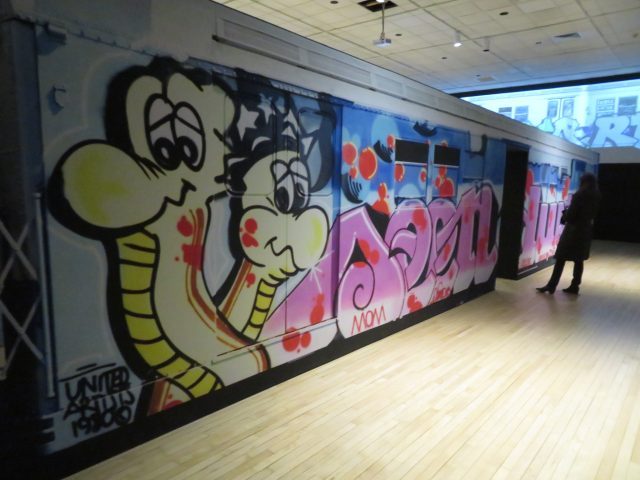
Life-size cloth murals are arranged like train cars at the Bronx museum (photo by twi-ny/mdr)

In the back room, a series of wooden structures are covered with full-length cloth murals to replicate spray-painted subway cars at actual size, while dozens of Chalfant’s photos are projected at the top of a wall at one end of the room, roaring into the station, then pulling out, complete with sound effects. Also on view are some of Chalfant’s notebooks and more than a hundred photographs of the burgeoning street hip-hop culture as well as newspaper and magazine articles and other ephemera. “The story of the neglected children of NYC, victims of poverty, racism, poor schools lacking art and music instruction who overcame their circumstances with creative expression, is a powerful and inspiring one,” Chalfant says in the beautiful bilingual catalog. “There are plenty of examples in the various cultures that emerged from the mean streets of New York that have been a powerful inspiration to youth everywhere. I’m happy and proud to be bringing it home.” The catalog also features essays by Jenkins, Sharp, SUSO33, and Carlos Mare.

Chalfant, a Stanford grad whose 1984 collaboration with Martha Cooper, Subway Art, is the bible of the genre and who coproduced with director Tony Silver the seminal 1983 documentary Style Wars, did the world a great service by capturing these works of art, which turned drab silver train cars into canvases of free expression, where men and women on the margins could scream out for all to experience. Be on the lookout for such photos as “Dondi,” “EYE JAMMIE by AOne,” “Mad (by Seen),” “Style Wars by Noc 167,” and “Stop the Bomb.”
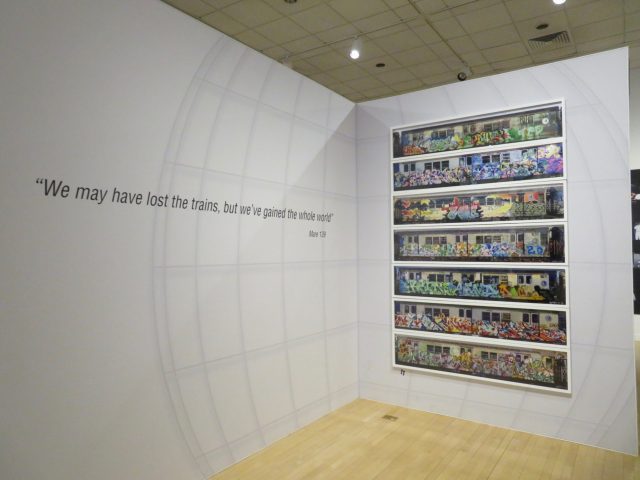
Exhibit extends past New York and into other cities where hip-hop and graffiti blossomed (photo by twi-ny/mdr)

Exhibit extends past New York and into other cities where hip-hop and graffiti blossomed (photo by twi-ny/mdr)

On March 6, the Bronx Museum will host a free screening of Chalfant’s award-winning 2006 documentary, From Mambo to Hip-Hop: A South Bronx Tale; advance registration is recommended here. Also at the museum is the eye-opening “José Parlá: It’s Yours,” a major solo show by the Miami-born, longtime Bronx resident and former street artist known as “Ease”; his dazzling paintings and collages require up-close viewing to fully experience his exploration of gentrification and systemic racism while also celebrating street art and the Bronx.

THE BOOKSELLERS

The Booksellers

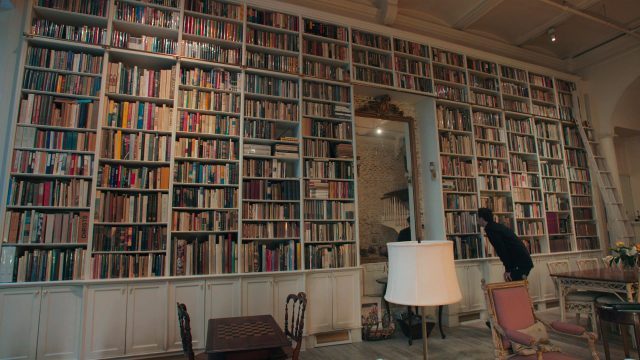
Rare-book dealers such as Adam Weinberger scour through private homes to find buried treasure in The Booksellers

THE BOOKSELLERS (D. W. Young, 2019)
Quad Cinema
34 West 13th St. between Fifth & Sixth Aves.
Opens Friday, March 6
212-255-2243
booksellersdocumentary.com
quadcinema.com

“There’s so much more to a book than just the reading,” Maurice Sendak is quoted as saying in D. W. Young’s wonderfully literate documentary The Booksellers, which opens at the Quad March 6. I have to admit to being a little biased, as I work in the children’s book industry in another part of my life, and I serve as the managing editor on Sendak’s old and newly discovered works. The film follows the exploits of a group of dedicated bibliophiles who treasure books as unique works of art, buying, selling, and collecting them not merely for the money but for the thrill of it. “The relationship of the individual to the book is very much like a love affair,” Americana collector Michael Zinman explains.
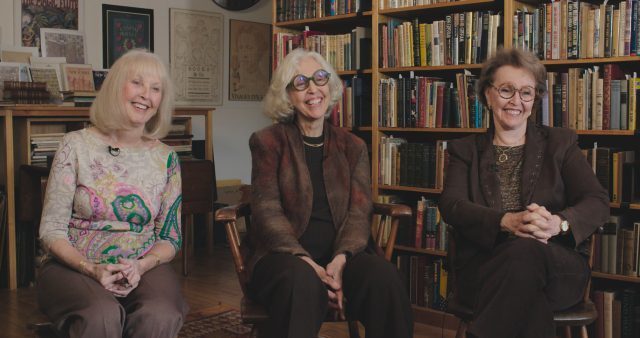
Sisters Adina Cohen, Judith Lowry and Naomi Hample, owners of the Argosy Book Store, at the store on East 59th Street in Manhattan

Sisters Adina Cohen, Judith Lowry, and Naomi Hample of Argosy Book Store keep the family legacy alive

In the film, which features narration by executive producer Parker Posey, Young visits the Antiquarian Book Fair at Park Avenue Armory and speaks with a wide range of intellectual characters, including author and cultural commentator Fran Lebowitz, who relates her experiences in rare-book stores; bestselling writer Susan Orlean, who discusses her archives; leather-bound connoisseur Bibi Mohamed of Imperial Fine Books, who talks about going to her first estate sale; late-twentieth-century specialist Arthur Fournier; Nicholas D. Lowry and Stephen Massey of Antiques Roadshow, the latter of whom was the auctioneer for the most expensive book ever sold, Leonardo Da Vinci’s Hammer codex; sci-fi expert and author Henry Wessells; Justin Schiller, who worked with Sendak and other children’s book authors; Rebecca Romney of Pawn Stars; Jim Cummins, who owns some four hundred thousand books; Erik DuRon and Jess Kuronen of Left Bank Books; Nancy Bass Wyden of the Strand; and Adina Cohen, Naomi Hample, and Judith Lowry, the three sisters who own the Argosy Book Store, continuing the family legacy.

But times have changed, for both good and bad. Dealer Dave Bergman complains, “The internet has killed the hunt,” comparing the excitement of live auctions and the detective-like chase for a title to the boredom of automated online searches and bidding. However, diversity is on the rise, as explored with Kevin Young of the Schomburg Center for Research in Black Culture; Caroline Schimmel, a leading collector of books by women; and hip-hop archivist and curator Syreeta Gates. “I think the death of the book is highly overrated,” Heather O’Donnell of Honey and Wax Booksellers declares. From her mouth. . . . The Booksellers, which is worth seeing solely for Antiques Roadshow appraiser and Swann Auction Galleries president Nicholas D. Lowry’s fab mustache, is screening in conjunction with the sixtieth anniversary of the New York Antiquarian Book Fair, taking place March 5-8 at Park Avenue Armory. The Quad is hosting a series of Q&As opening weekend, with Young and such guests as Posey, Wyden, Romney, O’Donnell, and Nicholas D. Lowry, moderated by Eugene Hernandez and Adam Schartoff.

HOMAGE TO CHANTAL AKERMAN

Chantal Akerman

Cellist Sonia Wieder-Atherton will accompany text and film by her former partner, Chantal Akerman, in special tribute at FIAF

French Institute Alliance Française, Florence Gould Hall, Tinker Auditorium
55 East 59th St. between Madison & Park Aves.
March 6-7, $7-$14 per event, $45 full weekend pass
212-355-6100
fiaf.org

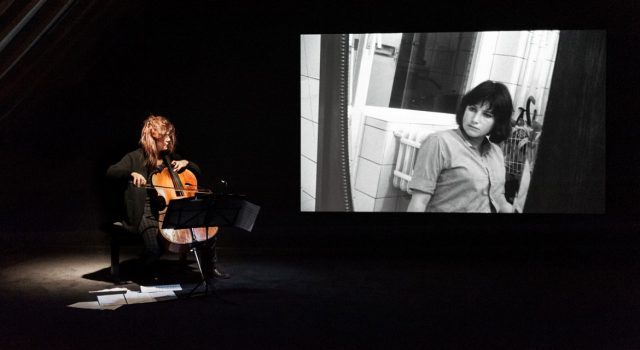
FIAF is paying homage to the life and career of filmmaker Chantal Akerman with five special programs this weekend. Friday night at 7:00, FIAF will screen Akerman’s 2011 film, Almayer’s Folly, which was based on Joseph Conrad’s first novel, followed by a conversation with actor Stanislas Merhar and French journalist Laure Adler. On Saturday at 1:00, Akerman’s 2002 film, From the Other Side, about Mexican immigration in California, will be shown. The tribute continues at 3:15 with the unique documentary Chantal Akerman by Chantal Akerman, made for French-German television in 1997. At 4:30, the panel discussion “Chantal Akerman’s Legacy” brings together cellist Sonia Wieder-Atherton (Akerman’s former partner), screenwriter Leora Barish (Desperately Seeking Susan, Basic Instinct 2), writer-director Henry Bean (Noise, Basic Instinct 2), actor, director, writer, and Akerman student Andrew Bujalski (Computer Chess, Support the Girls), and moderator Adler, with a toast at 6:00. The celebration of Akerman, who died in 2015 at the age of sixty-five, concludes Saturday night at 7:00 with “Chantal?,” a live performance by Wieder-Atherton, with works by Bartók, Janáček, and Prokofiev and originals set to Akerman’s written words and her 1968 short Blow Up My City, followed by a Q&A with Wieder-Atherton, Merhar (La Captive, Almayer’s Folly), and Adler. “I wanted to play along with her, her every move, her silences, her dancing at once burlesque and deadly serious, her anxiety as she is humming little tunes,” Wieder-Atherton explained in a statement.

THE LETTERS OF EFRATIA GITAI: A STAGED READING

efratia gitai

“IN TIMES LIKE THESE”: AMOS AND EFRATIA GITAI
MoMA, Museum of Modern Art
11 West 53rd St. between Fifth & Sixth Aves.
Thursday, March 5, $8-$12, 7:00
Series continues through March 9
212-708-9400
www.moma.org
primolevicenter.org/events

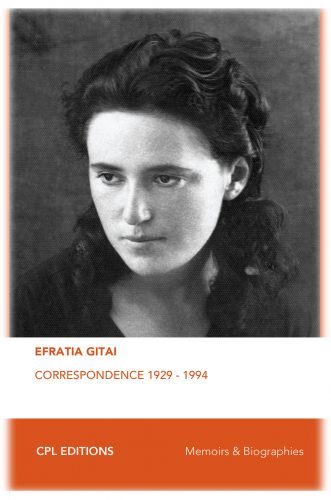
In conjunction with the publication of the English-language edition of Efratia Gitai: Correspondence 1929–1994, MoMA will host “‘In Times Like These’: Amos and Efratia Gitai,” a series of events featuring the author’s son, award-winning Israeli filmmaker Amos Gitai. Born in 1909 in Palestine to Russian Zionist parents, Efratia Gitai wrote letters throughout her life to Amos, her Bauhaus architect husband Munio Weinraub, and friends, sharing her views on the state of the world, from the Bolshevik Revolution and Viennese psychology to Churchill, Hitler, and kibbutzes. On March 5 at 7:00, Amos Gitai will introduce “The Letters of Efratia Gitai: A Staged Reading,” a ninety-minute presentation featuring Cannes Best Actress winner Barbara Sukowa (Berlin Alexanderplatz, Hannah Arendt) and Belgian actor and producer Ronald Guttman (Coastal Disturbances, Mildred Pierce) dramatizing the letters, which were curated by Rivka Gitai, Amos’s wife; they will be accompanied on piano by sixteen-year-old Yali Levy Schwartz. The series continues through March 9 with screenings of four of Amos Gitai’s films, Carmel, Esther, Berlin-Jerusalem, and Kedma, several of which will be introduced by the filmmaker.

PERFORMANCES INSPIRED BY ALFRED JARRY

DJ Spooky (photo courtesy Subliminal Kid Inc.) and Tony Torn and Julie Atlas Muz (photo by Max Basch) will pay tribute to Alfred Jarry at the Morgan on February 28

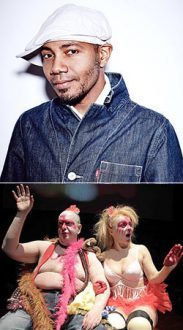
DJ Spooky (top, photo courtesy Subliminal Kid Inc.) and Tony Torn and Julie Atlas Muz (bottom, photo by Max Basch) will pay tribute to Alfred Jarry at the Morgan on February 28

Morgan Library & Museum
225 Madison Ave. at 36th St.
Friday, February 28, $25, 7:00
212-685-0008
www.themorgan.org

In conjunction with its current exhibit “Alfred Jarry: The Carnival of Being,” the Morgan is hosting a special event on February 28, bringing together a wide range of performers celebrating the vast influence of Jarry, the French Symbolist who died in 1907 at the age of thirty-four, having left behind an important legacy of plays (Ubu Roi), novels (Exploits and Opinions of Dr. Faustroll, Pataphysician), essays (The Green Candle), illustrations, and more. The evening includes musical excerpts from actor Tony Torn and Julie Atlas Muz’s Ubu Sings Ubu, a mashup of Ubu Roi and songs by Cleveland art-punk provocateurs Pere Ubu; a screening of British speculative sculptor Lawrence Lek’s two-minute 2010 film The Time Machine, “a translation of surrealist science fiction into physical form” based on Jarry’s 1899 essay “How to Construct a Time Machine”; “Reading Jarry,” a collaboration between DJ Spooky and Belgian actor and producer Ronald Guttman; and live scoring by DJ Spooky to clips from the late Polish graphic designer and cartoonist Jan Lenica’s 1979 film, Ubu et la grande Gidouille. The program begins at 7:00, but ticket holders are invited to check out the exhibition, which continues through May 10, beginning at 6:00.

PREMATURE

Premature

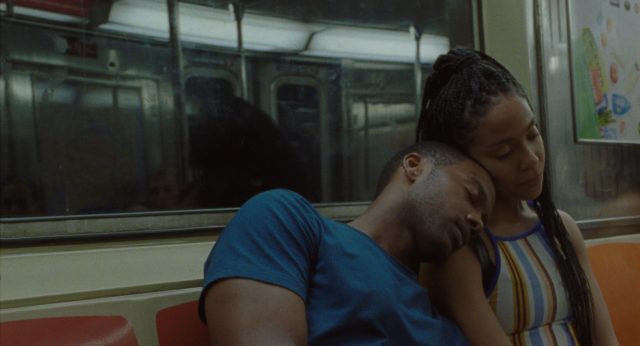
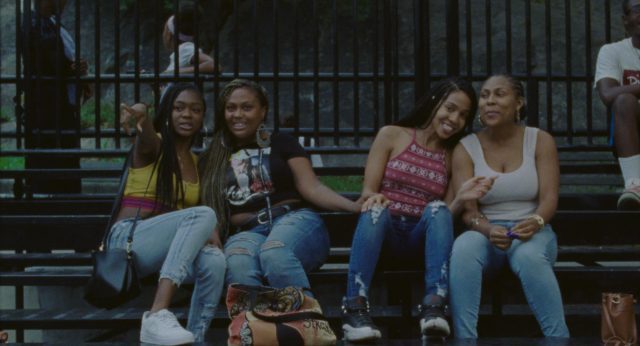
Isaiah (Joshua Boone) and Ayanna (Zora Howard) fall in love in Rashaad Ernesto Green’s Premature

PREMATURE (Rashaad Ernesto Green, 2019)
IFC Center
323 Sixth Ave. at West Third St.
Opens Friday, February 21
212-924-7771
www.ifccenter.com

From the first time their eyes meet, you know that Ayanna (Zora Howard) and Isaiah (Joshua Boone) are destined to fall in love in Rashaad Ernesto Green’s sweetly tender and moving Premature. A Sundance hit that was nominated for two Independent Spirit Awards — the John Cassavetes Award for best film made for less than $500,000 and the Someone to Watch Award for Green, whose previous film was 2011’s well-received Bronx-set Gun Hill RoadPremature is an expansion of Green’s 2008 fifteen-minute HBO Grand Jury Prize-winning short that starred Howard as a Bronx teen facing a crisis. Ten years later, longtime friends Green and Howard, who live in the same Harlem neighborhood, teamed up to write the feature-length version of the story, which opens February 21 at IFC. (Green will participate in Q&As at the 8:20 shows on February 21 and 22, joined the first night by Howard.)

The film was shot on location in Harlem primarily around 145th St., where Ayanna, a poet, is spending her last summer before heading off to college. She hangs around with her close group of friends, Shonté (Imani Lewis), Tenita (Alexis Marie Wint), and Jamila (Tashiana Washington), some of whom already have children and who don’t share the dreams of independence that drive Ayanna. Meanwhile, her mother, Sarita (Michelle Wilson), shows only a mild interest in her daughter, instead taking up with a series of men, searching for her own love. Upon meeting the slightly older Isaiah, a music producer dedicated to the legacy of his late jazz musician father, Ayanna at first plays coy, then heads full steam into a relationship with Isaiah, who appears to be more honest and dependable than most of the other guys in the community, who like talking trash and getting it on with any woman in their path. But when Ayanna suddenly faces an unexpected crisis, she has to decide what she wants for herself, her once bright future now possibly in question.

Premature

Cowriter and star Zora Howard (second from right) plays a young woman with a bright future in Premature

Premature is beautifully photographed in 16mm by Laura Valladao, giving the film a kind of timelessness, both modern and a throwback to an earlier era, attempting to capture a Harlem that is quickly undergoing gentrification, losing some of its identity; in some ways it is reminiscent of Horace Jenkins’s recently discovered and restored 1982 indie gem Cane River, in which a young woman about to go to college falls in love with a slightly older man who wants to be a poet, although Premature is far more accomplished in both storytelling and acting, has a feminist perspective, and purposely steps aside from issues of race, politics, and the legacy of slavery. Instead, Green and Howard, a playwright whose Stew closes at Walkerspace on February 22, focus purely on the love story between two black people who are practically living in a private dream world, as if their relationship exists on its own plane.

Their Harlem is not the one you usually see onscreen; it’s not a spoiler to say that there is no crime or violence in Premature, no side plots of drugs, prostitution, clashes with law enforcement, or other stereotypical sociocultural elements that usually creep into such narratives. Yet the gentle, sensitively told Premature, with a lively score that features Dave Eggar on solo cello and a mix of song styles from diverse musicians, is as much about Harlem and its black community as it is about a man and a woman who might be destined for each other. The film slips as it reaches its conclusion, stretching the limits of credulity as it devolves into a sentimentality and cliché it wisely avoids otherwise, but it also includes an unforgettable scene when the dreadlocked Ayanna takes a pair of scissors to her hair, a defining moment for the character and the movie itself. Green and Howard sought to make a different kind of black love story set in New York City, and that’s exactly what they have done, to all our benefit.

ONCE WERE BROTHERS: ROBBIE ROBERTSON & THE BAND

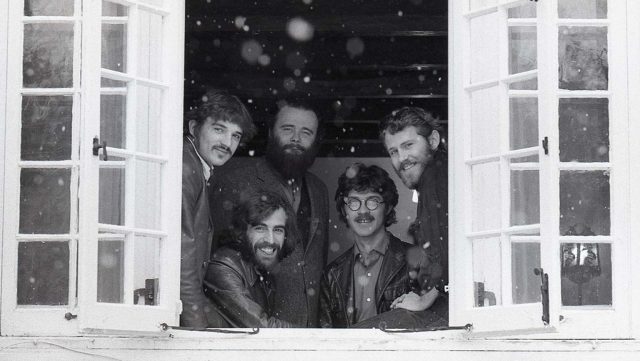
Documentary explores the history and legacy of the Band from a singular point of view

Documentary explores the history and legacy of the Band from a singular point of view

ONCE WERE BROTHERS: ROBBIE ROBERTSON & THE BAND (Daniel Roher, 2019)
IFC Center
323 Sixth Ave. at West Third St.
Opens Friday, February 21
212-924-7771
www.ifccenter.com

The opening night selection of the tenth annual DOC NYC festival, Daniel Roher’s Once Were Brothers: Robbie Robertson & the Band is an intimate, if completely one-sided, look inside one of the greatest, most influential music groups in North American history. The film was inspired by Band cofounder Robbie Robertson’s 2016 memoir, Testimony, offering his take on the Band’s ups and downs, famous battles, and ultimate breakup. “I don’t know of any other group of musicians with a story equivalent to the story of the Band, and it was a beautiful thing. It was so beautiful it went up in flames,” Robertson, sitting in a chair in a vast, empty room, guitars hanging on the wall far behind him, says. The setup puts the focus on Robertson’s individuality, his alone-ness, in what others trumpet as a collection of extraordinary musicians. “There is no band that emphasizes coming together and becoming greater than the sum of their parts, than the Band. Simply their name: The Band. That was it,” fan Bruce Springsteen says. “I was in great awe of their brotherhood. It was the soul of the Band,” notes Eric Clapton, who says he wanted to join the group made up of singer-songwriter and guitarist Robertson, singer and bassist Rick Danko, singer and keyboardist Richard Manuel, singer and drummer Levon Helm, and keyboardist and accordionist Garth Hudson.

When Robertson, who was born in Toronto in 1943, talks about his childhood — his mother was born on the Six Nations of the Grand River Indian reserve, which had a profound effect on him musically, and his biological father was a Jewish gangster, although he was raised by an abusive stepfather — the film is revelatory, with archival photographs and live footage of Robertson’s early bands and his time with Ronnie Hawkins and the Hawks. Robertson shares mesmerizing anecdotes about going electric with Bob Dylan, recording the Basement Tapes in a house called Big Pink, and discussing his craft. “I don’t have much of a process of like I’m thinking about this, and now I’m going to write a song and it’s gonna be about that,” he explains. “A lot of times, the creative process is trying to catch yourself off guard. And you sit down and you’ve got a blank canvas and you don’t know what you’re gonna do and you just see what happens.”

Hawkins speaks glowingly of his protégé Robertson, who wrote his first songs for Hawkins when he was only fifteen. Roher also talks to executive producer Martin Scorsese, Rolling Stone founder Jann Wenner, record producer John Simon, road manager Jonathan Taplin, equipment manager Bill Scheele, photographer John Scheele, Asylum Records creator David Geffen, and musicians Dylan, Taj Mahal, Peter Gabriel, Van Morrison, and Jimmy Vivino, who all rave about Robertson and the Band. “They were totally in love with their music, and they were in love with each other,” photographer Elliott Landy says. “I never saw any jealousy, I never saw any arguments, I never saw them disagree. They were always supporting each other. They were five brothers, very clearly five brothers who loved each other, and I never saw anything but that.”

Of course, Roher cannot talk to Manuel, Danko, and Helm, who are all dead, and Hudson did not participate in the documentary. Robertson and his wife, Dominique, paint a harrowing picture of the Band’s severe strife as drugs and alcohol tear them apart. There’s really no one, aside from a brief point made by guitarist Larry Campbell, to offer an opposing view to Robertson’s tale, which puts him on a golden throne despite some very public disagreements, particularly with Helm over songwriting credit and royalties. Robertson speaks enthusiastically and intelligently throughout the film, but it’s clear from the get-go that these are his carefully constructed, perhaps selective memories about what happened. But Roher doesn’t disguise that conceit; the film is named after one of Robertson’s solo songs, and the second half of the title is, after all, Robbie Robertson & the Band, as if Robertson is separate from the rest.

One of the main surprises is Robertson’s claim that the Last Waltz concert at Winterland in 1976 was not meant as a farewell but just a pause; Roher and Robertson fail to point out that the group continued to tour and record without Robertson. On his sixth solo album, Sinematic, which was released last September, Robertson has a song about the Band, the aforementioned “Once Were Brothers,” that can be heard at the start of the film. “Oh, once were brothers / Brothers no more / We lost a connection / After the war / There’ll be no revival / There’ll be no one cold / Once were brothers / Brothers no more,” Robertson sings. “When that curtain comes down / We’ll let go of the past / Tomorrow’s another day / Some things weren’t meant to last.” It’s a sad testament to a storied legacy, packed with amazing photos and live clips that make it a must-see for fans of the group. Once Were Brothers opens at IFC on February 21, with music photographer Elliott Landy, who appears in the film, participating in a Q&A at the 7:45 show Friday night.