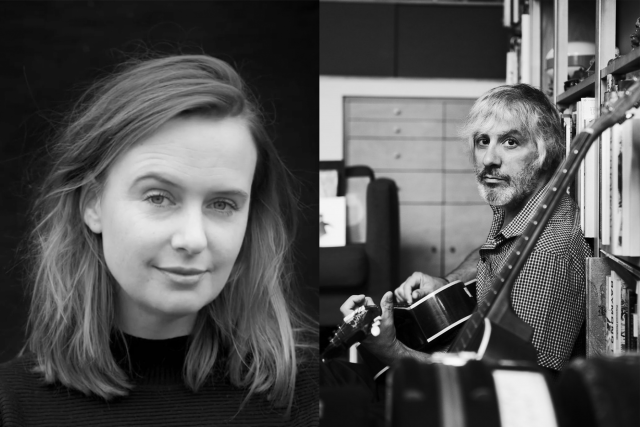
Who:Lonneke Gordijn,Lee Ranaldo What:Online conversation hosted by Pace Gallery Where: Pace Gallery Instagram Live When: Thursday, April 23, free, 5:00 Why: If you haven’t been to Pace’s huge new home in Chelsea yet, it will be a little while longer before you get to check it out. But during the lockdown, Pace is hosting a series of livestreamed performances and conversations. On March 12, musician, composer, visual artist, writer, producer, and Sonic Youth cofounder Lee Ranaldo was scheduled to play a duet with EGO, a shapeshifting sculptural installation by DRIFT, a Dutch studio that was established in 2006 by Ralph Nauta and Lonneke Gordijn to bring people together with nature and technology. That event was cancelled because of the coronavirus, but on April 23 at 5:00, Ranaldo and Gordijn will take part in “Duet: Lonneke Gordijn in Conversation with Lee Ranaldo.” The free talk, focusing on creative collaboration in today’s complex world, will be streamed live on Instagram.
Who: Kiki Abba, Erin Bednarz, Alyza DelPan-Monley, Nick Spencer, Ayo Tushinde, Faye Driscoll What:Live watch party with preshow chat and postshow wrap-up Where:Instagram When: Wednesday, April 22, free, 7:00 Why: When Seattle arts organization On the Boards kicked off its 2019-20 fortieth anniversary season last year with the theme “In the Future’s Wake: Rituals, Ceremonies, and Happenings,” it could never have conceived what the future did in fact hold for them and the rest of the country (and world). On April 22, the company will be hosting a highly relevant watch party on Instagram, streaming the first part of Faye Driscoll’s Thank You for Coming: Attendance, recorded with four cameras at Danspace Project in 2014. Driscoll followed Attendance with Play and Space, an endlessly creative trilogy that ingeniously shatters the boundaries between audience and performer. The work takes on a new meaning in the age of Covid-19, with the relationship between audience and performer changing again — and among the performers themselves, since they can’t be together in the same place, instead relegated to individual boxes on a screen — as we are all hunkered down at home, seeing one another only through our phones and computers and communicating via live chats. This online presentation of Attendance begins with an introduction and preshow chat at 7:00 with the Bounce House, a cohabitating collective that consists of Kiki Abba, Erin Bednarz, Alyza DelPan-Monley, Nick Spencer, and Ayo Tushinde, followed by the performance and a wrap-up at the end. The show will be streamed on DelPan-Monley’s Instagram.
Arnaud Hoedt and Jérôme Piro will take a unique look at French spelling at FIAF online performance
Who:Arnaud Hoedt and Jérôme Piro What: Live performance and Q&A from Belgium (in French) Where:French Institute Alliance Française When: Wednesday, April 22, free with advance RSVP, 5:00 Why: In 1771, Voltaire wrote, “The spelling in French books is ridiculous for the most part. Convention alone allows this incongruity to persist.” Two former Belgian teachers, Arnaud Hoedt — a self-described “linguist dilettante, philographer, pedagogue, true-false comedian, and academician eater” — and Jérôme Piro have taken that quote as inspiration for their two-person presentation La Convivialité: La Faute de l’Orthographe (roughly, Friendliness: The Spelling Error), an abridged version of which they will perform on April 22 at 5:00 via FIAF’s Facebook page and Zoom, followed by a Q&A. You need to register in advance here to receive the Zoom password and be able to ask questions. You can get a preview of their dissection of the French language by watching their May 2019 TEDx Talk and this preview, both of which are in French without English translation, as will be the FIAF program. And you thought American English spelling had problems.
Tovah Feldshuh and Ed Asner will talk about anti-Semitism and the Holocaust as part of Yom HaShoah commemoration
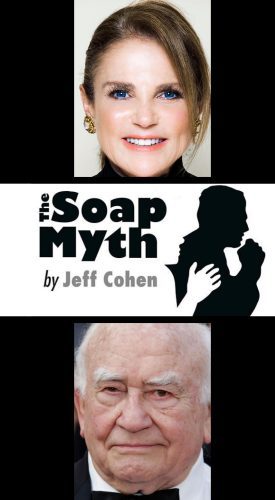
Who: Ed Asner, Tovah Feldshuh, Jeff Cohen, Rabbi Joshua M. Davidson, Arnold Mittelman, Michael Berenbaum, Ira Forman, Richard Salomon What: Panel discussion about The Soap Myth in honor of Yom HaShoah (Holocaust Remembrance Day) Where: Temple Emanuel Streicker Center website When: Monday, April 20, free with advance registration, 6:30 Why: In commemoration of Yom HaShoah (Holocaust Remembrance Day), the Temple Emanu-El Streicker Center, the National Jewish Theater Foundation, and the Illinois Holocaust Museum & Education Center have teamed up to present a live online panel discussion exploring anti-Semitism, the Holocaust, and the historical record as brought up in Jeff Cohen’s poignant play The Soap Myth, which looks at the claim that the Nazis made soap from the bodies of dead Jews. I saw a full staging of the work in 2012, calling it “an emotionally moving production [that] offers an intriguing look into the speculative nature of history and one man’s furious dedication to setting the record straight.” Ed Asner and Tovah Feldshuh have been touring with the play for several years, performing staged readings directed by Pamela Berlin, one of which was taped for PBS, where it can be seen for free as part of WNET’s All Arts.
You’ll want to watch it before tuning in to the live event on April 20 at 6:30, when Asner, Feldshuh, and Cohen will be joined by Holocaust scholar Dr. Michael Berenbaum, former special envoy for monitoring and combating anti-Semitism Ira N. Forman, and moderator Rick Salomon of the Illinois Holocaust Museum. The program will be introduced by Rabbi Joshua M. Davidson of Temple Emanu-El and Arnold Mittelman of the National Jewish Theater, who directed the production I saw. Advance registration is required here.
Who: Musicians, actors, television hosts, and other celebrities What:Global Citizen benefit concert Where:Global Citizen and many streaming sites When: Saturday, April 18, donation suggested, 2:00 pm – 8:00 am Why: Dozens of musicians will be appearing tonight in “One World: Together at Home Special to Celebrate COVID-19 Workers,” an international concert to benefit health-care workers on the front lines of the Covid-19 crisis. Proceeds from the presentation go to the WHO’s Covid-19 Solidarity Response Fund. The show is sponsored by Global Citizen, the nonprofit whose mission statement declares: “Around the world, countless people face daily inequalities — from the LGBTI community, to children with disabilities. We can build a better world, but only if we each raise our voice and take action.” Among those making appearances from their homes during the overnight marathon, which is curated by Lady Gaga (who helped raise $35 million in one week for the charity), are, in one two-hour block, Adam Lambert, Jennifer Hudson, Lang Lang, Milky Chance, Niall Horan, Picture This, Rita Ora, Sofi Tukker, and the Killers; Annie Lennox, Ben Platt, Common, Ellie Goulding, Jack Johnson, Kesha, Michael Bublé, and Sheryl Crow in another two-hour block; and Angèle, Billy Ray Cyrus, Christine and the Queens, Hozier, John Legend, Lady Antebellum, Leslie Odom Jr., Luis Fonsi, and Sebastián Yatra in a third segment.
Also on the bill are the Rolling Stones, Alicia Keys, Amy Poehler, Andrea Bocelli, Awkwafina, Billie Eilish, Billie Joe Armstrong, Celine Dion, Chris Martin, Connie Britton, Don Cheadle, Eddie Vedder, Ellen DeGeneres, Elton John, Heidi Klum, Jack Black, Keith Urban, Kerry Washington, Lily Tomlin, Lupita Nyong’o, Oprah Winfrey, Paul McCartney, Pharrel Williams, Sam Smith, Samuel L. Jackson, Sarah Jessica Parker, Shawn Mendes, Stevie Wonder, Taylor Swift, and Usher, with hosts Stephen Colbert, Jimmy Fallon, and Jimmy Kimmel. Give generously if you can — and stay safe and healthy.
Beyond the Visible profiles the life and work of master abstractionist Hilma af Klint
BEYOND THE VISIBLE: HILMA AF KLINT (Halina Dyrschka, 2019)
Opens virtually April 17, $12 (good for one-week pass)
Live Q&A on April 18 at 3:00 kinonow.com zeitgeistfilms.com
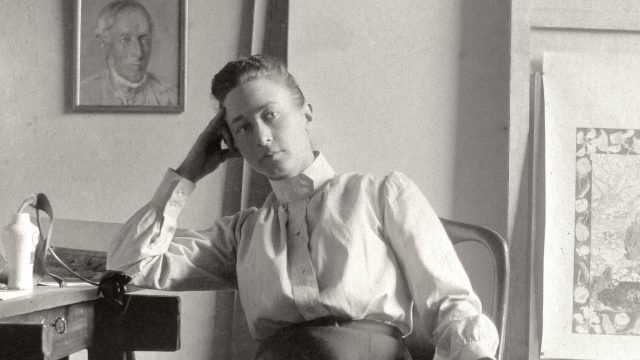
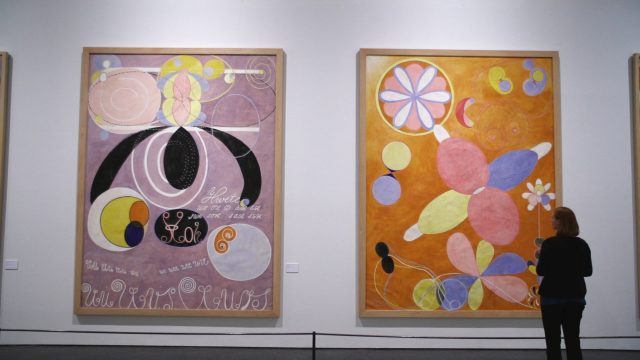
In 2013, a new hero burst onto the art scene, despite being dead for nearly seventy years. First came “Hilma af Klint — A Pioneer of Abstraction,” by all accounts an eye-opening show that toured Europe, followed five years later by the smash Guggenheim exhibit “Hilma af Klint: Paintings for the Future,” which propelled the extraordinary work of the Swedish abstractionist into the mainstream. I fondly remember making my way through the show, mouth agape at the many wonders I was seeing. German director Halina Dyrschka continues the celebration of this previously little-known painter in the documentary Beyond the Visible — Hilma af Klint, which will be available for streaming April 17 through Kino Marquee in association with BAM in Brooklyn and Laemmle Monica Film Center in Los Angeles. Dyrschka and Guggenheim assistant curator David Max Horowitz will participate in a Zoom Q&A with BAM on April 18 at 3:00.
In her debut full-length film, Dyrschka digs deep into who af Klint was, what inspired her unique achievements, and why she had been overlooked until the 2010s. “Now we have a real scandal,” German art critic and af Klint biographer Julia Voss says. “Suddenly, more than fifty years after history was written, completely out of the blue, at least for the general public, we discover this woman who painted abstract works before Kandinsky, creating this huge oeuvre, fully independently, and by a kind of miracle it’s all stayed together. It’s like finding a time capsule in Sweden. And now we have to ask: How should we integrate it?”
Born in Stockholm in 1862, af Klint incorporated physics, mathematics, the natural world, and spiritualism into her paintings, abstract canvases that predated Wassily Kandinsky and Piet Mondrian, who both, like af Klint, died in 1944. She didn’t exhibit any of her work until 1906, and after that only sparingly. Upon her death, her estate was not permitted to show anything for twenty years; her first posthumous exhibition was held in LA in 1986.
“We are not here forever,” Dyrschka narrates early in the film. “So it is not at all astonishing that someone once wondered about what it means to be in the world and how everything fits together — and came up with a huge answer. The strange thing is I only found out about it more than one hundred years later. Art history has to be rewritten.” Among the others lobbying for af Klint’s ascension into the art canon are artists Josiah McEhleny and Monika von Rosen, novelist Anna Laestadius Larsson, art historians Ernst Peter Fischer and Anna Maria Bernitz, Eva-Lena Bengtsson of the Royal Academy of Fine Arts in Stockholm, collector Valeria Napoleone, and gallerist Ceri Hand, offering different perspectives of the value and legacy of her her work. Lending more personal insight are Ulla af Klint, the widow of Hilma’s nephew Erik (from a 2001 interview); Johan af Klint, Ulla’s son, who ran the Hilma af Klint Foundation, which oversees the artist’s 1,500 paintings and 26,000 pages in notebooks; and Marie Cassel and Brigitta Giertta, descendants of two of Hilma’s closest friends. Together they paint a compelling portrait of the iconoclastic af Klint, who filled her work with cutting-edge and fringe philosophy and science. But you don’t have to agree with her offbeat world view to fall in love with her gorgeous canvases, many of which are displayed in the film.
The extraordinary canvases of Swedish artist Hilma af Klint are on view in Beyond the Visible
Curator Iris Müller-Westermann explains, “Never in her lifetime did she put any of her abstract work on show. Hilma af Klint’s project was something much grander than what we today call ‘art.’ It was all about seeing the world we live in in a larger context, to understand who we really are in a cosmic perspective.”
Cinematographers Alicja Pahl and Luana Knipfer often let the camera linger on peaceful shots of water, flowers, the sky, and other natural elements that morph into Klint’s paintings and reenactments of af Klint working on a large-scale painting on the floor of her studio. Petra van der Voort reads excerpts from af Klint’s writings in voice-over, narrating from books that we can follow along with, zooming in on her penmanship, while Damian Scholl supplies a wide-ranging, eclectic score.
“She was well educated, she had a mind of her own, and she painted like nobody else,” Johan af Klint says. McElheny points out, “In order to tell the history of abstraction now, you have to rewrite it.” Beyond the Visible confirms that it’s time for a new history.
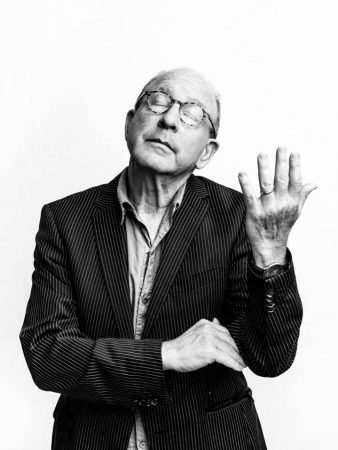
Jerry Saltz will discuss his new book and the state of art during the age of corona in live online conversation (photo courtesy Jerry Saltz)
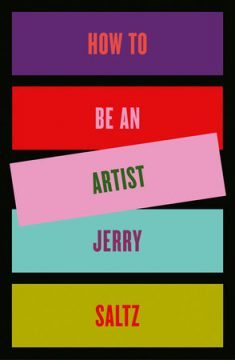
Who:Jerry Saltz, Barbara Pollack, Anne Verhallen What: Book and art talk with Jerry Saltz Where: Livestream (email info@artatatimelikethis for password) When: Friday, April 17, free, 4:00 Why: Rock star art critic Jerry Saltz’s latest book has come along at just the right moment. How to Be an Artist (Riverhead Books, March 2020, $22) guides you through the creation of art — by anyone, regardless of talent and skill — espousing a dedicated work ethic, something that many of us are paradoxically demonstrating more than ever now that we’re stuck at home. “I have tried every way in the world to stop work-block or fear of working, of failure. There is only one method that works: work. And keep working,” Saltz, the Pulitzer Prize-winning senior art critic for New York magazine, writes in the book. “Every artist and writer I know claims to work in their sleep. I do all the time. Jasper Johns famously said, ‘One night I dreamed that I painted a large American flag, and the next morning I got up and I went out and bought the materials to begin it.’ How many times have you been given a whole career in your dreams and not heeded it? It doesn’t matter how scared you are; everyone is scared. Work. Work is the only thing that takes the curse of fear away.”
On March 17, Barbara Pollack and Anne Verhallen launched Art at a Time Like This, a website that features the work of a different artist every weekday, focusing on the question “How can you think of art at a time like this?” Among the participating artists are Ai Weiwei, Mickalene Thomas, Jacolby Satterwhite, Lynn Hershman Leeson, Dread Scott & Jenny Pollak, Marilyn Minter, and Dan Perjovschi, presenting new and older paintings, photographs, and videos, all of which illuminate in some way the crisis we are facing together, the onslaught of Covid-19, which has shut down galleries and museums around the world.
A social media icon, Saltz will join Pollack and Verhallen on April 17 at 4:00 for a live online conversation about the state of art on a planet in lockdown. “Jerry Saltz is a natural for livestream because he is the completely accessible art critic, dedicated to reaching all kinds of art lovers, from the aficionado to the art-curious,” Pollack told twi-ny. “His new book puts forth the insane idea that anyone can be an artist, or at least artistic. Of course, people love him for this!”
As someone who has been writing about art for nearly twenty years, I’ve been forced to reconsider how we all experience art during this pandemic, looking at it onscreen, right next to Facebook, Google, and my day-job site. Obviously it’s not the same, and I have to admit I at first had trouble adjusting, but I’m getting more used to it every day. But can you critique a work of art you’ve seen only online, not in person? When viewed in real life, you can sense a painting’s texture, its physical presence; a photograph can envelop you and shake your surroundings loose; and videos can beam out from unique sculptural installations. But when is the next time any of us is likely to step foot in a gallery or museum in the five boroughs (or elsewhere)? What will things be like once they do reopen? Will crowds descend on MoMA and the Met like they did before corona?
In his October review of the new MoMA for New York magazine, a piece entitled, “What Does the New MoMA Mean for Modernism? And What Was Modernism Anyway?,” Saltz wrote, “Here’s how art has already moved on. Modernism is now just part of art history to artists, and not even the only or best part.” How will art move on after Covid-19? What will become part of art history? I can’t wait to hear what Saltz has to say about what will become of art’s future.