this week in lectures, signings, panel discussions, workshops, and Q&As

AVIVA (with live Q&As)

Aviva

Real-life dancers Bobbi Jene Smith and Zina Zinchenko star in Boaz Yakin’s Aviva

Who: Boaz Yakin, Bobbi Jene Smith, Zina Zinchenko, Or Schraiber, Tyler Phillips
What: Virtual theatrical release of Aviva (Boaz Yakin, 2019), with live Q&As
Where: Angelika Film Center, $11.99 to rent film; Q&As free
When: Streaming begins June 12; Q&A with director Boaz Yakin and cast members and choreographers Bobbi Jene Smith and Or Schraiber, moderated by Robert Rosenberg, June 13 & 20, free with RSVP, 7:00; with Yakin and cast members Zina Zinchenko and Tyler Phillips, moderated by Rosenberg, June 14, free with RSVP, 7:00; with filmmakers June 18, Marlene Meyerson JCC Manhattan, free with RSVP, 8:30
Why: “There’s nothing more depressing or lonely than being alone in New York City,” a character says in voice-over early on in Boaz Yakin’s intensely intimate and sexual Aviva, an SXSW2020 selection that is being released virtually June 12 through the Angelika online here in New York. A few moments later, the character adds, “And so we created an imaginary space together, a space outside of time and space, shared only by us.” Aviva is a tantalizing, introspective film seemingly made for the time of coronavirus, with so many people still sheltering in place, facing isolation and loneliness, seeking connections via new spaces such as Zoom.

Yakin, a New York-based Israeli American writer, director, and producer who previously made Fresh, Remember the Titans, and Max, collaborated extensively with dancer-choreographer Bobbi Jene Smith on the film, which uses an array of beautiful bodies — nearly every actor is introduced in the nude — to express ideas of personal identity, traditional gender roles, love, friendship, boundaries, and creativity. Zina Zinchenko plays Aviva, a free-spirited Jewish dancer in Paris who is set up with Eden (Tyler Phillips), a relatively uncommunicative and ultraserious New Yorker. In Hebrew, Aviva means springlike and innocent, while Eden is named after the Garden of Eden, particularly the promise that turns into a fall from grace.

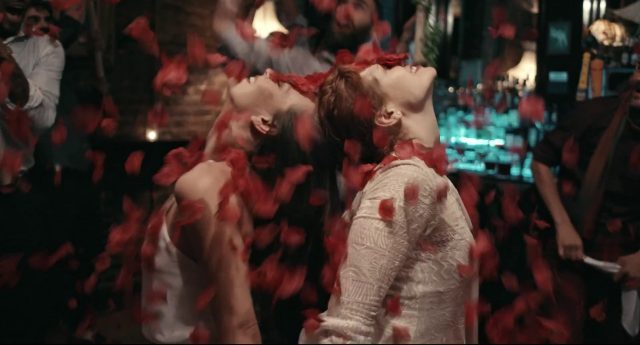
Yakin brilliantly explores the masculine-feminine contradictions in us all by also having Smith portray Eden as a woman, and her real-life husband, Or Schraiber, play Aviva as a man. The other characters recognize the two Edens and two Avivas, speaking with them as if there is nothing odd about the situation. In addition, the four speak to each other, arguing and debating the state of their desires, which becomes especially intriguing, and confusing, in the numerous graphic sexual scenes that sometimes involve multiple men and women. Dances are intricately placed throughout the film as part of the drama; the actors don’t simply break out into song a la Hollywood musicals so much as the movement usually develops more organically as characters get close, touch hands, and then come together in gorgeously choreographed solos and pas de deux, as well as a fun, freewheeling scene in a club. Yakin regularly breaks the fourth wall as characters speak directly at the viewer and, occasionally, the boom mic and the cameramen enter shots; there is no reason for him to hide that this is a movie, and that it is about dance, among other things.

Smith and Aviva co-choreographer Schraiber are both veterans of Ohad Naharin’s storied Israeli troupe Batsheva; the former teaches Gaga, Naharin’s unique physical language, and her parents are mimes who teach movement for actors at Juilliard; the real lives of Smith and Schraiber were detailed in the extraordinary 2017 documentary Bobbi Jene. Smith, Schraiber, and Zinchenko have also appeared together in such Batsheva pieces as The Last Work, while Zinchenko and Phillips are both veterans of Sleep No More. The four protagonists’ familiarity with one another adds another level of intimacy; we sometimes feel like we’re intruding on real life, which contrasts effectively with Bobbi Gene, which is framed like a fiction film.

New Yorkers will get a cathartic kick when the story travels to Coney Island and Central Park, recognizing such familiar sites as the Wonder Wheel and the Hans Christian Andersen statue, popular spots come spring and summer. It’s also no coincidence that children are front and center in those scenes. For those of us missing the connections that dance, sex, and going to the movies bring us, Aviva satisfies many of those needs. There will be free, live Q&As with Yakin and members of the cast on June 13, 14, 18, and 20; the film can be rented online for $11.99.
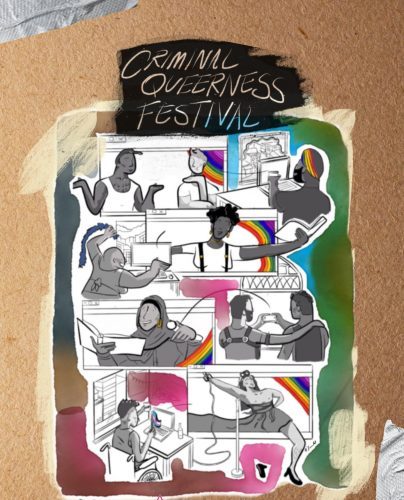

CRIMINAL QUEERNESS FESTIVAL: GLOBAL STORIES FOR GLOBAL IMPACT

criminal queerness festival

Who: Omer Abbas Salem, Noor Hamdi, Connor Bryant, Rula Gardenier, Bahar Beihaghi, Martin Zebari, Sharifa Yasmin, Adam Ashraf Elsayigh, Amahl Raphael Khouri, Hashem Hashem, Sivan Battat, Christopher Unpezverde Núñez, Pooya Mohseni, Samy Nour Younes, Louis Sallan, Roger Q. Mason, Ianne Fields Stewart, Migguel Anggelo, Marlene Ramirez-Cancio, Adam Elsayigh, Adam Odsess-Rubin, J. Julian Christopher, Shayok Misha Chowdhury, Mashuq Mushtaq Deen
What: Second annual Criminal Queerness Festival
Where: Dixon Place Zoom, Facebook, YouTube
When: June 13-29, free (some events require advance RSVP)
Why: National Queer Theater and Dixon Place’s second annual Criminal Queerness Festival consists of two and a half weeks of live performances, discussions, screenings, master classes, and workshops that bring together queer playwrights from around the world to fight censorship, inspire activism, and help shape a quickly changing culture. This year’s festival focuses on presentations involving four artists whose work had to be canceled or postponed at Dixon Place because of the pandemic: Chicago-based actor Omer Abbas Salem’s debut play, Mosque4Mosque; transgender Jordanian documentary playwright Amahl Raphael Khouri’s She He Me; Venezuelan-born, Brooklyn-based Migguel Anggelo’s Maid in America; and 2019 Lambda Literary Award winner Mashuq Mushtaq Deen’s The Shaking Earth. Among the issues being investigated in the plays and talks are “The Syrian Civil War and LGBTQ Communities,” “Queer Transnational Activism in the Middle East,” “Queering Trauma into Fabulousness,” and “What Does It Mean to Be Criminally Queer?” Online admission to everything is free, but donations are accepted and some events require advance registration. Below is the full schedule.

Saturday, June 13
“Creative Conversations: The Syrian Civil War and LGBTQ Communities,” with Omer Abbas Salem and Noor Hamdi, moderated by festival dramaturg Adam Ashraf Elsayigh, 2:00

Tuesday, June 16
“Creative Conversations: Queer Transnational Activism in the Middle East,” discussion surrounding Amahl Raphael Khouri’s documentary play She He Me, with Khouri and Hashem Hashem, moderated by director Sivan Battat, noon

Thursday, June 18
Master Class with Amahl Raphael Khouri on giving testimony, 2:00

Wednesday, June 17
“Queer and Disabled: Examining the imagination,” with Christopher Unpezverde Núñez, 2:00

Friday, June 19
Reading of Mosque4Mosque by Omer Abbas Salem, with Noor Hamdi, Connor Bryant, Rula Gardenier, Bahar Beihaghi, and Martin Zebari, followed by a talkback moderated by director Sharifa Yasmin, 8:00

Saturday, June 20
LGBTQ Digital Pride and Migration 2020 Festival: Livestream performance of excerpts from Amahl Raphael Khouri’s She He Me, 1:00

Sunday, June 21
LGBTQ Digital Pride and Migration 2020 Festival: Live performance of Amahl Raphael Khouri’s She He Me, with Pooya Mohseni, Samy Nour Younes, and Louis Sallan, followed by a talkback with Khouri, moderated by director Sivan Battat, 4:00

Master Class with playwright Omer Abbas Salem, 7:00

Monday, June 22
“The House of Joy: A Tent Revival for the Legendary Quarantined Children,” exercises and open discussion with Roger Q. Mason and Ianne Fields Stewart, 8:00

Tuesday, June 23
Panel discussion on LGBTQ human rights in Latin America, with multidisciplinary artist Migguel Anggelo, moderated by Marlene Ramirez-Cancio of the Hemispheric Institute, 7:00

Thursday, June 25
“Queering Trauma into Fabulousness”: Master Class with J. Julian Christopher, 7:00

Friday, June 26
Live screening of vichitra: an anthology of queer dreams, directed by Shayok Misha Chowdhury, with video by Kameron Neal and sound design by Jeremy Bloom, followed by discussion with Chowdhury, 7:00

Sunday, June 28
Maid in America: original semiautobiographical video by Migguel Anggelo, with screenplay by J. Julian Christoper, musical direction by Jaime Lozano, and directed and developed by Srđa Vasiljević, 7:00

Monday, June 29
Master Class with Mashuq Mushtaq Deen, 3:00

THEATER OF WAR: THE KING LEAR PROJECT

theater of war

Who: Bryan Doerries, Frankie Faison, Amy Ryan, Kathryn Erbe, Marjolaine Goldsmith, David Zayas, Jumaane Williams
What: Live Zoom theatrical production and discussion from Theater of War
Where: Zoom link sent with advance registration
When: Thursday, June 11, free with RSVP, 7:00
Why: One of the best Zoom presentations of the pandemic has been Theater of War’s The Oedipus Project, in which Frances McDormand, John Turturro, Oscar Isaac, Jeffrey Wright, Frankie Faison, David Strathairn, Glenn Davis, Marjolaine Goldsmith, and Jumaane Williams gave a live, powerful dramatic reading of scenes from Sophocles’s fifth-century BCE classic, Oedipus the King, from wherever they were sheltering in place. (Most of the actors chose relatively spare, blank backgrounds while Turturro opted for an anachronistic study.) The event was introduced by Theater of War cofounder and adapter/director Bryan Doerries, who also led a postshow discussion relating the play to the Covid-19 crisis.

The organization now turns its attention to the themes of caregiving and death with The King Lear Project, streaming live on Zoom on June 11 at 7:00. In the play, Lear asks, “Doth any here know me? This is not Lear: Doth Lear walk thus? Speak thus? Where are his eyes? Either his notion weakens, or his discernings are lethargied — Ha! Waking? ’tis not so. Who is it that can tell me who I am?” To which the Fool responds, “Lear’s shadow.” The reading will feature another all-star lineup performing from home, consisting of Amy Ryan, David Zayas, Kathryn Erbe, Faison, Goldsmith, and Public Advocate Williams; it will be followed by a talk facilitated by Doerries with four community panelists on the subjects of aging, dementia, elder care, and family dynamics, examining the play — which Shakespeare wrote, perhaps while self-isolating, during the 1606 plague, when theaters had shut down — in context with the current pandemic.

VIRTUAL ANNUAL SAKE LECTURE & TASTING: SAKE ETIQUETTE

sake

Sake is on the home menu for Japan Society tasting moving online

Who: Dr. Joshua Walker, Timothy Sullivan
What: Annual Sake Lecture & Tasting
Where: Japan Society YouTube
When: Thursday, June 11, free with advance RSVP, 6:30
Why: Japan Society’s twenty-third annual Sake Lecture & Tasting will be a little different this year, taking place online instead of at the cultural institution’s lovely home on East Forty-Seventh St. The hour-long event will be introduced by Japan Society CEO and president Dr. Joshua Walker; the guest of honor is UrbanSake.com founder and Sake Revolution podcast host Timothy Sullivan, who will be discussing “Sake Etiquette,” from how to pour properly to how to prepare warm sake to how to deal with overflow. You’ll have to supply your own sake; the list of Sullivan’s recommendations can be found here, consisting of thirty sakes from sixteen companies, including Junmai Ginjo “Taisetsu,” Nanbu Bijin Tokubetsu Junmaishu, Dewatsuru Kimoto Junmai-shu, Dewatsuru Sakura Emaki Sparkling, Hoyo “Kura no Hana” Junmai Daiginjo “Fair Maiden,” Okunomatsu Daiginjo Shizukusake 18th Ihei, and Okunomatsu Tokubestu Junmai. Drinking at home has been a popular way to pass the time during the pandemic, so enjoy!

HERE@HOME: DISPOSABLE MEN WITH LIVE Q&A

disposable

Who: James Scruggs, Kristin Marting
What: Screening of 2005 production and live Q&A
Where: HERE Arts Center Facebook page
When: Wednesday, June 10, free (donations accepted), 6:30
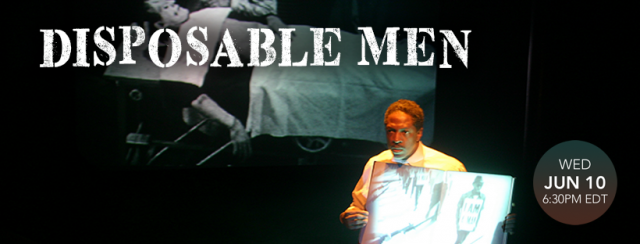
Why: In February 2005, James Scruggs’s Disposable Men debuted at HERE Arts Center, a one-man multimedia show that compared Hollywood monsters to African American men and examined the history of medical apartheid and the killing of black men with the support of the government, in a country dominated by white supremacy and mired in systemic racism. With the pandemic lockdown still in place and George Floyd protests continuing, HERE will be streaming the perhaps never-more-relevant Disposable Men June 10 at 6:30 on Facebook Live, followed by a discussion and Q&A with HARP artist Scruggs and HERE founding artistic director Kristin Marting, who was the presenter and producer of the original production. The show was created and written by Scruggs (Deepest Man, MELT!), who also did the video design; the lighting is by Chris Brown, sound by Jeremy Wilson, costumes by Patrice Busnel, video technical direction by Hal Eager, and score by Philip Pares.

VIRTUAL MUSEUM MILE FESTIVAL

virtual museum mile

Who: Eight arts institutions along upper Fifth Ave..
What: Virtual Museum Mile Festival
Where: Individual websites, Twitter, Instagram, Facebook
When: Tuesday, June 9, free 9:00 am – 9:00 pm
Why: For forty-one years, New Yorkers have crowded onto Fifth Ave. between 82nd and 105th Sts. for the annual Museum Mile Festival, in which eight popular arts institutions open their doors for free, providing access to exhibitions and hosting live performances, workshops, panel discussions, and more between 6:00 and 9:00. With the pandemic lockdown still in place for museums, the festival goes virtual for 2020, taking place all day instead of just three hours, offering exhibition tours, curator and artist talks, family-friendly activities, and other special programs that people can experience from the comfort of their home. The live and prerecorded events are scheduled for 9:00 am to 9:00 pm on Twitter, Instagram, and Facebook; follow #VirtualMuseumMile for specific info. Below are some of the highlights.

The Africa Center
“African/American: Making the Nation’s Table,” prerecorded videos with Ezra Wube, livestreamed conversation at 5:00 between culinary historian and exhibition’s curator Jessica B. Harris and exhibit advisor and Teranga executive chef and co-owner Pierre Thiam

Museum of the City of New York
“Curators from the Couch: Who We Are,” with chief curator and deputy director Sarah Henry, information designer Giorgia Lupi, and artist and computer scientist Brian Foo; MCNY Live, with cartoonist Roz Chast and novelist and Hugo Award winner N. K. Jemisin

El Museo del Barrio
Prerecorded interviews with artists, including iliana emilia garcia and Hiram Maristany; Collection-ary, with curators Rodrigo Moura and Susanna Temkin and artists Elia Alba and Scherezade García, 6:00; “¡Muevete!” with Nina Sky, free with advance RSVP, 8:00

The Jewish Museum
At-home art projects for families; audio tours with Isaac Mizrahi, Kehinde Wiley, Alex and Maira Kalman, Ross Bleckner and Deborah Kass, and others; “Movies That Matter: Teens Confront Segregation in America,” with artist and filmmaker Gillian Laub; interview with artist Rachel Feinstein about the exhibition “Rachel Feinstein: Maiden, Mother, Crone”; discussion with artists Rachel Feinstein and Lisa Yuskavage, filmmaker Tamara Jenkins, and curator Kelly Taxter; performance for families from the Paper Bag Players at Home

Cooper Hewitt, Smithsonian Design Museum
Virtual tour of the exhibition “Contemporary Muslim Fashions”; video art-making lessons, including potato stamp pattern making inspired by Eva Zeisel; design talk “Exploring A.I.: Data Portraits,” with curator Ellen Lupton and artists R. Luke DuBois, Jessica Helfand, and Zachary Lieberman

Solomon R. Guggenheim Museum
Virtual Stroller tour/talk for young children, 3:00; Guggenheim at Large, with curators talking about the collection; “Sketch with Jeff,” a hands-on activity for families with teaching artist Jeff Hopkins; a self-directed audio/visual experience via the Guggenheim Digital Audio Guide

Neue Galerie New York
Virtual tour of “Madame d’Or” with exhibition curator Dr. Monika Faber; a hands-on arts and crafts activity “Making Hats: Use What You Have,” with Deborah Rapoport; “Baking Linzer Cookies: A Recipe from Café Sabarsky”

The Metropolitan Museum of Art – Twitter, Instagram, Facebook, YouTube
Virtual tours of “Sahel: Art and Empires on the Shores of the Sahara” and “Gerhard Richter: Painting After All”; prerecorded interview with artist Wangechi Mutu; design your own puppet and banjo using recycled materials; flower crown making; streaming of 2019 MetLiveArts dance performance by Silas Farley filmed in museum galleries

UNORTHODOX Q&A WITH ANNA WINGER

Unorthodox

Unorthodox cocreator and writer Anna Winger will discuss the show at JCC Q&A

Who: Anna Winger
What: Live Q&A with cocreator of Unorthodox series
Where: Marlene Meyerson JCC Manhattan
When: Monday, June 8, free with RSVP, noon
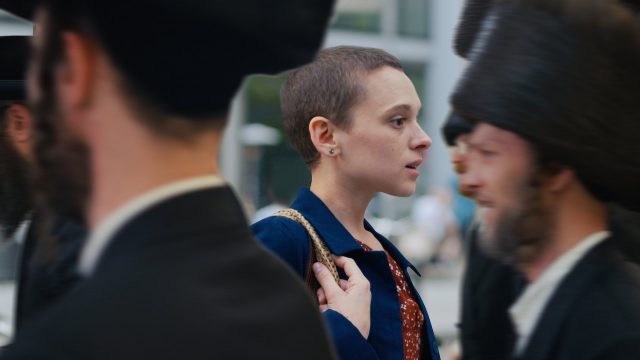
Why: One of the runaway television hits of the pandemic has been Netflix’s Unorthodox, about a young married Orthodox woman in Brooklyn who runs away to Berlin to escape the suffocating life she is trapped in. The four-part series has led to the breakout success of Israeli actress Shira Haas, who has a smaller but critically significant role in the earlier Israeli series Shtisel, which also involves Orthodox marriage. Unorthodox was inspired by Deborah Feldman’s memoir Unorthodox: The Scandalous Rejection of My Hasidic Roots; while the Brooklyn segments of the show are based on the book, the Berlin sections are fictional. One of the writers and creators of the show, Anna Winger, who also wrote and created Deutschland 83 and Deutschland 86, was scheduled to do a live Q&A on May 28 as part of the Marlene Meyerson JCC Manhattan’s Paul Feig z”l Tikkun Leil Shavuot, but the event was postponed because of the protests over the police killing of George Floyd. The free discussion is now taking place June 8 at noon. Judging by Winger’s Twitter feed, she will have a lot to say not only about Unorthodox but about what is happening in America today.