this week in lectures, signings, panel discussions, workshops, and Q&As

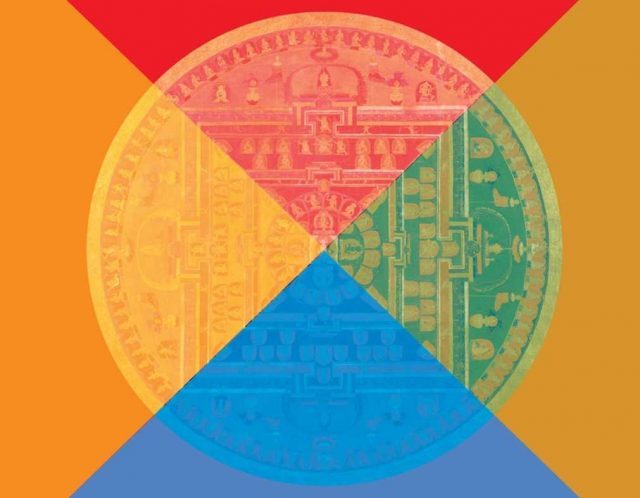
INSIDE THE MANDALA: A VIRTUAL GALA

Who: Mingyur Rinpoche, Ponlop Rinpoche, Laurie Anderson, Sivamani, Preeti Vasudevan, Deepak Chopra, Tracy Dennis-Tiwary, Stuart Firestein, Daniel Goleman, Ana Lucia Valencia, Erin Reid
What: Rubin Museum virtual gala
Where: Rubin Museum online
When: Wednesday, October 21, free with RSVP (donations accepted, $25-$5,000), 6:00
Why: The Rubin Museum couldn’t have had any idea how prescient its 2020 theme would be when it first came up with it: “Impermanence: A Yearlong Exploration.” It’s been quite a year, from protests over police brutality to a global pandemic, from a bitter presidential race that has torn apart the country to a fierce economic crisis. The Rubin will offer a look back as well as a way forward at its annual gala, taking place online on October 21 at 6:00. “Inside the Mandala” promises to guide audience members into the symbolic circular spiritual object, with appearances by meditation teachers Mingyur Rinpoche and Ponlop Rinpoche, visual artist and musician Laurie Anderson, musician Drums Sivamani, choreographer Preeti Vasudevan, Rubin teaching artist Erin Reid, neuroscience researcher Ana Lucia Valencia, author and alternative medicine practitioner Deepak Chopra, emotion scientist Dr. Tracy Dennis-Tiwary and her family, biological scientist Stuart Firestein, and psychologist and science journalist Dr. Daniel Goleman.

Admission is free, but donations will be accepted at any amount. As deputy executive director and chief programmatic officer Tim McHenry noted in an email blast, “Wednesday night we take you on a journey. Inside the mandala. We are revealing for the first time our plans to convert a whole floor of the museum into an experiential (and experimental) zone for social and emotional learning using the tantric precepts of the Vairocana mandala as our model. Yes, we are…” See you there, in mind and spirit if not body.

ARTISTS ON ARTWORKS — DREAD SCOTT ON JACOB LAWRENCE

Jacob Lawrence, We have no property! We have no wives! No children! We have no city! No country! — petition of many slaves, 1773, 1955 (Collection of Harvey and Harvey-Ann Ross. © 2019 The Jacob and Gwendolyn Knight Lawrence Foundation, Seattle / Artists Rights Society [ARS], New York)

Who: Dread Scott, Sylvia Yount
What: Artist talk
Where: Met Museum Facebook or YouTube
When: Friday, October 23, free, 6:30 (exhibition continues through November 1)
Why: In his artist statement, Dread Scott explains, “I make revolutionary art to propel history forward. I look towards an era without exploitation or oppression. I don’t accept the political structures, economic foundation, social relations, and governing ideas of America. . . . I work in a range of media: performance, installation, video, photography, printmaking, and painting. Two threads that connect them are: an engagement with significant social questions and a desire to push formal and conceptual boundaries as part of contributing to artistic development.” On October 23 at 6:30, the Met will be livestreaming the prerecorded program “Artists on Artwork — Dread Scott on Jacob Lawrence,” in which Dread looks at his own work and puts it in context with that of Lawrence, focusing on the intensely beautiful “American Struggle,” on view at the Met through November 1. The show features Lawrence’s extraordinary “Struggle: From the History of the American People,” a mid-1950s series consisting of thirty historical twelve-by-sixteen-inch tempera paintings that trace US history from 1775 to 1817, depicting, in Lawrence’s words, “the struggles of a people to create a nation and their attempt to build a democracy.”

The Met has twenty-five of the thirty original canvases on display (the other five are represented by black-and-white facsimiles), organized in chronological order, reminiscent of Lawrence’s more famous 1940-41 “The Great Migration.” Like that series, “Struggle” engages with social questions — many of which are still relevant today — while pushing formal and conceptual boundaries. [Ed. note: On October 22, it was announced that one of the missing paintings, There are combustibles in every State, which a spark might set fire to. — Washington, 26 December 1786, depicting Shays’ Rebellion, has been found and will be reunited with the rest of the series at the Met.] Colors explode off the panels, which favor sharp angles and striking imagery melding representation and abstraction that often requires rapt concentration to decipher, coming to life slowly before your eyes. Lawrence used descriptive titles often taken from published quotations to name the pieces. In We crossed the River at McKonkey’s Ferry 9 miles above Trenton . . . the night was excessively severe . . . which the men bore without the least murmur (Tench Tilghman, December 27, 1776), bayonets point up to the sky as Gen. George Washington leads three rowboats over the ocean, being carried by treacherous blue waves. In . . . we mutually pledge to each other our Lives, our Fortunes, and our sacred Honour, words taken from the conclusion of the Declaration of Independence, a man is barely visible through the wagon of hay he is pulling while blood drips down the right side of the painting. And Lawrence celebrates military veteran Margaret Cochran Corbin at the Battle of Fort Washington in And a Woman Mans a Cannon, with sharp horizontals offset by a tall, vertical figure at left.

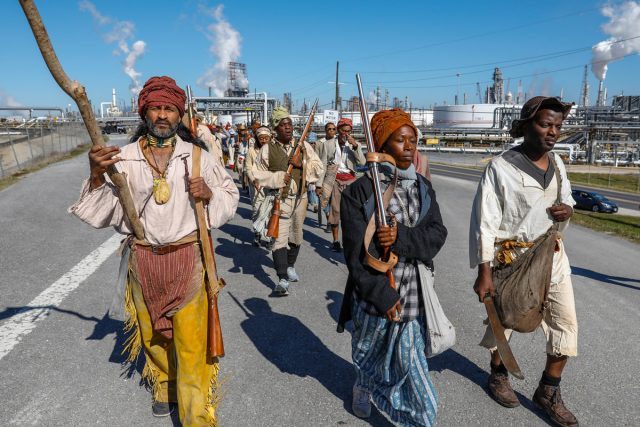
Dread Scott’s Slave Rebellion Reenactment was performed last November 8-9 in the outskirts of New Orleans (photo by Soul Brother)

In a 1968 interview with Carroll Greene for the Archives of American Art, Lawrence said about the work, “Several years ago I started an American history series, which did not pertain strictly to the Negro theme but I think my reason for doing it had something with the Negro consciousness. I wanted to show how the Negro had participated — and to what degree the Negro had participated — in American history. In fact I call it the ‘Struggle.’ As late as a few years ago in the 1950s, the Negro had not been included in the general stream of American history. We don’t know the story, how historians have glossed over the Negro’s part as one of the builders of America, how he tilled the fields and picked cotton and helped to build the cities. But I wanted to do a series showing the American Revolution. Again, this had to do with struggle — the struggle of man. This was not a Negro series; it isn’t just Negroes. It dealt with Negroes who were with Washington when he crossed the Delaware. Not as slaves. These were people who had signed up to take part in the American Revolution.” For more on Lawrence, check out a short 1993 video portrait here; born in Atlantic City and raised in Harlem, he passed away in 2000 at the age of eighty-two.

Dread’s work includes the 2019 performance piece Slave Rebellion Reenactment, a timely exploration of suppression, resistance, and revolution; the controversial What Is the Proper Way to Display a U.S. Flag?; and Money to Burn, in which he burned cash on Wall Street. Right now he has a billboard on Morgan Ave. and Harrison St. in Brooklyn in the group show “Ministry of Truth 1984/2020,” declaring, “9-1-1. There’s a white male running down the street.” For more on Dread Scott, watch this interview from April. The MetSpeaks talk is moderated by Sylvia Yount, the Lawrence A. Fleischman Curator in Charge of the American Wing. And don’t forget to see the Lawrence show, which is utterly stunning and closes soon.

AMERICAN DREAMS

American Dreams turns the path to citizenship into an interactive game show (photo by Cherie B. Tay)

Town Hall: What Does It Mean to Be a Citizen?, Monday, October 19, free with RSVP, 7:30
October 20-25, Working Theater, suggested $30
October 27 – November 1, Hartford Consortium, suggested $25
November 10-15, Marin Theatre Company, price TBD
www.americandreamsplay.com

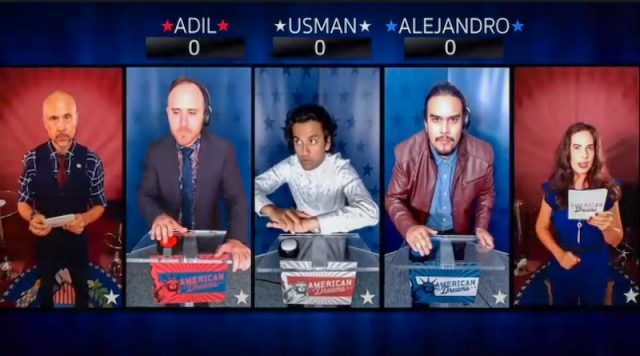
“It’s a game. It’s a show. It’s AmERica!!!” an announcer declares at the beginning of American Dreams, an interactive online play that skewers US immigration policy and ethnocentricity in funny, clever, and, ultimately, harsh ways. With the country in the process of deciding whether to give President Donald Trump, a former reality TV star, another four years in the White House, the show is on a virtual nationwide tour, stopping October 20-25 at New York City’s Working Theater. First staged at the Cleveland Public Theatre two years ago, Leila Buck’s play has been reimagined for the internet, set up as a game show that gives one of three immigrants the chance to win American citizenship.

Cohosted by the deceptively smarmy Christian White (Jens Rasmussen) and bright and perky Sherry Brown (Buck), who are over-the-top gleeful until they turn the tide, the game show is divided into four sections: “How America Works,” “America’s Favorites,” “Aliens with Extraordinary Skills,” and “American Dreams.” Battling it out to live in the United States legally are Adil Akram Mansour (Andre Ali Andre), a chef and philanthropist from Bethlehem (“not the one in Pennsylvania”); Alejandro Rodriguez (Andrew Valdez), a former National Guard medic from Mexico; and Usman Bhutt (Imran Sheikh), a Pakistani illustrator who loves Star Trek. “For the past two seasons,” Sherry says, “we have been offering once-in-a-lifetime chances to people searching for a brighter future in the land of freedom and opportunity. And while this season we can’t be in your town halls, theaters, and auditoriums, we are so glad to be welcomed into your homes.” Chris adds, “On each show, three contestants compete for the equivalent of Columbus’s gold.” Sherry: “One lucky winner will receive, right here, tonight, immediate citizenship to the greatest nation on earth. Our online studio audience has been approved by the highest levels of our government to be the people —” Chris and Sherry: “— who choose the people.” Sherry: “So your votes will determine our contestants’ destinies, as you decide who has the chance to live the American Dream.” It’s more than their destinies that are at stake.

Bree Coffman (India Nicole Burton), deputy director of culture for the US, keeps in touch with the audience throughout. “We all have the power to help shape and control the future of this country — one citizen at a time,” Coffman explains early on. As the game continues, you’re likely to find out that these immigrants know more about America than you do, but that is not necessarily going to mean they’re on the path to citizenship as various roadblocks, arbitrary and not, interfere with their quest, mimicking real life.
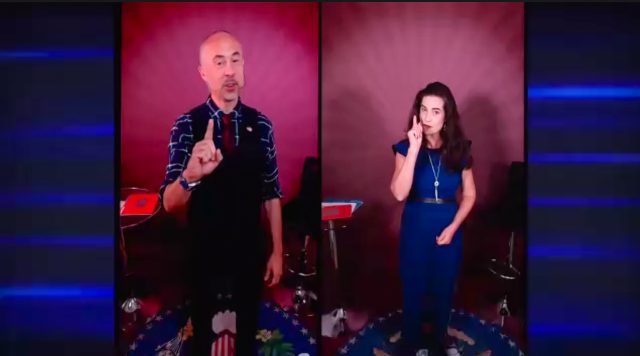
Cohosts Christian White (Jens Rasmussen) and Sherry Brown (playwright Leila Buck) lead the way in American Dreams (photo by Cherie B. Tay)

Co-commissioned by ASU Gammage and Texas Performing Arts and presented by Working Theater as well as Round House Theatre, Salt Lake Acting Company, Marin Theatre Company, HartBeat Ensemble, the Bushnell Center for the Performing Arts, and University of Connecticut’s Thomas J. Dodd Center, American Dreams achieves its goal of making the show a communal experience; the audience, visible in Zoom boxes, gets to fill out surveys, ask questions, cheer, and vote. Director Tamilla Woodard (Men on Boats, La Ruta) uses split screens to make it look like the contestants are in the same studio, even though they’re beaming in from wherever they’re sheltering in place; Woodard mixed Zoom, Skype, and other platforms to create what she refers to as a “beautiful monster.” The cast has a lot of fun, especially during one segment that is heavily improvised, making each performance unique. Even at ninety minutes, American Dreams feels too long, but you might want to stick around for the talkback anyway, which offers further insight into the development of the play. At one point, a prerecorded announcement tells us, “Your participation is key to protecting our democracy. If you see something, say something. The security of the greatest nation on earth depends on you.” As Buck points out, if only it were that easy.

In conjunction with the show’s run at Working Theater, there will be a free, virtual town hall on October 19, at 7:30, held in partnership with Portland’s Boom Arts, addressing the question “What does it mean to be a citizen?” featuring a keynote by actor Carlo Alban, followed by a panel with Nura Elgmagbari of the Portland Refugee Support Group, Richard Lujan-Valerio of the Latino Network, Juanita Sarmiento of Rural and Migrant Ministry, and actor, playwright, and native communities advocate DeLanna Studi (Cherokee), moderated by North Star Fund deputy director Elz Cuya Jones. Tune in and make a difference. Oh, and vote.
FROM HERE TO THERE: PROGRAMS AND EVENTS

Aki Sasamoto will present three live, collaborative, improvisational performances from Japan Society as part of online exhibition

Who: Nobutaka Aozaki, Hanako Murakami, Aki Sasamoto, Daisy Nam, Felipe Arturo, Kyle Dancewicz, more
What: Livestream performances and artist Q&As
Where: Japan Society online
When: October 22 – December 17, $10 per program ($40 for all exhibition-related programs), 6:00
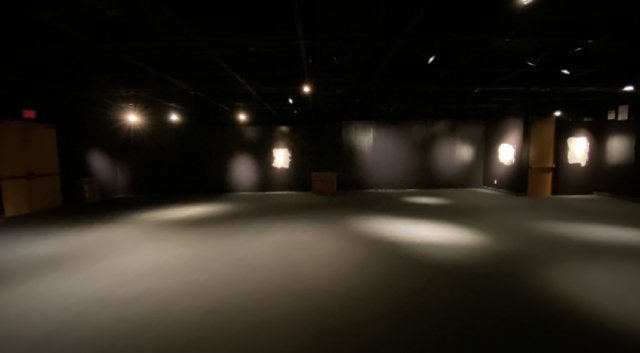
Why: On September 24, Japan Society unveiled its first virtual exhibition, in response to the pandemic lockdown resulting from the coronavirus crisis. On view through January 21, “From Here to There” consists of three visual artists taking on isolation and community, the physical versus the digital, and issues of control and agency. The works will evolve over time and take the audience behind the scenes of their progress. New York-based Nobutaka Aozaki is maintaining a conceptual map of found items and ground-floor businesses along Broadway. In Imaginary Landscapes, Paris-based Hanako Murakami repurposes vintage film and photographic plates and paper to explore the nature of memory (followed by “Palpebra” on October 22, “Film Reels” on November 19, and “Magic Lantern” on December 17).

And New York-based Aki Sasamoto is staging, with collaborators from the Yale School of Art, three livestreamed performances and Q&As from Japan Society, on October 22 with Armando Cortes, Sae Jun Kim, Erik Nilson, Hyeree Ro, Amina Ross, Audrey Ryan, Jeenho Seo, Pap Souleye, Lucas Yasunaga, Stella Zhong, and moderator Daisy Nam, November 19 with moderator Felipe Arturo, and December 3 with moderator Kyle Dancewicz, all at 6:00. The improvised pieces will reconsider live performance in the age of Covid-19, announcing, “Let’s sing together. Physically transport objects. Think about speech patterns. Throw a workout session.” In addition, Murakami will give a photo processing demonstration from her personal darkroom on November 5 and will speak with Maison Européenne de la Photographie director Simon Baker on January 7, and Aozaki will give an artist talk and gallery walkthrough of his intervention at Japan Society on December 17. You can watch the virtual opening of the exhibit with the artists, gallery director Yukie Kamiya, and assistant curator Tiffany Lambert here.

MICHAEL MENCHACA: THE WALL

Who: Michael Menchaca, Claudia Zapata
What: Online launch of The Wall (link goes live October 22)
Where: El Museo del Barrio Zoom
When: Thursday, October 22, free with advance RSVP, 6:00
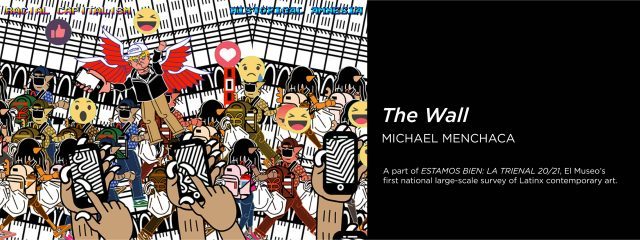
Why: On October 22, Texas-born artist Michael Menchaca will launch the online version of his three-channel video project The Wall, as part of El Museo del Barrio’s “Estamos Bien — La Trienal 20/21.” Previously presented live at the American University Museum in DC last year, The Wall, which features music from Jorge Ramos Avalos’s January 2019 video op-ed “Trump Is the Wall,” addresses issues of borders and immigration using gaming and video art as seen through Chicanx aesthetics. The event will include a discussion between Menchaca, Smithsonian American Art Museum curatorial assistant Claudia Zapata, and curators from El Museo del Barrio. “With the virtual presentation of The Wall, my intention is to offer a space for contemplation on one of the central campaign promises of the forty-fifth U.S. president as he seeks reelection,” Menchaca said in a statement. The on-site exhibition “Estamos Bien — La Trienal 20/21” is scheduled to open at El Museo on March 13.

THE DALAI LAMA GLOBAL VISION SUMMIT

Who: His Holiness the Dalai Lama, Richard Gere, Sharon Salzberg, Deepak Chopra, Lama Tsultrim Allione, Serene Jones, Jan Willis, Dr. Mark Epstein, Amishi Jha, Rabbi Michael Lerner, B. Alan Wallace, the Venerable Tenzin Priyadarshi, Sofia Stril-Revor, Daniel Goleman, Dr. Alberto Villoldo, Karenna Gore, Robert A. F. Thurman, Dan Harris
What: Six-day online discussion and meditation
Where: Lion’s Roar and Tibet House US
When: October 22-27, free with advance RSVP, 9:00 am
Why: His Holiness the Dalai Lama has been busy during the pandemic, offering special teachings over social media, interacting with students from around the world over Zoom as he helps us all deal with the strife of life in 2020. He is now gathering many of his friends and supporters for the Dalai Lama Global Vision Summit, a free six-day event consisting of talks by nearly two dozen teachers, scientists, interfaith leaders, activists, psychiatrists, and other experts covering the following themes: “The Art of Happiness: Bringing the Best of Human Values into Our Lives”; “Transcendent Wisdom: Buddhist Teachings of the Dalai Lama”; “Toward a True Kinship of Faiths: Creating Harmony Among the World’s Religions”; “The Universe in a Single Atom: The Science of Spirituality”; “My Land, My People: Tibet’s Message of Peace, Compassion, and Sustainability”; and “Ethics for a New Millennium: The Dalai Lama’s Vision for a Better World.”

Among the participants are Richard Gere, Sharon Salzberg, Deepak Chopra, Amishi Jha, Rabbi Michael Lerner, B. Alan Wallace, the Venerable Tenzin Priyadarshi, Daniel Goleman, Karenna Gore, and Dan Harris. “What an honor to join with Lion’s Roar and this team of positive people who share their dedication, insight, arts, and skills in the spirit energized by His Holiness the Dalai Lama’s bright vision for all of us and our world’s future, helping us see how love, science, art, and common sense triumph over gloom and doom,” Tibet House cofounder and president Robert A. F. Thurman said in a statement. Registration is free and comes with a digital download of Teachings on Compassion from the Dalai Lama and a guided audio meditation by the Dalai Lama, who turned eighty-five in July. For more teachings from His Holiness himself, follow him on Facebook.

REIKO YAMADA: SOUND INSTALLATION ON SILENT FILMS

Reiko Yamada will present the virtual world premiere of the Japan Society commission Sound Installation on Silent Films on October 21 (photo © Carolyn Drake)

Who: Reiko Yamada, Yoko Shioya
What: Livestreamed world premiere performance and artist Q&A
Where: Japan Society online
When: Wednesday, October 21, $15, 8:00 (available on demand through November 4)
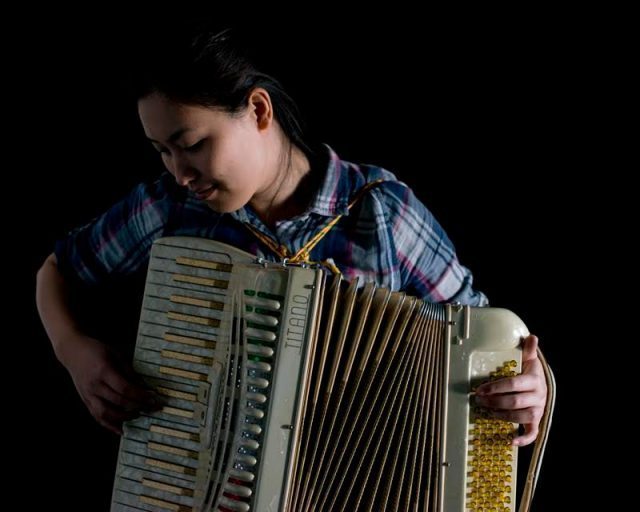
Why: Japan Society’s virtual 2020-21 Performing Arts Season kicks off with the commissioned world premiere of Hiroshima-born multimedia artist Reiko Yamada’s Sound Installation on Silent Films. On October 21 at 8:00, Japan Society will livestream the prerecorded performance, filmed live in Yamada’s home, in which she accompanies a trio of silent films with music played on broken accordions. “During the pandemic, our everyday lives have been greatly compromised, leaving us at times painfully dependent on the internet for connection. But while some advances in technology take a center stage in this climate, others that changed the world but have since become commonplace — cinema, instantly available music, global transportation — have been halted,” Yamada said in a statement. “The three antique films that I have selected for this concert — a reel of sumo wrestling matches, an almost abstract animation, and a documentary on the history of railroads in Japan – were the new technologies of their day, light entertainments in the truest sense. Recontextualizing these movies as ‘streaming performances’ supported by music provides me a canvas to present our relationship to entertainment over time.”

The performance will be followed by a live Q&A with Japan Society artistic director Yoko Shioya and Yamada, whose other works include the experimental opera Mask Your Sonic Story, the score for the dance piece You Took a Part of Me, the solo exhibition Small Small Things, and the orchestral composition New Shadows in Raw Light of Darkness. “I have an affinity for the accordion, having used it as a primary instrument in past projects,” Yamada, who is currently based in Barcelona, continues. “Though the accordion has no significant role in the history of Japanese silent film, I find the instrument, even (and perhaps especially) in a dilapidated state, can convey a depth of experience and an almost tactile sense of sound. By filtering my performance live through a computer, I can better isolate the unique personality of each instrument. The films that make up this performance were painstakingly digitized, recaptured like butterflies on pins for a modern audience that may find them rendered alien out of context. Much as each frame of these films has been renovated by both analog and digital processing, I will be transforming these nearly nonfunctional accordions into time machines, linking the performance’s many parts across oceans and centuries.” Tickets for the fifty-minute show are $15; the stream will be available through November 4.