FIAF’s virtual gala on November 16 features live music and dance from Florence Gould Hall
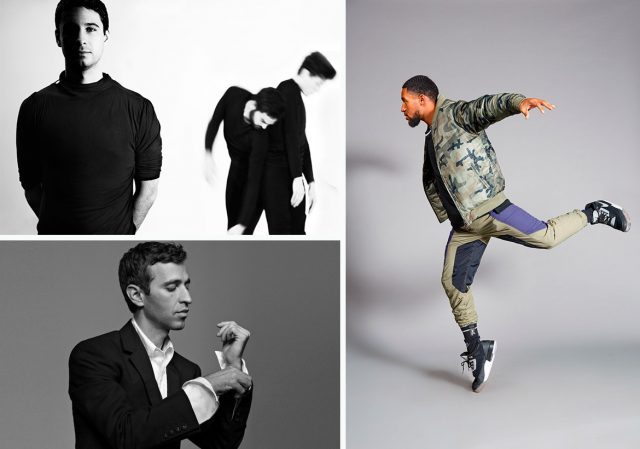
Who: Jonah Bokaer, Isaiah João, Nadia Khayrallah, Hala Shah, Rourou Ye, Cal Hunt, Anthony Roth Costanzo, Bryan Wagorn What:Virtual gala Where:FIAF online When: Monday, November 16, free with RSVP, 7:00 Why: The French Institute Alliance Française will be holding its gala on November 16 at 7:00, featuring livestreamed performances direct from the stage in Florence Gould Hall. The soirée “Le Petit Gala: Outside the Box” will include the live world premiere of Jonah Bokaer Choreography’s Softer Distances, a dance solo and quartet with Jonah Bokaer, Isaiah João, Nadia Khayrallah, Hala Shah, and Rourou Ye; FlexN specialist Cal Hunt’s solo dance Gliding: From Brooklyn to Paris; and France en chansons (“L’invitation au voyage” by Henri Duparc, “J’ai perdu mon Eurydice” from Gluck’s Orphée et Eurydice, “Sous le ciel de Paris” in honor of Juliette Gréco) with opera countertenor Anthony Roth Costanzo and pianist Bryan Wagorn. The limited in-person dinner in the FIAF Skyroom is sold out, but you can also participate by bidding in the silent auction, where you’ll find jewelry, wine, art, perfume, a Frédéric Fekkai experience, a private piano lesson with Wagorn, furniture, food, luxury bags, and more. All proceeds benefit FIAF’s cultural, artistic, and educational programs.
The Cherry Artists’ Collective will present English-language world premiere of A Day online
Who:The Cherry Artists’ Collective What: English-language world premiere Where:Livestream from the State Theatre of Ithaca When: November 13-14, 19-21, $15-$45, 7:30; live Zoom discussion Monday, November 16, free with RSVP, 4:00 Why: While theaters are still closed to audiences, many companies are using their spaces to perform works onstage and stream them live and/or recorded online. I’ve seen Yasmina Reza’s ‘Art’ from the San Francisco Playhouse, Albert Camus’s The Fall from FIAF, and Sarah Kane’s Crave from the Chichester Festival Theatre in England (with a masked audience before the new lockdown was announced). From November 13 to 21, the Ithaca-based Cherry Artists’ Collective will present the English-language world premiere of Québecoise playwright Gabrielle Chapdelaine’s 2018 award-winning A Day (Une journée) from the friendly confines of the State Theatre of Ithaca.
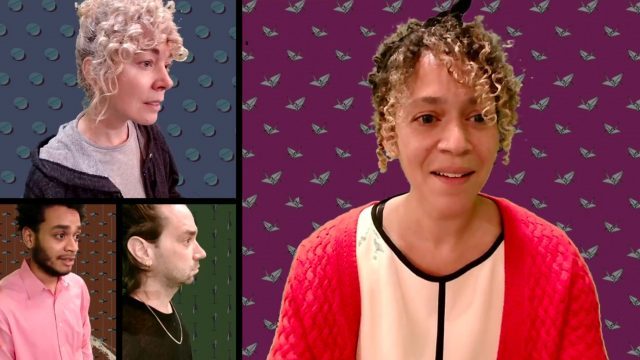
Translated by Josephine George, the ninety-five-minute play covers twenty-four hours in the ordinary life of four mysteriously interconnected characters, portrayed by Karl Gregory, Jahmar Ortiz, Erica Steinhagen, and Sylvie Yntema. The actors will be performing in multicamera green-screen booths at the theater, directed by Wendy Dann, with video mise en scène by Cherry artistic director Samuel Buggeln, mixing live and prerecorded audio and video that features other members of the collective as well. Performances take place November 13-14 and 19-21 at 7:30; tickets are $15 (minimum), $25 (recommended), or $45 (supporter). For a sneak peek, you can check out a short clip from a Zoom rehearsal above. In addition, Chapdelaine and Buggeln will take part in a live Zoom discussion moderated by Mat Fournier on November 16 at 4:00.
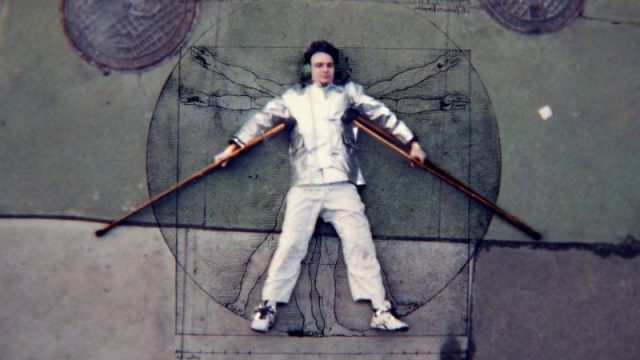
“Everybody has crutches,” multidisciplinary artist and performer Bill Shannon says in Crutch, making its world premiere November 11-19 at the virtual DOC NYC festival. “Some of them you can see; some of them are invisible.”
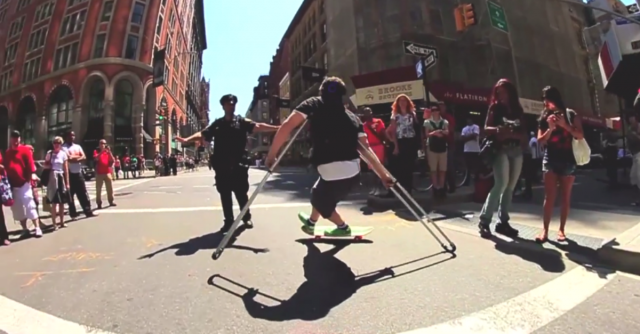
The title is both literal and metaphorical. The Nashville-born, Pittsburgh-based Shannon has been called “Crutch” since he was a kid; he has required the use of crutches most of his life because of the degenerative bilateral hip deformity Legg-Calvé Perthes disease. A skate punk, Shannon designed a unique set of crutches with rounded bottoms and developed a career as a dancer, choreographer, and visual artist that combined the crutches with skateboards, public intervention, and neuroscience.
The film follows Shannon, who recently turned fifty, for twenty years; it is directed by Frontline veteran Sachi Cunningham (the two have known each other since grade school, and she once dated his brother) and capoeira documenter Vayabobo, aka Chandler Evans. Crutch incorporates footage from throughout Shannon’s life with new interviews with friends, colleagues, family, dance critics, and Shannon himself, who speaks his mind onstage and off as he travels from Pittsburgh to New York City, California, and Florida as well as England, Australia, Canada, Finland, Russia, and Spain. The film is structured around Shannon’s visit to Camp Perthes USA, where children with the disease can participate in sports and other activities while learning to embrace their disability.
In such exhibitions and live shows as “The Evolution of William Foster Shannon,”Touch Update, and Traffic: A Transient Specific Performance, the onetime Easter Seals poster child has developed not only a unique choreographic language but also his own terminology to describe what he does, including such phrases as “gestures of help,” “the weight of empathy,” “reflections of enquiry,” and “the ambiguity of disability” that drive his practice, which is anchored by interaction with the public. The film is available online through November 19 and is accompanied by a Q&A with Cunningham, Vayabobo, and Shannon. Shannon, who is sheltering in place with his family in Pittsburgh, took some time away from the opening of the film and a conference to discuss Camp Perthes, the art of provocation, the pandemic lockdown, and more.
twi-ny: There’s a lot of old footage of you in the film, including your childhood and teen years. What was it like going through your archives to find the material? Is it difficult to watch footage of yourself of the years when you did not need the crutches? As a viewer, those transitions are deeply affecting.
bill shannon: I have had the privilege and joy of a father who studied film photography in the ’70s and was very technical in his approach. Then my brother was a very talented artist all around and he took great photos in the mid-to-late ’80s, and also my good friend Brian’s photos and videos from the mid-’80s into the ’90s had a big presence as well. Digging it all out, scanning it all was a long, drawn-out process because I never throw anything away.
twi-ny: At one point in the film you talk about how your work involves looking at people looking at you. Have you seen the final cut of the film? What do you think of it in that context, now that another level has been added to that relationship?
bs: I have seen it. It’s very meta, yet also there are not enough details within the doc to really sink into the meat of the public street work in terms of language and phenomenology. The doc does get the message out in a clear way, though.
twi-ny: The scenes of you at the camp are very emotional, both to you and the audience; the look on the kids’ faces as you talk to them and dance are just beautiful. What was that experience like for you, especially since there was nothing like it when you were their age and dealing with the disease?
bs: The experience was very moving. My kids got to meet other kids with Perthes and have more info on what I went through. This was also a case of the film documenting its own impact on my life. The camp for kids with Perthes was through connections that Sachi and Chandler made in the process of looking for others with Perthes to interview. They then organized the visit and flew me out there with my kids. I wish I had had something like the camp at the time I was a kid; I think it would have shifted my worldview and sense of belonging.
twi-ny: You’ve performed all over the globe. Are people’s reactions, particularly when you descend stairs or fall to the ground in a public place, the same everywhere when it comes to their opting whether to become good Samaritans? Have their reactions changed over time, regardless of where they are? I remember that in a promo piece for “Touch Update,” you specifically ask the question “Can people change?”
bs: There are regional variables. There are variables in what “falling to the ground” actually looks and feels like. Reactions are very diverse and also context dependent. I do believe that people change. The international diversity, say, between Mexico City and Novgorod, Russia, or Cairo, Egypt, are vast and fascinating.
twi-ny: How has Pittsburgh been dealing with the pandemic?
bs: Pittsburgh, like most places, has its share of individuals who are pretending it’s not real. Pittsburgh allowed for kids to go back to school, which in my opinion is a very stupid move. It sucks for the kids during a time in their lives when social interaction and bonding with friends is everything. Youth are further pushed into the screens, and it’s really sad.
Bill Shannon’s life and art evolve in Crutch documentary
twi-ny: If you’re not going out much, do you miss the interaction you usually have with the public? The film focuses on how much you crave making those connections.
bs: I am feeling extremely out of sorts lately for a variety of reasons. Having some contact with the streets, with the world would mean so much to me. Working this week as part of a conference, I am reminded how much I rely on my physical presence and in-person communication to build trust and understanding with others. When it’s Zoom and text, I lose a lot of my tools.
twi-ny: One of the people in the film calls you an “agent provocateur.” Would you agree with that assessment?
bs: My mom called me a provocateur. It is true but not the “agent” part. That’s what cops do when they join BLM demonstrations; they become agent provocateurs and burn shit down and vandalize to give protesters and the cause a bad name. I wouldn’t want to be associated with the agent part, but being a provocateur, someone who provokes, is accurate.
twi-ny: Your art has progressed from skateboards and crutches to multimedia, multidisciplinary shows involving cutting-edge technology and neuroscience. What’s next for you?
bs: I really don’t think so much about what is next. Next will happen to me. I am here today in the moment and trying to solve problems that I have identified out of solutions I came across yesterday.
Roz Chast and Calvin Trillin sit down for a 92Y online talk with Budd Mishkin on November 12
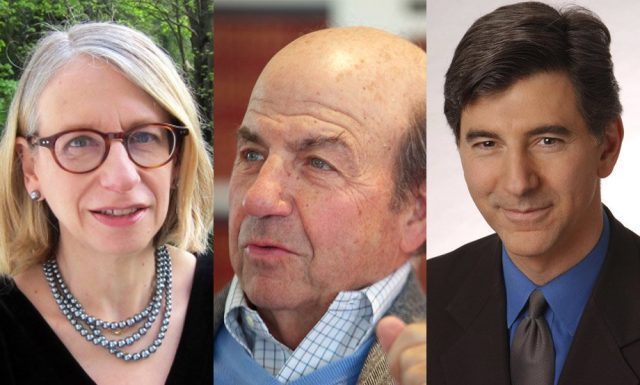
Who:Roz Chast, Calvin Trillin, Budd Mishkin What: 92Y Talks & Readings Where:92Y online When: Thursday, November 12, $15, 7:00 Why: Preeminent New Yorkers Roz Chast, Calvin Trillin, and Budd Mishkin come together for the inaugural presentation of the 92nd St. Y’s new series “New York Then and Now with Budd Mishkin.” On November 12 at 7:00, New Yorker cartoonist and Society of Illustrators Hall of Famer Chast and longtime New Yorker contributor and author Trillin will discuss the state of the city with moderator, broadcast journalist, and master interviewer Mishkin.
Actors Tracie Thoms and Bill Murray are among those participating in “Poetry for the Pandemic” on November 12
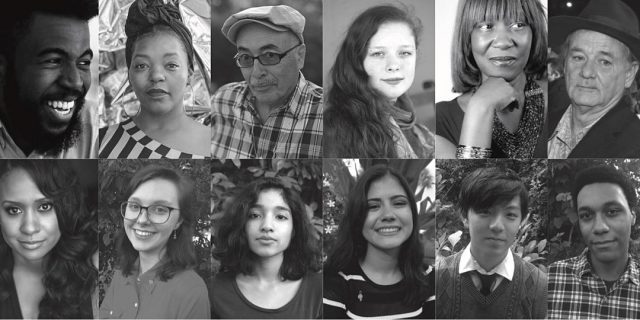
Who: Dr. Joshua Bennett, Mahogany L. Browne, Juan Felipe Herrera, Molly McCully Brown, Patricia Smith, Tracie Thoms, Bill Murray, Maddie Dietz, Manasi Garg, Isabella Ramirez, Ethan Wang, Anthony John Wiles Jr. What: Poetry, dialogue, Q&A Where:Theater of War Zoom When: Thursday, November 12, free with RSVP, 7:00 Why: Theater of War continues its impressive online presence during the Covid-19 crisis with the free, virtual program “Poetry for the Pandemic,” joining forces with the Alliance for Young Artists & Writers on November 12 at 7:00. The ninety-minute program brings together established and emerging poets along with actors Tracie Thoms, who played Antigone in Theater of War’s Antigone in Ferguson, and Bill Murray. The evening will begin with poetry readings, followed by a discussion with the student poets and then an audience Q&A. Dr. Joshua Bennett will serve as facilitator, with professional poets Juan Felipe Herrera, Mahogany L. Browne, Molly McCully Brown, and Patricia Smith and student poets Maddie Dietz, Manasi Garg, Isabella Ramirez, Ethan Wang, and Anthony John Wiles Jr.
The twentieth anniversary of Ronald K. Brown’s Grace will be celebrated this week at CAP UCLA
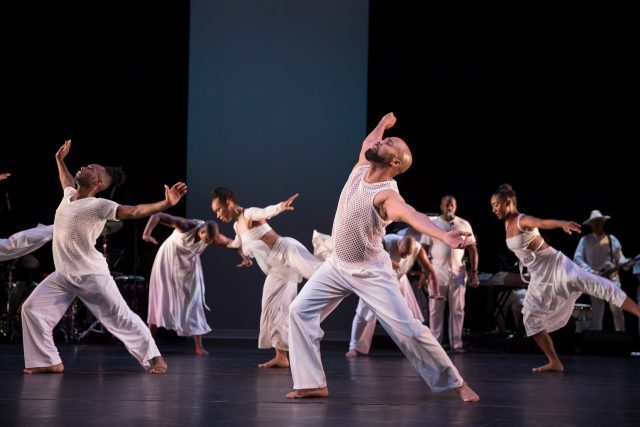
Who:Ronald K. Brown / Evidence, a Dance Company, Barry Brannum, Arthur Jafa, MarySue Heilemann, Theo Bonner Perkins, Kristy Edmunds, Meryl Friedman What: Three-day online celebration Where:Center for the Art of Performance UCLA When: November 12-14, free Why: In December 2012, I saw Alvin Ailey American Dance Theater’s stunning new production of Ronald K. Brown’s Grace, which was originally commissioned and presented for AAADT in 1999; I’ve also seen Brown and his troupe, Evidence, a Dance Company, perform it at the Joyce led by Brown himself. I’ve called Grace, which is a tribute to Ailey’s legacy and is set to music by Duke Ellington, Roy Davis Jr., and Fela Anikulapo Kuti, “an exhilarating, rapturous work, filled with an innate, infectious spirituality that resonates throughout the audience.” CAP UCLA will be honoring the twentieth anniversary of the piece with “Grace@20,” a three-day program that begins November 12 at 7:00 with “Celebrating Grace@20,” consisting of a screening of a recorded performance from Bard College’s Fisher Center in July 2019, followed by a live discussion with Brown and LA-based dancer-choreographer Barry Brannum.
On November 13 at 3:00, there will be an online community class, no experience necessary, to study Brown’s unique style, heavily influenced by West African traditional movement; participation is free with RSVP here. And on November 14 at 3:00, “Let’s Say Grace and Talk About It After!” is a live conversation with Brown, artist and filmmaker Arthur Jafa, UCLA School of Nursing associate professor MarySue Heilemann, artist and social justice advocate Theo Bonner Perkins, and CAP UCLA artistic and executive director Kristy Edmunds, moderated by CAP UCLA director of education Meryl Friedman. I’ve had the good fortune to interview Brown twice, and he is an extraordinary person, believing in love of community, the importance of dance as story, and honoring the ancestors. In 2015, he told me, “One thing that I have also learned is that we have to make sure we are connected to those close to us . . . and then that opens up the capacity to be connected to the world.” Grace has been doing just that for twenty years, with added relevance during the pandemic lockdown.
Soil Beneath: An Empirical Decay streams through Primary Stages this week
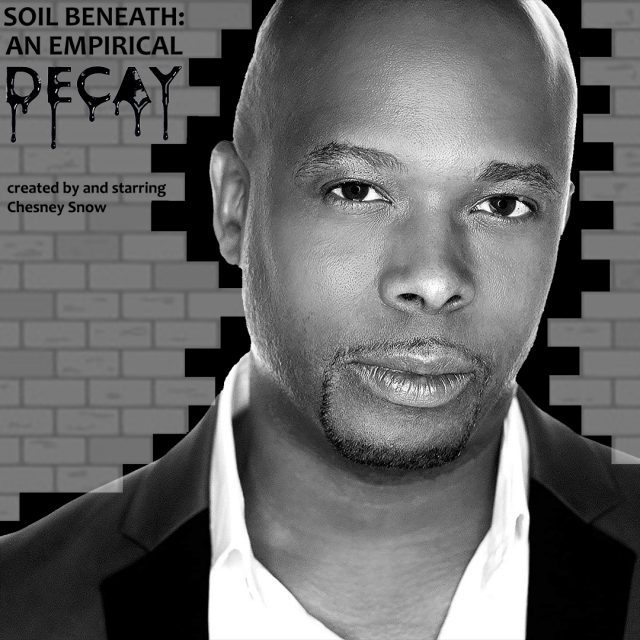
Who:Chesney Snow, Kevin Hillocks, Rachael Holmes, Winston Dynamite Brown, Latra Wilson, Kimille Howard, Diedre Murray What:Choreopoem Where:Primary Stages online When: November 11-15, $35 Why: Beatboxer, actor, songwriter, poet, and educator Chesney Snow will debut his Primary Stages commission, Soil Beneath: An Empirical Decay, this week, livestreaming November 11-15. The sociopolitical, multidisciplinary exploration of race and class in America was created by and stars Snow (In Transit, Oo Bla Dee), who will be joined in the forty-minute show by Kevin Hillocks as Homerel, Rachael Holmes as Dori, and choreographers Winston Dynamite Brown and Latra Wilson; Soil Beneath, which includes music, dance, poetry, and storytelling, is directed by Kimille Howard and features a score by Pulitzer Prize finalist Diedre Murray (Running Man, Eli’s Comin’). The November 11 opening-night performance will be followed by a Zoom talkback with members of the cast and artistic staff.