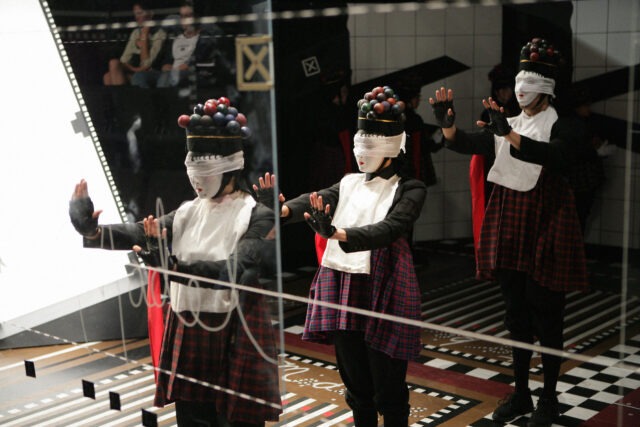
Ronald K. Brown/EVIDENCE returns to the Joyce for fortieth anniversary celebration
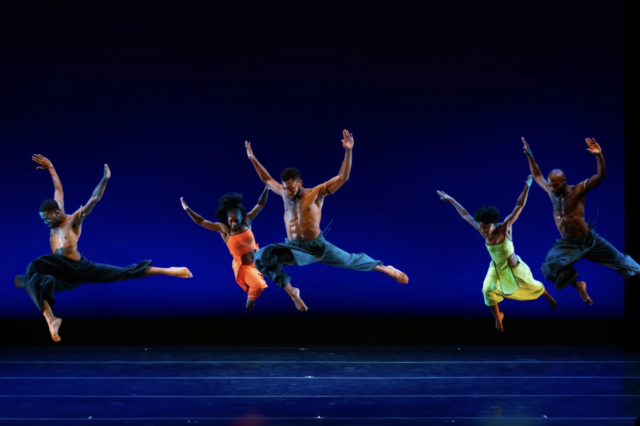
Ronald K. Brown/EVIDENCE, a Dance Company
Joyce Theater
175 Eighth Ave. at 19th St.
February 25 – March 1 (Curtain Chat February 25), $32-$82
212-645-2904 www.joyce.org evidencedance.com
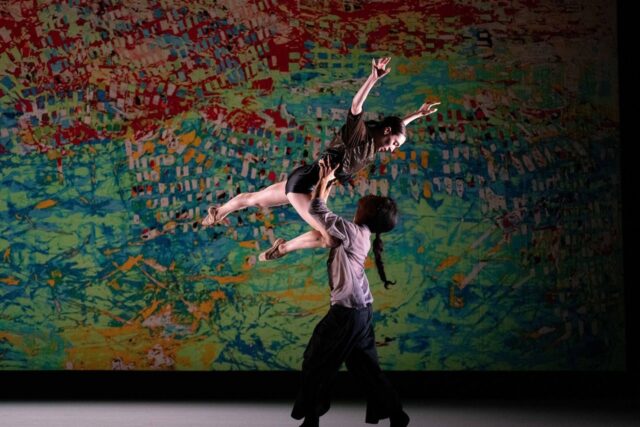
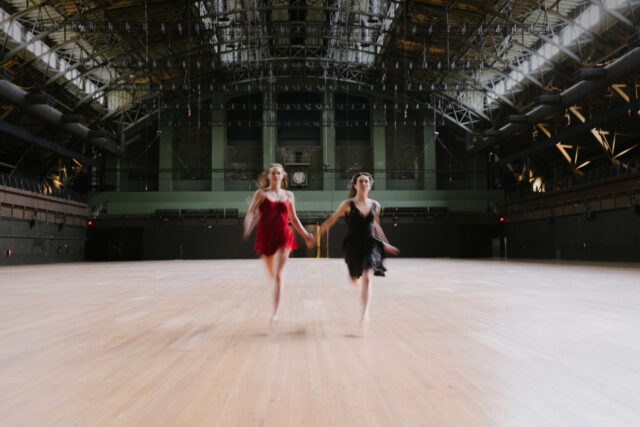
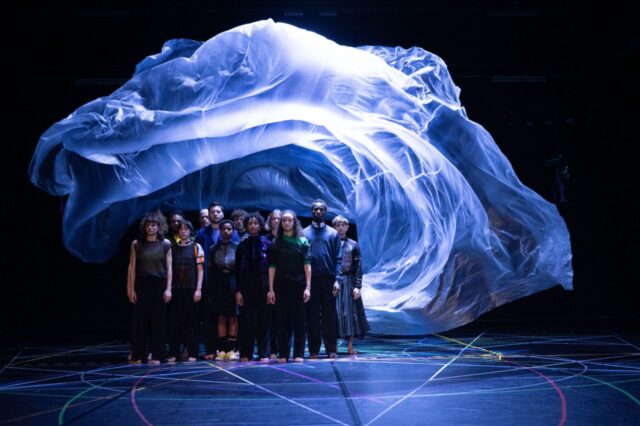
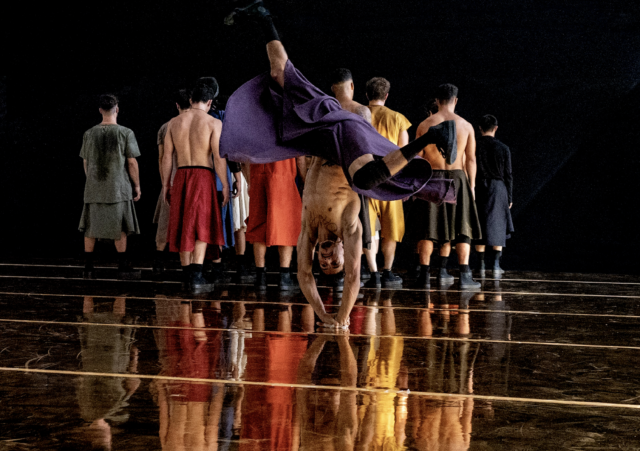
Ronald K. Brown/EVIDENCE celebrates its past while looking toward the future in its annual winter season at the Joyce, running February 25 through March 1. Because of the blizzard, opening night, February 24, has been canceled, but a 7:00 show has just been added, and great seats are available if you hurry.
The Brooklyn-based company will be presenting two exciting programs as part of its fortieth anniversary. The first honors longtime collaborator Wunmi Olaiya, a composer, costume designer, dancer, and visual artist who has been working with Brown since 1992, while the second pays tribute to TU Dance cofounding artistic director Toni Pierce-Sands, who danced with Alvin Ailey and EVIDENCE and would begin every TU Dance production with the Ulysses Dove mantra “Nothing to prove, only to share”; Pierce-Sands passed away in November at the age of sixty-three.
“Celebrating Wunmi” — born in London and raised in Lagos, she goes by one name — begins with Ebony Magazine: To a Village, a 1996 piece for Cleo Parker Robinson Dance Ensemble that EVIDENCE debuted in March 1998, featuring music and costumes by Wunmi centered around the repeated phrase “do you see what I see.” Clear as Tear Water is a 2006 solo originally choreographed for Pierce-Sands; at the Joyce, six different dancers will perform the work, which will be set to Wunmi’s “Woman Child” in Program A and Meshell Ndegeocello’s “Heaven” in Program B. Next is 1999’s Gatekeepers, a piece originally for Philadanco that delves into Native American mythology and African traditions, with music and costumes by Wunmi. Following intermission, the evening concludes with the rousing, nonstop Upside Down, an exhilarating excerpt from Brown’s 1998 Destiny, in which the company cuts loose to music by Wunmi, which she will play live with two drummers.
“With the trust Ron affords me, I dare to dream and visualize what the work he is creating is speaking on,” Wunmi explains in a Joyce interview. “Ron tells stories of human beings making their way . . . and, in there, I create costumes to make them visible. Thankful, trust is alive and well.”
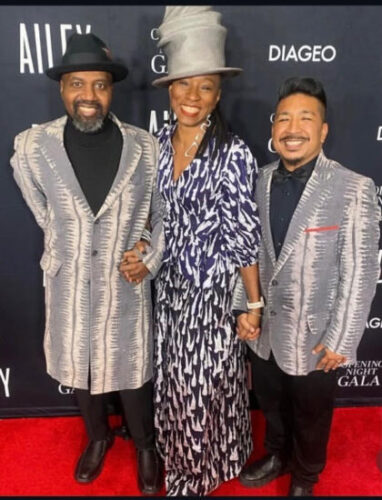
Ronald K. Brown, Wunmi Olaiya, and Arcell Cabuag at the 2024 Alvin Ailey American Dance Theater gala
Planned prior to Pierce-Sanders’s death from cancer, “A Celebration of the Life and Legacy of Toni Pierce-Sands” kicks off with 2012’s Torch, a touching tribute to former Brown student and dance enthusiast Beth Young, who passed away in January 2012, followed by Clear as Tear Water. The company premiere of 2017’s Where The Light Shines Through, originally commissioned for TU at the Ordway, is choreographed by Brown and his partner, Arcell Cabuag, and set to music by Ndegeocello, Susana Baca, Ballet Folklórico Cutumba de Santiago, and Black Motion. The finale is the spectacular 1999 favorite Grace, originally choreographed for Alvin Ailey, which features twelve dancers moving, in costumes by Wunmi, to a melding of modern dance and West African idioms as only Brown and Cabuag can do, with music by Duke Ellington, Roy Davis Jr., and Fela Aníkúlápó Kuti and live vocals by Gordon Chambers; the beats will stay with you long after the show is over.
“This celebration is long overdue and I am happy the time is now,” Brown says in a program note.
The time is always now to see this extraordinary company, still going strong after forty marvelous years.
[Mark Rifkin is a Brooklyn-born, Manhattan-based writer; you can follow him on Substack here.]
The life and career of Billy Preston held many surprises revealed in documentary
BILLY PRESTON: THAT’S THE WAY GOD PLANNED IT (Paris Barclay, 2024)
Film Forum
209 West Houston St.
Opens Friday, February 20 filmforum.org
“Will it go ’round in circles? / Will it fly high like a bird up in the sky?” Billy Preston sang in his 1973 smash hit. He might not have realized it then, but that line foretold his career, which had a seemingly endless series of ups until it all came crashing down.
The rise and fall of one of popular music’s most talented and beloved figures is intimately detailed in Paris Barclay’s revelatory documentary, Billy Preston: That’s the Way God Planned It.
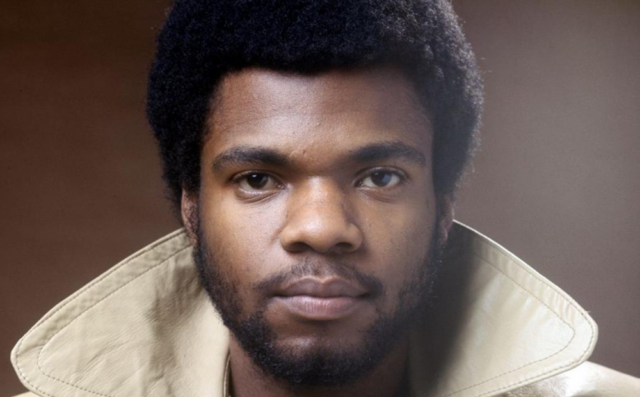
Born in 1946 and raised in the church by his mother, gospel singer Robbie Lee Williams, Preston began playing the piano at age three, appeared on The Nat “King” Cole Show in 1957, accompanied Mahalia Jackson and Pearl Bailey on keyboards in the 1958 film St. Louis Blues, played with the gospel group the Cogics (Church of God in Christ), and as a teenager toured with Little Richard and the Rolling Stones. An enthusiastic man with an infectious gap-toothed smile and a collection of impressive wigs, Preston was soon recording with the Stones, Sam Cooke, Sly Stone, Ray Charles, and Aretha Franklin.
He singlehandedly rescued the Beatles when the Fab Four was preparing the Let It Be album and concert, just dropping by to say hello but then taking a seat at the organ and starting to improvise with John, Paul, George, and Ringo, infusing them with the energy they had been previous lacking as rumors swirled that the band was breaking up. The tabloids nicknamed him the Fifth Beatle and the Black Beatle. “He never put his hands in the wrong place,” Starr says in the film.
Preston might have been the ultimate sideman, but when performing he couldn’t help himself, often getting up and dancing wildly, joy emanating out of every pore. He couldn’t read music and never used charts but just felt the music blaze through him, even when playing backup. “He would steal the record without you even knowing until later, and you’d go, ‘He’s done it again,’” Clapton explains.
When Preston brought an original song to George Harrison for a potential solo LP, the Quiet Beatle quickly assembled an all-star roster to back him up: Harrison, Eric Clapton, Keith Richards, and Ginger Baker.
In the 1970s, he hit the charts with such songs as “Outa-Space,” “Will It Go Round in Circles,” “Nothing from Nothing,” and “With You I’m Born Again,” all of which are featured prominently in the film. He was a musical guest on the very first episode of Saturday Night Live. Most people don’t realize that Preston wrote and originally recorded “You Are So Beautiful,” made famous by Joe Cocker; one of the highlights of the documentary is Preston’s performance of the song at the Apollo 50 celebration, joined by Cocker and Patti LaBelle on vocals. We also learn that it is a love song — to his mother, who he also plays it with in the film.
But his life started falling apart as he got lost in a haze of drugs and alcohol (Courvoisier, coke, eventually crack), starred as Sgt. Pepper in the ill-fated movie Sgt. Pepper’s Lonely Hearts Club Band, and continued to hide his sexuality, even though his friends, family, and musical colleagues knew he was gay going back to his youth. He was often seen with young men he referred to as cousins, but he was overcome with loneliness.
In their debut documentary, three-time Emmy winner Barclay (NYPD Blue,Glee) and cowriter Cheo Hodari Coker (Ray Donovan,Luke Cage) also delve into the sexual abuse Preston suffered as a child, which added to his problems as an adult. In the 1990s, he was arrested for DUI, charged with assault and child molestation, and spent time in prison, but he kept on playing music until his death in 2006 at the age of fifty-nine.
“He couldn’t move on,” soul and gospel singer Merry Clayton says. “No one knew what had transpired but us, the inner circle, family people. He’d have that smile, but his heart would be broken.”
Producer Suzanne de Passe notes, “Billy Preston was a gifted, genius, wonderful, talented human being, and he had a very, very self-destructed aspect to who he was. I wish I could have been more of a help in the parts that weren’t any of my business.”
Similarly, engineer Bob Margouleff says wistfully, “I don’t think anyone, including me, knew how to help him.”
The film has a bevy of revelatory archival material, from photographs and home movies to rare clips of Preston from childhood through his entire career, including key segments from a 2004 live appearance. Barclay also speaks with Billy Porter, producer Tony Jones, recording artists Gloria Jones and Blinky Williams, Pastor Sandra Crouch, musician Cory Henry, A&M publicist Don Mizell, biographer David Ritz, Preston’s cowriter Bruce Fisher, his nephew Derrick Preston, his managers Bob Ellis and Joyce McRae Moore, and numerous members of his bands, who all share poignant stories of Preston as a performer and a human being, a man bursting with life but hiding so much inside.
“I just want to be free, to play the music that God’s given to me,” Preston says.
It’s a tragic, if not unfamiliar, story, in this case happening to a cherished person who could not conquer his demons. But as he sang in his first big hit: “Let not your heart be troubled / Let mourning sobbing cease / Learn to help one another / And live in perfect peace.”
[Billy Preston: That’s the Way God Planned It opens February 20 at Film Forum, with Q&As with the filmmakers and special guests at the 7:00 shows on Friday and Saturday.]
[Mark Rifkin is a Brooklyn-born, Manhattan-based writer; you can follow him on Substack here.]
The second Dance Reflections by Van Cleef & Arpels Festival returns to New York City with sixteen performances and twenty-four workshops by some of the finest companies in the world, running February 19 through March 21.
The exciting series kicks off February 19-21 with the Lyon Opera Ballet presenting Merce Cunningham’s BIPED and Christos Papadopoulos’s Mycelium at City Center and the Ballet national de Marseille bringing (LA)HORDE’s Age of Content to BAM’s Howard Gilman Opera House from February 20 to 22. The lineup continues with such shows as Jan Martens’s The Dog Days Are Over 2.0 at NYU Skirball, Leïla Ka’s Maldonne at New York Live Arts, Noé Soulier’s The Waves at the Joyce, and Lucinda Childs’s Early Works for the Guggenheim’s Works & Process program.
Below is a look at five more of the highlights.
LA Dance Project’s On the Other Side is part of triptych at PAC NYC (photo by Jade Ellis)
BENJAMIN MILLEPIED AND THE L.A. DANCE PROJECT: REFLECTIONS: A TRIPTYCH
Perelman Performing Arts Center (PAC NYC)
251 Fulton St.
Saturday, February 21, 8:00, and Sunday, February 22, 3:00, $61-$157 www.dancereflections-vancleefarpels.com pacnyc.org
Benjamin Millepied merges dance, music, and visual art in the New York premiere of Reflections: A Triptych, three pieces inspired by precious stones. The thirty-minute Reflections (2013) boasts a score by David Lang and a bold scenic design by Barbara Kruger, with six dancers musing on longing and memory. The seventeen-minute Hearts and Arrows (2014) features a set by Liam Gillick, music by Philip Glass performed by Kronos Quartet, and fab costumes by Janie Taylor. Several Glass compositions and a set by Mark Bradford anchor the forty-five-minute On the Other Side (2016), which explores communal human experience. Audrey Sides will teach a “Hearts & Arrows Repertory” workshop at the New York Center for Creativity & Dance on March 12.
Trisha Brown and the Merce Cunningham Trust celebrate their extensive collaboration with Robert Rauschenberg, and the artist’s recent centennial, with two classic works for which Rauschenberg created the visual design and the costumes. Commissioned by BAM in 1983, Set and Reset is a postmodern masterpiece, with music by Laurie Anderson, that was recently reconceived as an art installation at the Tate. The vaudevillian pièce de résistance Travelogue (1977) is set to John Cage’s “Telephones and Birds,” which has been adapted for mobile devices, and is performed within Rauschenberg’s Tantric Geography environment. “I feel like this is the one time I can let the cat out of the bag and let you know just how dear this man is to me,” Brown once said about Rauschenberg. “Bob understands how I construct movement.” Bob returned the compliment: “Particularly with Trisha, it’s always a challenge because she remains so unpredictably fresh.” Cecily Campbell and Jamie Scott will lead a “Trisha Brown Discovery” workshop at the New York Center for Creativity & Dance on February 28.
Benjamin Millepied reconfigures his Romeo & Juliet Suite specifically for Park Ave. Armory
Benjamin Millepied follows up his PAC NYC Reflections tryptych with an eighty-minute multimedia adaptation of Sergei Prokofiev’s 1930s ballet Romeo and Juliet, combining dance, theater and film reconfigured specifically for the entire Park Ave. Armory building. The cast of eighteen dancers will rotate as Shakespeare’s doomed young couple, with the presentation spreading from the Wade Thompson Drill Hall to the historic period rooms and other spaces, so be sure to get there early. “Of all the places I’ve shown Romeo & Juliet Suite, the armory is by far the most fitting, as it provides the massive scale, flexibility, and grandeur needed to present this work at its fullest potential,” Millepied, who will participate in an artist talk with NYU professor André Lepecki on March 4, said in a statement. “I invite audiences to forget what you think you know about the story of these two star-crossed lovers — and how it should be told — and open your mind to experiencing a radically reimagined tale about love suited for modern day.”
Exciting Belgian choreographer Anne Teresa De Keersmaeker displays her principle of “My walking is my dancing” in Exit Above, in which thirteen dancers move to the sounds of Meskerem Meesre interpreting the blues of Robert Johnson in addition to music by TC Matic’s Jean-Marie Aerts and dancer-guitarist Carlos Garbin, with scenic design by Michel François, costumes by Aouatif Boulaich, and opening text taken from Walter Benjamin’s “On the Concept of History.” In a 2023 interview, De Keersmaeker explained, “Less is more, I increasingly think. For me that means going back to the source, to the real thing. Blues goes all the way back to that essence, also content wise: It is about sorrow and joy, my sorrow, my joy but also our sorrow, our joy. Both individual and collective: That tension is crucial to me. Blues the ultimate emotional alchemy: we sing about our sadness, but by singing about it with others we transform it into a strength, something joyful. Singing about sorrow immediately contains the consolation for that sorrow. Isn’t this ultimately why we make art? To mourn together and to celebrate joy together. Beauty and solace. I know that beauty is considered to be old-fashioned, but we need it more than ever: Our relationship with nature is disturbed, we are living on the edge of an ecological catastrophe. When you’re lost, it’s a good idea to retrace your footsteps.” Jacob Storer and Clinton Stringer will lead an Exit Above workshop at the New York Center for Creativity & Dance for professionals on March 6 and everyone on March 7.
Compagnie Hervé KOUBI will worship the sun again in Sol Invictus at the Joyce (photo by Nathalie Sternalski)
French choreographer Hervé Koubi studied dance and biology at the University of Aix-en-Provence, and he combines the two elements gorgeously in Sol Invictus as his company of eighteen performers pushes the limits of what the human body can do. Previously staged at the Joyce in 2023, Koubi calls the seventy-five-minute piece “a manifesto for life,” and he fills it with sections that explore ritual, worship, faith in a higher power — in this case, the sun — and life, death, and rebirth. “I want to talk about light, solidarity, and those bonds that unite us,” Koubi explains about the work, which features music and soundscapes by Mikael Karlsson, Maxime Bodson, Beethoven (the funeral procession from the Seventh Symphony), and Steve Reich and costumes by musical arranger Guilaume Gabriel. Several of the dancers will lead a “Sol Invictus Discovery” workshop at the New York Center for Creativity & Dance on March 13, and there will be a Curtain Chat following the March 11 show.
[Mark Rifkin is a Brooklyn-born, Manhattan-based writer; you can follow him on Substack here.]
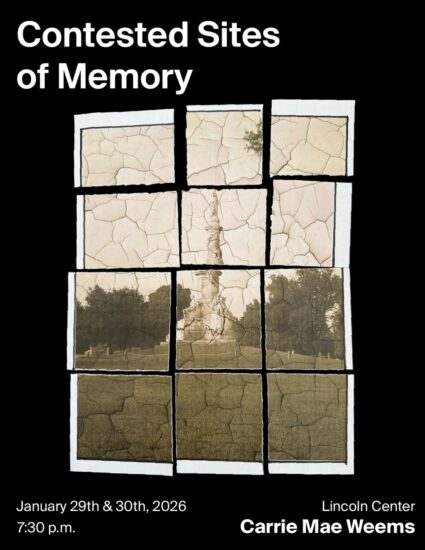
On January 29 and 30, Weems will be at Alice Tully Hall for her latest gathering, “Contested Sites of Memory.” Produced in collaboration with Shore Art Advisory and Lincoln Center, it will feature live music, video art screenings, spoken word, and more, with trombonist, composer, sonic shaman, and musical director Craig Harris, British-born Brooklyn-based playwright, radio host, author, and Armah Institute of Emotional Justice CEO Esther Armah, singer, songwriter, producer, and activist Nona Hendryx, Grammy-winning violinist Jennifer Koh, poet, playwright, novelist, essayist, composer, pianist, professor, and writer Vijay Iyer, and recording artist Carl Hancock Rux, and emcee, trumpeter, composer, producer, educator, and social activist Jawwaad Taylor. The focus is on the purpose and meaning of American monuments and how they relate to the past, present, and future of the country.
Born in Portland, Oregon, and based in Syracuse, Weems is best known for such highly influential photographic projects as “The Kitchen Table Series,”“Family Pictures and Stories,”“The Louisiana Project,”“Constructing History,” and “Museums.” A National Academician and MacArthur Genius, she was busy during the pandemic, making the hypnotic short film The Baptism with Rux and hosting a podcast for the Whitney, “Artists Among Us,” in which she spoke with a wide range of artists, curators, and writers, including Glenn Ligon, Bill T. Jones, Lucy Sante, Jessamyn Fiore, An-My Lê, and Adam Weinberg.
“Contested Sites of Memory” should be another unique and fascinating high point in the career of one of America’s genuine treasures, who has been documenting the shape of things for more than four decades.
[Mark Rifkin is a Brooklyn-born, Manhattan-based writer and editor; you can follow him on Substack here.]
On January 26, they are following that up with “We the People: An Assembly of New York Artists,” a town-hall-style gathering at St. Mark’s Church in-the-Bowery where the focus will be more local. The panel features Classical Theatre of Harlem producing artistic director Ty Jones, award-winning playwright and performer Lisa Kron (Fun Home,Well), the People’s Theatre executive artistic director and cofounder Mino Lora, former Creatives Rebuild New York executive director Sarah Calderon, New York Philharmonic vice president of education and community engagement Gary A. Padmore, and playwright and author Sara Farrington (CasablancaBox,A Trojan Woman). Farrington, who writes the indispensable Substack Theater Is Hard, will make her way through the audience with a microphone, giving members of the community the chance to speak their mind for sixty seconds (and maybe more); it is pointed out that “everyone who comes will already know that art is good, so be specific.”
The presentation will be recorded for online viewing, and a detailed report will be sent to Mayor Mamdani and Governor Hochul. Attendance is free with advance RSVP, although it is all dependent on the weather.
[Mark Rifkin is a Brooklyn-born, Manhattan-based writer and editor; you can follow him on Substack here.]
Harriet Stubbs will by paying tribute to Queen and Coldplay in Candlelight concerts on January 16 (photo by Julienne Schaer)
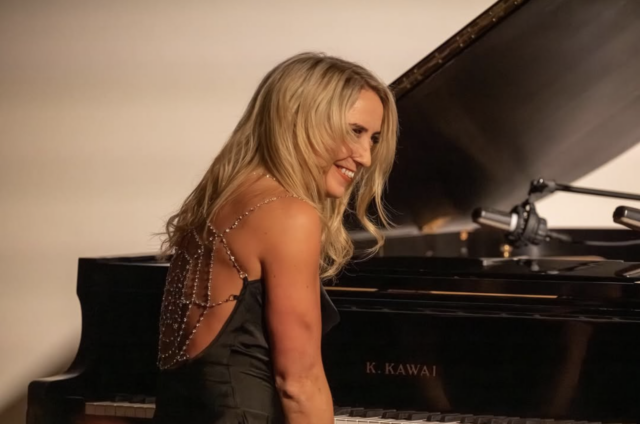
Who:Harriet Stubbs What:Candlelight concerts Where:St. Ann & the Holy Trinity Church, 157 Montague St. When: Friday, January 16, Queen, $46.50-$67, 6:30; Coldplay, $36.50-$65.50, 8:45 Why: “There’s nothing like playing to my adopted hometown of New York; it’s electrifying,” pianist Harriet Stubbs told me in a May 2024 twi-ny talk. A child prodigy in her native England, Stubbs is an extraordinary pianist, performing an intoxicating mix of classical and pop music, ranging from Beethoven, Bach, and Gould to David Bowie, Nick Cave, and the Beatles. Having recovered from a debilitating nerve injury that left her unable to even text — she had successful hand surgery in the fall — Stubbs is back behind the keys, doing what she does best.
On January 16 at 6:30, she will be at St. Ann & the Holy Trinity Church in Brooklyn for “Candlelight: Tribute to Queen,” in which she will play mind-blowing instrumental versions of many of Queen’s best-loved hits, from “Another One Bites the Dust” to “Bohemian Rhapsody.” That will be followed at 8:45 (separate admission) by “Candlelight: A Tribute to Coldplay,” featuring such songs as “Clocks,” “Paradise,” and “Sky Full of Stars.”
There’s a reason why I’ve asked her to participate in twi-ny’s twenty-fifth anniversary celebration at the Coffee House Club on June 3: She’s a unique and dynamic performer and a delightful human being.
[Mark Rifkin is a Brooklyn-born, Manhattan-based writer and editor; you can follow him on Substack here.]
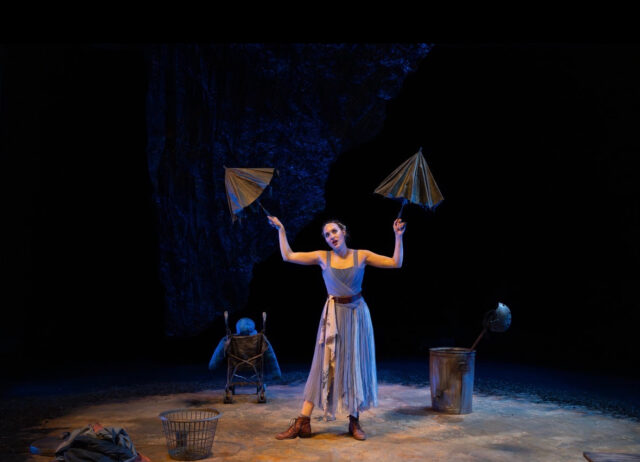
Elevator Repair Service’s Ulysses is a highlight of the January performance festival season (photo by Maria Baranova)
Every January, many of us begin the new year with resolutions to make positive changes in our lives; I find the best way to start that is by checking out the latest in cutting-edge and experimental theater, music, dance, opera, film, and other forms of entertainment. Performance festivals abound this month, at tiny venues you’ve never heard of, places you’ve always wanted to go to but haven’t yet, and well-known spaces you haven’t been to in years.
You now have the chance to fill those voids at such festivals as Under the Radar, Prototype, Exponential, Out-Front!, Live Artery, Winter Jazzfest, New Ear, the Fire This Time, and PhysFestNYC, none of them costing nearly as much as a Broadway show. As sound designer Mark Anthony Thompson says in the below video, “Get out of your house and be with people.”
Here are only some of the highlights of this exhilarating time to try something that might be outside your comfort zone — or right up your alley.
UNDER THE RADAR: IN HONOR OF JEAN-MICHEL BASQUIAT
New York Theatre Workshop
79 East Fourth St. between Second & Third Aves.
Tuesday – Sunday, January 7–18, $35 www.nytw.org utrfest.org
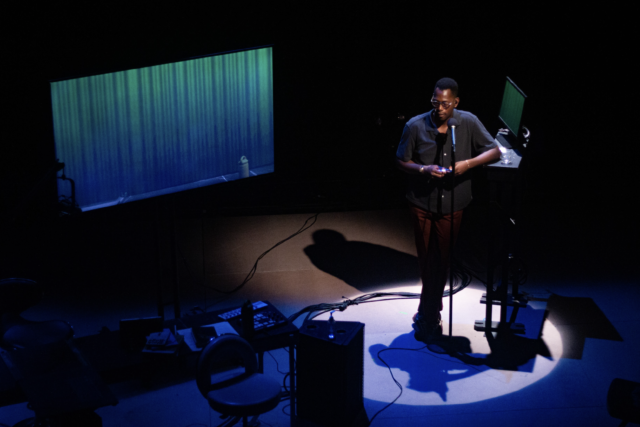
Obie-winning actor, playwright, rapper, and director Roger Guenveur Smith has staged such solo shows as A Huey P. Newton Story, about the founder of the Black Panthers, Frederick Douglass Now, in which he embodies the nineteenth-century abolitionist and orator, and Juan and John, which explored the real-life 1965 fight between Major League pitcher Juan Marichal and catcher John Roseboro. For the 2026 Under the Radar festival, he will perform In Honor of Jean-Michel Basquiat, about his friendship and collaboration with the highly influential Brooklyn-born artist and musician who died of a heroin overdose in 1988 at the age of twenty-seven. Smith and Basquiat met during their LA club years in the 1980s; Smith created the character of Smiley, inspired by Basquiat, for the 1989 Spike Lee film Do the Right Thing. The sixty-minute piece features live sound design by Mark Anthony Thompson; the January 8 and 15 performances will be followed by a Q&A.
UNDER THE RADAR: KANJINCHO
Japan Society
333 East 47th St. at First Ave.
January 8–11, $63 japansociety.org utrfest.org
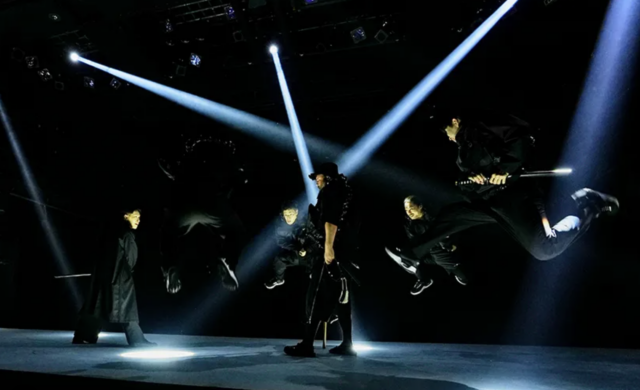
Yuichi Kinoshita reimagines the 1840 Kabuki classic Kanjincho (“The Subscription List”) as a contemporary hip-hop and pop-culture-infused theatrical experience, making its North American premiere at Japan Society January 8–11 as part of Under the Radar. The eighty-minute show is set in the twelfth century, around the Genpei War, a civil clash between the Taira and Minamoto clans. The work is performed by the Kyoto-based Kinoshita Kabuki, all dressed in black, and directed by Sugio Kunihara on a runway-like hanamachi (“flower path”) platform that juts into the audience, with the first two rows on the stage itself. The story concerns war, betrayal, race, and class as refugees attempt to cross borders, giving it a modern-day relevance. The company’s previous works include Musume Dojoji,Shinju Ten no Amijima, and Sannin Kichisa. The 7:30 show on January 8 will be followed by a reception; the 7:30 performance on January 9 will conclude with an artist Q&A. Ticket holders are invited to visit the immersive exhibition “Chiharu Shiota: Two Home Countries” with complementary same-day admission.
UNDER THE RADAR: ALL THAT FALL
Mabou Mines@122CC
150 1st Ave. at Ninth St.
January 8–26 www.maboumines.org utrfest.org
“It is our desire to create, as Beckett says, ‘a text written to come out of the dark,’” director JoAnne Akalaitis says about Mabou Mines’s tenth production of a work by Samuel Beckett, the absurdist black comedy All That Fall, following such presentations as Cascando,Happy Days,Play, and Worstward Ho over the course of the company’s fifty-six-year history. The seventy-five-minute one-act radio play will be performed by Randy Danson, Jesse Lenat, Steven Rattazzi, Tony Torn, Tẹmídayọ Amay, Wendy vanden Heuvel, Lila Blue, and Sylvan Schneiderman as part of Under the Radar. “What have I done to deserve all this, what, what?” the frail Mrs Maddy Rooney moans to bill broker Mr Tyler, later adding, “Have you no respect for misery?” I saw Trevor Nunn’s splendid version in 2013 starring Michael Gambon and Eileen Atkins and can’t wait to see what Akalaitis (Beckett’s First Love,BAD NEWS! I was there . . .) has in store for us this time around, with a set by Thomas Dunn, lighting by Jennifer Tipton, sound by Bruce Odland, costumes by Andreea Mincic, and projections by Jeri Coppola. Expect the unexpected.
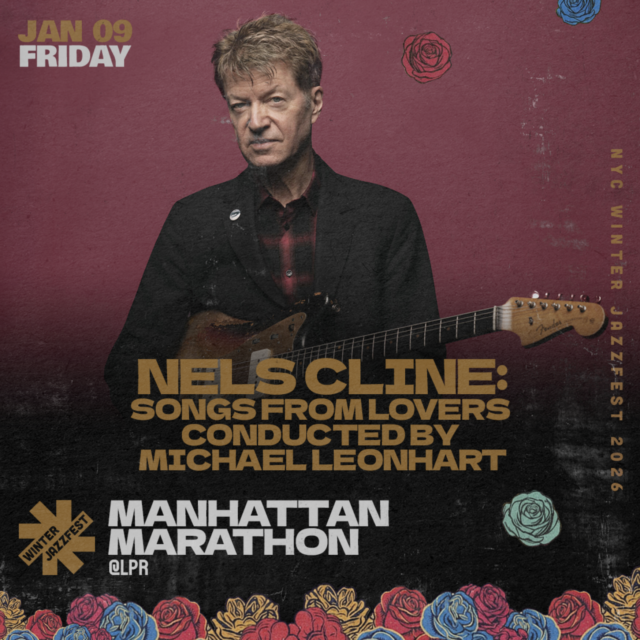
Founded in 2005, “Winter Jazzfest celebrates the music as a living entity, wherein history collides with the future in every note. Creative improvisation in the digital age continues to stimulate thought and emotion of its listeners, embracing innovation, defying instrumental boundaries and the old cliches of ‘What is Jazz?’” The festival runs January 8–13 and is highlighted by the Manhattan Marathon on January 9, boasting forty-five shows at Le Poisson Rouge, Nublu, DROM, City Winery, Close Up, Zinc, and the Bitter End, featuring Nels Cline’s “Songs from Lovers,” the Getdown, James Carter, David Murray, Lady Blackbird, and many more.
Drita Kabashi stars in Sara Farrington’s Euripides adaptation at the Tank (photo by Carol Ostrow)
APAP: A TROJAN WOMAN
Theater 98 at the Tank
312 West Thirty-Sixth St. between Eighth & Ninth Aves.
January 10-11, $23-$42 apap365.org/conference thetanknyc.org
“A Trojan Woman exists inside an act of modern warfare, inspired by an early moment in the Russian war against Ukraine that affected me deeply,” playwright Sara Farrington explains in a note about her adaptation of Euripides’s 415 BCE Greek tragedy The Trojan Women. Originally performed at the outdoor Theatro Attikou Aldous/Katina Paxinou Attica Grove Theater in Athens, Greece, in July 2023, A Trojan Woman will be at the Tank January 10-11 as part of the APAP (Association of Performing Arts Professionals) festival, directed by Meghan Finn and starring Drita Kabashi as Irina; the costumes are by Suzanne Bocanegra, with video by Ana Veselic. Farrington has previously collaborated with her husband, Reid Farrington, on such productions as BrandoCapote,CasablancaBox, and Dora Maar, always providing a unique take on the world and theater itself; Sara is currently working on Dr. Uncanny Presents: Moreau ’96, a musical based on the 2014 documentary Lost Soul: The Doomed Journey of Richard Stanley’s Island of Dr. Moreau. She is also the author of the popular Theater Is Hard. on Substack.
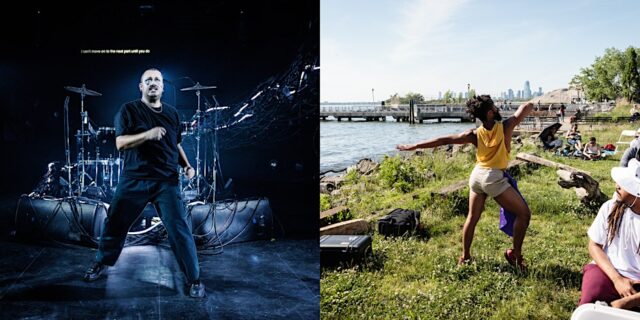
Ian Andrew Askew and Johnnie Cruise Mercer will present world premieres at Out-FRONT! Fest (photos by Maria Baranova and Johnnie Cruise Mercer)
OUT-FRONT! FESTIVAL: IAN ANDREW AND JOHNNIE CRUISE MERCER
Judson Memorial Church
243 Thompson St. at 55 Washington Square South
Saturday, January 10, and Sunday, January 11, free with advance RSVP (suggested donation $28.52) pioneersgoeast.org www.judson.org
Pioneers Go East Collective’s multidisciplinary Out-FRONT! Fest “champions the voices of LGBTQ and Feminist artists for a lively exchange of art and culture.” Curated by Gian Marco Riccardo Lo Forte, Remi Harris, Philip Treviño, and Joyce Isabelle, the 2026 edition runs January 5–11, with works by such performers as Dominica Greene, Suzzanne Ponomarenko, Alexa Grae, Sugar Vendil, Jo Warren, Owen Prum, and Corentin JPM Leven at Judson Memorial Church. On January 10 and 11, Ian Andrew Askew will present the world premiere of SLAMDANCE punk lessons, which explores sociopolitical aspects of moshing and violence, followed by the world premiere of Johnnie Cruise Mercer’s Mercies of a Butterfly, “a movement allegory about resilience.” All tickets are free with suggested donation and are going fast.
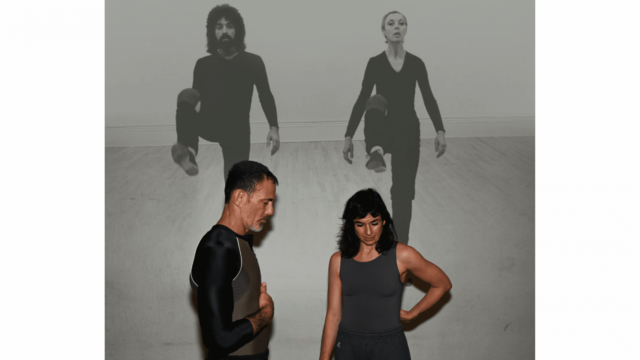
Wally Cardona and Molly Lieber restage David Gordon’s 1975 duet in original SoHo loft (b&w photo by Babette Mangolte; color photo by Daqi Fang)
LIVE ARTERY: TIMES FOUR / DAVID GORDON: 1975/2025
New York Live Arts / Pick Up Performance Co. Studio
541 Broadway between Spring & Prince Sts.
January 11–13, $33.85 newyorklivearts.org
Two of my favorite dancer-choreographers, Wally Cardona and Molly Lieber, have teamed up for Times Four / David Gordon: 1975/2025, an adaptation of David Gordon’s 1975 duet with his wife and muse, Valda Setterfield, that will run January 11–13 as part of New York Live Arts’ Live Artery festival. The work will be presented in the same SoHo loft where Obie and Bessie winners Gordon and Setterfield debuted it fifty years ago; Times Four has not been seen in its entirety since then. In 2021, Gordon asked Cardona, who is married to playwright Ain Gordon, David and Valda’s son, if he wanted to perform something from his archives. Cardona was instantly interested in Times Four, an unusual, relatively unknown piece, but Gordon rejected that. However, after both Gordon and Setterfield died, the former in 2022 at the age of eighty-five, the latter in 2023 at eighty-eight, Cardona decided to resurrect Times Four in their honor. “I think that they, especially Valda, would be very happy that we are doing this piece and that we are performing something,” Cardona told choreographer, dancer, director, and NYLA head Bill T. Jones in an online interview. Cardona (Interventions,The Set Up) and Lieber (Rude World,Gloria) reconstructed the piece from a video rehearsal, Setterfield’s handwritten notes, photographs, and other ephemera, as no footage of the full original duet, which is done in silence, exists. The audience will sit in folding chairs on all four sides of the loft.
Eric Berryman shares African American toasts in Wooster Group’s Get Your Ass in the Water and Swim Like Me (photo by Marika Kent)
UNDER THE RADAR: GET YOUR ASS IN THE WATER AND SWIM LIKE ME
Joe’s Pub, the Public Theater
425 Lafayette St. at Astor Pl.
Monday, January 12, and Tuesday, January 13, $36 utrfest.org publictheater.org
In 2019, the Wooster Group production of The B-Side: “Negro Folklore from Texas State Prisons,” a Record Album Interpretation earned a Drama Desk nomination for Unique Theatrical Experience for Eric Berryman’s multimedia adaptation of a 1965 LP compiled by Bruce Jackson, consisting of performances by inmates of color on segregated agricultural prison farms. Writer and actor Berryman and director Kate Valk followed that up with Get Your Ass in the Water and Swim Like Me, which is having an encore presentation at Joe’s Pub as part of Under the Radar. This time Berryman dives deep into Jackson’s 1974 book and 1976 disc, Get Your Ass in the Water and Swim Like Me: Narrative Poetry from Black Oral Tradition, a collection of folktales known as toasts, made for heroes and antiheroes in the Black storytelling canon. The tales are filled with tawdry sex and extreme violence — bullets are flying everywhere — but as funny as they are, there’s also an underlying sense of discomfort, particularly with a primarily white audience, as the stories contain stereotypes reminiscent of minstrelsy. Berryman compares over-the-top characters to Greek myths, where such figures as Hercules and Jason “would do stupid shit because they knew it would help them uh, uh, more quickly achieve kleos, and get kleos . . . A community creates the heroes that they need.” Berryman (Primary Trust,Toni Stone) is not just sharing old fables but exploring Black identity then and now. At one point he digresses into a discussion of his own name, how disappointed he is to be anchored with the plain “Eric” when he has relatives called Qasim, Idris, Indira, Akeem, Alenka, and Adia. (He does note that there is a Gary but does not share that it’s his uncle, Grammy-winning jazz saxophonist Gary Bartz.) The show concludes with the all-time favorite “Stackolee,” a tale of murder and mayhem that has been recorded in different versions by Mississippi John Hurt, Doc Watson, Wilbert Harrison, Long Cleve Reed, Lloyd Price, and Nick Cave and the Bad Seeds, among others, its familiarity spotlighting the centrality rather than the marginalization of the Black experience in American popular culture.
PhysFestNYC: BILL BOWERS: IT GOES WITHOUT SAYING
Stella Adler Center for the Arts
65 Broadway
Tuesday, January 13, $20, 7:30 & 9:00 www.physfestnyc.org
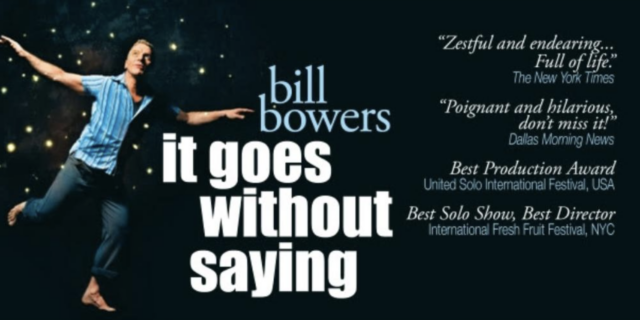
PhysFestNYC was started in 2024 as “a community-focused festival that celebrates, enriches, and envisions our field of physical theater . . . [which] tends to be experimental, innovative, and genre-breaking.” The third annual event, taking place January 8–18 at the Stella Adler Center for the Arts, consists of workshops, panel discussions, masterclasses, and live performances. On January 13, Bill Bowers will present the one-man show It Goes without Saying, which delves into his life and career from his childhood in Montana to studying with Marcel Marceau and appearing in several Broadway productions.
Christopher-Rashee Stevenson, Vin Knight, and Scott Shepherd rehearse for NYC premiere of ERS’s Ulysses (photo by Joan Marcus)
UNDER THE RADAR: ULYSSES
Martinson Theater, the Public Theater
425 Lafayette St. at Astor Pl.
January 13 – February 15, $109 publictheater.org utrfest.org
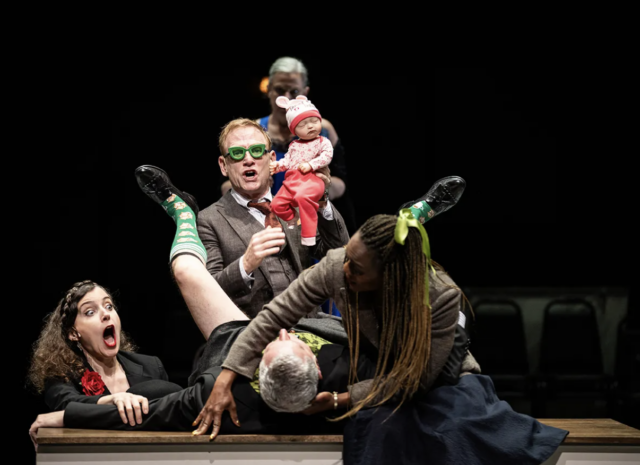
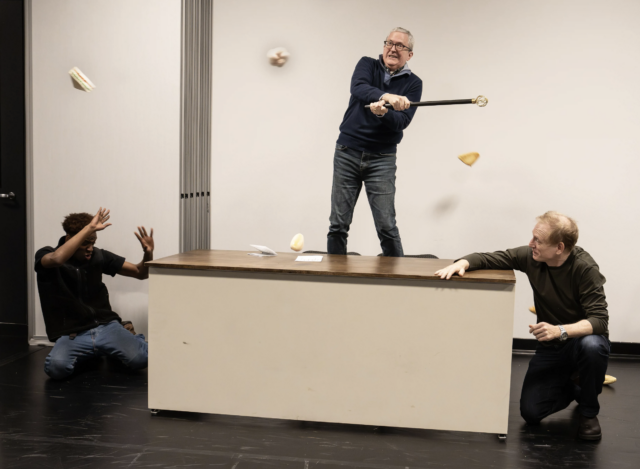
Elevator Repair Service follows up its farewell performance of the eight-hour Gatz at the Public with its adaptation of James Joyce’s Ulysses, clocking in at a mere two hours and forty minutes. Directed by John Collins, who has previously tackled such literary biggies for ERS as The Sound and the Fury and The Sun Also Rises in addition to Gatz, the show stars Dee Beasnael, Kate Benson, Maggie Hoffman, Vin Knight, Christopher-Rashee Stevenson, Stephanie Weeks, and codirector and dramaturg Scott Shepherd, with sets by dots, costumes by Enver Chakartash, and projections by Matthew Deinhart. Joyce is having a bit of a renaissance onstage recently, with a rare revival of Joyce’s only play, Exiles, last winter and Colin Murphy’s The United States vs. Ulysses at the Irish Arts Center last spring; ERS’s Ulysses, part of Under the Radar, promises to be the best of the bunch.
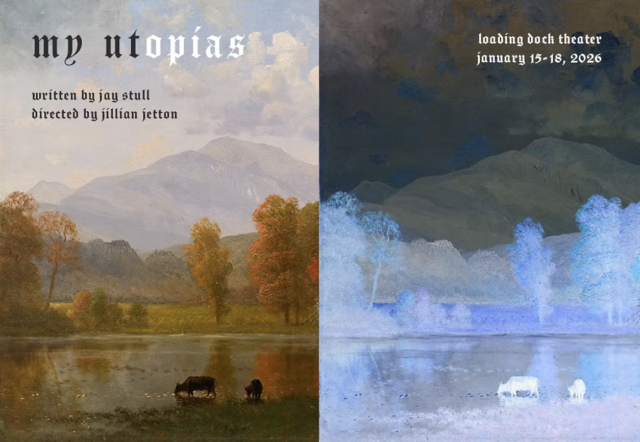
Writer Jay Stull (The Capables,Rantoul and Die) and director Jillian Jetton have put together a fantastic cast for my utopias, running at the Loading Dock Theatre as part of the Exponential Festival: Brittany Bradford, Ugo Chukwu, Fernando Gonzalez, Melissa Hurst, Jon Norman Schneider, Colleen Werthmann, and Julyana Soelistyo. The show is about a kind of postapocalyptic nightmare in New York City as a group of survivors wonder what the future holds.
Paul Lazar and Annie-B Parson stage first revival of Richard Foreman’s What to wear at BAM (photo by Scott Groller)
PROTOTYPE: WHAT TO WEAR
Brooklyn Academy of Music
BAM Strong Harvey Theater
651 Fulton St. at Ashland Pl.
January 15-18 www.bam.org www.prototypefestival.org
“Don’t finish what you start,” reads one of ninety-four notecards collected in experimental theater maestro Richard Foreman’s posthumously published book No Title. Fortunately, Foreman, the founder of the Ontological-Hysteric Theater who died last January at the age of eighty-seven, finished much of what he started, including more than eighty plays, operas, films, and books. The seven-time Obie winner and Guggenheim and MacArthur Fellow turned the theater and opera community inside out and upside down with such influential avant-garde works as Sophia = (Wisdom) Part 3: The Cliffs,Pandering to the Masses, and Elephant Steps. In the past year and a half, Object Collection presented the world premiere of Foreman’s Suppose Beautiful Madeline Harvey, the Wooster Collective staged 1987’s Symphony of Rats, and the Segal Center Film Festival on Theater and Performance held a retrospective of Foreman’s movies and videos. Big Dance Theater’s Paul Lazar and Annie-B Parson are now reviving, for the first time since its premiere, Foreman and Michael Gordon’s 2006 surreal post-rock opera What to wear, running January 15–18 at the Harvey as part of the Prototype and BAM’s Next Wave festivals. Foreman wrote the libretto and directed the original; Gordon composed the music, which will be performed by Bang on a Can All-Stars. The cast is highlighted by St. Vincent, sopranos Sarah Frei and Sophie Delphis, mezzo Hai-Ting Chinn, and tenor Morgan Mastrangelo, along with an ensemble of more than a dozen vocalists and dancers.
NEW EAR FESTIVAL: NIGHT 02
Fridman Gallery
169 Bowery between Delancey & Broome Sts.
Saturday, January 17, $22.46–$43.57, 8:00 withfriends.events
The Fridman Gallery’s annual New Ear multimedia festival showcasing “time-based art in all its forms” is highlighted by an impressive roster of performers on January 17, consisting of dancer and choreographer Jade Manns, artist and biohacker Dr. Heather Dewey-Hagborg, and the live debut of the trio of sound artist Stephen Vitellio, Fugazy drummer Brendan Canty, and multi-instrumentalist and producer-engineer Hahn Rowe, supporting their sophomore LP, Second. Talullah Calderwood, Sue Huang, and Konjur Collective open the three-day fest on January 16, while La Frae Sci, Ben Shirken x Dorothy Carlos, and Lucky Dragons close things out on January 18.
Fire This Time fest features ten-minute works by six playwrights
THE FIRE THIS TIME FESTIVAL: TEN-MINUTE PLAY PROGRAM
The Apollo Stages at the Victoria
233 West 125th St. between Frederick Douglass & Adam Clayton Powell Jr. Blvds.
January 23–31, $51.25 www.firethistimefestival.com
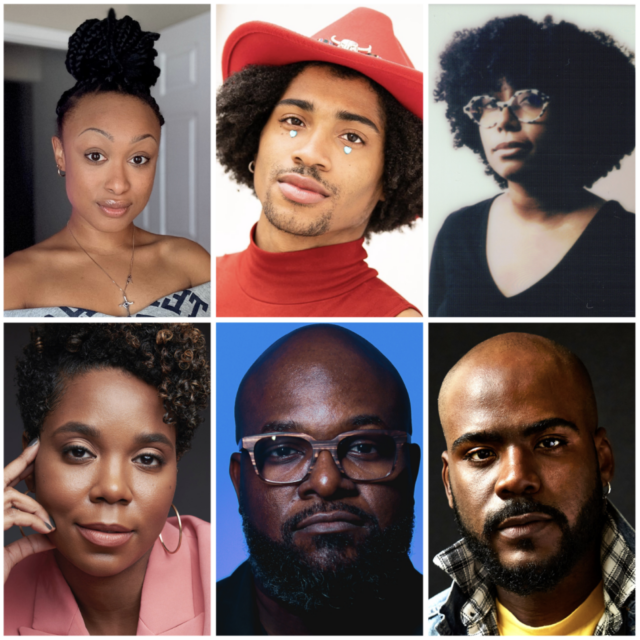
Founded in 2009 by Kelley Nicole Girod, the Fire This Time Festival, now in its seventeenth year, “provides a platform for early career playwrights of African and African American descent.” The 2026 iteration comprises six ten-minute shows at the Apollo Stages at the Victoria: Teniia Micazia Brown’s Everything But–, Preston Crowder’s Black to Save the Day, Mo Holmes’s Clumsy, Naomi Lorrain’s DNR, DeLane McDuffie’s Goose, and Donathan Walters’s White Diamond.
[Mark Rifkin is a Brooklyn-born, Manhattan-based writer and editor; you can follow him on Substack here.]