this week in music

THE CIVILIANS PRESENTS SHOWING UP

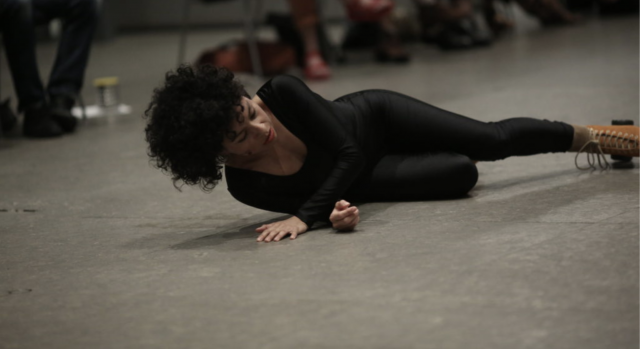
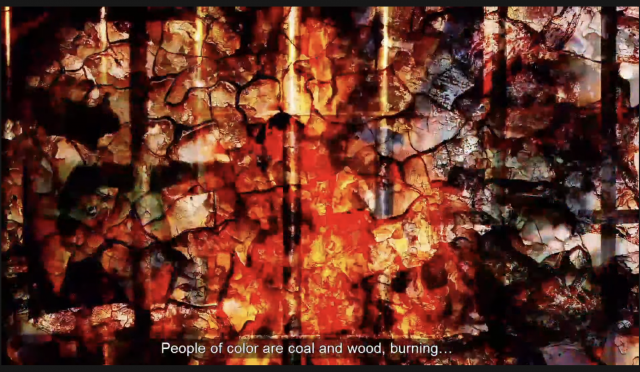
Accra Shepp’s portraits of BLM activists are inspiration for virtual evening of music and theater (photo © Accra Shepp)

Who: The Civilians
What: Livestreamed music, art, and performance
Where: Civilians online
When: Friday, April 16, free with RSVP (suggested donation $15), 7:30
Why: In the spring of 2020, award-winning photographer Accra Shepp began taking pictures of Black Lives Matter activists on the front lines, posting them to Instagram; his Covid Journals started with “Contagion,” with “Hunger” and “Justice” to follow. Those portraits are now the basis for Showing Up, a livestreamed event led by Brooklyn-based “investigative theater” specialists the Civilians in which four actors (Becca Blackwell, Cecil Blutcher, Sheldon Best, and Marsha Stephanie Blake) and a group of musicians and singers (bassist Rashaan Carter with vocalist Anaïs Maviel; composer Jacinth Greywoode and singer-songwriter Rebecca Hart; Jamie Lozano, with Javier Ignacio; and Katie Madison and composer-musician Jarret Murray, with Deborah Cowell) will perform new material inspired by the New York City native’s photos and by interviews with some of his subjects conducted by Blake, Jesse Baxter, Bailey Jordan Garcia, Dee Harper, Matt Maher, and Riley Tollen.

“I was introduced to Shepp’s Covid Journals this past fall and was moved by his striking ability to connect with each subject,” Civilians artistic director Steve Cosson said in a statement. “In Shepp’s photos, I saw an individual assert their presence on his or her own terms, giving a human-scale dimension to these larger, collective events. I’m delighted that Shepp agreed to work with us on this project, offering an opportunity for the voice of the individuals in these photos to ‘show up’ through their conversations with our company of interviewers and the interpretation of their words by actors and musicians.” Copresented with the International Center for Photography and Alice Austen House and with the collaboration of the Alfred Stieglitz Society at the Met, Showing Up is directed by Colette Robert, with video direction by Sadah Espii Proctor; Nidra Sous la Terre serves as host. Admission is free with advance RSVP; a talk with Shepp bookends the evening. Up next for the Civilians is Black Feminist Video Game April 27 to May 9.

PARTY IN THE BARDO

Park Ave. Armory, Wade Thompson Drill Hall
643 Park Ave. at 67th St.
May 5-9, $45
212-933-5812
www.armoryonpark.org

The Park Ave. Armory’s Social Distance Hall series has been selling out almost immediately, so act right now if you want to get the chance to experience Party in the Bardo, a collaboration between Laurie Anderson and Jason Moran, consisting of only four sixty-minute shows in which they will play live music over the epic soundscape that is Lou Reed: Drones, joined by special guests. The season began with Steven Hoggett, Christine Jones, and David Byrne’s SOCIAL! the social distance dance club, in which audience members get to dance in their own spotlights in the drill hall (through April 22), and continues May 9-26 with Bill T. Jones’s previously Covid-delayed Afterwardsness. Curator of the armory’s Artists Studio Series, Moran is a musician, composer, visual artist, MacArthur Fellow, and more, as depicted in his revelatory 2019-20 Whitney exhibition. In October 2015, Anderson presented Habeas Corpus at the armory with Mohammed el Gharani, a dazzling multimedia, sociopolitical installation. And Lou Reed’s former guitar tech and collaborator Stewart Hurwood has been guiding Drones through a variety of locations, from outdoors at Lincoln Center to the Cathedral Church of St. John the Divine, keeping Lou’s guitars humming. It should all come together for a compelling evening of improvisation and meditation at New York City’s best venue to see just about anything.

JOHN CULLUM: AN ACCIDENTAL STAR

John Cullum shares a life in the theater in one-man show (photo by Carol Rosegg)

JOHN CULLUM: AN ACCIDENTAL STAR
Available on demand through May 6, $28.75 – $81 (pay-what-you-can)
Live watch party: Saturday, April 17, 2:00
irishrep.org
www.vineyardtheatre.org

“Most of the shows I’ve done – and the parts I’ve played – have come to me through the back door, by accidents, you might say, or coincidence, or just plain luck. And tonight, I’d like to share with you some of my lucky accidents,” two-time Tony winner John Cullum says at the start of his wonderful one-man show, An Accidental Star, streaming on demand through April 21. Copresented by three theaters that have played an important role in Cullum’s long, distinguished career, the Vineyard, the Irish Rep, and Goodspeed Musicals, the eighty-minute production takes viewers behind the curtain as Cullum relates funny and poignant anecdotes and sings songs from throughout his more than sixty years in the business.

Cullum, who turned ninety-one last month, was born in Tennessee and had dreams of making it as an actor. When he arrived in New York City in 1956, he was ready to do whatever it took to land an audition and get an acting job. Through a series of lucky accidents, he soon found himself cast in three summer plays for Joe Papp’s Shakespeare in the Park, even though he had zero experience with the Bard. That led directly to auditioning for Moss Hart for Camelot on Broadway, where Cullum would meet Richard Burton, who became a lifelong friend.

Julie McBride plays piano as John Cullum reflects on his long career in An Accidental Star (photo by Carol Rosegg)

Cullum, who won Tonys for Shenandoah and On the Twentieth Century, was nominated for On a Clear Day You Can See Forever, Urinetown, and 110 in the Shade, and scored an Emmy nomination for his role as Holling Vincoeur in Northern Exposure, also chronicles experiences involving Maximilian Schell, Louis Jourdan, Lerner & Lowe, Hal Prince, Robert Preston, Robert Goulet, Madeline Kahn, The Scottsboro Boys, and his wife of more than sixty-one years, choreographer and writer Emily Frankel. Filmed by Carlos Cardona in January onstage at the Irish Rep, An Accidental Star was conceived by Cullum and Jeff Berger, written by David Thompson (The Scottsboro Boys; Priscilla, Queen of the Desert), and directed by Lonny Price and Matt Cowart (110 in the Shade, Lady Day at Emerson’s Bar & Grill), with music supervision by Georgia Stitt and music direction by Julie McBride, who accompanies Cullum on piano. The cameras shoot Cullum, dressed in an unbuttoned vest, purple shirt, and brown pants, from all sides as he sits on a stool, gets up and spreads his arms for a big finale, and walks over to the piano to join McBride. He’s an engaging raconteur who is deservedly proud of what he’s accomplished yet humble enough to understand how fortunate he’s been on this amazing journey, which includes a live watch party on April 17 at 2:00.

UNRAVELLED

Dr. Bruce Miller (Leo Marks) meets with Anne Adams (Lucy Davenport) and her husband, Robert (Rob Nagle), in Jake Broder’s UnRavelled (photo by Corwin Evans)

UNRAVELLED
The Global Brain Health Institute / Trinity College Dublin
Available on demand through April 30, free
www.gbhi.org/unravelled

One of the most fascinating plays of the Zoom era comes to us from an unlikely source: the Global Brain Health Institute at the University of California, San Francisco. Jake Broder’s UnRavelled is a deeply affecting ninety-minute play that shares the true story of Canadian scientist Anne Adams, who, in 1994, at the age of fifty-three, became obsessed with Maurice Ravel’s “Bolero” and made a remarkable painting based on the 1928 musical work, which Ravel composed for dancer Ida Rubenstein in 1928, when he was fifty-three. As it turns out, both Adams and Ravel had the same serious brain disease that affects memory while lighting a creative fuse.

Directed by Nike Doukas and edited by Corwin Evans in Zoom boxes, UnRavelled stars Lucy Davenport as Anne, a mathematician, chemist, and biologist, and Rob Nagle as her husband, Robert, a traffic architectural engineer. They are trying to hold together following a serious accident involving their son, but when they continue to have trouble communicating and Anne starts spending more time by herself in her studio, listening to “Bolero” and painting, Robert begins to suspect something else is going on, and Dr. Bruce Miller (Leo Marks) ultimately confirms that.

Doukas cuts between the current reality, in color, and Anne’s imaginary conversations with Ravel (Conor Duffy) about art, love, and science, usually in black-and-white. The play not only traces the intricate details of Anne’s illness but the effects it has on Robert, a gentle, caring man whose world has also been turned upside down. Prior to her submersion into “Bolero,” Anne is painting strawberries over and over, which upsets Robert. “You aren’t a painter,” he tells her. Anne responds, “You’re going to tell me what I can and can’t do?” Robert: “You’d be wasting your gifts, your experience in your field. And you will leave the world a poorer place, let alone our family.” Anne: “You don’t get to take a spiritual high ground. . . . I don’t need my choices mansplained to me, thank you. . . . I’m stopping to paint strawberries for a while, but that should be all I have to say.” Robert: “Yes, that’s true if you were some normal person and it didn’t matter, but you’re not and it does.” Later, after Anne considers leaving her chair at the university, Robert says to himself, “Seriously, who are you and what have you done with my wife?”

Anne Adams (Lucy Davenport) and Maurice Ravel (Conor Duffy) have something in common in fascinating new play (photo by Corwin Evans)

Broder includes interstitial scenes in which Dr. Miller, a neurologist who becomes Anne’s physician, is giving an intriguing lecture about modern art, while Ravel also speaks with Rubenstein (Melissa Greenspan), who has commissioned “Bolero,” which Ravel detests and can’t believe he actually wrote. “It just dumped itself into my lap all at once,” Ravel tells Anne. “At the premiere, the crowd roared. And I knew that this would be the first line of my obituary, and there is not a note of music in it.” The merging of the different aspects of science and the artistic process in the two distinct time periods works well as more information comes out about Anne’s condition. Nagle stands out among the cast, representing a kind of everyperson suddenly having to face a difficult, unexpected situation that he can’t control; he’s the character the audience can most identify with. The power of the play, which features the London Symphony Orchestra’s version of “Bolero” as well as French pianist Pierre-Laurent Aimard performing Ravel’s “Jeux d’eau, M.30,” lies in how it develops organically, like a work of art or, sadly, an untreatable disease.

Copresented by GBHI and Trinity College Dublin, UnRavelled is streaming for free through April 30. In conjunction with the play, there are several talkbacks and panel discussions available on demand, with Broder (Our American Hamlet, His Royal Hipness Lord Buckley), Doukas UnRavelled (Red Ink, The Hothouse), GBHI codirector and UCSF Memory and Aging Center director Miller, neurologists Bill Seeley and Adit Friedberg, neuroscientist Francesca Farina, theater and dementia specialist Nicky Taylor, GBHI alumni relations manager Camellia Latta, as well as a related dance choreographed by Magda Kaczmarska.

RICHARD THOMPSON: BEESWING VIRTUAL TOUR

RICHARD THOMPSON WITH ELVIS COSTELLO
Montclair Literary Festival
Tuesday, April 6, $20 ($35 with book), 8:00
succeed2gether.org

BEESWING: RICHARD THOMPSON IN CONVERSATION WITH DAVID FRICKE
92Y Online
Thursday, April 15, $10, 7:00
www.92y.org
www.richardthompson-music.com

“There is dust, and then there is dust. It’s thickest here, in my memory. This remotest room of my mind has been shut up for years, the windows shuttered, the furniture covered with dust sheets. Light hasn’t penetrated into some of these corners for years; in some cases it never has. If something is uncomfortable, I shove it in here and forget about it. When was the last time I dared look? I don’t want to remember, but now it is time to think back. The arrow is arcing through the air and speeding towards its appointed target.”

So begins British folk-rock legend Richard Thompson’s new memoir, Beeswing: Losing My Way and Finding My Voice 1967–1975 (Workman, April 2021, $27.95), written with Scott Timberg and illustrated with personal photographs. Thompson, who turned seventy-one last week, is one of the world’s finest guitarists and songwriters and a musicologist; he has made classic records with Fairport Convention, French Frith Kaiser Thompson, his then-wife, Linda Thompson, and as a solo artist. His project 1000 Years of Popular Music features tunes that go back to 1068. He peppers his extraordinary live shows with engaging patter with the audience, highlighting a snarky sense of humor and a wry smile. During the pandemic, he put on a series of living room concerts with his partner, Zara Phillips, from their home in Montclair, New Jersey, and released the six-track EP Bloody Noses, which he debuted from their house. So it is fitting that on April 6, he will be launching the book at the virtual Montclair Literary Festival, discussing it with Elvis Costello, who wrote his own memoir, Unfaithful Music & Disappearing Ink, in 2015. Tickets are $35 with a copy of the book, $20 without.

Thompson will be back online April 15 for the 92Y presentation “Beeswing: Richard Thompson in Conversation with David Fricke,” speaking with the longtime Rolling Stone journalist about the memoir, named for one of his most popular songs, an autobiographical tune about falling in love as a teenager. “She was a rare thing / Fine as a beeswing / So fine a breath of wind might blow her away / She was a lost child / She was running wild, she said / As long as there’s no price on love, I’ll stay / And you wouldn’t want me any other way,” he sings. Exploring his formative years, the book features such chapters as “Instead of Bleeding,” “Yankee Hopscotch,” “Tuppenny Bangers and Damp Squibs,” and “Bright Lights.” Thompson will be bringing his guitar with him to play a couple of songs as well.

As he writes in the afterword, “Like Fairport, like so many of my contemporaries, I don’t know when to stop — and hooray for that. There are more mortgages to be paid off and bills piling up, but more motivational than that, there is still an audience. It may be twenty thousand at a festival, a thousand in a theatre or ten in a retirement home, but the desire to communicate from my heart to their heart is the strongest pull, and the sweetest feeling.” If you’re not yet part of that audience, now’s the time. Hooray for that.

HIGH LINE ART: PIANO MAGIC LIVE Q&A

Song-Ming Ang will discuss his High Line Art video installation “Piano Magic” in live, online Q&A on April 6

Who: Song Ming Ang, Melanie Kress
What: Live online artist talk
Where: The High Line Zoom
When: Tuesday, April 6, free with RSVP, 1:00 (exhibition continues through April 28)
Why: In the 2019 interview “A New Understanding of Place” for the High Line blog, associate curator Melanie Kress explained why video was part of the elevated park’s continuing celebration of site-specific public art. “When we think of public art, most of us think of murals and sculptures. But to fully showcase the range of mediums that artists are working in today, video is indispensable,” she said. “Video also has the ability to cross back and forth between many different worlds and forms at the same time — between advertising, social media, film, documentary, documentation, television, music videos, and more. It provides a really interesting place for artists to play with viewers’ expectations. In a public space, visitors aren’t necessarily expecting to encounter art — especially video art — so those lines can be blurred in all the more challenging and creative ways.”

The latest video art installation to screen on the High Line Channel at Fourteenth St. is Singapore-born artist Song-Ming Ang’s “Piano Magic,” which consists of 2014’s Backwards Bach, in which Ang, who is based in Singapore and Berlin, plays Johann Sebastian Bach’s C Major Prelude from Book I of The Well-Tempered Clavier on the harpsichord both forward and backward, and 2011’s Parts and Labour, in which he fixes a disused piano. On April 6 at 2:00, Ang and Kress will discuss the project, which continues through April 28, in a live Zoom Q&A. Ang is also represented at the Asia Society Triennial with the multimedia site-specific installation True Stories, twelve music stands with text and images that explore the demise of societal norms, which he detailed in the Instagram Live program “Talking Dreams: A Conversation with Artist Song-Ming Ang.”

WOOFSTOCK AT THE WINERY: EMMYLOU HARRIS AND STEVE EARLE

Emmylou Harris and Steve Earle are teaming up for livestreamed benefit concert from City Winery in Nashville

Who: Emmylou Harris, Steve Earle
What: Livestreamed benefit concert
Where: CWTV from City Winery
When: Saturday, April 3, $15, 9:00
Why: City Winery is now hosting live concerts in its new space on Eleventh Ave. at Hudson River Park, including shows by Rhett Miller, Willie Nile, and Rufus Wainwright this month, but it is also still streaming performances on its CWTV platform from its locations in New York City and Nashville. Next up is “Woofstock at the Winery: Emmylou Harris & Steve Earle,” a benefit at City Winery Nashville for Bonaparte’s Retreat, a nonprofit dog rescue organization founded by Harris in 2004 to care for “the neglected and forgotten — senior dogs, large dogs, or dogs in need of imminent medical care or surgery,” and Crossroads Campus, which fosters “the healing power of the human-animal bond.” Earle and Harris are longtime friends and musical colleagues; on his 2019 tribute album to Guy Clark, Earle is joined by Harris (and Rodney Crowell) on “Old Friends,” on which they sing together, “Old friends / They shine like diamonds / Old friends / You can always call / Old friends / Lord, you can’t buy ’em / You know it’s old friends after all.” An early, in-person show at 5:00 Nashville time was added and sold out quickly, at $125 a pop; tickets for the one-time-only livestream at 9:00 New York time are $15.