On their 2010 full-length debut, Burning Bush Supper Club, Brooklyn-based indie four-piece Bear Hands explored guns, violence, and lost love in a relatively personal way. But on their new three-track EP, Songs from Utopia Volume I — which was released for free on Independence Day — singer-guitarist Dylan Rau, guitarist Ted Feldman, bassist Val Loper, and drummer TJ Orscher take on bigger issues, examining some of the most embarrassing moments in recent American history. “It takes a warrior to kill fifteen men / It takes a gentleman to apologize,” Rau sings on “What I’ve Learned,” which looks at U.S. military involvement in Japan, Vietnam, Cambodia, Nicaragua, Mexico, and Iraq. Now sporting a much tighter do that his previous, wilder hairstyles, he continues, “I’d like to see the red sun rising in Japan / Recall the glory days of dying like a man / With every death is born a brand-new life / Master of double speak make everything all right.” On “Bullshit Saviour Complex,” the band explores American policy in Africa, while “Disaster Shy” excoriates the government for its failure to react to the devastation wrought by Hurricane Katrina. Bear Hands will be kicking off their latest tour at the Knitting Factory in Brooklyn on July 20 ($15, 9:00) with Fort Lean and the Judas Knife. The EP, which features a mix of genres from rap and reggae to funk and techno, can be downloaded for free here. As this is called “Volume I,” we’re hoping there’s more to come, and soon.
this week in music
TWI-NY TALK: CATALPA FOUNDER DAVE FORAN
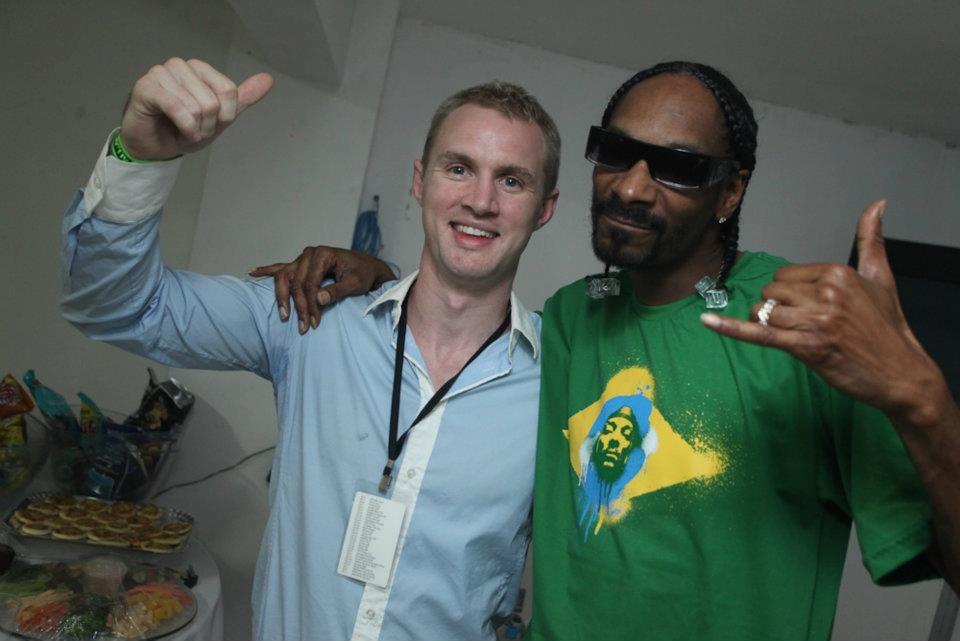
Dave Foran partied with Snoop Dogg at Vivo Rio last September and will do so again later this month on Randall’s Island
Catalpa Festival
Randall’s Island
Saturday, July 28, and Sunday, July 29
Weekend passes $179.99, day passes $99.99
www.catalpanyc.com
Dave Foran is hoping to achieve what no previous event promoter has done before in New York. Over the years, such outdoor music gatherings as the Fleadh, Lollapalooza, Across the Narrows, and All Points West have each failed to maintain a lasting presence, something the Dublin-born Foran is planning on doing with the Catalpa Festival. Taking place July 28-29 on Randall’s Island, the two-day inaugural festival boasts a diverse lineup of live acts, including the Black Keys, TV on the Radio, Umphrey’s McGee, Hercules and Love Affair, and Zola Jesus on Saturday and Snoop Dogg, Girl Talk, Matt and Kim, Cold War Kids, and Matisyahu on Sunday, among many other groups. In addition, Catalpa will host such special installations as Arcadia’s fire-shooting “Afterburner” and the Silent Disco Tent, where people can dance to wireless music beamed into their headphones. A former professional rugby player whose father was a promoter as well, the twentysomething Foran started his promotional company, Frisky, in 2010, with the goal of putting together “mind-blowing events.” The University of Sydney graduate recently discussed the genesis of Catalpa with us as the festival grew near.
twi-ny: What was the selection process like to come up with the roster of musical and visual artists participating in the festival?
Dave Foran: I didn’t want to pigeon-hole Catalpa in its first year and really wanted to create a diverse and slightly eclectic assortment of artists that I really feel had quite a bit of substance, their own style, and collectively a personality for the festival that I hope will be attractive. I did not set out to create a pop festival at all, but you do need some big names to get everyone interested. The Black Keys were my first-choice band for Catalpa. I really think they are amazing, and their recent explosion has been built on a solid foundation of developing a following year on year from creating incredible blues-rock; to me that is the epitome of what I would like Catalpa to represent.
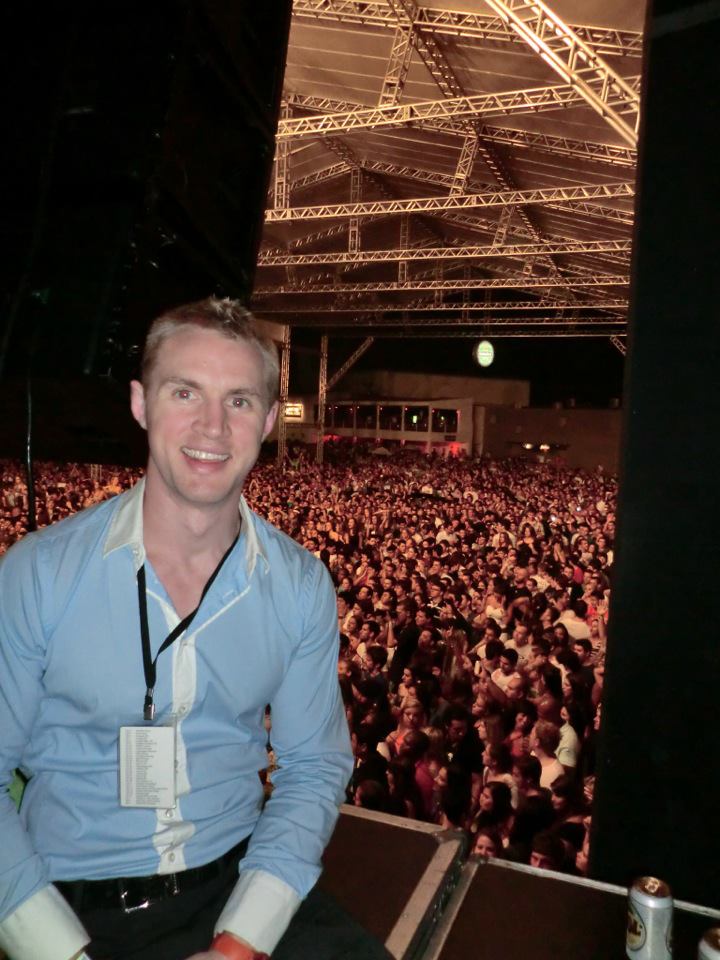
Dave Foran started Frisky in 2010 with the goal of throwing “mind-blowing events”
twi-ny: How did the decision to hold it on Randall’s Island come about?
Dave Foran: There really are not that many large green-field sites in NYC that can hold a suitable capacity and which are tried and trusted. In my view it really is the best of the bunch. Governors Island is landlocked and a logistical nightmare. Liberty State Park is in Jersey and that has its own problems with getting people over there from Manhattan and Brooklyn; people don’t like going across that water too much!!! Liberty State Park is also an old landfill with terrible drainage, and I think that is where a lot of problems with All Points West came from, as they were very unlucky with the weather.
twi-ny: What is the most difficult part of putting together a festival like Catalpa in New York City?
Dave Foran: The hardest things I have found so far is trying to make noise about a new event like this in a place so busy and difficult to get heard like NYC. You either need to be very clever about it or be willing to shovel over huge amounts of cash to get your brand out there. Also, booking a first-year festival as a relatively minor event producer from Ireland is not easy at all. I am not Live Nation or AEG, and a lot of talking was necessary to get some of the big artists I wanted.
twi-ny: Over the years, New York City has seen a slew of outdoor festivals come and go. What do you think the key is to make Catalpa work where others have failed?
Dave Foran: I am aiming for Catalpa to have a much more eclectic, left-field, and experience-based slant to it than other regular bar and stage events. I really believe that what keeps people remembering a good festival is not just the live acts they saw but also the subsidiary experiences they had. I am trying to bring this heightened dimension to Catalpa through elements such as Frisky’s Church of Sham Marriages, where a pimp pastor will marry couples, groups, threesomes, whatever, in an outrageous ceremony. There are also things like the Silent Disco and the High Times Reggae Stage, surrounded by hammocks where famous HT writers will be giving speeches on related topics. There are a lot of art installations, various site artistry, the world’s smallest nightclub (you need to see this!) etc. In my view it is these elements which also give a festival a life of its own and ultimately lead to its longevity.
BASTILLE DAY ON 60th STREET
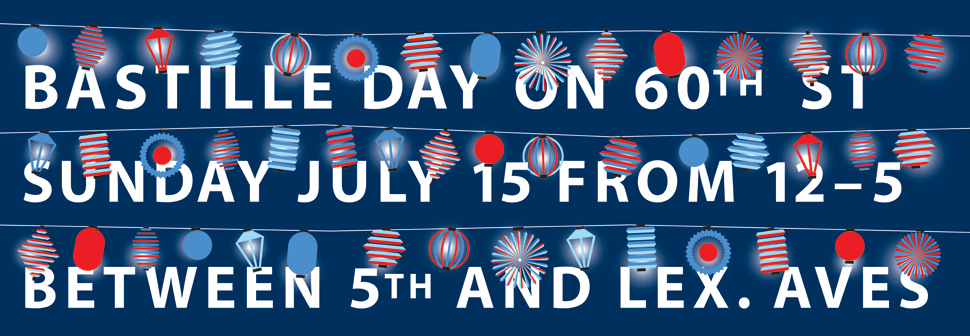
60th St. between Fifth & Lexington Aves.
Sunday, July 15, free, 12 noon – 5:00 pm
www.bastilledaynyc.com
www.fiaf.org
On July 14, 1789, a Parisian mob stormed the Bastille prison, a symbolic victory that kicked off the French Revolution and the establishment of the Declaration of the Rights of Man and of the Citizen. Ever since, July 14 has been a national holiday celebrating liberté, égalité, and fraternité. In New York City, the festivities will actually take place on Sunday, July 15, along Sixtieth St., where the French Institute Alliance Française hosts its annual daylong party of food, music, dance, and other special activities. There will be tastings ($20) inside FIAF, including wine and cheese, cocktails, and beer; a raffle drawing with such prizes as trips to France, St. Barts, and New Orleans; a Twitter challenge with yet more prizes; food and drink from Le Souk, Richart, Gastronomie 491, Bistro 61, Macaron Café, Financier, Opia, Ponty Bistro, Rouge Tomate, Tiny Treats, Bel Ami, Mille-feuille, and more; a macaron demonstration by master chef François Payard; French language workshops; live performances by the Hungry March Band and Can-Can Dancers; and a Kids’ Corner with such family activities as face-painting, arts & crafts, games, and more.
4KNOTS MUSIC FESTIVAL
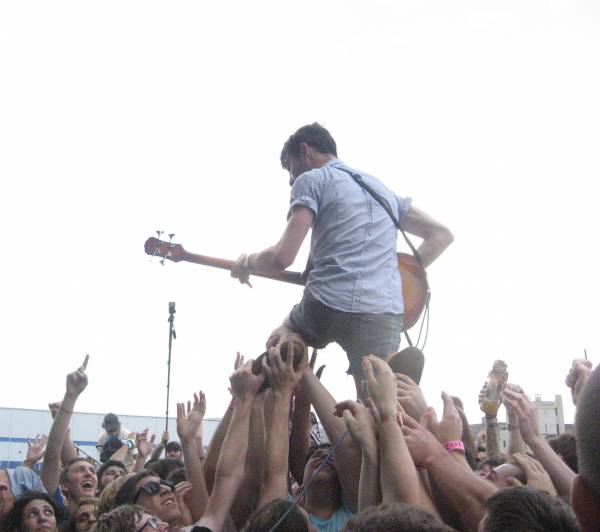
The Black Lips will lead what should be a crazy after-party to this year’s expanded 4Knots Music Festival (photo by twi-ny/mdr)
South Street Seaport, Pier 17
Saturday, July 14, free, 1:00 – 8:00
www.villagevoice.com/4knots
After a decade of the Siren Festival in Coney Island, the Village Voice moved its annual summer concert last year to the South Street Seaport and rechristened it the 4Knots Music Festival, which included great performances by, among others, Brooklyn’s Eleanor Friedberger and Oberhofer, San Juan’s Davila 666, and New Jersey’s Titus Andronicus on one main stage. This year 4Knots is expanding to two stages, better resembling its Coney Island beginnings, where sweaty music fans would dart between Stillwell Ave. and West Tenth St. to catch the band of their choice. Taking place on July 14, this year’s 4Knots kicks off with brief sets by the Smiling Lies at 12:15 and Fast Years at 12:30, after which decisions will have to be made between shows on the Main Stage and the Skippers Stage. There should be time to see some of every band, but that valuable spot will be snatched up the second you leave one area for the other. The Skippers Stage will feature Doldrums at 1:00, Devin at 2:00, Team Spirit at 3:00, and Delicate Steve at 4:00, while the Main Stage will be home to Nick Waterhouse at 1:30, Bleached at 2:30, Hospitality at 3:30, Crocodiles at 4:30, the Drums at 5:30, and headliners Archers of Loaf closing things out at 6:30. The after-party should be even crazier, with Black Lips, Kid Congo Powers and the Pink Monkey Birds, DJ April March go-go dancer Anna Copa Cabanna, and host DJ Jonathan Toubin holding court at the Beekman Beer Garden Beach Club at 89 South St. Tickets are $15 and worth every penny, especially if you’ve never seen Atlanta’s Black Lips, a crazed group of dudes who play legendary shows where just about anything can and will happen.
SUMMERNIGHTS 2012
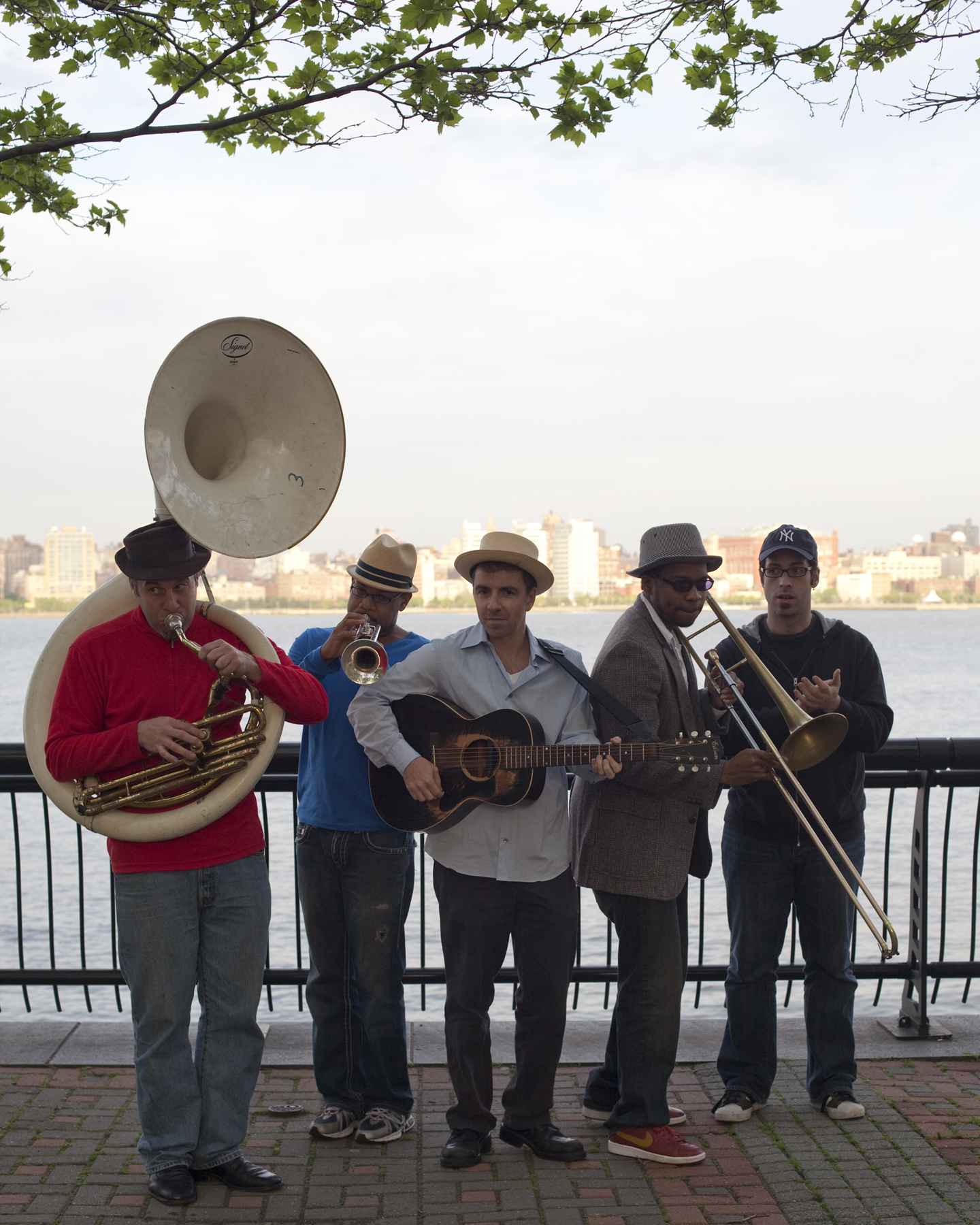
Howard Fishman and the Biting Fish Brass Band will kick off SummerNights at the Jewish Museum on July 12 (photo by Nisha Sondhe)
The Jewish Museum
1109 Fifth Ave. at 92nd St.
Thursday, July 12, 19, 26, $15, 7:30
212-423-3337
www.thejewishmuseum.org/summernights
“Performance is a religious activity to me,” Brooklyn-based singer, songwriter, and composer Howard Fishman wrote in March on the Huffington Post. “I don’t proselytize. The faith that I have is personal. I don’t believe that there is one right way to live, or that any group of people that has organized themselves under the name of a particular brand of religion has all the answers. But my experience tells me that we can make ourselves available to many of life’s mysteries by listening to a sort of inner voice, whatever we want to call it.” Fishman will share his inner voice and more as he opens the Jewish Museum’s SummerNights 2012 series on July 12, backed by his Biting Fish Brass Band, which includes trombone, trumpet, tuba, and drums. SummerNights continues on July 19 with local Balkan soul gypsy funk favorites Slavic Soul Party! and concludes on July 26 with One Ring Zero, the Brooklyn experimental klezmer outfit whose Author Project consists of songs with lyrics by such writers as Margaret Atwood, Neil Gaiman, Dave Eggers, and Paul Auster. There will also be free Chozen ice cream available and an open bar, and the galleries will remain open until 8:00 so you can check out such exhibitions as Kehinde Wiley’s “The World Stage: Israel” and “Edouard Vuillard: A Painter and His Muses, 1890-1940.”
WOODYFEST
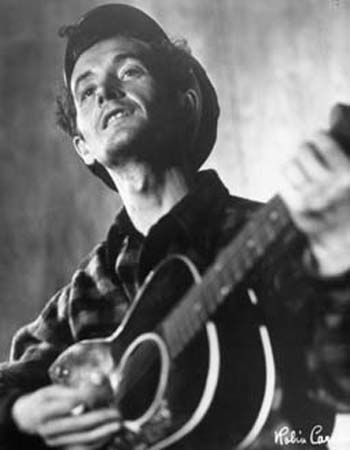
Steve Earle and special guests will celebrate Woody Guthrie’s centennial at City Winery this week
CELEBRATION OF WOODY GUTHRIE’S 100th BIRTHDAY
City Winery
155 Varick St.
July 11-13, $60-$80, 8:00
212-608-0555
www.citywinery.com
One hundred years ago this Saturday, folk-singing legend Woody Guthrie was born in Okemah, Oklahoma. In his too-brief career — he died from Huntington’s Disease in 1967 in Creedmoor State Hospital in Queens at the age of fifty-five, his ashes sprinkled in the ocean at Coney Island — he created a lasting legacy that proved that music can make a difference in changing socioeconomic and -political times. His 1940 album, Dust Bowl Ballads, is still a primer for the folk movement, containing such songs as “I Ain’t Got No Home in This World Anymore,” “Vigilante Man,” “Pretty Boy Floyd,” and “Blowin’ Down This Road.” This week City Winery will pay tribute to Woodrow Wilson Guthrie — yes, he was named after the New Jersey governor who was soon to become president — with the centennial celebration WoodyFest, part of a yearlong series of concerts put together with the Grammy Museum, the Woody Guthrie Archives, and the Guthrie family. The three-day event will be hosted by actor, author, activist, and folk troubadour Steve Earle, who is a kind of illegitimate son of Guthrie and Hank Williams. On July 11, Earle will be joined by John Hammond, Tim Robbins, and Diana Jones, followed on July 12 by Rachael Yamagata, the Wood Brothers, and Allen Toussaint and July 13 by Billy Bragg, Amy Helm, and Joe Purdy, with more to come. Be sure to study up on those other verses of “This Land Is Your Land,” because there’s sure to be a sing-along of the whole song.
LOWDOWN HUDSON BLUES FESTIVAL
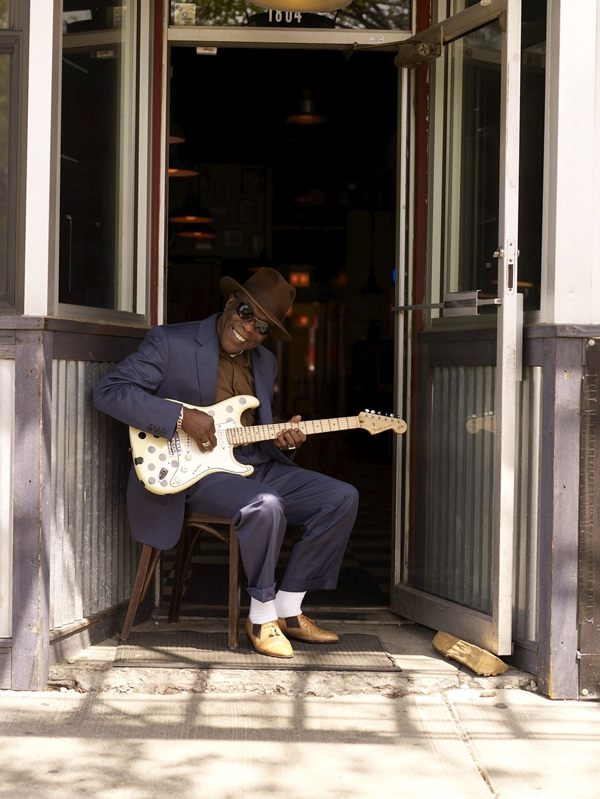
The legendary Buddy Guy will headline the two-day Lowdown Hudson Blues Festival on July 11 (photo by Christian Lantry)
World Financial Center Plaza
220 Vesey St. between North End Ave. & West St.
July 11-12, free, 6:00
212-417-7050
www.artsworldfinancialcenter.com
The blues return to World Financial Center Plaza this week with another diverse lineup for the second annual Lowdown Hudson Blues Festival. Last July, such greats as Taj Mahal and James Blood Ulmer played in the shadow of the Hudson River; this year features seventy-four-year-old living legend Buddy Guy, who will be headlining the July 11 show (after signing copies of his new memoir, When I Left My Home: My Story). Wednesday will also feature thirteen-year-old-prodigy Quinn Sullivan and the one and only John Mayall, the seventy-eight-year-old British master who led one of the seminal blues groups, the Bluesbreakers, which gave rise to such guitarists as Eric Clapton, Peter Green, and Mick Taylor. On July 12, Rob and Rachel Kolar’s He’s My Brother She’s My Sister kicks things off, joined by tap dancer Lauren Brown, followed by sixty-three-year-old Charles Bradley and His Extraordinaires. Born in Florida but raised in Brooklyn, Bradley has lived the life he sings about on his debut album, No Time for Dreaming. The evening concludes with a performance by indie fave Neko Case, the northwest singer-songwriter who is a member of the New Pornographers and has released such well-received solo albums as 2006’s Fox Confessor Brings the Flood and 2009’s Middle Cyclone.