this week in music

VIDEO OF THE DAY: “LOOK HOMEWARD, HEATHEN” BY GRASSFIGHT

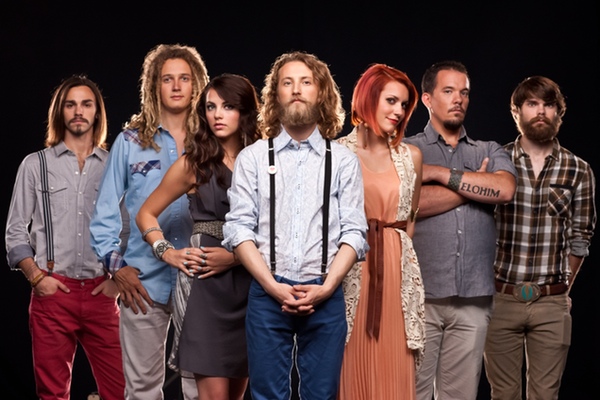
New York City band Grassfight has followed up its October 2011 EP, Icon, with another five-track, creatively titled Icon, EP 2. Released on July 24, the EP evokes 1970s Joy Division, 1980s Jesus and Mary Chain, and 1990s/2000s Interpol as well as Sonic Youth, with a big, brash, propulsive sound that can shake your bones and rattle your soul. Formed in Denton, Texas, in 2006, the trio of guitarist-singer Nathan Forster, bassist-singer Tamsi New, and drummer Mark Demiglio put Forster’s drony, commanding voice in the forefront, from the aggressive “Look Homeward, Heathen” to the bold, in-your-face “Hailey” and “Rhodendron” to the deeply intimate “Until You Sleep (Icy Slope).” On “Look Homeward, Heathen,” Forster sings, “I don’t want to know how it ends.” For Grassfight, perhaps things are only really just beginning. Grassfight will be at Arlene’s Grocery on September 1 at 11:00, preceded by Captain Baby at 10:00 and followed by Troublemakers at midnight. To get a taste of what you’re in for, you can check out the new EP for free here.

ORNETTE: MADE IN AMERICA

Shirley Clarke’s portrait of free jazz legend Ornette Coleman is back in a beautiful new 35mm restoration

ORNETTE: MADE IN AMERICA (Shirley Clarke, 1985)
IFC Center
323 Sixth Ave. at West Third St.
Opens Friday, August 31
212-924-7771
www.ifccenter.com
www.milestonefilms.com

In September 1983, innovative saxophonist and Fort Worth, Texas, native Ornette Coleman received a key to the city of his hometown and then helped open the new Caravan of Dreams arts center by performing the world premiere of “Skies of America,” a specially commissioned work that teamed Coleman and his band, Prime Time, with the Forth Worth Symphony. Director Shirley Clarke uses this celebratory event as the central focus of her 1985 documentary, Ornette: Made in America, which is being rereleased in a beautiful new 35mm restoration overseen by Milestone Films as part of its continuing Project Shirley, which began earlier this year with a dazzling new print of Clarke’s 1962 film about jazz and drugs, The Connection. In Ornette: Made in America, Clarke combines footage she shot of Coleman back in the 1960s for a never-completed film with new material that offers an inside look at Coleman and his relationship with his son, Denardo, a musical prodigy who has played drums with his father for decades, since he was a young boy. Clarke also includes staged scenes of young versions of Coleman wandering through his old neighborhood of Fort Worth, then turning to the camera to deliver determined stares, in addition to shots of a theater troupe dancing joyously down the street, Coleman performing through the years in San Francisco, New York City, and Nigeria, and interactions with such prominent figures as music critic Robert Palmer, artist Brion Gysin, writer William S. Burroughs, and architect Buckminster Fuller, who had a profound influence on Coleman’s unique free jazz sound. “As Buck says, you can’t see outside yourself, but we do have imagination,” Coleman explains inside a geodesic dome. “The expression of all individual imagination is what I call harmolodics, and each being’s imagination is their own unison, and there are as many unisons as there are stars in the sky.” Clarke puts the film together like one of Coleman’s free jazz compositions, filled with harmolodics, going from black-and-white to color and back again, cutting between interviews and live performances, moving from relaxing images to propulsive moments, and regularly bordering on the goofy, including talking heads in an animated television set, brief explanatory text in marquee scrolls, and shots of Coleman riding a spacecraft over the surface of the moon. Despite such silliness, Ornette: Made in America is a thrilling portrait of a national treasure, a one-of-a-kind musician who is still playing his unique brand of music in his eighties.

TICKET ALERT: THE KILLERS UNSTAGED

In a rather unexpected collaboration, the Killers are teaming up with legendary German director Werner Herzog in the latest edition of American Express Unstaged, in which a live performance is streamed in real time via YouTube and VEVO. The Las Vegas band, led by Brandon Flowers, will be playing at the Paradise Theater in the Bronx on September 18, the day their new record, Battle Born, is being released. Their fourth studio album, which follows 2004’s Hot Fuss, 2006’s Sam’s Town, and 2008’s Day & Age, features such tracks as “Flesh and Bone,” “The Way It Was,” “Miss Atomic Bomb,” and the first single, “Runaways.” The Killers handpicked Herzog to direct the show and were shocked when the filmmaker, who has made such landmark works as Aguirre, the Wrath of God, Fitzcarraldo, Grizzly Man, and Rescue Dawn, agreed to helm the project. Tickets ($58.50) go on sale August 31 at 12 noon for the September 18 show, which will stream live (and free) from the Bronx beginning at 7:00.

CROSSING THE LINE 2012

French Institute Alliance Française and other locations
Florence Gould Hall, 55 East 59th St. between Madison & Park Aves.
Le Skyroom and FIAF Gallery, 22 East 60th St. between Madison & Park Aves.
September 14 – October 14, free- $45
212-355-6160
www.fiaf.org

Tickets are now on sale for the sixth annual Crossing the Line festival, a month-long program of interdisciplinary performances and art sponsored by the French Institute Alliance Française at venues across the city. Running September 14 through October 14, the 2012 edition of CTL, curated by Gideon Lester, Lili Chopra, and Simon Dove, features a host of free events, with most ticketed shows twenty dollars and under. The festival opens on September 14 with the first of three concerts by innovative guitarist Bill Frisell, playing with two of his groups, the 858 Quartet and Beautiful Dreamers, in FIAF’s Florence Gould Hall; he’ll then be at St. Ann & the Holy Trinity Church in Brooklyn the next morning at 8:00 for the world premiere of his solo piece “Early (Not Too Late),” followed that night by the world premiere of the multimedia “Close Your Eyes” at the Invisible Dog, a collaboration with musician Eyvind Kang and visual artist Jim Woodring. Brian Rogers, cofounder and artistic director of the Chocolate Factory, will present Hot Box at the Long Island City institution, a chaotic look at mayhem, stillness, and disorder using a live video feed. Festival vet Gérald Kurdian returns with The Magic of Spectacular Theater at Abrons Arts Center, combining music and magic. DD Dorvillier / Human Future Dance Corps brings Danza Permanente to the Kitchen, reimagining a Beethoven score for four dancers, with acoustic design by Zeena Parkins. Choreographer Sarah Michelson will deliver Not a Lecture / Performance, while Jack Ferver will blend psychoanalysis with dance in the very personal Mon Ma Mes, both one-time-only presentations at FIAF. Joris Lacoste’s 4 Prepared Dreams uses hypnosis on April March, Annie Dorsen, Tony Conrad, and Jonathan Caouette. Congolese dancer and choreographer Faustin Linyekula, who dazzled CTL audiences last year with more more more . . . future, will participate in a discussion on September 17 with director Peter Sellars, followed by his solo work Le Cargo on September 18. Pascal Rambert’s Love’s End examines the disintegration of a relationship, with Kate Moran and Jim Fletcher at Abrons, while Raimund Hoghe teams up with Takashi Ueno at the Baryshnikov Arts Center for Pas de Deux, a playful look at the history of the classical duet. For Diário (através de um Olho Baiano), one of numerous free events, Bel Borba, collaborating with Burt Sun and André Costantini, will create a new piece of art every day somewhere in the city throughout the festival, with all coming together for a grand finale. Also free is David Levine’s Habit, a live ninety-minute-drama that loops for eight hours in the Essex Street Market, and OMSK / Lotte van den Berg’s Pleinvrees / Agoraphobia, in which the audience (advance RSVP required) wanders around Times Square listening on their cell phones to a man making his way through the area as well. In addition, Steven and William Ladd’s Shaboygen installation will be up at the Invisible Dog, and Céleste Boursier-Mougenot’s audiovisual portraits will be on view at the FIAF Gallery. Once again, CTL has included a little something for everyone, from performance art and dance to video and photography, from theater and concerts to the unusual and the indefinable.

SONG OF THE DAY: “MALDITO BENDITO” Y LA BAMBA REMIX BY TECHNICOLOR CATERPILLAR

Bilingual six-piece Latin folk band Y La Bamba is back in New York this week, playing two shows in support of their latest album, Court the Storm (Tender Loving Empire, February 2012). The follow-up to their 2010 debut, Lupon, the new record, produced by Los Lobos wiz Steve Berlin, features such songs as “Squawk,” “Moral Panic,” “Idaho’s Genius,” and “Michoacan” and includes an appearance by Neko Case on the title track. In addition, “Bendito” has been remixed as “Maldito Bendito” by fellow Portland group Technicolor Caterpillar. Y La Bamba is led by the unique voice of Luz Elena Mendoza, which wafts over Latin-inspired rhythms and harmonies, with lyrics that reveal her religious upbringing. “I can’t save my own life if I could / I can only save my dreams,” she sings on “Hughson Boys,” continuing, “Blessings to the world / Blessings to the dark places I give room to / Be free for so long / So long.” Y La Bamba will be at the Knitting Factory tonight and Mercury Lounge tomorrow, with Chris Pureka opening both shows.

VIDEO OF THE DAY: “THE FIRST TIME EVER I SAW YOUR FACE” BY AMANDA PALMER AND THE FLAMING LIPS (NSFW)

In her previous video, “Want It Back,” Amanda Fucking Palmer covered her unclothed body in black ink. The former Dresden Doll has cleaned herself up, in a way, for the follow-up, a remake of the folk-pop ballad “The First Time Ever I Saw Your Face,” which became a hit for Roberta Flack in 1972. A collaboration with the Flaming Lips, the video features AFP rolling around in a bathtub, no ink to be seen anywhere, in what she calls “a very naked, very joyful little present from me and the Flaming Lips!!” Palmer and her band, the Grand Theft Orchestra, are about to hit the road in support of their upcoming album, Theatre Is Evil, which was financed on Kickstarter with the help of such friends as Kristin Hersh, David Mack, husband Neil Gaiman, Robyn Hitchcock, DJ Spooky, and others making artistic contributions. The record features such tracks as “Smile (Pictures or It Didn’t Happen),” “The Killing Type,” “The Bed Song,” and “Lost” in addition to “Want It Back.” AFP and the GTO will be celebrating the September 11 release of Theatre Is Evil with a show that night in the Grand Ballroom at Webster Hall.

JANET CARDIFF AND GEORGE BURES MILLER: THE MURDER OF CROWS

“The Murder of Crows” is an intriguing, involving immersive experience at the Park Ave. Armory (photo by James Ewing/Park Avenue Armory)

Park Avenue Armory
643 Park Ave. at 67th St.
Tuesday – Sunday through September 9, $12 (open Labor Day Monday)
212-933-5812
www.armoryonpark.org
www.cardiffmiller.com

“Close your eyes and try to sleep,” Canadian-born sound artist Janet Cardiff repeatedly sings in a lullaby that is part of “The Murder of Crows,” a beautifully immersive installation continuing at the Park Ave. Armory through September 9. “Dreams will come / And when they’re done / It won’t be long / Until the dawn,” she adds. Closing one’s eyes and waiting for the coming of the proverbial dawn is the best way to experience “The Murder of Crows,” which was originally commissioned for the 2008 Biennale of Sydney. A collaboration between Cardiff — whose wonderful installation “The Forty Part Motet” can be seen at P.S. 1 in Queens through September 4 — and her husband, George Bures Miller, the thirty-minute “sound play” features ninety-eight speakers, fifty-five chairs, twenty-one amplifiers, and a gramophone horn on a lone desk. It was inspired by Goya’s late-eighteenth-century print “The Sleep of Reason Produces Monsters,” number forty-three of eighty works that make up “Los Caprichos,” a series that was critical of Spanish society. In the print, Goya buries his head in his arms on a table, surrounded by bats and owls, as if his nightmares are coming to life. In “The Murder of Crows” — the title refers to the collective noun used for a group of crows, intelligent, opportunistic birds that do so many things together, including mourning — Cardiff recounts several disturbing dreams, speaking through the gramophone horn, with sound effects, a traditional Tibetan prayer chant, and orchestral compositions arranged by Tilman Ritter and performed by Deutsches Film Orchester Babelsberg emanating from the speakers, which reside on chairs, hang at different heights from the ceiling, and are set on stands surrounding the chairs. “The Murder of Crows” touches on such issues as racism, globalization, war, and loss in evocative narrative fragments, including a surprising dose of unexpected humor, that create visual landscapes despite being a sound-based project. Visitors can enter the expansive Wade Thompson Drill Hall at any time during the piece and stay as long as they’d like, letting the dreamlike sounds wash over them as they remain in their seats or wander around the speakers, each one emitting something different. “The Murder of Crows” is yet another fascinating production at the armory, which has quickly become one of New York City’s most exciting venues for inventive, often cutting-edge art, dance, film, and music programming.