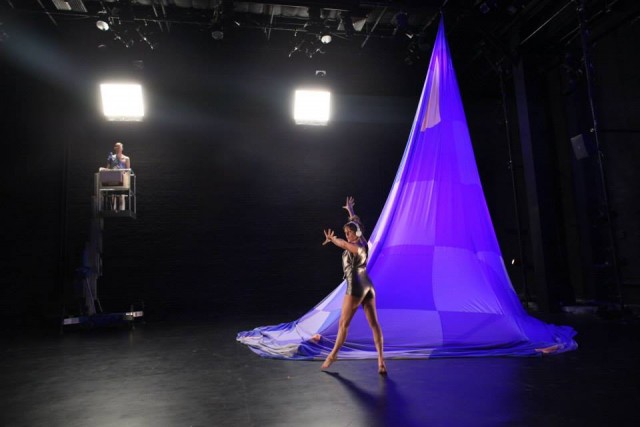
Adrienne Truscott moves from her day job at the Kitchen to live performance at Abrons Arts Center in …TOO FREEDOM…
Abrons Arts Center and other venues
466 Grand St. at Pitt St.
January 9-19, $20
212-598-0400
www.americanrealness.com
www.abronsartscenter.org
January in New York City is a veritable feast of live performance festivals, including PS 122’s Coil, the Public’s Under the Radar, Here’s Prototype, and Winter Jazzfest. Over at Abrons Art Center, American Realness will be celebrating its fifth anniversary with seventeen new movement-based shows and encore presentations as well as several off-site events. Tina Satter’s House of Dance (also part of Coil) follows a tense tap-dance competition. Ishmael Houston-Jones and Emily Wexler team up for the world premiere of 13 Love Songs: dot dot dot, which involves deconstructing romantic lyrics by Bryan Adams, Mary J. Blige, Ja Rule, Stephen Merritt, Nina Simone, Madonna, and others. Miguel Gutierrez explores gay sex and lost love in the intimate myendlesslove. Eleanor Bauer combines text, music, and movement in Midday and Eternity (The Time Piece); she’ll also lead the “Dancing, not the Dancer” class and host the anything goes Bauer Hour on January 19. Choreographer Juliana F. May and dancers Benjamin Asriel, Talya Epstein, and Kayvon Pourazar explore the physical and emotional naked body in Commentary=not thing. The Kitchen house manager Adrienne Truscott delves into day jobs and artistic creativity in . . . Too Freedom . . . , which also features Neal Medlyn, Gillian Walsh, Laura Sheedy, and Mickey Mahar. Lucy Sexton (the Factress), Anne Iobst (the Naked Lady), Scott Heron, and DANCENOISE join forces for Prodigal Heroes: An Evening of Legendary New York. Moriah Evans and Sarah Beth Percival play with human-connection tropes in Out of and Into (8/8): Stuff. Medlyn’s King concludes his seven-part foray into iconic stars, this time taking on Michael Jackson. And Melinda Ring’s Forgetful Snow and Roseanne Spradlin’s Indelible Disappearance — A Thought not a Title will be presented together for free on January 12.

Moriah Evans and Sarah Beth Percival team up in OUT OF AND INTO (8/8): STUFF for American Realness festival
Also on the schedule are Adam Linder’s Cult to the Built on What, Michelle Boulé’s Wonder (Boulé will also lead a “Persona & Performance” class on January 17), Rebecca Patek’s ineter(a)nal f/ear, Jillian Peña’s Polly Pocket, and Dana Michel’s Yellow Towel. The festival heads to MoMA PS1 on January 10-12 for Mårten Spångberg’s four-and-a-half-hour La Substance, but in English and to MoMA’s main Midtown location on January 15-16 for Eszter Salamon’s Dance for Nothing, based on John Cage’s Lecture on Nothing. In addition, there will be art exhibits throughout Abrons (Sarah Maxfield’s “Nonlinear Lineage: Over/Heard,” Ian Douglas’s “Instant Realness,” Medlyn and Fawn Krieger’s “The POP-MEDLYN Hall of Fame,” and Ann Liv Young’s interactive “Sherry Art Fair”), and Coil, Under the Radar, Prototype, and American Realness will be copresenting free live concerts every night from January 9 to 19 in the Lounge at the Public Theater, including Invincible, Christeene, Ethan Lipton, Heather Christian & the Arbonauts, Sky-Pony, Timur and the Dime Museum, the Middle Church Jerriesse Johnson Gospel Choir, M.A.K.U. Sound System, DJ Acidophilus, and Nick Hallett, Space Palace, and Woahmone DJs.
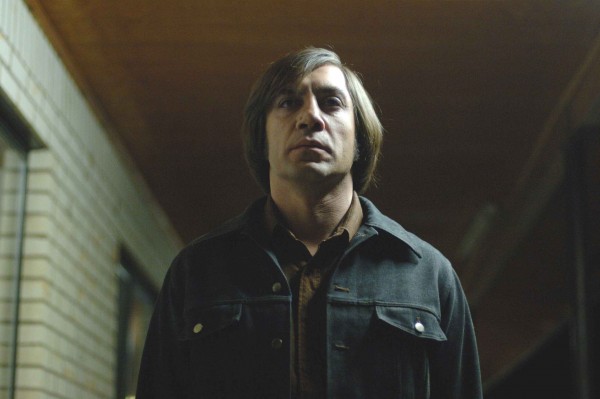
 Based on the novel by Cormac McCarthy, the Coen brothers’ No Country for Old Men is a gripping thriller dominated by the mesmerizing performance of Javier Bardem as Anton Chigurh, a psychopathic killer who believes in chance. When Llewelyn Moss (an outstanding Josh Brolin) accidentally stumbles upon the site of a drug deal gone terribly wrong, he walks away with a satchel of cash and the dream of making a better life for him and his wife (Kelly MacDonald). He also knows that there will be a lot of people looking for him — and the two million bucks he has absconded with. On his trail are the Mexican dealers who were ripped off, bounty hunter Carson Wells (Woody Harrelson), and the cool, calm Chigurh, who leaves a bloody path of violence in his wake. Meanwhile, Sheriff Bell (Tommy Lee Jones) philosophizes on the sorry state of the modern world as he follows the proceedings with an almost Zen-like precision. Though it struggles to reach its conclusion, No Country for Old Men is an intense noir Western, an epic meditation on chance in which the flip of a coin can be the difference between life and a horrible death. Nominated for eight Oscars and winner of four — for Best Picture, Best Supporting Actor (Bardem), Best Director, and Best Adapted Screenplay — No Country for Old Men is screening January 4-5 at 11:30 am as part of Nitehawk Cinema’s “Country Brunchin’” and “Coen Brothers Before Fargo” series and will be preceded by a live performance by NYC band Tatters & Rags. Yes, the Nitehawk knows that No Country for Old Men actually came after Fargo, which is part of the month-long festival along with Miller’s Crossing, Raising Arizona, Blood Simple, and The Hudsucker Proxy.