this week in music

MARXFEST

marxfest

Multiple locations
May 1-31, free – $35
www.marxfest.com

As legend has it, during a card game in May 1914, vaudeville monologist and mimetic comedian Art Fisher rechristened Leonard, Arthur, Julius, and Milton Marx as Chicko (Chico), Harpo, Groucho, and Gummo, respectively. (Herbert was renamed Zeppo later.) So in May 2014, Marxfest will celebrate the one hundredth anniversary of that propitious event with a series of special programs in all five boroughs, paying tribute to the New York City natives with film screenings, panel discussion, plays, parties, and a reading of an upcoming musical production of the brothers Marx’s Broadway musical debut, which was never filmed and has not been revived, until now. In addition to the below highlights, there are free film screenings every Thursday afternoon (A Night at the Opera, Monkey Business, Room Service, A Day at the Races), a Barx Brothers Dogwalk costume contest, walking tours, and more.

Thursday, May 1
The Party of the First Part, opening night party at location where Harpo spent many a night with the likes of Heywood Broun, Dorothy Parker, Alexander Woollcott, and George S. Kaufman, Algonquin Hotel Blue Bar, 59 West 44th St., free admission (cash bar), 6:00 – 10:00 pm

Friday, May 2
From Angels to Anarchists: The Evolution of the Marx Brothers, with Trav S.D. discussing Marx Brothers’ transition from the singing group the Four Nightingales to a comedy act and Sarah Moskowitz performing early routines, Coney Island USA, 1208 Surf Ave., $7, 7:30

Sunday, May 4
An Evening with Groucho, starring Frank Ferrante, Williamson Theatre, College of Staten Island, $20-$25, 3:00

Wednesday, May 7
Marxes in Manhattan, with a theremin tribute by Rob Schwimmer, a re-creation of the Leroy Trio with Richard Pearson, Zachary Catron, and Kit Russoniello, a multimedia presentation on the Marx Brothers and their hometown by author and archivist Robert S. Bader, the Players Theatre, 115 MacDougal St., $24, 8:00

Friday, May 9
The Music of the Marx Brothers, with Marissa Mulder, Rebekah Lowin, Bill Zeffiro, Tonna Miller, Gelber & Manning, and special surprise guests, hosted by Dandy Wellington, 54 Below, 254 West 54th St., $25-$35 (plus $25 food and drink minimum), 11:00

Saturday, May 10
Anarchy in Astoria: The Making of the Marx Brothers’ First Two Pictures, with the American Vaudeville Theatre’s Trav S.D. discussing the making of The Cocoanuts and Animal Crackers, Greater Astoria Historical Society, Quinn Building, 35-20 Broadway, fourth floor, $10, 1:30

Saturday, May 17
“You Bet Your Ass,” quiz show with host Murray Hill and announcer Jonny Porkpie, with burlesque stars Anita Cookie, Lady Scoutington, and Trixie Little & the Evil Hate Monkey, the Cutting Room, 44 East 32nd St., $14.99 in advance, $19.99 at the door, 10:00

Sunday, May 18
An Elephant in Your Pajamas . . . at the Zoo, the Bronx Zoo, meet at the south gate at noon in your pajamas, zoo admission of $13-$17, 12 noon

Sunday, May 25
I’ll Say She Is, full-length reading of first Marx Brothers Broadway musical, followed by panel discussion, the Players Theatre, 115 MacDougal St., $25, 5:00

Thursday, May 29
We’re All Mad Here: The Marx Brothers in Context, with Trav S.D. discussing the Marx Brothers’ vaudeville inspirations, Mid-Manhattan Library, 455 Fifth Ave., free, 6:30
PROJECT IX — PLEIADES

Japan Society
333 East 47th St. at First Ave.
Friday, May 2, and Saturday, May 3, $30, 7:30 PM
212-715-1258
www.japansociety.org

As part of the sixtieth anniversary of Japan Society’s performing arts program, the institution is presenting the North American premiere of Project IX — Pléïades, a multimedia music/video/movement piece. The “IX” in the title does not represent the Roman numeral “9” but the letters “I” and “X,” the initials of innovative Romanian-born Greek-French composer and musical theorist Iannis Xenakis. The evening is a collaboration between Japanese percussionist Kuniko Kato, who has released such albums as Cantus and Kuniko Plays Reich; Japanese dancer and teacher Megumi Nakamura, who has performed around the world with Jiří Kylián’s Nederlands Dans Theater, her own Dance Sangra, and other companies; and Italian choreographer Luca Veggetti, who has previously created works for the New York City Ballet’s Choreographic Institute, the Spoleto Festival, the Ballet of the Rome Opera, and the Kirov Ballet at the Mariinsky and was the 2011 resident artistic director of Morphoses. Kato will play Xennakis’s 1988 Rebonds, a multiple percussion solo in two parts, while Nakamura will dance to Xenakis’s 1978 Pléïades, a work for six percussionists in four movements. (“Pléïades” refers to the seven daughters of Atlas in Greek myth as well as the star cluster in the constellation Taurus.) “Why Xenakis, and why our interest in Xenakis? Xenakis had a strong interest in Japanese culture, and in Japanese theater in particular — which I share, by the way,” Veggetti, who is married to Japanese artist Moe Yoshida and has worked with Japanese composer Toshio Hosokawa on several projects, says in the above promotional video. “In particular about noh theater, which for him represented some kind of supreme form in terms of theatrical tradition, which conveyed his ideas about theater so exactly. And so we felt that because of this connection it was natural to build a project that hereditarily comes from Japan and that we’re performing here with Japanese performers.” The program will take place May 2 & 3 at 7:30; the May 2 performance will be followed by a reception with the artists.

SPEAKEASY DOLLHOUSE: THE BROTHERS BOOTH

Competitive siblings John Wilkes Booth and Edwin Booth are at center of complex drama in THE BROTHERS BOOTH (photo by Jeremy Daniel)

Competitive siblings John Wilkes and Edwin are at center of complex drama in THE BROTHERS BOOTH (photo by Jeremy Daniel)

The Players Club
16 Gramercy Park South
Saturday, May 3, June 7, July 12, general admission $75, VIP $125, 8:00
www.brothersbooth.blogspot.com

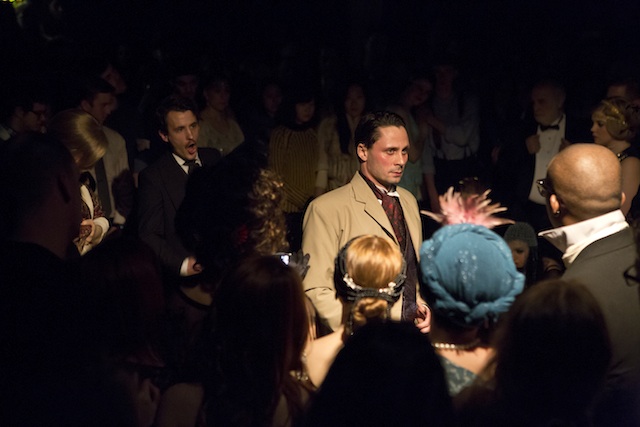
A palimpsest of nineteenth-century theater history, 1920s cabaret, and the storied Players Club, Speakeasy Dollhouse: The Brothers Booth is the second of creator Cynthia von Buhler’s Speakeasy Dollhouse immersive theater pieces. Long fascinated by her family’s bootlegger past and the layers of stories in New York City, von Buhler crafts participatory theatrical evenings unlike any other, in which the actors and the audience inhabit the same set — the dollhouse — with everyone as the dolls. The set in The Brothers Booth is the Players Club on Gramercy Park, the exclusive private organization for thespians founded by Edwin Booth, a superstar of the nineteenth-century stage, son of the preeminent Shakespearean actor Junius Brutus Booth — and brother to the less talented but far more notorious John Wilkes Booth, who assassinated Abraham Lincoln. (A statue of Edwin Booth resides in the center of Gramercy Park, across the street from the Players Club.) Von Buhler’s show, directed by Wes Grantom (Eager to Lose), invites ticket holders to dress up — going in costume is highly encouraged and pretty much essential to enjoying oneself — and join a 1920s Prohibition-era party in progress at the club, complete with ukulele players, magicians, singers, and a fabulous emcee, modern burlesque star Tansy.

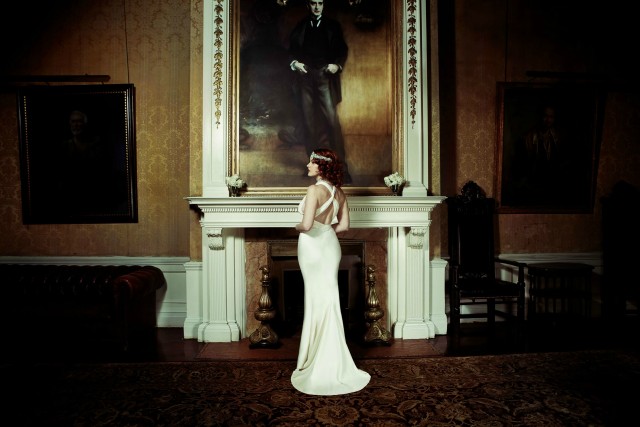
Speakeasy Dollhouse creator Cynthia von Buhler in the Sargent Room at the Players Club, beneath John Singer Sargent’s portrait of Edwin Booth (photo by Maxine Nienow 2014)

Speakeasy Dollhouse creator Cynthia von Buhler in the Sargent Room at the Players Club, beneath John Singer Sargent’s portrait of Edwin Booth (photo by Maxine Nienow 2014)

But the party is haunted by the spirits of the brothers Booth (with Ryan Wesen as John and an excellent Eric Gravez as Edwin) and various characters in their lives, who reenact mysterious scenes from different decades in assorted rooms on multiple floors, recalling Sleep No More, involving sibling rivalry, the fight over John Wilkes Booth’s corpse, a traveling circus, a burned tattooed man (Dan Olson), and the murder of the president. There’s a battle over a coffin, a medium (Chrissy Basham) holding a séance, a sword fight, a puppet show, a spirit photographer, and a telling excerpt from Julius Caesar, all taking place over and over again as guests get drinks at various bars (credit cards only), ogle one another’s costumes, mingle with the various performers dressed as taxi dancers and gigolos, and snap photos to post on social media. (VIPs also get to watch Mark Twain [Lord Kat] play cards with Robert Todd Lincoln and hang out in the burlesque performers’ dressing room.) The layering of stories is murkier in this installment; unlike Speakeasy Dollhouse: The Bloody Beginning (which continues April 26 and May 10, 17, and 31 on the Lower East Side), it’s hard to tell who is who and when is when. Most of the guests are there to show off their 1920s garb and to drink, and the scenes are repetitive and often unclear. Still, the evening is theatrically ambitious, absolutely singular, and not to be missed by fans of New York City history willing to take a walk on the strange side, into the Players Club and into the dollhouse.

SAKURA MATSURI

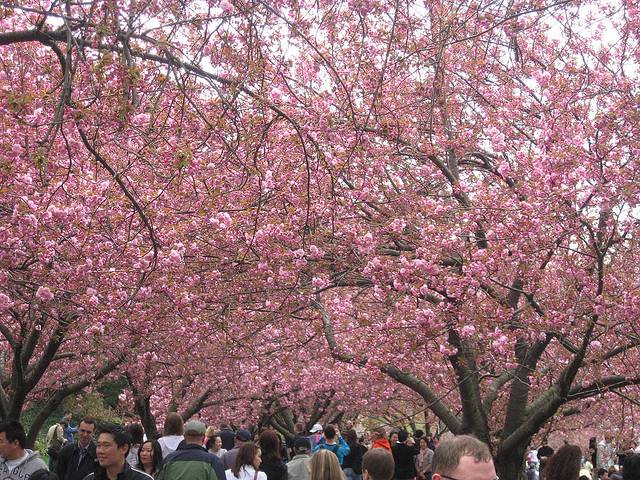
Large crowds will gather to see the blooming cherry trees at the Brooklyn Botanic Garden this weekend (photo by twi-ny/mdr)

Large crowds will gather to see the blooming cherry trees at the Brooklyn Botanic Garden this weekend (photo by twi-ny/mdr)

Brooklyn Botanic Garden
900 Washington Ave. at Eastern Parkway
Saturday, April 26, and Sunday, April 27, $20-$25 (children under twelve free), 10:00 am – 6:00 pm
718-623-7200
www.bbg.org

In her book The Cherry Blossom Festival: Sakura Celebration, author Ann McClellan writes, “The breathtaking sight of the cherry trees blooming in Japan has inspired princes, poets, artists, and ordinary people for over 1000 years.” However, just as every rose has its thorn, “The sublime beauty of the flowers and their brief life at the beginning of each spring symbolize the essence of a human’s short life well-lived.” This weekend, the beauty, delicateness, and symbolic nature of the cherry blossom will be honored as more than a hundred cherry trees are expected to bloom at the Brooklyn Botanic Garden. On Saturday and Sunday, the annual Sakura Matsuri will include live music and dance, parades, workshops, demonstrations, martial arts, fashion shows, and much more. The festival will feature Ikebana flower arranging, a bonsai exhibit, Shogi chess, a manga mural, a wall scroll show, rice shaker and origami workshops, garden tours, shopping, a bookstore, Japanese food, and more, taking place all day long. Below are just some of the highlights of other special, more time-specific events.

Saturday

Children’s Suzuki Recital, with Brooklyn College Preparatory Center, auditorium, 11:00 am

The Battersby Show, with special guest Misako Rocks, J-Lounge Stage at Osborne Garden, 12:30

Ikebana Flower Arranging Demonstration, with Sogetsu expert Fumiko Allinder, auditorium, 12:30

Dancejapan with Sachiyo Ito, Cherry Esplanade, 1:00

IchiP Dance Party, J-Lounge Stage at Osborne Garden, 1:15

BBG Parasol Society Fashion Show, featuring J-pop singer Hitomi Himekawa of Rainbow Bubble, Cherry Esplanade, 2:00

Hanagasa Odori Parade, with Japanese Folk Dance Institute of NY, J-Lounge Stage at Osborne Garden, 2:00

Urasenke Tea Ceremony, auditorium, 3:00 & 4:30

Samurai Sword Soul, Cherry Esplanade, 4:00

The Battersby Show, with special guest Jed Henry, J-Lounge Stage at Osborne Garden, 4:15

Sunday

Soh Daiko, Cherry Esplanade, 12 noon

“The Art of Bonsai” Lecture, with Julian Velasco, auditorium, 12 noon

Awa Odori Parade, J-Lounge Stage at Osborne Garden, 1:00 & 4:30

Ukiyo-e Illustration Demonstration with Artist Jed Henry, J-Lounge Art Alley at Osborne Garden, 1:30 & 3:00

Dancejapan with Sachiyo Ito, Cherry Esplanade, 2:00

Sohenryu-Style Tea Ceremony, with Soumi Shimizu and Sōkyo Shimizu, auditorium, 2:30 & 4:00

Magician Rich Kameda, J-Lounge Stage at Osborne Garden, 2:00 & 4:00

Hitomi Himekawa and the Rainbow Bubble Girls, J-Lounge Stage at Osborne Garden, 3:00

Ryukyu Chimdon Band, Cherry Esplanade, 4:00

Cosplay Fashion Show, Cherry Esplanade, 5:15

CARRIE MAE WEEMS LIVE: PAST TENSE / FUTURE PERFECT

Carrie Mae Weems

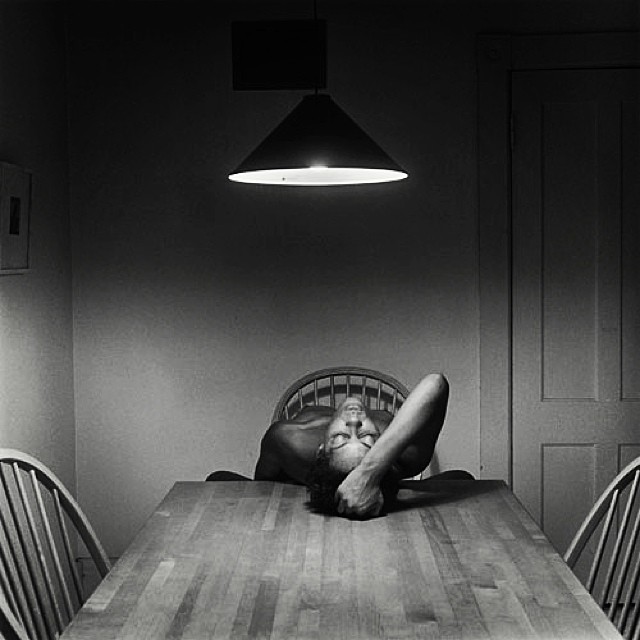
Carrie Mae Weems, “Untitled (Kitchen Table Series),” gelatin silver print and text, 1953 (© Carrie Mae Weems. Photo: © The Art Institute of Chicago)

Solomon R. Guggenheim Museum
1071 Fifth Ave. at 89th St.
April 25-27, most events free with museum admission of $18-$22, evening concerts $15-$35
Exhibition continues through May 14
212-423-3587
www.guggenheim.org

In her online biography, Carrie Mae Weems writes, “My work has led me to investigate family relationships, gender roles, the histories of racism, sexism, class, and various political systems. Despite the variety of my explorations, throughout it all it has been my contention that my responsibility as an artist is to work, to sing for my supper, to make art, beautiful and powerful, that adds and reveals; to beautify the mess of a messy world, to heal the sick and feed the helpless; to shout bravely from the roof-tops and storm barricaded doors and voice the specifics of our historic moment.” All this and more is evident in her current exhibition at the Guggenheim, ”Carrie Mae Weems: Three Decades of Photography and Video.” The show, which continues through May 14, is centered by her subtly powerful 1990 black-and-white “Kitchen Table Series,” which details the evolution of a woman photographed in the same domestic space, sometimes by herself, sometimes with children, sometimes with a man. In many ways it harkens back to painting series by Jacob Lawrence, capturing the African American experience, in this case with the focus on a woman. The show also includes photos from her “Colored People” grids, “Family Pictures and Stories” (accompanied by a voice-over by Weems), “Dreaming in Cuba,” “Roaming,” “From Here I Saw What Happened and I Cried,” “The Louisiana Project,” and “Sea Islands Series” in addition to such short films as Afro-Chic and ceramic commemoration plates, all of which explore elements of black history from an often extremely personal perspective.

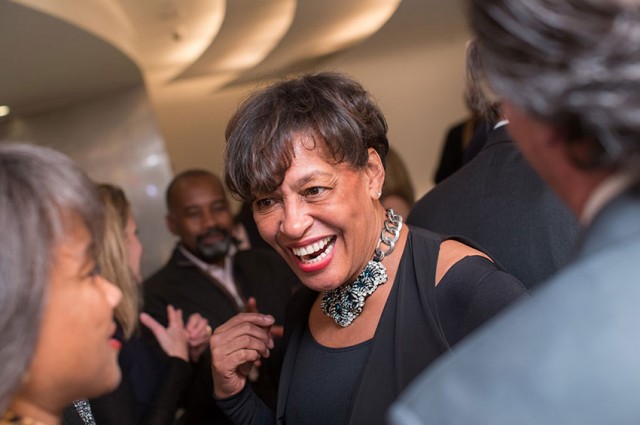
Carrie Mae Weems will cohost three days of art and activism at the Guggenheim this weekend (photo by Scott Rudd)

Carrie Mae Weems will cohost three days of art and activism at the Guggenheim this weekend (photo by Scott Rudd)

The Portland, Oregon-born artist will be at the Guggenheim this weekend presenting “Carrie Mae Weems LIVE: Past Tense/Future Perfect,” three days of discussions, live music, processions, readings, and more, cohosted by Weems and multidisciplinary artist Carl Hancock Rux. On Friday, there will be a tribute to conceptual sculptor and saxophonist Terry Adkins, who passed away at the age of sixty in February, with Vijay Iyer, Vincent Chancey, Dick Griffin, Marshall Sealy, and Kiane Zawadi, followed by “The Blue Notes of Blues People,” consisting of four sets of presentations by such visual artists, curators, choreographers, and scholars as Julie Mehretu, Leslie Hewitt, Shinique Smith, Thomas Lax, Michele Wallace, Camille A. Brown, Shahzia Sikander, Mark Anthony Neal, Sanford Biggers, Lyle Ashton Harris, and Xaviera Simmons. Other programs include “Written on Skin: Posing Questions on Beauty,” “Slow Fade to Black: Explorations in the Cinematic,” and “Laughing to Keep from Crying: A Critical Read on Comedy,” with Nelson George. The first two nights will conclude with ticketed concerts and conversations, with Jason Moran and the Bandwagon (Friday, with Weems) and the Geri Allen Trio (Saturday, with Weems and Theaster Gates). on Sunday, visual artist María Magdalena Campos-Pons will lead the procession “Habla Lamadre” before Weems offers closing remarks. Select programs on Friday and Saturday will be streamed live here.

WALKING SHAPES: A NEW YORK LOVE LETTER

With social media, online digital platforms, and thousands of cable channels, there are more ways than ever for a new band to get noticed. But New York City’s Walking Shapes has found a unique method to share their music. On April 24, guitarists Nathaniel Hoho and Jesse Kotansky, keyboardist Jake Generalli, bassist Dan Krysa, and drummer Christopher Heinz will celebrate the release of their energetic debut album, Taka Come On (No Shame, April 8), by playing at twenty-four different locations in a twenty-four hour period. “A New York Love Letter” opens at 1:00 am at the Manhattan Inn and continues at such venues as the Kent Ale House (1:45 am), Shayz Lounge (2:15), McCarren Park (10:30), El Beit (11:00), MOSCOT eyewear (2:00 pm), Central Park (4:15), Pianos (6:00), Tompkins Square Park (7:30), and Union Square (8:45). They will also be playing in a church, outside on Bedford Ave., on the subway, in a library, and at an art studio. Sleep is included; they’ll be taking a much-needed break from 4:00 to 8:30 am. The whirlwind tour concludes at 10:00 pm with a show at Bowery Electric with Har Mar Superstar. In addition, Walking Shapes has created a video for each tune on the record; you can watch the full stream above and check out some of their previous songs here. Sure, it’s a stunt to get publicity, but it helps that the album kicks some ass, from catchy guitar-heavy tracks (“Woah Tiger,” “In the Wake”) to synth pop (“Winter Fell,” “Feel Good”) to the acoustic ballad “Find Me.” And on April 24, you can find them all over the place. [ed. note: the schedule has changed since this initial post; check the band’s Twitter and Instagram pages for further updates. Walking Shapes will also be playing the No Shame showcase at DROM on April 25 with Pompeya and Seasick Mama.)

LADY DAY AT EMERSON’S BAR AND GRILL

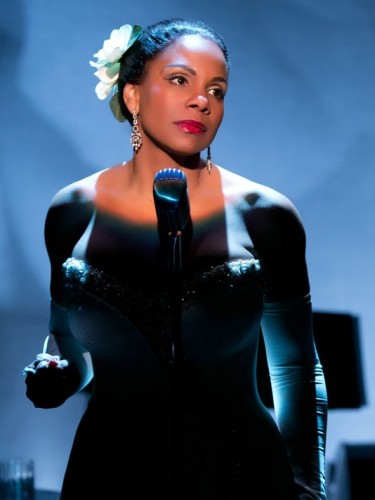
Audra McDonald channels Billie Holiday in  LADY DAY (photo by Evgenia Eliseeva)

Audra McDonald channels Billie Holiday in LADY DAY (photo by Evgenia Eliseeva)

Circle in the Square Theatre
1633 Broadway at 50th St.
Tuesday – Sunday through August 10, $97 – $252
www.ladydayonbroadway.com

Watching — nay, experiencing — the astonishing Audra MacDonald inhabit Billie Holiday in Lady Day at Emerson’s Bar & Grill, one might think that the show was created specifically for the five-time Tony winner. In fact, it’s been around since 1986, and earlier off-Broadway and out-of-town versions have featured such stars as Lonette McKee, Eartha Kitt, S. Epatha Merkerson, Loretta Divine, and Jackée Harry. Inspired by one of Holiday’s final performances, at a small club in South Philadelphia a few months before her death in 1959 at the age of forty-four, Lanie Robertson’s (Nasty Little Secrets) ninety-minute show focuses on a brittle but still immensely talented Holiday as she performs classic songs while sharing tales from her difficult life, which was riddled with physical and sexual abuse, failed marriages, rape, prostitution, and drug and alcohol addiction. Backed by Shelton Becton as pianist Jimmy Powers, George Farmer on bass, and Clayton Craddock on drums (get there early, as the trio starts performing well before curtain time), McDonald nails Holiday’s unique phrasing and thrilling voice on such numbers as “I Wonder Where Our Love Has Gone,” “Crazy He Calls Me,” and “Easy Living” as well as “God Bless the Child,” which she cowrote, “T’aint Nobody’s Business If I Do,” and “Strange Fruit,” giving them added emotional resonance in relation to Lady Day’s tragic downfall. The audience sits around the thrust stage on three sides, with a “Circle Club” section in the middle, where patrons sit at tables and drink during the show and Holiday occasionally stumbles through, slurring her words, needing help just to stay upright. Directed by Lonny Price, who previously worked with McDonald on 110 in the Shade, Lady Day is a poignant, passionate look at one of the greatest singers who ever lived, magnificently portrayed by one of Broadway’s very best.