Who: The PrimaDonna Reeds
What: CD release concert & party
Where: SPiN, 48 East 23rd St. between Park & Madison Aves., 212-982-8802
When: Saturday, August 29, $10 in advance, $14 at the door, 7:30
Why:Lower East Side six-piece the PrimaDonna Reeds are celebrating the release of their debut CD, Red Stilettos, in the kind of style that would probably make Oscar-winning namesake Donna Reed proud. On Saturday night, singer Karena Reiter, guitarists JC Ryder and Quinn Sheppard, bassist John Sheppard, drummer Slamin’ George Morales, and backup vocalist Christa McNamee will be at SPiN NYC on East Twenty-Third St. highlighting the record, which includes such tracks as “Planetary City Soldier,” “Cell Phone Funk,” and “Give Me the Key.” Attendees will receive a free three-song preview disk consisting of “Red Stilettos,” “Cell Phone Funk,” and “To Feel You.” (You can check out a handful of PrimaDonna Reeds songs here.) Also on the bill are Sylvana Joyce & the Moment, the Vinyl Plane, the Dave Fields Band, and Gusher. And at midnight, an after-party fashion show will feature such models as Ali Bukhari, Starlana Johnson, and Angelina Torreano.
this week in music
LIFE’S A PICNIC IN GRAND CENTRAL 2015
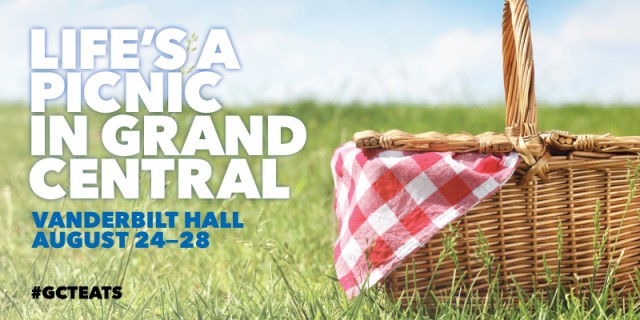
Vanderbilt Hall, Grand Central Terminal
89 East 42nd St. at Vanderbilt Ave.
August 24-28, free, 11:00 am – 2:00 pm & 4:00 – 7:00
www.grandcentralterminal.com
For the second August in a row, Grand Central Terminal’s classy Vanderbilt Hall is getting a makeover, being transformed into an indoor public picnic space August 24-28, with tables covered in gingham cloth, an AstroTurf floor, prizes and giveaways, and food from many of the restaurants that are located throughout GCT. “Life’s a Picnic in Grand Central” will also feature free Wi-Fi, air-conditioning, and live performances. You can bring your own lunch or pick up specials from a rotating lineup of GCT eateries, including Café Spice, Ceriello Fine Foods, Café Grumpy, Jacques Torres Ice Cream, Financier Patisserie, Junior’s Bakery, Magnolia Bakery, Neuhaus Belgian Chocolate, Zaro’s Bakery, Manhattan Chili Co., Li-Lac Chocolates, Manhattan Chili Co., Shiro of Japan, and Murray’s Cheese. Below is the lineup of special events.
Monday, August 24
Live Food Demonstrations: The Bar Burger by Chef Cenobio Canalizo of Michael Jordan’s, sushi rolling by Chef Hiro Isikawa of Shiro of Japan, mozzarella making with Dan Belmont of Murray’s Cheese, and cupcake decorating by Amy Tamulonis from Magnolia Bakery, 11:00 am – 2:00 pm
Joe’s Pub at the Public Theater presents “Echoes of Etta: A Tribute to Etta James,” featuring William Blake & Michael Thomas Murray, 4:30 – 6:30
Tuesday, August 25
Broadway Hour featuring live performance and more from the Broadway musical Wicked, 12:30
Music Under New York: Robert Anderson Jazz Trio, 4:00 – 7:00
Wednesday, August 26
Big Apple Circus presents Peety the Clown’s Yo-Yos & Stuff Show, 12 noon – 2:00 pm
Joe’s Pub at the Public Theater presents Danny Lipsitz and His Brass Tacks, 4:00 – 7:00
Thursday, August 27
Broadway Hour featuring musical performances from the Broadway musicals On the Town and Finding Neverland, 12:30 – 1:30
Music Under New York: Receta Secreta, 4:00 – 7:00
Friday, August 28
Broadway Hour: musical performances from Chicago, Something Rotten! and A Gentleman’s Guide to Love and Murder, 12:30 – 1:30
BAM NEXT WAVE FESTIVAL 2015
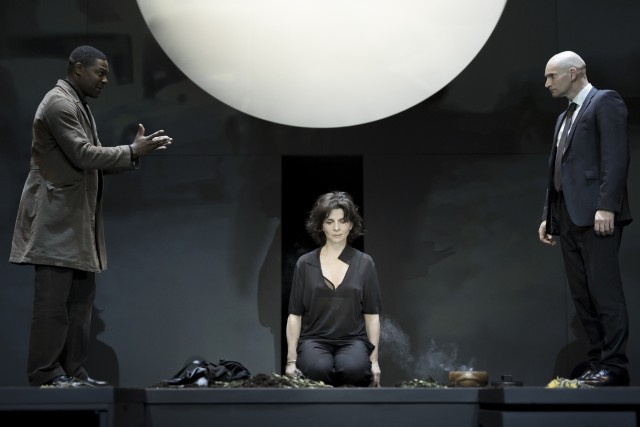
Juliette Binoche stars in new adaptation of ANTIGONE as part of BAM Next Wave Festival (photo by Jan Versweyveld)
Brooklyn Academy of Music
BAM Howard Gilman Opera House, 30 Lafayette Ave.
BAM Harvey Theater, 651 Fulton St.
BAM Fisher, 321 Ashland Pl.
September 16 – December 20, $20-$135
718-636-4100
www.bam.org
Every fall, we practically move into BAM for its annual Next Wave Festival, three months of exciting, challenging, and cutting-edge dance, music, theater, and other arts. And this year is no exception, with a roster of events that has us salivating. The star attraction is Ivo van Hove’s Antigone, a multimedia adaptation of Sophokles’s classic Greek tragedy in a new colloquial translation by Anne Carson and featuring Oscar winner Juliette Binoche in the title role. Other theater highlights are Stan Douglas and Chris Haddock’s multimedia stage noir, Helen Lawrence; Carl Hancock Rux’s The Exalted, about German-Jewish writer and art historian Carl Einstein, genocide, and genealogy, directed by Anne Bogart and with live music by Theo Bleckman; Royal Shakespeare Company actor Paterson Joseph portraying Charles “Sancho” Ignatius in the one-man show Sancho: An Act of Remembrance; and John Jahnke and Hotel Savant’s Alas, the Nymphs, a modern reimagination of the story of Greek mythological figure Hylas.
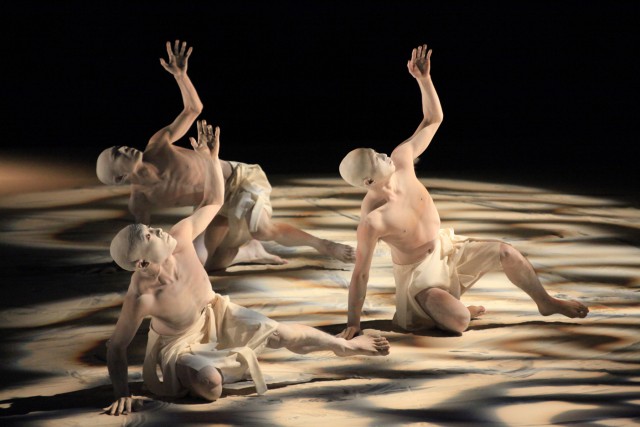
Sankai Juku returns to BAM for the first time since 2006 with UMUSUNA (photo courtesy of Sankai Juku)
The dance lineup at the 2015 Next Wave Festival is extraordinary as always, led by the return of German choreographer Sasha Waltz with Continu, a wild piece of dance theater set to Edgard Varèse’s “Arcana,” and Japanese Butoh troupe Sankai Juku’s Umusuna: Memories Before History, Ushio Amagatsu’s meditative exploration of history through fire, water, air, and earth. The season also includes Finnish choreographer Kenneth Kvarnström’s experimental Tape, the Cloud Gate Dance Theatre of Taiwan’s Rice, U-Theatre’s Beyond Time, Souleymane Badolo’s Yimbégré, Urban Bush Women’s Walking with ’Trane, Mark Morris’s annual holiday favorite The Hard Nut, and Wendy Whelan and Jock Soto in David Michalek’s Hagoromo, with choreography by David Neumann, puppetry by Chris M. Green, and Nathan Davis’s score performed live by the International Contemporary Ensemble.
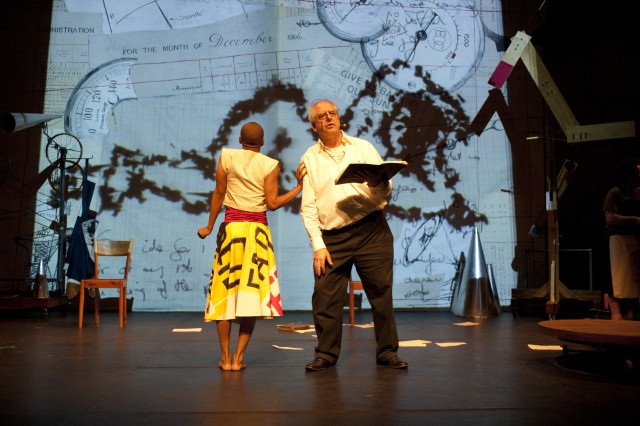
William Kentridge stars in his multimedia opera REFUSE THE HOUR (photo by John Hodgkiss)
The music program features one of the most unusual works, Kid Koala’s adaptation of his graphic novel Nufonia Must Fall, about a robot in love with an office mate, for which Kid Koala will be joined by the Afiara Quartet. In All Vows, cellist Maya Beiser teams up with bassist Jherek Bischoff, drummer Zachary Alford, and filmmaker Bill Morrison. Timur and the Dime Museum say a glam farewell to the environment in Collapse. In Real Enemies, Darcy James Argue and his Secret Society big band join forces with filmmaker Peter Nigrini, writer-director Isaac Butler, and designer Maruti Evans to delve into American conspiracy theories. South African genius William Kentridge is back at BAM with the multimedia opera Refuse the Hour, a companion piece to his immersive “Refusal of Time” installation recently acquired by the Met. Drummer Jim White and Sasha Waltz & Guests dancer Claudia de Serpa Soares perform on one side of a two-way mirror in More up a tree. And Steppenwolf cofounder Terry Kinney turns Portland indie group Other Lives’ stage show into a multimedia experience. Tickets are going fast — Miranda July’s participatory New Society is already sold out, as is Théâtre de l’Atelier’s Savannah Bay, both of which take place at the small BAM Fisher, where all tickets are always a mere $25 — so don’t hesitate if you want to catch some of these fab presentations.
VIDEO OF THE DAY: “CARELESS” BY ALEX WINSTON
Who: Alex Winston
What: Rocks Off Concert Cruise
Where: The Jewel, Skyport Marina, East 23rd St. & FDR Dr.
When: Thursday, August 27, $20-$25, 7:00
Why: It would be more than careless of us not to tell you to hop on board the Jewel on August 27 to see Brooklyn-based Detroit native Alex Winston, who we’ve been telling you about for several years now. Winston writes catchy techno dance pop set apart by her sweet, high-pitched voice (reminiscent of Kate Bush) and infectious, lilting melodies that can go from intimate to epic in the blink of an eye. She’s readying This Ain’t Luck, her long-awaited follow-up to 2012’s King Con, for a November 13 release, and you can check out a three-track teaser of “The Day I Died,” “Down Low,” and “Dead End” here, while you can enjoy the video for “Careless” above. We’ve had quite the luck ourselves, being able to listen to the upcoming album in advance, and we can’t get it out of our head, with songs such as “Breakdown,” “Cruel,” and “The One That Stayed” swirling around playfully in our brain. Joining Winston on this Rocks Off Concert Cruise will be Friend Roulette and DJ Emmieshouse.
CROSSING THE LINE 2015
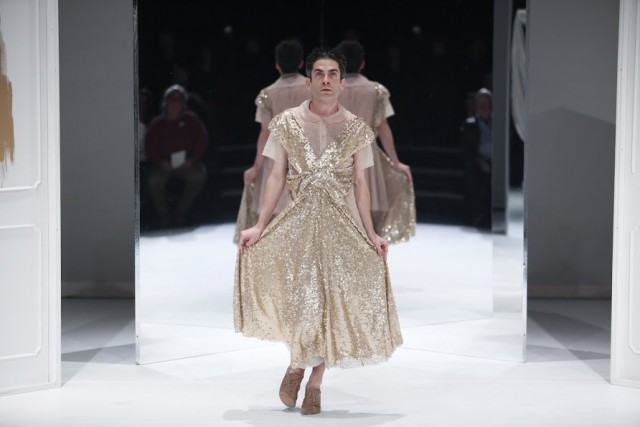
Jack Ferver and Marc Swanson will present the glittering CHAMBRE as part of FIAF’s annual Crossing the Line festival (photo by Julieta Cervantes)
French Institute Alliance Française and other locations
Florence Gould Hall, 55 East 59th St. between Madison & Park Aves.
FIAF Gallery, 22 East 60th St. between Madison & Park Aves.
September 10 – October 4, free – $35
212-355-6160
www.fiaf.org
Tickets are now available for FIAF’s ninth annual late summer/early fall multidisciplinary arts festival, and you better act fast if you want to see some of this year’s most intriguing programs. For us, the highlight is Jack Ferver and Marc Swanson’s Chambre, an installation and performance piece at the New Museum inspired by Jean Genet’s The Maids and pop-culture elements, with extravagant costumes by Reid Bartelme and experimental sound and music by twi-ny fave Roarke Menzies. British artist Ant Hampton’s Autoteatro series continues with The Extra People, in which participants will go on an individual adventure through FIAF’s Florence Gould Theater. The U.S. premiere of Brazilian artist Gustavo Ciriaco and Austrian artist Andrea Sonnberger’s Here whilst we walk will take small groups, bound by a giant rubber band, on a silent trip through Red Hook. Elana Langer’s free What I Live By will pop up at three locations, examining brand identification and personal values. Iranian artist Ali Moini searches for freedom in the multimedia dance work Lives at New York Live Arts (NYLA). Miguel Gutierrez will present the New York City premiere of all three parts of his Age & Beauty series, Mid-Career Artist/Suicide Note or &:-/; Asian Beauty @ the Werq Meeting or The Choreographer & Her Muse or &:@&; and Dancer or You can make whatever the fuck you want but you’ll only tour solos or The Powerful People or We are strong/We are powerful/We are beautiful/We are divine or &:’////, at NYLA, featuring such collaborators as Mickey Mahar, Michelle Boulé, Jen Rosenblit, Ishmael Houston-Jones, and Alex Rodabaugh. Italian artist Alessandro Sciarroni asks Folk-s, will you still love me tomorrow? in his unique interpretation of Bavarian folk dance at NYLA. French director Joris Lacoste investigates multiple languages and human spoken expression in Suite n°2 in Florence Gould Hall. Also on the bill are Shezad Dawood’s “It was a time that was a time” exhibition at Pioneer Works, a photography show by Mazaccio & Drowilal in the FIAF Gallery, Olivia Bransbourg’s ICONOfly magazine, and Adrian Heathfield and André Lepecki’s three-day symposium, “Afterlives: The Persistence of Performance,” at FIAF and MoMA.
CHARLIE PARKER JAZZ FESTIVAL
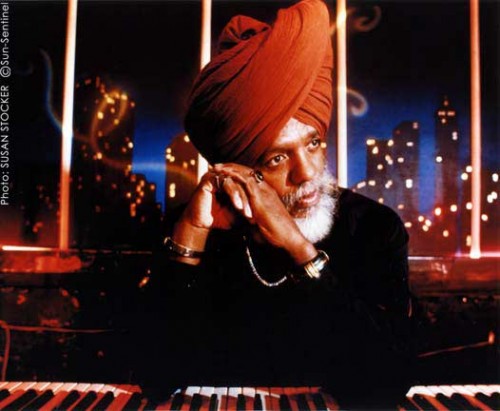
Dr. Lonnie Smith is one of the headliners at this years Charlie Parker Jazz Festival
Marcus Garvey Park and Tompkins Square Park
August 21-23, free
www.cityparksfoundation.org
The annual Charlie Parker Jazz Festival is always a bittersweet affair. The sweet part is three days of free music this year, up from the usual two. The bitter part is that it always comes near the end of the summer season, with Labor Day and school right around the corner. But let’s not worry about that now and instead concentrate on the free concerts at the twenty-second edition, which is part of the CityParks Foundation SummerStage program and begins August 21 at 6:00 in Marcus Garvey Park with Oliver Lake Big Band performing a special commission, the King Solomon Hicks Trio, and Michela Taps: Bird Lives! (“[Parker] was such an innovator and a driving force in this music, as well as an important influence on tap,” tap-dance star Michela Marino Lerman said in a statement. “We hope to contribute, in some way, to his tremendous legacy.”) On Saturday starting at 3:00, Dr. Lonnie Smith, Andy Bey, Jeff “Tain” Watts, Camille Thurman, and Norma Miller will be in Marcus Garvey Park (preceded at 2:00 by a master class taught by Samuel Coleman). And on Sunday at 3:00, Charlie Parker’s lasting influence will be honored in Tompkins Square Park with Rudresh Mahanthappa: Bird Calls, Joe Lovano, Myra Melford: Snowy Egret, and Michael Mwenso.
OUTDOOR CINEMA: ALICE
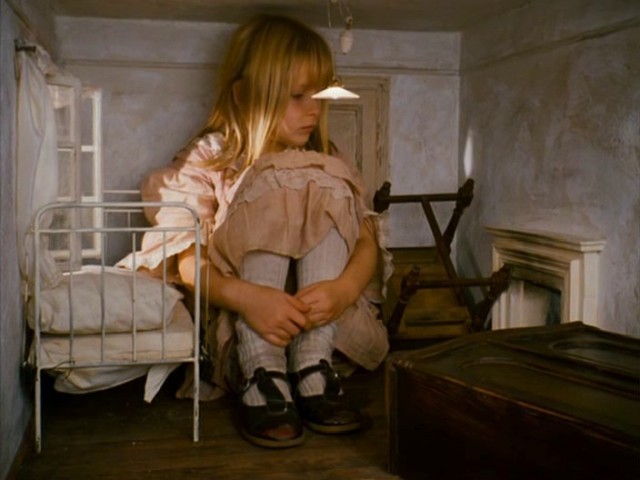
A young girl creates a bizarre, fantastical world in Jan Švankmajer’s unique retelling of Lewis Carroll classic
ALICE (NĚCO Z ALENKY) (Jan Švankmajer, 1988)
Socrates Sculpture Park
32-01 Vernon Blvd.
Wednesday, August 19, free, 7:00
718-956-1819
socratessculpturepark.org
 Czech master Jan Švankmajer’s debut feature-length film is a unique and unusual trip inside Lewis Carroll’s Alice’s Adventures in Wonderland. But this being Švankmajer, who began making creepy and fun stop-motion animated shorts in 1964, this is not a traditional telling. “Alice thought to herself, Now you will see a film made for children — perhaps,” Alice (Kristýna Kohoutová) says at the beginning. “But — I nearly forgot — you must close your eyes. Otherwise, you won’t see anything.” Sitting on the bank of a river, Alice tries to look at the book being read by her older sister (the figure is possibly a doll; the audience never sees the head), but Alice gets slapped, so she soon creates her own story in her head, as a taxidermied white rabbit comes alive and she follows it into a desk drawer and enters a weird, fantastical land where she alternates between being a regular-sized girl, a giantess, and a small doll. She encounters Carroll’s Mad Hatter, the beheading-crazed queen, a live piglet, and his other oddball creatures as she keeps finding keys that lead her into stranger and stranger places. She never smiles as her curiosity grows, very much a child with natural fears about what awaits her in the future. Alice gives different voices to all the characters as she narrates the tale, with all the lines identifying the speaker (“said the white rabbit,” “cried out the Mad Hatter and the March Hare”) accompanied by an extreme and disconcerting close-up of Alice’s mouth saying the words. Alice has constructed a dark world in her imagination, one that is not nearly as playful as the one created by Carroll. Švankmajer’s (Faust, Little Otik) use of dolls, puppets, and bizarre sets is impressively peculiar as the story takes grotesque twists and turns that are certainly not for younger children. Alice is screening August 19 as part of the Socrates Sculpture Park Outdoor Cinema series and will be preceded by a live performance by Brooklyn electronics duo Xeno and Oaklander, and Eastern European food will be available from Bear; the summer festival concludes August 26 with Joann Sfar’s Gainsbourg: A Heroic Life. And be sure to get there early to check out the summer art installations in the park. (Švankmajer, who at eighty years old is hard at work on his next project, was a major influence on the Quay Brothers, and you can see just how much in “The Quay Brothers — on 35MM,” running August 19-25 at Film Forum.)