Philip Glass’s “Glass on Water” promises “beautiful music in a beautiful setting” for free Make Music New York festival
Make Music New York is back for its tenth year, celebrating the longest day of the year with more than a thousand free concerts across the city on June 21. There are participatory events, live music in parks and plazas, unique gatherings in unusual places, and just about anything else you can think of. Below are only ten of the highlights, arranged chronologically.
Inside the Bird Chorus by David Rothenberg, at Brooklyn Botanic Garden (hosted by Rothenberg, 5:00 am & 8:00 pm), Wave Hill (hosted by multi-instrumentalist Michael Pestel, 9:30 am), Central Park (hosted by trumpeter Jordan McLean, 5:00), Jamaica Bay Wildlife Refuge (hosted by oboist Dave Kadden, 5:00 pm), and Fresh Kills Park (hosted by cellist Anneke Schaul-Yoder, 7:15 pm)
Mass Appeals: Stones: “Stones/Water/Time/Breath” by Dean Rosenthal, Lullwater Bridge, 11:00 am; bagpipes, “Windchime” by Matthew Welch, Court Square, 12 noon; Pianos: Celebrating Earle Brown, Cornelia St., 1:00 – 5:00; Cymbals: “Shimmer” by Brian Chase, Madison Square Park, 3:15; Guitars, Union Square Plaza South, 4:30 (including 5:45 play-along); Ukulele, Central Park, 5:00; Voice: Circle Singing, Sakura Park, 5:00 Modular Synth Orchestra, CultureHub NYC, 5:00 – 9:00); Harmonicas, Central Park, 5:30; Accordions, Carroll Park, 6:00; Double Reeds, Bleecker Park, 6:00; French Horns, Citicorp Plaza, 6:00; Music Boxes: “Here” by Angélica Negrón, Transmitter Park, 6:30; Boomwhackers: “Eye of the Tiger” by Survivor, Richmond County Ballpark, 7:00; Mandolins, Theodore Roosevelt Park, 7:00; Recorders, Straus Park, 7:00; Percussion: “Bells/Door” by J. C. King, DUMBO Archway, 8:00; Voice: Sacred Harp Sing, Calvary Church, 8:00; Voice: “The Gauntlet” by Sxip Shirey, the High Line, 8:15; and “49 Waltzes” by John Cage, multiple times and locations
Joe’s Pub Block Party: Stephanie McKay 11:00 am, Celisse Henderson 12 noon, Cocomama 1:00, Shrive Alive 2:00, Francesca Blanchard 3:00, Ocho Ocho Ocho 4:00, SLV 5:00, Astor Pl. & Lafayette St.
Street Studio City, Grandma’s Place (11:00 am – 1:00 pm), Stratosphere (12 noon – 2:00), Andrew Freedman Home (3:00 – 5:00), Harlem Grown (3:00 – 6:00), Jamaica Performing Arts Center (3:00 – 6:00), LP N Harmony (4:00 – 6:00), and Fowler Square (4:00 – 7:00), followed by Street Studio Smackdown at National Sawdust on June 23 at 9:00
Boleros by Maurice Ravel, Maria Hernandez Park, 12 noon & 4:00
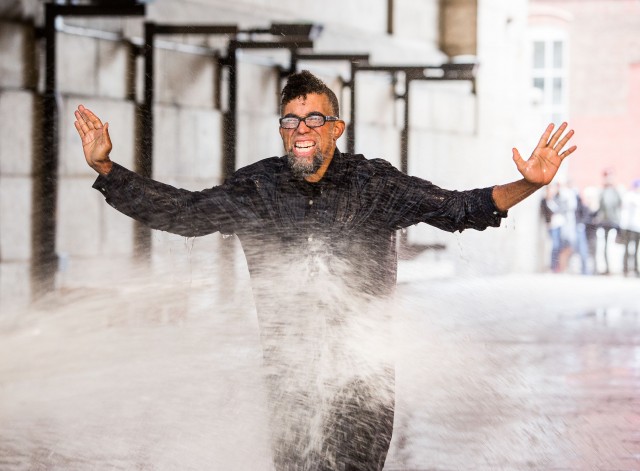
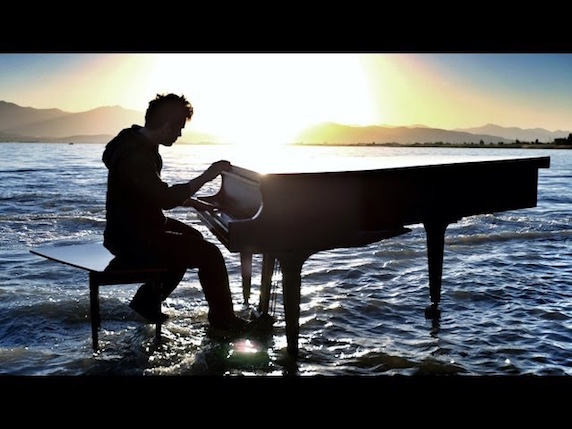
Summer on the Hudson: Glass on Water, performed by Philip Glass and more than forty New York City-area students, Pier i, West 70th St. & Riverside Park, 5:00
Concerto for Buildings, new works by Angélica Negrón (“There and Not Here”), Brooks Frederickson (“Bull Float”), and Kevin Moran, with Mantra Youth Percussion, performed on eight buildings on Greene St. between Grand & Broome, 5:00
Harlem Arts Festival: Uptown Funk, Corner Social (Karen Davis 12 noon, JuliousBass 4:00, Manny’s Boogaloo Crew 6:00), Harlem Tavern (Kochguit 12 noon, Ana Cifuentes 6:30, Siobhan 8:30), MIST (3:00 – 7:45), Billie’s Black (4:00 – 8:00), Walls-Ortiz Gallery and Center (Mayari 4:00, groovline 7:00), Urban Garden Center (Doctor Mo 4:30, KristanInvention 6:00, La Huerta 6:30), the Shrine (New Music Jazz Orchestra, 6:00), Silvana (6:00 – 10:00), Angel of Harlem (Shareef Keyes & the Groove, 7:15), and the Cecil (JS Williams, 7:15)
Exquisite Corpses, with Jeremiah Lockwood, First Shearith Israel Graveyard, 4:00
Sousapalooza: conducted by Jeff W. Ball of the Brooklyn Wind Symphony, Bryant Park, 5:00 – 6:30