this week in (live)streaming

RIDE SHARE

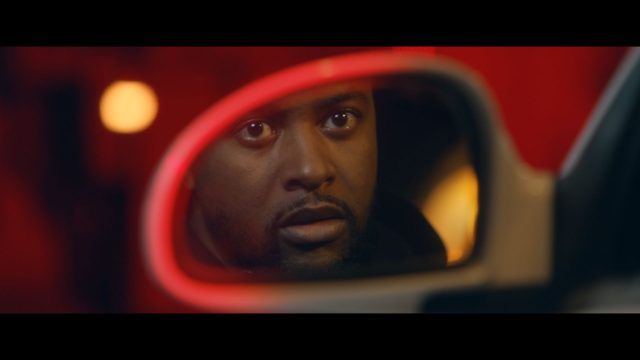
Marcus (Kamal Angelo Bolden) is on a dangerous road in Writers Theatre’s Ride Share

RIDE SHARE
Writers Theatre
Through July 25, $40-$100
Live Zoom talkback July 25 at 4:00
www.writerstheatre.org
www.blacklivesblackwords.org

“I hate my life,” Marcus (Kamal Angelo Bolden) says early on in the virtual one-man show Ride Share, a psychological thriller streaming from Chicago’s Writers Theatre through July 25.

Marcus believed he was on the right road, doing everything correctly. The thirty-three-year-old Black man had just married a lovely woman, Joselyn, at an $85,000 wedding and returned from their honeymoon in Aruba imagining only brightness in his future. He gets called in to work, expecting to be made partner after having put in twelve dedicated, difficult years. Instead, Craig, a white Yale grad who married the boss’s niece, informs Marcus that he is being laid off. “He tells me that I should . . . count this as a blessing, this leaves your path wide open for a great adventure ahead of you. Oh, and by the way, there’s a box waiting for [you] at the front desk.”

Devastated and desperate for money, Marcus becomes a driver for every ride-share company he can find. He shuttles passengers around Chicago in his white Kia from four to ten every morning and again from seven at night till past midnight, jeopardizing his relationship not only with his new wife but with his sanity. Standing atop his car, he details his preoccupation with his rating, like a day trader or a compulsive gambler:

“From the start, ratings have been the bane of my existence. In three months, I’ve earned the ranking of a platinum-level driver. I’ve driven 647 trips with a rating of 4.9, with 629 five-star reviews, 10 four-stars, 4 three-stars, 3 two-stars, and 1 one-star review. I watch these ratings like a hawk. It’s gotten so bad that now I tell people I’m gonna give them five stars in hopes that they do the same. I check these ratings after every ride. I check them again before I go to bed; my wife thinks that I’m obsessed with these ratings. She says, ‘You pay more attention to your ratings than you do to me.” I say, ‘Well, you’re not gonna downgrade me from platinum to blue. She laughed and then she said, ‘You better be careful because your ratings aren’t the only things that could turn blue.’ I love her so much. She’s my everything.”

He spends his down time trying to create better opportunities, learning Spanish by listening to Latin music and hanging out with the other drivers at the airport. “All of us waiting. Waiting for just one ride. Waiting to control our own destinies, waiting on the America dream, waiting.” As his disdain for his passengers grows, particularly for snarky businesspeople and young white women, so does information about a new disease, Covid-19. Then fate steps in when Craig enters his vehicle and Marcus admits to himself that he always has an additional passenger sitting next to him, which he calls his dark rider. “No one can see him but me, our eyes lock, ten generations of rage staring back at me, his mouth gaping wide, uttering nothing but yet I hear his whispers,” he says. Suddenly the road ahead is filled with sin and temptation.

Written by Reginald Edmund and directed by Simeilia Hodge-Dallaway, the cofounders of the activist Black Lives, Black Words International Project, Ride Share, part of BLBW’s Plays for the People series, is a tense and uneasy journey into the mind of a man who has been rejected by a society that refuses to see him for who he is as an individual, as a unique human being. When seen at all, he is judged by the color of his skin and the type of car he drives, representations of systemic racism and income inequality. Bolden (Jitney, Detroit ’67) effectively captures the angst and fear that so many Black men and other people of color have felt so acutely over the last sixteen months (not to mention the decades before), during a pandemic that has led to isolation and economic hardship, as well as a reckoning for racial injustice.

At times, cinematographer Tannie Xin Tang brings the camera right up to Marcus’s mouth, making palpable the years of anguish and torment, ready to emerge and explode at any moment. Edited by Lesley Kubistal, with music and sound by CHXLL Sounds and scenic design by Alexandra Regazzoni, the eighty-minute hybrid work is informed by an ever-threatening claustrophobia that envelops the viewer, sitting at home, where not everyone is always as safe as they think they are. Marcus often is shown looking into his rearview mirror, watching out for what is chasing him, while the road ahead becomes continually darker. The ride can get bumpy, but the ultimate destination is as startling as it is, unfortunately, all too believable.

TRAGEDIES OF YOUTH — NOBUHIKO OBAYASHI’S WAR TRILOGY

SEVEN WEEKS

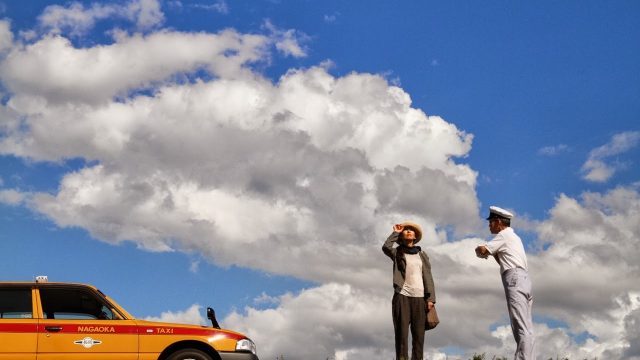
Nobuhiko Obayashi’s beautifully told tale, Seven Weeks, is part of Japan Society online tribute

TRAGEDIES OF YOUTH — NOBUHIKO OBAYASHI’S WAR TRILOGY: SEVEN WEEKS (NO NO NANANANOKA) (Nobuhiko Obayashi, 2014)
Japan Society virtual cinema
Available on demand through August 6, seven-day rental $10 per film, $24 for all three
japansociety.org

In December 2015, Japan Society presented the two-weekend, ten-film series “Nobuhiko Obayashi: A Retrospective,” which revealed that the Japanese auteur was so much more than just the director of the 1977 cult classic House. In commemoration of the recent death of the iconoclastic, eclectic writer-director, who passed away in April 2020 from lung cancer at the age of eighty-two, Japan Society is hosting a special monthlong online screening of his War Trilogy, consisting of 2012’s Casting Blossoms to the Sky, set in the aftermath of the devastating 2011 Tōhoku earthquake and tsunami, 2017’s Hanagatami, an adaptation of Kazuo Dan’s 1937 novella about a group of students falling in and out of love in prewar Japan, and the 2014 epic family drama Seven Weeks.

A tribute to Obayashi’s late friend and colleague Hyoji Suzuki, who started an independent film workshop in Ashibetsu in 1993 and died of pancreatic cancer four years later at the age of thirty-six, Seven Weeks was shot in and around that Hokkaido village over the course of five weeks. Ninety-two-year-old patriarch Mitsuo Suzuki (Toru Shinagawa), a local retired doctor who now runs the Starry Cultural Center gift shop (a nod to Suzuki’s Hoshi no Furusato Ashibetsu Eiga Gakko, or Starry Beautiful Home Ashibetsu Film School), is on his deathbed, and various relatives are arriving to say goodbye and participate in the nanana no ka Buddhist ritual, in which they will hold memorials once a week for seven weeks following his death. The mourners include Mitsuo’s sister, Eiko (Tokie Hidari), grandchildren Fuyuki (Takehiro Murata), Haruhiko (Yutaka Matsuhige), Akito (Shunsuke Kubozuka), and Kanna (Saki Terashima), and great-granddaughter Kasane (Hirona Yamazaki), in addition to his nurse, Nobuko Shimizu (Takako Tokiwa). During the seven weeks, family members relive the past, uncovering surprising secrets about the young Mitsuo (Shusaku Uchida), his harmonica-playing friend Ono (Takao Ito), and the woman they both admire, Ayano (Yumi Adachi), as Obayashi weaves together past and present through flashbacks, the appearance of dead characters, and painting and poetry (several of the characters share a love of the poems of Nakahara Chuya).

But the film, shot in lush, fairy-tale-like colors by cinematographer Hisaki Mikimoto and featuring a sweeping score by Kôsuke Yamashita and a kind of Greek chorus embodied by the unusual Japanese band the Pascals, is not merely about the travails of one extended family; it is also very much about the rebuilding of Japanese society in the wake of WWII, the earthquake and tsunami of March 11, 2011, and the ensuing Fukushima nuclear disaster. In fact, all of the clocks and watches in Seven Weeks are perpetually stopped at 2:45 pm, the exact time the horrific 3/11 events began. Obayashi also investigates the Soviet invasion of Sakhalin Island in August 1945 and the abuse of Korean migrant workers in Japanese mines as he explores the complex issue of the meaning of home. Seven Weeks is a beautifully told tale of memory and loss, of art and war, a summing up not only of Obayashi’s career but of twentieth-century Japan, with plenty of the director’s unique trademark style. “How do I paint the world?” Mitsuo asks at one point, something Obayashi has achieved in this deeply involving and wonderfully mysterious film. Fortunately for all of us, Obayashi was not quite done painting the world, continuing a legacy that is at last being celebrated here in the West.

TRAGEDIES OF YOUTH — NOBUHIKO OBAYASHI’S WAR TRILOGY: CASTING BLOSSOMS TO THE SKY (KONO SORA NO HANA: NAGAOKA HANABI MONOGATARI) (Nobuhiko Obayashi, 2014)
japansociety.org

“If people made pretty fireworks instead of bombs, there wouldn’t have been any wars,” says journalist Reiko Endō (Yasuko Matsuyuki), quoting wandering artist Kiyoshi Yamashita at the start of Nobuhiko Ōbayashi’s Casting Blossoms to the Sky. The first of the eclectic Japanese auteur’s War Trilogy, the film, based on actual experiences, is essentially an audiovisual essay, “Reiko Endō’s Wonderland: A Journey of Emotions to Nagaoka,” detailing Endō’s trip to Nagaoka in Niigata Prefecture, as the local citizenry share true tales of WWII and the 2011 Tōhoku earthquake and tsunami. (Nagaoka took in more than a thousand evacuees from Fukushima.) Ōbayashi goes back and forth between the past and the present, from the summer in 1945 when Nagaoka was bombed by the United States to the latest edition of the city’s annual fireworks display, which honor the victims of Pearl Harbor, the bombings of Nagaoka, Hiroshima, and Nagasaki, and the 2011 disaster.

With the day of the fireworks show approaching, Endō rides with wise cabdriver Akiyoshi Muraoka (Takashi Sasano), as she, and we, discover the city’s history of war and remembrance. Endō meets with her ex-boyfriend, Kenichi Katayama (Masahiro Takashima), who is in charge of the school play at Chuetsu High and chooses There’s Still Time Until a War by a mysterious girl named Jana Motoki (Minami Inomata) who rides a unicycle through the halls and down the streets of the neighborhood. Endō learns from the inhabitants themselves, including military history researcher Takashi Mishima (Akiyoshi Muraoka) and triathlete and potato farmer Goro Matsushita (Toshio Kakei), who built a memorial using a fragment from one of the incendiary bombs dropped on Nagaoka; war veteran and local fireworks legend Seijiro Nose (Akira Emoto); reporter Wakako Inoue (Natsuka Harada), who walks Endō through important parts of the city; Yoshie Yamafuji, who lost much of her family in the bombings; artist Yasunari Honmura, who uses his paintings as reminders of the horrors of war; and numerous other survivors and relatives of the dead.

Journalist Reiko Endō (Yasuko Matsuyuki) goes on quite a ride with cabdriver Akiyoshi Muraoka (Takashi Sasano) in Nobuhiko Ōbayashi’s Casting Blossoms to the Sky

Casting Blossoms to the Sky is made in Obayashi’s unique style, with visually stunning backdrops (real and green-screened), bright, brash color schemes, professional and nonprofessional actors, and computer-generated imagery that can feel rather goofy. The film was imaginatively shot by Yûdai Katô and Hisaki Sanbongi, with lovely, often garishly beautiful production design by Kôichi Takeuchi and playful editing by Obayashi and Hisaki Sanbongi, using cute cinematic techniques. The characters sometimes turn and speak directly into the camera, further establishing the film as a cautionary tale.

“I don’t know anything about war and it’s never crossed my mind,” a young student named Ryo says to Katayama, who replies, “It’s the citizens’ duty to tell the story. There are adults who think war is necessary but not the children. That’s why it’s up to the children to make peace.”

In one of the most moving scenes, a black-and-white flashback to 2009 during a fierce storm, Endō’s mother (Shiho Fujimura) says to her, “Life is connected,” a statement that is at the heart of Obayashi’s message. But no matter how didactic some of the dialogue is and how silly the visuals can get, accompanied by Joe Hisaishi’s emotional score, Casting Blossoms to the Sky has an innate charm that is so endearing you will forgive its flaws. At one point Katayama explains, “The fireworks are a prayer.” So is Casting Blossoms to the Sky, which, like fireworks, is quite a sight to behold.

THE MURDER ON THE LINKS

Who: L.A. Theatre Works
What: All-star audio play based on Agatha Christie novel
Where: LATW online
When: Available starting July 1, $20 (nine-play season $150)
Why: In the 1990s, L.A. Theatre Works focused its attention on audio plays, “producing world classics, modern masterpieces, contemporary, and original works that speak to the issues of our times.” Audio plays have flourished during the pandemic lockdown, with excellent productions from the Public Theater, Keen Company, and Gideon Media, among many others. So the time is right for LATW’s digital 2020-21 nine-play season, which has included audio versions of The Thanksgiving Play by Larissa FastHorse, Life on Paper by Kenneth Lin, Extinction by Hannie Rayson, Bump by Chiara Atik, A Weekend with Pablo Picasso by Herbert Sigüenza, For Us All by Jeanne Sakata, No-No Boy by Ken Narasaki, and A Good Day at Auschwitz by Stephen Tobolowsky.

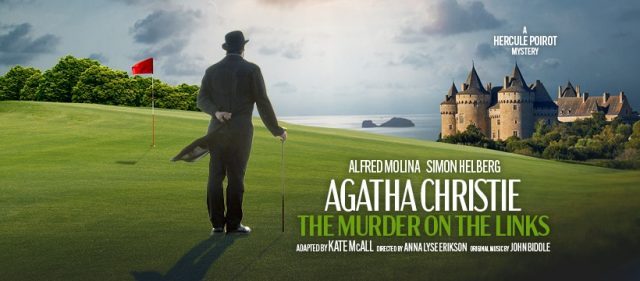
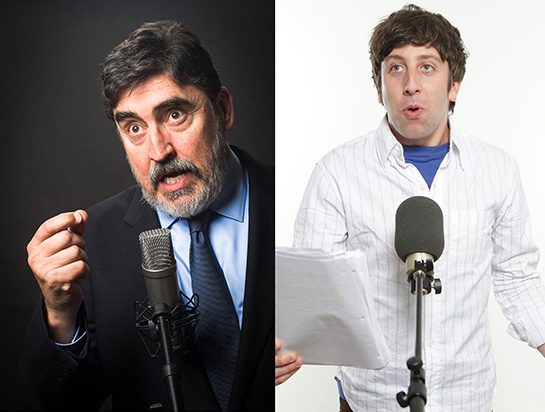
Alfred Molina and Simon Helberg star in LATW audio adaptation of The Murder on the Links (photos by Matt Petit and Derek Hutchison)

The final work is Kate McAll’s audio theater adaptation of The Murder on the Links, based on Agatha Christie’s 1923 novel, which featured John Moffat as Belgian detective Hercule Poirot in a 1990 BBC Radio 4 version and David Suchet as the intrepid detective in a 1996 episode of Agatha Christie’s Poirot for British television. Here Alfred Molina stars as Poirot, with Simon Helberg as Poirot’s bestie, Capt. Arthur Hastings. The two men travel to France to meet with Paul Renauld, only to find out he has been murdered — and their quest soon leads to another body. The cast also features Adhir Kalyan as Jack Renaud, Joanne Whalley as Madame Daubreuil, Kevin Daniels as Detective Giraud, Edita Brychta as Madame Renauld and Françoise, Anna Lyse Erikson as Leonie, Darren Richardson as a sergeant, a doctor, and others, Jocelyn Towne as Cinderella and Marthe Daubreuil, and Matthew Wolf as Monsieur Hautet; the download includes access to a digital video of a table read. Recorded in West Hollywood in April 2021, The Murder on the Links is directed and produced by Erikson, with original music by John Biddle, editing by Charles Carroll, and foley sound by Jeff Gardner. Each LATW play can be downloaded for $20; all nine are available for $150 and come with such bonuses as a video conversation with LATW founding members Ed Asner, Richard Dreyfuss, Hector Elizondo, Stacy Keach, Marsha Mason, and JoBeth Williams.

TWO BY WALLACE SHAWN: GRASSES OF A THOUSAND COLORS / THE DESIGNATED MOURNER

Who: Wallace Shawn, Julie Hagerty, Jennifer Tilly, Emily Cass McDonnell, Deborah Eisenberg, Larry Pine
What: Audio versions of Wallace Shawn’s Grasses of a Thousand Colors and The Designated Mourner
Where: Gideon Media
When: Available July 9
Why: Beloved New York City icon Wallace Shawn has kept himself very busy during the pandemic lockdown. He wonderfully reprised his role as the villainous Vizzini (“Inconceivable!”) in a Zoom benefit reunion reading of Rob Reiner’s The Princess Bride to help support the Wisconsin Democratic party in the 2020 elections. The New GroupOffstage: Two by Wallace Shawn consisted of all-star Zoom reunion readings of his plays Aunt Dan and Lemon and Evening at the Talk House, the latter featuring his stellar turn as a bedraggled actor. And through July 25, you can catch him as Lucky in the New Group’s online adaptation of Samuel Beckett’s Waiting for Godot, with Ethan Hawke as Didi, John Leguizamo as Gogo, and Tarik Trotter as Pozzo.

The curmudgeonly Shawn continues visiting his past with audio versions of his two of his most intense shows, presented for free by Gideon Media and reuniting the casts from previous productions. In Grasses of a Thousand Colors, an erotic futuristic nightmare that had its world premiere in 2009 at the Royal Court Theatre in London and debuted in New York four years later at the Public, Shawn expands on Madame d’Aulnoy’s 1698 fairy tale The White Cat in a wild and unpredictable story about sex, humans, animals, sex, the food chain, and sex. “Oh, hello there!” Shawn begins as a doctor named Ben. “You know, I’m just so thrilled that you’ve made the rather wild decision to listen to the meaning of all people right at this very moment. I mean, I know you’re probably just as mixed up about everything as I am because since yesterday, well, things have obviously changed since yesterday, that’s totally clear. Things are definitely different in one way or another. I mean, it’s been quite a journey, my God. And the last part of it was so crazy.” The play brings back Julie Hagerty as Cerise, Ben’s wife; Jennifer Tilly as Robin, his mistress; and Emily Cass McDonnell as Rose, his girlfriend, along with director André Gregory, who starred with Shawn in Louis Malle’s brilliant 1981 film, My Dinner with André.

The play is divided into six sections, “Invitation,” “The Quest to Be Known,” “Affair,” “Revenge,” “Illness,” and “Party,” that are definitely not safe for work, for those who are back in the office. “So anyway,” Dr. Ben says, “You see, I’d always loved nudity, including nude performances, because what other pleasures can we get in life except from what is naked, or in other words from getting closer and closer to what we call nature.”

Also available is an audio version of Shawn’s The Designated Mourner, which premiered at the Royal National Theatre in 1996; this reading reunites Shawn, Deborah Eisenberg (Shawn’s real-life wife), and Larry Pine from the 2000 New York City production directed by Gregory in several small rooms in a building on William St. in the Financial District. Divided into “Resentment,” “Accommodation,” “Danger,” “Flight,” “Arrest,” and “Death,” the play delves into violence, authoritarianism, and injustice amid Shawn’s unrelenting trademark dark humor.

“It’s just remarkable that your father is allowed to exist!” Judy (Eisenberg) recalls being told about her father, Howard (Pine), a famous and well-respected poet. “And meanwhile your attention is entirely turned away from the human suffering that is going on all around you,” Howard tells Jack (Shawn), her husband. “You can sum me up in about ten words: a former student of English literature who — who went downhill from there!” Jack explains.

In Woody Allen’s 1987 comedy Radio Days, Shawn played the Masked Avenger, the hero of a popular radio serial, who says, “I wonder if future generations will ever even hear about us. It’s not likely. After enough time, everything passes. I don’t care how big we are or how important are our lives.” Through podcasts such as these of Shawn’s plays, future generations around the world will indeed get to hear about these seminal works.

CAN YOU BRING IT: BILL T. JONES AND D-MAN IN THE WATERS

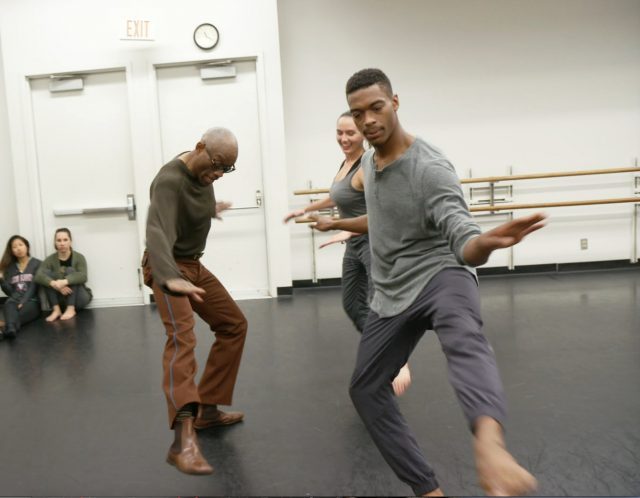
Documentary explores the creation and legacy of Bill T. Jones/Arnie Zane Company’s D-Man in the Waters (photo courtesy Rosalynde LeBlanc)

CAN YOU BRING IT: BILL T. JONES AND D-MAN IN THE WATERS (Rosalynde LeBlanc & Tom Hurwitz, 2020)
Film Forum
209 West Houston St.
Opens Friday, July 16
212-727-8110
www.d-mandocumentary.com
filmforum.org

In 1989, the Bill T. Jones/Arnie Zane Company presented the world premiere of D-Man in the Waters at the prestigious Joyce Theater in New York City, a physically demanding, emotional work born out of the AIDS crisis, dealing with tragedy and loss in the wake of the death of Zane, Jones’s personal and professional partner, at the age of thirty-nine in 1988. Directors Rosalynde LeBlanc and Tom Hurwitz take a deep dive into the history of the dance and its lasting impact more than thirty years later in the captivating documentary Can You Bring It: Bill T. Jones and D-Man in the Waters, opening July 16 at Film Forum.

“What is D-Man? Is it alive now? Is it a cautionary tale? Is it one of inspiration?” Jones tells fifteen Loyola Marymount dancers who are staging the piece under the direction of LeBlanc, a former company member who runs the Jones/Zane Educational Partnership at the school, where she is an associate professor in the Department of Dance. Jones continues, “Makes you want to get all your shit together, your community together, take responsibility, be beautiful, be fierce — is that what it is? I don’t know what it is. . . . What do they share that is so big, so tragic that you need a piece like this to move it and give it body?”

LeBlanc, who also produced the film, and two-time Emmy-winning cinematographer Hurwitz, the son of longtime Martha Graham dancer, choreographer, and teacher Jane Dudley, talk to most of the original cast of D-Man, many of whom have gone on to form their own companies: Arthur Avilés, Seán Curran, Lawrence Goldhuber, Gregg Hubbard, Heidi Latsky, Janet Lilly, and Betsy McCracken, who, along with Jones and his sister Johari Briggs, share intimate stories of working with Jones and Zane and the importance of the piece as the arts community was being ravaged by AIDS. Sometimes holding back tears, they speak lovingly of Zane and Demian Acquavella, nicknamed “D-Man,” who died at the age of thirty-two in 1990. “He was always a boy, but always a bit of a devilish boy, and the dancing was also that way,” Jones remembers.

Through new and old interviews, home video and archival photographs, and exciting footage from the dance’s original rehearsals and Joyce premiere, LeBlanc, Hurwitz, and editor Ann Collins choreograph a gracefully flowing, compelling narrative as the documentary participants discuss specific movements — Latsky’s attempts at a jump and Curran’s memories of a duet with Acquavella in which their foreheads have to keep touching are wonderful — and LeBlanc tries to reach inside the Loyola Marymount performers to motivate them. They might have the movement down, but D-Man requires more than that to be successful. “Do you dare to let the stakes really be high?” she asks as they search for contemporary issues that impact them similarly to how AIDS affected the creation of the work, which is set to Felix Mendelssohn’s 1825 Octet for Strings, which the German composer wrote at the age of sixteen. “There was some healing, cathartic ritual in the making and the doing of this dance that sustained us,” Curran says, a feeling LeBlanc wants to instill in the college students.

“This work is not about anybody’s epidemic,” Jones, a Kennedy Center Honoree, MacArthur Grant awardee, and Tony winner who is the artistic director of New York Live Arts, said in a statement about the film. “It is about the dark spirit of what is happening in the world and how you push back against it.” Can You Bring It: Bill T. Jones and D-Man in the Waters gets to the heart of that spirit by revealing the legacy, and the future, of a seminal dance piece that continues to find its place on an ever-evolving planet.

LeBlanc and Hurwitz will be at Film Forum to discuss the film at the 7:00 shows on July 16 and 17 and will participate in a live, virtual Q&A with Jones at 8:00 on July 21. Jones, whose riveting Afterwardsness at Park Avenue Armory in May explored the Covid-19 pandemic, isolation, and racial injustice, will return to the space this fall with Deep Blue Sea, a monumental work for more than one hundred community members and dancers that begins with a solo by Jones and incorporates texts by Martin Luther King Jr. and Herman Melville, with water again playing a critical role.

ACROSS THE MacDOWELL DINNER TABLE: EXCELLENCE, AESTHETICS, AND VALUE

Who: Nell Painter, Linda Harrison, Joyce Kozloff, Garth Greenan
What: Livestreamed discussion
Where: 92Y online
When: Thursday, July 15, free with advance RSVP, 7:00
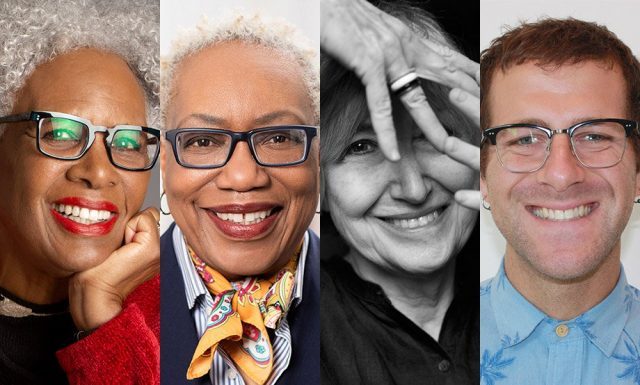
Why: For more than a century, artists of all disciplines have come to MacDowell to create works in residency in a welcoming New Hampshire community. (It was previously known as the MacDowell Colony, but the name was changed in 2020 because of the its oppressive overtones.) MacDowell Fellows have included James Baldwin, Meredith Monk, Thornton Wilder, Leonard Bernstein, Suzan-Lori Parks, Studs Terkel, Ruth Reichl, and Jonathan Franzen. On July 15 at 7:00, the 92nd St. Y is hosting the free virtual discussion “Across the MacDowell Dinner Table: Excellence, Aesthetics, and Value,” with Newark Museum director and CEO Linda Harrison, visual artist Joyce Kozloff, and gallerist Garth Greenan, moderated by artist, author, and board chair Nell Painter. They will consider the past, present, and future of MacDowell and its place in a quickly changing art world. The Garth Greenan Gallery is currently showing “Alexis Smith: Not in Utopia” through July 30; the Newark Museum has on view “Anual de Artes de Nueva Jersey 2021: ReVisión y Respuesta,” “Four Quiltmakers, Four American Stories,” and “Wolfgang Gil: Sonic Geometries”; and Kozloff’s “Uncivil Wars,” in which she repurposes Civil War battle maps by incorporating images of viruses, runs through August 13 at DC Moore. Kozloff will be at the gallery to talk about the exhibition on July 21 at 6:00 as part of the free ADAA Chelsea Gallery Walk.

STOP AAPI HATE: A GENTLEMAN’S GUIDE TO LOVE AND MURDER

Abridged online version of A Gentleman’s Guide to Love and Murder benefits Stop AAPI Hate

Who: Lea Salonga, Ali Ewoldt, Diana Phelan, Thom Sesma, Cindy Cheung, Karl Josef Co
What: All-Asian-American abridged online version of A Gentleman’s Guide to Love and Murder
Where: Broadway on Demand
When: July 15-22, pay-what-you-wish (suggested donation $20.14 – $1,000)
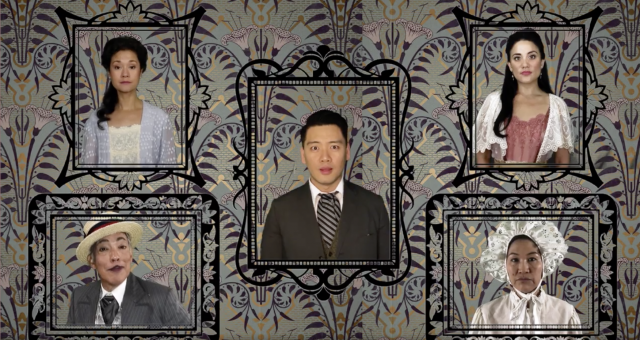
Why: On May 19, the National Asian American Theatre Company held a one-time-only virtual benefit reading of Thornton Wilder’s Our Town, featuring an all-Asian-American cast. Now CollaborAzian and Broadway on Demand are teaming up for an online version of Robert L. Freedman and Steven Lutvak’s A Gentleman’s Guide to Love and Murder that will benefit Stop AAPI Hate, which “tracks and responds to incidents of hate, violence, harassment, discrimination, shunning, and child bullying against Asian Americans and Pacific Islanders in the United States.” An abridged adaptation of the Broadway musical that was nominated for ten Tonys, winning three (Best Musical, Best Book of a Musical, and Best Direction of a Musical), the show will be available July 15-22. The story, based on the 1907 novel Israel Rank: The Autobiography of a Criminal by Roy Horniman and the 1949 British film Kind Hearts and Coronets, follows the exploits of a man ninth in the line of succession to his family’s dukedom who decides to get rid of the eight people above him and grab the crown for himself as revenge for how his mother was treated by them. Thom Sesma plays the endangered members of the D’Ysquith clan, with Cindy Cheung as Ms. Shingle and others, Ali Ewoldt as Phoebe D’Ysquith, producer Karl Josef Co as Monty Navarro, and producer Diane Phelan as Sibella Hallward; hosted by Tony winner Lea Salonga, the presentation is directed by Alan Muraoka, who has played Alan, the owner of Hooper’s Store on Sesame Street, for more than two decades, with music direction by Steven Cuevas, costumes by Carla Posada, props by Alesha Borbo Kilayko, and audio engineering by Jonathan Cuevas.

“Historically, Asian American artists have been marginalized in media and on stage, and productions like this help to spotlight the tremendous talent that has been overlooked. We’re here to show the world that we are here, and we are fantastic,” Salonga said in a statement. The event is being held in conjunction with the Coalition of Asian Pacifics in Entertainment, the Broadway Diversity Project, Unapologetically Asian, Leviathan Labs, Chinosity, and Tremendous Communications.