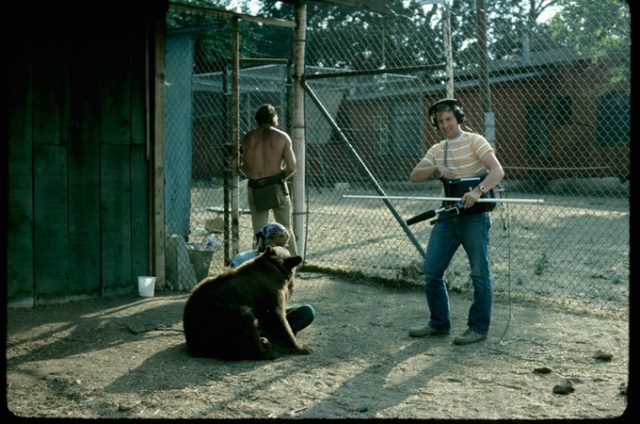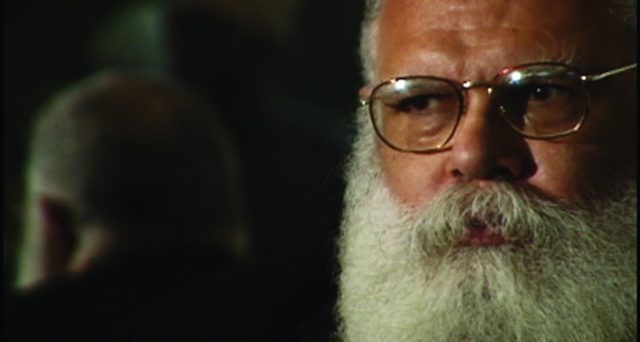
Samuel R. Delany will be at Metrograph for a pair of special programs
Metrograph
7 Ludlow St. between Canal & Hester Sts.
May 17-19
212-660-0312
metrograph.com
www.samueldelany.com
In Fred Barney Taylor’s 2009 documentary The Polymath, about writer, filmmaker, and social historian Samuel R. “Chip” Delany, Jonathan Lethem explains, “He embraces the whole of intellectual curiosity while remaining committed to an artistic practice. He’s a philosophical, confessional, and fictional genius. How often is this encountered in American literature? I don’t know that there’s any precedent. Geniuses are usually monomaniacs; they do one thing to the utmost. Well, Chip does several things to the utmost.” Metrograph is honoring the seventy-seven-year-old Delany’s life and career with the three-day series “Delanymania,” featuring films by and about him or that made an impact on him. “They’re films I liked early, and they contributed to my own appreciation of science fiction, films, and writing (This Island Earth), and an appreciation of the cost of difference (The Boy with Green Hair, Touch of Evil), and what I wanted to do with the movement of bodies in The Orchid (Gold Diggers of 1937, The Seventh Seal),” he notes about the program. Delany, a New York City native and the author of such science-fiction tomes as Dhalgren and Babel-17, will be at Metrograph for several screenings, introducing shows and participating in Q&As for The Polymath with Taylor on May 17 at 6:00 and for “3 Films by Samuel R. Delany” on May 18 at 3:30. The latter consists of his only film as a director, the controversial 1971 experimental work The Orchid, and two extremely low-budget DIY shorts by his then-partner, Frank Romeo, Bye, Bye Love and The Aunts.
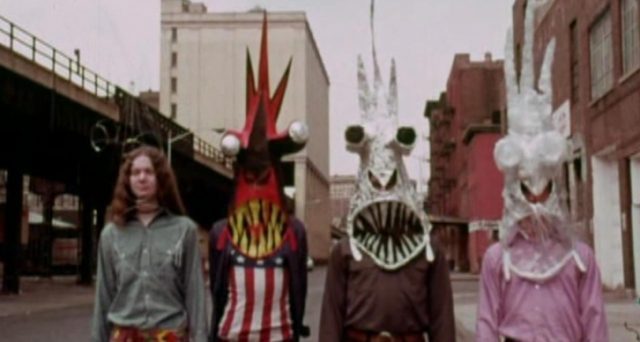
Metrograph will show Samuel R. Delany’s only film as a director, The Orchid
The Orchid is Delany’s Un Chien Andalou, a bizarre, surreal, delightfully amateurish tale of a businessman with a thing for protractors and other basic mathematical equipment who has strange encounters on the streets of New York City with a little boy, a man carrying a microphone, and members of a cultlike group than don bizarre masks, take off their clothes, and take part in odd rituals. Produced by Barbara Wise, the film features a playful score by John Herbert McDowell; Adolfas Mekas, brother of Jonas, was the production coordinator. Writing as K. Leslie Steiner, Delany opined that when the film “primiered [sic] at the World Science Fiction Convention in Chicago that September (Delany himself was not present), it caused a riot. Outraged fans tried to shout the film off and even pulled down the screen.” Chip Delany is credited as script boy for Bye, Bye Love, in which two brothers (Frank De Fay and Martin Zone) from upstate head to the Big Apple to become famous by recording their version of the Everly Brothers classic “Bye Bye Love,” and The Aunts, in which a group of women (Cass Morgan, Katie McDonough, Mayda Sharrow, and Pat Tortorici) gossip away in a small kitchen as a young girl (Jocelyn Mason) listens in from her bedroom. Delany’s father was an undertaker and his mother was a library clerk, which explains a lot. In conjunction with “Delanymania” and other cinematic literary events, Metrograph is hosting a Spring Film Book Fair on May 18 and 19 from 11:00 to 6:00, promising “thousands of rare, vintage, and out of print items, including biographies, monographs, hundreds of periodicals, plus memorabilia, scripts, novelizations, and other extraordinary pieces of ephemera.”
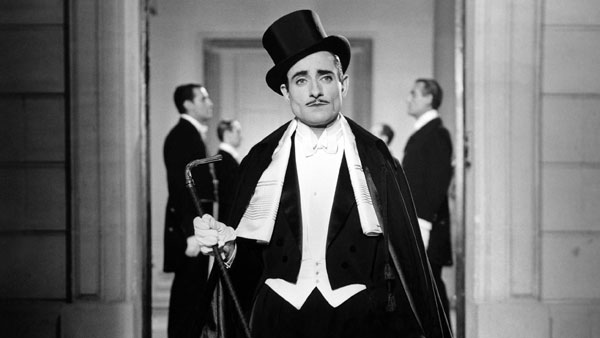
 French auteur Pierre Étaix’s strange and beautiful films were long inaccessible, the subject of nearly two decades of legal wrangling, but on May 9 and 15, MoMA will be presenting his 1965 bittersweet black-and-white slapstick charmer, Yoyo, as part of its “Jean-Claude Carrière” series, celebrating the screenwriter and master collaborator who worked with such legends as Luis Buñuel, Louis Malle, Miloš Forman, Jean-Luc Godard, Andrzej Wajda, Nagisa Oshima, and Peter Brook; the eighty-seven-year-old Carrière will introduce the May 9 screening. (In April 2010, Étaix was finally able to once again bring his films to the public, his entire output restored and making their New York debut at a festival at Film Forum in October 2012.) Étaix, who wrote Yoyo with Carrière, stars as a ridiculously wealthy but extremely bored man who lives alone in an ornately decorated, absurdly large chateau. It’s 1925, and he has servants for absolutely everything, as well as his own private band and flappers, but he pines for his lost love, Isolina (Claudine Auger). One day she arrives with a traveling circus, along with a young boy (Philippe Dionnet) who turns out to be his son. She at first rejects the multimillionaire, but when he loses it all on Black Tuesday, the three of them form their own traveling circus, with the boy ultimately turning into a popular clown named Yoyo (played as an adult by Étaix) and seeking to restore the chateau and his family.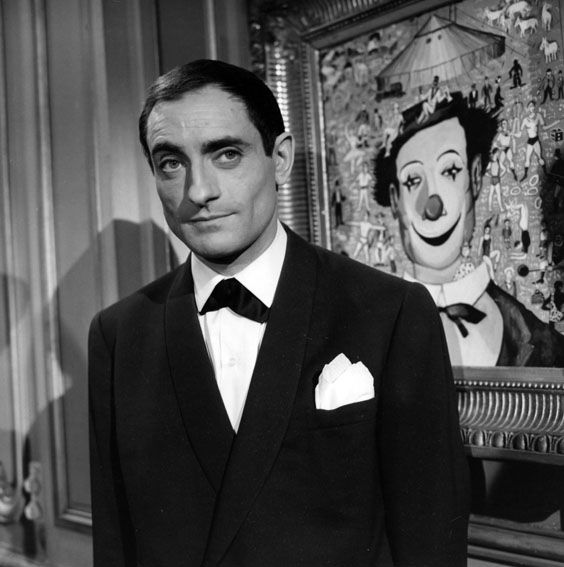
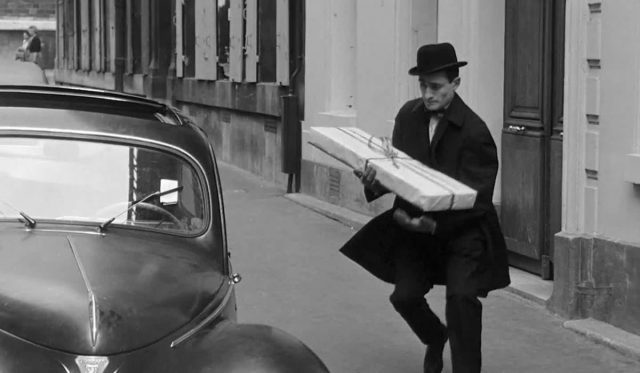
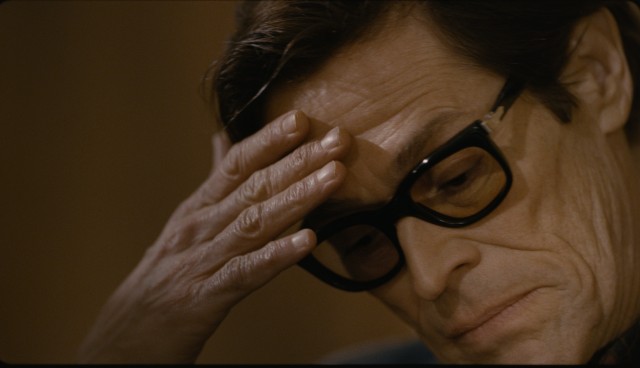
 Director Abel Ferrara packs a whole lot into controversial Italian writer and filmmaker Pier Paolo Pasolini’s last day on earth in the multinational coproduction Pasolini. Unfortunately, it all ends up a rather confusing jumble, with Ferrara (Bad Lieutenant, The Addiction) and screenwriter Maurizio Braucci (Gomorrah, Black Souls) squeezing too much into too little. Willem Dafoe stars as Pasolini on November 2, 1975, as the director is interviewed by a journalist, reads the newspaper on the couch, sits down at his typewriter to work on his novel Petrolio, edits what would be his final film (Salò, or the 120 Days of Sodom), and goes cruising to pick up a young stud. Ferrara adds enactments of scenes from the never-realized Porno-Teo-Kolossal, with Pasolini’s real-life lover, Ninetto Davoli, playing the fictional character Epifanio. (Davoli was supposed to play the younger Nunzio in the hallucinatory tale, about a search for faith and the messiah. Davoli is played by Riccardo Scamarcio in Ferrara’s film.) Ferrara never really delves into the internal makeup of Pasolini (The Gospel According to Matthew, Teorema), an openly gay outspoken social and political activist, poet, Marxist, Christian, and documentarian, instead using brief episodes that only touch the surface, as if Dafoe is playing a character based on Pasolini rather than the complex man who was indeed Pasolini. But Ferrara does get very specific about Pasolini’s mysterious, brutal death. Pasolini is screening May 3 at 7:00 in the MoMA series “Abel Ferrara: Unrated” and will be followed by a Q&A with the director and Dafoe.
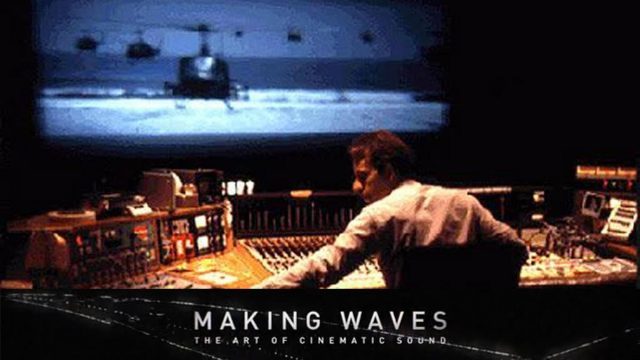
 Longtime sound editor and teacher Midge Costin pays tribute to her discipline in the eye- and ear-opening documentary Making Waves: The Art of Cinematic Sound, having its world premiere this week at the Tribeca Film Festival. The celebration of sound focuses on three of the best in the business: three-time Oscar winner Walter Murch (Apocalypse Now, The English Patient), four-time Oscar winner Ben Burtt (E.T. the Extra-Terrestrial, Star Wars), and seven-time Oscar winner Gary Rydstrom (Saving Private Ryan, Toy Story). “Before we were born, you’re looking at darkness. Sound is the first sense that’s plugged in,” Murch says at the beginning of the film. “Six months, seven months into the womb, it’s hearing the mother’s heartbeat, it’s hearing her breathing, it’s hearing Dad shouting from the garage. It’s making sense of the world. You have emerged into a kind of consciousness using only sound. And then you’re born. Sound affects us in a deeper way almost than image does. It goes deeper. And yet we’re naturally, seemingly oblivious to that.”