Breakout Unorthodox star Shira Haas will participate in 92Y Q&A on July 7
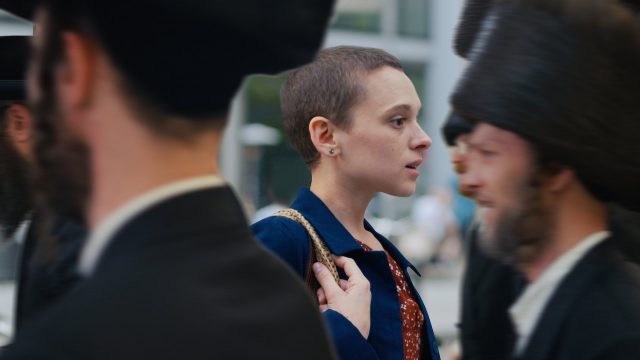
Who: Anna Winger, Shira Haas, Amit Rahav, David Canfield What: Live Q&A with cocreator and costars of Unorthodox series Where:92Y online When: Tuesday, July 7, free, 5:00 Why: One of the runaway television hits of the pandemic has been Netflix’s Unorthodox, about a young married Orthodox woman in Brooklyn who runs away to Berlin to escape the suffocating life she is trapped in. The four-part series has led to the breakout success of Israeli actress Shira Haas, who has a smaller but critically significant role in the earlier Israeli series Shtisel, which also involves Orthodox marriage. On July 7 at 5:00, Haas, who stars as Esty Shapiro in Unorthodox, will be joined by Amit Rahav, who plays her husband, Yanky, and showrunner Anna Winger for a free live online discussion with Entertainment Weekly’s David Canfield as part of the online partnership between EW and the 92nd Street Y.
Nick Cave takes a look back at his life and career as only Nick Cave can in imaginative, deeply introspective documentary
Who: Tim Burgess, Iain Forsyth, Jane Pollard What: Listening/watch party of 20,000 Days on Earth (Iain Forsyth & Jane Pollard, 2014) with live tweeting Where:Tim’s Twitter Listening Party When: Sunday, June 28, Twitter free, film rental here, 11:00 pm EST Why: During the pandemic, Tim Burgess of the Charlatans has been hosting listening and watch parties with live tweeting, highlighting such records as Camper Van Beethoven’s Telephone Free Landslide Victory, Orchestral Manoeuvres in the Dark’s Dazzle Ships, Dexys Midnight Runners’ Searching for the Young Soul Rebels, and Duran Duran’s Rio, with band members chiming in as the album plays. On June 28 at 11:00 pm EST, Burgess goes audiovisual with live tweeting during a watch party of Iain Forsyth and Jane Pollard’s 2014 documentary, 20,000 Days on Earth. (You can rent the film here.)
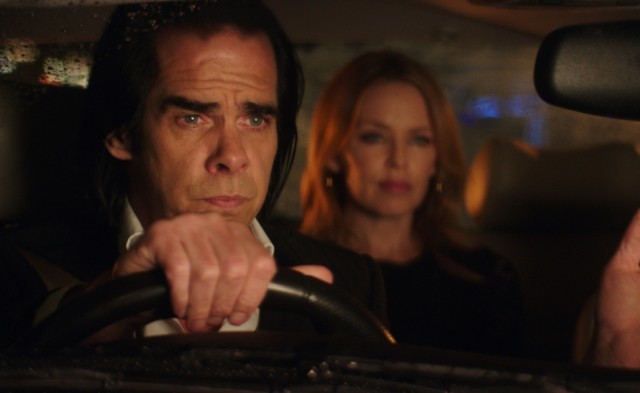
The film might sound like a 1950s low-budget sci-fi cult classic you’ve never seen, but actually it’s an unusual and vastly inventive document of the life and times of Australian rocker, poet, novelist, film composer, screenwriter, and all-around bon vivant Nick Cave. In their debut feature, installation artists and curators Forsyth and Pollard collaborated closely with Cave, mixing reality and fantasy as they follow Cave during a rather busy day. “Who knows their own story? Certainly it makes no sense when we are living in the midst of it,” Cave, who is now sixty-two, says in the deeply poetic voiceover narration he wrote specifically for the film. “It’s all just clamor and confusion. It only becomes a story when we tell it, and retell it, our small, precious recollections that we speak again and again to ourselves or to others, first creating the narrative of our lives, and then keeping the story from dissolving into darkness.” Forsyth and Pollard journey with Cave as he delves into religion and his relationship with his father with psychoanalyst Darian Leader, visits with longtime collaborator Warren Ellis (who shares an amazing story about Nina Simone and a piece of gum), drives around as people from his past suddenly appear in his car (friend Ray Winstone, duet partner Kylie Minogue, former bandmate Blixa Bargeld), lays down tracks in the studio (“Give Us a Kiss,” “Higgs Boson Blues,” “Push the Sky Away” with a children’s orchestra), watches television with his twin sons, and goes through his archives of photographs and other ephemera from childhood to the present day.
The film reveals Cave, the leader of cutting-edge groups the Birthday Party, Grinderman, and the Bad Seeds and author of the novels And the Ass Saw the Angel and The Death of Bunny Munro, to be an intelligent, introspective, engaging fellow with a wry, often self-deprecating sense of humor and a hunger to create. “Mostly I write. Tapping and scratching away day and night sometimes,” he says while typing away with two fingers on an old typewriter in his home office. “But if I ever stopped for long enough to question what I’m actually doing? The why of it? Well, I couldn’t really tell you. I don’t know.” The film begins with a barrage of images of Cave and his influences throughout the years, whipping by machine-gun style on multiple monitors, and ends with Cave onstage with the Bad Seeds, becoming the fearless musician that has defined his career. In between, he’s a contemplative husband, father, son, and friend, an artist with a rather unique view of the world and his place in it. (Sadly, in 2015, Cave’s son Arthur died in a tragic accident, something Cave dealt with creatively in the 2016 documentary One More Time with Feeling, about the recording of the album Skeleton Tree.)
On September 20, 2014, I attended a special event at Town Hall in which Cave participated in a postscreening Q&A with Forsyth and Pollard, performed solo songs at the piano (playing what one fan described as a “dream setlist”), and spoke often about “transformation.” In its own way, 20,000 Days on Earth is a transformative documentary, a groundbreaking, unconventional, and thoroughly imaginative portrait of a groundbreaking, unconventional, and thoroughly imaginative artist.
[Note: Tim’s Twitter Listening Party continues with such other albums as the Waterboys’ Fisherman’s Blues, the Soft Boys’ Underwater Moonlight, Superchunk’s Majesty Shredding, Madness’s One Step Beyond, and Joy Division’s Closer.]
Australian actor and filmmaker Damon Gameau has followed up his award-winning 2014 documentary, That Sugar Film, about the effects of sugar on the body, with 2040, in which he goes around the world not only to point out how our environment is rapidly deteriorating in numerous ways but also to do something about it, for the sake of his four-year-old daughter, his wife, and the rest of the planet. “I think we’re all pretty aware that when it comes to predictions of the future, they’re almost entirely negative at the moment,” he says near the start of the film. “Any time you open your news feed or social media, there’s some kind of doom and gloom story about the future of our environment. And as a father, I think there’s room for a different story, a story that focuses on the solutions to some of these problems. So my plan is to go out and find some of these solutions and then create a vision of a different future for our daughter. I want to show her what the world would look like if the solutions I find were implemented today. So what would the world look like in 2040 if we just embraced the best that already exists. That’s my only rule: Everything I show her in this 2040 has to exist today in some form. I can’t make it up.”
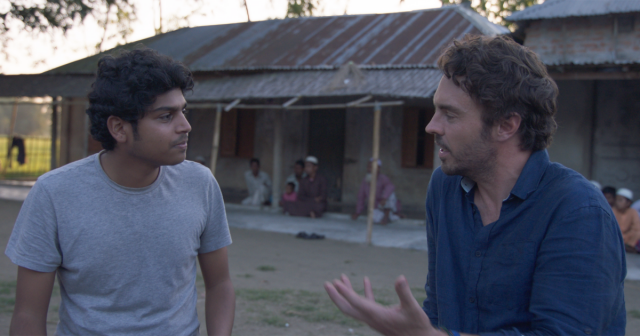
Gameau heads out to Bangladesh, Singapore, Sweden, America, the UK, and Tanzania, meeting with scientists, farmers, economists, and other experts to come up with answers to questions involving carbon dioxide, methane gas, solar and wind power, automobile traffic, fossil fuels, meat consumption, and other key issues. “It’s our generational challenge,” Doughnut Economics purveyor Kate Raworth explains. Gameau speaks with Neel Tamhane about self-sustaining energy microgrids, RethinkX cofounder Tony Seba about transportation, Colin Seis about regenerative farming, Dr. Brian von Herzen of the Climate Foundation about our use of water, Dr. Amanda Cahill about women, childbirth, and education for girls, and Eric Toensmeier and Paul Hawken of Project Drawdown about greenhouse gases. Gameau shifts between 2019 and 2040, when an older version of him, his wife, and his daughter reveal what the world might be like if we take action now. It all comes down to creating more than we consume, and Gameau makes the case that we can start immediately with what we already have.
Writer-director-producer-star Gameau is an engaging character, an instantly likable fellow with a lively sense of humor. He has fun with the media of film, using animation effects to turn his home into a place of climate disaster and depicting some of the people he talks with in miniature, putting them in fireplaces and atop wind turbines. He also lets children between the ages of six and eleven tell us what they think is wrong with the world and what they want for their future, and the result is as hysterically funny as it is smart and poignant, getting right to the point.
2040 is available for streaming through July 1; Gameau will be hosting a week of free panel discussions online (see the full schedule below), delving into specific issues brought up in the documentary with various experts, including some who appeared in the film. It’s time to do something, and I’m fine with Gameau leading the way. As one of the kids says near the end, “If people keep doing what they’re doing now, the world won’t be a very good place.”
Friday, June 26
US Premiere, with Damon Gameau, Paul Hawken, Kate Raworth, and Neel Tamhane discussing innovative solutions to the climate crisis, moderated by Kate Aronoff of The New Republic, free with advance RSVP, 7:30
Saturday, June 27
“From Drawdown to Regeneration: Meet the Researchers Behind Drawdown,” with Damon Gameau, Chad Frischmann, Mamta Mehra, Ryan Allard, moderated by Crystal Chissell, free with advance RSVP, 7:30
Sunday, June 28
“Regenerative Agriculture,” with Damon Gameau, Eric Toensmeier, and Portia Adomah Kuffuor, free with advance RSVP, 4:30
“Sustainable Travel,” with Damon Gameau, Darrell Wade, and Denaye Hinds, moderated by Ashley Renne, free with advance RSVP, 7:30
Monday, June 29
“Seaweed & Marine Regeneration,” with Damon Gamean, Brian von Herzen, Brad Ack, and Jo Kelly, free with advance RSVP, 7:30
Tuesday, June 30
“The Power of Youth Voices,” with Damon Gameau, Xiye Bastida, and Alexandra Berry, moderated by Annelise Bauer, free with advance RSVP, 7:30
Wednesday, July 1
“Climate Justice & Empowering Women,” with Damon Gameau, Mary Heglar, and Amy Westervel, free with advance RSVP, 7:30
Thursday July 2
“The Importance of Hope,” with Damon Gameau, Eric Holthaus, and Renee Lertzman, free with advance RSVP, 7:30
Amos Nachoum searches for the elusive polar bear in Picture of His Life
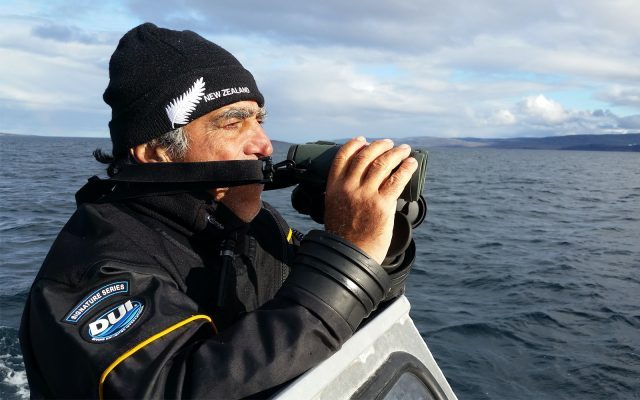
Who: Dani Menkin, Amos Nachoum What: Live Q&A about Picture of His Life (Yonatan Nir & Dani Menkin, 2019) Where:Marlene Meyerson JCC Manhattan When: Tuesday, June 23, free with advance RSVP, 8:30 Why: Captain Ahab had his great white whale in Moby-Dick, Captain Quint had his great white shark in Jaws, and Timothy Treadwell had his grizzly bear in Grizzly Man. People have been obsessed with animals in the wild since the dawn of humanity, as prey, for food, for sport, and for companionship. In Picture of His Life, directors Yonatan Nir and Dani Menkin track legendary Israeli-American underwater photographer Amos Nachoum as he attempts to cap his remarkable career by capturing, on film, a polar bear — “the world’s largest land carnivore,” opening text points out — while swimming with it in its native habitat. “I’ve been dreaming of this moment for a long time. After all these years of photographing in the wild, there is one subject that eludes me: that is photographing the polar bear in the water,” Nachoum admits.
So the filmmakers join Nachoum, his Emmy-winning cinematographer, Adam Ravetch, local Inuit guide Joe Kaludjak, and a few others on a five-day journey in the gorgeous Canadian Arctic. Nachoum, who turned seventy this year, is a Hemingway-esque figure, ruggedly handsome, introspective, a man of few words, devoted to his mission. “Amos, to me, is one of the best ambassadors of the ocean. There’s a message in every one of his pictures. Sometimes he takes huge amounts of risks to bring those images which nobody else has been able to capture,” says oceanographic explorer Jean Michel Cousteau, son of Jacques Cousteau. “Amos is like a scientist, observing carefully, and then reporting honestly,” National Geographic explorer in residence Dr. Sylvia Earle notes. “He doesn’t have a normal life,” explains underwater photographer Javier Mendoza, adding, “He’s married to the ocean.”
Nir (My Hero Brother, The Essential Link: The Story of Wilfrid Israel) and Menkin (39 Pounds of Love,On the Map), who previously collaborated on Dolphin Boy, about an Arab teenager who finds help from dolphins after being horrifically beaten, also speak with Scuba Diving Hall of Famer Howard Rosenstein, photographer J. Michael, Whitaker, The Blue Planet director Andy Byatt, shark expert Avi Klepfer, and Nachoum’s two sisters, Ilana Nachoum and Michal Gilboa, who discuss Amos’s difficult relationship with their father; some of his fellow soldiers talk about how serving in an elite commando unit in the 1973 Yom Kippur War affected them all. A self-described “soldier of the sea,” Nachoum is shown sitting alone in a dark room, projecting his wildlife photos from a carousel the way families look at vacation pictures together. “The polar bear for Amos is personal; it symbolizes something that makes it more than a picture of the polar bear. It’s a picture of his life,” Mendoza says.
The film is spectacularly photographed by Nir aboveground and Ravetch underwater; the small expedition seems to have the entire world all to itself. Editors Taly Goldenberg, Martin Singer, and Shlomi Shalom cut from the Canadian Arctic to Nachoum’s remarkable wildlife photos, from archival war footage to old snapshots and video of Nachoum as a boy and a young man. Nir manages to catch Nachoum, the 2019 SeaKeeper of the Year, several times by himself, lying on a rock, looking up at the sky or out at the ocean, a strong but quiet man still searching for purpose, still seeking approval as he risks his life yet again for what for him is more than just a photograph, a different kind of old man and the sea. Picture of His Life can be streamed via the Angelika or the Marlene Meyerson JCC Manhattan; Menkin and Nachoum will participate in a live Q&A through the JCC on June 23 at 8:30 that is free with advance RSVP here.
Unsettled follows four LGBTQ immigrants seeking refuge in America
Who: Samantha Power, Ari Shapiro, Tom Shepard, Subhi Nahas What: Free screening and live Q&A of Unsettled (Tom Shepard, 2019) Where:WORLD Channel and ITVS When: Monday, June 22, free with advance RSVP, 7:00 Why: “I just want to live a normal life,” Junior Mayema says in Tom Shepard’s heart-wrenching documentary Unsettled: Seeking Refuge in America. In honor of the UN’s World Refugee Day, which took place on June 20, the film is being streamed on June 22 at 7:00, followed by a Q&A with producer-director Shepard, former US ambassador to the UN Samantha Power, All Things Considered host Ari Shapiro, and one of the film’s subjects, Subhi Nahas, a Syrian refugee who has unexpectedly become a spokesman for LGBTQ refugees and asylum seekers.
In the film, Shepard (Scout’s Honor, The Grove) follows the agonizing plight of several LGBTQ people who have escaped dangerous situations in their homeland to try to make a new, safer life in the United States, but obstacles abound. “I was always the black sheep, I was always the outcast. I think most gay people in Syria felt the same: isolation, people mocking them. And it’s been a lonely place for twenty-five years,” Subhi says. He left Syria shortly after an al-Qaeda branch began terrorizing gay people in his hometown in 2012; as he becomes a leader in the gay refugee movement, he is determined to get his sister out as well.
Cheyenne Adriano and Mari N’Timansieme are partners in love, music, and business, attempting to gain asylum through legal channels after their lives were jeopardized first in their native Angola, then in Capetown, South Africa. “Being kicked out by the people you most love and trust, I have this anger in my heart,” Cheyenne says. “At least here, we’re not going to have people stalking us, or following us, or throwing rocks, or calling us names on the street. I think this doesn’t happen here in America, right?”
Junior, from the Democratic Republic of the Congo, has the most difficulty making the transition, having trouble finding a job, friends, and a place to sleep. While Subhi, Cheyenne, and Mari are driven by very specific goals, Junior is lost, his life further disrupted by his alcoholism. Among those offering support to the four of them are various professionals, officials, and volunteers, including Powers, refugee and asylum advocate Melanie Nathan, refugee sponsor Fred Hertz, director of refugee services Amy Weiss, LGBT refugee advocate Neil Grungras, and attorney Kathlyn Querubin, but the road is not an easy one, for any of them.
The film is especially relevant given several recent developments in the USA, with the Supreme Court declaring that gay, lesbian, and transgender workers are covered by antibias laws and ruling on cases involving legal and illegal immigration. LGBTQ refugees come to America, fleeing countries where their sexual orientation might not only be against the law but is punishable by death, yet they still have to go through a complex system in order to gain asylum here. It’s a harrowing journey that does not always have a happy ending, even in San Francisco, and now under the current administration. After the free screening and live discussion on June 22, the documentary will be available for streaming on the WORLD channel and PBS from June 28 to July 12.
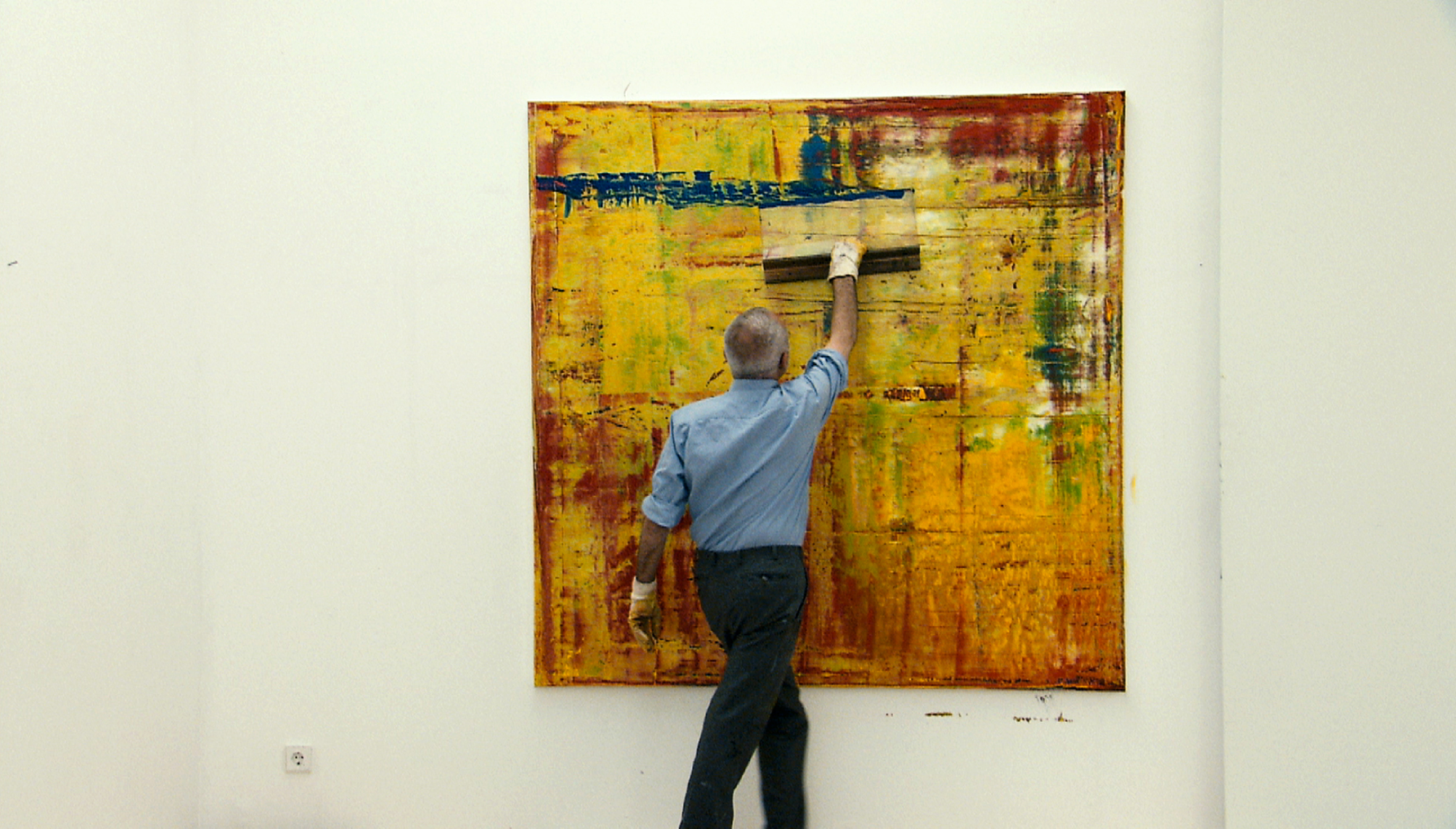
Gerhard Richter reveals his creative process in fascinating documentary (photo courtesy of Kino Lorber)
Who: Brinda Kumar, Corinna Belz What: Livestreamed prerecorded discussion Where: MetMuseum Facebook and YouTube When: Tuesday, June 23, free, 6:00 Why: In conjunction with the expansive Met Breuer exhibition “Gerhard Richter: Painting After All,” which opened March 4 for a brief run before the pandemic lockdown and hopefully will continue once the crisis is over, the Met’s “Insider Insights” series will examine Corinna Belz’s 2011 documentary, Gerhard Richter Painting. [Ed. note: It was announced on June 22 that the Met Breuer will be closing for good, so the exhibition will not be coming back.] On June 23 at 6:00, writer-director Belz will be joined by Met Modern and Contemporary Art assistant curator Brinda Kumar for a prerecorded interview discussing the making of the film, which can be streamed for free through July 31 here.
There’s nothing abstract about the title of Belz’s documentary on the German artist, no missing words or punctuation marks. Gerhard Richter Painting is primarily just that: Ninety-seven minutes of Gerhard Richter painting as he prepares for several exhibitions, including a 2009 show at the Marian Goodman Gallery in New York City. In 2007, Belz got a rare chance to capture Richter on camera, making a short film focusing on the stained-glass window he designed for the Cologne Cathedral. Two years later, the shy, reserved Richter, who prefers to have his art speak for itself, invited Belz into his studio, giving her remarkable access inside his creative process, which revealingly relies so much on chance and accident. Belz films Richter as he works on two large-scale canvases on which he first slathers yellow paint, adds other colors, then takes a large squeegee and drags it across the surface, changing everything. It’s fascinating to watch Richter study the pieces, never quite knowing when they are done, unsure of whether they are any good. It’s also painful to see him take what looks like an extraordinary painting and then run the squeegee over it yet again, destroying what he had in order to see if he can make it still better. “They do what they want,” he says of the paintings. “I planned something totally different.”
from
About halfway through the film, a deeply concerned Richter starts regretting his decision to allow the camera into his studio. “It won’t work,” he says. “At the moment it seems hopeless. I don’t think I can do this, painting under observation. That’s the worst thing there is.” But continue he does, for Belz’s and our benefit. Belz (Life After Microsoft,Peter Handke: In the Woods, Might Be Late) even gets Richter to talk a little about his family while looking at some old photos, offering intriguing tidbits about his early life and his escape to Düsseldorf just before the Berlin Wall went up. Belz also includes clips from 1966 and 1976 interviews with Richter, and she attends a meeting he has with Goodman about his upcoming show, lending yet more insight into the rather eclectic artist. “To talk about painting is not only difficult but perhaps pointless, too,” Richter, who turned eighty-eight in February, says in the 1966 clip. However, watching Gerhard Richter Painting is far from pointless; Belz has made a compelling documentary about one of the great, most elusive artists of our time. “Man, this is fun,” Richter says at one point, and indeed it is; watching the masterful artist at work is, well, a whole lot more fun than watching paint dry.
Sanford Biggers will talk to Performa head RoseLee Goldberg about The Somethin’ Suite and more on Juneteenth
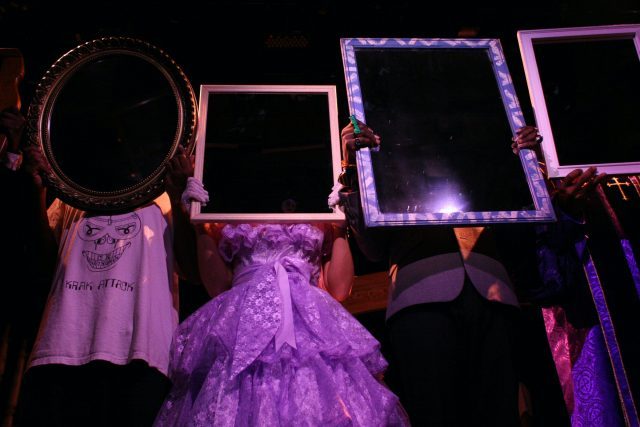
Who:Sanford Biggers,RoseLee Goldberg What: Talk and screening surrounding The Somethin’ Suite Where:Performa Instagram Live and Performa website When:Talk: Friday, June 19, free, noon; screening: June 18 & 19, free, 7:00 Why: In honor of Juneteenth, the anniversary of the end of the Civil War and slavery, Performa chief curator RoseLee Goldberg will discuss art, politics, systemic racism, and more with New York City-based multidisciplinary artist Sanford Biggers. The talk will take place on Instagram Live at noon, in conjunction with screenings on June 18 and 19 of Biggers’s 2007 Performa commission, The Somethin’ Suite, what he called “a post minstrel cycle” and “a darke xperiment.” The twenty-five-minute performance, held at the Box, featured Martin Luther, Saul Williams, Esthero, Shae Fiol, Imani Uzuri, DJ Dahi Sundance, CX KidTRONiK, and Freedome Bradley as a wide range of characters staging a minstrel show, using spoken word, song, music, dance, and film to bring to stark light historical aspects of racism.
In a 2007 interview, Biggers, who was raised in Los Angeles, told Goldberg, “The whole institution of our popular cultural media, which started with minstrel shows and has now become the hip hop music industry — one of the most lucrative entertainment industries worldwide — originated with making a mockery of blacks. So I’m interested in how much and how little has changed in these last 150 years. We’re at a crucial moment in race relations in America right now, with a lot of old wounds being reopened and reexamined. With the ‘PC’ ethos of the ’90s having passed, and a black man being seriously considered for the US presidency, we cannot afford to not develop a more sophisticated understanding of ‘race’ and ‘otherness.’ So I thought it was a perfect time to really look at the history of how we’ve been imagining ourselves, as African Americans, how white people have projected their stereotypes onto us, and how we’ve reflected their obsession by projecting some of those stereotypes back, because neither party is solely guilty — there’s a complicity.” Given what is happening right now in America, from George Floyd to Aunt Jemima, this program could not be any more timely.