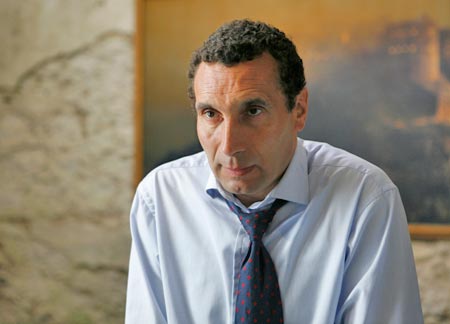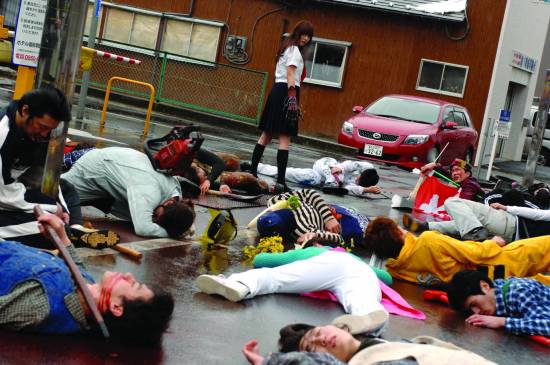
Programmer Grady Hendrix points to film such as MUTANT GIRLS SQUAD as a different kind of summer fare
NEW YORK ASIAN FILM FESTIVAL
Film Society of Lincoln Center, Walter Reade Theater
165 West 65th St. at Amsterdam Ave.
June 25 – July 8
212-875-5601
www.filmlinc.com
www.subwaycinema.com
Since 2002, the New York Asian Film Festival has introduced city cineastes to more than 220 mainstream, avant-garde, and cutting-edge films from Japan, China, Korea, Thailand, Vietnam, Hong Kong, Taiwan, and other Asian nations, many of the selections North American premieres. Initially shown at Anthology Film Archives, the festival moves uptown this year, holding screenings at the Film Society of Lincoln Center’s Walter Reade Theater from June 25 through July 8, in addition to weekend midnight screenings at the IFC Center and the overlapping Japan Cuts series at the Japan Society (July 1-16). The NYAFF was cofounded by Grady Hendrix, who runs Subway Cinema, a group dedicated to spreading the many wonders of Asian films, from low-budget bloodbaths to touching romantic comedies, from shoot-’em-up gangster movies to gory zombie tales, from campy musicals to martial arts and samurai epics.
This year’s festival includes a very special opening night, honoring Huang Bo (COW, CRAZY RACER) with the Rising Star of Asia Award, Simon Yam (ECHOES OF THE RAINBOW, STORM WARRIORS) with the Star Asia Award, and Sammo Hung (IP MAN 2, EASTERN CONDORS) with the Star Asia Lifetime Achievement Award. In the midst of a publicity blitz for the festival, Hendrix, who is well known for the colorful outfits he wears, chatted via email with twi-ny about the 2010 NYAFF.
twi-ny: What is it about Asian films that so drives you? Did you have a moment of epiphany watching a specific movie?
Grady Hendrix: This gets a two-part answer. The four of us who run the festival [Hendrix, Goran Topalovic, Daniel Craft, and Marc Walkow] come to Asian movies in different ways, but for me it was sitting in the Music Palace down in Chinatown back in 1993 taking in a double feature of ALWAYS BE THE WINNER and LOVE ON DELIVERY. It was while watching a man dressed as Garfield defeat a karate master with pure stupidity that I fell in love with Hong Kong movies, and that was the gateway drug that led me everywhere else.
But for all of us, the reason we’re so devoted to Asian movies is the same: We’re bored. This summer, the big movies coming out of Hollywood are movies like MARMADUKE, but if you’re willing to read subtitles, there are dozens of amazing movies from Korea, Japan, Hong Kong, and China. Folks complain that they have to watch endless sequels and disappointing remakes from Hollywood, but over at our festival summer viewing is all about giant pigs holding Korean villages in their porky grip of terror, flying kung fu masters beating each other up with ultimate weapons made of the spinal columns of dead gods, fizzy-as-champagne romantic comedies from China starring Zhang Ziyi, amazing new flicks from Jackie Chan, masked Mexican wrestler movies from Japan, and breakdancing action films from Thailand. If you’re happy watching Tom Cruise and Cameron Diaz pretend to fall in love, then great. If you want something a little more fun than that, then you should try a little of what we’re smoking.
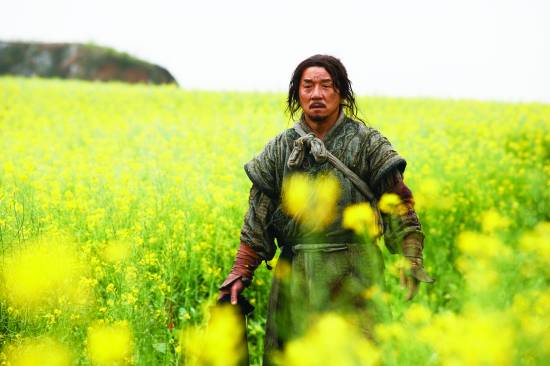
Jackie Chan gets all serious for New York Asian Film Festival at Lincoln Center
twi-ny: Five years ago you wrote in Slate, “If you’re thinking of running a film festival: don’t. It will ruin your life.” This year the NYAFF graduates to Lincoln Center, from its early days at Anthology Film Archives. Do you still feel that running a film festival will ruin your life? Did you handle anything different because the festival will be held at the prestigious Walter Reade Theater?
GH: Doing this festival still ruins my life. In fact, at this point I think it’s too late for me and my life has been ruined beyond repair. The fact is, the four of us who run the New York Asian Film Festival are intensely passionate about what we do, to the point of being deranged. Even when we outsource some of the work, we still wind up pushing our designers to do better, we bust our butts to make sure our fliers and programs get to absolutely everywhere possible even if we wind up having to do it ourselves, we really care about our audience, and we have to make sure that every screening is as fun as humanly possible. Being at the Walter Reade hasn’t changed that. It hasn’t changed our programming, either. Movies like DOMAN SEMAN and MUTANT GIRLS SQUAD are going to hurt the brains of people who are used to “A Pleasant Jaunt Through Lithuanian Cinema.”
twi-ny: You’re renowned for your choice of wardrobe at screenings. Will the move to Lincoln Center affect what you will wear in any way?
GH: This year it’s more about what we won’t be wearing rather than what we will. Right now I’m sizing bodystockings in order to pick the one that will induce maximum discomfort in the audience, and expect more bare butts than ever during MUTANT GIRLS SQUAD screenings.
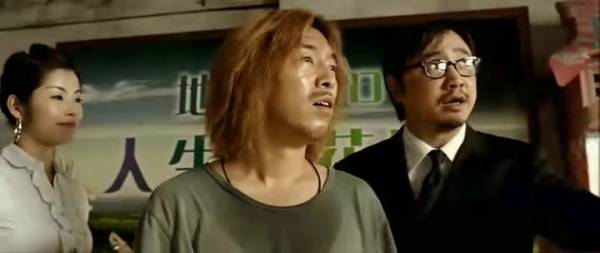
 Nothing is going right for poor Geng Hao (Huang Bo). After losing the national bike championship because he hammed it up by celebrating a split second too early, Geng’s life goes into freefall: His coach (Ma Shaohua) suffers a debilitating heart attack, and he loses everything after getting briefly involved with a shady snake-oil salesman, Li Fala (Jiu Kong), who dresses in Superman costumes as he promises that his questionable liquid concoction can turn anyone into a superhero. Soon Geng is a poverty-stricken bike messenger on the run from a Taiwanese drug kingpin and the cops, with a frozen Thai assassin in the back of his truck, and continually getting set up by Li Fala, who has some serious problems of his own. Nominated for Best Film at the 2009 Golden Horse Fillm Festival, CRAZY RACER (aka SILVER MEDALIST) is crazy good, an entertaining farce with absurd characters, a twisting plot, plenty of mistaken identity, Ning Hao’s (MONGOLIAN PING PONG) Guy Ritchie-inspired tongue-in-cheek direction, and, most of all, Huang Bo himself, who plays the sad sack Geng Hao with Buster Keaton-like appeal. Huang Bo, who will be awarded the Rising Star of Asia Award at the New York Asian Film Festival opening ceremonies on June 25, will introduce the June 26 screening and participate in a postscreening Q&A; he can also be seen in Guan Hu’s COW at the festival.
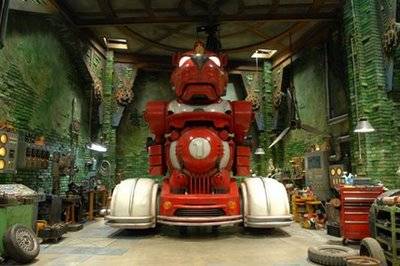
 Although Japanese director Takashi Miike is best known for such gruesome, violent, cutting-edge films as AUDITION, ICHI THE KILLER, the DEAD OR ALIVE trilogy, and GOZU, he has recently been showing off his more childlike side in such kid-friendly fare as THE GREAT YOKAI WAR and ZEBRAMAN. Now Miike has focused his attention on the popular late 1970s animated television show YATTERMAN, turning it into a goofy live-action flick filled with bright, bold colors, a fairly simplistic plot, and very cute machinery. On the side of good is Gan-chan (Japanese teen idol Sho Sakurai) and Ai-chan (Saki Fukuda), while rat-faced Doronjo (Kyoko Fukada), pig-nosed Tonzura (Kendo Kobayashi), and sexy leader Boyakki (Katsuhisa Namase) form the nasty, rather hapless villainous trio after the giant mecha-hero Yatterman and the four pieces of the valuable Skull Stone. Nothing short of the fate of the world is in jeopardy as the increasingly silly bad guys battle our beautiful, innocent heroes. Much of YATTERMAN is discombobulated and hard to follow, and the production values at times are more akin to Saturday-morning television than a trip to the movies, but it has such a charming sense of humor and playfulness that you might just overlook many of its needless excesses.
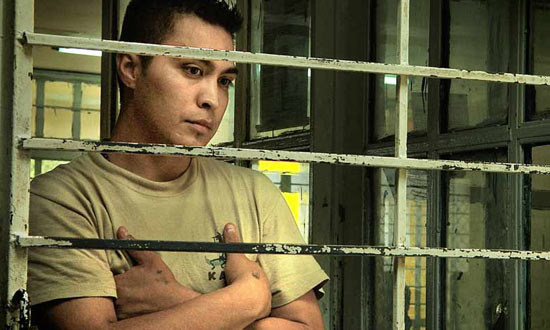
 Roberto Hernández and Geoffrey Smith’s harrowingly frustrating documentary is precisely the type of true story that explains why the Human Rights Watch Film Festival, and the Human Rights Watch organization itself, unfortunately needs to exist. Part of the Accountability and Justice section of the festival and chosen as the closing night film, PRESUMED GUILTY details the plight of Toño Zuniga, a young man arrested in Mexico City in December 2005 for a murder he did not commit and, despite all the evidence supporting his innocence — and even more important, no evidence proving his guilt — remains locked up, facing a long sentence. PRESUMED GUILTY is a maddening indictment of Mexico’s corrupt legal system, from cops who are paid by the arrest, to prosecutors who need to present nothing at trials, to judges who refuse to listen to the truth. Lawyers Hernández and Layda Negrete, along with documentarian Geoffrey Smith (THE ENGLISH SURGEON), are given remarkable access to Zuniga, following him in prison and ultimately filming his ever-more-ridiculous retrial, which he watches from a tiny barred area behind the judge. Zuniga himself is a fascinating character who is somehow able to hold back any anger as the inequities just keep piling on, but viewers won’t be able to temper their anger as the frustration builds to impossible heights. Smith and Hernández will participate in a postscreening discussion and reception that will bring the 2010 Human Rights Watch Film Festival to its conclusion, until next year, when another series of politically based dramas and documentaries expose other frightening tragedies occurring all over the world.