Youth Brigade will look back on thirty years of punk Sunday night at the Mercury Lounge
Mercury Lounge
217 East Houston St.
Sunday, November 14, $12-$15, 7:00
www.mercuryloungenyc.com
www.myspace.com/youthbrigadebyo
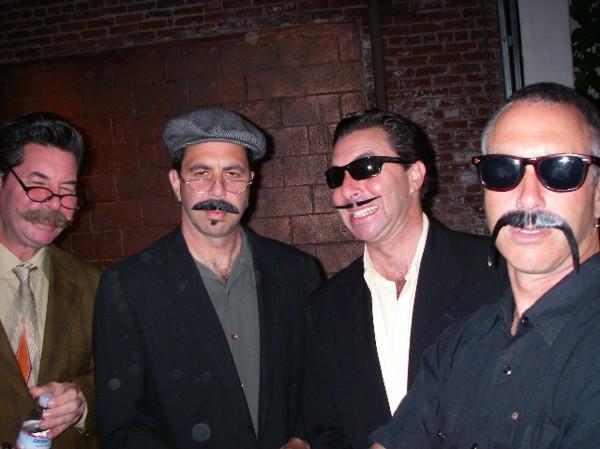
Thirty years ago, the brothers Stern — Shawn (guitar and vocals), Mark (bass), and Adam (drums) — formed Youth Brigade, a California punk band that went on to record such albums as SOUND & FURY (1982) and TO SELL THE TRUTH (1996) and such tracks as “I Hate My Life,” “Did You Wanna Die,” “Fuck You,” “Somebody’s Gonna Get Their Head Kicked In,” and “Where Are All the Old Man Bars.” Shawn and Mark also founded BYO (Better Youth Organization) Records back in 1982, and the history of the band and the label is captured in the documentary LET THEM KNOW: THE STORY OF YOUTH BRIGADE AND BYO RECORDS (Jeff Alulis, 2009). In honor of their thirtieth anniversary, the band is back out on the road; before heading off on their first European tour in seven years, which will take them to the Netherlands, Greece, Germany, Italy, France, Switzerland, Belgium, and Spain, they’ll be making a highly anticipated stop at the Mercury Lounge on November 14. The festivities begin at 7:00 with a screening of LET THEM KNOW, followed by live performances by TV Tramp at 8:30 and the Scandels at 9:10 before the headliners take the stage at 10:00. Just be ready for YB to rip up the halls and tear down the walls, and beware that pool of blood on the dance hall floor. . . .
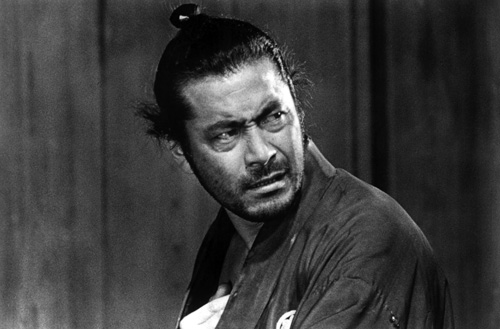
 In Akira Kurosawa’s sort-of sequel to YOJIMBO based on Shūgorō Yamamoto’s short story “Peaceful Days,” Toshirō Mifune returns as Tsubaki Sanjuro, a rogue samurai who shows up in a small town looking for food and fast money and takes up with a rag-tag group of wimps who don’t trust him when he says he will help them against the powerful ruling gang. Also back is Tatsuya Nakadai, this time as his accomplice Hanbei. Funnier than most Kurosawa samurai epics, the film is unfortunately brought down a notch by a bizarre soundtrack that ranges from melodramatic claptrap to a jazzy big-city score. The film is being screened at BAMcinématek as part of the series Kurosawa’s Samurai, which concludes November 21 with the King Lear epic RAN.
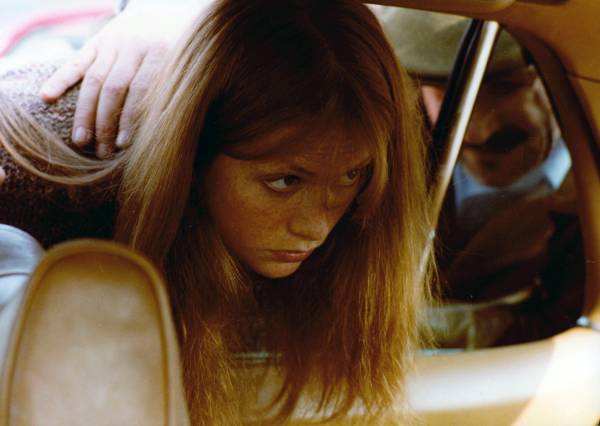
 Screening at Film Forum in a new 35mm print in honor of its thirtieth anniversary, Jean-Luc Godard’s EVERY MAN FOR HIMSELF marked a return to a somewhat more accessible narrative for the Nouvelle Vague auteur, although that does not mean it is by any means a traditional story or that it follows mainstream conventions. Arranged in four sections — the Imaginary (Slow Motion), Fear (Run for Your Life), Commerce (Trade), and Music — the film focuses on a smarmy, unlikable cigar-smoking video director, unironically named Paul Godard (Jacques Dutronc), who fights with his ex-wife (Paule Muret), wonders why he can’t touch his eleven-year-old daughter (Cécile Tanner) in rather sensitive areas, has driven away his bicycle-riding girlfriend, Denise Rimbaud (Nathalie Baye), and pays for a visit from Isabelle (Isabelle Huppert), a prostitute who recites lines from Charles Bukowski in her head while plying her trade and seeking her independence. Godard frames many of the images like paintings, coming alive with bright, bold colors. Nearly all of the interior scenes are filmed in long takes with no camera movement or cross-cutting (with two notable exceptions), while other scenes are filled with slow-motion shots, forcing viewers to question what they are seeing. Meanwhile, snippets of Gabriel Yared’s score and incidental music are often heard by only some of the characters, who wonder where the sounds are coming from. Godard infuses the film with various thoughts on Marxism, feminism, capitalism, pedophilia, incest, and violence against women; in one unforgettable scene, a businessman arranges a ridiculously funny Rube Goldberg-like foursome, acting like a film director, mocking Jean-Luc Godard’s own profession. Thirty years down the road, EVERY MAN FOR HIMSELF, also known as SLOW MOTION and, in French, SAUVE QUI PEUT (LA VIE), feels as relevant, as challenging, and as entertaining as ever. (Note: Film critic and Godard biographer Richard Brody will introduce the 8:20 screening on November 19.)