Lyle Heavy Runner (Blackfeet), design owner and painter; Naomi Crawford (Blackfeet), tipi maker, “Blackfeet Tipi,” canvas, latex paint, wood, Great Falls, Montana, 2010 (photo: Jenny Steven)
Brooklyn Museum
200 Eastern Parkway
Saturday, March 5, free, 5:00 – 11:00 (some events require free tickets distributed at the Visitor Center)
212-864-5400
www.brooklynmuseum.org
The new Brooklyn Museum exhibit “Tipi: Heritage of the Great Plains” is the focus of the institution’s March First Saturdays program, a free night of art, music, talk, film, literature, and dance. The party begins at 5:00 with singer/songwriter/activist Martha Redbone’s unique blend of soul, R&B, and traditional Native American music. At 5:30, the Thunderbird American Indian Dancers will perform. James McDaniel’s 2003 film, Edge of America, set at a high school reservation, will screen at 6:00, the same time Brooklyn artist Yatika Fields will discuss the “Tipi” exhibit. The Hands-On Art workshop (6:30-8:30) will teach children and adults how to make the Native American pouch called a parfleche. At 7:00, Nancy Rosoff will lead a tour of “Tipi,” followed at 8:00 by a Young Voices talk in which student guides will venture through the exhibit. DJ Frame of the Redhawk Arts Council will be behind the turntables for the always smokin’ Dance Party (8:00 – 10:00). At 9:00, visitors have the choice of continuing to dance up a storm, checking out Joseph Marshall III talking about his latest book, To You We Shall Return, or participating in an interactive dance performance with the Redhawk Arts Council. In addition, the galleries remain open until 11:00, giving everyone ample time to check out such exhibits as “reOrder: An Architectural Environment by Situ Studio,” “Thinking Big: Recent Design Acquisitions,” “Lorna Simpson: Gathered,” “Norman Rockwell: Behind the Camera,” “Sam Taylor-Wood: Ghosts,” and “Body Parts: Ancient Egyptian Fragments and Amulets.”
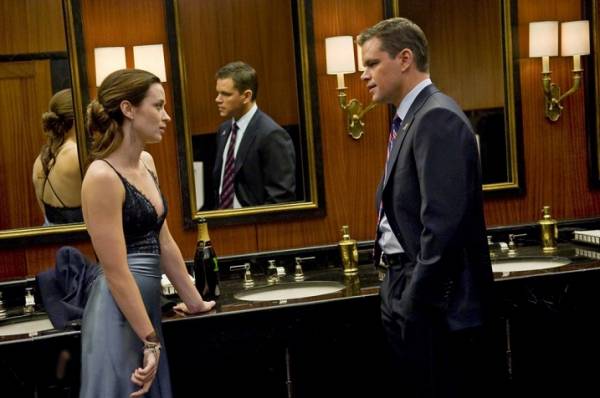
 Loosely based on a 1954 short story by Phikilp K. Dick that was also the inspiration for the 1998 Alex Proyas film Dark City, which starred Jennifer Connelly and Rufus Sewell, The Adjustment Bureau is a gripping romantic thriller that begins and ends with overwrought silliness but packs quite a wallop in between. After losing his bid for the Senate because, among other reasons, the New York Post slapped a picture of his butt on its front page, U.S. congressman David Norris (Matt Damon) unexpectedly meets a beautiful dancer, Elise (Emily Blunt), in the men’s room of the Waldorf=Astoria as he rehearses his concession speech. Sparks fly, but as they try to begin a relationship, outside forces work hard to keep them apart. Those forces turn out to be members of a mysterious group of men in hats whose job it is to make sure the Chairman’s preordained plan continues as scheduled. After seeing something he wasn’t supposed to, Norris is told by Adjustment team leader Richardson (John Slattery) that he must never see Elise again and that if he tells anyone what he’s seen, they will erase his mind. But Norris isn’t about to give up the woman he feels destined to be with, no matter what the consequences. The Adjustment Bureau starts with a ridiculous montage of real-life pundits, broadcasters, and politicians talking about the fictional Norris. But once the drama kicks into full gear, the film turns into an exciting battle of wits that includes several cool chase scenes that take viewers through the real New York City, not Toronto or Vancouver or green screens; New Yorkers are sure to laugh out loud when Richardson tells his underling, Harry (Anthony Mackie), upon getting lost tracking David and Elise, “I hate downtown.” First-time director George Nolfi even gets the dance scenes right, making Elise a member of Chelsea’s Cedar Lake Contemporary Ballet, using the company’s real stage and actual dancers. The denouement gets unnecessarily sappy and melodramatic, but by then you’ll have had more than enough fun to adjust your enjoyment of this popcorner.

 Winner of last year’s Palme d’Or at Cannes, Thai writer-director Apichatpong Weerasethakul’s Uncle Boonmee Who Can Recall His Past Lives is an elegiac meditation on memory, transformation, death, and rebirth, a fascinating integration of the human, animal, and spirit worlds. Uncle Boonmee (Thanapat Saisaymar) is dying of kidney failure, being tended to by his Laotian helper, Jaai (Samud Kugasang). Boonmee is joined by his dead wife’s sister, Jen (Jenjira Pongpas), in his house in the middle of the jungle. Boonmee and Jen have nearly impossibly slow conversations that seem to go nowhere, just a couple of very simple people not expecting much excitement out of what’s left of their lives. Even when Boonmee’s long-dead wife, Huay (Natthakarn Aphaiwonk), and his long-missing son, Boonsong (Geerasak Kulhong), now a hairy ghost monkey covered in black fur and with two laserlike red eyes, suddenly show up, Boonmee and Jen pretty much just go with the flow. Weerasethakul maintains the beautifully evocative pace whether Jaai is draining Boonmee’s kidney, the characters discuss Communism, Tong (Sakda Kaewbuadee) questions his monkhood, a princess (Wallapa Mongkolprasert) has sex with a catfish, or they all journey to a cave in search of another of Boonmee’s past lives. The film, which was shot in 16mm and was inspired by a 1983 book called A Man Who Can Recall His Past Lives, is part of the Primitive Project, Weerasethakul’s multimedia installation that also includes the short films A Letter to Uncle Boonmee and Phantoms of Nabua. Weerasethakul, who gained a growing international reputation with such previous works as Blissfully Yours (2002), Tropical Malady (2004), and Syndrome and a Century (2006) and has a bachelor’s degree in architecture from Khon Kaen University and an MFA in filmmaking from the Art Institute of Chicago, is a master storyteller who continues to challenge viewers with his unique visual language and subtly effective narrative techniques.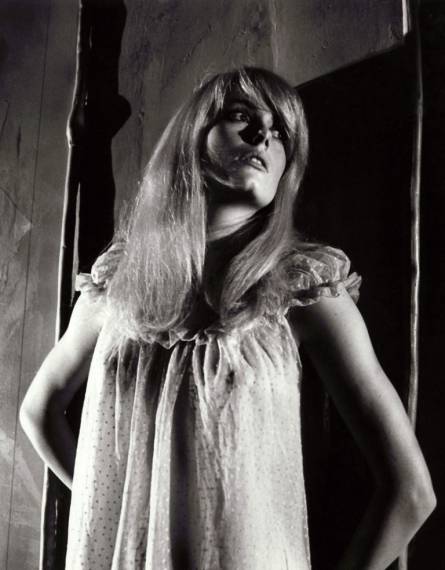
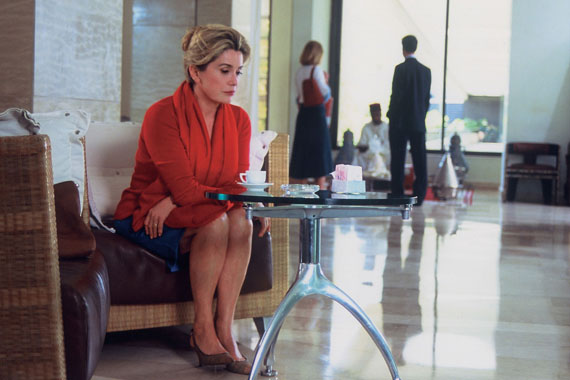
 In 1980, Catherine Deneuve and Gérard Depardieu teamed up for the first time in Claude Berri’s Je Vous Aime, followed by François Truffaut’s The Last Metro. They appeared in several more films together but not in dual leading roles since François Dupeyron’s A Strange Place to Meet (1988). Fortunately, in the ensuing years, they have been more successful than the characters they play in André Téchiné’s absorbing drama Changing Times. Deneuve, as beautiful as ever in her early sixties, stars as Cécile, a lonely woman feeling way too settled in her role as wife, mother, and radio host. Depardieu is Antoine, a lonely engineer who has been burning a candle for Cécile, his first love, for more than thirty years. When her grown son, Sami (Malik Zidi), comes to visit, he surprises everyone by bringing his girlfriend, Nadia (Lubna Azabal), and her young son, Said (Jabi Elomri). Both Sami and Nadia have other reasons for coming to Tangier: He wants to see his very good friend Bilal (Nadem Rachati), a groundskeeper for a rich family, and she wants to see her twin sister, Aicha (Azabal), a devout Muslim who works in McDonald’s. Meanwhile, Cécile’s husband, the younger Nathan (Gilbert Melki), hangs around the house, goes for long swims, and takes care of Antoine’s smashed nose. Depardieu is unnerving as a creepy stalker, and Deneuve is enchanting as the bored wife; Téchiné (Scene of the Crime, Alice et Martin) treats their awkward relationship with intelligence and subtlety, allowing it to play out in unexpected ways.