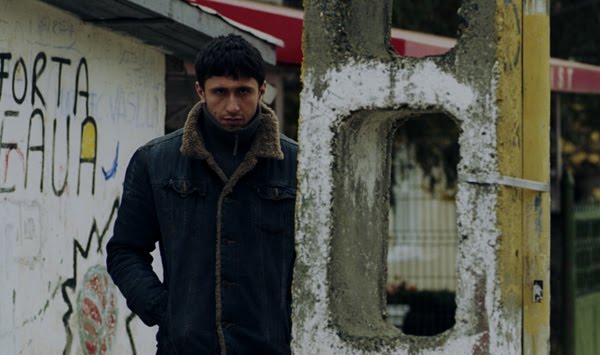
Cristi (Dragos Bucur) is on one helluva boring stakeout in Romanian black comedy
POLICE, ADJECTIVE (Corneliu Porumboiu, 2009)
Bohemian National Hall
321 East 73rd St. between First & Second Aves.
Friday, April 13, free, 8:15
Festival runs April 10-22 at Bohemian National Hall, IFC Center, and FIAF
new-york.czechcentres.cz
 The first half of Corneliu Porumboiu’s Police, Adjective is as dreadfully boring as Detective Cristi’s (Dragos Bucur) assignment, tailing a student, Victor (Radu Costin), who enjoys a joint with two of his friends every day after school. While Cristi wants to nail the kid’s supplier, the cop’s boss has him on a tight deadline, insisting he arrest Victor if the investigation continues to go nowhere, but Cristi strongly disagrees with putting the teenager away for up to seven years for a crime he believes will soon be abolished by the government. However, the film picks up considerably as Cristi seeks help from various contacts, getting caught up in red tape and public servants who would really rather not be bothered. And when he get called in by the chief (Vlad Ivanov from 4 Months, 3 Weeks, and 2 Days) and gets a long lecture in linguistics, well, you won’t be able to control yourself from laughing out loud. Porumboiu (12:08 East of Bucharest) keeps the pace very slow and very steady, but hang in there, because the end is a riot. Police, Adjective, which won the Un Certain Regard Jury Prize at the Cannes Film Festival, screened at the New York Film Festival and at MoMA as part of the “Contenders, 2009,” series, and was Romania’s official entry for the Foreign Language Film Academy Award, is being shown April 13 at the Bohemian National Hall as part of “Disappearing Act IV,” a festival of recent European films that also includes such works as Miguel Gomes’s Our Beloved Month of August (Aquele Querido Mes de Agosto) from Portugal and France, Vaclav Kadrnka’s Eighty Letters (Osmdesat dopisu) from the Czech Republic, Jaroslav Vojtek’s The Border (Hranice) from Slovakia, Argyris Papadimitropoulos and Jan Vogel’s Wasted Youth from Greece, and Marc Bauder’s The System (Das System ― alles verstehen heisst alles verzeihen) from Germany, with many screenings followed by a Q&A with members of the cast and/or crew. The series is curated and produced by Irena Kovarova and presented in association with the Czech Center, the Romanian Cultural Institute, and the Group of European Cultural Institutes and Diplomatic Representations in New York.
 Experimental filmmaker Bill Morrison’s production company is called Hypnotic Pictures, and for good reason; the Chicago-born, New York-based auteur makes mesmerizing, visually arresting works using archival found footage and eclectic soundtracks that are a treat for the eyes and ears. Several of his films were recently shown at a retrospective at the World Financial Center (including
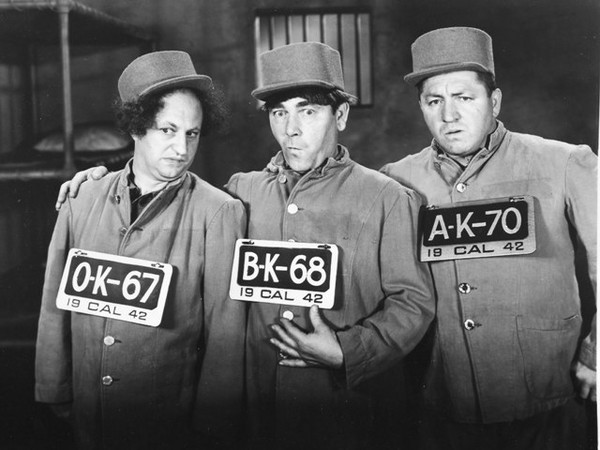
 Inspired by Homer’s Odyssey, Gaston Bachelard’s The Poetics of Space, and the Bowery Boys’ Spooks Run Wild, Canadian experimental filmmaker
 French director Julien Leclercq re-creates an infamous 1994 hijacking in the action thriller The Assault. On Christmas Eve, four members of the Algerian Armed Islamic Group (the GIA) boarded Air France Flight 8969 at Algiers’ Houari Boumedienne Airport and took the crew and 227 passengers hostage, demanding the release of two imprisoned Islamic Salvation Front leaders. Leclercq (Chrysalis) and screenwriter Simon Moutaïrou tells the story like a police procedural as the heavily armed terrorists begin killing passengers when their plan goes awry and they do not immediately get what they want. Meanwhile, the French Interior Ministry and the National Gendarmes Intervention Group (GIGN) are debating their response, including a possible all-out raid on the plane. Leclercq focuses on SWAT team member Thierry Prugnaud (Vincent Elbaz), whose wife (Marie Guillard) prays for his safe return; Yahia Abdallah (Aymen Saidi), a cold-blooded terrorist fiercely dedicated to his cause; and Carole (Melanie Bernier), a ministry worker who risks her career by taking charge. Although technically adept, The Assault lacks emotional resonance. The depiction of the relationship between Thierry and his wife and daughter feels forced, more of a soapy aside than an integral part of the film. There is little subtlety in evidence and plenty of clichés, with the hijackers representing pure evil, the GIGN officers primarily faceless, machinelike automatons, and the politicians overly concerned about themselves and how this will look to the world. The events, which were broadcast live in France, are quite remarkable, but Leclercq ends up draining them of much of their power, resulting in a surprisingly cold tale.