this week in film and television

RIALTO AT 25

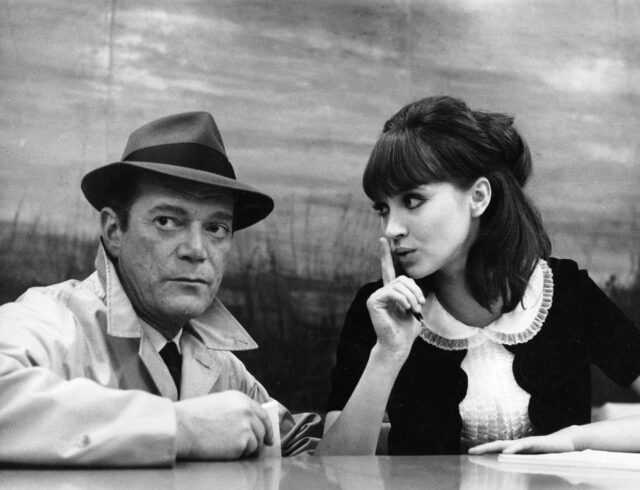
World premiere of 4K restoration of Jean-Luc Godard’s Alphaville kicks off “Rialto at 25” at MoMA (photo courtesy the Kobal Collection)

RIALTO AT 25
MoMA Film, Museum of Modern Art
11 West 53rd St. between Fifth & Sixth Aves.
April 19 – May 22, $8-$12
212-708-9400
www.moma.org
www.rialtopictures.com

In 1997, Bruce Goldstein started Rialto Pictures, joined the following year by Adrienne Halpern. For more than a quarter-century, Rialto has been dedicated to reissuing and restoring classic foreign and independent films, both famous and forgotten, often debuting them at Film Forum, where Goldstein has long served as master programmer. MoMA pays tribute to copresidents Goldstein and Halpern with “Rialto at 25,” a five-week series consisting of thirty-one films released by the beloved distribution company, beginning with Henri-Georges Clouzot’s 1947 murder mystery, Quai Des Orfèvres, and the world premiere of a brand-new 4K restoration of Jean-Luc Godard’s 1965 futuristic thriller, Alphaville.

Organized by MoMA Film curator Dave Kehr, the festival also includes Jean-Pierre Melville’s Army of Shadows, Francis Ford Coppola’s The Conversation, John Carpenter’s Escape from New York, Robert Hamer’s Kind Hearts and Coronets, Marcel Carné’s Le Jour Se Lève, Akira Kurosawa’s Ran, Carol Reed’s The Third Man, Joe Dante’s The Howling, and Alberto Cavalcanti’s Went the Day Well?

“I began Rialto Pictures out of sheer frustration. Many classic movies, particularly European films, had no distribution in the United States, with prints either impossible to get or unavailable to repertory cinemas,” Goldstein said in a statement. “And, just as bad, a lot of important classics — like Renoir’s Grand Illusion and Godard’s Breathless — were seen for decades only in miserable 16mm copies, with bad image and sound. By getting the rights to movies like these myself, I could make brand new 35mm prints and show them — not just in New York — but in movie theaters across the country.”

Rialto has amassed a profoundly remarkable collection that is well represented in the MoMA series; among the other highlights and surprises are Federico Fellini’s Nights of Cabiria (with a seven-minute restored scene), Jules Dassin’s Rififi, Orson Welles’s The Trial, Joseph Losey’s Mr. Klein, John Boulting’s Brighton Rock, and Luis Buñuel’s The Discreet Charm of the Bourgeoisie and That Obscure Object of Desire. In addition, MoMA has created a special forty-five-minute compilation of Rialto trailers.
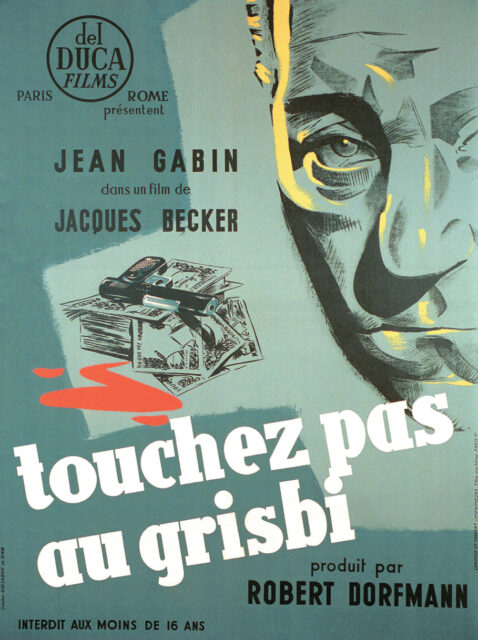
On April 29, Goldstein will present the illustrated talk “The Art of Subtitles”; several screenings will feature introductions or discussions; and originally commissioned Rialto posters will be on view. Goldstein will introduce Jacques Deray’s La Piscine on April 26 and Dino Risi’s Una Vita Difficile on May 14, translator and subtitler Michael F. Moore will introduce Francesco Rosi’s Christ Stopped at Eboli on April 22, Whit Stillman and actors Dylan Hundley and Carolyn Farina will participate in a discussion following a screening of Metropolitan on April 27, actor Madjid Niroumand will talk about Amir Naderi’s Davandeh with Goldstein after a screening on April 28, and Julien Duvivier’s Panique will be introduced on April 26 by Pierre Simon, the son of Georges Simenon, on whose novel the film is based. You might as well just move in to MoMA from April 19 to May 22, but keep looking over your shoulder.
GUILLERMO DEL TORO: CRAFTING PINOCCHIO

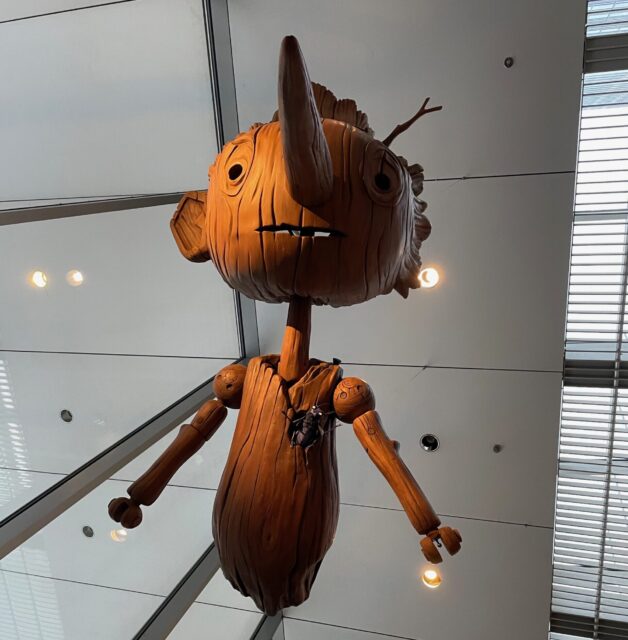
A large-scale Pinocchio hovers over a MoMA hallway (photo by twi-ny/mdr)

GUILLERMO DEL TORO: CRAFTING PINOCCHIO
MoMA, Museum of Modern Art
The Debra and Leon Black Family Film Center
The Paul J. Sachs Galleries
11 West 53rd St. between Fifth & Sixth Aves.
Through April 15, $14-$25 (sixteen and under free)
212-708-9400
www.moma.org
crafting pinocchio slideshow

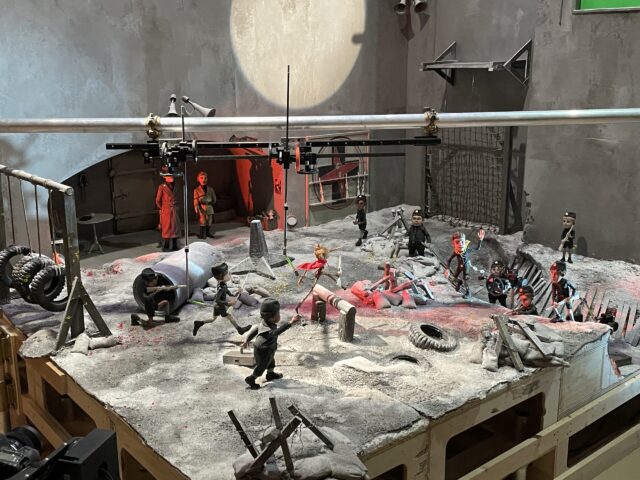
You don’t have to have seen Guillermo del Toro’s Oscar-winning stop-motion-animated Pinocchio or even liked it in order to appreciate the magical “Crafting Pinocchio” exhibition at MoMA, on view for just a few more days. Expect long lines to check out models, maquettes, drawings, dioramas, and video that goes behind the scenes of the making of the film, which started out as a chapter book illustrated by Gris Grimly.

“After the book was published, me and some friends started to develop how this could be a movie. And we came up with a list of directors, and Guillermo was top on the list,” Grimly explains on the audioguide. “Shortly after that, I got a call from a gallery that was selling my artwork, and they said that Guillermo came in and bought a piece of my Pinocchio artwork. And I said, ‘You’ve got to be kidding me!’ They called him up and we had lunch. And this was 2004, I think. It’s been a long time coming. This has been like twenty some years.”

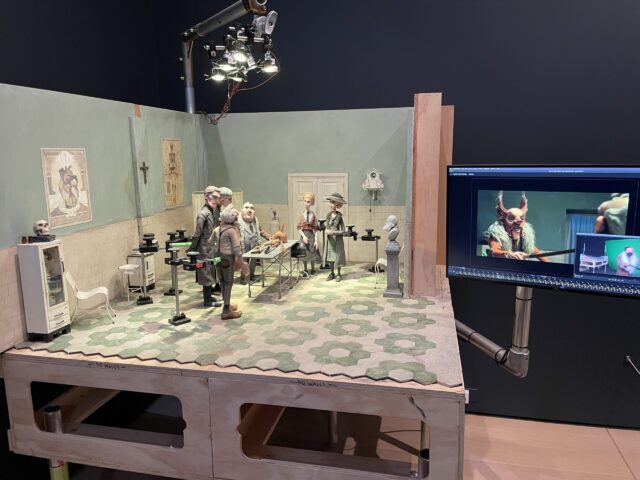
Doctors examine Pinocchio in scene from Oscar-winning film (photo by twi-ny/mdr)

The exhibit is an enticing collection that will bring out the little kid in you. You’ll learn about the creation of such characters as Cricket (voiced by Ewan McGregor), Geppetto (David Bradley), Pinocchio (Gregory Mann), Podesta (Ron Perlman), Dottore (John Turturro), Candlewick (Finn Wolfhard), Spazzatura (Cate Blanchett), the Black Rabbits (Tim Blake Nelson), Count Volpe (Christoph Waltz), the Wood Sprite (Tilda Swinton), and Mussolini (Tom Kenny) and encounter scenes set in Geppetto’s home, the doctor’s office, the battlefield, and the circus where Pinocchio performs.

“This is a fable very close to my heart, and one that I think has lived in many incarnations,” del Toro says on the guide. “And I trust the one we’re offering to you is a particularly beautiful one. This is a tale about becoming who you are, not transforming yourself for others, which goes counter to the traditional take on Pinocchio.” The film itself will be screened at MoMA on April 14 and 15 at 3:00.

Exhibit goes behind the scenes of the making of Guillermo del Toro’s Pinocchio (photo by twi-ny/mdr)

In the film center downstairs are a number of old copies of Carlo Collodi’s story in multiple languages from around the world, an inside look at the music in del Toro’s movie, and clips and posters from Pinocchio and such other del Toro works as Nightmare Alley, The Shape of Water, Pan’s Labyrinth, Hellboy, and The Devil’s Backbone.

On the audioguide, del Toro adds, “We wanted to create a story about a world that behaves like a puppet and obeys everything they’re told, and a puppet that chooses to be disobedient and finds his own morality, his own soul, and his own humanity by that disobedience.” The MoMA show captures just how del Toro accomplished that.

EVERY OCEAN HUGHES: RIVER

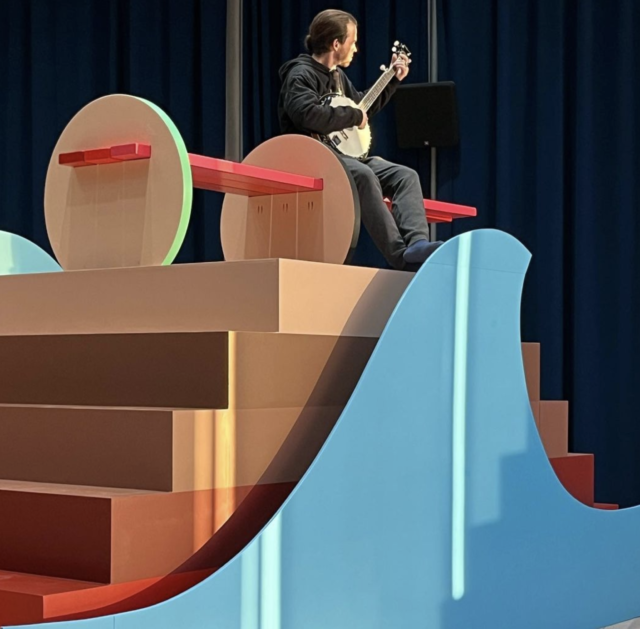
Every Ocean Hughes’s River will be performed March 24–26 in conjunction with photography exhibit (photo courtesy Every Ocean Hughes)

Who: Every Ocean Hughes
What: Live performance
Where: Whitney Museum of American Art, the Susan and John Hess Family Theater, 99 Gansevoort St.
When: March 24, 7:00; March 25, 4:00 & 7:00; March 26, 4:00, $25; exhibition continues through April 2
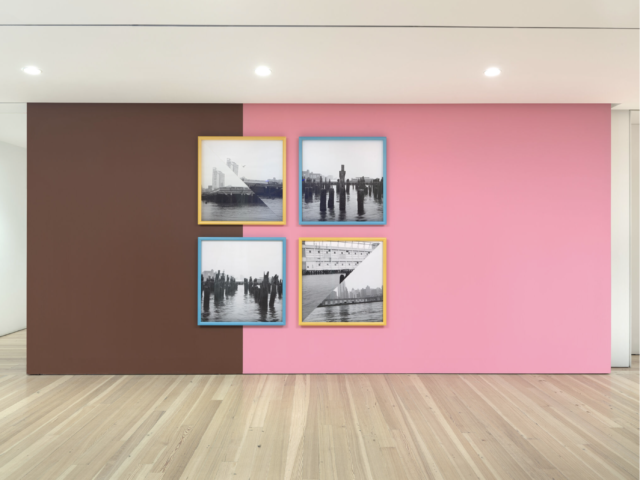
Why: Multidisciplinary artist Every Ocean Hughes activates her Whitney photography exhibition “Every Ocean Hughes: Alive Side” with four live performances this weekend in the Susan and John Hess Family Theater. Formerly known as Emily Roysdon, Hughes investigates legacy, loss, and inheritance in “Alive Side,” consisting of photographs of the west side piers right outside the Whitney; Hughes calls them “unmarked memorials, found monuments to the lives that needed that unregulated space. To those who died living queerly. Those who died of neglect, poverty, AIDS, violence, and politics. And to those seeking life by crossing West Street.” The black-and-white photos of the dilapidated wooden piers sticking out of the water, some works sliced diagonally in half, are framed in bright pastel colors that evoke the rainbow pride flag. The exhibit also features the forty-minute video One Big Bag, in which a death doula portrayed by Lindsay Rico describes and enacts rituals surrounding the end of life; “the whole process is a creative process,” she says.

Every Ocean Hughes, The Piers Untitled (#12 collaged, #9, #14 collaged, #4), 2009-23 (photo by Ron Amstutz)

On March 24–26, the Maryland-born Hughes, who lives and works in her home state and Stockholm, will present River, a thirty-minute live performance incorporating song, text, choreographed movement, and set design exploring the crossing that takes place at death, the descent into the underworld. The cast includes Rico, Geo WyeX, Æirrinn, and Nora Brown, with movement direction by Monica Mirabile, costumes by Montana Levi Blanco, and lighting by Timothy Johnson. Tickets are $25; it is recommended they be purchased in advance.

RIMINI

Richie Bravo (Michael Thomas) tries to hang on to his long-lost past in Ulrich Seidl’s Rimini

RIMINI (Ulrich Seidl, 2022)
Quad Cinema
34 West 13th St. between Fifth & Sixth Aves.
Opens Friday, March 17
212-255-224
quadcinema.com

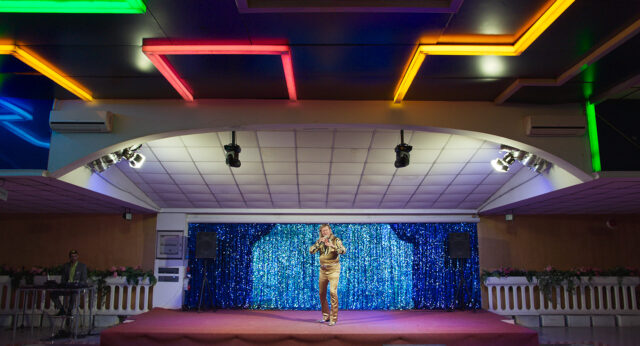
Michael Thomas is unforgettable as washed-up Schlager singer Richie Bravo, an alcoholic haunted by his past, in Ulrich Seidl’s Rimini, opening March 17 at the Quad. In an early scene, he visits his brother, Ewald (Georg Friedrich), at their family home after the death of their mother and walks wistfully around the house, looking at old photos, gently brushing his hand over a piano, and playing Bata Illic’s “Schwarze Madonna” on the jukebox in the basement, dancing by himself and eventually singing along: “Every life has its woes / Happiness comes and goes / Black Madonna / Every day, every night / We will always be this happy / It’s not too late / Your future will be great / Black Madonna.”

Richie is a big, broad-shouldered man who moves with a swagger, slightly leaning to his right, his dirty blond hair in a ponytail, a wisp often falling over his face. After the funeral, he returns to his house in Rimini, Italy, a popular resort in the summer but it’s now winter, sparsely populated and covered in snow and mist. A large cutout of his younger self, when he was a star, hovers over his music room like a curse.

He is now relegated to performing in front of embarrassingly small groups of German-speaking tourists for peanuts, singing standards as well as new songs composed by Fritz Ostermayer and Herwig Zamernik. He can’t afford to hire a band, so he is accompanied by prerecorded music that is only one step removed from barroom karaoke. The dozen or two elderly fans who attend his shows adore him; he wanders through the audience, flirting with the women; following the shows, he sometimes sleeps with them for money, making more as a gigolo than as a musician. Seidl graphically depicts Richie having sex with them, particularly his ersatz girlfriend, Annie (Claudia Martini), whose dying mother (Rosa Schmidl) is in the next room. Richie is surrounded by approaching death; his father, Ekkehart (Hans-Michael Rehberg, who passed away shortly after filming), lives in a nursing home, barely able to move or speak.

Richie’s pathetic life is sent into turmoil when his daughter, Tessa (Tessa Göttlicher), suddenly shows up with her boyfriend, Moumen (Abd El Rahman), demanding the money Richie promised her and her mother when he left them eighteen years earlier, when Tessa was six. She is not asking for him to finally be a father to her; she just wants the cash and then to never see him again. But Richie is broke, and he doesn’t know how to show love and care anymore, so he is wracked with guilt, trying to find a way out of the miserable excuse of a life he has constructed for himself.

In addition to making fiction films, Seidl (the Paradise Trilogy, Dog Days) is an award-winning documentarian, and he, cinematographer Wolfgang Thaler, and art directors Andreas Donhauser and Renate Martin bring a realistic feel to the sad story, which Seidl wrote with longtime collaborator Veronika Franz. Rimini was written specifically for Thomas (Across the Mile, Randgänger), inspired by an event when, preparing to make the 2007 Import Export, Seidl watched as Thomas spontaneously sang “My Way” in a Ukraine restaurant. Resembling a bizarro, older Brad Pitt, Thomas gives a career performance as Richie, a train wreck of a human being who barely survives in the fragile bubble he has created for himself, buried in booze, cigarettes, and cheap sex to take away the pain of knowing what might have been, his ghostly eyes always somewhere else. He’s a bear of a man, wearing a faded fur coat as he stumbles past empty playgrounds and cabanas, passing by anonymous people dressed in black.

Göttlicher is terrific in her screen debut, channeling a young Claire Danes as Tessa tries to put together her own shattered life. And Rimini is a character to itself, its streets filled with emptiness and occasional random, unidentified figures. Seidl chose to film there not because it is Federico Fellini’s hometown but because his parents took the family to the seaside resort in the 1950s, although certain scenes have a Fellini-esque quality.

Seidl explores a different side of the story in his follow-up, Sparta, which was filmed at the same time as Rimini and focuses on Ewald, a work that has been mired in controversy surrounding allegations of on-set child exploitation that the director has denied. The two films have also been presented as the 205-minute Wicked Games: Rimini Sparta at festivals.

MONTHLY ANIME: THE PLACE PROMISED IN OUR EARLY DAYS / VOICES OF A DISTANT STAR

The Place Promised in Our Early Days is part of Japan Society double feature celebrating Makato Shinkai

THE PLACE PROMISED IN OUR EARLY DAYS (Makoto Shinkai, 2004) / VOICES OF A DISTANT STAR (Makoto Shinkai, 2002)
Japan Society
333 East 47th St. at First Ave.
Friday, March 17, $15, 7:00
www.japansociety.org

Makoto Shinkai, who took the anime world by storm with his 2002 hit Voices of a Distant Star, a short film made completely on his home computer, followed that up with his first feature-length work, the magical and mystical The Place Promised in Our Early Days. Set in an alternate futuristic post-WWII world, The Place Promised centers on three friends, Hiroki, Takuya, and Sayuri, who make a vow to fly Hiroke and Takuya’s plane, Bela C’ielo, into the Tower, a monolithic structure rising into the sky that symbolizes the postwar division between the Union and US-Japanese forces. With war imminent, an older Takuya and Hiroki find themselves on opposing sides, with Sayuri lost in a coma dreamworld.

Although the plot — especially the science aspects — gets rather complex and confusing, The Place Promised is a beautiful-looking film, both tenderly sweet and harshly depressing, presenting a rather bleak forecast of the future. But stunning visual moments such as a setting sun with an illuminated halo that forms a shining star twinkling into an abandoned factory make it all worth it. Shinkai’s film was deservedly named Best Animated Film at the Mainichi Film Awards, where it topped the much more heralded Steamboy (Katsuhiro Otomo, 2004) and Howl’s Moving Castle (Hayao Miyazaki, 2004).

In celebration of the April 14 North American release of Shinkai’s latest film, Suzume, a coming-of-age story about a seventeen-year-old protagonist, Japan Society is screening The Place Promised in Our Early Days on March 17 at 7:00 in its monthly anime series. It will be preceded by Voices of a Distant Star, a devastatingly melancholic and hauntingly gorgeous twenty-five-minute exploration of loneliness as Mikako chases the evil Tarsians through the galaxies with the UN Space Army carrier Lysithea (named after a Greek mythological figure and a genus of red algae) while Noboru, her true love since they were fifteen, waits for her messages, which take longer and longer to reach him the farther out the battle takes her. Tenmon’s piano score is heartbreaking in one of the saddest and most poignant animes ever made.

FIRST LOOK 2023: ART TALENT SHOW

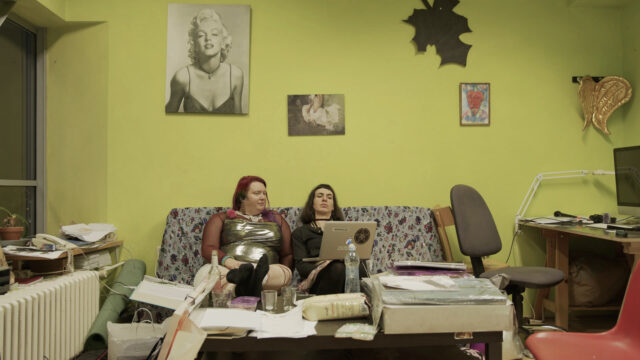
Kateřina Olivová and Darina Alster evaluate potential students in Art Talent Show

ART TALENT SHOW (Adéla Komrzý & Tomáš Bojar, 2022)
Museum of the Moving Image
35th Ave. at 36th St., Astoria
Sunday, March 19, 5:30
Festival runs March 15-19
718-777-6888
movingimage.us

“I think the line between reality and art has been smudged here. . . . You don’t know what’s art and what’s real anymore,” a teacher says in Adéla Komrzý and Tomáš Bojar’s vastly entertaining Art Talent Show, making its New York premiere at the Museum of the Moving Image’s twelfth “First Look” festival, which highlights new, innovative international films. I could say the same thing about Art Talent Show itself, which develops such an intriguing narrative that you might have a hard time convincing yourself that it’s nonfiction; at least I did.

In 2019, Adéla Komrzý was commissioned by rector Tomáš Vaněk and the Academy of Arts (AVU) in Prague to make a documentary in celebration of the institution’s 220th anniversary. Komrzý teamed up with Tomáš Bojar, and they spent four days filming a diverse group of applicants going through the difficult selection process to capture one of the coveted spots, not only creating art but taking written tests and undergoing rigorous personal interviews. Six professors in three departments agreed to let the cameras follow them: Vladimír Kokolia and Eva Červená from Graphic Design, Kateřina Olivová and Darina Alster from New Media, and Marek Meduna and Petr Dub from Painting.

They ask such questions as “What do you think is the role of art in today’s society?” and “What is the worst thing you have done in your life?” and get a wide range of answers from the unnamed students, who sometimes go off on tangents or freely admit they have no idea. Some try to be completely honest, others struggle to assert their identity, and a few use the opportunity to respond as if giving a performance. We learn as much, if not more, about the teachers than we do about the students, especially one who goes off on her own tangent about her sexuality and another who seems to savor grilling the applicants a bit too much. Meanwhile, a pair of older women who work at the reception/security desk gossip about it all.

The hundred-minute film provides compelling insight into the next generation of artists, even via this small sample; many of them talk about how they are making art for themselves, rather than as part of something bigger or considering how their work could influence society and the world at large. Most of them appear to have no interest in art history, instead focusing solely on what they are doing, as if they exist in a vacuum. It also serves as a microcosm of what is happening outside art school, where kids and teenagers are obsessed with social media, trying to figure out who they are in full view of others.

Inspired by Claire Simon’s Le Concours, about an annual French student contest, Komrzý (Intensive Life Unit, Viva Video, Video Viva) and Bojar (Two Nill, Breaking News) avoid reality-show pizzazz, instead trying to be as unobtrusive as possible, choosing the fly-on-the-wall route; at times they set up their cameras in rooms and operate them remotely so their physical presence will not affect the discussions between teachers and students.

The professors reveal their own predilections, especially Olivová, who dresses in colorful childlike costumes and wears kitten ears, offering the students encouragement, whereas Kokolia puts them through a much more direct and almost accusatory investigation. In a promotional interview, Dub explains, “I also realized that the presence of the crew will make us all — both [teachers] and applicants — step out of our comfort zones. However, this is what the art is principally based on: constant searching and crossing borders, whether social or artistic ones. I am not a big fan of safe zones as they blunt our perception, relation to reality, and possibilities of art experiments which are necessary to prevent existential sterility.” Scenes in which the teachers evaluate the artwork and debate topics for the students to address should give pause to the thin-skinned applying to similar programs.

“I don’t know whether to write ‘definite pass’ or ‘definite fail,’” one teacher says about a specific test. Art Talent Show is a definite pass, acing its subject.

“First Look” runs March 15-19 at MoMI, comprising more than fifty shorts and features, with many filmmakers on hand for Q&As. The opening night presentation is Babak Jalali’s Fremont, starring Anaita Wali Zada and Jeremy Allen White, paired with Ruslan Redotov’s Away, two very different refugee tales. The closing night film is C. J. “Fiery” Obasi’s Mami Wata, centered around a powerful mermaid goddess in a West African community.

NYICFF 2023

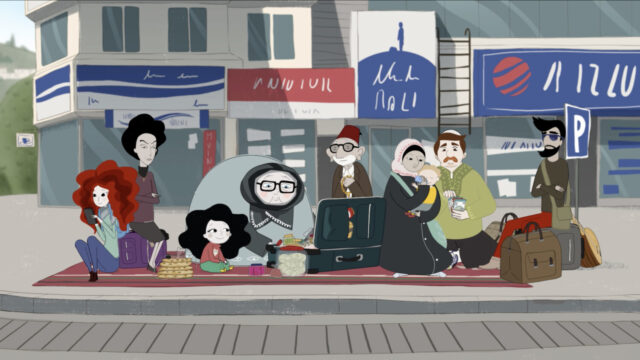
Dounia and the Princess of Aleppo is one of the highlights of NYICFF 2023

NYICFF 2023
Alamo Drafthouse Cinema, DCTV, Film Forum, Scandinavia House, SVA Theatre, Sag Harbor Cinema
March 3-12, $17-$20
nyicff.org

Entering its second quarter-century, the New York International Children’s Festival (NYICFF) spreads all over town March 3-19, with sixteen features and eight shorts programs, including many US, New York, and international premieres, being shown at Alamo Drafthouse Cinema, DCTV, Film Forum, Scandinavia House, SVA Theatre, and Sag Harbor Cinema. The opening night selection is Jean-Christophe Roger and Julien Chheng’s Ernest and Celestine: A Trip to Gibberitia, the sequel to the 2013 smash Ernest & Celestine, about a bear and a mouse; the screening will be followed by a Q&A with the filmmakers. Among the other features are Pierre Coré’s Belle and Sebastian: Next Generation (with Q&A), the continuing adventures of the beloved characters; Marya Zarif and André Kadi’s Dounia and the Princess of Aleppo (with Q&A), about a princess and some seeds; Keiichi Hara’s Lonely Castle in the Mirror, based on the YA novel by Tsujimura Mizuki; and Kajsa Næss’s Titina, a polar journey with an airship engineer and his dog, “more or less based on true events.”

Among the shorts programs are “Heebie Jeebies,” “Girls’ POV,” and “Celebrating Black Stories.” NYICFF was founded in 1997, “rooted in the belief of film as a path for young people to understand themselves and others. All programs are designed to celebrate the beauty and power of film, spark the inherent capacity of children to connect with complex, nuanced art, and encourage the creation of intelligent films that represent and celebrate unique, diverse, and historically excluded voices.”