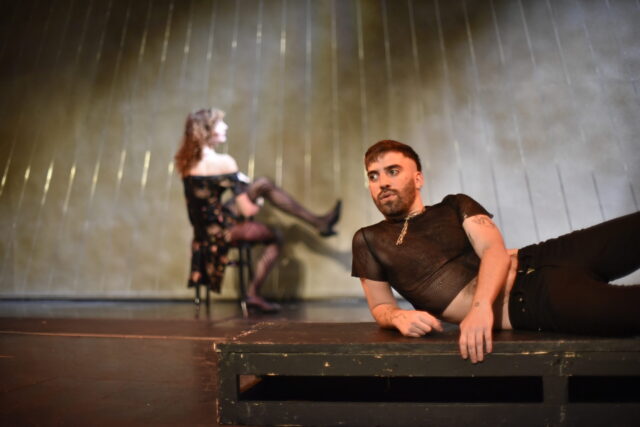
Bruno Isaković and Nataša Rajković’s Yira, yira (Cruising, cruising) is part of QNYIAF (photo by Silvija Dogan)
QUEER NEW YORK INTERNATIONAL ARTS FESTIVAL
NYU Skirball Center for the Performing Arts
566 La Guardia Pl. between Third & Fourth Sts.
February 7 – 17, $25
212-945-2600 nyuskirball.org
After a six-year break, the Queer New York International Arts Festival returns to the city, taking place February 7-17 at NYU Skirball. Started by Queer Zagreb founder Zvonimir Dobrović in 2012 at Abrons Arts Center, the fest consists of works that address queerness in today’s society, this year with presentations from Argentina, Brazil, Canada, Croatia, and Germany, including live performances, installations, and public talks.
The 2024 QNYIAF kicks off February 7 with Croatian artist Arijana Lekić Fridrih’s From5to95, a hybrid video installation and online project in which Croatian women from the ages of five to ninety-five share their personal stories about gender inequality. On February 7 and 8, Croatian artists Bruno Isaković and Nataša Rajković’s Yira, yira (Cruising, cruising), which premiered in Argentina in 2019, is performed by sex workers Juan Ejemplo, Leandra Atenea Levine Hidalgo, Pichón Reyna, and Sofía Tramazaygues, exploring the relationship between client and sex worker.
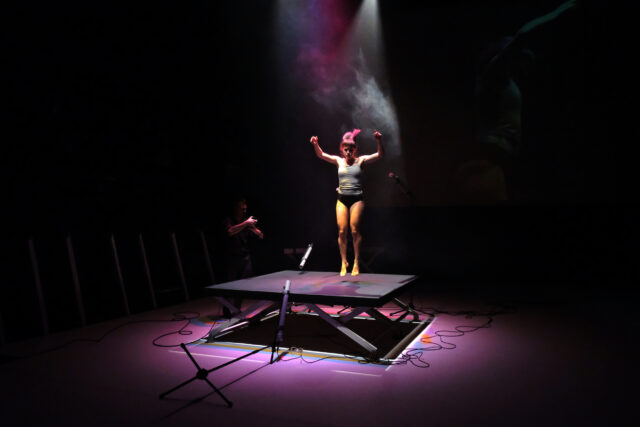
Bruno Isaković and Mia Zalukar’s Kill B. reimagines the Bride from Quentin Tarantino films (photo by Hrvoje Zalukar)
Isaković collaborates with fellow choreographer and dancer Mia Zalukar on Kill B., inspired by Quentin Tarantino’s Kill Bill. Playing February 9 and 10, the piece focuses on the character of the Bride as well as artistic hierarchical structures and their own professional partnership. On February 13, Toronto-based performance artist Clayton Lee goes through his sexual history in The Goldberg Variations, which mashes up Johann Sebastian Bach with WCW and WWE wrestler and actor Bill Goldberg, host of the 2018-19 competition series Forged in Fire: Knife or Death and a contestant on The Celebrity Apprentice. Some iterations have included smells and live snakes, so be ready.
On February 15, Argentinian interdisciplinary artist Tiziano Cruz will deliver the autobiographical performance lecture Conference, followed by a discussion. His piece Soliloquy — I woke up and hit my head against the wall was about his mother; in Conference he turns his attention to his ancestors and his late sister. On February 16, Brazilian artist Wagner Schwartz’s performance lecture La Bête is an interactive solo in which he activates a plastic replica of one of Lygia Clark’s rearrangeable hinged metal sculptures known as bichos, or “beasts,” and then the audience does the same, except with Schwartz’s naked body.
QNYIAF concludes February 17 with Raimund Hoghe Company members Emmanuel Eggermont and Luca Giacomo Schulte’s An Evening with Raimund, a tribute to German choreographer, dancer, and journalist Raimund Hoghe, who died in 2021 at the age of seventy-two; excerpts from his works will be performed by seven dancers. “To see bodies on stage that do not comply with the norm is important — not only with regard to history but also with regard to present developments, which are leading humans to the status of design objects,” Hoghe said. “On the question of success: It is important to be able to work and to go your own way — with or without success. I simply do what I have to do.”
[Mark Rifkin is a Brooklyn-born, Manhattan-based writer and editor; you can follow him on Substack here.]
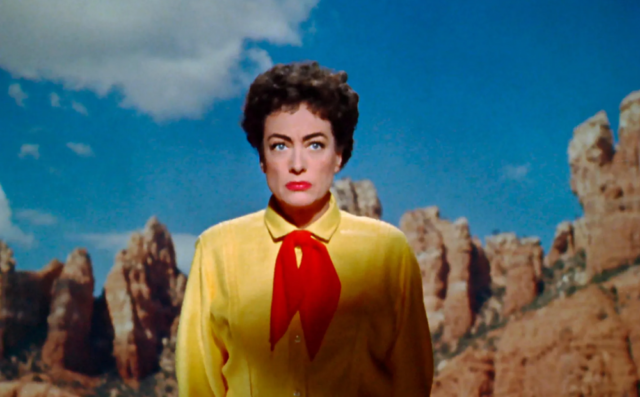
Joan Crawford stars in Nicholas Ray’s Johnny Guitar, part of sapphic Film Forum series
SAPPH-O-RAMA
Film Forum
209 West Houston St.
February 2-13
212-727-8110 filmforum.org
Film Forum is celebrating lesbian cinema with the twelve-day, thirty-flick series “Sapph-O-Rama,” consisting of famous and obscure works by, about, and/or featuring women in love and fighting for freedom. Programmed by Andrea Torres and Emily Greenberg, the entries range from Jamie Babbit’s But I’m a Cheerleader, David Butler’s Calamity Jane, and Donna Deitch’s Desert Hearts to Leontine Sagan’s Mädchen in Uniform, Pedro Almodóvar’s Dark Habits (Entre Tinieblas), and Chantal Akerman’s Je Tu Il Elle. Among the stars of the movies, which go back more than a hundred years, are Clara Bow, Fredric March, Agnes Moorehead, Alla Nazimova, Doris Day, Howard Keel, Natasha Lyonne, RuPaul Charles, Kathryn Bigelow, Eric Bogosian, Delphine Seyrig, Mink Stole, Sterling Hayden, and Joan Crawford.
In addition to select reviews below, here are the special events that Film Forum will be hosting:
Sunday, February 4, 1:10 She Must Be Seeing Things (Sheila McLaughlin, 1987), prerecorded introduction by filmmaker Sheila McLaughlin
Sunday, February 4, 4:50 Murder and Murder (Yvonne Rainer, 1996), Q&A with filmmaker Yvonne Rainer and Amy Taubin
Tuesday, February 6, 8:15 Codependent Lesbian Space Alien Seeks Same (Madeleine Olnek, 2011), introduced by Río Sofia of Queer | Art, followed by a Q&A with filmmaker Madeleine Olnek and stars Lisa Haas and Rae C. Wright, moderated by Jude Dry
Friday, February 9, 5:20 The Wild Party (Dorothy Arzner, 1929), introduced by David Stenn, author of Clara Bow: Running Wild
Saturday, February 10, 4:15 The Killing of Sister Georgie (Robert Aldrich, 1968), introduced by editor and critic Melissa Anderson
Saturday, February 10, 7:10 Daughters of Darkness (Harry Kümel, 1971), introduced by vampire expert Laura Westengard
Tuesday, February 13, 6:00 The Incredibly True Adventure of Two Girls in Love (Maria Maggenti, 1995), introduced by filmmaker Maria Maggenti
Tuesday, February 13, 8:05 She Must Be Seeing Things (Sheila McLaughlin, 1987), prerecorded introduction by filmmaker Sheila McLaughlin
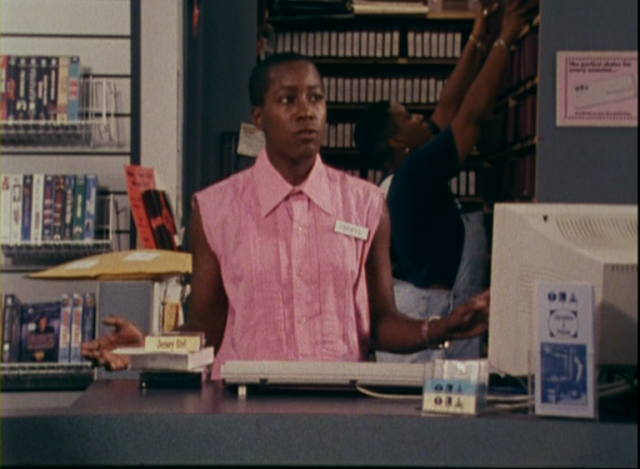
Cheryl Dunye wrote, directed, edited, and stars in The Watermelon Woman
THE WATERMELON WOMAN (Cheryl Dunye, 1996)
Friday, February 2, 4:00
Tuesday, February 6, 6:10
Monday, February 12, 9:20 filmforum.org
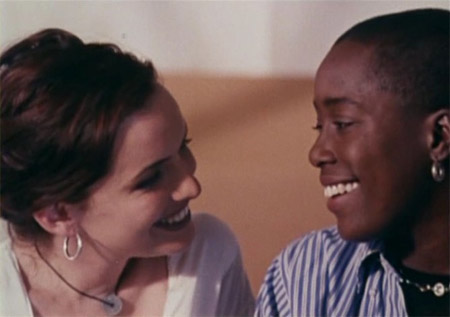
“The idea came from the real lack of information about the lesbian and film history of African American women. Since it wasn’t happening, I invented it,” Cheryl Dunye says about her 1996 debut, The Watermelon Woman. In the film, the first feature by a black lesbian, Dunye plays herself, a twenty-five-year-old black lesbian working at a video store with her goofy best friend, Tamara (Valerie Walker). Searching for a topic to make a movie on, Cheryl becomes obsessed with an actress who played a mammy in Plantation Memories and other 1930s films. The actress was listed in the credits as the Watermelon Woman; Cheryl decides to find out more about her, going on a journey in and around her hometown of Philadelphia, discovering more and more about the actress, also known as Fae Richards, and the battle black lesbians had to fight in the early-to-mid-twentieth century. In the meantime, Cheryl begins a relationship with Diana (Guinevere Turner), a privileged white woman who has just moved into the area, mimicking what Cheryl has found out about Richards, who had an affair with white director Martha Page.
Diana (Guinevere Turner) and Cheryl Dunye (as herself) stars a relationship in The Watermelon Woman
The Watermelon Woman suffers from amateurish filmmaking techniques (Michelle Crenshaw was the cinematographer, while Dunye served as editor in addition to writer, director, and star), but its central issue is a compelling one, and Dunye is engaging as her onscreen alter ego. Richards (Lisa Marie Bronson) and Page (producer Alexandra Juhasz) are seen only in photographs and archival footage shot by white lesbian artist Zoe Leonard (her photography assistant was Kimberly Peirce, who went on to make Boys Don’t Cry), while Doug McKeown (The Deadly Spawn) directed the scenes from fake movies Plantation Memories and Soul of Deceit. (The photographs became an art project of its own, touring museums around the world.) The film features numerous cameos by writers, musicians, and activists, including Camille Paglia as herself, V. S. Brodie as a karaoke singer, Sarah Schulman as the CLIT archivist, David Rakoff as a librarian, and Toshi Reagon as a street singer.
The Watermelon Woman is a heartfelt tribute to black lesbians by a black lesbian who is restoring one woman’s true identity as a microcosm for all black women who have had theirs taken away. The film also became part of an attempt by certain congressmen to defund the National Endowment for the Arts, which supplied a $31,500 grant to Dunye; Michigan Republican Peter Hoekstra, head of the House Education and Workforce Committee’s Subcommittee on Oversight and Investigations, singled the film out as offensive. The Watermelon Woman is also a reminder of what research was like pre-Google, a mere twenty years ago. Dunye has gone on to make such films as Stranger Inside, Black Is Blue, Mommy Is Coming, and My Baby’s Daddy, continuing her exploration of multiracial, gay, and trans culture.
Alice Wu’s Saving Face breaks the chains of conventions in LGBTQ love story
SAVING FACE (Alice Wu, 2004)
Monday, February 5, 12:30
Wednesday, February 7, 4:10
Sunday, February 11, 1:00 filmforum.org
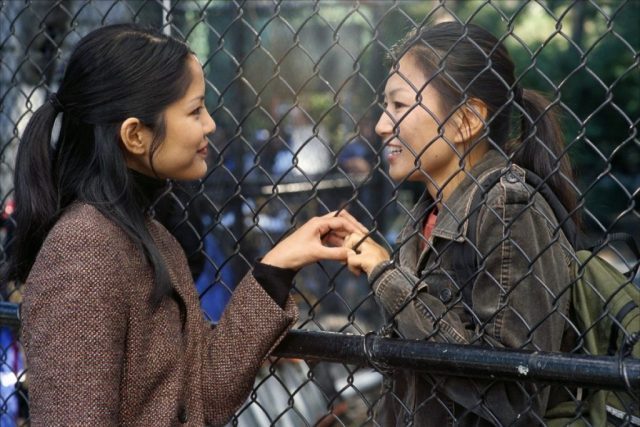
While much of writer-director Alice Wu’s independent first feature, Saving Face, is entertaining enough, the last scenes are so much fun, so heartbreaking, and so charming that the film leaps to the next level, so stay with it. The captivating Michelle Krusiec (One World, Knife Fight) stars as Wilhelmina, a twenty-eight-year-old doctor trying to balance her career with her family in Flushing. Every Friday night she goes to the community dance, where her mother (Joan Chen) and the other Chinese yentas try to fix her up with a guy. Little do they know that she’s gay and strongly attracted to the boss’s daughter, Vivian (Lynn Chen), a ballerina dabbling in modern dance. Things get a little wacky when it turns out that Wil’s mother is pregnant and won’t tell anyone who the father is, leading to her banishment from her parents’ home and her friends’ inner circle. Suddenly Wil finds herself struggling to take care of her mother while also exploring a blossoming relationship that she hides from nearly everyone except her best friend, Jay (Ato Essandoh). Tradition battles modern life, generation battles generation, sexual preference battles gossip and scandal, and conventional roles get turned upside down and inside out in this film-festival favorite that will leave you smiling.
Peggy Gravel’s quaint suburban life is about to go to hell in John Waters’s Desperate Living
DESPERATE LIVING (John Waters, 1977)
Thursday, February 8, 8:30 filmforum.org
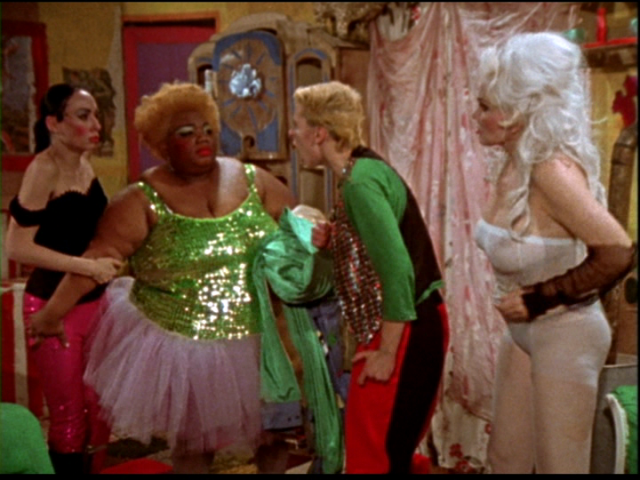
A turning point in his career, John Waters’s Desperate Living is an off-the-charts bizarre, fetishistic fairy tale, the ultimate suburban nightmare. Mink Stole stars as Peggy Gravel, a wealthy housewife suffering yet another of her mental breakdowns. In the heat of the moment, she and the family maid, four-hundred-pound Grizelda Brown (Jean Hill), kill Peggy’s mild-mannered husband, Bosley (George Stover), and the two women end up finding refuge in one of the weirdest towns ever put on celluloid, Mortville, where MGM’s The Wizard of Oz and Babes in Toyland meet Russ Meyer’s Faster, Pussycat! Kill! Kill! (with some Kenneth Anger, Jack Smith, and Douglas Sirk thrown into the mix as well). “I ain’t your maid anymore, bitch! I’m your sister in crime!” Grizelda declares. Peggy and Grizelda move into the “guest house” of manly Mole McHenry (Susan Lowe) and her blonde bombshell lover, Muffy St. Jacques (Liz Renay). Mortville is run as a kind of fascist state by the cruel and unusual despot Queen Carlotta (Edith Massey), an evil shrew who enjoys being serviced by her men-in-leather attendants, issues psychotic proclamations, and is determined that her daughter, Princess Coo-Coo (Mary Vivian Pearce), stop dating her garbage-man boyfriend, Herbert (George Figgs). (Wait, Mortville has a sanitation department?) Camp and trash combine like nuclear fission as things get only crazier from there, devolving into gorgeous low-budget madness and completely over-the-top ridiculousness, a mélange of sex, violence, and impossible-to-describe lunacy that Waters himself claimed was a movie “for fucked-up children.”
John Waters’s Desperate Living is a celebration of camp and trash, an extremely adult and bizarre fairy tale
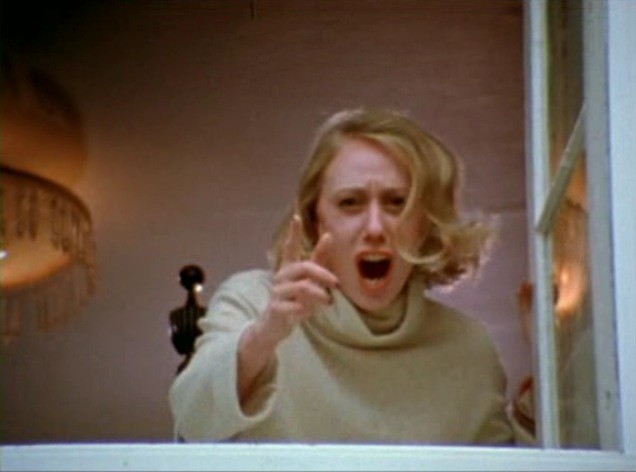
The opening scenes of Peggy’s meltdown are utterly hysterical. When a neighbor hits a baseball through her bedroom window and offers to pay for it with his allowance, she screams, “How about my life? Do you get enough allowance to pay for that? I know you were trying to kill me! What’s the matter with the courts? Do they allow this lawlessness and malicious destruction of property to run rampant? I hate the Supreme Court! Oh, God. God. God. Go home to your mother! Doesn’t she ever watch you? Tell her this isn’t some communist day-care center! Tell your mother I hate her! Tell your mother I hate you!” The sets and costumes are deranged — and perhaps influenced Pee-wee’s Playhouse — the relatively spare score is fun, and the acting is, well, appropriate. The first half of the film is better than the second half, but it’s still a delight to watch Waters, who wrote, directed, and produced the film, which was shot in a kind of lurid Technicolor by Charles Ruggero, take on authority figures (beware of Sheriff Shitface), gender identity, class structure, hero worship, beauty, race, crime, nudity, and, of course, at its very heart, love and romance.
[Mark Rifkin is a Brooklyn-born, Manhattan-based writer and editor; you can follow him on Substack here.]
Documentary explores life and career of twentieth-century photographer Roman Vishniac
VISHNIAC (Laura Bialis)
Quad Cinema
34 West Thirteenth St. between Fifth & Sixth Aves.
Opens Friday, January 19 quadcinema.com vishniacfilm.com
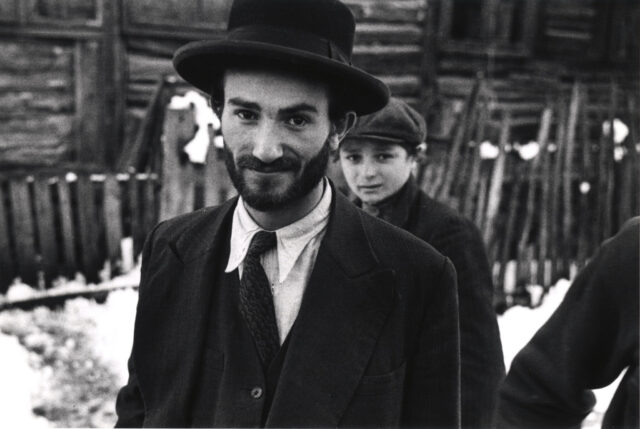
After screening at the New York Jewish Film Festival at Lincoln Center, Laura Bialis’s Vishniac is opening January 19 at the Quad for a one-week run. The documentary tells the story of Russian-American photographer Roman Vishniac, who captured Jewish life in shtetls and ghettos in the 1930s while also pioneering photomicroscopy. Vishniac was born in St. Petersburg in 1897, moved to Berlin in his early twenties, and eventually settled with his family in 1940 in New York City.
“He had enormous chutzpah,” his daughter Mara Vishniac Kohn says in the film. “He regarded himself as a mixture of Moses and Superman.”
Bialis first met Kohn at an Elie Wiesel lecture more than two decades ago. “The encounter made a deep impact,” she noted while making the film. “It’s a story that feels more important to me now than ever, in the face of rising antisemitism and fading ties to the Holocaust. As more survivors pass away, we’re losing those who experienced it firsthand. However, one thing we’ll never lose are the faces portrayed in Vishniac’s photographs, faces that could be those of our grandparents, aunts, uncles, and cousins. They speak to us across time and space and compel us never to forget.”
Vishniac was written and coproduced by Sophie Sartain and edited by Chris Callister; it combines archival footage and new interviews with many of Vishniac’s sixteen thousand photos and reenactments of scenes from his life.
“Despite Vishniac’s monumental contributions to Jewish history and culture, a full-length, retrospective film about his life and work has never been produced. Our film will be the first,” Bialis said.
Bialis (Rock in the Red Zone,Refusenik) will be at the Quad for Q&As at the 7:15 show on January 19 and, joined by executive producer Nancy Spielberg, the 7:15 screening on January 20 and the 2:45 show on January 21.
[Mark Rifkin is a Brooklyn-born, Manhattan-based writer and editor; you can follow him on Substack here.]
Isabelle Cottenceau immerses viewers into the life and career of designer Gaby Aghion in Looking for Chloé
LOOKING FOR CHLOÉ (GABY, THE WOMAN BEHIND MAISON CHLOÉ) (Isabelle Cottenceau, 2023)
Walter Reade Theater, Film at Lincoln Center
165 West 65th St. between Broadway & Amsterdam Aves.
Saturday, January 20, 7:00 www.filmlinc.org thejewishmuseum.org
“Gaby was not a typical fashion designer who simply made clothes. She was someone who really wanted, in a way, to revolutionize society,” Chloé archive director Géraldine-Julie Sommier says about Jewish Egyptian designer Gaby Aghion in Isabelle Cottenceau’s Looking for Chloé. “There’s a quote I love: ‘She wanted to create an attitude through her clothes.’”
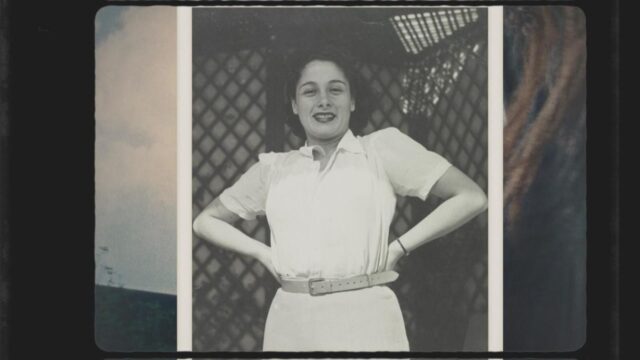
Screening January 20 at 7:00 at the Walter Reade Theater as part of the thirty-third annual New York Jewish Film Festival — copresented by Film at Lincoln Center and the Jewish Museum — the documentary tells the little-known story of the underrecognized Chloé founder, born Gabrielle Hanoka in Alexandria, Egypt, in 1921. In 1940 she married communist intellectual Raymond Aghion, they moved to Paris five years later, then she started Chloé in 1952, unhappy with the state of women’s clothing.
Aghion was not really a hands-on designer, not making any sketches or drawings, but she knew what she liked; she surrounded herself with talented individuals as she developed the brand, changing the industry with luxury prêt-à-porter. Among the designers she hired were Gérard Pipart, Phoebe Philo, Stella McCartney, and, most famously and successfully, Karl Lagerfeld, who helped put the fashion house on the map. “They understood each other. And it was Karl Lagerfeld who crystallized Chloé’s identity,” researcher Camille Kovalevsky says. However, Aghion points out, “We created Karl. It is not Karl that created Chloé.”
Cottenceau combines archival footage, family photographs, and old news reports with new interviews in the film, which features spoken text by Israeli-Dutch singer-songwriter and composer Keren Ann taken from a rare interview Aghion did in 2012.
“People have never understood how a fashion house called Chloé, a house that had no past, no name, could become so inventive,” Keren Ann narrates as Aghion. “We just opened the door to inventors. I love invention; I love people who stand up and take action.”
Longtime Chloé model Pat Cleveland explains, “Chloé is the essence of freedom, an air of elegance, but freedom at the same time . . . like a vacation for your body.”
Cottenceau (Sous les pavés, la jupe; Éloge de la laideur) paints a wide-ranging portrait by talking with Aghion’s economist son, Philippe, who shares touching remembrances with stark honesty; former creative director Clare Waight Keller; painter and photographer Peter Knapp; fashion exhibition curator Judith Clark; machinist Bayram Kaya; seamstresses Anita Briey and Virginia Da Silva Santos; celebrities atelier assistant manager Nicolas Imberty; personal friend Anita Saada; and FIT Museum curator Dr. Valerie Steele, who will participate in a postscreening discussion with producer Sophie Jeaneau.
Together they emphasize Aghion’s dedication to the freedom of movement, offering women literal and figurative liberation, helping them break out of boredom and social convention. She didn’t take herself too seriously, preferring to have fun and joke around as she remained in the background, her company making clothing that was adventurous, imbued with a spirit of fluidity, simplicity, and optimism for a new open-minded generation.
“She got into fashion with a determination to democratize it,” Aghion’s granddaughter, brand sustainability and development consultant Mikhaela Aghion, says. But Philippe admits her clothing was not inexpensive.
The film is being screened in conjunction with the excellent Jewish Museum exhibition “Mood of the moment: Gaby Aghion and the house of Chloé,” which continues through February 18 and consists of photographs, sketches, personal and professional documents, nearly 150 garments, and other paraphernalia celebrating the life and career of an extraordinary woman, who passed away in 2014 at the age of ninety-three but whose legacy lives on.
[Mark Rifkin is a Brooklyn-born, Manhattan-based writer and editor; you can follow him on Substack here.]
Jane Birkin is seen through the eyes of her daughter in Jane by Charlotte
FIAF CineSalon: JANE BY CHARLOTTE (JANE PAR CHARLOTTE) (Charlotte Gainsbourg, 2021)
French Institute Alliance Française (FIAF)
FIAF Florence Gould Hall
55 East 59th St. between Madison & Park Aves.
Tuesday, January 16, $20, 7:30
Series continues through January 30 fiaf.org
Jane by Charlotte is a documentary that only a daughter could make about her mother, a movie about two women who are always being looked at looking at each other. And on January 16 at 7:30, the director, Charlotte Gainsbourg, will introduce a special screening as part of FIAF’s “Being Birkin” series to look even further at her mother, Jane Birkin, a frequent visitor to FIAF who passed away in July 2023 at the age of seventy-six.
In 1988, French New Wave auteur Agnès Varda made Jane B. par Agnès V., in which the director herself was a character in the film, showing London-born French singer, actress, and fashion icon Jane Birkin galivanting through imaginative and playful set pieces as Varda photographed her, with Varda sometimes revealing herself in front of and behind the camera. She had just finished Kung Fu Master, a family affair starring Birkin, her daughters Charlotte Gainsbourg (who also appeared in the documentary) and Lou Doillon, and Varda’s son Mathieu Demy.
Charlotte, the actress and singer who is the daughter of Birkin and French pop star and heartthrob Serge Gainsbourgh, now picks up the camera to delve into her complicated relationship with her mother in another family affair, Jane by Charlotte. It’s a deeply personal film in which mother and daughter share intimate details of their lives together, the good and the bad, while also avoiding certain topics as they head toward milestones, with Jane approaching seventy-five and Charlotte fifty.
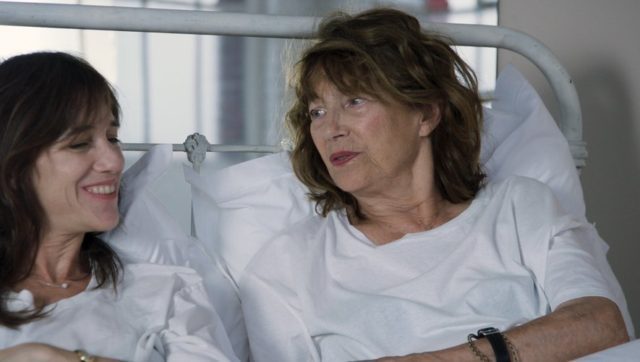
Daughter and mother take a break in bed by Jane by Charlotte
“Filming you with a camera is basically an excuse to just look at you. That’s a brief explanation of the process, OK?” Charlotte tells her mother, who has been looked at most of her life. Birkin has been a public figure since she was a teenager as an international model in the 1960s, her name immortalized in the treasured Hermés Birkin bag. She’s released some twenty albums and appeared in such films as Blowup,Je t’aime moi non plus,La Belle Noiseuse, and Death on the Nile. Charlotte is no stranger to the limelight either, starring in such films as Lars von Trier’s Antichrist,Melancholia, and Nymphomaniac, Franco Zeffirelli’s Jane Eyre, Alejandro González Iñárritu’s 21 Grams, and Michel Gondry’s The Science of Sleep and releasing five records of her own.
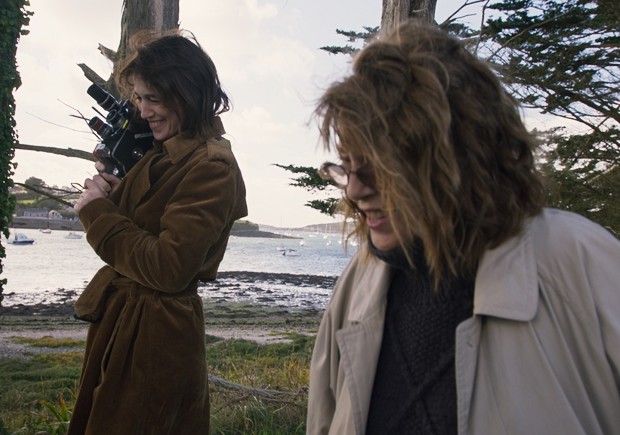
Cinematographer Adrien Bertolle follows Jane, Charlotte, and, occasionally, Charlotte’s young daughter, Jo, as they roam from Paris and New York City to Brittany, visiting the beach, a Manhattan rooftop, and, for the first time in many years, the home Jane and Charlotte lived in with Serge, who passed away in 1991 at the age of sixty-two. They are shown rehearsing a duet at the Beacon for the touring concert “Birkin Gainsbourg: Le Symphonique,” performing Serge’s song “Ballade de Johnny-Jane.” The soundtrack also features snippets of Birkin’s “F.R.U.I.T.,” “Max,” and “Je voulais être une telle perfection pour toi!” and Charlotte’s “Lying with You” and “Kate.”
Jane often poses for her daughter, who takes still shots and movies of her mother, who speaks openly about her aging as Charlotte snaps close-ups of her mother’s wrinkled face, arms, and hands. They lie together in bed, all in a heavenly white, as Jane talks about her insomnia and her longstanding near-addiction to sleeping pills.
Jane had one child with each of her major relationships: She had Kate with her husband, conductor and film composer John Barry, in 1967; Charlotte with Serge, who she never married, in 1971; and singer, actress, and model Lou with director Jacques Doillon in 1982. But mother and daughter carefully avoid several details. They discuss Jane’s recent illness without ever naming it as leukemia. And although they often mention Kate, they never speak of her as being dead; a fashion photographer, Kate died in 2013 at the age of forty-six, perhaps by suicide. Both Jane and Charlotte divide their lives into two segments, before and after Kate, a haunting presence who hovers over them.
Charlotte Gainsbourgh and Jane Birkin stroll through Paris in intimate documentary
Jane has come to terms with getting older. “We don’t have much of a choice, you know,” she says. “I’m very lucky.” She also admits to making mistakes with Charlotte and in other parts of her life. “I never wanted to do wrong in regards to you,” she tells her. “You were so private, and so . . . secretive. I didn’t have any clues.” Later, sitting in front of projections of home movies, Jane confesses, “I think I’m always tormented by guilt. I often wonder if it was all my fault, if I should have done differently, in regards to everything.”
Ultimately, in her directorial debut, Charlotte makes some confessions of her own, revealing what she still needs from her mother. It’s a poignant and emotional, wholly French finale, evoking Truffaut as we watch Jane on a beach, her hair blowing in the wind. The two of them then hug as if they never want to let go, Charlotte’s Bolex camera dangling over her shoulder.
The series also includes Serge Gainsbourg’s 1976 I Love You, Me Neither (Je t’aime moi non plus) on January 16 at 4:00 and Birkin’s 2007 Boxes on January 30 at 4:00 and 7:30.
[Mark Rifkin is a Brooklyn-born, Manhattan-based writer and editor; you can follow him on Substack here.]
Adam Breier’s All About the Levkoviches is part of 2024 NYJFF
THIRTY-THIRD ANNUAL NEW YORK JEWISH FILM FESTIVAL
Walter Reade Theater, Film at Lincoln Center
165 West 65th St. between Broadway & Amsterdam Aves.
January 10-24, $14-$17
212-875-5050 www.filmlinc.org thejewishmuseum.org
With the scourge that is antisemitism on the rise yet again, this time spurred by Hamas’s October 7 terrorist attack on Israel and the IDF’s military response, it feels like a political statement just to attend the thirty-third annual New York Jewish Film Festival, taking place January 10–24 at the Walter Reade Theater at Lincoln Center. The 2024 iteration consists of more than two dozen features, documentaries, and shorts from Hungary, Poland, Germany, the Czech Republic, France, Italy, Austria, the UK, Israel, Ukraine, and America, exploring such topics as antisemitism, family estrangement, Nazi-looted art, the 1976 trial of Pierre Goldman, Klezmer music, survival in the desert, excommunicated philosopher Baruch Spinoza, and the Shabbos goy.
The opening night selection is the New York premiere of James Hawes’s One Life, in which Sir Anthony Hopkins portrays Sir Nicholas Winton, an unassuming British stockbroker who was a quiet WWII hero; producer Joanna Laurie will participate in a postscreening discussion. The centerpiece film is the New York premiere of Michal Vinik’s Valeria Is Getting Married, about two Ukrainian sisters who come to Israel and get involved in contemporary arranged marriages. The festival closes with Ron Frank’s documentary Remembering Gene Wilder, a celebration of the beloved stage and screen star, with reminiscences from Mel Brooks, Alan Alda, Carol Kane, Harry Connick Jr., Rain Pryor, and others; the New York premiere will be introduced by executive producer Julie Nimoy and followed by a talk with Frank, writer Glenn Kirschbaum, and Peter Ostrum, who played Charlie Bucket in Willy Wonka and the Chocolate Factory, his only film role.
Below are five films to watch out for; most screenings throughout the festival will be followed by a discussion with directors, producers, subjects, cast members, or experts.
The 1939 Yiddish melodrama Mothers of Today will be shown at NYJFF in a 35mm restoration
MOTHERS OF TODAY (Henry Lynn, 1939)
Thursday, January 11, 2:30
Sunday, January 14, 12:00 www.filmlinc.org
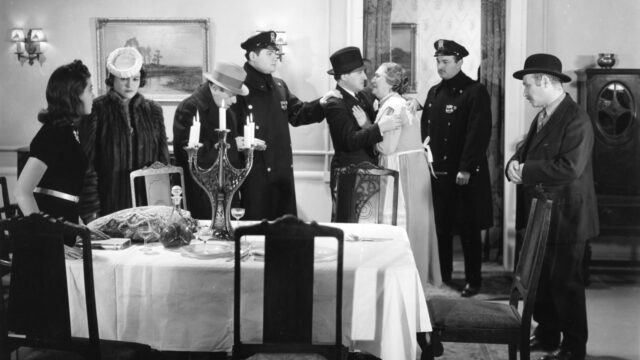
Yiddish radio star Esther Field, the “Yiddishe Mama,” made her only film appearance in Henry Lynn’s 1939 shund film, Mothers of Today, being shown in a 35mm restoration at the festival, followed by a discussion with National Center for Jewish Film codirectors Lisa Rivo and Sharon Rivo. It’s a working-class immigration melodrama about a widow trying to hold on to Jewish tradition as her children begin straying from the religion in America. The film was shot in the Bronx and features Jewish songs and prayers, including the Kiddush, “Got Fun Avrohom,” and Kol Nidrei.
Gad Elmaleh’s autobiographical comedy Stay with Us deals with religious conversion
STAY WITH US (Gad Elmaleh, 2022)
Thursday, January 11, 5:30
Wednesday, January 24, 4:00 www.filmlinc.org
A minor controversy erupted when it was reported in 2022 that Moroccan-Canadian-French Jewish comedian and actor Gad Elmaleh had converted to Christianity. It wasn’t true, but Elmaleh had studied Christianity extensively, resulting in his autobiographical comedy Stay with Us, in which he plays a Jewish man named Gad who announces to his family, played by his actual mother, father, and sister, that he is converting to Catholicism. Just wait till you see his parents’ reaction when his mother finds a statue of the Virgin Mary in his suitcase. “Get your fingers off it!” his father declares.
The Books He Didn’t Burn goes inside Adolf Hitler’s private library
THE BOOKS HE DIDN’T BURN (Claus Bredenbrock & Jascha Hannover, 2023)
Monday, January 15, 1:00 www.filmlinc.org
Jeremy Irons narrates Claus Bredenbrock and Jascha Hannover’s The Books He Didn’t Burn, which asks the question “Can literature provide a handbook for mass murder?” as American historian Timothy Ryback examines Adolf Hitler’s book collection, which totaled sixteen thousand at the time of his suicide. “Our whole notion, going back to the ancient Greeks, that art, beauty, literature ennobles the human spirit . . . Hitler’s library turns this whole thing on its head,” Ryback says in the film. Hannover will participate in a discussion after the screening.
Isabelle Cottenceau immerses viewers into the life and career of designer Gaby Aghion in Looking for Chloé
LOOKING FOR CHLOÉ (Isabelle Cottenceau, 2023)
Saturday, January 20, 7:00 www.filmlinc.org
The Jewish Museum is currently hosting the wide-ranging exhibition “Mood of the Moment: Gaby Aghion and the House of Chloé,” about the Jewish Egyptian entrepreneur who founded the French fashion house Chloé. In Looking for Chloé, Isabelle Cottenceau follows the life and career of Gaby Aghion, who was born Gabrielle Hanoka in Egypt in 1921; launched Chloé in 1952; hired Karl Lagerfeld, Stella McCartney, and Phoebe Philo; and had such clients as Brigitte Bardot, Jackie Kennedy, and Maria Callas. Aghion was married to her husband, gallery owner and fellow political activist and intellectual Raymond Aghion, for nearly seventy years and was a leader in the development of prêt-à-porter. Producer Sophie Jeaneau and Museum at FIT director Dr. Valerie Steele will be on hand for a postscreening discussion.
Adam Low digs deep into James Joyce’s 1922 novel, Ulysses, in 2022 doc
JAMES JOYCE’S ULYSSES (Adam Low, 2022)
Sunday, January 21, 1:00 www.filmlinc.org
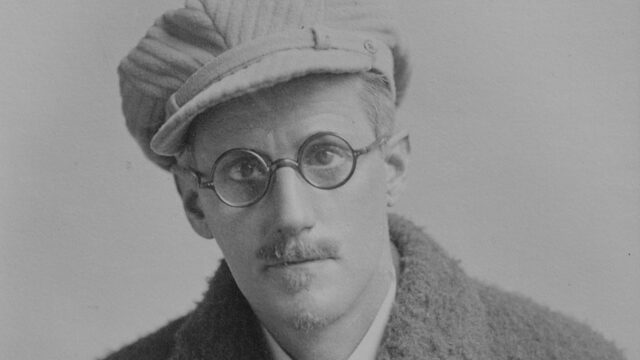
In honor of the centennial of the publication of James Joyce’s Ulysses, documentarian Adam Low goes behind-the-scenes of the writing, publication, and legacy of the notoriously difficult 1922 novel, set during one June day in Dublin in 1904. In the film, British journalist and novelist Howard Jacobson declares that the book is “the greatest Jewish novel of the twentieth century — the first one with a Jew at its very center,” Leopold Bloom. Low also speaks with Salman Rushdie, Colm Tóibín, Anne Enright, Eimear McBride, Paul Muldoon, John McCourt, Nuala O’Connor, Vivienne Igoe, and others as he details the heroic efforts by such people as Margaret Anderson, Jane Heap, Sylvia Beach, Harriet Shaw Weaver, and Nora Barnacle, who played such important roles in its ultimate success. Low and producer Martin Rosenbaum will be on hand for a postscreening talk.
[Mark Rifkin is a Brooklyn-born, Manhattan-based writer and editor; you can follow him on Substack here.]
Pioneers Go East Collective, which is dedicated to “radical queer performance, dance, and film for social change,” is presenting the 2024 Out-FRONT! Festival, taking place January 10-15 at the LGBT Community Center and January 17-20 at Abrons Arts Center. The bill features live performances by Arthur Aviles and Collaborators, Joey Kipp with Pioneers, Christopher Unpezverde Núñez, Jason Anthony Rodriguez, Paz Tanjuaquio, Ogemdi Ude, and Annie MingHao Wang; workshops with Rodriguez and Magda Kaczmarska; and a film program.
“This year’s festival brings together ten extraordinary multigenerational artists whose socially engaged practices explore issues of race, gender, disability, grief, migration, and our collective humanity in ways that continue to inspire us,” Pioneers artistic director Gian Marco Riccardo Lo Forte said in a statement. “We created Out-FRONT! to both celebrate artists with community-driven approaches to art-making and to offer them a platform to share their work with audiences during the Association of Performing Arts Professionals conference, an opportunity we hope provides new connections and sparks a positive dialogue about creative participation in shared spaces.”
Rodriguez, who played Lemar Wintour on Pose, will stage Take a Good Look with Dominican dancer and actor Gaymer and the solo Meet Me in the Moon. Aviles’s Naked Vanguard series continues with reimaginations of earlier works (Morning Dance,In the End, Let’s Begin, and A Jamaican BattyBwoy in America) in addition to the world premiere of Untitled #5A After Ted Shawn AKA Dansé Mexicaine & Jamaïquaine Américaine, performed by Nikolai McKenzie Ben Rema, Hunter Sturgis, and Aviles. The film screenings consist of a new short by Fana Fraser, And I was recognized by Omega X, Danni Venne, Matt Harvey, and Laura Marie Marciano, and The Personal Things by Tourmaline.
Below is the full schedule; admission to all events is free with RSVP (suggested donation $25).
Wednesday, January 10
Jason Anthony Rodriguez, Take a Good Look / Meet Me in the Moon, LGBT Community Center, Theatre 301, 8:00
Thursday, January 11
Jason Anthony Rodriguez, Take a Good Look / Meet Me in the Moon, LGBT Community Center, Theatre 301, 7:00
Joey Kipp with Pioneers Go East Collective, Tracing Lorraine, LGBT Community Center, Theatre 301, 8:00
Friday, January 12
Voguing for Teens, NEXT! TEEN Workshop with Jason Anthony Rodriguez, LGBT Community Center, Theatre 301, 3:00
Joey Kipp with Pioneers Go East Collective, Tracing Lorraine, LGBT Community Center, Theatre 301, 8:00
Saturday, January 13
Films by Fana Fraser, Omega X & Danni, Matt Harvey, Laura Marie Marciano, and Tourmaline, LGBT Community Center, Gallery 101, 5:00
Ogemdi Ude, Hear, LGBT Community Center, Theatre 301, 7:00
Sunday, January 14
NEXT! Workshop for older adults with Magda Kaczmarska, dance and storytelling, LGBT Community Center, 5:00
Ogemdi Ude, Hear, LGBT Community Center, Theatre 301, 6:00
Christopher Unpezverde Núñez, YO OBSOLETE, LGBT Community Center, Theatre 301, 7:00
Monday, January 15
Christopher Unpezverde Núñez, YO OBSOLETE, LGBT Community Center, Theatre 301, 8:00
Wednesday, January 17
Arthur Aviles and Collaborators, Naked Vanguard, Abrons Arts Center Playhouse, 8:00
Thursday, January 18
Annie MingHao Wang, had my mouth, Abrons Arts Center Playhouse, 8:00
Friday, January 19
Paz Tanjuaquio / TOPAZ ARTS Dance Productions, Silweta, Abrons Arts Center Playhouse, 7:00
Arthur Aviles and Collaborators, Naked Vanguard, Abrons Arts Center Playhouse, 8:00
Saturday, January 20
Annie MingHao Wang, had my mouth, Abrons Arts Center Playhouse, 5:00
Paz Tanjuaquio / TOPAZ ARTS Dance Productions, Silweta, Abrons Arts Center Playhouse, 6:00
[Mark Rifkin is a Brooklyn-born, Manhattan-based writer and editor; you can follow him on Substack here.]