this week in film and television

GOODBYE, DRAGON INN

Tsai Ming-liang’s Goodbye, Dragon Inn is a poignant, poetic farewell to the cinema

GOODBYE, DRAGON INN (Tsai Ming-liang, 2003)
Metrograph (in-person and digital)
7 Ludlow St. between Canal & Hester Sts.
Thursday, December 21, 7:15
Thursday, December 28, 1:45
Saturday, December 30, 12:30
metrograph.com

Taiwanese master Tsai Ming-liang’s Goodbye, Dragon Inn is a heart-stirring elegy to going to the movies, returning to Metrograph screens after streaming in a gorgeous 4K restoration at Metrograph Digital in 2020. The accidentally prescient 2003 film takes place in central Taipei in and around the Fu-Ho Grand Theater, which is about to be torn down. For its finale, the Fu-Ho is screening King Hu’s 1967 wuxia classic Dragon Inn, Hu’s first work after moving from Hong Kong to Taiwan; the film is set in the Ming dynasty and involves assassins and eunuchs.

In 2021, Tsai’s film seems set in a long-ago time as well. It opens during a crowded showing of Dragon Inn in which Tsai’s longtime cinematographer, Liao Pen-jung, places the viewer in a seat in the theater, watching the film over and around two heads in front of their seat, one partially blocking the screen, which doesn’t happen when viewing a film on a smaller screen at home — especially during a pandemic, when no one was seeing any films in movie theaters. So Goodbye, Dragon Inn takes on a much bigger meaning, since the lockdown has changed how we experience movies forever.

Most of the film focuses on the last screening at the Fu-Ho, with only a handful of people in the audience: a jittery Japanese tourist (Mitamura Kiyonobu), a woman eating peanuts or seeds (Yang Kuei-mei), a young man in a leather jacket (Tsai regular Chen Chao-jung), a child, and two older men, played by Jun Shih and Miao Tien, who are actually the stars of the film being shown. (They portray Xiao Shao-zi and Pi Shao-tang, respectively, in Dragon Inn.) In one of the only scenes with dialogue, Miao says, “I haven’t seen a movie in a long time,” to which Chun responds, “No one goes to the movies anymore, and no one remembers us anymore.”

The tourist, a reminder of Japan’s occupation of Taiwan from 1895 to 1945, spends much of the movie trying to find a light for his cigarette — a homoerotic gesture — as well as a better seat, as he is constantly beset by people sitting right next to him or right behind him and putting their bare feet practically in his face or noisily crunching food, even though the large theater is nearly empty. In one of the film’s most darkly comic moments, two men line up on either side of him at a row of urinals, and then a third man comes in to reach over and grab the cigarettes he left on the shelf above where the tourist is urinating. Nobody says a word as Tsai lingers on the scene, the camera not moving. In fact, there is very little camera movement throughout the film; instead, long scenes play out in real time as in an Ozu film, in stark contrast to the action happening onscreen.

Meanwhile, the ticket woman (Chen Shiang-chyi), who has a disabled foot and a severe limp, cleans the bathroom, slowly steams and eats part of a bun, walks down a long hallway, and brings food to the projectionist (Tsai mainstay Lee Kang-sheng). She is steeped in an almost unbearable loneliness; she peeks in from behind a curtain to peer at the few patrons in the theater, and at one point she emerges from a door next to the screen, looking up as if she wishes to be part of the movie instead of the laborious life she’s living.

A woman (Chen Shiang-chyi) works during the final screening at the Fu-Ho Grand Theater in Goodbye, Dragon Inn

In his Metrograph Journal essay “Chasing the Film Spirit,” Tsai, whose other works include Rebels of the Neon God, The River, The Hole, Days, and What Time Is It There? — which has a scene set in the Fu-Ho, where he also held the premiere — writes, “My grandmother and grandfather were the biggest cinephiles I knew, and we started going to movies together when I was three years old. We would go to the cinema twice a day, every day. Sometimes we would watch the same film over and over again, and sometimes we would find different cinemas to watch something new. That was a golden age for cinema, and I’m proud my childhood coincided with that time.”

He continues, “Nowadays everyone watches movies on planes. On any given flight, no matter the airline, you can choose from hundreds of films: Hollywood, Bollywood, all different types of movies. However, you can count on one thing: You’ll never find a Tsai Ming-liang picture on a plane, as I make films that have to be seen on the big screen.” Unfortunately, in 2020-21, we had no choice but to watch Goodbye, Dragon Inn on small monitors, but now you can catch this must-see, stunningly paced elegiac love letter on the silver screen, sitting in a dark theater with dozens or hundreds of strangers, staring up at light being projected onto a screen at twenty-four frames per second, telling a story as only a movie can, with a head partially blocking your view, bare feet in your face, and someone crunching too loudly right behind.

[Mark Rifkin is a Brooklyn-born, Manhattan-based writer and editor; you can follow him on Substack here.]

ABOUT GOLSHIFTEH: PATERSON

PATERSON

Adam Driver and Golshifteh Farahani star as a happy New Jersey couple in Jim Jarmusch’s Paterson

PATERSON (Jim Jarmusch, 2016)
Metrograph
7 Ludlow St. between Canal & Hester Sts.
Tuesday December 26, 2:15
Series runs December 20-26
212-660-0312
metrograph.com
www.bleeckerstreetmedia.com

Metrograph is celebrating the career of forty-year-old award-winning Iranian French actress Golshifteh Farahani in the four-film series “About Golshifteh,” which kicks off December 20 with Asghar Farhadi’s 2009 About Elly and continues with Abbas Kiarostami’s 2008 Shirin and Marjane Satrapi and Vincent Paronnaud’s 2011 Chicken with Plums before concluding with Jim Jarmusch’s Paterson. Farahani was banned from living and working in Iran in 2009 because she appeared in the Ridley Scott thriller Body of Lies.

Paterson is a beautifully poetic, deceptively simple wonder about the beauty, poetry, and wonderful simplicity of life, an ode to the little things that make every day special and unique. Adam Driver stars as Paterson, a New Jersey Transit bus driver and poet who lives in Paterson with his girlfriend, Laura (Golshifteh Farahani), who spends much of her time decorating their small, quaint house, painting black and white circles and lines on curtains, couches, dishes, walls, and even her clothing, continually creating works of art out of nearly everything she comes into contact with. The film takes place over an ordinary week for the sweet-natured couple, who are very much in love, each allowing the other the freedom to explore who they are and offering their complete support. Every morning, Paterson wakes up around 6:12, as the sunlight streaks over their sleeping bodies. He checks his Casio wristwatch to confirm the time — he doesn’t use an alarm clock, nor does he own a cell phone or a computer — then snuggles closer with Laura for a few extra minutes. He eats Cheerios out of a bowl painted by Laura with circles that match the shape of the cereal. He studies a matchbook, which becomes the starting point for his next poem.

Lunchbox in hand, he walks to the Market St. garage and gets on board the 23 bus. He writes a few lines of poetry, listens to fellow bus driver Donny’s (Rizwan Manji) daily complaints, then heads out on his route through his hometown, picking up pieces of some very funny passenger conversations. For lunch he sits on a bench overlooking the Paterson Great Falls and composes more mostly non-rhyming lines in his “Secret Notebook,” which he will not show anyone but Laura. At quitting time, he walks home, checks the mail, fixes the tilted mailbox, sees what new art Laura has created, and takes their English bulldog, Marvin (Nellie, who won the Palm Dog at Cannes and passed away two weeks after shooting concluded), for a walk after dark, stopping for a beer and chatting with bar owner Doc (Barry Shabaka Henley). He then goes back home, ready to do it all over again the next day. But Paterson is no bored working-class suburbanite living out a dreary routine; he finds something new and special in every moment, from his job to his relationship to his nightly trips to the bar. Every day is different from the one before, Jarmusch celebrating those variations that make life such a joy.

Adam Driver

Adam Driver plays a poetic New Jersey Transit bus driver named Paterson in Paterson

Set to a subtle electronic score by Sqürl, Jarmusch and Carter Logan’s band, Paterson is a gorgeous film, lovingly photographed by Frederick Elmes, who captured a very different kind of town in David Lynch’s Blue Velvet, and edited to the sweet rhythm of a basic existence by Affonso Gonçalves. Paterson’s poems were written by award-winning poet Ron Padgett, who, like Jarmusch, studied with Kenneth Koch; the works, which unfold day by day, include the previously published “Love Poem” (a tribute to Ohio Blue Tip Matches and love), “Glow,” “Pumpkin,” and “Poem” as well as three written specifically for the film, “Another One,” “The Run,” and “The Line.” The words appear on the screen in a font based on Driver’s handwriting as he narrates them in voiceover. (Among the other poets referenced in the film are Frank O’Hara, Wallace Stevens, Petrarch, and Emily Dickinson.)

The film is also very much about duality and pairs, which Jarmusch has said in interviews was not always intentional. Adam Driver, who served in the Marines, plays a driver and former Marine named Paterson who lives and works in Paterson. He is constantly seeing twins, from two brothers named Sam and Dave (Trevor and Troy Parham) to two young girls on his bus to two older men on a bench. While Paterson and Laura seem meant to be together, their happiness infectious, he looks on every night as Everett (William Jackson Harper) desperately pleads with Marie (Chasten Harmon) to take him back. At the bar, Paterson often speaks to Doc about the pictures on the wall of fame, photos about such native sons as Uncle Floyd and his brother, Jimmy Vivino, as well as local superstar Lou Costello, part of one of the most popular comedy duos ever with Bud Abbott, who was born in Asbury Park (and thus does not qualify for the wall). Paterson’s favorite poet is lifelong New Jersey-ite William Carlos Williams, who Laura playfully refers to as Carlos Williams Carlos. (In making the film, Jarmusch was inspired by one of Williams’s most popular phrases, “No ideas but in things.”) And when Paterson’s not encountering twins, he’s bumping into random poets (Sterling Jerins, Method Man, Masatoshi Nagase) during his walks.

Paterson is a poetic marvel all its own, a dazzling film about love and harmony, about finding creativity in every aspect of life, led by marvelous performances by Driver and Farahani and written and directed by a master of cinematic restraint.

[Mark Rifkin is a Brooklyn-born, Manhattan-based writer and editor; you can follow him on Substack here.]
TAISHO ROMAN: FEVER DREAMS OF THE GREAT RECTITUDE

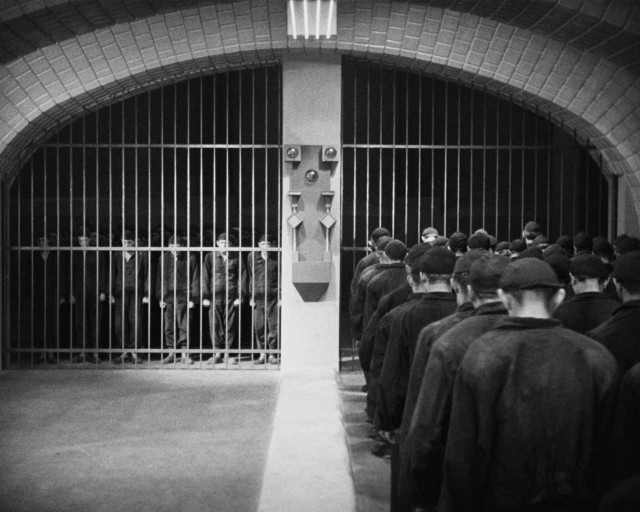
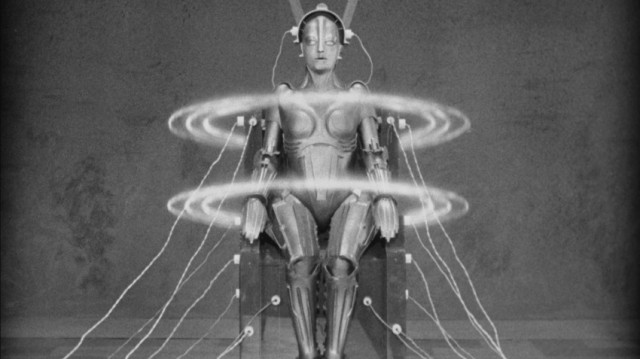
Teruo Ishii’s Horrors of Malformed Men is one of six wild and unpredictable films in Japan Society series (photo © 1969 Toei Co., Ltd)

TAISHO ROMAN: FEVER DREAMS OF THE GREAT RECTITUDE
Japan Society
333 East 47th St. at First Ave.
Friday, December 15, and Saturday, December 16, $12-$16 per film
212-715-1258
japansociety.org

“Taisho is the best,” legendary Japanese filmmaker Seijun Suzuki once said. I can’t disagree.

Japan Society is celebrating the Western-influenced Taisho period, which followed the Meiji and ran from 1912 to 1926, during the reign of the country’s 123rd emperor, Yoshihito, with the film series “Taisho Roman: Fever Dreams of the Great Rectitude.” As a general rule, I am always attracted to the most unusual, bizarre, and strange films of festivals, the kind most likely to be shown at midnight screenings. In the case of “Taisho Roman,” however, that would essentially mean all six movies.

The festival kicks into high gear Friday night with a half dozen wide-ranging works, beginning with a double feature at 6:00 of Teinosuke Kinugasa’s hourlong 1926 silent classic, A Page of Madness (the 1970s New Sound version of this previously lost silent film), about a man who takes a custodial job in a mental institution where his ailing wife is being treated, partly inspired by the director having met the emperor, and Shuji Terayama’s 1979 forty-minute Grass Labyrinth, a psychosexual memory tale based on the novel by Kyoka Izumi. At 9:00, Japan Society screens a thirty-fifth-anniversary 35mm print of Toshio Matsumoto’s 1988 Dogra Magra, a surreal drama of memory and identity from a story by detective novelist Kyusaku Yumeno.

On Saturday at 3:00, it’s time for Teruo Ishii’s wild and unpredictable 1969 Horrors of Malformed Men, in which the protagonist escapes an asylum and tries to figure out who he is. At 5:00 is the international premiere of Suzuki’s 1980 genre-defying Zigeunerweisen, a unique adaptation of Hyakken Uchida’s Disk of Sarasate and Yamataka-boshi. The series concludes at 8:00 with a thirty-fifth-anniversary screening of Akio Jissoji’s 1988 Tokyo: The Last Megalopolis, based on the first three volumes of Hiroshi Aramata’s 1980s epic Teito Monogatari, an occult reimagining of the history of Tokyo.

“Exploring one of Japan’s most fascinating periods, ‘Taisho Roman’ pulls from some of Japanese literature’s most occult and imaginative texts — writings that to this day remain untranslated,” Japan Society film programmer and series curator Alexander Fee said in a statement. “Featuring films that range from exploitation to avant-garde and angura, this series collects both well-known and forgotten works that envisage differing realities of the often-mythologized era of Japanese history.”

You might as well just movie in to Japan Society for a few days so you can also check out the current exhibition “Out of Bounds: Japanese Women Artists in Fluxus.”

[Mark Rifkin is a Brooklyn-born, Manhattan-based writer and editor; you can follow him on Substack here.]
PSYCHIC CINEMA: EXPERIMENTAL FILMS — NICK DIDKOVSKY AND ROBERT KENNEDY

Who: Nick Didkovsky and Robert Kennedy
What: Experimental short films with live musical accompaniment
Where: The LetLove Inn, 21-27 Twenty-Third Ave., Astoria
When: Monday, December 11, free (donations accepted), 9:00
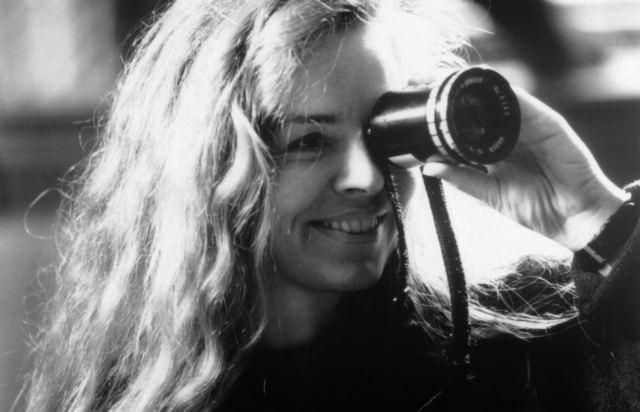
Why: On December 11 at the LetLove Inn in Astoria, Nick Didkovsky of Doctor Nerve and Robert Kennedy of the Flushing Remonstrance will team up for the next iteration of “Psychic Cinema,” an evening of classic experimental short films by Bill Morrison, Joel Schlemowitz, Stan Brakhage, Peter Tscherkassky, Barbara Hammer, Lawrence Jordan, and others, set to all-new experimental live scores. Kennedy will be on keyboards, electronics, and voice, Didkovsky on guitar. In May, the duo performed to a collection of surrealist and Dada works by Fernand Léger, Hans Richter, Man Ray, Władysław Starewicz, Slavko Vorkapich, Mary Ellen Bute, Joseph Cornell, Marie Menken, Wallace Berman, Tscherkassky, and Guy Maddin, which should provide insight into what awaits on December 11. Admission is free; donations are accepted.

[Mark Rifkin is a Brooklyn-born, Manhattan-based writer and editor; you can follow him on Substack here.]
MY HARRY

Photographer unknown, Harry Smith at Naropa Institute, gelatin silver print, 1990 (Harry Smith Papers, Getty Research Institute, Los Angeles; gift of the Harry Smith Archives)

MY HARRY
Whitney Museum of American Art, Education Center and Hess Family Theater
99 Gansevoort St.
December 8-10, $18-$25
212-570-3600
whitney.org

The Whitney celebrates the legacy of American polymath Harry Smith in the three-day festival “My Harry.” Held in conjunction with the multimedia exhibition “Fragments of a Faith Forgotten: The Art of Harry Smith,” which continues at the museum through January 28, the revelry features listening sessions, illustrated lectures, film screenings, conversations, live music, art workshops, and more, with appearances by friends and colleagues of Smith, who was born in Portland, Oregon, in 1923 and died in New York City in 1991 at the age of sixty-eight, leaving behind a treasure trove of music, art, and film that he both made and collected, as well as a lifelong interest in the occult. Among those participating in the weekend are Carol Bove, Ali Dineen, Bradley Eros, Raymond Foye, Andrew Lampert, April and Lance Ledbetter, James Inoli Murphy, Rani Singh, Peter Stampfel, Charles Stein, and Anne Waldman. Below is the full schedule.

My Harry: Magick and Mysticism
Friday, December 8, $8-$10, 5:30–9 pm

Listening Session: Harry Smith’s Field Recordings, 5:30

Fragments of a Faith Forgotten: A Presentation by Carol Bove, with Carol Bove and Andrew Lampert, 6:30

Screening of Harry Smith’s “Film No. 14: Late Superimpositions,” 7:30

Harry Smith and the Future of Magick: A Presentation by Charles Stein, with Charles Stein and Raymond Foye, 8:00

Harry Smith, Untitled [Zodiacal hexagram sctratchboard], ink on cardstock, ca 1952 (Lionel Ziprin Archive, New York)

My Harry: Stories, Songs, and Strings
Saturday, December 9, free with museum admission, 11:00 am – 6:00 pm

Stop Motion Animation Studio and Paper Airplane Workshop, hosted by Bradley Eros, 11:00 am – 3:00 pm

Singing Circle with Ali Dineen, 11:00 am

Peter Stampfel and the Atomic Meta-Pagan Posse, with Peter Stampfel, Eli Smith, Zoe Stampfel, Eli Hetko, Steve Espinola, Paul Nowinski, Sam Werbalowsky, Heather Wagner, and Dok Gregory, 12:00

String Figure Workshop with James Inoli Murphy, 12:00

Paper Airplane Contest with Bradley Eros, 2:00

On Mahagonny: A Presentation by Rani Singh, 5:00

My Harry: Affinities
Sunday, December 10, free with museum admission, 11:00 am – 5:00 pm

Listening Session: Harry Smith’s Field Recordings, 11:00 am

On Harry’s Trail: A Presentation by Dust-to-Digital, with Lance and April Ledbetter, 12:00

Screening: A selection of films and videos featuring Harry Smith by a variety of the artist’s friends and associates, 1:00

Friendly Rivals: The Art of Jordan Belson, a Presentation by Raymond Foye, 3:00

Anne Waldman, 4:00

[Mark Rifkin is a Brooklyn-born, Manhattan-based writer and editor; you can follow him on Substack here.]
ARTIST FOR ACTION PRESENTS SHERYL CROW, PETER FRAMPTON, KEVIN BACON + SPECIAL GUESTS: A FATHER’S PROMISE FILM LAUNCH CONCERT

Who: Jimmy Vivino, Mark Barden, Sheryl Crow, Peter Frampton, Kevin Bacon, Bernie Williams, Rozzi, the Dumes, the Alternate Routes, Jen Chapin, Aztec Two-Step 2.0, more
What: Benefit concert for Sandy Hook Promise celebrating film launch
Where: NYU Skirball Center for the Performing Arts, 566 La Guardia Pl. between Third & Fourth Sts.
When: Thursday, December 7, $81-$256, 7:30
Why: “Music succeeds when politics and religion fail,” Darryl “DMC” McDaniels says in A Father’s Promise: The Story of a Father’s Promise to End Gun Violence, a documentary opening December 8 at LOOK Dine-In Cinema W57. Directed by Rick Korn and executive produced by Sheryl Crow, the film follows musician Mark Barden as he takes action after his seven-year-old son Daniel was one of twenty-six people murdered at Sandy Hook Elementary in Newtown, Connecticut, on December 14, 2012.

Barden, cofounder of Sandy Hook Promise, and filmmaker Korn teamed up with Matthew Reich and Neal Saini to form Artist for Action to Prevent Gun Violence. On December 7 at NYU Skirball, Barden and the Promise Band will join musical director Jimmy Vivino and a group of all-stars to celebrate the launch of the film; among the special guests performing live will be Crow, Peter Frampton, Kevin Bacon, Bernie Williams, Rozzi, the Dumes, the Alternate Routes, Jen Chapin, and Aztec Two-Step 2.0. The evening will be filmed for a future documentary, continuing to raise funds and awareness about the horrors of gun violence, the leading cause of death for children and teens in America.

[Mark Rifkin is a Brooklyn-born, Manhattan-based writer and editor; you can follow him on Substack here.]
ISABELLE HUPPERT AT THE QUAD

Isabelle will be in person — not on the phone — at the Quad for Q&As following screenings of Jean-Paul Salomé’s La Syndicaliste

Who: Isabelle Huppert
What: Screenings followed by Q&As
Where: Quad Cinema, 34 West 13th St. between Fifth & Sixth Aves.
When: December 1-2 (festival continues all month)
Why: For more than half a century, French actress Isabelle Huppert has been one of cinema’s brightest stars. She’s appeared in more than 130 films, working with a who’s who of international directors, including Claude Chabrol, Márta Mészáros, Jean-Luc Godard, Diane Kurys, Bertrand Tavernier, David O. Russell, Joachim Trier, Hal Hartley, Ursula Meier, Bertrand Blier, Curtis Hanson, Hong Sang-soo, Ira Sachs, Paul Verhoeven, Wes Anderson, Michael Cimino, and Michael Haneke. She’s also done more than thirty plays, including 4.48 Psychose, The Maids, and The Mother in New York.

Huppert will be back in New York on December 1 and 2, participating in Q&As following screenings of Jean-Paul Salomé’s Venice Film Festival selection La Syndicaliste, a thriller in which Huppert plays real-life Irish trade unionist and whistleblower Maureen Kearney. Huppert will be at the Quad for the 7:15 show on December 1 and the 4:15 and 7:15 shows on December 2. The Quad will also be presenting “Restorations Starring Isabelle Huppert,” part of its ongoing “From the Vault: The Cohen Film Collection” series, on three Wednesdays in December: Benoît Jacquot’s 1999 Keep It Quiet on December 6, André Téchiné’s 1979 The Brontë Sisters on December 13, and Maurice Pialat’s 1980 Loulou on December 20. Finally, her latest film, François Ozon’s The Crime Is Mine, a murder mystery adapted from a 1934 play, opens exclusively at the Quad on December 25. Huppert, who turned seventy this past March, is as resplendent as ever, so these Q&As are must-see events.

[Mark Rifkin is a Brooklyn-born, Manhattan-based writer and editor; you can follow him on Substack here.]