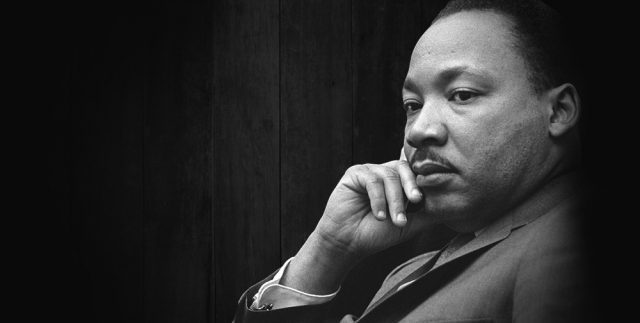
It’s hard to believe that this year marks the fiftieth anniversary of the assassination of the Rev. Dr. Martin Luther King, Jr., and that half a century later racism is still such a central issue in America and around the world. In 1983, the third Monday in January was officially recognized as Martin Luther King, Jr. Day, honoring the birthday of the civil rights leader who was shot and killed in Memphis on April 4, 1968. Dr. King would have turned eighty-nine on Monday, and you can celebrate his legacy on Monday by participating in a Martin Luther King, Jr., Day of Service project or attending one of numerous special events taking place around the city. Below are some of the highlights.
JCC Harlem: Community Carnival at All Souls Church, MLK Day-themed art projects for community children, 88 St. Nicholas Ave., free, 10:00, 12:30, 3:00
Martin Luther King, Jr. Commemorative March: “A New Revolution: Youth and Social Change,” Eleanor Roosevelt Monument in Riverside Park at 72nd St. at 10:00 am to Manhattan Country School at 150 West 85th St. at 2:00, free
Martin Luther King, Jr. Day Celebration: Martin’s Mosaic, 10:00 am and 1:00 pm; Museum of Impact visits CMOM, Upstanders Fest, 12 noon – 4:00, Children’s Museum of Manhattan, 212 West 83rd St., $11-$14
Thirty-second Annual Brooklyn Tribute to Dr. Martin Luther King, Jr., with keynote speaker Jelani Cobb, Martha Redbone, and the Brooklyn Interdenominational Choir, BAM Howard Gilman Opera House, free, 10:30 am; Unbound: Patrisse Cullors and asha bandele, launch of When They Call You a Terrorist: A Black Lives Matter Memoir, moderated by Rashad Robinson and followed by a book signing, BAM Fisher, Fishman Space, free, 1:00; screening of 4 Little Girls (Spike Lee, 1997), BAM Rose Cinemas, free, 1:00
Honoring Dr. Martin Luther King Jr., including visits to “King in New York” and “Activist New York” exhibits and poster workshop, Museum of the City of New York, 1220 Fifth Ave at 103rd St., free with museum admission of $12-$18, 11:00 am – 2:00 pm
Family Matinees:Selma, Lord, Selma (Charles Burnett, 1999), $7-$15, 11:00 am; The Wiz (Sidney Lumet, 1978), $7-$15, 1:00, Museum of the Moving Image, 35th Ave. at 36th St., price includes admission to galleries
I Have a Dream Celebration: Make Art Not War: Interactive Handprint Mural, 11:30; I Have a Dream Cloud, 1:00; Kids Take Action! Letter Writing for Change, 1:30; Sylvia’s Story Corner on the Bus, 3:30, Brooklyn Children’s Museum, 145 Brooklyn Ave., $11
Soul to Soul, with Lisa Fishman, Cantor Magda Fishman, Elmore James, Tony Perry, and musical director Zalmen Mlotek, followed by a discussion with the artists and creators, presented by National Yiddish Theatre Folksbiene, Museum of Jewish Heritage, 36 Battery Pl., $25 (use discount code “Mishpokhe” for 20% off online tickets), 2:00
Hands On | Harlem Dreams, Legends, and Legacy, teen photo studio, time capsules, mixed-media art, scavenger hunt, and in-gallery collage, Studio Museum in Harlem, 144 West 125th St., $3-$7, 2:00 – 6:00
Cinematters:Muhammad Ali: Me Whee (Arny Stone, 1975), followed by a Q&A with executive producer Drew Stone, Lou DiBella, and Craig Setari, JCC in Manhattan, 334 Amsterdam Ave., $5, 5:00
Ellie Shine (Laurie Simmons) takes a break at the new Whitney as the sun sets in My Art
MY ART (Laurie Simmons, 2016)
Quad Cinema
34 West 13th St. between Fifth & Sixth Aves.
Opens Friday, January 12
212-255-2243 quadcinema.com/film/my-art
Visual artist Laurie Simmons makes her feature-film debut as writer, director, and star of the self-indulgent, pretentious romance My Art, which opens at the Quad on January 12. Part of the Pictures Generation, Simmons, who was born in Queens in 1949, has been creating intriguing photographic series since the mid-1970s, often focusing on such inanimate objects as mannequins and dolls, offering a feminist viewpoint of domesticity. In My Art, she plays Ellie Shine, a sixty-five-year-old teacher and artist who decides to house-sit for an upstate friend in order to take advantage of her large studio and to work on a new project, bringing along her ailing dog, Bing, who is suffering from degenerative myelopathy (and is sometimes played by her real dog, Dean, who had the same illness). Although she is seeking privacy and seclusion, she is soon interacting with three men, local gardeners Frank (Robert Clohessy), a widower, and Tom (Josh Safdie), who is married to Angie (Parker Posey), and an oft-divorced lawyer, John (John Rothman). Instead of using dolls and mannequins, she and the three men dress up to re-create scenes from some of Ellie’s favorite films, including John Huston’s The Misfits, Stanley Kubrick’s A Clockwork Orange, Billy Wilder’s Some Like It Hot, and François Truffaut’s Jules and Jim, which involve issues of sex, femininity, age, and gender. Inspired by the work of Cindy Sherman and Gulley Jimson, the painter portrayed by Alec Guinness in Ronald Neame’s The Horse’s Mouth, Ellie reimagines herself as Marilyn Monroe, Kim Novak, Malcolm McDowell, Marlene Dietrich, and other characters as the scenes help drive the narrative of her evolving relationships with the three men as well as the upstate community as a whole. She did not come to the house looking for romance, instead wanting to concentrate on her art, but she can’t help but be beguiled by the three men, particularly Frank, while rediscovering her sexuality.
Ellie (Laurie Simmons) grabs a smoke while clutching Bing (Dean) in My Art
My Art is too cutesy for its own good, more of a Lifetime movie or gallery installation than a theatrical release for the general public. It’s often cloying, and clumsily edited, with a score that might rot your teeth. Simmons is a terrific visual artist — you can see some of her real work in the opening scene, when Ellie is walking through the 2015 Whitney exhibition “As Far as the Eye Can See” (the colorful painting she stops at is “Large Bather [quicksand],” by her husband, Carroll Dunham) — but perhaps feature films are just not her forte. Dunham and Simmons’s daughter, Lena Dunham, makes an early cameo as a student of Ellie’s; it’s not difficult to understand where Lena gets some of her artistic and political views from. There are also cameos by Simmons’s other daughter, writer and activist Grace Dunham, in addition to Marilyn Minter, Blair Brown, and Barbara Sukowa. Simmons, who appeared in Lena’s Tiny Furniture with Grace and in Girls and made the 2006 short The Music of Regrets, is a much better photographer than actress; while it’s refreshing to see a sixtysomething woman protagonist rediscovering life’s many pleasures, Simmons can’t carry the lead. In fact, the only actor who excels in the film is the amiable Clohessy, who is impeccable as Frank, riffing on his real life as a former boxer, son of a police officer, and actor who has primarily played cops in his career, including recurring roles on NYPD Blue, Oz, and Blue Bloods. Simmons will participate in several special events at the Quad: There will be Q&As with Simmons, Rothman, Clohessy, producer Andrew Fierberg, and Lena Dunham (via Skype) on January 12 and 13 at the 7:00 shows; the 4:50 screening on January 14 is dedicated to women artists, while the 7:00 screening the same day is a fundraiser for Planned Parenthood and will be followed by a Q&A with Simmons, moderated by Lynn Tillman.
The Prince and the Dybbuk makes its U.S. premiere at the New York Jewish Film Festival
THE PRINCE AND THE DYBBUK (Piotr Rosolowski & Elwira Niewiera, 2017)
Film Society of Lincoln Center, Walter Reade Theater
165 West 65th St. at Amsterdam Ave.
Wednesday, January 10, 2:45, and Thursday, January 11, 9:00
Festival runs January 10-23
212-875-5601 www.filmlinc.org prince-dybbuk.com
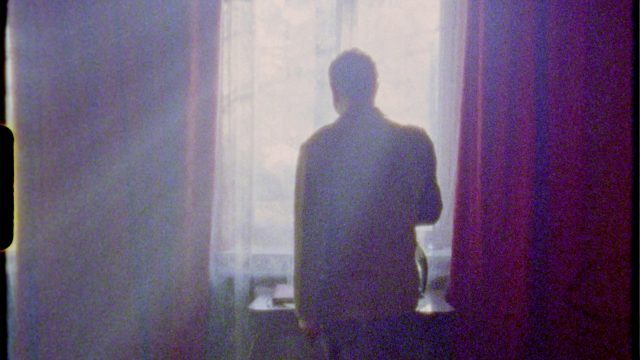
The New York Jewish Film Festival gets under way January 10 with an intriguing look at enigmatic filmmaker Michał Waszyński, the director of one of the most important Yiddish movies of all time, the 1937 supernatural tale The Dybbuk. In The Prince and the Dybbuk, directors Piotr Rosolowski and Elwira Niewiera find that discovering who Waszyński was is like chasing a ghost, as he continually reinvented himself while being haunted by a past he tried to erase. Like the characters in many of the films he produced and directed, he was constantly searching for his true identity as he journeyed from Poland and Germany to Italy and Spain. “He was in his world, so mysterious and exciting. Nobody really knows what he’s really like,” one of his assistant directors, Enrico Bergier, says. Throughout the eighty-minute documentary, friends, relatives, colleagues, and others describe Waszyński, who produced and/or directed nearly 150 films, as a gentleman, Jewish, Catholic, noble-minded, lonely, elegant and refined, an exceptional boss, generous, isolated, very smart, a larger-than-life character, an aristocrat, a bit strange, and a mythomaniac. He married a countess, dubbing himself the Polish Prince, and took one of his actors, Albin Ossowski, to gay restaurants. “He was longing for his youth,” Ossowski says. He hobnobbed with Orson Welles, Sophia Loren, Audrey Hepburn, and Claudia Cardinale. He appeared in Joseph L. Mankiewicz’s 1954 film, The Barefoot Contessa. He was singled out by Josef Goebbels as an enemy. He was involved with such 1960s blockbusters as El Cid and The Fall of the Roman Empire as well as smaller Eastern European films, most famously The Dybbuk, about a young bride possessed by a spirit. Rosolowski and Niewiera, who previously collaborated on the award-winning Domino Effect, include newsreel footage, family photos, home movies, a behind-the-scenes promotional piece narrated by James Mason about the making of Anthony Mann’s budget-busting The Fall of the Roman Empire, spoken excerpts from Waszyński’s diaries, and clips from such Waszyński films as His Excellency the Shop Assistant, Unknown Man of San Marino, Dvanáct kresel, Gehenna, Wielka Droga, Zabawka, and Znachor, many of which feature lost characters.
Enigmatic filmmaker Michał Waszyński (in red shirt) plays cards in Joseph L. Mankiewicz’s The Barefoot Contessa
Waszyński was born Moshe Waks in the village of Kovel in Poland (what is now Ukraine) in 1904 and later changed his name to Michał Waszyński and converted to Catholicism. Even when facts are revealed about him, there is no evidence about why he did the things he did in his personal life. “To me he was a great magician. He lived in a dream world, because cinema is a dream,” explains Maurizio Dickmann, a member of the Italian family that took him in. Later, in an Under the Flag of Love radio broadcast, Waszyński explains, “I do what I love. Cinema is my passion and it stimulates my intellect. . . . To me, film is like a second reality, subject to completely different rules. In a split second, a king can become a shepherd or a beggar a rich man.” His diaries divulge a dark side about his search for who he is and who he was as he transformed himself from shepherd to king. “My city vanishes from my mind, as if the place of my youth had never existed,” he writes. “But I can never rid myself of you. You were the one who abandoned us. Although, even now, in my dreams and when awake, you return to me every night, like a stab to the heart. You drive deep inside me. Like an evil spirit, you circle around me.” Waszyński was chased by spirits his entire life — he passed away suddenly in 1965 — and turned to the movies for answers, which only led to more questions. Named Best Documentary on Cinema at the Venice Film Festival, The Prince and the Dybbuk is making its U.S. premiere at the New York Jewish Film Festival, screening at the Walter Reade Theater on January 10 at 2:45 and January 11 at 9:00, preceded by Daria Martin’s short film A Hunger Artist, based on the Franz Kafka story. The January 11 screening will be followed by a Q&A with Rosolowski, Niewiera, and Martin. A copresentation of the Jewish Museum and the Film Society of Lincoln Center, the festival, which runs January 10-23, is also showing the world premiere of a brand-new restoration of The Dybbuk on January 14 and 17.
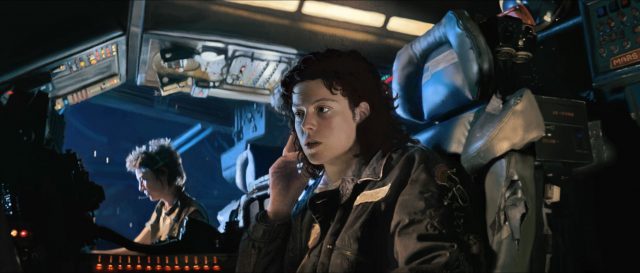
Alien is one of nineteen films in the Quad series “The Way I See It: Directors’ Cuts”
Quad Cinema
34 West 13th St. between Fifth & Sixth Aves.
January 5-18
212-255-2243 quadcinema.com
You might think that you’ve seen certain films, but you have not necessarily experienced them the way their directors intended you to. For reasons such as money, running time, deadlines, and creative differences with producers, not all films completely represent an auteur’s artistic vision. The Quad pays respect to those wishes with “The Way I See It: Directors’ Cuts,” a two-week series featuring nineteen films in which the director went back and made additions and deletions after the initial theatrical release. Of course, it doesn’t mean the movie is now better, but it is no longer exactly the same. Among the revised works the Quad is showing are Steven Spielberg’s Close Encounters of the Third Kind, Miloš Forman’s Amadeus, Ridley Scott’s Blade Runner: The Final Cut and Alien, Francis Ford Coppola’s Apocalypse Now Redux, Terry Gilliam’s Brazil, and Sergio Leone’s Once Upon a Time in America. It’s best to just settle in and watch these special editions as they are, without desperately trying to figure out what is new and what has been cut; you can always check that out later on the internet.
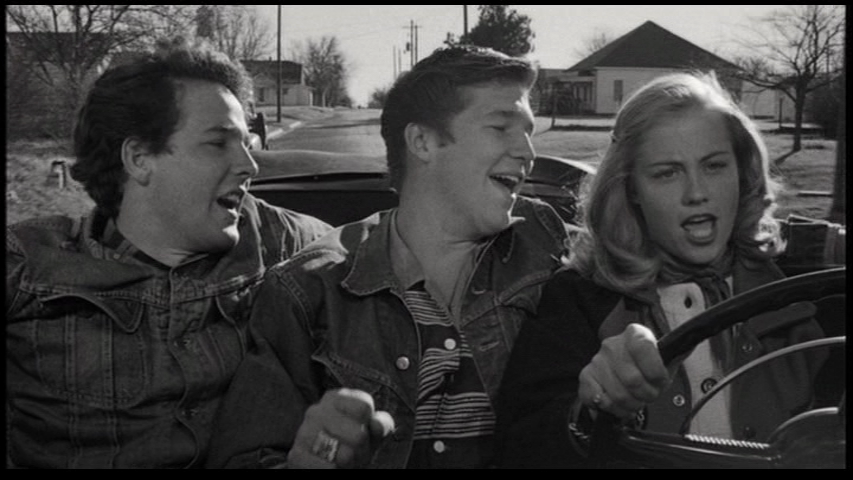
Timothy Bottoms, Jeff Bridges, and Cybill Shepherd prepare for adulthood in The Last Picture Show
THE LAST PICTURE SHOW (Peter Bogdanovich, 1971)
Quad Cinema
January 8-18 quadcinema.com
Peter Bogdanovich’s The Last Picture Show is a tender-hearted, poignant portrait of sexual awakening and coming-of-age in a sleepy Texas town. Adapted from the Larry McMurtry novel by the author and the director, the film is set in the early 1950s, focusing on Sonny Crawford (Timothy Bottoms), a teenager who works at the local pool hall with Billy (Timothy’s brother Sam), a simple-minded boy who needs special caring. Sonny’s best friend, Duane Jackson (Oscar-nominated Jeff Bridges), is dating the prettiest girl in school, Jacy Farrow (Cybill Shepherd, in her film debut), who is getting ready to test out the sexual waters, sneaking away on a date with Lester Marlow (Randy Quaid), who takes her to a naked-swimming party in a wealthier suburb of Wichita Falls. Meanwhile, Sonny breaks up with his girlfriend, Charlene Druggs (Sharon Taggart), and becomes drawn to the sad, unhappy Ruth Popper (an Oscar-winning Cloris Leachman), the wife of his football coach (Bill Thurman). The outstanding all-star cast also features Oscar-nominated Ellen Burstyn as Lois, Jacy’s mother; Eileen Brennan as a waitress in the local diner who makes cheeseburgers for Sonny; Clu Gulager as a working man who has a thing for Lois; Frank Marshall, who went on to become a big-time producer, as high school student Tommy Logan; and Oscar winner Ben Johnson as Sam the Lion, the moral center of the town and owner of the pool hall, diner, and movie theater, which shows such films as Father of the Bride and Red River.
Cinematographer Robert Surtees shoots The Last Picture Show in a sentimental black-and-white that gives the film an old-fashioned feel, as if it’s a part of Americana that is fading away. Bogdanovich also chose to have no original score, instead populating the tale with country songs by Hank Williams, Bob Wills and the Texas Playboys, Lefty Frizzell, Tony Bennett, and others singing tales of woe. In many ways the film, nominated for eight Oscars including Best Picture and Best Director, is the flip side of George Lucas’s 1973 hit American Graffiti, which is set ten years later but looks like it’s from another century; it also has a lot in common with François Truffaut’s 1962 classic Jules and Jim.
Isabelle Huppert and Kris Kristofferson waltz their way through Heaven’s Gate
HEAVEN’S GATE (Michael Cimino, 1980)
Quad Cinema
January 11-15 quadcinema.com
When I was a kid in school, one of the first movies I ever reviewed was Heaven’s Gate, Michael Cimino’s brazenly overbudget famous Hollywood disaster. Incensed that professional film critics were obsessed with the meta surrounding the making of the epic Western instead of simply taking it for what it was, I was determined to treat it like any other movie, forgetting about all the behind-the-scenes gossip and tales of financial gluttony. And what I found back then was that it was a noble failure, a bold exercise in genre that had its share of strong moments but ultimately fell apart, leaving me dissatisfied and disappointed but glad I had seen it; I did not want my three-plus hours back. In fact, I probably would have checked out the rumored five-hour version if it had been shown, hoping it would fill in the many gaps that plagued the official theatrical release. More than thirty years later, Cimino’s follow-up to his Oscar-winning sophomore effort, The Deer Hunter, has returned in a 219-minute digital restoration supervised by Cimino, and it does indeed shed new light on the unfairly ridiculed work, which is still, after all this time, a noble failure. Inspired by the 1882 Johnson County War in Wyoming, the film stars Kris Kristofferson as Jim Averill, a Harvard-educated lawman hired by a group of immigrants, called “citizens,” whose livelihood — and lives — are being threatened by a wealthy cattlemen’s association run by the elitist Frank Canton (Sam Waterston). The association has come up with a kill list of 125 citizens, offering fifty dollars for each murder, a plan that has been authorized all the way up to the president of the United States. Leading the way for the cattlemen is hired killer Nate Champion (Christopher Walken), who has a particularly fierce aversion to the foreign-speaking immigrants. With a major battle on the horizon, Averill and Champion also fight for the love of the same woman, the luminous Ella Watson (Isabelle Huppert), a successful madam who soon finds herself in the middle of the controversy.
Christopher Walken sets his sights on immigrants in epic Western
Heaven’s Gate is beautifully photographed by Vilmos Zsigmond, the first half bathed in sepia tones, with many shots evoking Impressionist painting. The narrative, which begins in Harvard in 1870 before jumping to 1890 Wyoming, moves far too slowly, with underdeveloped relationships and characters that don’t pay off in the long run, especially John Hurt as Billy Irvine, who wanders around lost throughout the film. Using a gentle rendition of Strauss’s “The Blue Danube” as a musical motif, Cimino creates repetitive scenes that start too early and go on too long, choosing style over substance, resulting in too much atmosphere and not enough motivation. The all-star cast also includes Joseph Cotten, Jeff Bridges, Brad Dourif, Richard Masur, Eastwood regular Geoffrey Lewis, Terry O’Quinn, Tom Noonan, and Mickey Rourke, but most of them are wasted in minor roles that are never fully developed. Whereas the film began by calling to mind such works as Akira Kurosawa’s Yojimbo, John Ford’s My Darling Clementine, and Robert Altman’s McCabe & Mrs. Miller, it devolves into Sam Peckinpah-lite as rape and violence take center stage, along with silly plot twists and clichéd dialogue, much of which is hard to make out. However, all of that does not add up to one of the worst movies ever made, despite its inclusion on many such lists. It even feels oddly relevant today, as America continues to debate immigration laws. But in the end it’s just a film that tried too hard, focusing on the wrong things. Back in 1980, I wanted to see the supposed five-hour version; now I think I’d prefer to see a two-hour Heaven’s Gate that would just get right to the point.
In 2007, Charles Burnett released a directors cut of his 1983 film, My Brother’s Wedding
MY BROTHER’S WEDDING (Charles Burnett, 1983)
Quad Cinema
January 13-16 quadcinema.com
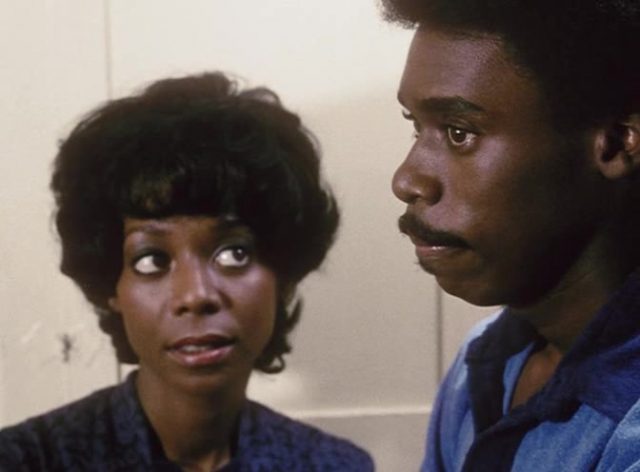
Following the breakout success of the 2006 release of Charles Burnett’s remarkable Killer of Sheep (1977), the following year Milestone Films released a restored and digitally reedited version of Burnett’s poignant 1983 drama, My Brother’s Wedding. Everett Silas stars as Pierce Mundy, a ne’er-do-well slacker who loafs around in his parents’ dry-cleaning store, waits for his best friend, the smooth-talking Soldier (Ronnie Bell), to get out of jail, and resents that his brother, Wendell (Dennis Kemper), has become a successful lawyer and is preparing to marry the snobby Sonia (Gaye Shannon-Burnett, the director’s real-life wife). As he did with Killer of Sheep, Burnett, who was born in Vicksburg, Mississippi, and raised in Watts, sets the film in Watts, where poor black families struggle to make a go of it in the shadow of ritzy Los Angeles. Although Pierce never seems to make the right decision, his choices are limited, but that doesn’t stop Burnett (To Sleep with Anger), who will be receiving an honorary Oscar this year, from coming up with some very droll, funny scenes. Shot in color (Killer of Sheep was made in black-and-white), My Brother’s Wedding is another no-budget treasure from a vital director who is vastly underrecognized.
Hava Kohav Beller’s documentary In the Land of Pomegranates begins with an epigraph quote from Swiss writer and political activist Friedrich Dürrenmatt: “This inhuman world has to become more human. But how?” The writer of The Pledge and The Visit also claimed, “Without tolerance, our world turns into hell,” and argued that Swiss citizens were both prisoners and guards. One wonders what Dürrenmatt would have thought of Beller’s film, which explores the ongoing battle between Jews and Palestinians over who has the right to exist in Israel. The two-hour film starts out slowly, with interviews dating back to 2010 as random men and women share their views on the fierce debate; they are not artists, politicians, public figures, acknowledged experts, or professional thinkers. Ofra Eviatar talks about the dangers of being a Jew living by the wall at the Gaza border. An Arab man explains that he felt scared when he was a child, so “my fear meant I would get revenge when I grew up.” The people chosen feel a bit too arbitrary, too selective and manipulative. But then, suddenly, the film finds its focus as it zeroes in on a gathering of young Palestinians and Jews participating in a retreat in Germany called “Vacation from War,” where they live together and have intense group discussions about the controversy surrounding the State of Israel. “Here we are having a break from reality and here we will try to see if we can understand each other,” facilitator Shadi Hanoun says. But just when it seems like the next generation might be able to find some common ground, the conversation gets brutal as the Jews ask whether the Palestinians will ever accept Israel’s right to exist and the Palestinians demand that their land must be returned to them. Meanwhile, a young Palestinian mother has to cross the border to bring her son, who has a severe heart problem, to an Israeli hospital where Jewish doctors try to save the boy.
Guy Zuzut shares his thoughts on Israel, the Jews, and the Palestinians in powerful documentary
Beller (The Burning Wall, the Oscar-nominated The Restless Conscience: Resistance to Hitler within Germany 1933-1945), a former dancer and choreographer who was born in Germany, raised in Israel, and lives in New York City, occasionally cuts away to show horrific terrorist bombings as well as supremely gorgeous shots of Israel, stunning locales that serve as a dramatic counterpoint to the bitter feuds and spilled blood. (The lush cinematography is by Colin Rosin, Christoph Lerch, and Shalom Rufeisen, with superb editing by Jonathan Oppenheim.) One of the most striking elements of the film is how similar the young Palestinians and Jews look; aside from those wearing burkas or yarmulkes, it is not immediately apparent what side Ayana Lekach, Amal Shater, Rotem Dar, Shadi Abu Arrah, Rabea Arar, Guy Zuzut, Nira Ponso, and Aya Awad are on. And no matter what side you’re on, you’re likely to become enraged as the subject of the Holocaust takes center stage and the film reaches its sizzling conclusion. (The film also offers an alternate look from Menachem Daum and Oren Rudavsky’s 2016 The Ruins of Lifta: Where the Holocaust and Nakba Meet, in which an elderly Jewish woman and Palestinian man examine their differences.) “There needs to be an acceptance of the two national narratives,” Mohammad Judeh says, which seems to be impossible. It would be fascinating to hear what the participants think of President Trump’s decision to move the American embassy from Tel Aviv to Jerusalem, which led to further violence. As Beller notes in the film, “The pomegranate is the fruit of the land, a symbol of rejuvenation and rebirth. It is also a euphemism for a hand grenade.” A lasting peace is not on this menu. In the Land of Pomegranates is having its theatrical world premiere on January 5 at Lincoln Plaza Cinema, which will be closing at the end of the month as its lease expires and the building and plaza undergo renovation. “At the completion of this work, we expect to reopen the space as a cinema that will maintain its cultural legacy far into the future,” owners Milstein Properties announced in a statement.
Guy Maddin, Evan Johnson, and Galen Johnson reimagine Alfred Hitchcock’s Vertigo with clips from old films in The Green Fog
THE GREEN FOG (Guy Maddin, Evan Johnson, and Galen Johnson, 2017)
IFC Center
323 Sixth Ave. at West Third St.
Opens Friday, January 5
212-924-7771 www.ifccenter.com guy-maddin.com
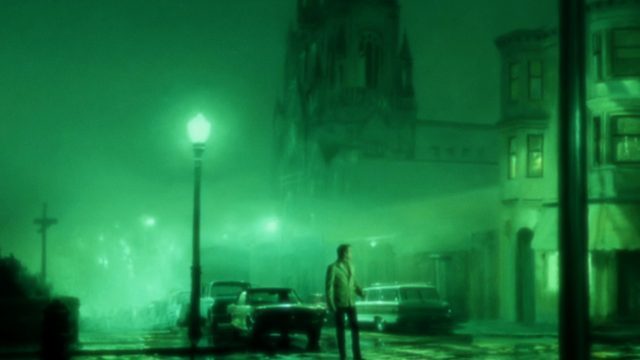
Winnipeg-based filmmakers Guy Maddin, Evan Johnson, and Galen Johnson ingeniously reimagine Alfred Hitchcock’s psychosexual masterpiece, Vertigo, using clips from dozens of movies and television shows in the mesmerizing pastiche The Green Fog. When Maddin, who has made such previous films as Careful, The Saddest Music in the World, and My Winnipeg, which use early-cinema conventions and look like rediscovered, decayed old works, was commissioned by the San Francisco International Film Festival to make a film for its sixtieth anniversary, Maddin turned to the Johnson brothers, his collaborators on The Forbidden Room and Bring Me the Head of Tim Horton, and began poring over movies and TV shows set in the City by the Bay. Along the way they were continually reminded of Vertigo as they recognized locations from the classic thriller about an agoraphobic detective obsessed with a woman who resembles his former love. So the trio decided to re-create Vertigo with found footage, not shot-by-shot like Gus Van Sant did with Psycho but by employing themes, places, pacing, mood, and tension similar to Hitchcock’s, and in about half the time. (The Green Fog runs sixty-three minutes, Vertigo slightly more than two hours.)
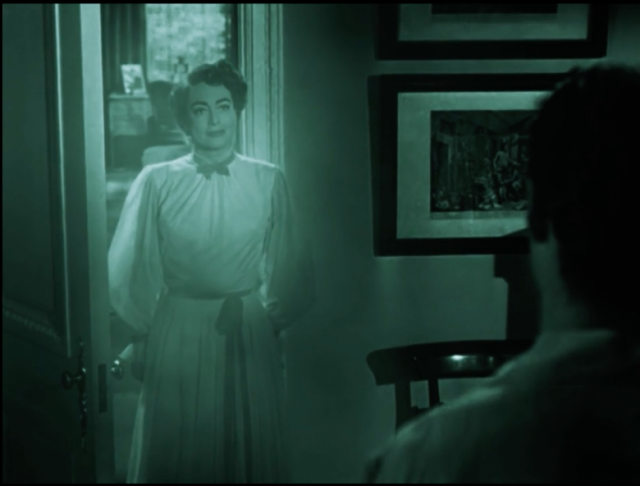
The Green Fog incorporates clips from such genre movies as Sudden Fear, starring Joan Crawford
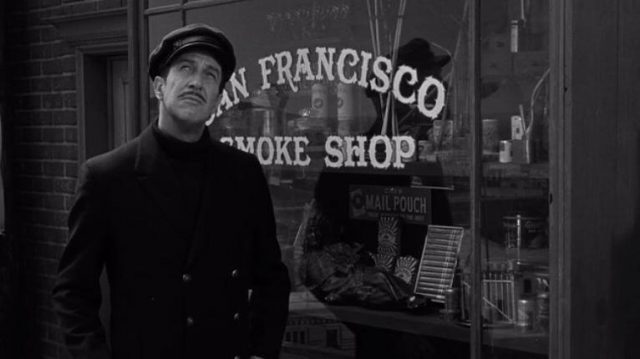
In sections with such titles as “Prologue,” “Weekend at Ernie’s,” and “Catatonia,” Maddin and the Johnsons follow the general story line of Vertigo,, with the Jimmy Stewart role “played” primarily by Rock Hudson from McMillan & Wife, Vincent Price from Confessions of an Opium Eater, and Chuck Norris from Slaughter in San Francisco and An Eye for an Eye. There’s a rooftop chase, a visit to a flower shop, scenes in restaurants and with paintings in museums, and a trip up a tower. Occasionally a green fog threatens ominously. In the vast majority of the clips, the dialogue has been cut out, so the characters are seen in choppy edits looking at each other in offbeat ways, allowing viewers to infer their own Vertigo-esque narrative. Because viewers are likely not to be familiar with many of the scenes from the movies and thus don’t know the relationships between the characters, issues of sexuality, homoeroticism, and even incest arise as Maddin and the Johnsons redefine the male gaze — so prevalent in Hitchcock films — while passing the Bechdel test. Snippets of conversation occasionally come through, usually involving people watching surveillance footage on film or monitors or listening to tape recordings, commenting with inside jokes and references to the making of The Green Fog. “What are we looking for, sir?” Sgt. Enright (John Schuck) asks Commissioner McMillan (Hudson), who responds, “I don’t know, but at this point I’ll take anything.” McMillan also says, “That’s the trouble with that old film,” and later sets fire to filmstrips, leading to a series of disasters of epic proportions. And Michael Douglas as Det. Steve Keller from The Streets of San Francisco watches Michael Douglas as Det. Nick Curran from Basic Instinct get out of bed and walk to the bathroom naked. “Boy, you look good, Mike. You ever thought about going into showbiz?” Keller says to Lt. Stone (Malden).
Vincent Price is one of many actors who “portray” John “Scottie” Ferguson (Jimmy Stewart) in mesmerizing cinematic collage based on Vertigo
Many shots echo the doubling mirror image that is at the heart of Vertigo. In a scene from Nicholas Ray’s Born to Be Bad, Gobby Broome (Mel Ferrer) watches what appears to be twin girls looking intently at two paintings in a museum. In a restaurant, a daughter tells her father, “I’m trying to become somebody,” as if there’s another persona waiting to burst out of her. And Lt. Stone puts on clown makeup to try to catch a killer. Among the other actors who show up in the film are Mel Brooks, Lee Remick, Martin Landau, Nancy Kwan, Clint Eastwood, Meg Ryan, Richard Gere, Kim Basinger, Donald Sutherland, Miriam Hopkins, Dean Martin, Fritz Weaver, Sandra Bullock, Claude Akins, Sharon Stone, John Saxon, Joan Crawford, Sidney Poitier, Humphrey Bogart, Joseph Cotten, and Veronica Cartwright, from such movies and TV series as Murder She Wrote, Mission: Impossible, Hotel, Bullitt, High Anxiety, Dark Passage, Star Trek IV: The Voyage Home, The Towering Inferno, It Came from Beneath the Sea, Barbary Coast, The Conversation, Flower Drum Song, The Love Bug, Dirty Harry, A View to a Kill, The Lady from Shanghai, Sans Soleil, Sister Act, So I Married an Axe Murderer, Pal Joey, Invasion of the Body Snatchers, The Ten Commandments, and They Call Me Mister Tibbs! as well as an *NSYNC video. The intense, titillating score was composed by Jacob Garchik and is performed by the San Francisco-based Kronos Quartet. The Green Fog also evokes Christian Marclay’s The Clock and Telephones, in which the Swiss and American visual and sound artist edited together existing film footage to create narratives based on time and phone conversations, respectively. As with those montage-based works, it’s easy to get caught up in trying to identify the actors and the movies in The Green Fog, but don’t forget that the clips are all being employed to come up with something brand new that stands on its own. Maddin (Tales from the Gimli Hospital,Keyhole) and the Johnsons have made a dazzling love letter to Vertigo, to San Francisco, and to the history of movies themselves, offering a treasure trove of fun worthy of repeated viewings.
The Green Fog opens January 5 at IFC Center, screening with Maddin and the Johnson brothers’ 2015 short Lines of the Hand, which is based on Jean Vigo’s unrealized film poem Les lignes de la main and stars film critic Luce Vigo, who is Vigo’s daughter, along with Geraldine Chaplin and Udo Kier. Maddin will participate in a Q&A with SFFILM executive director Noah Cowan following the 8:55 show on January 5 in addition to Q&As after the 4:50 and 8:55 screening on January 6. There will also be some double features pairing The Green Fog with Vertigo.
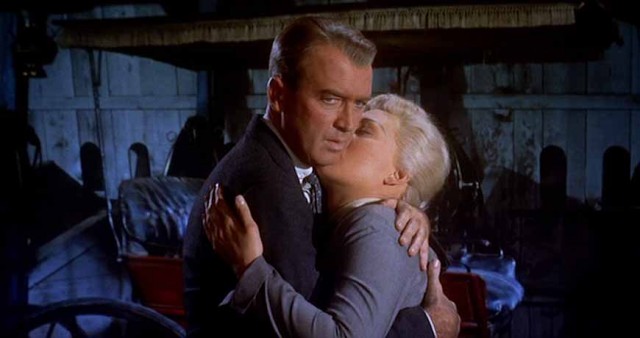
James Stewart and Kim Novak get caught up in a murder mystery in Vertigo
VERTIGO (Alfred Hitchcock, 1958)
IFC Center
323 Sixth Ave. at West Third St.
Opens Friday, January 5
212-924-7771 www.ifccenter.com
Select screenings of The Green Fog will be accompanied by Alfred Hitchcock’s 1958 mind-altering, fetishistic psychological thriller, Vertigo, which heavily influenced Guy Maddin, Evan Johnson, and Galen Johnson’s San Francisco montage. Based on Boileau-Narcejac’s 1954 novel, D’entre les morts, the film delves deep into the nature of fear and obsession. Jimmy Stewart stars as John “Scottie” Ferguson, a police detective who retires after his acrophobia leads to the death of a fellow cop. An old college classmate, wealthy businessman Gavin Elster (Tom Holmore), asks Scottie to look into his wife’s odd behavior; Elster believes that Madeleine (Kim Novak) is being inhabited by the spirit of Carlotta Valdes, her great-grandmother, a woman who committed suicide in her mid-twenties, the same age that Madeleine is now. Scottie follows Madeleine as she goes to Carlotta’s grave, visits a portrait of her in a local museum, and jumps into San Francisco Bay. Scottie rescues her, brings her to his house, and starts falling in love with her. But on a visit to Mission San Juan Bautista, tragedy strikes when Scottie can’t get to the top of the tower because of his vertigo. After a stint in a sanatorium, he wanders the streets of San Francisco where he and Madeleine had fallen in love, as if hoping to see a ghost — and when he indeed finds a woman who reminds him of Madeleine, a young woman named Judy Barton (Novak), he can’t help but try to turn her into his lost love, with tragedy waiting in the wings once again.
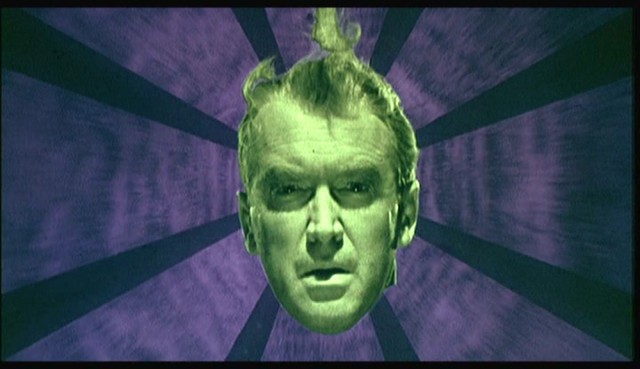
Scottie experiences quite a nightmare in Alfred Hitchcock classic
Vertigo is a twisted tale of sexual obsession, much of it filmed in San Francisco, making the City by the Bay a character all its own as Scottie travels down Lombard St., takes Madeleine to Muir Woods, stops by Ernie’s, and saves Madeleine under the Golden Gate Bridge. The color scheme is almost shocking, with bright, bold blues, reds, and especially greens dominating scenes. Hitchcock, of course, famously had a thing for blondes, so it’s hard not to think of Stewart as his surrogate when Scottie insists that Judy dye her hair blonde. Color is also central to Scottie’s psychedelic nightmare (designed by artist John Ferren), a Spirographic journey through his mind and down into a grave. Cinematographer Robert Burks’s use of the dolly zoom, in which the camera moves on a dolly in the opposite direction of the zoom, keeps viewers sitting on the edge of their seats, adding to the fierce tension, along with Bernard Herrmann’s frightening score. Despite their age difference, there is pure magic between Stewart, forty-nine, and Novak, twenty-four. (Stewart and Novak next made Bell, Book, and Candle as part of the deal to let Novak work for Paramount while under contract to Columbia.)
The production was fraught with problems: The screenplay went through Maxwell Anderson, Alec Coppel, and finally Samuel A. Taylor; shooting was delayed by Hitchcock’s health and vacations taken by Stewart and Novak; a pregnant Vera Miles was replaced by Novak; Muir Matheson conducted the score in Europe, instead of Herrmann in Hollywood, because of a musicians’ strike; associate producer Herbert Coleman reshot one scene using the wrong lens; Hitchcock had to have a bell tower built atop Mission San Juan Bautista after a fire destroyed its steeple; and the studio fought for a lame alternate ending (which was filmed). Perhaps all those difficulties, in the end, helped make Vertigo the classic it is today, gaining in stature over the decades, from mixed reviews when it opened to a controversial restoration in 1996 to being named the best film of all time in Sight & Sound’s 2012 poll to a recent digital restoration.
Brooklyn Museum screening of I Am Not Your Negro will be followed by discussion of activism with James Baldwin’s niece
Brooklyn Museum
200 Eastern Parkway at Washington St.
Saturday, January 6, free, 5:00 – 11:00
212-864-5400 www.brooklynmuseum.org
The Brooklyn Museum looks to 2018 with its January First Saturday program, “New Year, New Futures.” There will be live music by Sinkane, BEARCAT, Zaven of Resonator Collective (an in-gallery soundscape for the terrific exhibition “Proof: Francisco Goya, Sergei Eisenstein, Robert Longo”), and New Kingston; a curator tour of “Rodin at the Brooklyn Museum: The Body in Bronze” with Lisa Small; a hands-on art workshop in which participants can make zines inspired by “Proof”; a community talk with Murad Awawdeh, the vice president of advocacy at the New York Immigration Coalition; a screening of the Oscar-nominated documentary about James Baldwin, I Am Not your Negro (Raoul Peck, 2017), followed by a discussion with activists Jessica Green and Aisha Karefa-Smart (Baldwin’s niece); a Feminist Book Club event focusing on the 1970 book Sisterhood Is Powerful: An Anthology of Writings from the Women’s Liberation Movement, edited by Robin Morgan, hosted by Glory Edim of Well-Read Black Girl based on selections by Judy Chicago; pop-up gallery talks on “Roots of ‘The Dinner Party’: History in the Making”; a Brooklyn Dance Festival movement workshop and live performances; pop-up poetry with DéLana R. A. Dameron (Weary Kingdom) and Rickey Laurentiis (Boy with Thorn), followed by a signing; and a NYLaughs comedy showcase with Negin Farsad, Nimesh Patel, and Jordan Carlos, hosted by Ophira Eisenberg and followed by a discussion on humor, activism, and crisis. In addition, the galleries will be open late so you can check out “Roots of ‘The Dinner Party’: History in the Making,” “Soulful Creatures: Animal Mummies in Ancient Egypt,” “Proof: Francisco Goya, Sergei Eisenstein, Robert Longo,” “Arts of Asia and the Middle East,” “Infinite Blue,” “Ahmed Mater: Mecca Journeys,” “Rodin at the Brooklyn Museum: The Body in Bronze,” “A Woman’s Afterlife: Gender Transformation in Ancient Egypt,” and more.

 Visual artist Laurie Simmons makes her feature-film debut as writer, director, and star of the self-indulgent, pretentious romance My Art, which opens at the Quad on January 12. Part of the Pictures Generation, Simmons, who was born in Queens in 1949, has been creating intriguing photographic series since the mid-1970s, often focusing on such inanimate objects as mannequins and dolls, offering a feminist viewpoint of domesticity. In My Art, she plays Ellie Shine, a sixty-five-year-old teacher and artist who decides to house-sit for an upstate friend in order to take advantage of her large studio and to work on a new project, bringing along her ailing dog, Bing, who is suffering from degenerative myelopathy (and is sometimes played by her real dog, Dean, who had the same illness). Although she is seeking privacy and seclusion, she is soon interacting with three men, local gardeners Frank (Robert Clohessy), a widower, and Tom (Josh Safdie), who is married to Angie (Parker Posey), and an oft-divorced lawyer, John (John Rothman). Instead of using dolls and mannequins, she and the three men dress up to re-create scenes from some of Ellie’s favorite films, including John Huston’s The Misfits, Stanley Kubrick’s A Clockwork Orange, Billy Wilder’s Some Like It Hot, and François Truffaut’s Jules and Jim, which involve issues of sex, femininity, age, and gender. Inspired by the work of Cindy Sherman and Gulley Jimson, the painter portrayed by Alec Guinness in Ronald Neame’s The Horse’s Mouth, Ellie reimagines herself as Marilyn Monroe, Kim Novak, Malcolm McDowell, Marlene Dietrich, and other characters as the scenes help drive the narrative of her evolving relationships with the three men as well as the upstate community as a whole. She did not come to the house looking for romance, instead wanting to concentrate on her art, but she can’t help but be beguiled by the three men, particularly Frank, while rediscovering her sexuality.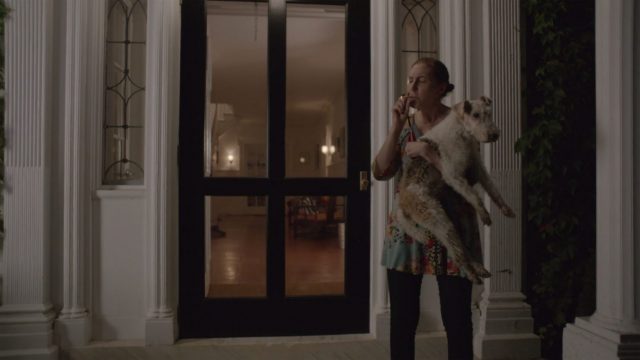
 The New York Jewish Film Festival gets under way January 10 with an intriguing look at enigmatic filmmaker Michał Waszyński, the director of one of the most important Yiddish movies of all time, the 1937 supernatural tale The Dybbuk. In The Prince and the Dybbuk, directors Piotr Rosolowski and Elwira Niewiera find that discovering who Waszyński was is like chasing a ghost, as he continually reinvented himself while being haunted by a past he tried to erase. Like the characters in many of the films he produced and directed, he was constantly searching for his true identity as he journeyed from Poland and Germany to Italy and Spain. “He was in his world, so mysterious and exciting. Nobody really knows what he’s really like,” one of his assistant directors, Enrico Bergier, says. Throughout the eighty-minute documentary, friends, relatives, colleagues, and others describe Waszyński, who produced and/or directed nearly 150 films, as a gentleman, Jewish, Catholic, noble-minded, lonely, elegant and refined, an exceptional boss, generous, isolated, very smart, a larger-than-life character, an aristocrat, a bit strange, and a mythomaniac. He married a countess, dubbing himself the Polish Prince, and took one of his actors, Albin Ossowski, to gay restaurants. “He was longing for his youth,” Ossowski says. He hobnobbed with Orson Welles, Sophia Loren, Audrey Hepburn, and Claudia Cardinale. He appeared in Joseph L. Mankiewicz’s 1954 film, The Barefoot Contessa. He was singled out by Josef Goebbels as an enemy. He was involved with such 1960s blockbusters as El Cid and The Fall of the Roman Empire as well as smaller Eastern European films, most famously The Dybbuk, about a young bride possessed by a spirit. Rosolowski and Niewiera, who previously collaborated on the award-winning Domino Effect, include newsreel footage, family photos, home movies, a behind-the-scenes promotional piece narrated by James Mason about the making of Anthony Mann’s budget-busting The Fall of the Roman Empire, spoken excerpts from Waszyński’s diaries, and clips from such Waszyński films as His Excellency the Shop Assistant, Unknown Man of San Marino, Dvanáct kresel, Gehenna, Wielka Droga, Zabawka, and Znachor, many of which feature lost characters.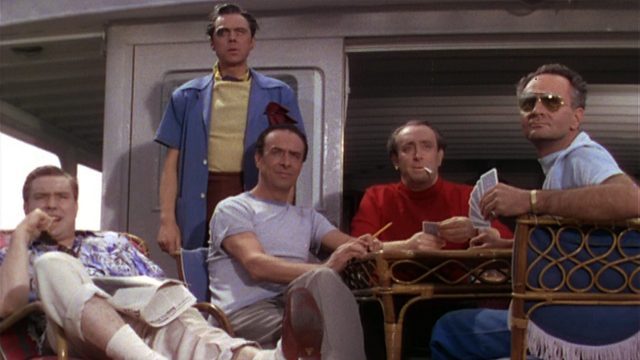
 Peter Bogdanovich’s The Last Picture Show is a tender-hearted, poignant portrait of sexual awakening and coming-of-age in a sleepy Texas town. Adapted from the Larry McMurtry novel by the author and the director, the film is set in the early 1950s, focusing on Sonny Crawford (Timothy Bottoms), a teenager who works at the local pool hall with Billy (Timothy’s brother Sam), a simple-minded boy who needs special caring. Sonny’s best friend, Duane Jackson (Oscar-nominated Jeff Bridges), is dating the prettiest girl in school, Jacy Farrow (Cybill Shepherd, in her film debut), who is getting ready to test out the sexual waters, sneaking away on a date with Lester Marlow (Randy Quaid), who takes her to a naked-swimming party in a wealthier suburb of Wichita Falls. Meanwhile, Sonny breaks up with his girlfriend, Charlene Druggs (Sharon Taggart), and becomes drawn to the sad, unhappy Ruth Popper (an Oscar-winning Cloris Leachman), the wife of his football coach (Bill Thurman). The outstanding all-star cast also features Oscar-nominated Ellen Burstyn as Lois, Jacy’s mother; Eileen Brennan as a waitress in the local diner who makes cheeseburgers for Sonny; Clu Gulager as a working man who has a thing for Lois; Frank Marshall, who went on to become a big-time producer, as high school student Tommy Logan; and Oscar winner Ben Johnson as Sam the Lion, the moral center of the town and owner of the pool hall, diner, and movie theater, which shows such films as Father of the Bride and Red River.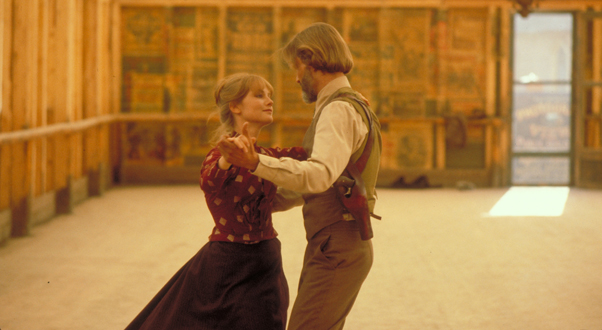
 When I was a kid in school, one of the first movies I ever reviewed was Heaven’s Gate, Michael Cimino’s brazenly overbudget famous Hollywood disaster. Incensed that professional film critics were obsessed with the meta surrounding the making of the epic Western instead of simply taking it for what it was, I was determined to treat it like any other movie, forgetting about all the behind-the-scenes gossip and tales of financial gluttony. And what I found back then was that it was a noble failure, a bold exercise in genre that had its share of strong moments but ultimately fell apart, leaving me dissatisfied and disappointed but glad I had seen it; I did not want my three-plus hours back. In fact, I probably would have checked out the rumored five-hour version if it had been shown, hoping it would fill in the many gaps that plagued the official theatrical release. More than thirty years later, Cimino’s follow-up to his Oscar-winning sophomore effort, The Deer Hunter, has returned in a 219-minute digital restoration supervised by Cimino, and it does indeed shed new light on the unfairly ridiculed work, which is still, after all this time, a noble failure. Inspired by the 1882 Johnson County War in Wyoming, the film stars Kris Kristofferson as Jim Averill, a Harvard-educated lawman hired by a group of immigrants, called “citizens,” whose livelihood — and lives — are being threatened by a wealthy cattlemen’s association run by the elitist Frank Canton (Sam Waterston). The association has come up with a kill list of 125 citizens, offering fifty dollars for each murder, a plan that has been authorized all the way up to the president of the United States. Leading the way for the cattlemen is hired killer Nate Champion (Christopher Walken), who has a particularly fierce aversion to the foreign-speaking immigrants. With a major battle on the horizon, Averill and Champion also fight for the love of the same woman, the luminous Ella Watson (Isabelle Huppert), a successful madam who soon finds herself in the middle of the controversy.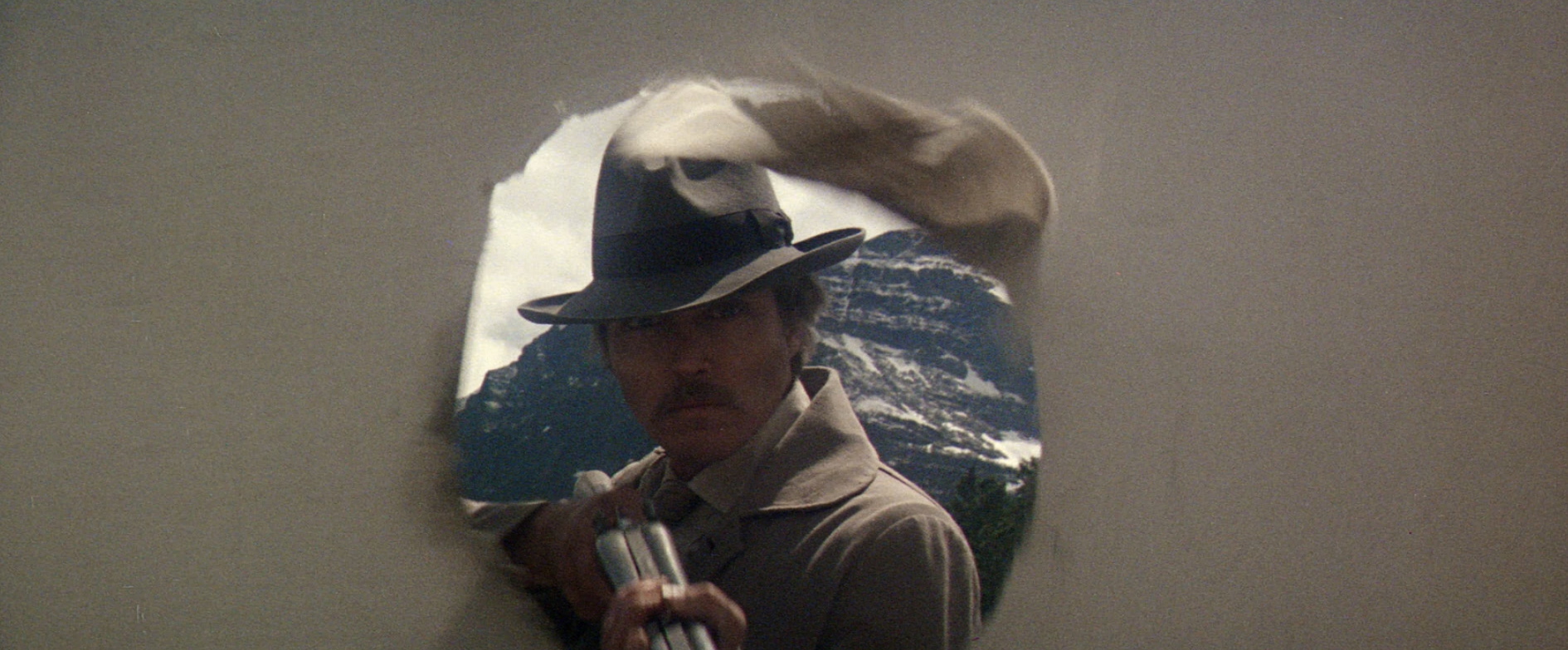
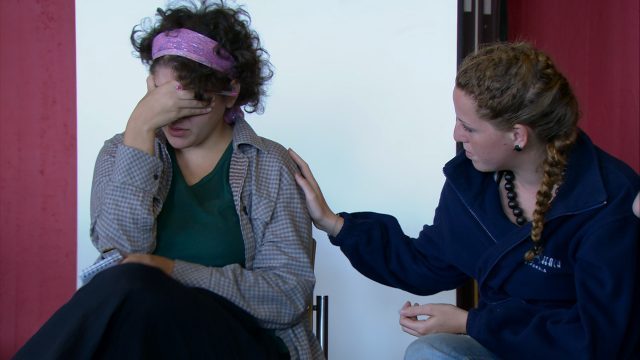
 Hava Kohav Beller’s documentary In the Land of Pomegranates begins with an epigraph quote from Swiss writer and political activist Friedrich Dürrenmatt: “This inhuman world has to become more human. But how?” The writer of The Pledge and The Visit also claimed, “Without tolerance, our world turns into hell,” and argued that Swiss citizens were both prisoners and guards. One wonders what Dürrenmatt would have thought of Beller’s film, which explores the ongoing battle between Jews and Palestinians over who has the right to exist in Israel. The two-hour film starts out slowly, with interviews dating back to 2010 as random men and women share their views on the fierce debate; they are not artists, politicians, public figures, acknowledged experts, or professional thinkers. Ofra Eviatar talks about the dangers of being a Jew living by the wall at the Gaza border. An Arab man explains that he felt scared when he was a child, so “my fear meant I would get revenge when I grew up.” The people chosen feel a bit too arbitrary, too selective and manipulative. But then, suddenly, the film finds its focus as it zeroes in on a gathering of young Palestinians and Jews participating in a retreat in Germany called “Vacation from War,” where they live together and have intense group discussions about the controversy surrounding the State of Israel. “Here we are having a break from reality and here we will try to see if we can understand each other,” facilitator Shadi Hanoun says. But just when it seems like the next generation might be able to find some common ground, the conversation gets brutal as the Jews ask whether the Palestinians will ever accept Israel’s right to exist and the Palestinians demand that their land must be returned to them. Meanwhile, a young Palestinian mother has to cross the border to bring her son, who has a severe heart problem, to an Israeli hospital where Jewish doctors try to save the boy.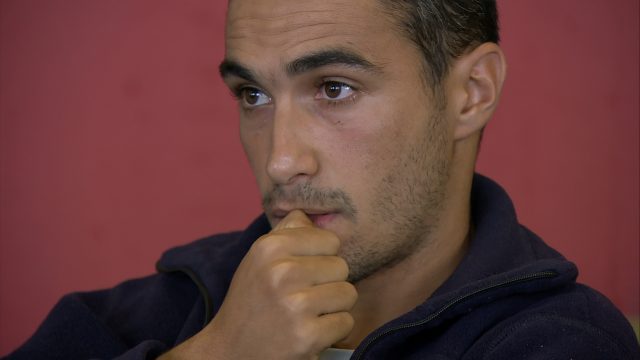
 Winnipeg-based filmmakers Guy Maddin, Evan Johnson, and Galen Johnson ingeniously reimagine Alfred Hitchcock’s psychosexual masterpiece, Vertigo, using clips from dozens of movies and television shows in the mesmerizing pastiche The Green Fog. When Maddin, who has made such previous films as Careful, The Saddest Music in the World, and