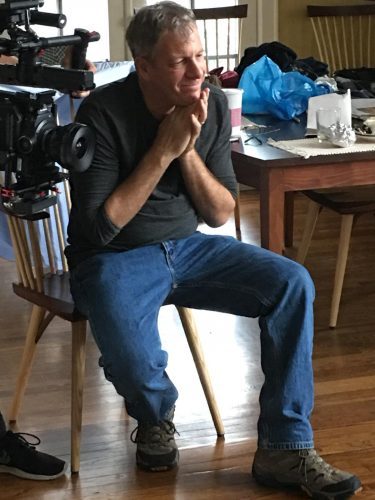
Producer and director Jeff Kaufman on the set of Every Act of Life (photo courtesy Jeff Kaufman)
EVERY ACT OF LIFE (Jeff Kaufman, 2018)
Tribeca Film Festival
Monday, April 23, SVA Theater 2 Beatrice, 8:00
Tuesday, April 24, Cinépolis Chelsea 6, 5:00
Wednesday, April 25, Cinépolis Chelsea 2, 6:15
Thursday, April 26, Cinépolis Chelsea 9, 4:00
everyactoflifedocumentary.com
www.tribecafilm.com
Four-time Tony winner Terrence McNally and his husband, producer Tom Kirdahy, appeared in the 2015 documentary, The State of Marriage, about marriage equality, but director-producer Jeff Kaufman and producer Marcia Ross were surprised to learn that no one had made a film about McNally himself. So they did. The result is Every Act of Life, an intimate portrait of the Texas-born activist and playwright, who has also won two Obies, four Drama Desk Awards, and an Emmy and has been a fixture in the theater community for six decades, writing such popular and influential works as Frankie and Johnny in the Clair de Lune; The Lisbon Traviata; Lips Together, Teeth Apart; Master Class; Kiss of the Spider Woman; and Love! Valour! Compassion!
Kaufman and Ross combine archival footage of many of McNally’s works with personal photos and new interviews with an all-star lineup that includes Angela Lansbury, Nathan Lane, Audra McDonald, Larry Kramer, Edie Falco, F. Murray Abraham, Tyne Daly, Billy Porter, Chita Rivera, John Slattery, Rita Moreno, Joe Mantello, and Christine Baranski, among many others. The film follows McNally through every act of his life, from his childhood in Texas living with abusive, alcoholic parents to his homosexuality, from his relationships with Edward Albee, Wendy Wasserstein, and others to his bout with lung cancer and marriage to Kirdahy. Every Act of Life is having its world premiere at the Tribeca Film Festival on April 23, with Kaufman, Mantello, Abraham, Lane, and McNally participating in an “After the Screening” conversation moderated by Frank Rich. (The film is also being shown April 24, 25, and 26.) Just as the festival got under way, Kaufman, who has also directed Father Joseph, The Savoy King: Chick Webb and the Music That Changed America, and Brush with Life: The Art of Being Edward Biberman, discussed the project via email in this exclusive twi-ny talk.
twi-ny: You first interviewed Terrence McNally and his husband, Tom Kirdahy, for The State of Marriage. How familiar were you with him and his work at that time?
Jeff Kaufman: Marcia grew up in Mt. Vernon, just outside of NYC, and the great love of her youth was coming into the city to go to the theater. It shaped much of her life that followed. I grew up near Seattle with a love of classic movies and art, so my discovery of the theater came a bit later (in part by subscribing to the Fireside Theatre Book Club). We both loved Terrence’s work but also made some lasting discoveries through making this film.
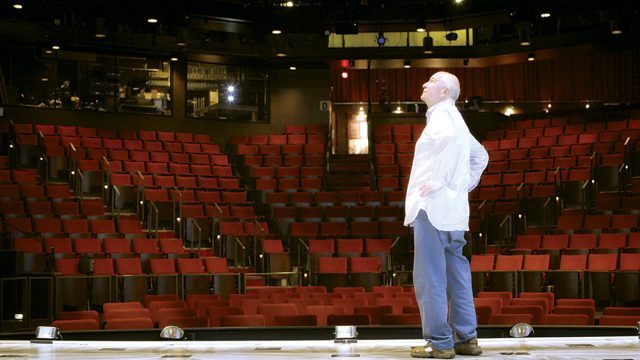
Every Act of Life is an intimate look at the life and career of award-winning playwright and activist Terrence McNally
twi-ny: Do you have a favorite play of his?
JK: For Marcia, her favorite play by Terrence (of many) is Love! Valour! Compassion! She says it speaks so beautifully about relationships. There are many characters and moments and plays of Terrence’s that keep reverberating for me, but I would mention (so others can look them up) the spiritual moments in A Perfect Ganesh and Corpus Christi, the sense of family and scope of life in L! V! C!, and the deep connection to the power of the arts in Master Class.
twi-ny: What made you think he would be a good subject for a full-length documentary? Was it difficult to get him to agree to the film?
JK: When we interviewed Terrence and Tom for The State of Marriage, we were so impressed with how direct and open and full of feeling Terrence could be. His life and work have changed many lives, and launched many careers, so his story is about a community of remarkable people as well. Through Terrence’s life and work we connect to a history of the theater, the struggle for LGBTQ rights (as Nathan Lane says, “Terrence has always been ahead of his time”), overcoming addiction (thanks in large part to Angela Lansbury), and what it means to keep searching and growing (and loving) throughout your life. So, for us Terrence, like his plays, speaks to a lot of important concerns.
And since we worked well together in the previous film, it wasn’t hard to get him and Tom to agree. They’ve been great to work with throughout the project.
twi-ny: Terrence gives you remarkable access to his life. Did that happen early on in the process, or did you have to establish a rapport?
JK: Our first conversation about doing this film was with Tom Kirdahy, a theater producer and former AIDS attorney who is also Terrence’s husband. Tom understood completely that honesty and access are essential. None of us wanted a fawning tribute. Terrence wasn’t comfortable with every aspect of our interviews, but he was remarkably forthcoming and unvarnished. I’ve interviewed hundreds of people, but Terrence is unique.
twi-ny: Were there any times he asked for the camera to be turned off?
JK: When he decides to open the door, he opens it all the way. There may have been a few things he pushed back on a bit, but we always got what we needed.
twi-ny: Terrence is known for being a perfectionist and, at times, demanding, yet he is very relaxed throughout the film. Did the making of the film actually go that smoothly? Whose idea was it to have numerous scenes in which two characters speak very comfortably to each other?
JK: I always try to put interview subjects in a positive frame of mind (even while asking a lot, on several levels). Marcia is a great ally in this as well. Often when I’m working with the film crew to set up the shot, Marcia engages in her singular way (and depth of theater knowledge) to help keep the subject engaged and relaxed. Then I conduct the interview. Since you asked, I came up with the idea for the various sequences (Edie and Murray talking about Frankie and Johnny, etc.).
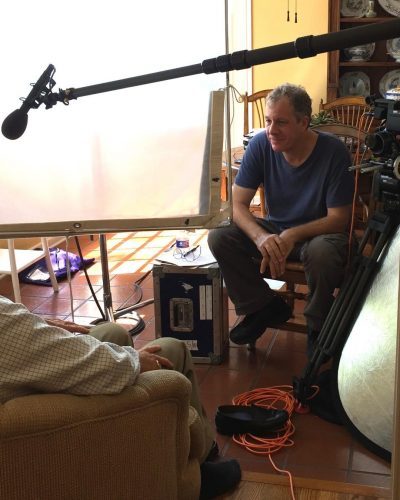
Jeff Kaufman interviewed a vast array of theater people for documentary about Terrence McNally (photo courtesy Jeff Kaufman)
twi-ny: You have amassed a terrific cast of characters from both his personal and professional life for the film. What was that experience like, “casting” the documentary? Was there someone you really wanted to interview but was unavailable?
JK: Casting is key in documentaries, narrative films, and the theater. Also important for our work is to get people to tell stories that put the audience in a scene with the subjects of our films. We were pretty much able to talk to everyone on our list . . . but I would have loved to go back in time and film Terrence with some of the people who are no longer living. We got as close as possible to that by finding unseen footage of Edward Albee and Wendy Wasserstein, having Bryan Cranston read an amazing letter to Terrence about what a writer needs to keep going, and getting Meryl Streep to read a letter from Terrence’s beloved high school English teacher.
twi-ny: In the film, Terrence and the actors talk about the importance of collaboration, which even extended to many of the documentary participants helping the Kickstarter campaign by contributing special rewards for donors. How does collaboration in theater compare with collaboration in film?
JK: Both are essential, and as Terrence says, life is about collaboration as well. I have a strong vision for what I want the documentary to be and say. So does Marcia. However, that only comes together through the work and vision and talent of many people.
twi-ny: What was the single most surprising thing you learned about theater and Terrence McNally while making the film?
JK: I don’t know if this qualifies as a surprise, but Marcia and I were both impressed by finding in Terrence, and others in the film, great artists who could easily rest on their laurels but who instead are still inspired, still learning, and still striving to do new and better work.
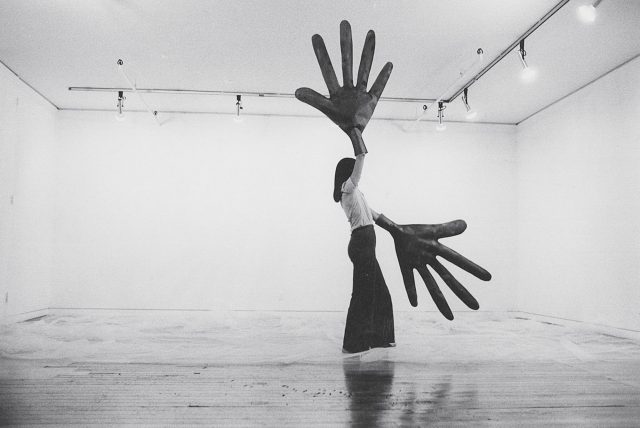
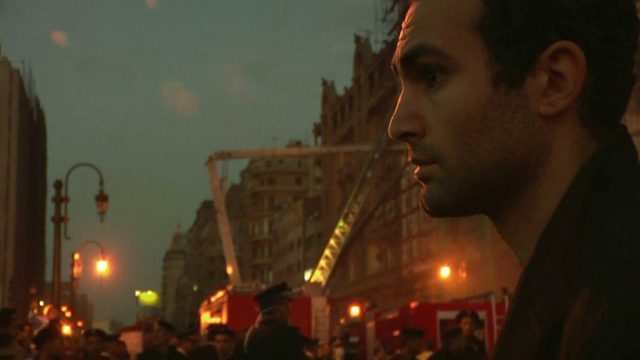
 Tamer El Said’s extraordinary debut feature, In the Last Days of the City, is an elegiac love letter to his deeply troubled hometown, Cairo, as well as a treatise on the responsibilities filmmakers have to their art and to society as a whole. Almost ten years in the making, the film was shot between 2008 and 2010, finishing shortly before the Arab Spring uprising in January 2011 in Tahrir Square, and was not completed and screened until 2016, when it started winning prizes at festivals around the world. It finally receives its New York theatrical release at the Museum of the Modern Art, running April 27 through May 3, where El Said will take part in a postscreening conversation on opening night at 7:00; in addition, on April 30 at 7:00, MoMA’s “Modern Mondays” series will present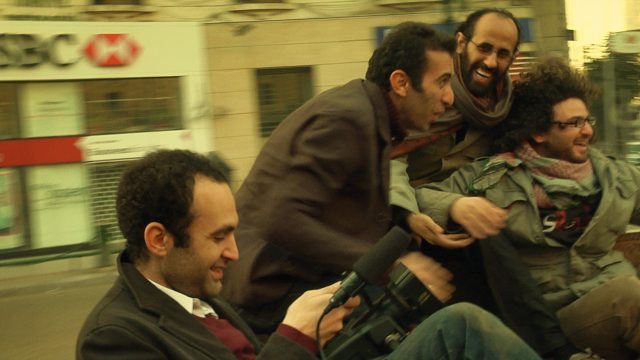
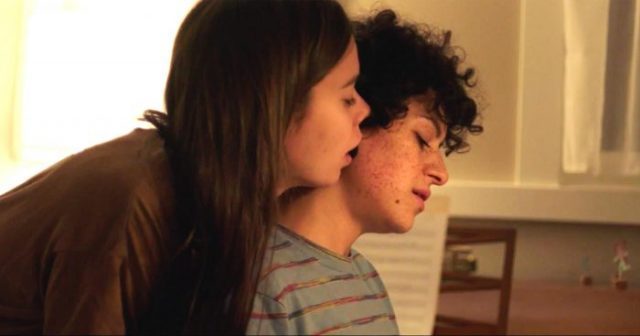
 The behind-the-scenes story of the making of Duck Butter, having its final world premiere screening at the Tribeca Film Festival on April 26 before opening at the Village East the next day, turns out to be better than the film itself. That doesn’t mean there isn’t lots to appreciate about the too-intimate drama, which chronicles the ups and downs, fears and desires of two women experiencing a full relationship in a twenty-four-hour period. Director Miguel Arteta (Beatriz at Dinner, Chuck & Buck) and actress Alia Shawkat (State of Grace, Arrested Development) initially wrote a script about an eighteen-month relationship between a man and a woman that featured a twenty-four-hour period in which they get to know each other by having sex once every sixty minutes. One friend advised that they instead make the movie just about the twenty-four hours, so they began looking for a male actor to star opposite Shawkat. After coming up empty, they decided that Laia Costa (Bandolera, Victoria), who had already been cast in a smaller role, was right for the part. They stripped the script down to its bare essentials, allowing the two actresses to improvise most of their dialogue as the main section of the film was claustrophobically photographed by Hillary Spera in about twenty-seven hours, giving it a cinéma vérité feel.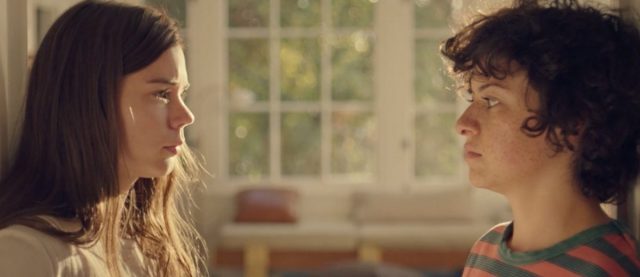
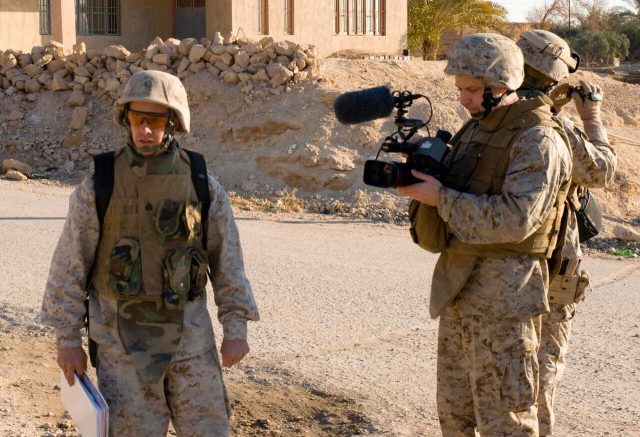
 Don’t be scared off by the title of House Two; it’s not a sequel to a horror film you didn’t see. But that doesn’t mean it isn’t downright frightening. On November 19, 2005, the Haditha Massacre took place, in which a small unit of U.S. Marines shot and killed two dozen Iraqis, including women and children, in a bedroom in a location identified as “House Two.” The Marines were searching for those responsible for setting off an IED nearby. The next year, following a Time magazine story about the incident, Oscar-nominated, Emmy-winning director Michael Epstein decided to make a film about the trial of Staff Sergeant Frank Wuterich, who was charged with eighteen counts of murder. In order to get as much behind-the-scenes information as possible without having to surrender it to the court or the military, Epstein actually became an official part of Wuterich’s defense team, gaining full access to its strategy and all those involved, beginning with Wuterich himself. In exchange, the legal team agreed that Epstein would have ownership of all footage he shot and that he could use it in any way he saw fit; thus, he had complete control over the documentary, and the legal team would even indemnify him for any resulting libel claims from them or Wuterich. What Epstein found out about the case is utterly shattering, a widespread conspiracy to cover up the incident — which recalled the 1968 My Lai Massacre in Vietnam — with a shocking revelation of who was ultimately in charge of the whitewashing.