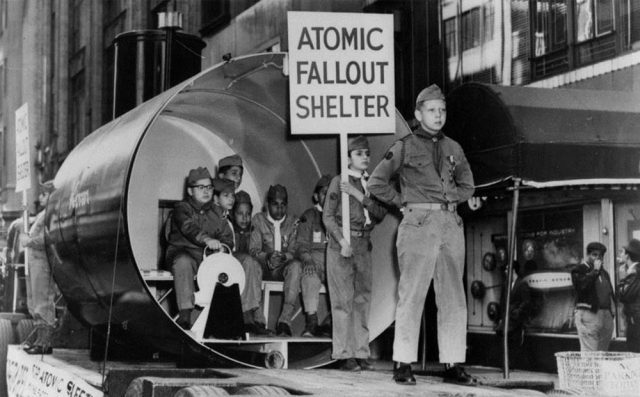
America prepares for the bomb in The Atomic Cafe, the restored documentary that is returning to Film Forum
THE ATOMIC CAFE (Kevin Rafferty, Jayne Loader & Pierce Rafferty, 1982)
Film Forum
209 West Houston St.
Opens Wednesday, August 1
212-727-8110
filmforum.org
 The time is ripe for a 4K restoration of the absurdist 1982 documentary The Atomic Cafe as President Trump deals with the nuclear capabilities and arsenals of Russia, Iran, and North Korea. Kevin Rafferty, Jayne Loader, and Pierce Rafferty were searching archives for propaganda films when they discovered a treasure trove of military and government shorts about the atomic and hydrogen bombs and how the American people should face any oncoming threats. The filmmakers weaved sensational footage together into an hour and a half of clips that range from the hysterically funny to the dangerously outrageous. Young students are taught to “duck and cover.” Enola Gay pilot Paul Tibbets Jr. describes how easy it was to fly over Hiroshima and drop the bomb but then admits his shock over the eventual destruction it wrought. Presidents Harry S Truman and Dwight D. Eisenhower discuss the impact of the bombs. A radio duo makes jokes about the decimation. Scenes of the horrific damage to Japanese victims are shown in silence. Vice Admiral W. H. P. Blandy defends the Bikini Atoll test, where island residents are assured everything will be fine — as are soldiers who will be in the vicinity of various tests.
While Russia escalates the Cold War — yes, they were our avowed enemy for quite some time, although the film includes President Richard Nixon joking around with Soviet premier Nikita Khrushchev — and a battle between North and South Korea looms, Americans drink “Atomic” cocktails and dance to “Atomic” songs. The execution of Ethel Rosenberg is explained in disturbing detail. A military officer tells the troops, “Watched from a safe distance, this explosion is one of the most beautiful sights ever seen by man,” and in a training film a military chaplain says to a few soldiers, “You look up and you see the fireball as it ascends up into the heavens; it’s a wonderful sight to behold.” Loader and the Raffertys fill the film with a vast array of black-and-white and color footage of nuclear bombs exploding into immense mushroom clouds, accompanied by a wide range of mood-enhancing music. It would be easy to dismiss most of the archival material in the film as ridiculous, outdated propaganda from a bygone era, but in this age of fake news, social media, lies from the White House, a war on journalism, and a president cozying up to enemies and taking issue with longtime allies, it’s more than a little bit frightening too. The Atomic Cafe opens August 1 at Film Forum — where it debuted in 1982 — with Kevin Rafferty, Jayne Loader, and Pierce Rafferty participating in Q&As following the screenings on August 2 and 3 at 7:10 and August 4 at 5:10.


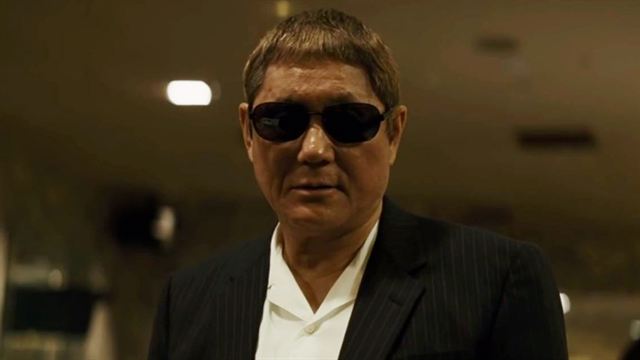
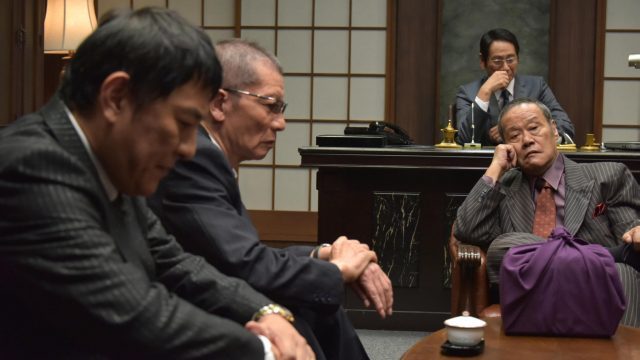
 The annual Japan Cuts series continues July 28 with the New York premiere of Takeshi Kitano’s Outrage: Coda, the finale in his yakuza series that began in 2010 with Outrage, followed two years later by Beyond Outrage. It’s not exactly the meeting of the five families in The Godfather when clan leaders get together as former stock trader Nomura (Ren Osugi) considers stepping down from his role as boss and selecting a replacement. Jockeying for various positions are the old school Nishino (Toshiyuki Nishida), the big, not too bright Hanada (Pierre Taki), the deeply pensive Nakata (Sansei Shiomi), and the sharp, cool Chang (Tokio Kaneda), who seems to have stepped right out of an episode of the original Hawaii Five-O. Detective Shigeta (Yutaka Matsushige) is on the case, watching it all very carefully, especially when round-faced Otomo (Kitano, who goes by the name Beat Takeshi as an actor) returns after a stint on Jeju Island in Korea.