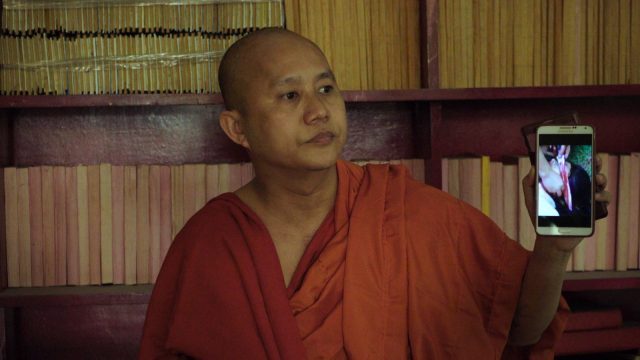
Megalomaniacal monk spouts his extremist views in Barbet Schroeder’s The Venerable W.
THE 16th MoMA INTERNATIONAL FESTIVAL OF FILM PRESERVATION: THE VENERABLE W. (Barbet Schroeder, 2017)
MoMA Film, Museum of Modern Art
11 West 53rd St. between Fifth & Sixth Aves.
January 4-10
Festival runs January 4-31
212-708-9400
www.moma.org
www.filmsdulosange.fr/en
 “To Save and Project: The 16th MoMA International Festival of Film Preservation,” comprising newly restored and preserved works from throughout the history of cinema, kicks off January 4 with a tribute to Iranian-born Swiss-French director Barbet Schroeder’s self-described “trilogy of evil”: 1974’s Général Idi Amin Dada: Autoportrait (General Idi Amin Dada: A Self Portrait), about the Ugandan dictator; 2007’s L’avocat de la terreur (Terror’s Advocate), a portrait of Siamese-born French lawyer Jacques Vergès, who has defended such clients as Klaus Barbie, French philosopher and Holocaust denier Roger Garaudy, and Carlos the Jackal; and last year’s Le vénérable W. (The Venerable W.), a look at controversial Buddhist monk Ashin Wirathu. According to long-standing traditions and beliefs, Buddhists have empathy and compassion for all sentient beings. For example, in the 2017 documentary The Last Dalai Lama?, His Holiness expressed such feelings even for the Chinese military and government that have waged war on the Tibetan people for more than fifty years and have decided that they will select the next Dalai Lama.
So when Schroeder, who is best known for such fiction films as Barfly, Reversal of Fortune, and Single White Female, first heard about Wirathu, a Buddhist monk in Myanmar advocating violence against a Muslim minority known as the Rohingyas, he headed to the country, formerly known as Burma, where he was so shocked and disturbed by what he saw that he can still barely say the monk’s name in interviews; nor could he bring himself to use it in the title of his film about Wirathu. The Venerable W. consists of archival footage and new interviews with Wirathu, as Schroeder essentially lets the leader speak his mind, in sermons to his rabid followers, at public events, and in his monastery, where he espouses his beliefs to the filmmaker. “The main features of the African catfish are that: They grow very fast. They breed very fast too. And they’re violent. They eat their own species and destroy their natural resources. The Muslims are exactly like these fish,” Wirathu, who was born in Kyaukse near Mandalay in 1968, says with a sly smile. He regularly boasts of his accomplishments in subduing the Rohingyas, whom he often refers to using a slur that is the equivalent of the N-word in America.
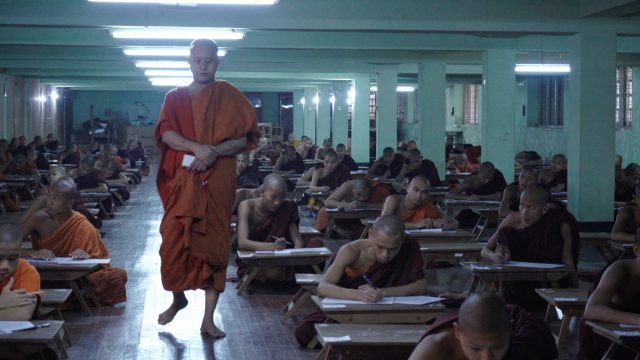
The Venerable Wirathu walks among his faithful minions in shocking documentary
A megalomaniacal nationalist with extremist positions on patriotism, protectionism, and border crossings and a clever manipulator of social media, Wirathu, inspired by the 1997 book In Fear of Our Race Disappearing, also makes extravagant, debunked claims using false statistics, from declaring that he started the 2007 Saffron Revolution to arguing that the Rohingyas are burning down their own villages so they can blame the Buddhists. Much of what he is saying sounds eerily familiar, evoking racist, nationalist sentiments that are gaining ground around the world, particularly in France, England, and America. “In the USA, if the people want to maintain peace and security, they have to choose Donald Trump,” Wirathu says. Schroeder also speaks with seven men who share their views about Wirathu: W.’s master, U. Zanitar; investigative magazine editor Kyaw Zayar Htun; Saffron Revolution monk U. Kaylar Sa; Fortify Rights creator Matthew Smith; Muslim political candidate Abdul Rasheed; Spanish journalist Carlos Sardiña Galache; and highly revered monk U. Galonni. Together they paint a portrait of a dangerous fanatic who is fomenting bitter hatred that has led to extensive episodes of rape, violence, and murder while the military and the government, headed by Aung San Suu Kyi, either support what Wirathu’s doing or merely look the other way. In numerous voiceovers, Portuguese actress Maria de Medeiros recites quotations from Buddhist texts, including the Metta Sutta, and states various sociopolitical facts. “The Buddha is often above good and evil, but his words should help us limit the mechanics of evil,” she narrates.
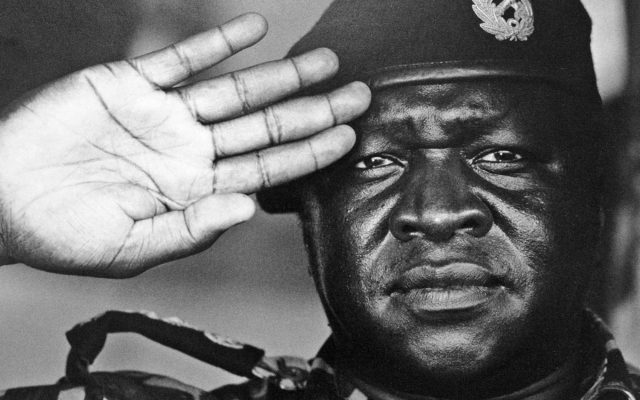
Barbet Schroeder’s General Idi Amin Dada: A Self Portrait is part of MoMA film-preservation festival
Meanwhile, Wirathu, who was declared “the Face of Buddhist Terror” in a June 2013 Time magazine cover story, insists he is doing the right thing for his country. “I help people who have been persecuted by Muslims,” he says. “The threat against Buddhism has reached alert level.” It’s a brutal film to watch, infuriating and frightening, as Schroeder and editor Nelly Quettier clearly and concisely present the facts, without judgment, including scenes of people on fire and being viciously beaten; the director might not make any grand statements against what Wirathu and his flock are doing — he lets the monk take care of that by himself — but the film is a clarion call for us all to be aware of what is happening around the world, as well as in our own backyard. The Venerable W. will be preceded by the short film Où en êtes-vous Barbet Schroeder? (What Are You Up to, Barbet Schroeder?), which goes behind the scenes of his decision to tell Wirathu’s story. Schroeder will be at MoMA to introduce multiple screenings of The Venerable W., Terror’s Advocate, and General Idi Amin Dada: A Self Portrait as well as Charles Bukowski par Barbet Schroeder (The Charles Bukowski Tapes) and “Four by Barbet Schroeder,” a compilation of Koko, le gorille qui parle (Koko: A Talking Gorilla), Le cochon aux patates douces, Maquillages, and Sing Sing. “To Save and Project” continues through January 31 with such other international films as Yvonne Rainer’s Journeys from Berlin, Alexander Korda’s The Private Life of Henry VIII, F. W. Murnau’s Faust, and Chantal Akerman’s Histoires d’Amérique: Food, Family and Philosophy.
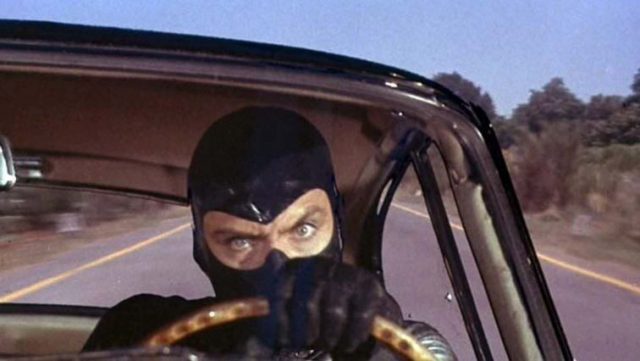
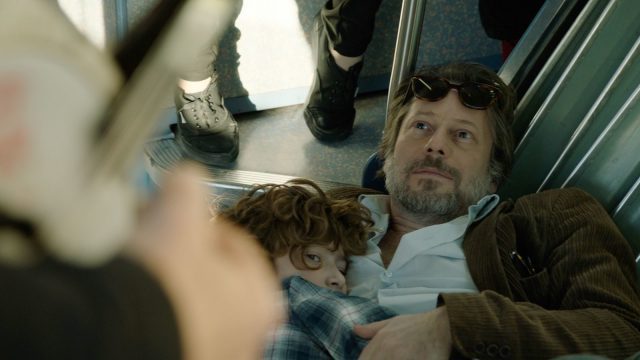
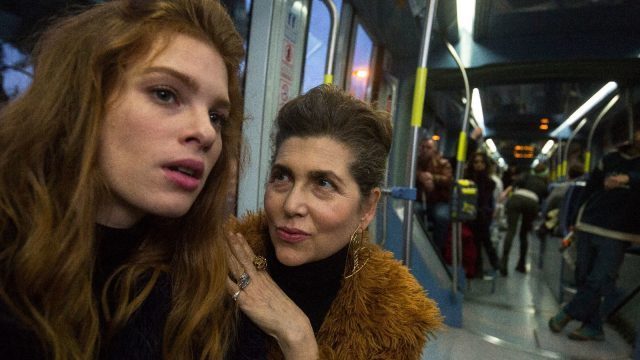
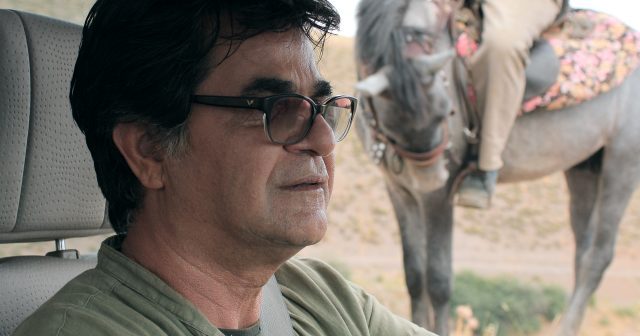
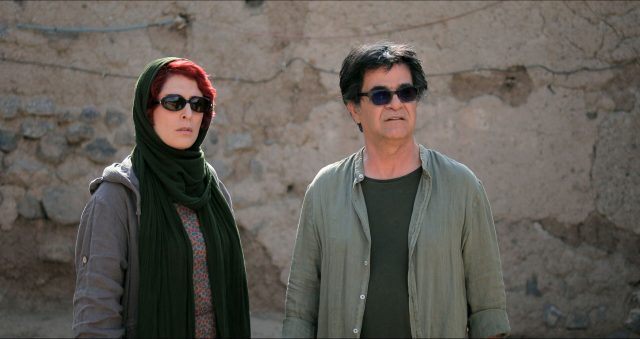
 One of the most brilliant and revered storytellers in the world, Iranian auteur Jafar Panahi proves his genius yet again with his latest cinematic masterpiece, the tenderhearted yet subtly fierce road movie 3 Faces. The film, which made its US premiere this past fall at the New York Film Festival and won the Best Screenplay prize at Cannes, is screening January 13 as part of IFC Center’s inaugural Iranian Film Festival New York. As with some of Panahi’s earlier works, 3 Faces walks the fine line between fiction and nonfiction while defending the art of filmmaking. Popular Iranian movie and television star Behnaz Jafari, playing herself, has received a video in which a teenage girl named Marziyeh (Marziyeh Rezaei), frustrated that her family will not let her study acting at the conservatory where she’s been accepted, commits suicide onscreen, disappointed that her many texts and phone calls to her hero, Jafari, went unanswered. Deeply upset by the video — which was inspired by a real event — Jafari, who claims to have received no such messages, enlists her friend and colleague, writer-director Panahi, also playing himself, to head into the treacherous mountains to try to find out more about Marziyeh and her friend Maedeh (Maedeh Erteghaei). They learn the girls are from a small village in the Turkish-speaking Azeri region in northwest Iran, and as they make their way through narrow, dangerous mountain roads, they encounter tiny, close-knit communities that still embrace old traditions and rituals and are not exactly looking to help them find out the truth.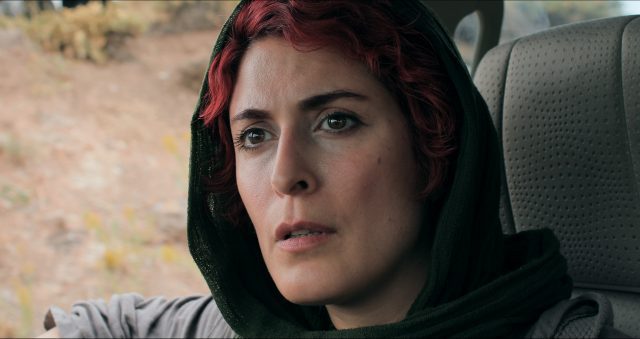
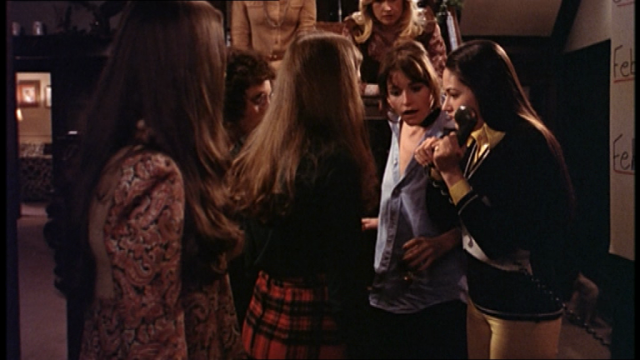
 American-Canadian filmmaker Bob Clark might be best known for the holiday favorite A Christmas Story, but he also directed another, very different yuletide cult classic, Black Christmas. Clark, who had previously made Children Shouldn’t Play with Dead Things and would go on to make such wide-ranging fare as Rhinestone, Turk 182!, Porky’s, and Baby Geniuses, assembled quite a cast for the 1974 horror flick, also known as Silent Night, Evil Night: Olivia Hussey (Romeo and Juliet), Keir Dullea (2001: A Space Odyssey, Bunny Lake Is Missing), Margot Kidder (Sisters, Superman), John Saxon (Enter the Dragon, A Nightmare on Elm Street), Art Hindle (The Brood, Invasion of the Body Snatchers), and Andrea Martin (SCTV, Pippin). The story is set in a sorority house run by Mrs. MacHenry (Marian Waldman), who lets the young women pretty much do whatever they want (while regularly sneaking drinks herself). A series of obscene phone calls has some of the sisters on edge while Barb (Kidder) is much more bold, challenging the twisted voice. After Clare (Lynne Griffin) disappears, the other women start growing more concerned, including Phyllis (Martin) and Jess (Hussey), as do Phyllis’s boyfriend, Patrick (Michael Rapport), Clare’s boyfriend, Chris (Hindle), and Olivia’s lover, Peter (Dullea), along with Clare’s prim and proper father (James Edmond) and local police lieutenant Kenneth Fuller (Saxon). With Christmas approaching, the body count starts piling up, as do the genre clichés, but it’s all in good fun.