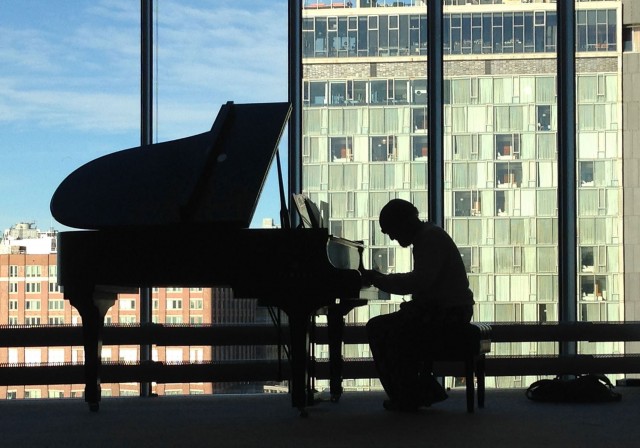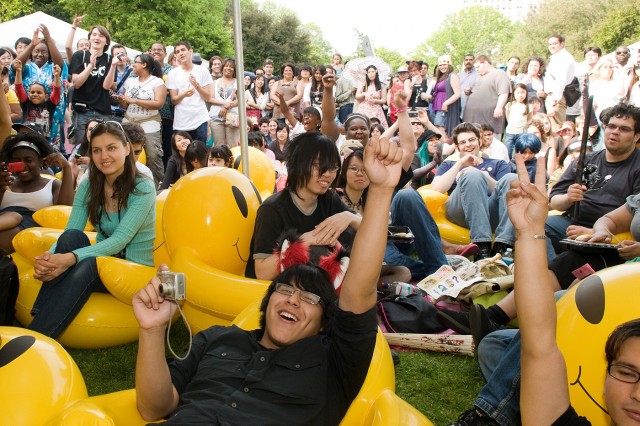
J-Lounge Stage at Brooklyn Botanic Garden is a great place to both party and relax (photo by Jason Gardner)
Brooklyn Botanic Garden
900 Washington Ave. at Eastern Parkway
Saturday, April 30, and Sunday, May 1, $20-$25 (children under twelve free), 10:00 am – 5:30 pm
718-623-7200
www.bbg.org
Spring appears to finally have arrived, and that means it’s time for one of the city’s most fabulous annual festivals, the Sakura Matsuri at the Brooklyn Botanic Garden. The weekend celebrates the beauty of the blossoming of the cherry trees with live music and dance, parades, workshops, demonstrations, martial arts, fashion shows, Ikebana flower arranging, a bonsai exhibit, Shogi chess, garden tours, the Mataro Ningyo Doll Museum, book signings, Japanese food, clothing, pottery, wall scrolls, kimonos, lots of children’s activities, and more. Below are ten daily featured highlights of this always lovely party, with many events going on all day long and over both days.
Saturday, April 30
Book signing: Kate T. Williamson, A Year in Japan, J-Lounge at Osborne Garden, 11:00
Ukiyo-e Illustration Demonstration with Jed Henry, Art Alley, J-Lounge at Osborne Garden, 11:00 & 2:00
The Battersby Show: Cosplay 101, with Charles Battersby, J-Lounge at Osborne Garden, 11:30
Manga Drawing with Misako Rocks!, J-Lounge at Osborne Garden, 12 noon, 1:15, and 3:00
Sohenryu Tea Ceremony, with tea masters Soumi Shimizu and Sōkyo Shimizu, BBG Tea Center Auditorium, 12:15 & 2:45
Dancejapan with Sachiyo Ito, Main Stage, Cherry Esplanade, 1:30
Book signing: Abby Denson, Cool Japan Guide: Fun in the Land of Manga, Lucky Cats and Ramen, J-Lounge at Osborne Garden, 3:00
Hanagasa Odori flower hat procession, with the Japanese Folk Dance Institute of New York, J-Lounge at Osborne Garden, 4:00
BBG Parasol Society Fashion Show, featuring live music by the Hanami Ensemble, Main Stage, Cherry Esplanade, 4:30
Yuzu’s Dream: An Urban Folk Odyssey, with Yuzu, Akim Funk Buddha, and his Origami Dance Crew, Main Stage, Cherry Esplanade, 5:15
Sunday, May 1
Japanese Garden Stroll, 10:00 am
Akim Funk Buddha’s Urban Tea Ceremony Unplugged, BBG Tea Center Auditorium, 12 noon
KuroPOP dance party, J-Lounge at Osborne Garden, 12:45
Stand-up Comic Uncle Yo, J-Lounge at Osborne Garden, 1:15 & 3:00
Samurai Sword Soul, Main Stage, Cherry Esplanade, 2:00
Takarabune Dance, J-Lounge at Osborne Garden, 2:00
Book signing: Rumi Hara, The Return of Japanese Wolves, J-Lounge at Osborne Garden, 3:00
Colossal Origami, with Taro Yaguchi, J-Lounge at Osborne Garden, 3:45
Sohenryu Tea Ceremony for Families, with Soumi Shimizu and Sōkyo Shimizu, BBG Tea Center Auditorium, 4:15
The Seventh Annual Sakura Matsuri Cosplay Fashion Show, with original music by Taiko Masala, Main Stage, Cherry Esplanade, 5:15
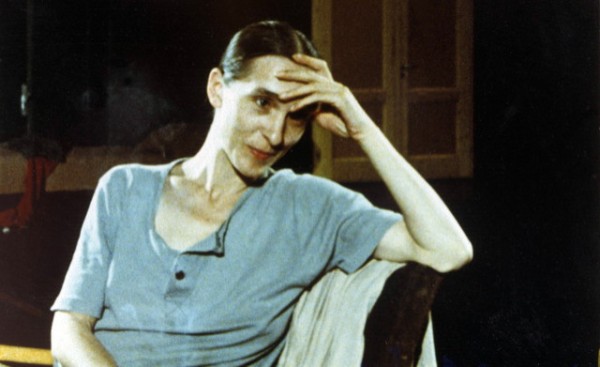
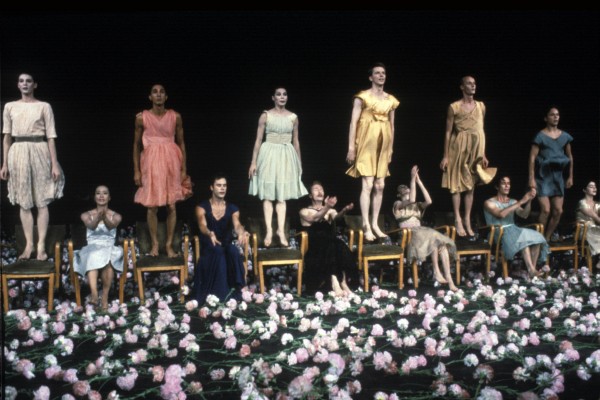
 In 1982, Belgian filmmaker Chantal Akerman followed Pina Bausch’s Tanztheater Wuppertal on a five-week tour of Europe as the cutting-edge troupe traveled to Milan, Venice, and Avignon. “I was deeply touched by her lengthy performances that mingle in your head,” Akerman says at the beginning of the resulting documentary, “One Day Pina Asked . . . ,” continuing, “I have the feeling that the images we brought back do not convey this very much and often betray it.” Akerman (Jeanne Dielman, 23 Quai du Commerce, 1080 Bruxelles; Je tu il elle) needn’t have worried; her fifty-seven-minute film, made for the Repères sur la Modern Dance French television series, is filled with memorable moments that more than do justice to Bausch’s unique form of dance theater. From 1973 up to her death in 2009 at the age of sixty-eight, Bausch created compelling works that examined the male-female dynamic and the concepts of love and connection with revolutionary stagings that included spoken word, unusual costuming, an unpredictable movement vocabulary, and performers of all shapes, sizes, and ages. Akerman captures the troupe, consisting of twenty-six dancers from thirteen countries, in run-throughs, rehearsals, and live presentations of Komm Tanz Mit Mir (Come Dance with Me), Nelken (Carnations), 1980, Kontakthof, and Walzer, often focusing on individual dancers in extreme close-ups that reveal their relationship with their performance. Although Bausch, forty at the time, is seen only at the beginning and end of the documentary, her creative process is always at center stage. At one point, dancer Lutz Förster tells a story of performing George and Ira Gershwins’ “The Man I Love” in sign language in response to Bausch’s asking the troupe to name something they’re proud of. Förster, who took over as artistic director in April 2013, first performs the song for Akerman, then later is shown performing it in Nelken. (Bausch fans will also recognize such longtime company members as Héléna Pikon, Nazareth Panadero, and Dominique Mercy.)